Debt Recovery in Romania: A Guide to Debt Collection 2025
Debt Recovery in Romania: A Guide to Debt Collection 2025

Navigating the complexities of debt recovery in Romania requires a thorough understanding of the legal landscape and effective debt collection strategies.
This guide offers valuable insights into the debt recovery procedures, key terms, and legal solutions available for both creditors and debtors within the Romanian legal system.
Whether you are a business seeking to recover debts or an individual facing debt-related issues, this guide aims to provide you with the essential information needed to navigate the Romanian debt recovery process successfully.
Understanding Debt Recovery in Romania
Debt recovery in Romania refers to the legal and administrative processes by which a creditor attempts to recover debts owed by a debtor.
This process is governed by Romanian law, specifically the Romanian Civil Procedure Code, and involves various stages, from initial negotiation to potential court proceedings.
Understanding these processes is crucial for both creditors seeking to recover their dues and debtors looking to manage their liabilities effectively within the bounds of Romanian law.
Engaging a Romanian lawyer can provide valuable assistance in navigating these complex procedures.
What is Debt Recovery?
Debt recovery encompasses all actions a creditor takes to recover debts from a debtor.
These actions can range from amicable settlement attempts, such as negotiation and mediation, to formal court proceedings governed by the Civil Procedure Code.
Debt recovery in Romania aims to provide a structured method for creditors to recover debts, ensuring both parties adhere to legal standards.
The objective is to find an enforceable resolution, whether through voluntary repayment or a court-ordered judgment, offering legal solutions for debt recovery.
Importance of Debt Collection in Romania
Effective debt collection in Romania is crucial for maintaining financial stability and trust within the economy.
When creditors can reliably recover debts, it encourages lending and investment, fostering economic growth.
Conversely, poor debt recovery mechanisms can lead to financial instability and reduced economic activity.
A robust system of debt recovery procedures ensures that contractual obligations are honored, thereby supporting a healthy and sustainable business environment.
This is why understanding the procedure of debt recovery is essential for businesses operating in Romania.
Key Terms in Debt Recovery
Navigating debt recovery in Romania requires understanding key terms and processes.
Debt recovery in Romania involves actions to recover the debt, often guided by a debt recovery lawyer in Romania.
Romanian law, especially the Romanian Civil Procedure Code, governs these proceedings.
Amicable settlements and litigation are common approaches.
The value of the claim and legal services are key considerations.
Familiarity with the table below and general principles helps navigate the claims procedure effectively and the recovery of the debt.
The goal is to recover debts efficiently, whether through negotiation or Romanian court involvement.
| Term | Definition |
|---|---|
| Creditor | Party owed money |
| Debtor | Party who owes the money |
The Legal Framework of Debt Recovery in Romania
Overview of Romanian Law on Debt Recovery
The legal framework for debt recovery in Romania is primarily governed by the Romanian Civil Procedure Code, which outlines the procedures for initiating and conducting debt recovery proceedings.
Romanian law provides a structured process for creditors to recover debts from debtors, ensuring that all actions are conducted within legal boundaries.
A Romanian lawyer specializing in debt recovery can provide invaluable assistance in navigating this complex legal landscape, ensuring compliance with Romanian law and maximizing the chances of a successful recovery.
Familiarity with these laws is crucial for both creditors and debtors in Romania.
Types of Debt Recovery Procedures
Romanian law offers various debt recovery procedures depending on the nature and value of the claim.
These types of debt recovery include amicable settlements, which involve negotiation between the creditor and debtor, and formal court proceedings.
The Romanian Civil Procedure Code provides the framework for court proceedings, including the possibility of a simplified procedure for smaller claims.
Understanding the different types of debt recovery procedures available under Romanian law is essential for choosing the most appropriate and efficient strategy, where a debt recovery lawyer in Romania can offer guidance and legal solutions.
Role of a Lawyer in Romania
A Romanian lawyer plays a crucial role in debt recovery, offering legal assistance at every stage of the process.
A debt recovery lawyer in Romania can advise on the best course of action, help file a claim, navigate the Romanian Civil Procedure Code, and represent clients in court proceedings.
Their expertise ensures compliance with Romanian law and maximizes the chances of a successful recovery of the debt.
Whether through amicable settlement or litigation, a lawyer in Romania provides invaluable support to creditors seeking to recover debts or debtors seeking legal solutions.
Different Methods of Debt Recovery
Amicable Debt Recovery Process
The amicable debt recovery process is a non-litigious method where the creditor and debtor attempt to resolve the debt through negotiation and mutual agreement.
Amicable settlement often involves direct communication, payment plans, or mediation.
This approach can be a cost-effective and efficient way to resolve debt issues without resorting to a Romanian court.
Engaging a debt recovery lawyer in Romania at this stage can help facilitate negotiations and ensure that any agreement reached is legally sound and enforceable.
Court Proceedings for Debt Recovery
When amicable efforts fail, court proceedings become necessary to recover debts under Romanian law.
Court proceedings involve filing a claim with the competent court and presenting evidence to support the creditor’s claim. The Romanian Civil Procedure Code governs these proceedings, ensuring a structured and fair process.
A litigation lawyer in Romania is essential to navigate the complexities of court proceedings, prepare legal documents, and represent the client’s interests effectively to recover debts.
The value of the claim will influence where the case is heard and will influence the legal services cost.
Simplified Procedure for Small Claims
Romanian law provides a simplified procedure for small claims, offering a more streamlined and cost-effective route for debt recovery. These are claims under 10.000 Eur.
The simplified procedure is designed for claims with a relatively low value of the debt, making it easier for creditors to recover debts without incurring significant legal expenses.
This procedure typically involves less formal court proceedings and a quicker resolution.
Understanding the requirements and process of the simplified procedure is crucial for businesses and individuals dealing with smaller debts in Romania, and a civil lawyer in Romania can offer guidance on how to initiate these claim procedures.
The Debt Collection Process in Romania
Initial Steps for Debt Collection
The initial steps for debt collection in Romania typically involve sending a formal notification to the debtor.
This notification, often referred to as a “somatie,” outlines the outstanding debts in Romania, including the original amount, any accrued interest, and a deadline for payment.
Under Romanian law, this step serves as a prerequisite for initiating further legal proceeding.
It demonstrates the creditor’s attempt at amicable settlement and is a crucial piece of evidence if litigation becomes necessary, especially as the Romanian Civil Procedure Code dictates.
Filing a Claim in Romania
If the initial notification does not yield payment, the next step is to file a claim in Romania with the competent court.
This involves preparing and submitting a formal application that details the debts in Romania, the creditor’s claim, and supporting documentation such as contracts, invoices, and correspondence.
The claims procedure also requires payment of a stamp duty, which varies depending on the value of the debt.
Filing a claim correctly, as per the Romanian Civil Procedure Code, is crucial for initiating court proceedings and pursuing legal solutions for debt recovery.
Understanding Court Costs and Fees
Engaging in debt recovery in Romania involves various court costs and fees, which are essential to understand.
These costs include the stamp duty for filing the claim, lawyer fees, and potential expert witness fees, especially during court proceedings.
The value of the claim often influences the amount of these fees.
While the debtor may be liable for these costs if the creditor wins the case, creditors should factor these expenses into their debt recovery strategy.
Therefore, understanding these costs allows for better financial planning and decision-making throughout the debt recovery process.
Legal Solutions for Debt Recovery
Contractual Debt Recovery Options
Contractual debt recovery options in Romania involve leveraging the terms outlined in the original agreement between the creditor and debtor.
These contracts often specify remedies for non-payment, such as late payment penalties or clauses allowing for the initiation of a recovery procedure.
A Romanian lawyer can review the contract to determine the available options and advise on the best course of action.
Enforcing these contractual rights through legal solutions for debt recovery can often lead to a swifter resolution.
Steps for Legal Action Against Debtors
Taking legal action against debtors in Romania requires several key steps, beginning with a formal notification and followed by filing a claim with the competent court.
The creditor must then present evidence supporting the claim, such as contracts, invoices, and payment records.
Court proceedings will involve hearings, evidence examination, and ultimately a judgment.
If the creditor wins, they can then proceed with enforcing the judgment, potentially through asset seizure or wage garnishment.
A litigation lawyer in Romania is essential to navigate this complex process and protect the creditor’s rights.
Choosing the Right Romanian Law Firm
Selecting the right Romanian law firm for debt recovery is crucial for achieving a successful outcome.
Look for a law firm in Romania, or better yet, a debt recovery lawyer in Bucharest with expertise in debt collection in Romania, a deep understanding of Romanian law, and a proven track record.
Smaller firms, like Atrium Romanian Lawyers, may offer more personalized attention and affordable rates.
Consider factors such as the firm’s reputation, client testimonials, and their approach to handling debt recovery cases.
The right legal assistance can significantly impact the efficiency and effectiveness of debt recovery efforts in Romania.
Best Practices in Debt Recovery
Effective Communication with Debtors
Effective communication with debtors is paramount in debt recovery in Romania.
This involves maintaining a respectful and professional tone, while clearly conveying the outstanding debts in Romania and the consequences of non-payment.
Document all communication, whether written or verbal, to maintain a clear record of interactions.
Following guidelines from Romanian law ensures that debt collection practices are ethical and compliant.
A debt recovery lawyer in Romania can provide guidance on appropriate communication strategies and legal compliance, improving chances of amicable settlement and efficient debt collection in Romania.
Documentation and Record Keeping
Meticulous documentation and record-keeping are vital components of successful debt recovery in Romania.
Accurate records of all transactions, communications, and payment attempts are essential for building a strong case.
These records should include copies of invoices, contracts, payment agreements, and correspondence with the debtor.
Comprehensive documentation not only supports legal actions in a Romanian court if litigation becomes necessary, but also helps demonstrate compliance with Romanian law and ethical debt collection practices.
Our team of Romanian lawyers can advise on the specific documentation requirements for debt recovery in Romania, ensuring nothing is missed.
Avoiding Common Pitfalls in Debt Collection
Avoiding common pitfalls is crucial for efficient debt collection in Romania.
One frequent mistake is non-compliance with Romanian law regarding debt collection practices.
Another pitfall is failing to maintain clear and respectful communication with the debtor, which can escalate the situation and hinder amicable resolution.
Inadequate documentation and record-keeping can also weaken a creditor’s case in court.
Consulting with a debt recovery lawyer in Bucharest can help avoid these pitfalls by ensuring compliance with legal requirements and implementing best practices in debt collection in Romania.
Conclusion and Key Takeaways
Summary of Debt Recovery Strategies
In summary, effective debt recovery strategies in Romania encompass both amicable and legal approaches.
Amicable strategies involve negotiation, mediation, and payment plans, while legal strategies include court proceedings and enforcement of judgments.
Key considerations include understanding the Romanian Civil Procedure Code, maintaining thorough documentation, and engaging a competent Romanian lawyer.
Final Thoughts on Engaging a Debt Recovery Lawyer in Romania
Engaging a debt recovery lawyer in Romania is a strategic decision that can significantly enhance the prospects of recovering outstanding debts.
A skilled Romanian lawyer brings expertise in Romanian law, experience in debt collection in Romania, and the ability to navigate complex legal procedures.
This legal assistance not only ensures compliance with the Romanian Civil Procedure Code but also maximizes the chances of a favorable outcome, whether through amicable settlement or litigation.
For businesses and individuals seeking to recover debts in Romania, a debt recovery lawyer in Romania is an invaluable asset that can also help file a claim and initiate the recovery procedure.
Debt Collection in Romania: Understanding the Process
What is the guide to debt recovery in Romania?
The guide to debt recovery in Romania outlines the necessary steps and legal procedures a creditor must follow to recover debts from a debtor.
It includes information on how to assess the existence of the debt, initiate legal action, and navigate court proceedings in Romania efficiently.
What is the procedure in Romania for debt recovery?
The procedure in Romania for debt recovery typically begins with a formal demand for payment, followed by the option of amicable settlement.
If these attempts fail, creditors may initiate court proceedings, which can include obtaining a payment order or pursuing a full recovery through legal means.
How does liability in Romania affect debt recovery?
Liability in Romania plays a crucial role in determining who is responsible for the debt.
Romanian law stipulates that debtors are liable for their obligations under contracts or invoices, and this liability is enforceable through legal action if necessary.
What are the steps to initiate court proceedings in Romania?
To initiate court proceedings in Romania, a creditor must file a claim at the first instance court, ensuring that all required documentation, such as contracts and invoices, is included.
The claimant must also pay the stamp duty and other associated court costs.
How long does the debt collection process take in Romania?
The debt collection process in Romania can vary in duration.
Typically, a creditor must wait 15 days after sending a registered letter before taking further legal action.
If the case proceeds to court, it may take several months to reach a resolution.
What is the role of a Romanian law firm in debt recovery?
A Romanian law firm, such as Atrium Romanian Lawyers, can assist with debt recovery by providing legal representation, advising on the claims procedure, and facilitating communication between creditors and debtors to reach an amicable settlement.
What is the low value claim procedure in Romania?
The low value claim procedure in Romania is designed to simplify the process for creditors seeking to recover small debts.
This procedure allows for expedited court action and reduced costs, making it easier for creditors to obtain a payment order for claims under a certain financial threshold.
What happens if a debtor does not respond to a payment order?
If a Romanian debtor does not respond to a payment order within 30 days, the creditor can escalate the process to full court proceedings.
Failure to comply may result in additional legal repercussions and enforcement actions to recover the owed debt.
Can a creditor pursue an amicable settlement before legal action?
Yes, creditors are encouraged to pursue an amicable settlement with the debtor before engaging in legal action.
This approach can save time and costs associated with court proceedings and may result in a quicker resolution to the debt recovery process.
Book a Consultation
Get clear legal answers — fast, online, and confidential!
Start NowMapping Romania’s Legal Space: A Close-Up Examination of May 2025
🇷🇴 Romania’s Legal Landscape
Key Developments in May 2025
Impact Overview
5
Major Legal Changes
50,000
New Small Claims Limit (RON)
14
EU States Under Scrutiny
€869M
Suspended EU Funds
May 8
⚖️ Small Claims Revolution
Small claims procedure limit increased from RON 10,000 to RON 50,000 – a 5x expansion to streamline justice and reduce court backlogs.
Judicial Efficiency Business ImpactMay 18
🗳️ Presidential Election Rerun
Nicușor Dan defeats George Simion in presidential runoff, following December 2024 court invalidation of first election due to interference concerns.
Democratic Stability Political LegitimacyMay 22
🏛️ Election Results Validated
Constitutional Court unanimously dismisses Simion’s fraud allegations as “unfounded,” affirming Nicușor Dan’s victory and ending electoral uncertainty.
Constitutional Law Rule of LawMay 22
🏥 EU Nursing Qualifications
European Commission launches infringement proceedings against 14 EU states, including Germany and France, over Romanian nursing diploma recognition.
Professional Mobility EU IntegrationMay 29
🔒 Transparency vs Privacy
Constitutional Court restricts public online access to wealth declarations of officials, citing privacy rights while maintaining filing requirements.
Anti-Corruption Privacy RightsOngoing Challenges
Fiscal Reforms
Special pensions reform, public enterprise governance, and tax framework overhaul remain critical for EU funding compliance.
EU Pressure
Romania faces Excessive Deficit Procedure with suspended PNRR funds pending reform implementation.
Institutional Balance
Balancing transparency, privacy, and anti-corruption efforts while maintaining public trust.
Romania’s Legal Landscape in May 2025: Key Decisions and Reforms
Navigating the Currents of Change: A Pivotal Month for Romanian Law and Society
Romania, a nation steadily advancing amidst its unique constitutional principles and the broader European Union legal order, experienced a remarkably dynamic May 2025.
This period was defined by significant rulings from the country’s highest court and crucial legislative shifts that touch upon the core principles of transparency, judicial efficiency, and Romania’s ongoing alignment with European standards.
For citizens, businesses, and legal professionals alike, understanding these developments is not merely an academic exercise but a practical necessity for navigating the contemporary Romanian legal landscape.
This report delves into the five most impactful legal events of May 2025, examining their origins, immediate consequences, and potential long-term repercussions.
From constitutional debates on public officials’ wealth declarations to strategic judicial reforms aimed at reducing court backlogs, and from European Commission interventions on professional recognition to the final validation of presidential election results, May underscored Romania’s continuous journey towards legal refinement and institutional strengthening.
We will also touch upon the persistent efforts in fiscal and economic reforms, essential for the nation’s financial health and its commitments to the European Union.
1. The Constitutional Court and the Shroud of Transparency: Rethinking Public Disclosure of Wealth Statements
Transparency forms the bedrock of any robust democratic institution, particularly concerning the financial integrity of public officials.
Romania has long grappled with a legacy of corruption, a struggle marked by intermittent successes and consistent scrutiny from international bodies.
A key instrument in this fight has been the compulsory filing of asset and interest declarations by government officials, a requirement enshrined in Law 176/2010.
This law aimed to foster accountability by enabling the National Integrity Agency (ANI) and the public to monitor the financial lives of those in power, thereby preventing illicit enrichment and conflicts of interest.
Public access to these statements, typically via dedicated online platforms, has been widely lauded as a vital tool for citizen oversight and investigative journalism, contributing to more informed public discourse.
May 2025, however, introduced a dramatic shift in this ongoing saga.
On May 29, 2025, the Romanian Constitutional Court (CCR) issued a highly anticipated decision that sent ripples through the political and civic spheres.
The Court declared certain provisions of Law 176/2010 unconstitutional, specifically those stipulating the public disclosure of wealth declarations on various websites.
While the fundamental obligation for politicians and government officials to complete and submit these statements to ANI remains, public online access has been curtailed.
The CCR’s reasoning, fully disclosed in the ensuing days, was reportedly grounded in the “right to private life,” arguing that the unrestricted online dissemination of such sensitive financial data, particularly concerning the children and spouses of public officials, constituted a disproportionate interference with this right.
This stance represents a delicate legal balancing act between the broader public interest in openness and individual privacy – a tension not unique to Romania but particularly salient given its recent history.
The ruling elicited a vehement and divided response.
The National Integrity Agency (ANI), the very body tasked with overseeing these declarations, expressed serious reservations.
ANI reiterated that public access to these declarations was crucial for efficient oversight, significantly facilitating their work in detecting potential cases of illicit enrichment and conflicts of interest.
They warned that the decision could jeopardize Romania’s international anti-corruption commitments and be perceived as a setback in the country’s progress toward public integrity.
Furthermore, investigative journalists and civil society organizations, who have extensively relied on this public information to uncover potential wrongdoing, voiced strong dismay.
They emphasized that the decision effectively disables their capacity to act as watchdogs.
Their argument is that while ANI performs a valuable role, its resources are not infinite, and public scrutiny provides an invaluable additional layer of accountability.
Conversely, supporters of the ruling, often citing privacy concerns, hailed the decision as a much-needed rebalancing that safeguards public officials and their families from unwarranted publicity and potential harassment.
The burden now falls on the Romanian Parliament, which must amend the law to comply with the CCR’s ruling while endeavoring to uphold the spirit of transparency.
This legislative tightrope walk will determine whether alternative, equally effective mechanisms for public monitoring can be implemented, or if the process of monitoring public officials’ wealth will, in fact, become less transparent, potentially impacting public confidence and drawing criticism from the international transparency community.
The path chosen will undoubtedly have a profound impact on Romania’s anti-corruption drive and its standing in the European and international community.
2. Streamlining Justice: The Improved Small Claims Procedure
Judicial efficiency is a cornerstone of a harmoniously functioning state and a predictable business climate.
The Romanian judiciary, like many others, has grappled for decades with large caseloads, leading to lengthy proceedings that burden individuals and businesses.
The initial small claims procedure, as part of the Civil Procedure Code (Law 134/2010), represented a preliminary attempt to create a quicker, less onerous path to adjudicating minor disputes.
May 2025 witnessed a significant and widely welcomed amendment designed to boost this efficiency.
On May 8, 2025, President Nicușor Dan enacted Law no. 57/2025, which importantly modified Article 1026 (1) of the Civil Procedure Code.
The flagship alteration: the value limit for actions under the small claims procedure was radically raised from RON 10,000 to RON 50,000.
This five-fold increase signals a strong commitment to expanding the scope of simplified dispute resolution.
The justification for this significant increase is clear: to bring a much broader range of small money claims within an accelerated process, thereby alleviating the load on the general court system.
The advantages of this enhanced small claims procedure are numerous and directly benefit litigants.
The procedure is primarily written, with fewer physical court appearances, saving parties time and travel expenses.
Claims and responses are filed on pre-designed forms, simplifying legal documentation.
Most importantly, the small claims court fee is a flat and much lower fee (RON 200), significantly less than the typically prohibitive value-based fees of regular civil actions.
Additionally, orders passed under this procedure are enforceable at first instance, meaning they can be enforced even if an appeal is made (though enforcement can be stayed on a security deposit).
The absence of a second appeal (recurs) further expedites the ultimate disposal of such cases.
While the ambit of the small claims procedure has been widened, it is noteworthy that some types of cases remain exempted, such as tax, customs, administrative law, labor law, inheritance, insolvency, and family law proceedings.
This ensures that complex legal issues receive the detailed attention they necessitate.
The anticipated effect of this legislative change is overwhelmingly positive.
For small businesses and citizens, it offers the prospect of quicker conflict resolution, reducing the financial and emotional toll associated with protracted litigation.
For the courts, it provides an effective means of improved case management, freeing up judicial resources to concentrate on higher-stakes and more complicated cases.
This reform represents a concrete step forward in Romanian judicial modernization, with a clear intention to enhance access to justice and the efficiency and predictability of its justice system.
Its success will hinge on successful implementation and consistent application by the courts, but the intention to create a more responsive and nimble justice system is undeniable.
3. EU Scrutiny on Professional Qualifications: The Case of Romanian Nurses
The free movement of persons is a foundational principle of the European Union, enabling citizens to live, work, and study in any member state.
A crucial element of this freedom is the mutual recognition of professional qualifications, which allows professionals to practice their profession in another member state after having trained in a different EU state.
For nurses in Romania, this principle has been of particular interest, especially for those who graduated prior to Romania’s EU accession in 2007.
A number of such nurses have undergone specially designed “upgrading programs” to align their qualifications with the minimum standards established by Directive 2005/36/EC on the recognition of professional qualifications.
Despite these initiatives, persistent challenges have emerged in the recognition of these specific Romanian nursing diplomas in some EU Member States.
To overcome these obstacles and further enhance the mobility of these essential healthcare workers, Directive (EU) 2024/505 was passed, including specific amendments designed to facilitate the recognition of nurses who graduated from these upgrading courses.
Member States were required to transpose this directive into national law by March 4, 2025.
On May 22, 2025, the European Commission, as the guardian of the Treaties, took firm action. It launched infringement proceedings against 14 Member States, including prominent ones such as Germany, France, Italy, Spain, and Poland.
The reason for issuing the notices was their failure to fully notify the Commission of their national legislation transposing Directive (EU) 2024/505.
This action reaffirms the Commission’s strong determination to ensure complete compliance and eliminate the remaining hindrances to the recognition of Romanian nursing diplomas.
The concerned Member States have two months to reply and demonstrate full compliance; a negative answer could lead to the launch of subsequent stages in the infringement proceeding, including a reasoned opinion and, if necessary, referral to the Court of Justice of the European Union.
The implications of this move are profound.
For tens of thousands of Romanian nurses, this action by the European Commission offers the prospect of increased professional opportunity and freedom of movement across the EU.
It directly addresses a persistent barrier that, in certain cases, has limited their ability to fully utilize their qualifications and contribute to healthcare systems across the continent.
For the 14 Member States concerned, the application of the directive could help alleviate workforce shortages by facilitating the entry of qualified professionals into the profession.
More broadly, the Commission’s action reaffirms the importance of the free movement of professionals within the single market and the continuous effort required to ensure that EU law is applied uniformly and effectively in all member states.
This is a clear victory for professional mobility and a more integrated European healthcare workforce.
4. Electoral Integrity Preserved: Constitutional Court Affirms Presidential Election
The path to a legitimate and stable political landscape in Romania was strongly established in May 2025, following a period of high electoral instability.
This development was set against the backdrop of a rerun of the presidential election, necessitated by a historic Constitutional Court ruling in December 2024 that invalidated the first presidential ballot amidst severe complaints of electoral manipulation and even external interference.
This earlier invalidation had triggered a unique political crisis in Romania, highlighting the vulnerability of democratic processes to such extreme tests.
The rerun poll, which took place on May 18, 2025, pitted centrist pro-EU Nicușor Dan against far-right George Simion in a runoff.
After the poll, Simion, the defeated candidate, approached the Constitutional Court to request the annulment of the rerun’s outcome.
His case was based on numerous accusations, including purported foreign involvement (with France and Moldova named specifically, along with “other actors”), and unsubstantiated claims of fraud at the voting booth (e.g., “dead people” voting). Simion claimed to possess “irrefutable evidence” for these assertions, none of which was officially submitted to or received by the Court.
On May 22, 2025, the Romanian Constitutional Court issued its unanimous ruling: it dismissed George Simion’s appeal as “unfounded.”
The Court’s ruling was final and binding, effectively denying all claims of massive fraud or outside interference that would have justified another annulment.
Simultaneously, the Court formally legitimized Nicușor Dan’s election as Romania’s new President, validating his win in the May 18 runoff.
This decision was a landmark for Romanian democracy.
It brought an end to a cycle of bitter electoral dispute and uncertainty.
By reaffirming the legitimacy of the May 2025 election, the Constitutional Court ensured the stability of Romania’s democratic institutions and electoral processes.
The speedy validation of President-elect Nicușor Dan’s mandate allowed for a seamless transition of power, enabling him to proceed with the essential task of forming a government and tackling the nation’s pressing issues.
In a region of the continent often susceptible to political instability, the CCR’s strong position served to affirm the supremacy of the rule of law and Romania’s commitment to its constitutional order for resolving electoral controversies.
It was an important move toward restoring public faith in the democratic process following an atypically acrimonious election season.
5. The Way Forward: Unfinished Fiscal and Economic Reforms
Romania’s financial health and adherence to European Union fiscal criteria remain a continuous and challenging area of interest, with May 2025 highlighting persisting pressures and ongoing reform attempts.
The country continues to face one of the largest budget deficits in the EU, operating under an Excessive Deficit Procedure (EDP).
This fiscal imbalance necessitates resolute efforts to achieve fiscal consolidation and long-term economic stability.
One of the main pillars of Romania’s strategy to surmount these challenges and secure much-needed EU funding is the National Recovery and Resilience Plan (PNRR).
The PNRR is a comprehensive list of reforms and investments intended to aid member states in recovering from the pandemic and building more resilient, green, and digital economies, subject to the fulfillment of precise milestones and targets.
In May 2025, Romanian politics were dominated by ongoing negotiations for the formation of a new government following the presidential election.
These discussions were directly linked to the economic agenda, as any incoming government would immediately be confronted with the requirement to push through fiscal reforms.
Urgency was underscored by external pressures; on June 4, 2025, the European Commission adopted a recommendation stating that Romania had not taken effective corrective action by April 30, 2025, regarding its Excessive Deficit Procedure.
This indicates an urgent need for more ambitious and swift implementation of budgetary measures.
Indeed, in May, the European Commission partially suspended a payment of €869 million under the PNRR for unfulfilled reform milestones, namely those related to special pensions and SOE governance.
The suspension, while not the final loss of funds, was a stark reminder of the conditionality of PNRR disbursements and the need for accelerated progress.
The consequences of these ongoing budgetary and financial adjustments are far-reaching.
Advances in these areas are paramount to ensuring Romania’s long-term fiscal sustainability, closing its budget deficit, and maintaining investor confidence.
Most importantly, successful and timely achievement of the PNRR milestones is the doorway to tens of billions of euros of EU recovery funds that are necessary to stimulate economic growth and finance priority investments in infrastructure, digitalization, and green transition.
The May negotiations and legislation highlighted the fraught interplay of economic need, political resolve, and European Union pressure, all of which will remain influential on Romania’s economic path in the coming months and years.
Conclusion
May 2025 was a month of significant legal and political events in Romania, attesting to the dynamic nature of its institutional evolution.
From the Constitutional Court’s historic, and controversial, ruling on the public disclosure of wealth statements, which reignited debate on privacy and transparency, to the strategic legislative modification that dramatically extended the scope of small claims procedures in an attempt to introduce greater efficiency into the national justice system, the month was replete with changes affecting various sectors of Romanian society.
In addition, the swift move by the European Commission to recognize Romanian nursing diplomas helped highlight the ongoing process of EU accession and the importance of guaranteeing free movement of professionals within the EU.
Meanwhile, the quick and unanimous confirmation by the Constitutional Court of the result of the presidential elections offered much-needed stability after a spell of electoral indecision and guaranteed the precedence of democratic processes.
Behind all of these was the determined, but challenging, effort to propel the major fiscal and economic reforms necessary to secure the nation’s financial health and tap into much-needed EU recovery funds through the PNRR.
These discrete legal events, disparate as they may seem, are in fact deeply interrelated. Constitutional decisions on transparency have a direct effect on public trust and anti-corruption efforts, which can, in turn, affect investor confidence and economic stability.
Judicial reforms, aimed at efficiency, help to create a more predictable legal climate for business.
And conformity with EU directives and fiscal guidelines is not merely a matter of compliance but of Romania’s deeper integration within the European family and its long-term prosperity.
As Romania looks to the future, the debates and decisions of May 2025 will undoubtedly shape its legal system for years to come.
The need for a fair balance between public interest and individual rights, the imperative of continued judicial reform, and the unwavering commitment to economic stability and European integration will remain subtextual themes.
Keeping up with such underlying legal evolution is not only for Romanian lawyers; it is vital to all citizens and businesses operating in Romania.
Simplified Cross-Border Debt Collection in Romania
Simplified Cross-Border Debt Collection in Romania
Are you having trouble getting debts back from clients or customers in Romania?
The process of debt collection in Romania can seem hard.
But, with the right help, it can be easier.
A professional cross-border debt lawyer in Bucharest can guide you through it.
For expert advice, reach out to a lawyer in Romania at (004) 0765366887.
They know the local laws and can help you.
A cross-border debt collection Romanian Law Office offers support and guidance every step of the way.

Key Takeaways
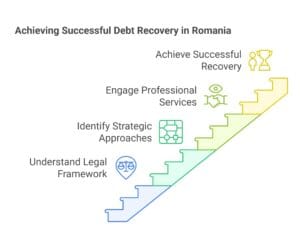
- Debt collection in Romania can be a complex process, but it can be simplified with the right guidance.
- A professional cross-border debt collection agency can help you navigate the complexities of debt collection in Romania.
- International debt recovery services can provide you with the necessary support and guidance throughout the process.
- A cross-border debt collection agency can help you recover your debts and provide you with the necessary support and guidance.
- The average timeline for the payment ordinance procedure in Romania is approximately 3 months.
- The stamp duty for filing a payment ordinance is RON 200 (approximately EUR 40).
- Courts are required to issue a decision within 45 days from the filing of the application for a payment ordinance.
Understanding Cross-Border Debt Collection in Romania
Dealing with debt collection in Romania requires knowing the laws and process.
Debt recovery across countries can be tricky.
But, understanding local laws helps you manage the process better.
In Romania, debts can’t be collected after 3 years, as debtors can claim “prescription.”
But, you can stop or reset this time limit.
This includes written confirmations from debtors, starting legal actions, or making partial payments.
Romania’s debt collection process is governed by many laws.
Often, debts are settled outside of court.
Success rates for enforcing judgments in Romania vary.
To boost success chances, get help from specialized lawyers in Romania, Bucharest.
Knowing Romania’s debt laws and process can help in recovering debts across countries.
| Debt Collection Stage | Success Rate | Cost |
|---|---|---|
| Out-of-court settlement | 70% | 5-10% of claim amount |
| Legal proceedings | 50% | 10-15% of claim amount |
Legal Framework for International Debt Recovery
Understanding the legal framework is key when dealing with cross-border debt recovery.
In Romania, the rules are complex but manageable with the right help.
A debt collection law firm in Europe can offer valuable support.
The European Union’s rules greatly influence debt recovery laws.
For example, the European small claims procedure helps recover debts up to EUR 2,000 across EU countries.
A Romanian debt collection company can assist in using this procedure to efficiently collect debts.
Important aspects of Romania’s debt recovery laws include:
- The new Romanian Civil Procedure Code, which updated debt collection rules;
- The option to start debt recovery through common law trial, Ordinance of Payment, or a special low-value claim procedure;
- The need to know about stamp duty and court fees for different recovery methods.
In summary, Romania’s debt recovery laws are detailed, and businesses need expert help.
By understanding these laws and working with a Romanian debt collection Law Office, businesses can increase their chances of successful debt recovery.
| Debt Recovery Procedure | Applicable Debt Value | Court Fees |
|---|---|---|
| Common Law Trial | No limit | Variable |
| Ordinance of Payment | No limit | RON 200 |
| Small Claims Procedure | Less than RON 10,000 | Lower than Common Law Trial |
The Romanian Debt Collection Process
Understanding the debt collection process in Romania is key to efficiently recover unpaid debts.
The process includes several steps, from initial assessment to court proceedings.
It’s important to follow the debt collection laws in Romania to recover debts.
The first step is an initial assessment of the debt.
The creditor checks if the debt is valid and if the debtor can pay.
This step helps decide the best way to recover the debt.
Sometimes, pre-legal steps can help without going to court.
Key Steps in the Debt Collection Process
- Initial assessment and documentation: gathering all relevant information about the debt and the debtor.
- Pre-legal collection procedures: attempting to recover the debt through negotiation and communication with the debtor.
- Court proceedings: taking the case to court if the pre-legal procedures are unsuccessful.
The debt collection laws in Romania guide the recovery process.
The European small claims procedure makes cross-border debt recovery easier within the EU.
By following the process and laws, creditors can improve their chances of successful debt recovery.
Strategic Approaches to Cross-Border Debt Recovery
When dealing with international debt recovery, it’s key to use smart strategies.
This boosts the chances of getting the debt back.
Using cross-border debt recovery services helps tackle the challenges of collecting debts abroad.
A debt collection Law Firm in Romania with international experience is very helpful.
Important strategies include amicable debt recovery and using technology.
Amicable recovery saves money and keeps relationships good.
Knowing the local laws and culture of the debtor’s country is also vital.
In Romania, for example, there are rules for small claims and common law procedures.
Creditors can join insolvency proceedings by registering assets and liabilities.
With the right strategies and a good debt collection agency, businesses can recover debts more effectively.
Enforcement of Foreign Judgments in Romania
Understanding how to enforce foreign judgments in Romania is key for businesses.
This involves recognizing and executing foreign court decisions.
Romania, being part of the European Union, follows EU rules like Regulation (EU) No 1215/2012.
This makes it easier to enforce judgments across the EU.
For foreign judgments to be recognized in Romania, there must be a mutual agreement.
The Romanian Civil Procedure Code handles judgments from outside the EU.
A court review checks if the judgment was fair and follows Romanian laws.
Key Considerations for Enforcement
- Reciprocity between Romania and the issuing country;
- Compliance with Romanian public policy;
- Procedural fairness in the foreign judgment;
- Execution procedures, including asset seizure and garnishment of wages.
Enforcing foreign judgments in Romania can help recover debts efficiently.
But, it’s important to know the legal steps well.
Getting legal help in Romania and having all the right documents is vital.
This way, businesses can handle debt collection across borders better and avoid risks.
Out-of-Court Settlement Options
Dealing with debt collection in Romania can be easier without going to court.
Debt settlement options like negotiation and mediation can help.
These methods aim to solve disputes peacefully.
They also reduce the need for long and expensive legal battles.
In Romania, creditors can enforce debts outside of court for non-real estate assets.
This includes things like equipment or inventory.
The process is usually quicker, taking less than a month, making it more efficient.
Out-of-court settlements have many benefits.
They are cheaper, faster, and help keep business relationships strong.
Using negotiation and mediation, creditors can get their money back while keeping things friendly.
This way, they avoid the high costs and time of court cases.
For the best results, creditors should work with a professional debt collection agency or lawyer.
These experts know how to handle the process and talk to debtors.
They help find agreements that work for everyone.
This way, creditors can get their money back quickly and keep their business relationships intact.
Professional Debt Collection Services in Romania
Dealing with unpaid debts in Romania requires professional help.
Debt collection lawyers offer efficient recovery solutions.
They have local knowledge and can handle international cases too.
Professional services bring expertise in local laws and a network of professionals.
They can tackle complex cases.
When using professional debt collection in Romania, consider these points:
* The time limit for business debts is 5 years.
* Late payments can hurt cash flow, affecting growth.
* Romanian companies must file annual accounts within 120 to 150 days after the financial year ends.
Using these services can boost debt recovery chances in Romania.
Preventive Measures for International Business
When you take your business global, it’s key to avoid debt collection problems.
You need to manage risks well.
Debt collection prevention and risk management are vital.
They help keep your cash flow smooth and your business safe.
To prevent debt issues, check your clients’ credit thoroughly.
Make sure payment terms are clear.
Keep an eye on what you’re owed.
Working with a local partner or a debt collection lawyer can also help.
It’s also important to know the local laws and rules.
For example, Romania’s Small Claims Procedure can help you get debts back quickly.
By being proactive, you can protect your business and aim for long-term success.
| Country | Debt Recovery Rate |
|---|---|
| Romania | Approximately 40% |
By using these preventive steps and staying informed, you can lower debt collection risks.
This way, your international business can thrive.
Time Limitations and Statutory Considerations
When dealing with debt collection in Romania, knowing the time limits and laws is key.
You must act quickly to increase your chances of getting the debt back.
In Romania, most debts have a three-year limit to be collected.
It’s vital to start the process within this time to get the best results.
There are other laws you need to know about too.
For example, in Romania, you can only get back legal costs if you’ve already paid them.
The court fees can also be different from what you’re used to.
Many debt collection agencies work in Romania, helping creditors with lots of debts.
Some important things to remember about debt collection in Romania include:
- Time limitations for debt collection: taking action within the three-year statute of limitations is key for success;
- Statutory considerations: knowing the legal framework and costs is essential;
- Documentation requirements: having all the right documents can make the recovery process smoother.
By understanding the time limits and laws for debt collection in Romania, you can act fast to recover your debts.
Knowing the specific rules in Romania is important to get the best outcome.
Technology and Modern Collection Methods
Technology is changing debt collection a lot. New methods are making it faster and better.
Tools like artificial intelligence and data analytics help a lot.
In Romania, digital banking is getting popular.
Now, 60% of banking services are online. This makes talking to creditors and debtors easier and safer.
Modern ways like mobile reminders and push notifications help too.
They make it more likely for people to pay back on time.
Some interesting facts about digital banking in Romania are:
- 70% of Romanians use contactless bank cards;
- 65% of Romanians access banking services through mobile banking apps;
- 53% of Romanians utilize internet banking services.
Technology in debt collection is growing fast.
The global market for debt collection software is expected to double by 2026.
We’ll see even more new ways to make debt recovery better.
Conclusion: Securing Your Cross-Border Debt Recovery in Romania
When dealing with cross-border debt recovery in Romania, a strategic plan is key.
You need to understand the local laws and best practices.
This approach helps in successfully recovering debts.
Romanian law offers several ways for creditors to act.
From early collection efforts to court actions, there are options.
Working with legal experts who know the Romanian legal system well is very helpful.
Also, teaming up with top debt collection agencies in Romania can boost your success rate.
It’s important to watch out for time limits, document needs, and legal rules.
By focusing on these, you can increase your chances of success.
This ensures you get your cross-border debt back in Romania.
FAQ
What is the legal framework for cross-border debt collection in Romania?
Romania’s laws for collecting debts from other countries are complex.
It’s important for businesses to understand these laws to collect debts well.
What are the common challenges in cross-border debt collection in Romania?
Collecting debts across borders in Romania can be tough.
Language and cultural differences, legal system variations, and finding debtors are big challenges.
What is the Romanian debt collection process like?
The process in Romania starts with an initial check.
Then, there are steps before court and possible court actions.
Knowing this helps businesses get their money back.
How can businesses enforce foreign judgments in Romania?
To enforce judgments from other countries in Romania, you need to get the foreign decision recognized.
Then, you follow execution steps, keeping in mind time and cost.
It’s a complex process.
What are the out-of-court settlement options for debt collection in Romania?
Businesses can try mediation or negotiation to solve debt issues without court.
These methods can be effective in Romania.
How can professional debt collection services in Romania assist businesses?
Professional services in Romania offer local knowledge and help with the legal side.
They also find cost-effective ways to help businesses get their money back.
What are the preventive measures for international businesses to avoid debt collection issues?
To avoid debt problems, businesses can take steps like preventing debt and managing risks.
These actions help keep debt issues away.
What are the time limitations and statutory considerations for debt collection in Romania?
Businesses must know the time limits and what documents are needed for debt collection in Romania.
This knowledge helps in recovering debts efficiently.
How can technology and modern collection methods help with cross-border debt recovery in Romania?
Technology and new methods, like AI and data analytics, can make debt recovery in Romania better.
They help businesses get their money back more easily and well.

Foreign Judgments in Romania: Recognition & Enforcement
Foreign Judgments in Romania: Recognition & Enforcement
Ever thought about how a foreign court’s decision could affect your rights in Romania?
Recognizing and enforcing foreign judgments in Romania is a key part of International Law.
It impacts both businesses and individuals.

Romania has a system for dealing with foreign court decisions.
It respects international rulings while protecting its own laws.
Knowing how Romanian rules work is vital, whether you face a money judgment, a mandatory order, or a decision from another EU country.
When Romania recognizes foreign court decisions, it looks at several things.
These include if the judgment is final, if the court had the right to make it, and if it goes against Romanian public policy.
To enforce foreign judgments in Romania, you need to understand both local and international laws well.
Key Takeaways
- Romania recognizes judgments from both contentious and non-contentious proceedings
- Full recognition applies to personal status decisions and those meeting specific criteria
- Finality of the foreign decision is crucial for recognition in Romania
- Documents must be translated and legalized for the recognition process
- Recognition can be refused on grounds of public policy violations or jurisdictional issues
- EU judgments benefit from a simplified enforcement procedure in Romania
- Non-EU judgments require an exequatur procedure under Romanian law
Legal Framework for Foreign Judgment Recognition in Romania
Romania has a complex legal system for recognizing foreign judgments.
It combines domestic laws, international agreements, and EU rules.
Knowing these parts is key to understanding how judgments are recognized in Romanian courts.
Domestic Laws and Regulations
The Civil Procedure Code (Law 134/2010) and the Civil Code (Law 287/2009) are the main laws.
They set the rules for recognizing and enforcing foreign judgments.
These laws explain the steps, what’s needed, and when foreign judgments can be accepted or rejected in Romania.
International Conventions and Bilateral Treaties
Romania follows the principle of comity of nations through international agreements.
It’s part of the Lugano Convention and the Hague Conventions on Civil Procedure and Choice of Court Agreements.
Romania also has treaties with about 17 countries, like Albania, Algeria, Russia, China, and Cuba.
These treaties help in recognizing judgments between countries.
EU Regulations Applicable in Romania
Being an EU member, Romania follows EU rules for recognizing judgments from other EU countries.
The Brussels Ibis Regulation (1215/2012) makes it easier to enforce judgments within the EU.
Brussels II (2201/2003) deals with family law matters.
Recognizing foreign arbitral awards in Romania also has its own rules.
This system ensures Romania balances recognizing foreign judgments with its legal rights and international duties.
Competent Courts for Foreign Judgment Cases
In Romania, second-degree courts called tribunals deal with foreign judgments.
The court’s role depends on the case type and where the defendant is.
For cases about recognizing foreign judgments in Romania, the tribunal in the defendant’s district has the power.
If the defendant is nowhere to be found or outside Romania, the Bucharest Tribunal steps in.
For enforcing foreign judgments, the tribunal in the county where the action happens has the authority.
This setup makes sure foreign judgment cases are handled well in Romania.
| Case Type | Competent Court | Jurisdiction Criteria |
|---|---|---|
| Recognition | Tribunal | Defendant’s district |
| Recognition (Unknown/Foreign Defendant) | Bucharest Tribunal | Default jurisdiction |
| Enforcement | Tribunal | County of forced execution |
The Romanian civil procedure has a clear way to deal with foreign judgments.
It makes sure cases are handled well and follow international standards.
Recognition vs. Enforcement: Understanding the Distinction
When dealing with foreign judgments in Romania, it’s crucial to understand the difference between recognition and enforcement.
These two processes play distinct roles in enforcing international judgments in Romania.
Effects of Recognition
Recognition gives a foreign judgment res judicata status in Romania.
This means the court acknowledges the decision as final and binding.
Once recognized, the judgment carries the same weight as a Romanian court decision.
It prevents parties from re-litigating the same issues in Romanian courts.
Purpose of Enforcement Proceedings
Enforcement goes a step further than recognition.
It allows the winning party to take action based on the judgment.
Through enforcement, you can collect money owed or compel specific actions.
The process turns the foreign ruling into an enforceable title in Romania.
While recognition and enforcement often go hand-in-hand, they serve different purposes.
Recognition alone doesn’t allow forced execution. Enforcement is necessary to take concrete steps against the losing party.
Understanding these distinctions is key when dealing with foreign judgments in Romanian legal proceedings.
Types of Enforceable Foreign Judgments in Romania
Romania accepts different kinds of foreign judgments for enforcement.
This is key for recovering debts across borders.
Knowing these types helps you enforce foreign money judgments in Romania better.
Monetary Judgments
Foreign money judgments are usually enforceable in Romania.
These include orders for specific payments or financial compensation.
Romanian courts enforce these judgments if they meet legal standards and don’t go against public policy.
Mandatory and Prohibitory Orders
Romanian courts also enforce mandatory and prohibitory orders from abroad.
This includes injunctions, specific performance orders, or restraining orders.
These judgments help with effective debt recovery across borders.

Treatment of Default Judgments and Punitive Damages
Default judgments and punitive damages are not automatically banned in Romania.
They might be reviewed for public policy violations.
Romanian courts carefully check these judgments, focusing on fairness and legal standards in debt recovery cases.
| Judgment Type | Enforcement in Romania |
|---|---|
| Monetary Judgments | Generally enforceable |
| Mandatory Orders | Recognized and enforced |
| Prohibitory Orders | Recognized and enforced |
| Default Judgments | Subject to scrutiny |
| Punitive Damages | Carefully assessed |
Formal Requirements for Recognition and Enforcement
The exequatur procedure in Romania has clear rules in the civil procedure code.
To get a foreign judgment recognized and enforced, you must follow strict rules.
Your request must include important details like the names of the parties, claims, legal reasons, and evidence.
Your signature as the submitting party is also key.
- Copy of the foreign judgment
- Proof of judgment finality
- Evidence of proper notification to the counterparty
To enforce the judgment, you need to show it’s enforceable in the country where it was made.
Depending on where it came from, you might need a Romanian translation and authentication or an apostille.
| Document Type | Requirement |
|---|---|
| Foreign Judgment Copy | Authenticated |
| Proof of Finality | Official certification |
| Notification Evidence | Court-issued document |
| Enforceability Proof | Issuing state certification |
Remember, judgments about personal status can be recognized directly if they involve citizens of the issuing state.
The Romanian civil procedure code has specific time limits for enforcement, depending on the rights involved.
Recognition and Enforcement of Foreign Judgements Romania: Process Overview
The process of recognizing and enforcing foreign judgments in Romania is key for working together across borders.
It has specific steps and rules to make sure legal actions are followed well.
Application Procedure
To start the recognition and enforcement process, you need to file a request with the right Romanian tribunal.
The court checks if everything is in order without looking at the case’s details. You must say if you want recognition, enforcement, or both.
Required Documentation
When you apply, you must give:
- A copy of the foreign judgment;
- Proof that the judgment is final;
- Proof of proper service;
- Certified translations of all documents.
Timeframes and Deadlines
The time limit for enforcing a judgment in Romania is usually 3 years. For property rights, it’s 10 years.
These start when the foreign judgment is final.
Romanian courts often favor recognizing foreign judgments.
This helps in enforcing laws across borders efficiently.
But, all requirements must be met and no valid reasons for refusal can exist.
Grounds for Refusal of Foreign Judgment Recognition
Romanian courts check foreign judgments carefully before they are recognized.
They look at several important factors.
This makes sure the judgments follow private international law and the principle of reciprocity.
Public Policy Violations
Courts might not recognize a judgment if it goes against Romanian public policy.
This happens when a judgment breaks key legal rules or moral standards in Romania.
Jurisdictional Issues
Recognition can be refused if the foreign court didn’t have the right to make the judgment.
Romanian courts check if the court had the authority to make the judgment based on international law.
Due Process Concerns
Judgments made without due process rights are often rejected.
This includes cases where people weren’t fairly notified or given a chance to defend themselves.
Other reasons for refusal include judgments that conflict with Romanian laws or previous decisions from other countries.
It’s key to remember that Romanian courts don’t judge the merits of foreign judgments.
They only check if the judgments meet the recognition conditions.
| Refusal Ground | Description | Example |
|---|---|---|
| Public Policy Violation | Judgment contradicts fundamental Romanian legal principles | Enforcing a polygamous marriage contract |
| Jurisdictional Issue | Foreign court lacked proper authority to make judgment | Ruling on Romanian real estate by non-Romanian court |
| Due Process Violation | Parties denied fair notice or opportunity to present case | Defendant not notified of proceedings against them |
| Conflicting Judgments | Incompatibility with existing Romanian or prior foreign decisions | Contradictory rulings on child custody between countries |
Enforcement of EU Member State Judgments in Romania
Romania has a simple way to enforce judgments from other EU countries.
This is thanks to the EU Brussels Ibis Regulation.
It makes it easier to enforce judgments across the European Union.
Applicability of EU Regulation 1215/2012
The EU Brussels Ibis Regulation, also known as Regulation (EU) 1215/2012, helps enforce judgments from EU courts in Romania.
It removes the need for a formal declaration of enforceability.
This makes the process quicker and more efficient.
Simplified Enforcement Procedure
Under this regulation, a judgment from an EU Member State must be enforced in Romania like a Romanian court judgment.
The steps are easy:
- Provide a copy of the judgment
- Submit a certificate of enforceability
- Include translations if necessary
Romanian courts can only refuse enforcement in a few cases.
These include public policy violations, due process concerns, or judgments that contradict others.
They cannot question the original court’s jurisdiction or the case’s merits.
This simplified process under the EU Brussels Ibis Regulation makes enforcing judgments between EU member states easier.
It leads to faster and more predictable results for creditors trying to enforce judgments across EU borders.
Recognition and Enforcement of Non-EU Judgments
Foreign court rulings in Romania have their own rules.
This includes judgments from the UK after Brexit.
The Romanian Civil Procedure Code explains how to handle these cases, focusing on working together internationally.
Exequatur Procedure under Romanian Civil Procedure Code
The exequatur process in Romania needs the foreign judgment to be final.
Your application must include important documents and details.
The Romanian court checks these without looking into the judgment’s details.
Reciprocity Requirements
Recognizing non-EU judgments also depends on fairness between Romania and the issuing state.
The court makes sure the issuing court had the right to make the judgment.
Remember, foreign court rulings in Romania can be refused if they go against public policy or due process.
Conclusion
Understanding how to deal with foreign judgments in Romania is complex.
The rules are set out in the Code of Civil Procedure and international agreements.
These rules help ensure the law is followed and cooperation between countries is promoted.
The process of recognizing foreign judgments involves detailed steps.
These steps include checking if the judgment is final and if it goes against local laws.
A lawyer in Romania can help navigate these steps, making sure everything is done right.
EU laws and treaties make it easier for judgments to be recognized in Romania.
This helps European citizens and businesses. It also makes cross-border legal issues less complicated.
Dealing with foreign judgments in Romania is a detailed process.
It involves checking many legal rules.
Our team of lawyers in Romania know these rules and this is considered to be the key for fair and smooth international legal actions.
FAQ
What legal framework governs the recognition and enforcement of foreign judgments in Romania?
In Romania, laws like Book VII, Title III of the Civil Procedure Code, and Emergency Ordinance 119/2006 play key roles.
The Civil Code’s Book VII also has important provisions.
Romania also follows international treaties and EU regulations, such as the Lugano Convention and Brussels Ibis.
Which courts in Romania have jurisdiction over cases involving the recognition and enforcement of foreign judgments?
Tribunals, or second-degree courts, handle these cases.
For recognition, the tribunal in the defendant’s district is responsible.
For enforcement, the tribunal in the county where execution happens is in charge.
What is the difference between recognition and enforcement of a foreign judgment in Romania?
Recognition makes the foreign judgment final and binding.
Enforcement allows the creditor to take action against the debtor.
Recognition alone doesn’t allow for execution, but enforcement does.
What types of foreign judgments can be enforced in Romania?
Romania can enforce monetary judgments and certain orders.
Default judgments and punitive damages might be tricky, as they could violate public order if they’re not fair.
What formal requirements must be met for a foreign judgment to be recognized and enforced in Romania?
You need a copy of the judgment and proof it’s final.
You also need to show the debtor was notified and that the judgment can be enforced where it was made.
Documents might need translation and authentication.
What are the potential grounds for refusing recognition and enforcement of a foreign judgment in Romania?
Recognition and enforcement can be refused if the judgment goes against Romanian public policy.
Issues with jurisdiction or due process can also be grounds.
Incompatibility with a Romanian judgment or another state’s judgment is another reason.
How does the procedure for recognizing and enforcing judgments from EU member states differ from that for non-EU judgments in Romania?
EU judgments have a simpler process under Regulation 1215/2012.
Non-EU judgments, including post-Brexit UK judgments, need the exequatur procedure.
This involves an application and checking if the judgment meets the necessary conditions.
What is the process for recognition and enforcement of foreign judgments in Romania?
The process for recognition and enforcement of foreign judgments in Romania involves several steps:
1. Filing a request for recognition with the competent Romanian court.
2. Providing the necessary documentation, including the original foreign judgment and its certified translation.
3. The court examines the conditions for recognition as stipulated in Romanian law.
4. If the conditions are met, the court issues a decision granting recognition and enforcement.
5. Once recognized, the foreign judgment can be enforced in Romania through the standard enforcement procedure. This process is governed by the Romanian Private International Law and the Civil Procedure Code.
It’s important to note that Romania is also party to various international conventions that may affect this process for judgments from certain countries.
What are the main conditions for recognition of a foreign judgment in Romania?
The main conditions for recognition of a foreign judgment in Romania include:
1. The judgment must be final and enforceable in the country where it was rendered.
2. The foreign court must have had jurisdiction according to Romanian private international law principles.
3. The parties must have had a fair trial opportunity in the foreign court proceedings.
4. The judgment must not conflict with a previous Romanian court judgment on the same matter.
5. The recognition and enforcement must not violate Romanian public order.
6. The judgment must not have been obtained fraudulently.
7. The matter should not fall under the exclusive jurisdiction of Romanian courts.
These conditions are assessed by the Romanian court during the recognition and enforcement process.

An Overview of Litigation in Romania
An Overview of Litigation in Romania: Rules, Laws and Regulations Explained
Litigation is the process of taking someone to court in order to resolve a legal dispute.
If you have been wronged and are looking to sue someone in Romania, it is important to understand the rules, laws, and regulations that apply in this country.
This overview will provide you with some basic information about litigation in Romania so that you can make informed decisions about your case.
The first step in any litigation case is to determine whether you have grounds for a lawsuit.
In Romania, there are three general categories of cases that can be brought to court: civil cases, criminal cases, and administrative cases.
- Civil cases typically involve disputes between two private parties, such as a contract dispute or a personal injury claim.
- Criminal cases are brought by the state against an individual accused of committing a crime.
- Administrative cases are usually brought by the government against a private party, such as a company that is violating environmental regulations.
Once you have determined that you have grounds for a lawsuit, the next step is to find a lawyer who can represent you in court.
It is important to find a Romanian lawyer who is familiar with the specific type of case that you are bringing, as well as the Romanian legal system.
Once you have retained a lawyer, they will begin gathering evidence and preparing your case for trial.
If your case goes to trial, it will be heard by a panel of judges.
The number of judges on the panel will depend on the type of case being heard.
In most civil and criminal cases, there will be three judges.
In administrative cases, there may be only one judge or a panel of multiple judges.
The judges will hear arguments from both sides and then render a decision.
If the decision is in your favor, the other party will be ordered to take some kind of action, such as paying damages or returning property.
If the decision is not in your favor, you may appeal the decision to a higher court.
Litigation can be a lengthy and complicated process, so it is important to understand the rules and regulations that apply in Romania before beginning your case.
By understanding the basics of the Romanian legal system, you can make informed decisions about your case and choose the best course of action for your particular situation.
Types of Litigation in Romania
There are many different types of litigation that can take place in Romania.
Some of the most common include:
1. Civil Litigation: This type of litigation involves one party suing another for damages that have been inflicted. This can be in the form of physical or emotional damages, financial damages, or even property damage.
2. Commercial Litigation: This type of litigation occurs when two businesses are in dispute with one another. This can be over contracts, disagreements on products or services, or even intellectual property disputes.
3. Criminal Litigation: This type of litigation is brought about when someone has been accused of committing a crime. This can be anything from a minor offense to a major felony.
4. Employment Litigation: This type of litigation occurs when there is a dispute between an employer and an employee. This can be over things like wages, hours, working conditions, or even wrongful termination.
5. Family Litigation: This type of litigation is usually between family members who are in dispute with one another. This can be over things like child custody, visitation rights, or even property division.
6. Personal Injury Litigation: This type of litigation occurs when someone has been injured due to the negligence of another person. This can be in the form of a car accident, slip and fall, or even medical malpractice.
7. Real Estate Litigation: This type of litigation occurs when there is a dispute over real estate. This can be over things like boundary disputes, easements, or even title disputes.
8. Probate litigation: This type of litigation occurs when there is a dispute over someone’s will or estate. This can be over things like the distribution of assets, the validity of the will, or even challenges to the executor of the estate.
No matter what type of litigation is taking place, it is always important to have an experienced Romanian attorney by your side.
Litigation can be a complex and time-consuming process, so it is important to have someone who knows the ins and outs of the legal system.
If you are involved in any type of litigation in Romania, contact an experienced attorney today.
Courts and Litigation in Romania
In Romania, the court system is divided into four levels:
- the first instance courts,
- the appellate courts,
- the high court of cassation and justice, and
- the constitutional court.
- The first instance courts are the courts of general jurisdiction and are divided into three categories: the county courts, the regional courts, and the tribunals.
The county courts have territorial jurisdiction over a specific county, while the regional courts have territorial jurisdiction over a group of counties. The tribunals are specialized courts that have jurisdiction over certain types of cases, such as labor disputes or cases involving minors.
- The appellate courts are the second level of the Romanian court system.
They consist of the court of appeal and the high court of cassation and justice. The court of appeal hears appeals from the first instance courts, while the high court of cassation and justice hears appeals from the appellate courts.
- The constitutional court is the highest level of the Romanian court system and is responsible for ensuring that the Constitution is respected.
Litigation in Romania is governed by the Civil Procedure Code, which regulates all aspects of civil procedure, from filing a lawsuit to executing a judgment.
The Code is divided into five parts:
- general provisions,
- procedural principles,
- parties to the proceedings,
- special proceedings, and
- execution of judgments.
Under Romanian law, anyone who has been harmed by another person or entity has the right to sue for damages.
If the person or entity against whom the suit is filed is located in Romania, the case will be heard by a Romanian court.
If the person or entity is located in another country, the case may be heard by a Romanian court if Romania has a bilateral or multilateral agreement with that country.
Romanian law recognizes two types of damages: pecuniary damages and non-pecuniary damages.
Pecuniary damages are those that can be quantified in monetary terms, such as loss of income or medical expenses.
Non-pecuniary damages are those that cannot be quantified in monetary terms, such as pain and suffering.
Starting a Litigation Case in Romania
If you are thinking about starting a litigation case in Romania, there are a few things you should know.
Romania is a civil law country, which means that the legal system is primarily based on written laws, as opposed to common law, which relies more on judicial precedent.
This can make it a little bit more difficult to sue someone in Romania, but it is not impossible.
There are a few steps you will need to take in order to start your litigation case in Romania.
First, you will need to find a lawyer who is licensed to practice in Romania and who has experience with litigation cases.
It is important to find a lawyer who you feel comfortable working with and who you feel confident will represent you well.
Once you have found a lawyer, you will need to gather all of the evidence you have to support your case.
This may include witness statements, documents, photographs, or anything else that will help to prove your case.
Once you have gathered all of your evidence, your lawyer will draft a complaint and file it with the court.
After your complaint has been filed, the court will set a date for a hearing.
At the hearing, both sides will present their evidence and arguments.
The judge will then make a decision on the case. If the judge decides in your favor, you will be awarded damages.
If the judge decides against you, you may appeal the decision.
Starting a litigation case in Romania can be a bit of a challenge, but it is not impossible.
With the help of an experienced lawyer, you can gather the evidence you need to support your case and present your argument in court.
Romania Litigation Process and Procedures
The Romanian legal system is based on the civil law tradition.
This means that laws are codified and judges are bound by legal precedent.
The main source of law is the Constitution of Romania, which was adopted in 1991.
Romania is a member of the European Union and its legal system is therefore subject to the influence of European Union law.
The Romanian court system is hierarchical.
- The courts of first instance are the courts of law, which hear criminal and civil cases.
- The courts of appeal are the tribunals, which hear appeals from the courts of law.
- The High Court of Cassation and Justice is the court of final appeal and review.
- The Constitutional Court of Romania is the body competent to adjudicate on the constitutionality of laws and regulations.
Romania has a dualist legal system, which means that international treaties are not automatically incorporated into domestic law.
However, once a treaty is ratified by Romania, it becomes part of Romanian law.
The Romanian legal system recognizes the principle of judicial independence.
Judges are appointed by the President of Romania, on the proposal of the Superior Council of Magistrates, and they can only be removed from office by presidential decree, for reasons of misconduct.
The Romanian judiciary is divided into three types of courts:
- civil courts,
- criminal courts and
- military courts.
Civil courts deal with disputes between private individuals, companies or other legal entities.
These disputes can be either over lawsuits personal in nature, such as divorce or child custody cases, or they can be about money, property or contracts.
Criminal courts deal with cases involving alleged violations of the criminal law.
These cases can be either misdemeanors, which are less serious offenses punishable by a fine or up to 60 days in jail, or felonies, which are more serious offenses punishable by a prison sentence of more than one year.
Military courts have jurisdiction over cases involving members of the Romanian armed forces.
These cases can involve alleged violations of military discipline or crimes committed while on active duty.
The Romanian legal system provides for the right to a fair trial.
This includes the right to counsel, the right to be presumed innocent until proven guilty, the right to a public trial and the right to appeal a decision to a higher court.
If you are involved in a legal dispute in Romania, it is important to understand the Romanian litigation process and procedures.
This process can be complex and time-consuming, so it is important to seek the advice of a qualified Romanian lawyer.
Representing Yourself vs. Hiring a Lawyer in Romania
There are many factors to consider when deciding whether to represent yourself or hire a lawyer in Romania.
The most important factor is the severity of your charge.
If you are facing a serious charge, it is probably in your best interest to hire a lawyer. If you are facing a less serious charge, you may be able to represent yourself.
Another factor to consider is your financial situation.
If you can afford to hire a lawyer, it may be worth it to do so. If you cannot afford a lawyer, you may have no choice but to represent yourself.
If you decide to represent yourself, there are a few things you should keep in mind.
First, you will be held to the same standard as a lawyer.
This means you will need to know the law and procedures just as well as a lawyer would.
Second, it is important to be respectful to the court and to those around you.
Third, you should be prepared for the possibility that you may lose your case.
If you decide to hire a lawyer, you should make sure to choose one that is experienced in Romanian law.
You should also make sure to ask for references and to meet with the lawyer before hiring them.
Possible Outcomes of Litigation in Romania
When considering whether to sue someone in Romania, it is important to weigh the potential outcomes of the litigation.
Though no legal case is ever guaranteed, understanding the possible outcomes of your case can help you make an informed decision about whether or not to move forward with legal action.
The first potential outcome is, of course, that you could win your case.
If the court finds in your favor, you will be awarded whatever damages or relief you are seeking.
This is the best-case scenario and, naturally, what everyone who decides to sue hopes for.
However, it is also possible that you could lose your case.
If the court does not find in your favor, you will not be awarded any damages or relief and will likely have to pay the legal fees of the person or entity you sued.
This is obviously not the ideal outcome, but it is a possibility that must be considered.
There is also a third potential outcome, which is that the case could be settled out of court.
This means that you and the person or entity you are suing come to an agreement outside of court and avoid having to go through the litigation process. This can be a good outcome if you are able to reach an agreement that is satisfactory to both parties.
Of course, these are not the only possible outcomes of litigation in Romania.
Every case is different and the specific circumstances will ultimately determine the outcome.
However, these are some of the most common possibilities that you should be aware of before deciding to sue someone in Romania.
Challenges of Litigation in Romania
Litigation is the process of taking legal action against another person or company.
It can be a long and difficult process, especially in a country like Romania where the legal system is not as developed as in other parts of the world.
There are many challenges that you will face when litigating in Romania, but you can overcome them.
One of the biggest challenges is the language barrier.
Many court documents are only available in Romanian, so you will need to hire a translator if you do not speak the language. This can be expensive and it can be hard to find a translator you trust.
The legal system in Romania is also very different from what you are used to in the other countries. The court system is much slower and it can take years for your case to be finally resolved. This can be very frustrating, but you need to be patient.
Another challenge you may face is the lack of reliable witnesses. In Romania, it is not uncommon for witnesses to be paid off by the party they are testifying against. This makes it very difficult to get accurate information about what really happened.
Despite all these challenges, it is still possible to win your case in Romania.
You just need to be prepared for the difficulties you may face and make sure you have a good Romanian lawyer on your side.
Mediation and Alternative Dispute Resolution in Romania
Today, mediation and alternative dispute resolution are becoming more popular in Romania.
Mediation is a process where two parties meet with a neutral third party to try to reach an agreement. This is an effective way to resolve disputes without going to court.
Alternative dispute resolution (ADR) is a process where two parties try to reach an agreement without going to court. This can be done through mediation, arbitration, or another process. ADR is often faster and cheaper than going to court.
There are many benefits to mediation and ADR.
- Mediation can help parties resolve their differences without the need for a lengthy and expensive court battle.
- It can also help parties to better understand each other’s position and to come up with creative solutions that they may not have thought of on their own.
- In addition, mediation and ADR can help to preserve relationships. This is especially important in cases where the parties will need to continue to work together after the dispute is resolved, such as in business or family matters.
If you are involved in a dispute, you should consider mediation or ADR as a way to resolve the issue.
By contacting a local lawyer or legal aid organization, individuals can get the help they need to protect their rights.
Litigation in Romania- FAQ
1. What is litigation and how does it work in Romania?
Litigation refers to the legal process used to settle disputes through a court of law in Romania.
The Romanian legal system follows a civil law framework, and litigation involves the resolution of civil or commercial matters through the courts.
It is governed by the Romanian Civil Procedure Code, which sets out the procedural rules for court cases.
2. Can foreign individuals or companies engage in litigation in Romania?
Yes, foreign individuals or companies can engage in litigation in Romania.
The Romanian legal system provides for the recognition and enforcement of foreign judgments, ensuring that a legal decision obtained in another country can be recognized and enforced in Romania.
However, specific procedures and requirements must be followed to initiate litigation as a foreign entity.
3. What is the role of a law firm in litigation?
A law firm plays a crucial role in litigation by providing legal representation and guidance to individuals or companies involved in a legal dispute.
They assist with preparing the necessary legal documents, advising on the applicable Romanian law, representing clients in court, negotiating settlements, and ensuring their clients’ best interests are protected throughout the litigation process.
4. How can I file an appeal in Romania?
To file an appeal in Romania, you need to follow the procedures set out in the Romanian Civil Procedure Code.
Generally, you will need to submit a written document called a “statement of appeal” to the relevant court within a specific timeframe. The appeal should clearly state the grounds on which you are challenging the court decision and provide supporting arguments and evidence.
5. What happens if I lose a court case in Romania?
If you lose a court case in Romania, you may be required to comply with the court decision, which usually includes fulfilling certain obligations or paying damages to the winning party.
The losing party may also be responsible for paying the legal fees and expenses incurred by both parties throughout the litigation process, unless otherwise determined by the court.
6. What is the role of the Court of Appeal and the High Court in Romania?
The Court of Appeal and the High Court are higher-level courts in Romania that hear appeals from lower courts and have the authority to review and decide on matters of law.
The Court of Appeal is the first instance of appeal, and its decisions are mandatory.

Debt Collection in Romania: How to Protect Your Interests and Rights as a Creditor
Debt Collection in Romania: Protect Your Interests and Rights as a Creditor
Debt collection in Romania is the process of pursuing and collecting unpaid debts from delinquent debtors, either through extrajudicial or judicial means. It is a vital part of credit management and risk mitigation for any business.
Sometimes your customers or clients may fail to pay their invoices on time, or even refuse to pay at all. This can cause serious cash flow problems, damage your reputation, and affect your relationships with other stakeholders. If you are a business owner or manager, you know how important it is to get paid for your products or services. That’s why you need to know how to recover your debts effectively and efficiently.
However, debt recovery can also be challenging and complex, especially if you are dealing with debtors in a different country, such as debt collection in Romania. Romania is a member of the European Union, but it has its own legal system, culture, and business practices that may differ from yours. You need to be aware of the regulations, procedures, and best practices for debt recovery in Romania, as well as the potential risks and opportunities involved.
In this article, we will provide you with the ultimate guide to debt recovery in Romania. We will cover the following topics:
- The legal framework and regulations for debt recovery in Romania
- The extrajudicial phase of debt recovery in Romania
- The judicial phase of debt recovery in Romania
- The best practices and tips for debt recovery in Romania
Debt collection in Romania: By the end of this article, you will have a better understanding of how to recover your debts in Romania effectively and efficiently. You will also learn how to avoid common pitfalls and mistakes, and how to protect your interests and rights as a creditor.
The Legal Framework and Regulations for Debt Collection in Romania
The first thing you need to know about debt collection in Romania is the legal framework and regulations that govern it. There are several sources of law that apply to debt recovery in Romania, such as:
- The Romanian Civil Code: This is the main source of law for civil matters, including contracts, obligations, and liabilities. It defines the rights and obligations of creditors and debtors, as well as the remedies available for breach of contract or non-payment of debts.
- The Romanian Civil Procedure Code: This is the main source of law for civil litigation, including debt collection lawsuits. It regulates the jurisdiction, competence, procedure, and enforcement of court judgments and orders.
- The Romanian Insolvency Law: This is the main source of law for insolvency and bankruptcy cases, including those involving debtors who are unable to pay their debts. It establishes the conditions, procedure, and effects of insolvency proceedings, as well as the rights and obligations of creditors, debtors, and insolvency practitioners.
- The Romanian Consumer Protection Law: This is the main source of law for consumer protection matters, including those involving consumer debts. It sets out the rules and principles for fair trade practices, consumer rights, and consumer disputes.
These sources of law are supplemented by various secondary legislation, such as decrees, orders, regulations, guidelines, and codes of conduct issued by relevant Romanian authorities or professional bodies.
As a creditor, you need to be familiar with these sources of law and how they apply to your specific case. You also need to comply with them when pursuing your debts in Romania.
Failure to do so may result in legal consequences, such as invalidity of your claim, dismissal of your lawsuit, or sanctions by the court or regulators.
The Extrajudicial Phase of Debt Collection in Romania
The second thing you need to know about debt collection in Romania is the extrajudicial phase. This is the phase where you try to recover your debts without involving the courts or other formal institutions. It is also known as the amicable phase or the pre-litigation phase.
The extrajudicial phase of debt recovery in Romania usually involves the following steps:
- Sending reminders: This is the first step you should take when your debtor fails to pay their invoice on time. You should send them a friendly reminder by email or phone call, informing them about their overdue payment and requesting them to pay as soon as possible. You should also keep a record of your communication with them.
- Sending demand letters: This is the second step you should take if your debtor does not respond to your reminders or still refuses to pay. You should send them a formal demand letter by registered mail or courier service, stating the amount and details of your claim, the deadline for payment (usually 15 days), and the consequences of non-payment (such as interest charges, legal action, or reporting to credit bureaus). You should also attach a copy of your invoice and any relevant documents (such as contracts or agreements) to support your claim.
- Sending notices of default: This is the third step you should take if your debtor does not comply with your demand letter or still disputes your claim. You should send them a notice of default by registered mail or courier service, declaring that they are in default of their obligation and that you reserve your right to take further action against them (such as initiating a lawsuit or an insolvency proceeding). You should also inform them about the possibility of reaching an amicable settlement or a payment plan, if you are willing to do so.
- Negotiating with the debtor: This is the fourth and final step you should take before resorting to judicial action. You should try to negotiate with your debtor in good faith and reach a mutually acceptable solution, such as a partial payment, a discount, a waiver, or a rescheduling of the debt. You should also document any agreement or arrangement you make with your debtor in writing and have it signed by both parties.
The extrajudicial phase of debt recovery in Romania is usually faster, cheaper, and more flexible than the judicial phase. It also helps you preserve your relationship with your debtor and avoid unnecessary conflicts. However, it also depends on the cooperation and willingness of your debtor to pay their debts. If your debtor is unresponsive, dishonest, or insolvent, you may need to escalate your case to the judicial phase.
The Judicial Phase of Debt Collection in Romania
The third thing you need to know about debt collection in Romania is the judicial phase. This is the phase where you involve the courts or other formal institutions to recover your debts. It is also known as the contentious phase or the litigation phase.
The judicial phase of debt recovery in Romania usually involves the following steps:
- Filing a lawsuit: This is the first step you should take if you decide to pursue your claim through legal action. You should file a lawsuit against your debtor at the competent court, depending on the amount and nature of your claim. You should also pay the court fees and attach all the relevant documents and evidence to support your claim.
- Obtaining a court order: This is the second step you should take after filing your lawsuit. You should wait for the court to examine your case and issue a court order, either granting or rejecting your claim. The court order may be issued after a hearing or without a hearing, depending on the type and complexity of your case.
- Enforcing the court order: This is the third and final step you should take after obtaining a court order. You should enforce the court order against your debtor, either by yourself or with the help of a bailiff or an enforcement agent. You should also monitor the enforcement process and collect your debt from your debtor’s assets or income.
The judicial phase of debt recovery in Romania is usually more effective, reliable, and enforceable than the extrajudicial phase. It also helps you protect your interests and rights as a creditor and obtain legal recognition for your claim. However, it also involves more time, money, and resources than the extrajudicial phase. It also exposes you to more risks and uncertainties, such as procedural delays, appeals, counterclaims, or insolvency proceedings.
The Best Practices and Tips for Debt Recovery in Romania
The fourth and final thing you need to know about debt recovery in Romania is the best practices and tips for debt collection in Romania. These are some of the recommendations and suggestions that can help you recover your debts in Romania more effectively and efficiently:
- Choose the right Romanian debt collection law office or Romanian attorney: If you need professional assistance or representation for debt recovery in Romania, you should choose a reputable and experienced debt collection attorney near you that can handle your case properly. You should also check their credentials, references, fees, and success rate before hiring them.
- Use online platforms and tools: If you want to save time and money for debt recovery in Romania, you should use online platforms and tools that can facilitate your communication, documentation, and verification of your claims. For example, you can use e-invoicing, e-signature, e-delivery, e-payment, or e-verification services that are available in Romania.
- Maintain good communication and documentation: If you want to avoid misunderstandings and disputes for debt collection in Romania, you should maintain good communication and documentation with your debtor throughout the process. You should also keep copies of all your correspondence, invoices, contracts, agreements, receipts, and evidence for future reference.
- Avoid common pitfalls and mistakes: If you want to prevent problems and complications for debt recovery in Romania, you should avoid common pitfalls and mistakes that can jeopardize your claim or lawsuit. For example, you should not send abusive or threatening messages to your debtor, ignore their legitimate complaints or objections, violate their privacy or data protection rights, or act in bad faith or dishonesty.
Debt collection in Romania can be challenging and complex, but it can also be rewarding and satisfying if you know how to do it properly. By following this ultimate guide to debt recovery in Romania, you will be able to recover your debts effectively and efficiently.