Changing shareholders in Romania 2026 legal guide showing business professionals, financial risks, and share transfer process illustration

Changing Shareholders in a Romanian Company: The 2026 Legal Guide

Changing Shareholders in a Romanian Company: The 2026 Legal Guide

TL;DR: Changing shareholders in a Romanian SRL requires a share transfer agreement, a shareholders’ resolution, an updated Articles of Association, and a Trade Register filing within 15 days. Since December 2025, Law 239/2025 adds a mandatory 15-day ANAF notification for any controlling stake transfer. From 1 January 2026, capital gains tax on direct share sales rises from 10% to 16%. Incomplete documents or missed deadlines can derail funding rounds and trigger significant penalties.

Romanian lawyers discussing corporate shareholder structure in a modern office

Strategic legal consultation for complex shareholder changes in Romanian SRLs.


📹 Video Guide: Changing Shareholders in Romania

Watch this comprehensive video guide covering the essentials of shareholder changes, share transfer procedures, and key legal considerations for Romanian companies in 2026.


Need Professional Help?

At Atrium Romanian Lawyers, we handle the entire shareholder change process — from drafting documents to Trade Register submission. We advise local clients and international investors on corporate governance, share transfers, and regulatory compliance.


What Does Changing Shareholders in a Romanian Company Actually Mean?

Earlier this year, one of our long-standing corporate clients came very close to losing an important investment deal. Not because of a financial problem or a contract dispute. Because one outdated name in a shareholder register stood between the company and a signed term sheet.

Changing shareholders in a Romanian SRL (societate cu răspundere limitată, or limited liability company) means transferring părți sociale (social parts, the Romanian term for ownership stakes) from one person or entity to another. This can happen through a sale, a gift, an inheritance, or a new capital subscription. The legal result is a change in the company’s ownership structure, which must be registered with the National Trade Register Office (ONRC).

AspectSRL (Limited Liability)SA (Joint-Stock)
Ownership UnitsPărți sociale (social parts)Acțiuni (shares)
Transfer MethodWritten agreement + ONRC filingFree market trading or private sale
Approval RequiredYes — shareholders’ resolutionGenerally no (unless restricted)
AoA UpdateMandatory for every transferNot required for each trade
RegistrationMust be filed within 15 daysRecorded in shareholder register

Unlike a joint-stock company (SA), where shares trade freely on the market, SRL social parts carry legal restrictions. They represent not just economic value but also voting rights, profit entitlements, and governance influence. A transfer isn’t complete until it’s properly documented and registered. Until that happens, it doesn’t exist as far as third parties are concerned.

This is also why updating the company’s Articles of Association is a mandatory step in every transfer, not an optional formality. If you’re setting up an SRL in Romania, understanding share transfer rules from day one will save you real trouble later.

Romanian shareholders and lawyers discussing corporate structure in a modern office

A comprehensive shareholder meeting ensures alignment before any official transfer filing.


When Is Shareholder Approval Needed for a Transfer?

Under Romanian corporate law, transfers between existing shareholders don’t require separate approval unless the Articles of Association say otherwise. Transfers to outside third parties are a different matter.

Shareholder Approval Rules for Share Transfers Who Is the Buyer? Existing Shareholder No approval needed (unless AoA says otherwise) Third Party (New Investor) 75% approval default (Law 31/1990) AoA Can Override (Law 223/2020) Set any threshold: 51% to 100% — overrides statutory default

Law 31/1990 on companies sets a default threshold requiring approval from shareholders holding at least three-quarters of the share capital. This default only applies when the AoA is silent on the matter.

Since Law 223/2020, shareholders have total freedom to set that approval threshold at any level they choose, directly in the Articles of Association. A company can require a simple majority of 51%, a unanimous 100%, or anything in between.

Law 223/2020 also abolished the old mandatory 30-day creditor opposition window that used to apply after publication in the Official Gazette. Before 2020, third-party transfers routinely took six to eight weeks because of that waiting period. Today, once the shareholders pass the resolution, the parties proceed directly to signing the transfer agreement and filing with ONRC.

This directly affects minority shareholder rights. A lower approval threshold in the AoA makes it easier for a majority to approve a third-party transfer over a minority’s objection. If you’re a minority shareholder, review your AoA carefully before any new investor enters the picture.


A legal professional signing and stamping a share transfer agreement in Romania

Every social part transfer must be documented by an attested or notarized agreement.

Step-by-Step: How to Change Shareholders in a Romanian Company

The process has six core steps. They must be completed in sequence, and each one demands accurate documentation.

6-Step Share Transfer Process
STEP 1 Draft Share Transfer Agreement Must be attested by a lawyer or notarized
STEP 2 Shareholders’ Resolution 75% approval for third parties (or AoA threshold)
STEP 3 Update Articles of Association Reflect new shareholder composition
STEP 4 File with ONRC (within 15 days) ⚠ Incomplete filings are rejected entirely
STEP 5 Update Beneficial Owner (UBO) Separate obligation with separate sanctions
STEP 6 Notify ANAF (controlling stakes) Law 239/2025 — within 15 days of transfer.
ONRC Filing Checklist
✓ Transfer agreement (lawyer-attested)
✓ Shareholders’ resolution (signed minutes)
✓ Updated Articles of Association
✓ ID documents + registration fee proof
⚠ 15-Day Deadline from Shareholders’ Resolution Missing this deadline means the transfer isn’t effective against third parties

Case Study: When Andrei came to us with a folder of incomplete online templates, steps 2, 3, and 4 all contained errors. The shareholders’ minutes used language that contradicted the AoA. The AoA itself hadn’t been updated since incorporation. The inactive shareholder had relocated abroad and was completely unreachable.

We restructured the entire dossier. We issued formal notifications to the shareholder’s last known address, documented every communication attempt to demonstrate due diligence, redrafted the shareholders’ resolution and updated AoA, and submitted a complete and consistent filing. The Trade Register approved the updated shareholding structure within three weeks. The investor transferred funds shortly after, and the company moved forward with its development plans.


What Changed in 2025 and 2026? New Rules You Must Know

Law 239/2025, published in Romania’s Official Gazette on 15 December 2025 and in force from 18 December 2025, introduced two new obligations for controlling stake transfers in Romanian SRLs: a mandatory ANAF notification and, where applicable, a debt guarantee requirement before the Trade Register will accept the filing.

Law 239/2025 — New Obligations for Controlling Stake Transfers 1. ANAF Notification (Mandatory) Transferor, transferee, or company must notify ANAF within 15 days of the transfer date Include: share purchase agreement + updated Articles of Association 2. Debt Guarantee (If Tax Debts Exist) Company or transferee must guarantee full amount of outstanding tax liabilities Options: cash deposit | bank letter of guarantee | insurance policy — enforced after 60 days 3. New Minimum Share Capital Rules New SRLs: minimum RON 500 | Turnover above RON 400,000: minimum RON 5,000 Existing companies above threshold: comply by end of 2027 | Non-compliance → dissolution risk

These changes add meaningful complexity to M&A transactions and investor onboarding timelines. When planning any controlling stake transfer, you need to factor in the time required to obtain tax clearance documentation, not just the drafting and signing process.


What Are the Tax Consequences of a Share Transfer in Romania?

For individual shareholders selling their stake in a Romanian SRL, the taxable gain is calculated as the difference between the sale price and the original acquisition cost of the social parts. Under the Romanian Fiscal Code (Law 227/2015), this gain is classified as capital income.

ScenarioTax Rate (2026)Notes
Individual — Direct Sale16% (was 10%)Most SRL social part sales; no broker involved
Individual — Via Broker (held >365 days)3%Through a licensed financial intermediary
Individual — Via Broker (held <365 days)6%Through a licensed financial intermediary
Corporate Seller16% CITGain included in ordinary profits
Corporate — Participation Exemption0%≥10% stake held ≥1 year uninterrupted

Important: Since 1 January 2026, gains from share transfers not performed through a licensed financial intermediary are taxed at 16%, up from the previous 10%. This covers the vast majority of direct SRL social part sales. Individual sellers must declare capital gains through the annual declarație unică, due by 25 May. This is separate from the ANAF notification requirement under Law 239/2025 — both can apply to the same transaction.

Getting the tax side of a share transfer right starts at the structuring stage, before documents are signed. This is one of the areas where the corporate law services side of legal work and the tax side must move together.


Reservation Agreements vs. Pre-Contracts: Understanding Shareholder Approval Thresholds

Approval ThresholdLegal BasisWhen It Applies
75% of share capitalLaw 31/1990 (default)Third-party transfers when AoA is silent
Custom threshold (51%–100%)Law 223/2020When AoA expressly sets a different threshold
No approval neededLaw 31/1990Transfers between existing shareholders (unless AoA requires it)
Unanimous (100%)AoA provisionWhen founders want maximum control over new entries

Common Mistakes That Delay or Block a Share Transfer

6 Common Mistakes That Block Share Transfers
❌ Generic Online Templates Inconsistent with your AoA → filing rejected;
❌ Outdated Articles of Association Old names, wrong capital figures → whole filing fails;
❌ Missing 15-Day ONRC Deadline Transfer not effective against third parties;
❌ Unchecked Tax Debts ONRC blocks registration without ANAF clearance;
❌ Forgotten UBO Declaration Separate obligation with separate penalties;
❌ Missing Foreign Shareholder Docs Missing apostille or translation → delayed filing.
 
✅ Solution: Professional Legal Review From the Start
 
The cost of fixing a rejected filing is always higher than getting it right the first time.

Do You Actually Need a Lawyer to Change Shareholders in Romania?

For most transfers, Romanian law already provides the answer: yes, at minimum, for document attestation. The share transfer agreement for SRL social parts must be attested by a Romanian lawyer or authenticated by a notary. You can’t skip this step regardless of how simple the transaction seems.

Beyond that legal minimum, the honest answer is: it depends on the complexity of your situation. A straightforward sale between two existing shareholders in a clean, debt-free company with a simple AoA is manageable with proper legal support on the documents. A transfer involving a third party, a new investor, a foreign national, an unreachable shareholder, or a company with outstanding tax obligations is an entirely different matter.

It’s also worth considering whether a shareholder agreement in Romania makes sense alongside the transfer. A well-drafted SHA addresses governance, exit rights, and dispute resolution mechanisms in ways the AoA alone doesn’t cover.


The Bottom Line

Changing shareholders in a Romanian company is more than an administrative step. It changes voting rights, tax obligations, and legal relationships simultaneously.

First: Follow the correct sequence from agreement to resolution to AoA update to ONRC filing, within 15 days. Any gap in the chain creates legal exposure.

Second: Know the new rules. Law 239/2025 added ANAF notification obligations and debt guarantees for controlling stake transfers, and capital gains tax on direct share sales now stands at 16%. These rules are in force now, not coming.

Third: Build the documentation correctly the first time. The cost of fixing a rejected ONRC filing or a blocked registration is always higher than the cost of professional legal support at the outset.


Related Guides & Resources

Expand your understanding of corporate and company law in Romania with these complementary guides:


FAQ – Changing Shareholders in a Romanian Company

Q: How long does it take to change shareholders in a Romanian company?

A: Once the documents are correctly prepared, ONRC typically processes a share transfer registration within 3 to 7 business days.

The 15-day filing deadline runs from the date of the shareholders’ resolution.

For controlling stake transfers requiring ANAF clearance under Law 239/2025, build in additional time for the tax certificate or guarantee approval.

Q: Does a share transfer in an SRL need to go through a notary?

A: Not necessarily. The transfer agreement can be attested by a licensed Romanian lawyer rather than notarized.

Both formats are accepted by ONRC.

Notarization is required when the transfer is structured as a gift (donation) or when the parties choose it for added evidentiary certainty.

Q: What happens if a shareholder is unreachable or refuses to cooperate?

A: The correct legal approach is to issue formal notifications to their last known address, document all communication attempts, and proceed under the legally permitted procedure set out in Law 31/1990.

Thorough documentation of every notification step is what allows the Trade Register to approve the transfer.

Q: Do I need to update the beneficial owner register after a share transfer?

A: Yes, if the transfer changes who the ultimate beneficial owner is.

Romanian anti-money laundering legislation requires companies to maintain an accurate UBO declaration with the Trade Register.

This is a separate obligation from the share transfer filing itself, and failing to comply carries independent sanctions.

Q: Can a non-resident foreigner be a shareholder in a Romanian SRL?

A: Yes. Romanian law places no nationality restrictions on SRL shareholders.

Both non-resident individuals and foreign companies can hold social parts.

However, foreign shareholders must provide authenticated and translated identity documents.

Missing or improperly apostilled documents are one of the most frequent sources of delay in cross-border share transfers.


Disclaimer: This article is for general information only and does not constitute legal advice. Please consult with a qualified Romanian corporate lawyer to verify current laws and regulations before initiating any shareholder change. Laws and procedures are subject to change, and individual circumstances may vary.

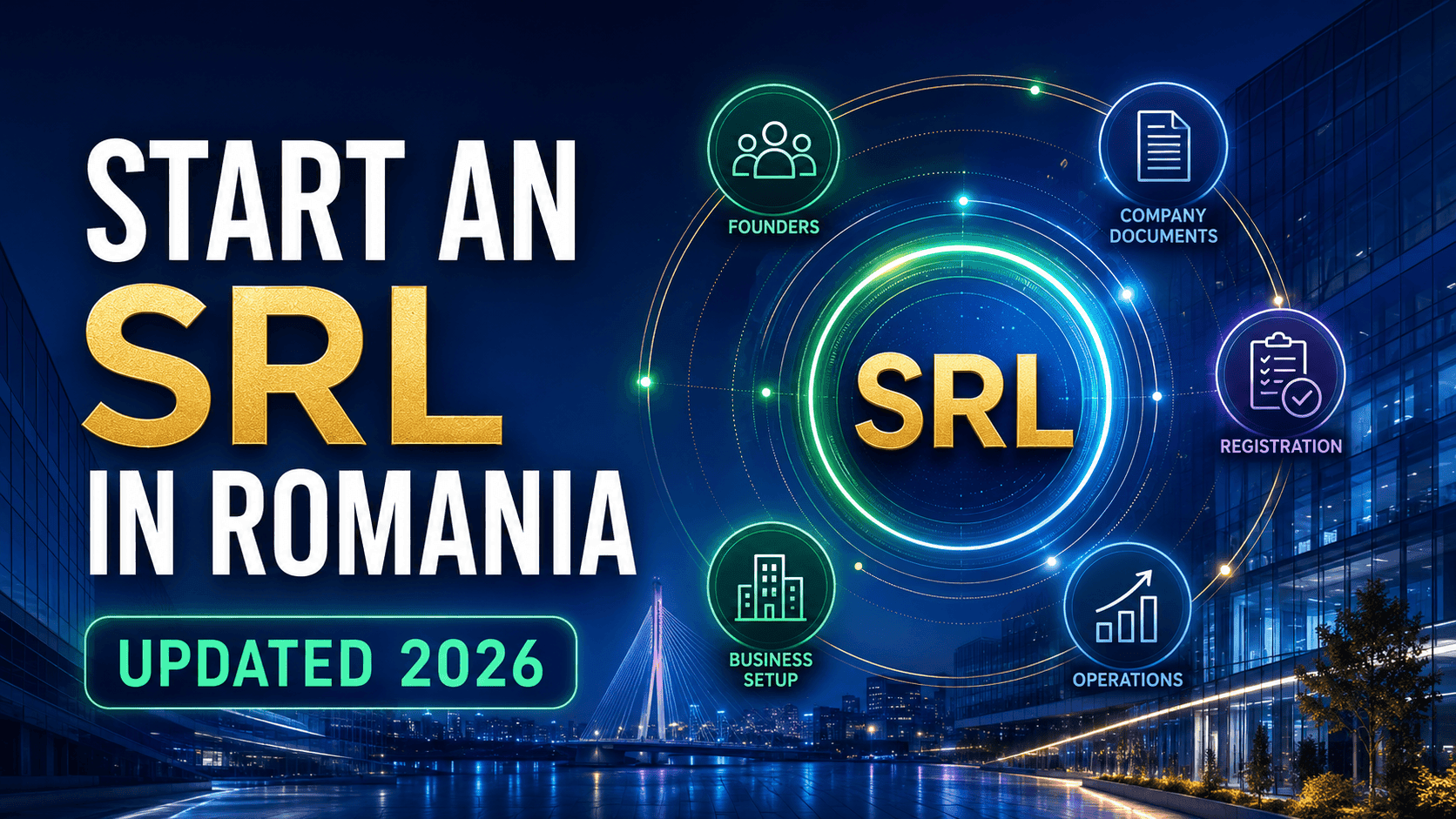
Start a Limited Liability Company (SRL) in Romania 2025

How to Start a Limited Liability Company (SRL) in Romania – Updated for 2025

How to Start a Limited Liability Company (SRL) in Romania – Updated for 2025

How to Start a Limited Liability Company (SRL) in Romania – Updated for 2025

Navigating the intricacies of starting a Limited Liability Company (SRL) in Romania requires a comprehensive understanding of the local legal framework and the specific nuances of Romanian law. This article serves as a guide to help entrepreneurs understand the SRL formation process, explore available options, and ultimately establish their business successfully in Romania.

Understanding SRL Formation in Romania

Successfully navigating the SRL registration process in Romania demands a clear understanding of both local and EU regulations. As an expert legal services provider, we can assist you in understanding the full scope of requirements and procedures. Our goal is to provide the best legal solutions, ensuring effective strategies for company formation in Romania. Learn more about our corporate law services.

What is an SRL?

An SRL (Societate cu Răspundere Limitată), or Limited Liability Company, is a business structure where the liability of shareholders is limited to their capital contribution. This structure is one of the most popular and practical routes for entrepreneurs in Romania, offering both flexibility and legal protection.

The Landscape of Business Formation in Romania

Romania’s economic landscape presents significant opportunities for business formation. Understanding the current trends, regulations, and requirements is crucial for both domestic and international entrepreneurs. The legal framework has been refined for 2025, with greater clarity around capital requirements, registration steps, and foreign investor issues.

Types of Business Structures: SRL vs. SA vs. PFA

In Romania, businesses can be structured in several ways:

  • SRL (Limited Liability Company), which is flexible and suitable for most startups and SMEs.
  • SA (Joint-Stock Company), typically required for large enterprises with minimum capital requirements.
  • PFA (Sole Proprietorship), suited for very small operations but without separate legal entity protection.

The type of business structure influences the registration process and available options, requiring tailored strategies.

Legal Framework for SRL Formation

Key Legislation Governing SRL Registration

The SRL formation process in Romania is governed by a comprehensive set of laws and regulations designed to protect both creditors and shareholders. Key legislation includes the Civil Procedure Code and regulations from the National Register of Commerce (ONRC). Understanding these laws is essential for effective company formation in Romania. For detailed information on procedures, refer to the European e-Justice Portal.

Role of Corporate Law Specialists

A corporate law specialist plays a crucial role in navigating the complexities of SRL formation in Romania.

Atrium Romanian Law Office is an expert legal services provider based in Romania, specifically in Bucharest. Atrium aims to be the best in handling complex and challenging legal matters. The firm’s team of experienced Romanian lawyers and professionals are equipped to resolve any legal issue in a timely manner. They offer guidance through processes related to company formation, compliance, and strategic business planning. The team are members of the Romanian Bucharest Bar.

These legal professionals provide expert guidance on registration procedures, handle ONRC submissions, and develop tailored strategies for company formation. At Atrium Romanian Law Office, experienced lawyers understand the nuances of Romanian law. This ensures that all procedures are both effective and compliant with current regulations, maximizing the chances of successful SRL establishment.

Understanding Capital Requirements

For 2025, the minimum share capital requirement has been effectively abolished for SRLs. Founders can declare any amount they deem appropriate. However, proposed legislative reforms may reintroduce minimum capital thresholds (around 8,000 RON) for new incorporations from January 2026 onwards. Understanding these requirements is crucial for proper company structuring.

Step-by-Step Process to Form an SRL in Romania

The SRL formation process in Romania involves several key phases designed to maximize your chances of successful registration. Whether through streamlined online procedures or in-person submissions, understanding each phase is critical.

Phase 1: Preliminary Planning & Name Reservation

The first step in SRL formation is careful planning and name reservation. This involves:

  • Choosing the SRL form and ensuring it fits your business model
  • Proposing 2–3 name options and checking availability via ONRC portal
  • Reserving the name with the trade-registry
  • Selecting your registered office address and gathering proof
  • Determining business activities (CAEN codes) carefully

Phase 2: Drafting Documents & File Preparation

Once planning is complete, prepare all necessary documentation:

  • Prepare Articles of Association outlining company details
  • For foreign shareholders: prepare apostilled copies and Romanian translations
  • Open a temporary bank account for capital deposit
  • Ensure all documentation is signed, notarized and in correct format

Phase 3: Submission to Trade Registry (ONRC)

Submit your file to ONRC through the following steps:

  • Submit file to ONRC (in person or via online portal)
  • Pay the state registration fee (approximately €50)
  • ONRC reviews file; certificate typically issued within 3 working days
  • Company is legally established; commence business activities (subject to licenses)

Phase 4: Post-Registration Formalities

After registration, complete these essential formalities:

  • Deposit declared capital in bank
  • Register for tax purposes with ANAF
  • Submit VAT registration if turnover exceeds threshold (EUR 88,500)
  • Open regular business bank account
  • Apply for sector-specific licenses/permits if required

Phase 5: Begin Operation & Compliance

Ensure ongoing compliance with:

  • Register for accounting and payroll services
  • File annual financial statements with ONRC
  • Ensure ongoing compliance with statutory deadlines
  • Report any changes in capital, address, administrators or business activity

Timeline & Cost Expectations (2025)

Typical Timeline: 5-10 working days for complete SRL setup

Typical Costs: €300-€800 (varies depending on legal fees, translations, notarization, and sector-specific requirements)

Actual costs vary widely depending on legal advisor fees, translation/notary costs for foreign shareholders, virtual office fees, bank requirements, and regulatory licenses needed.

Advantages of an SRL Structure in Romania

  • Limited Liability Protection – Your personal liability is limited to your contribution
  • Flexibility & Simplicity – Simpler to administer than joint-stock companies
  • Wide Applicability – Suited for startups, SMEs and cross-border businesses
  • Foreign Investor Friendly – Accommodates non-resident shareholders and administrators
  • Access to EU Single Market – With relatively favorable conditions

Common Pitfalls & How to Avoid Them

Protect your SRL formation by avoiding these common mistakes:

  • Incomplete documents — Legal professionals catch naming errors, missing signatures and incorrect forms
  • Foreign-investor documentation — Apostille, translation, notarization requirements vary; each adds time
  • Bank account delays — Budget extra time or use law-firm assisted account opening
  • Incorrect name or CAEN code — Similar names or restricted words trigger extra checks
  • Underestimating permits — Sectors like food, pharma, finance need regulatory checks before operation
  • Ignoring reform changes — Future-proof your structure against 2025/2026 minimum capital reforms

Related Company Formation Resources

To further support your journey in establishing and managing your business in Romania, we’ve compiled a comprehensive cluster of related guides and resources:

Frequently Asked Questions About SRL Formation in Romania

What is the minimum share capital for an SRL in Romania?
For an SRL in 2025, there is no legal minimum share capital required; founders may set the amount they deem appropriate. However, proposed legislative reforms may require higher minimum capital for new SRLs from 2026 onwards.
How long does it take to register an SRL?
If all documents are complete and valid, the trade-registry certificate is typically issued within 3 working days; total company setup often takes 5-10 working days depending on additional requirements.
Can a foreigner be a shareholder or director?
Yes — non-residents can own or manage an SRL; extra documentation may be required including apostille, notarization, and translation into Romanian.
When is VAT registration required?
Mandatory when turnover exceeds the equivalent of EUR 88,500 (in RON) or if opting in earlier. Check the latest ANAF threshold for current requirements.
What if my business activity needs a license?
After SRL registration you may need to apply for sector-specific licenses or permits (e.g., food services, pharmaceutical, financial advice). These can add days or weeks to the launch timeline.
What are the ongoing compliance requirements?
SRLs must file annual financial statements with ONRC, maintain accounting records, register for payroll services, and report any changes in capital, address, or business activities.
Can I use a virtual office for my registered address?
Yes, many foreign-investor SRLs use virtual offices with local law-firm hosting for convenience. The address will be publicly registered and used for all official correspondence.
What role does ONRC play in SRL formation?
ONRC (National Register of Commerce) processes SRL registrations, reviews submitted documents for compliance, issues registration certificates, and maintains the official registry of companies in Romania.
What are the benefits of engaging a law firm for SRL formation?
Engaging a law firm provides expert guidance on requirements, ensures proper document preparation, handles ONRC submissions, navigates foreign investor procedures, and improves chances of smooth registration.

Ready to Start Your SRL?

Setting up an SRL in Romania requires careful planning and professional guidance. Our experienced corporate lawyers ensure proper structure, compliant documentation, and smooth registration. Let us help you navigate the process and establish your business successfully.

Minority Shareholder Rights in Romanian Companies

Minority Shareholder Rights in Romanian Companies: Legal Protections and Limits

Minority Shareholder Rights in Romanian Companies: Legal Protections and Limits

Can minority shareholders in Romanian companies protect their investments against decisions by controlling shareholders?

This question is vital for thousands of investors who contribute capital and oversight but own less than fifty percent of shares.

Minority shareholder rights in Romanian companies are a delicate balance between business efficiency and investor protection.

The legal framework, including Law No. 31/1990 on Commercial Companies, the Civil Code, and court precedents, offers safeguards.

These protections are for investors without voting control but with essential capital and market credibility.

Minority Shareholder Rights in Romanian Companies

Shareholder protection laws in Romania acknowledge the unique vulnerabilities of minority investors.

Majority shareholders might pursue strategies that benefit them at the expense of smaller shareholders.

The legal system counters these risks with mandatory information rights, judicial remedies, and procedural safeguards for fair treatment within corporate structures.

EU standards significantly influence Romanian legislation on minority investor rights. European directives dictate how Romanian companies must treat all shareholders, regardless of ownership percentage.

These protections go beyond basic voting rights to include access to corporate information, dividend distributions, and legal recourse against decisions harming minority interests.

A Romanian law office specializing in corporate matters offers critical guidance for minority shareholders.

Professional assistance helps investors understand their rights, evaluate corporate actions, and pursue remedies when necessary.

For expert legal services combining Romanian expertise with international standards, contact office@theromanianlawyers.com.

Key Takeaways

  • Romanian law defines minority shareholders as those holding less than 50% of company shares with specific legal protections
  • Law No. 31/1990 on Commercial Companies provides the primary framework for shareholder rights and corporate governance,
  • Minority investors possess information rights, voting privileges, and access to judicial remedies against unfair treatment,
  • EU directives strengthen minority investor protections through enhanced transparency and governance standards
  • Professional legal counsel helps minority shareholders understand and exercise their rights effectively,
  • Romanian courts offer multiple remedies including resolution annulment, compensation, and forced company dissolution.

Understanding the Legal Framework for Minority Shareholders in Romania

The protection of minority shareholders in Romania is rooted in detailed business legislation.

This legislation sets out clear guidelines for corporate governance.

It ensures that even those with smaller stakes receive fair treatment and have a say in company decisions.

The level of protection depends on the company type and the percentage of shares held.

Law No. 31/1990 on Commercial Companies as the Primary Legislation

Law 31/1990 is the cornerstone of corporate law in Romania, covering all private companies and outlining fundamental shareholder rights.

This legislation, backed by the  Civil Code, strikes a balance in corporate governance.

It deals with essential topics like shareholder meetings, voting, access to information, and legal recourse for minority shareholders.

Romanian companies law framework

Distinction Between Limited Liability Companies (SRL) and Joint Stock Companies (SA)

Romanian companies law 31/1990 distinguishes between two main types of commercial entities.

Each has its own governance structure:

Company TypeMinimum CapitalShareholder RightsMeeting Requirements
SRL (Limited Liability)1 RONAll shareholders can propose agenda itemsSimple majority decisions
SA (Joint Stock)90,000 RON5% threshold for special rightsQualified majority for major decisions

Definition and Thresholds for Minority Shareholders

In Romania, minority shareholders are those with less than 50% of shares.

The law sets specific thresholds for enhanced rights.

In joint stock companies, those with at least 5% can call for a general meeting and suggest agenda items.

Even single-share owners in SRLs have significant rights, including the right to challenge unlawful decisions in court.

Fundamental Information Rights and Corporate Transparency

Information access is key to protecting shareholders in Romania.

The Romanian Company Law outlines detailed rights for shareholders.

These rights allow them to track company activities and make informed choices.

This ensures that even small investors can monitor their investments and hold management accountable.

Access to Financial Statements and Corporate Records

Romanian law ensures all shareholders can access critical company documents.

This includes annual financial statements, board meeting minutes, and corporate registers.

It’s vital for protecting minority shareholders to review balance sheets, profit and loss statements, and audit reports.

Companies must keep these records at their registered office and make them available during business hours.

minority shareholder protection documents

Rights to Request Explanations from Directors

Shareholders also have the right to ask directors for explanations.

They can pose questions about business operations, financial transactions, or strategic decisions.

Directors must respond clearly within 15 days.

This strengthens shareholder protection in Romania by ensuring management is accountable.

Notification Requirements for Shareholders’ Meetings

Meeting notification is another essential aspect of protecting minority shareholders in Romania.

Companies must announce general meetings at least 30 days in advance through official channels.

Notifications must include:

  • Complete meeting agenda,
  • Proposed resolutions text,
  • Voting procedures,
  • Documentation access details.

These rules prevent majority shareholders from making surprise decisions that could harm minority shareholders.

Courts actively enforce these rules, often annulling resolutions passed without proper notification.

Minority Shareholder Rights in Romanian Companies

Romanian corporate law offers vital mechanisms for minority shareholders to protect their interests.

These legal safeguards are key in preventing corporate abuse and ensuring fairness for all shareholders.

This fairness is not based on the size of their ownership stake.

Challenging Unlawful Resolutions Under Article 132

Article 132 of Law No. 31/1990 gives shareholders the power to challenge decisions that break the law or company statutes. This provision is a cornerstone in Romania’s fight against minority shareholder oppression.

Shareholders can seek court annulment of resolutions under these conditions:

  • Decisions breach Romanian commercial law
  • Articles of association are violated
  • Individual shareholder rights face infringement
  • Private interests override company welfare

Legal Standing and Time Limits for Court Actions

Any shareholder can challenge board decisions in Romanian courts.

The law sets a strict deadline—actions must be filed within 15 days from the date the resolution is published in the Monitorul Oficial al României, Part IV .

This tight timeframe demands constant vigilance and quick action against minority shareholder oppression.

shareholder remedies romania

Protection Against Abusive or Self-Interested Decisions

Romania’s corporate abuse protection goes beyond just procedural issues.

Courts also look at the substance of decisions affecting minority shareholders:

Type of AbuseExamplesAvailable Remedies
Financial OppressionWithholding dividends despite profitabilityCourt-ordered distributions
Dilution TacticsUnjustified share capital increasesResolution annulment
Exclusion PracticesBarring minorities from strategic decisionsGovernance reforms
Self-DealingUndisclosed related-party transactionsTransaction reversal

Romanian courts are active in reviewing cases of challenging majority decisions.

Judges determine if resolutions are for legitimate business reasons or just to benefit the majority at the expense of minorities.

Voting Rights and Meeting Participation

Protecting voting rights for minority shareholders is key in corporate governance in Romanian companies.

Romanian corporations must follow specific legal rules to ensure all shareholders, regardless of their share percentage, have a say in corporate decisions.

The law on voting rights in Romanian corporations sets clear thresholds.

This allows minority groups to influence major decisions.

Shareholders with at least 5% of shares can call for general meetings.

This ensures minority shareholders’ rights are protected, even without a majority.

voting rights shareholders romania

Voting rights in Romanian corporations vary between Limited Liability Companies (SRL) and Joint Stock Companies (SA).

In SRLs, every shareholder has more rights. They can:

  • Propose agenda items for general meetings,
  • Contest decisions deemed unlawful,
  • Exercise corporate voting rights Romania guarantees by statute.

Shareholders in Romania face some limitations.

Amendments to Law 31/1990 now allow electronic or correspondence voting, particularly in joint-stock companies (SAs)—especially when listed or when permitted under the articles of association.

For SRLs, remote voting remains subject to stricter interpretation and typically requires express provisions in the company statute.

Major corporate decisions need qualified majorities to protect minority shareholders’ rights.

Changes to company charters, liquidation, and major asset sales need at least three-quarters of voting shares approval.

Recent reforms have introduced cumulative voting.

Cumulative voting (permitting concentration of votes on a single board candidate) remains entirely optional, made possible only where provided in the articles of association.

While corporate governance codes for listed companies might encourage it, no legal mandate exists.

This strengthens minority shareholders’ voting power in board elections and improves their role in corporate governance.

Legal Remedies for Minority Oppression and Abuse

In Romanian companies, minority shareholders facing corporate minority oppression have legal recourse.

The courts aim to safeguard small investor rights from majority abuse.

This includes withholding dividends, excluding from decision-making, and unfair share dilution.

Remedies span from financial compensation to restructuring the company.

Financial Compensation and Annulment of Resolutions

Romanian courts can annul resolutions that harm minority investors.

Claims often stem from preferential treatment of directors through secret deals.

Shareholders receive financial compensation when corporate governance is breached.

oppression remedies romania

Company Dissolution and Enforced Exit Mechanisms

In severe cases, courts may dissolve the company.

They assess if operations are justified amidst ongoing conflicts.

Fair compensation is ensured in minority squeeze-out procedures, with judicial oversight.

Exit MechanismTrigger ConditionsCourt Requirements
Forced BuyoutSystematic exclusion from managementFair market valuation
Company DissolutionIrreparable deadlockNo viable alternatives
Squeeze-Out Rights95% ownership threshold (for listed companies) | Independent price assessment.
In unlisted companies, squeeze-out rights are not statutory and must be defined through shareholder agreements or pursued through court action in cases of abuse
Independent price assessment

Judicial Administrator Appointments in Governance Deadlocks

Courts appoint judicial administrators in governance deadlocks.

This addresses conflicts where squeeze-out procedures fail.

Administrators have temporary power to resolve issues, ensuring compliance with regulations.

Dividend Rights and Corporate Distribution Policies

Minority shareholder rights in Romanian companies are crucial for ensuring equitable treatment and protection against potential abuses by majority shareholders.

Under Romanian company law, minority shareholders often face challenges related to voting influence, dividend distribution, and participation in corporate governance.

The articles of association play a central role in defining the procedures for passing shareholder resolutions and transferring shares, which can significantly affect minority influence in the general meeting of shareholders.

In mergers, demergers, or corporate reorganizations, minority shareholders are entitled to receive fair treatment, including compensation where applicable, particularly if their shareholding is affected by structural changes or exit scenarios.

 Although share buybacks are legally permitted under strict conditions, they are not a typical tool for minority exits.

The Romanian courts have acknowledged the importance of safeguarding minority shareholder rights, and affected shareholders may bring legal actions to challenge unlawful decisions or seek remedies under Law No. 31/1990 on Companies.

The Trade Register (ONRC) ensures public access to essential information such as company capital, registered shareholders, and changes to governing documents, contributing to transparency for both limited liability companies (SRL) and joint stock companies (SA).

As Romania continues to align its corporate governance framework with EU directives and international standards, the development of more effective enforcement mechanisms remains key.

Ensuring meaningful participation and protection for minority shareholders is essential to building trust and accountability in the Romanian business environment.

Shareholder Agreements and Contractual Protections

Shareholders’ agreements in Romania offer vital protections beyond what’s mandated by law.

These agreements fortify minority positions with specific clauses addressing common issues in Romanian business structures.

Tag-Along Rights and Cumulative Voting Provisions

Tag-along rights safeguard minority investors during majority shareholder sales.

They ensure minority shareholders can sell at the same price and terms as the majority.

Cumulative voting rights, on the other hand, boost board representation by allowing concentrated voting on certain candidates.

Protection TypeKey BenefitsApplication in Romania
Tag-Along RightsEqual sale conditionsCommonly included in Romanian shareholder agreements—especially in joint ventures, private equity deals, or closely held companies—to protect minority investors during ownership changes
Cumulative VotingEnhanced board representationMandatory for listed companies
Drag-Along RightsFacilitates complete salesStandard in PE investments

Preemptive Rights in Share Transfers and Capital Increases

Preemptive rights in Romania safeguard shareholders from dilution.

These rights apply during capital increases and share transfers, ensuring ownership percentages remain proportional.

Exit Options for Minority Investors

Minority investors have exit options, including mandatory buyouts triggered by certain events.

Romanian agreements typically include valuation mechanisms for fair pricing.

Derivative Actions and Corporate Litigation Rights

Romanian law empowers minority shareholders to defend corporate interests through derivative actions.

These actions allow shareholders to sue on behalf of the company when directors act against its best interests.

This is a key part of resolving disputes in corporate settings, ensuring management is held accountable.

Derivative actions in Romania have strict rules.

Shareholders must prove that directors have not pursued rightful claims against wrongdoers.

The law allows for actions against directors for breaches of duty, conflicts of interest, and transactions that favor certain shareholders over the company.

Romanian courts assess both the process and fairness of minority shareholder lawsuits.

They check if claims are for the company’s benefit or personal gain.

This ensures only valid disputes are addressed, preventing frivolous lawsuits.

Type of ClaimLegal Standing RequirementsTime Limits
Breach of Fiduciary Duty5% ownership in SA, 10% in SRL3 years from discovery
Conflict of Interest TransactionsAny shareholder regardless of stake6 months from transaction
Corporate Asset Misappropriation5% ownership minimum5 years from occurrence

Despite its benefits, enforcing these rights in Romania is challenging.

Courts demand robust evidence and legal expertise in local commercial law.

Success in shareholder disputes hinges on grasping procedural details and presenting strong cases that clearly show corporate harm.

Evolution of Romanian Corporate Governance Standards

Corporate governance in Romania has seen major changes with the shift to a market economy.

The reopening of the Bucharest Stock Exchange in 1995 was a key moment.

It opened up the Romanian capital markets after a 50-year hiatus.

This event laid the groundwork for modern shareholder protection laws and opened doors for both local and international investors.

Impact of EU Directives on Shareholder Protection

Romania’s path toward European Union membership led to significant legislative improvements.

The Pistor index, a measure of investor protection, jumped from 13 points in 1996 to 17.75 between May 2002 and November 2006.

EU directives brought in essential protections for minority shareholders in Romanian joint stock companies:

  • Mandatory takeover bid thresholds protecting minority investors,
  • Independent share registries ensuring transparent ownership records,
  • Strict insider trading prohibitions,
  • Enhanced disclosure obligations for major transactions.

Bucharest Stock Exchange Requirements for Listed Companies

The exchange introduced a three-tier listing system with increasing strictness.

First-tier companies face the most demanding corporate governance standards.

These standards aim to boost transparency and accountability.

They also enhance minority protections through mandatory disclosure and regular financial reports.

Recent Legislative Developments and Reform Initiatives

Law No. 441/2006 brought significant changes to minority protections in Romanian Companies.

It reduced the quorum needed for certain decisions to one-quarter.

This change slightly lowered the protection index to 17.25.

Yet, recent reforms have tackled key areas like cumulative voting, compulsory takeover offers, and detailed transaction disclosure.

These steps reflect the growing demand for better governance from investors in Romania.

Conclusion

Romanian corporate law, as outlined in Law No. 31/1990, provides a robust framework for minority shareholder rights.

This legislation ensures that minority shareholders have access to corporate information and can participate in meetings.

They also have the right to challenge unfair resolutions and seek judicial remedies when their rights are violated.

These protections align with EU standards, solidifying Romania’s standing in the global business arena.

Despite these legal safeguards, minority shareholders face practical hurdles in Romanian corporate governance.

Companies often distribute minimal dividends, limiting returns for minority investors.

Share issuance restrictions also hinder market oversight, which could discipline management decisions.

Minority shareholders must remain vigilant, documenting governance failures and asserting their statutory rights.

The dynamic nature of shareholder protection laws in Romania necessitates ongoing monitoring of legislative changes and court interpretations.

Seeking professional legal representation is essential for minority shareholders facing complex corporate disputes.

A skilled Romanian lawyer is well-versed in both the statutory framework and practical strategies to protect minority interests.

Whether it’s pursuing annulment actions, seeking compensation, or negotiating exit arrangements, experienced counsel is vital.

For expert guidance on shareholder disputes and protection strategies, contact a reputable Romanian law office at office@theromanianlawyers.com.

The future of minority shareholder protection hinges on ongoing legislative refinement and judicial enforcement.

As Romania’s corporate landscape evolves, the balance between majority control and minority rights must be constantly adjusted.

Collaborating with knowledgeable lawyers in Romania ensures minority shareholders can effectively exercise their rights.

This contributes to enhanced corporate governance standards.

For tailored advice and protection strategies for your investments, contact experienced Romanian lawyers at office@theromanianlawyers.com.

FAQ

What percentage of shares qualifies someone as a minority shareholder under Romanian law?

Romanian corporate law defines minority shareholders as those owning less than 50% of shares.

This rule applies to both Limited Liability Companies (SRLs) and Joint Stock Companies (SAs).

Specific rights and thresholds can differ between these company types.

How long do minority shareholders have to challenge unlawful corporate resolutions in Romania?

Article 132 of Law No. 31/1990 states that minority shareholders must start legal actions within 15 days after a resolution is adopted.

This tight deadline is critical for shareholders to act quickly when they spot legal breaches or decisions that harm their rights.

What information rights do minority shareholders have in Romanian companies?

Romanian Company Law ensures minority shareholders can access corporate records like financial statements and meeting minutes.

They have the right to ask directors about company operations and must be informed about shareholders’ meetings and decisions.

Denying access to this information can lead to legal action.

Can minority shareholders in Romanian SRLs propose agenda items for general meetings?

Yes, in Limited Liability Companies (SRLs), any shareholder can suggest agenda items and challenge decisions, regardless of their shareholding percentage.

This gives them more participation rights than in Joint Stock Companies (SAs), where at least 5% is needed to request a general meeting.

What remedies exist for minority shareholders facing dividend withholding in profitable Romanian companies?

Romanian courts can order financial compensation or annul abusive resolutions.

In extreme cases, they might dissolve the company if majority shareholders consistently withhold dividends despite profitability.

Studies show companies with majority shareholders over 50% pay lower dividends, making judicial remedies key for minority protection.

How do tag-along rights protect minority shareholders in Romania?

Tag-along rights in shareholder agreements allow minority shareholders to sell their shares at the same price and conditions as majority stakeholders.

Can minority shareholders bring derivative actions against directors in Romanian companies?

Yes, Romanian law allows minority shareholders to take legal action on behalf of the company against directors who fail to pursue claims.

They can seek compensation for damages caused by directors’ breach of duties or conflicts of interest.

Courts assess both procedural and substantive fairness.

What voting threshold is required for fundamental corporate decisions affecting minority shareholders?

Romanian law demands a 3/4 qualified majority for key decisions like charter changes, liquidation, and major asset sales.

This supermajority ensures minority shareholders can block significant corporate changes that might harm their interests.

How has EU membership affected minority shareholder protections in Romania?

Romania’s EU accession boosted corporate governance standards, with the Pistor index increasing from 13 in 1996 to 17.25 in 2008.

EU directives introduced takeover bid thresholds, independent registries, insider trading bans, and enhanced disclosure, strengthening minority investor rights.

What are preemptive rights and how do they protect minority shareholders from dilution?

Preemptive rights prevent dilution by allowing minority shareholders to buy new shares proportional to their existing holdings during capital increases or share transfers.

Romanian courts uphold these rights, ensuring that minority positions are not unfairly diluted without participation opportunities.

What are the rights of minority shareholders in Romanian companies?

Minority shareholders in Romanian companies have several rights established by law that provide them protection in the company’s governance.

These rights include the ability to attend and vote in the general meetings of shareholders, access to the company’s financial information, and the right to propose resolutions.

Additionally, minority shareholders may request the court to intervene if their rights are violated or if they believe the company is not acting in its best interests.

How does the law protect minority shareholders during a merger?

The law provides specific protections for minority shareholders during a merger in Romania.

Minority shareholders have the right to fair compensation for their shares if they do not agree with the merger.

The company must publish the merger details in the official gazette and provide adequate information to all shareholders, ensuring transparency throughout the process.

Furthermore, minority shareholders may challenge the merger in court if they believe it violates legal provisions or the company’s articles of association.

Can minority shareholders influence decisions made at the general meeting of shareholders?

Yes, minority shareholders have the right to influence decisions made at the general meeting of shareholders.

They can vote on shareholder resolutions and may request to hold extraordinary general meetings if they hold at least a certain number of shares as established by the articles of association.

This ensures that even minority shareholders can contribute to significant decisions affecting the company, including changes in the share capital or the transfer of shares.

What is the significance of the trade registry for minority shareholders?

The trade registry plays a crucial role in protecting the rights of minority shareholders in Romanian companies.

It serves as the official record of the company’s structure, including the number of shareholders, their contributions to the share capital, and any changes to the company’s articles of association.

Minority shareholders can verify the company’s compliance with corporate governance rules and ensure that any resolutions or actions taken are legally binding and in their best interests.

What legal forms of companies exist that impact minority shareholder rights?

In Romania, there are two main types of companies that impact minority shareholder rights: joint-stock companies and limited liability companies.

Each legal form has specific regulations regarding shareholder rights, governance, and share capital.

For instance, in a joint-stock company, minority shareholders may have greater rights to information and participation in decision-making compared to a limited liability company.

Understanding these distinctions is essential for minority shareholders to navigate their rights effectively.