D&O insurance in Romania illustrated by falling dominoes stopped by a green protective barrier in a boardroom

Director and Officer Insurance in Romania: Does D&O Insurance Cover Management Liability?

Directors and officers insurance in Romania can protect managers and companies against certain defence costs and civil claims arising from alleged management errors. It does not cancel a director’s legal duties, guarantee payment of every claim or cover intentional misconduct simply because the allegation concerns a management decision.

D&O insurance claim process represented by corporate files connected through a structured green path
D&O coverage depends on how the insured person, claim, defence costs, exclusions and notification requirements are defined in the policy.

In brief: A D&O policy is a contractual risk-transfer tool, not immunity from Romanian director liability. Coverage usually depends on who is insured, the capacity in which the person acted, when the claim was made and notified, the policy territory, the applicable retention and the exclusions. Companies should review Side A, Side B and any entity cover separately, test insolvency and regulatory scenarios, and coordinate the policy with corporate indemnities, governance documents and the director’s actual role.

This guide is written for Romanian subsidiaries, foreign groups, founders, shareholders and board members assessing management-liability protection. It complements our detailed guide to Romanian company director liability, which explains when personal exposure may arise under company, insolvency and tax law.

What is D&O insurance and what does it protect?

D&O insurance is a liability policy designed to respond to covered claims alleging a wrongful act by an insured director or officer in that management capacity. Depending on the wording, it may fund defence costs and pay covered settlements, judgments or other insured loss. The policy may also reimburse the company where it lawfully indemnifies the individual.

The expression “wrongful act” is usually defined broadly in the policy, but the definition is only the entrance to the coverage analysis. The claim must also fall within the insured persons, insured capacity, policy period, territory and jurisdiction. It must not be removed by an exclusion, and all notification, consent and cooperation requirements must be met.

Coverage architecture
Who receives protection under Side A, Side B and Side C?

Select a coverage side to review its practical function.

Individual protection

Side A is intended to respond for an insured person when the company cannot or is not permitted to indemnify that person, subject to the policy terms.

Coverage sectionWho is protected?Practical question
Side AThe insured director or officer.Will the policy respond when the company cannot indemnify the individual, including because of insolvency or a legal restriction?
Side BThe company, after it indemnifies an insured person.Is the indemnity lawful, documented and within the policy definition of reimbursable loss?
Side CThe company itself for specified entity claims.Is entity coverage limited to securities claims or extended to other claims, and could it dilute the limit available to individuals?
ExtensionsDepends on the endorsement.Are investigation costs, extradition costs, crisis costs, employment-practices claims or retired-director protection actually included?

Is D&O insurance mandatory for Romanian directors?

There is no safe basis for saying that one identical D&O policy is compulsory for every Romanian company and every SRL administrator. The answer depends on the company form, appointment framework, applicable special regulation and corporate decisions.

Article 15312(4) of Romanian Companies Law no. 31/1990 applies within the governance regime of joint-stock companies (SA) and should not automatically be assumed to create a general insurance obligation for all SRL administrators. For a limited liability company, the articles of association, shareholders’ decision, mandate terms and any sector-specific legislation should be checked separately.

Romanian law refers to professional liability insurance, while modern D&O insurance is a market product developed by insurers. Although D&O insurance frequently serves this purpose in practice, the legal obligation and the insurance wording should not automatically be treated as identical concepts.

Even where insurance is required by the appointment or corporate framework, a policy bearing the label “D&O” does not automatically satisfy every requirement. The insured roles, limit, territory, duration, run-off protection and exclusions must fit the mandate and risk profile.

Practical distinction: a statutory or corporate requirement to maintain professional-liability insurance and the actual protection delivered by a particular D&O wording are separate questions. The appointment documents and the policy should be reviewed together.

Which Romanian director-liability claims may engage the policy?

A D&O policy may be relevant when a director faces a civil claim, investigation or other covered proceeding arising from alleged conduct in office. Whether it responds depends on the precise policy, not merely on the legal label attached to the dispute.

Potential claimRomanian legal contextCoverage question
Breach of mandate or company dutyArticles 72 and 73 connect administrators’ duties and liability to mandate rules and statutory obligations.Is the alleged act within insured capacity, and are defence costs and damages included?
Shareholder or company claimThe company may seek recovery for loss allegedly caused by breach of duty, or shareholders may initiate liability proceedings where permitted by law.Does an insured-versus-insured or major-shareholder exclusion apply?
Insolvency claimArticle 169 of Insolvency Law no. 85/2014 permits liability orders for specified conduct contributing to insolvency.Are insolvency-practitioner claims covered, and is there an insolvency or conduct exclusion?
Regulatory investigationA director may be required to respond to an authority in an official capacity.When does an “investigation” begin, and are interview or representation costs covered?
Tax-related exposureArticle 25 of the Fiscal Procedure Code contains specific circumstances in which administrators or other persons may incur joint fiscal liability, usually where bad faith is established.Are defence costs covered even if tax, penalties or the underlying liability are not?
Employment or whistleblowing claimManagers may be named in allegations concerning workplace decisions or retaliation.Is employment-practices liability included, excluded or subject to a separate sublimit?

How does a D&O claim move from allegation to payment?

The practical sequence begins before liability is established. Many policies are written on a claims-made or claims-made-and-notified basis. A demand, investigation notice, circumstance or written allegation may trigger immediate notification duties even if no court proceedings have started.

Claim flow
From first allegation to coverage decision

Select a step to see the control that protects coverage.

Detect the trigger

Identify whether a demand, investigation, formal notice or known circumstance falls within the policy’s definitions before treating it as ordinary correspondence.

  1. Preserve the notice. Keep the demand, authority letter, board papers and delivery evidence.
  2. Identify every potentially responsive policy. Check local and global programmes, prior-year policies and any run-off cover.
  3. Notify within the required form and period. Do not wait for a final claim value or court filing if the wording requires earlier notice.
  4. Obtain consent before material defence expenditure or settlement. Emergency-cost provisions should be checked where prior consent is impracticable.
  5. Separate insured and uninsured matters. Allocation may be needed between individuals and the company, covered and uncovered allegations, or several policies.
  6. Protect privilege and cooperation. Coordinate Romanian counsel, broker and insurer communications without disclosing privileged analysis unnecessarily.

What does D&O insurance usually not cover?

Exclusions differ materially between insurers and negotiated programmes. The most important distinction is between an allegation and a final conduct determination. Some policies advance defence costs while allegations are unresolved, then apply a dishonesty or personal-profit exclusion only after a final, non-appealable determination or admission. Other wording may be less protective.

Exclusion map
Where can expected protection disappear?

Select a category to review the main wording risk.

Fraud and personal benefit

Deliberate dishonesty, fraudulent conduct and unlawful personal profit are commonly excluded, but the required determination and severability wording are critical.

Exclusion or limitationWhy it mattersReview point
Dishonesty and deliberate conductThe most serious allegations may be the ones the policy ultimately excludes.Check whether exclusion requires a final adjudication and whether one person’s conduct is imputed to others.
Prior knowledge or circumstancesA matter known before inception may fall outside the new policy.Coordinate proposal disclosures, warranty statements and prior notices.
Insured-versus-insuredClaims by the company or another insured may be restricted.Check carve-backs for derivative claims, insolvency practitioners, whistleblowers and employment claims.
Fines, penalties and taxesSome amounts may be excluded from coverage or may be regarded as non-insurable under applicable mandatory law.Separate defence costs from the underlying payment and verify Romanian mandatory law.
Bodily injury and property damageThese risks normally belong under other liability policies.Review defence-cost or management-claim carve-backs where relevant.
Sanctions and territorial limitsCross-border groups may face claims or restrictions outside the expected jurisdiction.Map subsidiaries, directors’ residences, business territories and local-admitted requirements.

Does D&O insurance cover insolvency, tax liability or criminal proceedings?

Not automatically. These are precisely the scenarios where the difference between defence-cost protection and payment of the underlying liability becomes important.

Under Article 169 of Romanian Insolvency Law no. 85/2014, the court may order persons who contributed to insolvency through listed conduct to bear part or all of the debtor’s liabilities within the causally connected loss. A policy must be checked for insolvency-practitioner claims, conduct exclusions, prior-circumstance provisions and the point at which dishonesty is established.

Tax debts, administrative fines, criminal fines, confiscation and amounts representing unlawful gain may be excluded from coverage or may be regarded as non-insurable under applicable mandatory law. Nevertheless, some policies may cover defence costs for a covered person during an investigation or proceeding until an exclusion is established. The precise wording and Romanian public-policy rules control the answer.

A policy cannot prevent an investigation, prosecution, disqualification, regulatory order or the consequences of a final judgment. Insurance is financial protection within contractual and legal boundaries, not a transfer of public-law responsibility.

What should a Romanian company check before buying or renewing D&O cover?

The best review starts with the company’s actual management structure and claim scenarios, not with the premium alone. A low limit, broad entity cover or weak notification clause may leave directors exposed even where the policy looks extensive on a summary page.

Renewal control
D&O policy review checklist

Select a control area before accepting the wording.

People and entities

Match the definition of insured person to registered administrators, delegated directors, supervisory members, de facto managers and relevant employees.

Review itemQuestions to askEvidence
Insured populationAre current, former and future managers covered? Are de facto or shadow roles addressed?Trade Register extract, group chart, delegations and job functions.
Limit and erosionDo defence costs reduce the aggregate limit? Is there dedicated or excess Side A protection?Policy schedule, tower structure and defence-cost clause.
RetentionWhich retention applies to Side A, Side B, entity claims and investigations?Schedule and each coverage clause.
NoticeWhat is a claim or circumstance, where must notice be sent and by when?Definitions, reporting clause and internal escalation process.
Run-offWhat happens after resignation, sale of the company or cancellation?Discovery-period, change-in-control and retired-director provisions.
Territory and jurisdictionDoes the programme follow Romanian directors into relevant foreign proceedings?Territorial clause, jurisdiction clause and local policy map.
Exclusions and severabilityCan one person’s knowledge or conduct prejudice innocent insureds?Conduct, application, imputation and severability wording.

How should D&O insurance fit with corporate governance?

Insurance works best when the governance system can show who decided, on what information, under which authority and with which conflict controls. The policy does not replace accurate minutes, authority matrices, financial reporting, compliance escalation or timely insolvency analysis.

Companies should align the policy with the articles of association, director appointment or mandate, shareholder resolutions, group indemnity arrangements and any transaction documents. A share purchase agreement may require run-off cover for outgoing directors, while a shareholder agreement may address nomination rights and insurance commitments. Neither document should promise protection that the policy does not deliver.

Change of control is particularly important. Many policies restrict cover for wrongful acts occurring after an acquisition or other control event. Transaction planning should therefore address tail coverage, continuity dates, notice of known circumstances and the allocation of premium and claims responsibility.

Risk: the most damaging coverage failure is often procedural rather than substantive: a demand is treated as routine correspondence, the insurer is notified late, defence counsel is instructed without consent or a transaction changes control before run-off protection is arranged.

The bottom line

D&O insurance in Romania can be an important layer of financial protection, especially where directors manage material contracts, regulated activity, cross-border operations or financial distress. Its value depends on the wording and the company’s ability to recognise and manage a claim.

The practical review should connect four documents: the legal mandate, the corporate indemnity, the D&O policy and the internal claims protocol. If they use different definitions of director, authority, claim or covered loss, the gap may emerge only when protection is needed.

Frequently asked questions

Does D&O insurance eliminate a Romanian director’s personal liability?

No. It may fund defence costs and certain covered loss, but it does not remove the underlying legal duties or prevent a court, tax authority, regulator or insolvency practitioner from pursuing the director. Coverage remains subject to the policy terms, exclusions and applicable mandatory law.

Is D&O insurance mandatory for every Romanian SRL administrator?

No general conclusion should be drawn for every SRL. Article 15312(4) of Companies Law no. 31/1990 applies within the governance regime of joint-stock companies (SA) and should not automatically be assumed to create a general insurance obligation for all SRL administrators. Romanian law refers to professional liability insurance, which should not automatically be treated as identical to a modern D&O policy. For an SRL, the articles of association, shareholder decisions, mandate terms and any sector-specific legislation must be reviewed separately.

Does a D&O policy cover fraud or intentional misconduct?

Policies commonly exclude fraud, deliberate dishonesty and unlawful personal benefit. The important drafting questions are when the exclusion applies, whether a final adjudication is required and whether one insured person’s conduct or knowledge can be attributed to innocent insureds.

Can D&O insurance cover an insolvency claim against a director?

Potentially, but not automatically. The policy should be checked for insolvency-practitioner claims, conduct exclusions, prior circumstances, defence-cost treatment and the insurability of the requested amounts. Liability under Article 169 and insurance coverage are separate legal analyses.

What happens to D&O cover after a director resigns?

Resignation does not erase claims relating to earlier conduct. Coverage depends on the claims-made wording, continuity provisions and any discovery or run-off period. The director and company should coordinate resignation, handover, notice of known circumstances and continued access to policy information.

Are defence costs paid in addition to the policy limit?

Not necessarily. Many policies include defence costs within the aggregate limit, so legal fees reduce the amount remaining for settlement or judgment. The schedule, defence clause, sublimits and any dedicated Side A layer should be checked before relying on the headline limit.

Reviewing D&O cover for a Romanian company?

We can review the Romanian-law liability framework, corporate indemnities, appointment documents and proposed policy wording so that the insurance programme reflects the company’s actual governance and risk profile.

Book a Corporate Consultation

Disclaimer: This article provides general legal and insurance information and does not constitute legal, tax, insolvency, insurance-brokerage or coverage advice. Coverage depends on the policy wording, facts, applicable law and insurer’s assessment.

AI Notice: AI-assisted content, pending review by a qualified Romanian lawyer.

Commercial lease agreement in Romania with office key and floor plan

Commercial Lease Agreement Romania: 12 Key Clauses

A commercial lease agreement in Romania can commit a company to years of rent, service charges and restoration costs. The commercial decision therefore depends not only on the monthly headline rent, but also on whether the premises can lawfully support the tenant’s activity and whether the contract allocates operational risks clearly.

Commercial lease agreement in Romania with office key and floor plan
Commercial premises and lease documentation in Romania. AI-generated illustration.

This guide is intended for landlords and companies leasing offices, retail units, warehouses and other business premises. It explains the principal clauses to check under the Romanian Civil Code and the related property, tax and authorisation framework. Residential leases and leases of public property follow additional rules and are outside this article’s main scope.

Is a written commercial lease mandatory in Romania?

Romanian law does not generally require a privately owned commercial lease to be notarised for validity. A signed written contract is nevertheless essential for evidence, enforceability, tax treatment and protection against third parties.

The lease relationship is governed principally by the Romanian Civil Code, especially the general rules on lease agreements. The parties have broad contractual freedom in a business-to-business transaction, but statutory rules apply where the lease is silent, and certain mandatory provisions of Romanian law may apply irrespective of contractual wording.

Under Article 1798 of the Civil Code, a lease concluded in authentic form, or a privately signed lease registered with the competent tax authority, may constitute an enforceable title for rent payment under the conditions stated by law. Tax registration affects enforceability, not the validity of the lease. It is not a universal requirement for the existence of every corporate lease, although the applicable tax and registration duties must still be checked for the particular landlord and transaction.

For leases requiring stronger protection against a future buyer or other third parties, the parties should assess land-book registration. The correct mechanism depends on the property, the lease term and the landlord’s registered title. A company entering a long-term lease should not assume that signature alone gives the same protection as registration.

Lease signing roadmap
From premises selection to rent commencement

Select a stage to see the legal control that should be completed before moving forward.

Define the commercial scope

Fix the exact premises, intended activity, timetable, fit-out assumptions, headline rent and critical conditions before detailed drafting begins.

What should be checked before the commercial lease is signed?

Verify the landlord, title, cadastral identity, permitted use, technical condition and authorisation route before the lease becomes unconditional.

The tenant should compare the land-book extract and cadastral plan with the space actually offered. The review should cover ownership, mortgages, litigation annotations, existing leases, access rights, parking, common areas and the landlord’s authority to grant the agreed use. These checks overlap with a focused real estate due diligence review in Romania.

The proposed activity must also be compatible with the building’s authorised use and applicable planning, fire-safety, sanitary, environmental and sector-specific requirements. A contractual statement that the tenant will obtain “all permits” does not solve a structural problem with the premises. The lease should distinguish permits relating to the building from those relating to the tenant’s own business.

For buildings or units covered by Law no. 372/2005, the owner must address the applicable energy-performance certificate obligations when leasing. The current framework covers offices, retail and other occupied commercial uses, subject to statutory exemptions. See the official energy performance legislation.

CheckTenant questionContract response
Title and authorityDoes the landlord own and control the exact premises?Attach current land-book and corporate authority evidence.
Permitted useCan the intended activity operate lawfully here?Make effectiveness or rent commencement conditional where appropriate.
Physical conditionWho bears existing defects and compliance works?Use a detailed handover report, photos and defect list.
Third-party rightsCould a lender, buyer or other tenant disrupt use?Consider lender consent, non-disturbance and land-book protection.
Utilities and capacityAre power, HVAC, access and loading capacity sufficient?Define technical specifications and remedies for shortfalls.

The 12 clauses that determine the real commercial risk

Commercial lease risk selector
Where can the lease create the greatest exposure?

Select a clause to see the negotiation priority.

Total occupancy cost

Model base rent, indexation, VAT, service charge, utilities, insurance contributions and one-off fit-out or reinstatement expenses.

1. Parties, authority and guarantees

Identify each party by its full legal name, registered office, registration number and tax code. Confirm the signatory’s authority. If a parent company, bank or shareholder gives security, specify whether it is a guarantee, autonomous demand guarantee, deposit or another instrument, together with its cap, duration and claim procedure.

2. Exact premises and permitted use

The lease should attach a plan and state the exclusive area, common-area allocation, parking and access rights. “Office use” or “commercial use” may be too vague. Describe the actual activity and deal with signage, customer access, deliveries, opening hours, hazardous materials and exclusivity if commercially relevant.

3. Term, commencement and long-stop date

Separate the signature date, handover date, fit-out access date, lease commencement and rent commencement. If delivery or permits are delayed, a long-stop date should allow the affected party to terminate. The Civil Code limits leases to a maximum statutory duration, so unusually long structures require specific review.

4. Rent, currency and indexation

State the currency, payment currency, exchange-rate source, due date and invoicing mechanics. An indexation clause should identify the index, reference period, first adjustment date, whether decreases apply and whether there is a cap or floor. Avoid combining indexation with discretionary “market rent” language unless the valuation procedure is clear.

5. VAT, withholding and invoicing

The lease of immovable property is generally VAT-exempt under the Romanian Fiscal Code, subject to important statutory exceptions and the landlord’s option to apply VAT under the prescribed procedure. Ancillary services, bundled supplies, invoicing structures and certain categories of premises may require distinct treatment. The contract should state whether figures include or exclude VAT and what happens if the VAT treatment changes. The parties should also align invoicing with the applicable Romanian electronic invoicing rules. For wider compliance context, see the site’s Romanian tax guidance.

6. Service charge and operating costs

Define recoverable costs, allocation formula, budget, reconciliation, audit rights and exclusions. Capital expenditure, financing costs, structural defects, landlord negligence, vacancy costs and costs relating to other tenants should not be hidden in a generic “all building expenses” clause. Retail leases may also involve marketing contributions and turnover reporting.

Cost itemPoint to negotiateTypical control
Base rentArea, currency, payment date and rent-free periodRent schedule attached to the lease
IndexationIndex, floor, cap and first adjustmentWorked example and no double escalation
Service chargeRecoverable categories and allocationAnnual budget, reconciliation and audit right
UtilitiesMetered consumption versus allocationSeparate meters or transparent formula
VATExempt or taxable treatmentExpress net/gross wording and change mechanism
ReinstatementRemoval and restoration at exitAgreed baseline and pre-expiry inspection

7. Deposit and financial security

Specify the amount, currency, replenishment duty, permitted deductions, return deadline and whether interest accrues. A bank guarantee should state the required issuing bank, wording, expiry buffer and renewal consequences. The landlord should not have an unlimited right to draw security for disputed amounts.

8. Handover, condition and defects

A signed handover protocol should record keys, meters, systems, inventory, photographs and defects. Define the condition standard at delivery and the remedy if the premises fail the agreed technical specifications. The tenant should not inadvertently accept latent or structural defects merely by taking possession.

9. Fit-out, alterations and ownership of improvements

Address design approval, permits, contractors, access, insurance, health and safety, delays and damage. The lease must also say whether improvements become the landlord’s property, whether compensation is available and what must be removed at expiry. These provisions should be coordinated with the construction-law implications of fit-out works.

10. Repairs, maintenance and building services

The Civil Code places core delivery, maintenance and peaceful-use obligations on the landlord, while the tenant normally bears routine repairs resulting from ordinary use, subject to the contract and the nature of the defect. A commercial lease should allocate structure, roof, façade, common systems, HVAC, internal installations and statutory upgrades expressly, together with response times and self-help rights.

Responsibility map
Who controls each category of work?

Select the responsible actor. The final allocation must be stated in the lease and coordinated with insurance and access rights.

Landlord-controlled matters

Ownership, structural integrity, roof and façade, common systems and building-level approvals normally require the landlord’s control and cooperation.

MatterStarting allocationLease control
Structure, roof and façadeLandlordResponse deadline, access and tenant remedy if use is disrupted
Routine internal maintenanceTenantStandard of care and exclusions for latent defects
Common building systemsLandlord or service-charge regimeService levels, cost allocation and outage remedies
Tenant fit-outTenant, subject to approvalDesign approval, permits, ownership and reinstatement
Statutory upgradeDepends on cause and scopeBuilding-level versus activity-specific responsibility

11. Assignment, subletting and corporate change

The Romanian Civil Code contains specific rules on assignment and subletting, which are frequently modified by commercial lease clauses. The contract should therefore state whether landlord consent is required and on what conditions. The tenant may seek objective consent standards for group reorganisations, business transfers and subleases, while the landlord may require financial tests or continued liability.

12. Default, termination, force majeure and hardship

List the defaults that justify termination, notice method, cure periods and consequences. Non-payment, unlawful use, loss of permits and abandonment need different treatment. Insolvency provisions should be reviewed together with the applicable insolvency legislation: Article 123 of Law no. 85/2014 maintains ongoing contracts at the opening of insolvency proceedings and may limit clauses that terminate or accelerate solely because insolvency has commenced. Force majeure should address genuine impossibility, while hardship or major economic disruption requires a separate allocation because increased cost alone is not automatically force majeure.

What happens if the building is sold?

A tenant should not rely on a simple “sale does not affect the lease” sentence. Ongoing protection depends on the Civil Code’s opposability rules and the steps taken to make the lease effective against the buyer.

Articles 1811 and following of the Civil Code regulate when a lease is opposable to a purchaser and the consequences of transferring the leased property. For registered immovable property, notation of the lease in the Land Registry is a central opposability mechanism; other statutory rules may apply depending on the property and transaction. The lease should require the landlord to notify a sale, procure the buyer’s assumption of obligations and transfer the deposit or guarantees correctly. For material long-term premises, the tenant should assess Land Registry notation and lender non-disturbance arrangements. The seller’s continuing liability, if any, should be stated rather than assumed.

Can the landlord enforce unpaid rent without a full lawsuit?

Potentially yes. A qualifying lease may constitute an enforceable title for rent, but enforceability depends on the contract’s form or tax registration and on the claim being due and sufficiently determined.

Article 1798 of the Civil Code gives qualifying leases enforcement value for rent. Separate rules may also support restitution of the premises when a fixed-term lease expires. Parties should coordinate default clauses with Romanian civil procedure and should not assume that a contractual label such as “enforceable” creates enforcement rights by itself. Broader non-payment strategies are covered in the guide to recovering unpaid business claims in Romania.

Exit & default risk map
How can the lease relationship end?

Select a route to review the clause that should control notice, cost and handover.

Expiry of the agreed term

Set the handover date, inspection process, reinstatement standard, deposit reconciliation and treatment of any continued occupation.

Exit eventDocument to controlMain financial exposure
Fixed-term expiryExpiry notice and handover protocolReinstatement, dilapidations and deposit deductions
Tenant breakBreak notice complying exactly with the clausePenalty, incentive repayment or remaining liabilities
Termination for breachDefault notice and evidence of cure periodArrears, damages, security draw and enforcement costs
Property saleBuyer assumption and opposability evidenceDeposit transfer and continuity of tenant rights
Continued occupationWritten extension or renewal termsUncertain rent, duration and exit notice

Landlord and tenant negotiation checklist

  1. Verify title, cadastral identity, authority and encumbrances.
  2. Confirm that the building and the intended activity can obtain the necessary approvals.
  3. Attach the plan, technical specifications, handover standard and fit-out rules.
  4. Model rent, indexation, VAT, service charge, utilities and exit costs.
  5. Allocate structural, routine and statutory repair obligations precisely.
  6. Align guarantees with actual exposure and release dates.
  7. Negotiate cure periods, break rights, long-stop dates and restoration obligations.
  8. Assess tax registration, enforceability and land-book protection.
  9. Record condition, meters, defects and assets in the handover protocol.
  10. Retain signed notices, invoices, approvals and service-charge reconciliations.

The bottom line

A commercial lease agreement in Romania is primarily a long-term allocation of business risk. The strongest contract is not necessarily the longest. It is the one that identifies the premises accurately, prices the full occupancy cost, makes the authorisation path workable and provides realistic remedies when delivery, operation or exit does not go as planned.

Before committing to a significant lease, both landlord and tenant should coordinate the legal document with technical due diligence, tax treatment, insurance and the operational timeline. A focused contract review in Romania can identify inconsistencies before the commercial timetable makes them expensive to correct.

Frequently Asked Questions

Must a Romanian commercial lease be notarised?

No, not as a general validity rule for a private commercial property. However, authentic form, tax registration and land-book notation can have different consequences for enforcement and opposability. The right structure depends on the parties, term, property and intended protection.

Can rent be stated in euros but paid in Romanian lei?

Yes, parties often denominate rent in euros and provide payment in lei. The lease should identify the exchange-rate source and date, address bank charges and avoid ambiguity about whether indexation applies before or after currency conversion.

Is VAT charged on commercial rent in Romania?

The lease of immovable property is generally VAT-exempt, subject to important statutory exceptions and the landlord’s option to apply VAT under the prescribed procedure. Ancillary services, bundled supplies, invoicing structures and certain premises may receive distinct treatment. The lease should state whether amounts are net or gross and allocate change-of-law risk.

Who pays for repairs in a Romanian commercial lease?

The Civil Code provides a default allocation, broadly separating the landlord’s obligation to maintain usable premises from routine tenant repairs. Commercial contracts usually refine this substantially. Structure, building systems, internal installations, negligence and statutory upgrades should each be addressed expressly.

Can a tenant terminate a fixed-term commercial lease early?

Only if the contract or applicable law provides a right to do so, or if a sufficiently serious breach justifies termination. Businesses should negotiate express break rights, notice periods, conditions and any repayment of incentives rather than rely on a general expectation of early exit.

Does the lease continue if the property is sold?

It may continue against the buyer when the Civil Code’s opposability requirements are satisfied. The tenant should assess land-book notation, the landlord’s sale obligations and any lender arrangements, particularly for high-value fit-out or a long remaining term.

AI Notice: AI-assisted content, reviewed and approved by a qualified Romanian lawyer.

Geometric maze illustrating contractual risk assessment during a contract review in Romania

Contract Review in Romania: 12 Clauses to Check

Which contract clauses should a business check before signing?

A Romanian business contract should clearly allocate performance, payment, liability, intellectual-property, data and exit risks. These 12 clauses are the practical starting point for a legal and commercial review.

Contract review in Romania should test more than whether an agreement is formally valid. Before signing, a business should understand what it must deliver, when it will be paid, which losses it may bear, how intellectual property and data may be used, and how the relationship can end.

Commercial contracts are often negotiated under pressure. A supplier is ready to begin, a customer wants the final draft immediately, or a foreign group needs its Romanian operation running without delay. That is precisely when unclear wording, inconsistent annexes and borrowed template clauses are most likely to pass unnoticed. Companies entering the market should connect the contract with the wider steps required to start and operate a business in Romania.

Interconnected architectural structure illustrating how contract clauses work together in a Romanian contract review
A well-structured contract depends on interconnected clauses that allocate obligations, remedies and commercial risks consistently.

Under the Romanian Civil Code, a validly concluded contract is binding on the parties, and contractual negotiations and performance are governed by good faith. A useful review therefore connects the legal wording with the operational deal. It identifies which party controls each risk, whether the agreed remedy can work in practice, and what evidence will be needed if performance is disputed.

The following 12 clauses form a practical checklist for Romanian companies and foreign businesses entering agreements governed by Romanian law or involving a Romanian counterparty.

Parties, capacity and signing authority

The contract should identify the correct legal entities, not merely the brand names used in negotiations. For a Romanian company, check its registered name, registered office, Trade Registry number, fiscal identification code and representative. If a group is involved, establish which entity receives the services, issues invoices, owns the relevant assets and assumes liability.

Signing authority should be verified against the company’s constitutional documents, Trade Registry information, corporate approvals or a power of attorney. A signature block describing someone as a “manager” does not itself resolve whether that person may bind the company for the relevant transaction. The representation rules should be checked against the company’s current Romanian articles of incorporation and the registered powers of its administrators.

The internal authority analysis also matters for potential Romanian company director liability, particularly where a director signs outside approved limits or fails to document a material commercial decision.

Check before signingConfirm the contracting entity, the signatory’s authority, any required corporate approval, the position of affiliates and whether subcontracting or assignment to another group company is permitted.

Scope, deliverables and acceptance

The scope clause should describe the goods or services, specifications, quantities, locations, deadlines, dependencies and exclusions. For project work, it should also establish milestones, acceptance tests, correction periods and a change-control procedure.

Review the main agreement together with proposals, statements of work, order forms and technical annexes. If they conflict, an order-of-precedence clause should determine which document controls. Acceptance by silence should also be tested carefully: specify when the review period begins, what constitutes a valid rejection and what happens when defects are minor. Providers using standard customer documentation should also verify the applicable service contract requirements in Romania.

Common riskThe commercial proposal promises one result, the technical annex describes another and the general conditions allow the supplier to treat delivery as accepted before meaningful testing has taken place.

Price, VAT, invoicing and payment

A complete payment clause states the price or calculation method, currency, VAT treatment, invoicing trigger, payment deadline, supporting documents, bank charges and the procedure for disputing an invoice. It should also explain whether the customer may withhold, deduct or set off amounts and whether the supplier may suspend performance for non-payment.

For B2B transactions, Law no. 72/2013 on late payment contains mandatory protections. Article 5(1) establishes a general 60-calendar-day limit for contractual payment terms between professionals. By exception, the parties may agree a longer payment term, provided that the clause is not abusive under Article 12. A term exceeding 60 days is therefore not automatically invalid, but it should be assessed carefully for gross unfairness to the creditor in light of the statutory criteria and the circumstances of the transaction. Where the applicable conditions are met, late payment can trigger statutory penalty interest and the fixed EUR 40 recovery compensation.

For the calculation rules and available remedies, see our guide to late-payment interest and penalties in Romania.

Term, renewal and minimum commitments

The agreement should state its effective date, initial duration and whether it renews automatically. An automatic renewal clause is not necessarily problematic, but the notice window, notice method and effect of a missed deadline must be clear.

Check minimum purchase commitments, exclusivity, take-or-pay obligations and price changes that continue into a renewal term. Add internal calendar reminders for any deadline that determines whether the company remains bound for another year or loses a renegotiation opportunity.

Check before signingIdentify the earliest exit date, the last date for a non-renewal notice and every financial or operational commitment that survives renewal.

Termination, cure periods and exit assistance

The termination clause should distinguish between serious breach, remediable breach, insolvency-related events, prolonged force majeure and termination for convenience. It should specify whether prior notice is required, how long the defaulting party has to cure, and whether termination operates through a contractual mechanism or requires another legal step.

The Romanian Civil Code regulates remedies for non-performance, including termination under Article 1549 and the related provisions. The contract should not merely say that a party “may terminate immediately”. It should align the grounds, notice mechanics and agreed effects with the type of contract and the intended remedy.

Exit provisions matter just as much as the termination trigger. Address final invoices, transition assistance, return of equipment and documents, data export, deletion, continued licences and the clauses that survive termination.

Penalty clauses and late-payment interest

A penalty clause fixes in advance the consequence of non-performance, defective performance or delay. Under Article 1538 of the Romanian Civil Code, its drafting should identify the protected obligation, the triggering event and the calculation method. The agreement should also state whether a penalty is daily or fixed, whether it is capped and how it interacts with damages and other remedies.

Article 1541 permits a court to reduce a penalty in the statutory circumstances, including where it is manifestly excessive in relation to the loss that the parties could have foreseen when concluding the contract. A high percentage is therefore not a substitute for careful drafting.

Common riskA daily penalty has no cap, applies to several overlapping obligations and continues after termination, creating exposure far beyond the economic value of the contract.

Liability caps, exclusions and indemnities

Liability provisions should allocate risk in proportion to the contract’s value, the parties’ control and the available insurance. Review the general cap, any separate or higher caps, excluded categories of loss, claims procedures and responsibility for employees, affiliates and subcontractors.

Do not assume that an indemnity is a familiar standard clause. It should identify the covered events, third-party claims, control of the defence, settlement authority, notification duties and mitigation. Check whether the limitation of liability applies to the indemnity or whether it creates uncapped exposure.

Any exclusion or limitation must also be tested against mandatory law and the nature of the conduct involved. A clause should not be described as protecting a party against every possible form of unlawful conduct. Where the agreement supports a wider investment or group operation, the liability wording should be reviewed together with the company’s corporate and commercial governance arrangements.

Warranties, regulatory compliance and audit rights

Warranties should be specific to the transaction. Depending on the contract, they may cover conformity with specifications, professional licences, legal compliance, authority, sanctions, anti-bribery, tax status, employment practices, product safety or the absence of third-party rights.

The review should also establish the remedy for an inaccurate warranty. Possible outcomes include correction, replacement, a price adjustment, indemnification or termination. An audit right should define scope, frequency, confidentiality, cost allocation and the treatment of identified non-compliance.

Drafting pointA broad promise to comply with “all applicable laws” may be necessary, but it does not replace transaction-specific duties, evidence requirements and an agreed remediation process.

Force majeure, hardship and change in law

Force majeure and hardship solve different problems. Force majeure concerns an external, unforeseeable, absolutely invincible and unavoidable event under the Civil Code framework. Hardship under Article 1271 addresses an exceptional change that makes performance excessively onerous, subject to the statutory conditions and the allocation of contractual risk.

The clause should define notice, evidence, mitigation, suspension, continued payment obligations and the point at which prolonged disruption permits termination. For regulated or long-term projects, add a change-in-law mechanism explaining who bears new compliance costs and whether price or timing may be adjusted.

Check before signingDo not treat every supplier delay, price increase, staff shortage or market change as force majeure. The clause should distinguish ordinary commercial risk from qualifying events.

Confidentiality and intellectual property

A confidentiality clause should define protected information, permitted use, internal access, legally required disclosures, security standards, duration and return or destruction. Trade-secret protection also depends on practical steps, so access controls and marking procedures should match the contractual wording. A standalone non-disclosure agreement in Romania may be appropriate before sensitive negotiations begin.

For intellectual property, distinguish pre-existing materials from deliverables created under the contract. State whether rights are assigned or licensed and address territory, duration, field of use, sublicensing, modifications, source materials and third-party components.

Romanian Law no. 8/1996 on copyright requires an assignment of economic copyright to specify the transferred rights and, for each, the modes of use, duration, extent and remuneration. A generic sentence stating that the customer “owns everything” may therefore be insufficient for the intended result. Businesses acquiring or licensing valuable assets can obtain a separate review from intellectual property lawyers in Romania.

For ownership arrangements between founders and shareholders, see our guide to shareholder agreements in Romania.

Personal data, security and digital services

If the agreement involves personal data, identify whether each party acts as controller, processor, joint controller or independent controller. When a supplier processes personal data on behalf of a controller, Article 28 of the General Data Protection Regulation requires a contract containing specified safeguards. Our GDPR compliance checklist for Romanian companies explains the wider governance controls that should support those clauses.

Review processing instructions, confidentiality, security measures, subprocessors, assistance with data-subject requests, breach notification, international transfers, audit rights and return or deletion. The commercial agreement and data processing agreement should not contain inconsistent liability, notice or termination rules. More complex vendor arrangements may require assistance from GDPR and data protection lawyers in Romania.

For SaaS and other digital services, also check availability commitments, backups, recovery objectives, vulnerability management, incident cooperation, data portability and access after termination. Technology businesses should align these provisions with their wider technology and digital law obligations and, where relevant, obtain a focused IT and software contract review.

Governing law, jurisdiction and notices

In cross-border contracts, governing law and forum are separate questions. The Rome I Regulation generally allows the parties to choose the law governing their contractual obligations, subject to its safeguards and mandatory rules. The Brussels I bis Regulation governs jurisdiction and the recognition and enforcement of judgments in relevant EU civil and commercial matters.

Consider whether the selected court or arbitral tribunal is proportionate to the likely dispute, where evidence and assets are located, the language and cost of proceedings, and whether an eventual judgment or award can be enforced efficiently.

The notice clause should identify valid addresses, permitted delivery methods, deemed receipt and the process for updating contact details. A termination or claim notice sent to the commercial contact may fail if the contract requires delivery to a different address or by a specific method. Where non-payment is already a concern, the agreement should be tested against the available legal recovery options for unpaid invoices in Romania.

Contract review in Romania: risk map

Contract areaQuestion to answerRisk if unclear
AuthorityIs the correct entity bound by an authorised person?Enforceability, approval and group-liability disputes.
PerformanceWhat exactly must be delivered, tested and accepted?Disputes over completion, defects and payment.
PaymentWhen is money due and what follows from delay?Cash-flow loss, penalties and invoice disputes.
ExitHow can the relationship end and what survives?Lock-in, service interruption and lost data.
LiabilityWhich losses are covered, capped or excluded?Exposure disproportionate to contract value.
IP and dataWho owns or may use assets, information and data?Loss of rights, GDPR exposure and operational dependency.
DisputesWhich law, forum and notice rules apply?Unexpected cost and difficult enforcement.

A practical pre-signing review process

Confirm the commercial dealRecord the intended result, price, timeline and points already agreed before editing legal language.
Read every contract documentReview the agreement, annexes, order forms, proposals, policies and incorporated online terms together.
Rank the risksSeparate legal defects, high-value commercial exposure, operational ambiguity and points that are negotiable preferences.
Propose usable wordingConvert each material issue into a replacement clause, tracked change or clear negotiation question.
Check signing and evidenceConfirm authority, approvals, signature method, final attachments and preservation of the executed version.
Calendar post-signing dutiesTrack notices, renewals, price reviews, certificates, audits and delivery or payment milestones.

Need a Romanian contract reviewed before signing?

Atrium Romanian Lawyers assists Romanian and foreign businesses with contract review, drafting and negotiation. The review can be delivered as tracked changes, replacement clauses, a consolidated draft or a practical risk report adapted to your position in the transaction.

Frequently asked questions

Is a business contract written in English valid in Romania?

Romanian companies can generally conclude commercial contracts in English. The transaction may nevertheless require Romanian-language documents or translations for authorities, courts, employees, consumers, notaries or regulated formalities. The governing-language clause should state which version prevails if the contract is bilingual.

Can a foreign-law contract be used with a Romanian company?

Potentially, yes. In a cross-border contract, the parties may often choose the governing law, but the Rome I framework, mandatory rules, the place of performance and the practical enforcement route must be considered. Choosing foreign law does not automatically remove every Romanian mandatory provision relevant to the transaction.

Are contractual penalties enforceable in Romania?

Romanian law recognises penalty clauses, but the obligation, trigger and calculation must be clear. Article 1541 of the Civil Code permits judicial reduction in the statutory circumstances, including a penalty that is manifestly excessive compared with the foreseeable loss at contract formation.

When should contract review in Romania take place?

Ideally before signing and before the commercial position becomes difficult to change. A new review is also appropriate before renewal, when the scope or price changes, when a party proposes an amendment, or when performance problems and a possible dispute emerge.

What should a foreign company send to the reviewing lawyer?

Send the complete draft and annexes, the commercial proposal, your role in the transaction, the applicable deadline, the principal business concerns and any terms already agreed. Identifying whether you are the customer, supplier, licensor, employer, investor or distributor changes the risk analysis.

Disclaimer: This article provides general legal information and does not constitute legal, tax or commercial advice. Contractual rights and risks depend on the complete document, the transaction, the parties, mandatory rules and the relevant facts.

AI Notice: AI-assisted content, reviewed and approved by a qualified Romanian lawyer.

Terminate with Confidence: How to End a Contract Legally in Romania

Terminate with Confidence: How to End a Contract Legally in Romania

Ever found yourself lost in Romanian contract law, unsure how to terminate an agreement? You’re not alone.

Understanding how to legally end a contract in Romania is key to protecting your rights and avoiding legal trouble.

In Romania, ending a contract isn’t just a simple goodbye.

It’s governed by laws like the Romanian Civil Code.

Knowing these laws is vital for anyone doing business here, whether you’re a local or an international company.

We’ll help you through the complex world of contract termination in Romania.

You’ll learn how to protect your interests.

We’ll cover everything from the legal reasons for ending a contract to the steps you need to take.

terminate a contract under Romanian law

Let’s explore Romanian contract law and learn how to end agreements legally and confidently.

This guide will help you, whether you’re dealing with employment contracts, commercial agreements, or other legal agreements.

You’ll find it easier to navigate the termination process.

Key Takeaways

  • Romanian contract termination is governed by specific legal frameworks;
  • Understanding legal grounds for termination is crucial;
  • Procedural requirements must be followed for valid contract termination;
  • Notice periods vary based on contract type and employee position;
  • Special considerations apply to commercial and international contracts;
  • Dispute resolution mechanisms are available for termination conflicts.

Understanding Contract Termination Basics in Romanian Law

Romanian civil code contracts are key in business relationships here.

The legal rules for contracts in Romania are detailed and varied.

We’ll look at the main points of ending a contract under Romanian commercial law.

Types of Contracts Under Romanian Legislation

Romanian law has many contract types, each with its own rules.

Employment contracts, for both short and long terms, are common.

The Labor Code, from 2003, guides these contracts.

Romanian contract termination grounds

Legal Framework for Contract Termination

Ending a contract in Romania follows specific laws and rules.

The Labor Code outlines what’s needed, like age and documents.

The grounds for ending a contract depend on the agreement and situation.

Key Regulatory Bodies and Their Roles

Many bodies watch over contracts in Romania.

The Romanian Immigration Office deals with contracts for non-EU workers.

The Romanian Health Insurance House handles medical leave pay.

These groups make sure everyone follows the law and protects everyone’s rights.

Regulatory BodyPrimary Role
Romanian Immigration OfficeOversees contracts for non-EU employees
Romanian Health Insurance HouseManages medical leave compensation
Labor InspectorateEnforces labor laws and regulations

Legal Grounds to Terminate a Contract Under Romanian Law

In Romania, ending a contract has its own rules.

We’ll look at the reasons for ending a contract, like both sides agreeing, one side ending it, or a court order.

Mutual Agreement Termination

A mutual termination in Romania lets both sides agree to end a contract peacefully.

This way, they avoid fights and keep their professional relationship good.

They talk about things like who pays what or how to move on.

Unilateral Termination Rights

In Romania, one side can end a contract under certain conditions.

This could be because of a broken promise or if something specific happens.

For jobs, employers have to follow strict rules:

  • For collective redundancies, at least 10% of employees must be dismissed within 30 days for companies with 100-300 workers;
  • Employers must consult with trade unions or employee representatives before initiating collective redundancies;
  • Whistleblowers are protected against retaliation under Law No. 361/2022.

Court-Ordered Termination

Court-ordered termination in Romania happens when a judge steps in.

This is usually because of disagreements or if someone doesn’t do their part.

The judge looks at the facts and decides if ending the contract is right.

contract termination Romania

Knowing these rules is key for businesses in Romania.

Atrium Romanian Law Firm can help with contract ending issues.

Notice Periods and Procedural Requirements

In Romania, ending a contract has its rules.

We’ll look at the notice period, what’s needed for a termination notice, and how to end a contract.

Standard Notice Period Guidelines

The Labor Code has clear rules for notice periods.

Employers must give 20 working days’ notice to end contracts.

If an employee wants to leave, they also need 20 working days’ notice.

But, for managers, it’s 45 working days.

Documentation Requirements

Having the right documents is key in ending a contract in Romania.

All notices must be in writing.

Contracts with a set end date need to clearly state when they end.

If an employer fires someone, they must give written reasons and offer another job if there is one.

Service of Notice Procedures

It’s important to serve notice the right way.

Notices can be given in person or by registered mail.

The countdown starts the day after it’s received.

For big layoffs, employers must tell employee reps and the labor office.

notice period Romania

Contract TypeEmployer NoticeEmployee Notice
Standard Positions20 working days20 working days
Managerial Positions20 working days45 working days
Probationary PeriodNo notice requiredNo notice required

Force Majeure and Contract Termination in Romania

Force majeure in Romania is key for ending contracts.

The force majeure clause in agreements deals with unexpected events that stop contract work.

Romanian law lets contracts be ended if these events happen under certain conditions.

The Romanian Civil Code says force majeure is an outside event that’s hard to predict and can’t be stopped.

Courts say economic crises aren’t always force majeure. Even in emergencies, a direct link to not doing contract work is needed.

Force majeure Romania

In Romania, business groups can give opinions on force majeure.

The Ministry of Economy can also confirm if an event is force majeure.

These confirmations are important in contract termination disputes.

Force majeure doesn’t excuse past due payments.

To end a contract because of force majeure, parties must tell the other side quickly.

Romanian law’s strict rules mean not all events, like the coronavirus, automatically excuse contracts.

If force majeure doesn’t apply, parties might use the doctrine of frustration of purpose in Romania.

This idea lets contracts be changed if they become too hard because of special situations.

Courts can adjust contracts fairly if parties can’t agree.

Breach of Contract and Termination Rights

In Romania, knowing about breach of contract and termination rights is key.

We’ll look at the main points, like what a material breach is, how to fix it, and what compensation you might get.

Material Breach Definitions

In Romania, a material breach occurs when a party fails to fulfill their obligations as stipulated in a contract.

This can cause a contract to end, especially in jobs where serious mistakes can lead to being fired.

Remedies for Breach

If there’s a breach of contract in Romania, you have choices. You can:

  • End the contract;
  • Ask for money for any losses;
  • Ask the other side to do what they agreed to.

The Romanian Civil Code says how to cancel a contract.

It’s necessary to inform the other party that they are failing to fulfill their duties and must continue to neglect them for the situation to remain unchanged.

Compensation Rights

Getting damages for a breach of contract in Romania depends on agreements between groups or individuals.

While there’s no law that says you must get severance pay, some exceptions exist.

These are for layoffs due to company changes, health reasons, or retirement.

breach of contract Romania

It’s good to know that trying to solve problems through mediation is encouraged in Romania.

But, it might not always mean the contract ends. If it doesn’t, you might have to go to court to end the contract.

Because of how complex these issues can be, it’s smart to talk to a Romanian lawyer.

They can help you understand your rights and protect them.

Special Considerations for Commercial Contracts

Commercial contracts in Romania have their own set of challenges.

We’ll look at the specific needs of different industries and the global aspects that affect ending contracts in Romania.

Industry-Specific Requirements

Each sector in Romania has its own rules for ending contracts.

Sale contracts, which are common, have detailed rules.

The freedom to agree on terms within legal limits is a key principle.

Termination can happen through mutual agreement, rescission, or annulment.

International Business Considerations

For companies from abroad, ending contracts in Romania requires more steps.

Non-EU citizens need approval from the Romanian Immigration Office to work.

EU citizens must register if they stay over 180 days.

These rules affect how international companies write their contracts and termination clauses.

AspectRomanian Law Requirement
Consumer Withdrawal Period14 days for distance and off-premises contracts
Contract RescissionCourt-ordered or unilateral declaration
Annulment GroundsConsent defects (error, deceit, duress)
Non-EU Employee HiringRomanian Immigration Office approval required

It’s vital to understand the specific contract rules in Romania.

Each industry might have its own termination rules and notice periods.

For international businesses, knowing the legal details in Romania helps manage contracts smoothly.

Damages and Compensation Upon Termination

In Romania, employment law covers damages and compensation when contracts end.

Employees might get different kinds of pay based on the situation.

Severance pay is for when companies change or jobs get cut.

It’s usually set in agreements, with a base of one month’s salary.

For example, if a company moves or closes, workers can get this pay.

Wrongful termination in Romania can lead to big payouts.

If a court sides with an employee, they might get their job back and money for lost time.

Sometimes, they also get extra for emotional harm.

Termination TypeNotice PeriodPotential Compensation
DismissalMinimum 20 working daysSeverance pay, back pay if wrongful
ResignationUp to 20 days (45 for management)N/A
Unlawful TerminationN/AReinstatement, back pay, moral damages

It’s key to remember that Romanian laws protect workers from unfair firing.

The Territorial Labor Inspectorate makes sure these rules are followed.

This ensures fair treatment and right compensation when jobs end.

Dispute Resolution and Legal Remedies

In Romania, there are many ways to solve contract disputes.

The legal system offers several paths for dealing with contract breaches and terminations.

We will look at the main ways to resolve disputes in Romania.

Court Proceedings

The Romanian civil court system has four levels: first court, Tribunal, Court of Appeal, and High Court of Cassation and Justice.

Most cases are decided at the first level, with appeals allowed under the New Civil Procedure Code of 2013.

Judges lead the case, without a jury.

Alternative Dispute Resolution

Before going to court, Romanian law requires certain steps.

These include mediation, conciliation, and inquiries at a notary public.

These methods can solve disputes faster than court cases.

Enforcement of Decisions

Enforcing legal decisions in Romania has its own rules.

The process starts when a claim is filed with the court.

The time to bring a civil claim varies from one to ten years, with three years being the usual limit.

AspectDetails
Legal FrameworkNew Civil Code (2011), New Civil Procedure Code (2013)
Court LevelsFirst Court, Tribunal, Court of Appeal, High Court of Cassation and Justice
Judges per Proceeding1 (First Instance), 2 (Appeal), 3 (Second Appeal)
Preliminary ProceduresMediation, Conciliation, Notary Public Inquiries

Knowing these steps is key when looking for legal help for contract breaches in Romania.

The rules for ending contracts ensure fair dispute resolution, protecting everyone’s rights.

Early Termination and Penalty Clauses

In Romanian contract law, early termination clauses and penalty provisions are key.

They are covered by the Civil Code and are common in business deals.

Let’s look at the main points of early termination penalties in Romania and termination for convenience.

Valid Penalty Provisions

Contracts in Romania often have penalty clauses for early termination.

These clauses aim to cover damages if a party doesn’t follow the contract.

The Civil Code, specifically articles 1538-1543, sets the rules for these clauses.

Penalty clauses have two main goals:

  • To estimate potential damages ahead of time;
  • To make sure parties stick to the contract.

Limitations on Penalties

While early termination penalties are allowed in Romania, there are limits.

Courts can change penalty clauses if they seem too high compared to the expected harm.

This ensures fairness in contract law.

AspectDetails
Legal BasisCivil Code Articles 1538-1543
Court InterventionPossible if penalties are excessive
Partial ExecutionMay lead to penalty reduction
PurposeCover damages, ensure timely execution

It’s important to understand these rules when making or negotiating contracts in Romania.

Parties should make sure early termination clauses and penalties follow the law to stay enforceable.

Conclusion

Ending contracts legally in Romania needs a good grasp of the country’s laws.

We’ve looked at different parts of contract dissolution in Romania.

It is evident that written contracts are more secure than oral agreements, particularly for significant transactions.

Romanian laws on ending contracts stress the need for clear, detailed clauses and proper documents.

The role of authentic forms and notaries is key to legal compliance.

The growing ICT sector in Romania has made legal services for contracts more important.

When ending contracts in Romania, parties must think about notice periods, compensation, and how to solve disputes.

It’s crucial to include specific rules for liability, when to end the contract, and keeping secrets.

With changing laws and the impact of GDPR, getting professional legal advice is key to handling contract dissolution in Romania well.

FAQ

What are the main legal grounds for terminating a contract in Romania?

In Romania, you can end a contract through mutual agreement or if one side decides to end it (if the contract allows).

The court can also order a contract to end.

Additionally, if something outside of your control happens, like a natural disaster, you might not have to follow the contract.

What is the standard notice period for contract termination in Romania?

The notice time in Romania depends on the type of contract and the job.

For jobs, you must give 20 working days’ notice if you’re the employer.

If you’re the employee, you need 20 days for most jobs and 45 for management roles.

Business contracts might have different times set in them.

How does force majeure affect contract termination in Romania?

Force majeure in Romania means you might not have to follow the contract if something big happens.

Contracts usually have a clause for this.

It outlines what counts as a big event, how to tell the other side, and what happens next, like ending the contract.

What constitutes a material breach of contract in Romania?

In Romania, it is considered a significant mistake when someone fails to fulfill their agreed-upon commitments, especially in matters of importance.

In the workplace, committing a serious mistake or underperforming can result in termination of employment.

The definition of a significant mistake may vary depending on the terms of the contract.

Are there special considerations for terminating commercial contracts in Romania?

Yes, ending business contracts in Romania can have special rules.

Business contracts often have their own rules for ending them and might need longer notice than job contracts.

How are disputes related to contract termination resolved in Romania?

Disputes over ending contracts in Romania can go to court or be solved through other ways like mediation.

If you’re fired, you can take it to court.

The choice of how to solve the problem depends on the contract and the issue.

Are early termination penalty clauses enforceable in Romanian contracts?

Romanian contracts can include penalties for ending early, but there are limits.

The penalty must be fair and not just to punish.

Whether it’s fair and if it can be enforced depends on the contract and Romanian law.

What compensation might be due upon contract termination in Romania?

In Romania, the compensation received upon the termination of a contract varies based on the reason for its conclusion.

You might get severance pay if the company is restructuring or if you can’t work because of health reasons.

If you have been unfairly dismissed, you may be entitled to compensation through legal proceedings.

How much you get is usually decided by agreements between workers and employers or by the contract itself.

How does Romanian law protect employees in case of contract termination?

Romanian law helps protect workers when contracts end.

It sets a minimum notice time, lists reasons for firing, and protects certain groups like pregnant women.

Workers can also go to court if they think they were fired unfairly.

What role do regulatory bodies play in contract termination in Romania?

In Romania, important groups like the Immigration Office and the Health Insurance House help with ending contracts.

They make sure rules are followed, especially for workers from outside the EU or those on medical leave.

What are the legal grounds for terminating an individual employment contract in Romania?

Under Romanian law, there are several legal grounds for termination of an individual employment contract.

These include:

1. Mutual agreement between the employer and employee

2. Expiration of a fixed-term contract

3. Dismissal initiated by the employer

4. Resignation by the employee

5. Death of the employee

The Romanian Labor Code provides specific provisions for each of these grounds.

It’s important to note that termination must always comply with the legal provisions and contractual obligations set forth in the employment agreement and applicable collective labor agreement.

Consulting with a lawyer specialized in labor law or a reputable Romanian law firm is advisable to ensure proper termination procedures are followed.

How can an employer legally terminate an employment contract in Romania?

An employer can legally terminate an employment contract in Romania through dismissal, which can be either for reasons related to the employee or for reasons not related to the employee.

The process typically involves:

1. Providing a written decision of the competent body within the company

2. Clearly stating the reasons for dismissal

3. Observing the mandatory notice period (usually 30 days)

4. Offering the employee the opportunity to defend themselves

5. Considering any applicable collective bargaining agreements.

It’s crucial to follow the procedures outlined in the Romanian Labor Code and seek legal advice from a Romanian law firm or lawyer specialized in employment in Romania to avoid potential litigation.

Non disclosure agreement Romania

Understanding Non-Disclosure Agreements (NDAs) and Confidentiality in Romania

Understanding Non-Disclosure Agreements (NDAs) and Confidentiality in Romania

Ever thought about how Romanian businesses keep their secrets safe?

Non-disclosure agreements (NDAs) are key in this.

They are contracts that keep sensitive info from getting out.

This helps keep important business details safe.

In Romania, NDAs help all kinds of businesses.

Small ones and startups use them to guard their secrets.

Keeping information private is very important in Romania.

It helps build trust between people working together.


NDAs in Romania follow the Romanian Civil Code and GDPR.

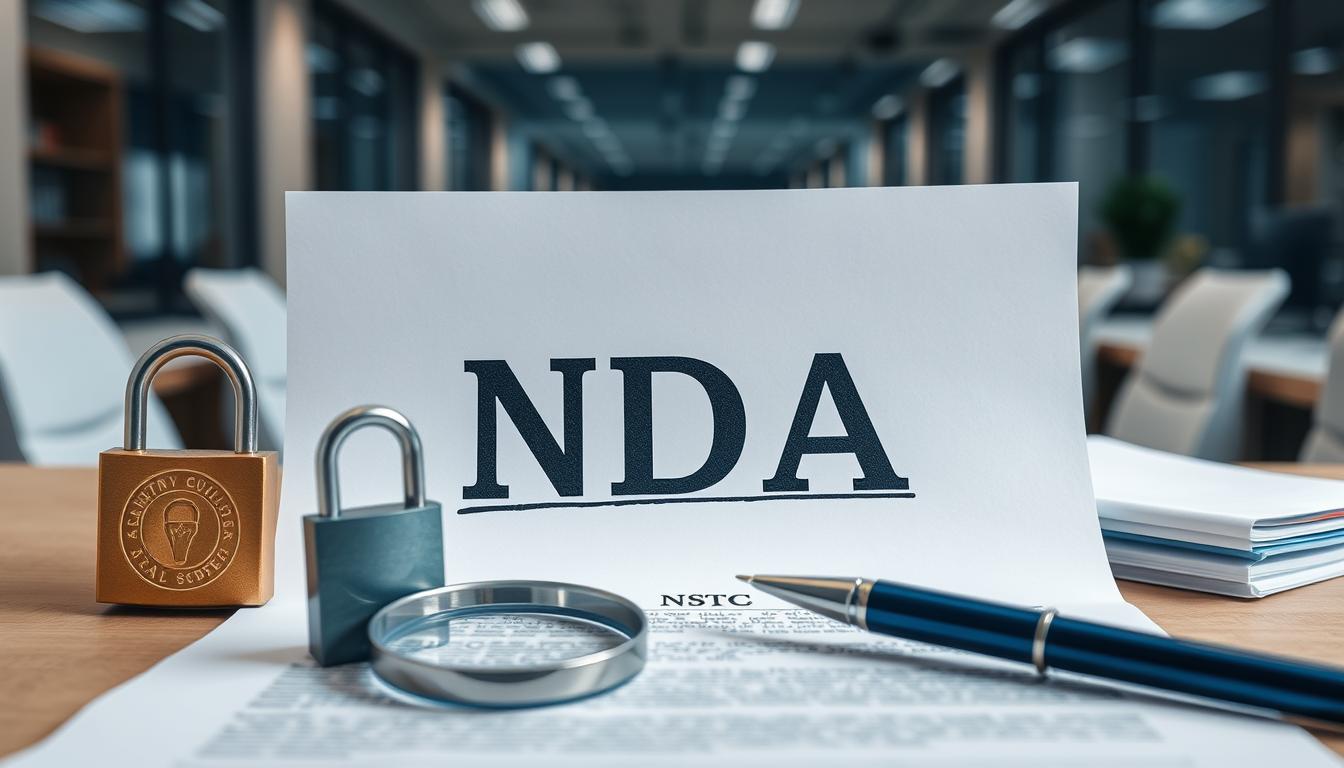
NDA Romania

This makes sure these agreements work well and can be enforced.

Knowing about these legal rules is very important.

NDAs in Romania usually last about two years for business deals.

But, personal info is protected forever.

Some info might not be covered by NDAs, like things that become public or info found on your own.

Key Takeaways

  • NDAs are essential for businesses of all sizes in Romania;
  • They protect proprietary information, processes, and customer lists;
  • Romanian NDAs must comply with the Civil Code and GDPR;
  • The average confidentiality period is two years for commercial data;
  • Personal information is typically protected indefinitely;
  • Certain information categories may be excluded from NDA protection.

Introduction to NDAs in Romania

Non-disclosure agreements (NDAs) are key in Romania’s business world.

They keep sensitive info and trade secrets safe.

Knowing about NDA laws Romania is a must for businesses here.

Definition and Purpose of NDAs

NDAs are contracts that create a secret sharing relationship.

They stop the sharing of info without permission.

In Romania, they help protect trade secrets and proprietary knowledge.

There are three main types of NDAs:

  • Unilateral: One party shares info with another
  • Bilateral: Both parties share confidential info
  • Multilateral: Many parties exchange sensitive data

Importance in Romanian Business Context

In Romania’s competitive market, NDAs are crucial.

They keep new ideas, strategies, and client info safe.

Confidentiality clauses Romania are key in talks, partnerships, and jobs.

They help build trust and encourage innovation by keeping info secure.

nda laws romania

Legal Framework Governing NDAs in Romania

The Romanian Civil Code is the main law for NDAs.

These agreements must follow data privacy laws Romania, like GDPR.

Important parts of Romanian NDAs include:

  • Clear definition of confidential info;
  • Allowed use of shared data;
  • How long the secrecy lasts;
  • What happens if someone breaks the agreement.

By grasping these points, businesses can use NDAs well in Romania’s fast-paced market.

Key Components of Romanian NDAs

Romanian NDAs have important clauses to protect sensitive info.

These agreements set clear rules for keeping secrets.

When making an NDA in Romania, you must include key parts to make it work well.

Key components of Romanian NDAs

  • Identification of contracting parties;
  • Definition of confidential information;
  • Scope and duration of confidentiality;
  • Intellectual property safeguards;
  • Breach of confidentiality penalties;
  • Jurisdiction and applicable law.

Your NDA should clearly list who is involved and what’s considered secret.

Say how long the secrecy lasts, from a few years to forever.

Also, add rules to protect your intellectual property.

Make sure to include penalties for breaking the secrecy rules.

These can be money fines or legal action.

Finally, say which laws apply if there’s a dispute.

This makes things clear if you go to court.

With these parts, you make a strong NDA to protect your business in Romania.

Always talk to a Romanian lawyer to make sure it fits your needs and follows Romanian laws.

Types of Non-Disclosure Agreements in Romania

In Romania, non-disclosure agreements (NDAs) are key in keeping secrets safe.

They come in different forms to meet various business needs.

Unilateral NDAs

A unilateral NDA Romania is for when one side shares secrets with another.

It’s common in jobs. For instance, a company might ask new employees to sign one to keep company secrets safe.

Bilateral (Mutual) NDAs

Bilateral NDA Romania is for when two sides share secrets with each other.

It’s used in partnerships or talks. Both sides promise to keep the shared info private, building trust and open talks.

Multilateral NDAs

Multilateral NDA Romania is for when many sides agree to keep secrets.

It’s good for big business deals or joint projects with many people involved.

Types of NDAs in Romania

NDA TypeDescriptionCommon Use
UnilateralOne-way information sharingEmployment contracts
BilateralTwo-way information exchangeBusiness partnerships
MultilateralMultiple parties involvedJoint ventures, complex deals

Picking the right NDA is key to keeping secrets safe in Romanian business.

Each type has its own role and should match the situation and the people involved.

Legal Requirements for NDAs in Romania

In Romania, non-disclosure agreements (NDAs) are key to keeping secrets safe.

It’s important for businesses to know the NDA legal requirements Romania.

These agreements must follow the Romanian Civil Code and data privacy Romania rules.

NDAs in Romania cover many types of secrets, like technical data and customer lists.

They should clearly say what’s confidential and what can’t be shared.

Romanian intellectual property law is also important for NDAs, especially for tech companies.

These agreements help protect trade secrets and new ideas.

Keeping information secure is a big deal in Romania.

NDAs should talk about how to keep secrets safe and what to do with them when the deal ends.

Key NDA ComponentsLegal Considerations
Purpose of AgreementMust be clearly stated and lawful
Definition of Confidential InformationSpecific and comprehensive
Duration of ObligationsReasonable timeframe
Consequences of BreachEnforceable penalties
Governing LawRomanian law jurisdiction

Employers in Romania need to make sure NDAs follow employment laws.

They can’t be used to stop people from speaking out.

Getting legal advice is a good idea to make sure NDAs work in Romania.

Non Disclosure Agreement and Confidentiality Romania: Best Practices

In Romania, keeping trade secrets and intellectual property safe is key for businesses.

To keep information confidential, understanding how to write and enforce non-disclosure agreements (NDAs) is vital.

Drafting Considerations

When making an NDA in Romania, use simple language.

Clearly state what information is confidential.

The agreement must follow the Civil Code, as published in Official Gazette no. 505 of 15 July 2011.

Include clauses for confidentiality, non-competition, and non-solicitation.

Also, outline when the agreement ends and how to handle confidential materials.

Enforcement Strategies

To make NDAs more effective in Romania, consider these steps:

  • Include liquidated damage provisions;
  • Outline injunctive relief options;
  • Specify attorney fees as a remedy for breach;
  • Define clear dispute resolution mechanisms.

Keep in mind, going to court can be expensive.

Regularly update and review NDAs to keep up with laws, like the Unfair Competition Law amended on 6 August 2014.

Common Pitfalls to Avoid

To effectively protect trade secrets in Romania, avoid these mistakes:

  • Using overly broad definitions of confidential information;
  • Neglecting digital data handling procedures;
  • Failing to address cross-border confidentiality issues;
  • Overlooking GDPR compliance in NDAs.

By following these guidelines, you can better protect your intellectual property in Romania.

This reduces the chance of confidentiality breaches.

Always talk to legal experts to make sure your NDAs meet Romanian laws and protect your business.

Confidentiality Clauses and Trade Secret Protection in Romanian NDAs

In Romania, confidentiality clauses are key to protecting trade secrets and proprietary data.

They are the core of Non-Disclosure Agreements (NDAs), offering strong Ip protection Romania.

A good NDA usually has three pages and details how Confidential Information is shared.

  • Clear definition of confidential information;
  • Transfer process documentation;
  • Immediate notification requirements for unauthorized disclosures;
  • Governing law (Romanian) and jurisdiction (Bucharest courts).

Data protection Romania is crucial in these agreements.

The NDA should say no warranties are given about the shared information’s accuracy or completeness.

This helps protect the party sharing the information from legal issues.

For strong proprietary data Romania protection, NDAs often have:

  • Termination procedures (exclusive to the disclosing party);
  • Injunctive relief in case of breaches;
  • Written notice requirements with proof of delivery.

By adding these elements, Romanian businesses can make strong NDAs.

These agreements help protect valuable trade secrets and keep businesses competitive in the market.

GDPR Compliance and Data Privacy in Romanian NDAs

In Romania, data privacy rules are key in making Non-Disclosure Agreements (NDAs).

These agreements must follow the General Data Protection Regulation (GDPR). This ensures the security of business information and stops corporate espionage.

Intersection of NDAs and GDPR

Romanian NDAs now follow GDPR rules to protect sensitive data.

This change affects how companies deal with confidential and personal data.

For example, NDAs usually last 3 years, with confidentiality rules lasting 5 years after they end.

Data Protection Obligations in Confidentiality Agreements

Data protection laws in Romania make NDAs detail how to handle data.

They include:

  • Limiting data access to those who really need it;
  • Destroying confidential info within 30 days after the agreement ends;
  • Keeping contractual data for 5 years after it’s over;
  • Storing billing details for 10 years to meet legal needs.

Penalties for Non-Compliance

Not following data privacy rules in Romania can lead to big problems.

Companies must make sure their NDAs follow GDPR to avoid fines.

This means handling personal data right, especially for technical support and abuse prevention.

Data TypeRetention PeriodPurpose
Registration DataUntil account inactivity (30 days)User management
Contractual Data5 years post-contractLegal compliance
Billing Information10 yearsFinancial records
Technical Support DataDuration of assistanceCustomer support

Enforcement of NDAs in Romanian Courts

Romanian courts are serious about keeping information confidential.

To prove a breach, you must show the violation and any damages.

They look at the agreement’s details and how well information was protected.

If someone steals a trade secret in Romania, they must provide solid evidence.

Keeping detailed records is key to winning a case.

This helps prove the breach and its impact.

Romanian courts can help in several ways:

  • Injunctive relief to stop further breaches;
  • Monetary damages to compensate for losses;
  • Specific performance to enforce agreement terms.

The length of an NDA matters a lot.

NDAs usually last 24 months, but confidentiality can last up to five years after it ends.

Trade secrets are protected forever.

Romanian law oversees these agreements. Courts in Arad have the final say.

This ensures local enforcement while following global standards.

For agreements across borders, getting help from a legal expert is wise.

They can handle the complex legal issues.

International Aspects of NDAs in Romania

Romania’s business world is getting more global, making international NDAs key.

These agreements keep sensitive info safe across borders.

They need careful thought about legal details.

Cross-border Confidentiality Agreements

Cross-border NDAs in Romania need to follow international law.

They’re used before talks begin to protect competitive data.

These agreements outline who’s involved, what’s covered, how long it lasts, and what happens if there’s a breach.

Jurisdiction and Applicable Law Considerations

When making an international NDA in Romania, think about jurisdiction and law.

Romanian courts usually accept foreign NDAs that follow local laws.

They often include penalties to make enforcement easier without needing to prove harm.

Recognition of Foreign NDAs in Romania

For foreign NDAs to be recognized in Romania, they must meet local legal standards.

Info that’s public or needed by law is usually not protected.

It’s smart to share details with professionals who promise to keep it secret, like patent lawyers or legal advisors.

AspectConsideration
Disclosure RisksUnauthorized use of ideas, potential patent issues
Safe DisclosureTo professionals bound by confidentiality
StrategyAvoid excessive secrecy, reveal broad concept
CautionBe diplomatic yet firm, even with NDA protection

Conclusion

Understanding the role of NDAs in Romania is key to protecting your business.

These agreements are essential for keeping trade secrets safe and maintaining confidentiality.

By using well-made NDAs, you can protect your company’s sensitive information and ideas.

NDAs do more than just protect legally.

They help build trust and professionalism in business dealings.

In Romania, where company info is limited, NDAs are crucial for keeping things private and safe.

Legal changes, like GDPR in Romania, have made confidentiality practices more complex.

You need to make sure your NDAs follow these rules to avoid fines and stay legal by getting advice from a experienced team of  lawyers in Romania.

Keeping up with legal changes and adjusting your practices by accessing  our team of Romanian Lawyers helps protect your business in Romania’s competitive market.

FAQ

What is the purpose of an NDA in Romania?

NDAs in Romania are contracts that keep sensitive info safe.

They protect business secrets in B2B deals and talks.

What are the key components of a Romanian NDA?

A Romanian NDA has key parts.

These include who’s involved, what’s confidential, how long it’s kept secret, and what happens if it’s not.

It also has rules for legal issues.

What types of NDAs are used in Romania?

Romania uses different NDAs. There are ones-way, two-way, and many-way NDAs.

Each type deals with sharing info differently.

What legal requirements must NDAs in Romania comply with?

NDAs in Romania must follow the Romanian Civil Code and GDPR.

They need to be fair and handle digital info well.

What are some best practices for NDAs in Romania?

Good NDAs are clear and specific.

They should be fair and reviewed often.

It’s important to avoid broad terms and handle digital data right.

How do confidentiality clauses in Romanian NDAs protect trade secrets?

Confidentiality clauses in NDAs define trade secrets and secrecy measures.

They also state what happens if secrets are shared without permission.

Romanian law sees trade secrets as intellectual property.

How do Romanian NDAs address GDPR compliance?

NDAs must follow GDPR.

They need to talk about data handling, how long data is kept, and data subject rights.

Not following GDPR can lead to fines.

How are NDAs enforced in Romanian courts?

Romanian courts look at the agreement’s fairness, how well info was protected, and evidence of a breach.

They can order actions to stop the breach and award money damages.

What considerations apply to cross-border NDAs involving Romanian parties?

Cross-border NDAs need to say who’s in charge of legal issues and where disputes are solved.

Romanian courts usually accept foreign NDAs if they meet Romanian laws.

What is a Non-Disclosure Agreement (NDA) and why is it important in Romania?

A Non-Disclosure Agreement (NDA), also known as a confidentiality agreement, is a legally binding contract between two or more parties that outlines confidential information that the parties wish to share with one another but restrict access to by third parties.

In Romania, NDAs are crucial for protecting business information, trade secrets, and intellectual property.

They establish a clear relationship between the parties and set expectations regarding the handling of sensitive information.

NDAs are particularly important in Romania due to the country’s growing business landscape and increasing international collaborations, which necessitate proper safeguards for valuable information.

What types of information can be covered by an NDA in Romania?

In Romania, an NDA can cover a wide range of confidential information, including:

– Trade secrets and proprietary processes

– Financial data and projections

– Customer and supplier lists

– Marketing strategies and plans

– Product designs and formulas

Inventions and patent applications

– Research and development data

– Source code and software algorithms

Personal data (subject to data protection laws)

– Negotiation strategies and terms.

It’s important to note that the agreement should clearly define what constitutes confidential information to avoid ambiguity and potential disputes.

How long does a Non-Disclosure Agreement typically last in Romania?

The duration of a Non-Disclosure Agreement in Romania can vary depending on the nature of the confidential information and the agreement between the parties.

contract breaches in Romania

Contract Breaches in Romania

Understanding Contract Breaches in Romania: What You Need to Know

Contract breaches can be frustrating and lead to potential legal disputes.

In this article, we will dive into the topic of contract breaches in Romania to help you understand your rights and options when dealing with such situations.

What is a Contract Breach?

A contract breach simply means that one party fails to fulfill their obligations as outlined in a legally binding agreement.

It can involve various scenarios, such failing to deliver goods or services, not meeting project deadlines, or violating specific terms and conditions stated in the contract.

When a breach of contract occurs under the stipulations of the Romanian Law, the non-breaching party may seek legal remedies to address the situation appropriately.

Types of Contract Breaches in Romania

In Romania, contract breaches can be classified into two main types: material breaches and minor breaches.

  • Material Breaches:

A material breach is a significant violation of the contract that goes to the core of the agreement.

It occurs when the breaching party’s actions or omissions substantially prevent the other party from receiving the benefits they were entitled to under the contract.

Material breaches often give rise to substantial legal remedies for the non-breaching party.

  • Minor Breaches:

A minor breach, also known as a partial breach, refers to a lesser violation of the contract’s terms.

While it does not fundamentally undermine the purpose of the agreement, it still represents a failure to perform certain obligations. In such cases, the non-breaching party may be entitled to seek limited remedies, such as damages or specific performance.

Legal Remedies for Contract Breaches in Romania

When a contract breach occurs in Romania, the non-breaching party has several legal remedies available to properly address the situation. Let’s explore some of the common remedies:

  • Damages:

The non-breaching party may seek monetary compensation to cover any financial losses incurred due to the breach. The damages aim to put the injured party in the position they would have been in had the breach not occurred.

  • Specific Performance:

The non-breaching party may request the court to order the breaching party to fulfill their contractual obligations as originally agreed. This remedy is typically sought when the subject matter of the contract is unique.

  • Contract Termination:

In severe cases, the non-breaching party may choose to terminate the contract, releasing both parties from their obligations. However, reviewing the contract terms and consulting legal counsel is crucial before termination.

  • Seeking Legal Assistance:

Dealing with contract breaches in Romania can be complex, so seeking legal assistance from an experienced Romanian attorney is advisable to protect your rights and interests.

Minimizing Contract Breaches in Romania

While understanding remedies is essential, it’s equally important to take preventive measures to minimize the chances of a breach occurring in Romania in the first place:

  • Draft Clear and Precise Contracts: Ensure contracts clearly define the rights, obligations and expectations of all parties involved to avoid disputes.
  • Perform Due Diligence: Research the other party thoroughly before entering into a contract to reduce the risk of unreliable partners.
  • Include Dispute Resolution Clauses: Consider including mediation or arbitration clauses to resolve disputes efficiently, without going to court.
  • Regularly Review and Update Contracts: Review contracts periodically to ensure they reflect any changes in laws or regulations that may impact the agreement.

In summary, understanding contract breaches in Romania is key to protecting your rights and navigating disputes.

Seeking legal assistance from qualified Romanian attorneys ensures you can address any contract breaches effectively, while preventive measures help minimize breach occurrences.