
Business lawyer assisting foreign company with branch office registration in Romania

How to Register a Branch Office of a Foreign Company in Romania


How to Register a Branch Office of a Foreign Company in Romania

Setting up a branch office in Romania offers foreign companies a strategic foothold in the European market. This comprehensive guide provides an overview of the process to register a branch in Romania, ensuring compliance with Romanian regulations and maximizing your business potential. From understanding the nuances of Romanian law to navigating the National Trade Register Office, we’ll walk you through each step.


Need Professional Help?

At our law firm, Atrium Romanian Lawyers, we assist clients with corporate & commercial law, branch registration, and investor-friendly advisory services.


Understanding Branch Offices in Romania

A receptionist welcoming visitors at the front desk of the office.

What is a Branch Office?

A branch office in Romania serves as an extension of the parent company, allowing it to conduct activities in Romania without creating a separate legal personality. Essentially, registering a branch is establishing a physical office in Romania that operates under the umbrella of the existing foreign company. Unlike a Romanian subsidiary, the branch office shares the same legal entity as its parent company, simplifying administrative processes while expanding its reach.

Branch vs. Subsidiary: Key Differences

TypeDescription
Branch OfficeExtension of parent company without separate legal personality; parent is directly liable
SubsidiaryDistinct legal entity with own capital; provides liability protection to parent

Benefits of Establishing a Branch in Romania

  • Test the Romanian market and gain insights before committing to a full-fledged subsidiary
  • Simpler and faster registration process compared to forming a new Romanian legal entity
  • Lower initial setup costs and reduced administrative burden
  • Leverage the established brand and resources of the parent company
  • Direct representation in the European Union market

Legal Framework for Foreign Companies

A close-up of legal documents and a pen on a desk.

Romanian Companies Law 31/1990

The Romanian Companies Law 31/1990 is the cornerstone of corporate governance in Romania, influencing how foreign companies can establish a branch. This law defines the legal entities permitted to operate in Romania and outlines the requirements for company formation, including registering a branch. Understanding this legislation is vital for foreign investors aiming to register a branch in Romania, ensuring compliance with local regulations.

Foreign Branch Legal Requirements

To register a branch in Romania, foreign companies must meet specific legal requirements:

  • Submit parent company’s registration documents, translated and notarized, to the National Trade Register Office (ONRC)
  • Ensure the branch representative has power of attorney to register and legally bind the company
  • Provide a registered office address in Romania with proof of occupancy
  • Define the scope of activities through CAEN codes

Registration with ONRC Romania

The National Trade Register Office (ONRC) is the central authority for registering a branch in Romania. The process involves filing necessary documents, including the parent company’s details, the decision to open a branch, and the appointment of the branch representative. Once approved, the branch office receives a unique registration number and tax identification code, allowing it to operate legally.

Atrium Romanian Law Office is an expert legal services provider based in Romania, specifically in Bucharest. The firm’s team of experienced Romanian lawyers and professionals are equipped to resolve any legal issue in a timely manner. They offer guidance through the branch registration process, ensuring full compliance with Romanian law.


Step-by-Step Registration Process

A checklist with steps for registration is pinned on a bulletin board.

Phase 1: Preparation of Required Documents

  • Parent company’s articles of association and certificate of incorporation
  • Board resolution authorizing the establishment of the branch
  • Proof of legal existence of the parent company
  • Details of the branch representative and their power of attorney
  • Business plan detailing planned activities in Romania

All foreign documents must be officially translated into Romanian and notarized. This preparation is crucial for avoiding delays with ONRC.

Phase 2: Branch Registration with ONRC

  • Submit all prepared registration documents to ONRC (in person or online)
  • Pay the registration fee (typically €50-€100)
  • ONRC reviews documents for compliance with Romanian legal requirements
  • Upon approval, receive registration certificate and unique fiscal code
  • Branch receives official publication in the Commercial Register

Phase 3: Tax Registration with ANAF

Phase 4: Post-Registration Formalities

  • Open business bank account in Romania
  • Register for social security and employment purposes
  • Apply for sector-specific licenses or permits if required
  • Notify relevant authorities of branch operations

Key Responsibilities After Registration

A computer screen displaying a business registration form.

Role of the Branch Representative

The branch representative holds significant responsibilities:

  • Acts on behalf of the parent company in all matters related to the branch
  • Is authorized to make decisions and enter into contracts
  • Must be a resident of Romania or an EU citizen with valid residence permit
  • Ensures compliance with all Romanian legal and regulatory requirements
  • Serves as the main point of contact with Romanian authorities

Parent Company Obligations

The parent company maintains certain obligations:

  • Remains ultimately liable for all activities conducted by the Romanian branch
  • Must ensure the branch adheres to Romanian legal standards
  • Is responsible for financial reporting and tax compliance
  • Must promptly communicate changes to structure or articles of association
  • Must maintain adequate insurance coverage for branch operations

Common Pitfalls & How to Avoid Them

Two people are discussing documents in a meeting room.
  • Incomplete translations — Ensure all documents are properly translated and notarized by qualified professionals
  • Inadequate branch representative — Choose a qualified individual familiar with Romanian business practices
  • Tax compliance issues — Establish robust accounting and tax reporting procedures from the start
  • Incorrect CAEN codes — Define business activities carefully to match registration requirements
  • Delayed bank account opening — Prepare all documentation in advance to expedite the process
  • Missing sector licenses — Identify and obtain all required permits before commencing operations

Useful Resources & Links


FAQ – Branch Registration in Romania

Q: What is a branch office of a foreign company in Romania?

A: A branch office is an extension of the parent company located abroad. It operates under Romanian laws while representing the foreign legal person and can engage in various business activities.

Q: How long does it take to register a branch in Romania?

A: The registration process typically takes 2-4 weeks, depending on the completeness of submitted documents and ONRC processing time.

Q: What are the registration costs?

A: Costs typically range from €500-€1,500, including ONRC fees, translation and notarization services, publication fees, and optional legal advisory services.

Q: Can a foreign company open multiple branches in Romania?

A: Yes, a foreign company can open multiple branches. However, each branch must be registered separately and comply with local laws and regulations.

Q: What is the difference between a branch and a representative office?

A: A branch can engage in commercial activities and generate revenue, while a representative office is limited to promoting the parent company’s interests without engaging in direct business activities.

Q: Is the branch representative required to be Romanian?

A: The branch representative must be a resident of Romania or an EU citizen with a valid residence permit. They don’t need to be Romanian by nationality.

Q: What are the tax implications for a branch?

A: A branch is subject to corporate income tax on income generated within Romania. It must register for VAT if annual turnover exceeds EUR 88,500 and comply with Romanian tax regulations.

Q: What documents are required to register a branch?

A: Required documents include the parent company’s incorporation certificate, articles of association, proof of legal existence, branch representative details, power of attorney, and information about planned activities.

Q: Can changes be made to the branch after registration?

A: Yes, changes such as branch representative, registered office, or scope of activities must be reported to ONRC. The parent company must ensure all modifications are properly documented and filed.


Disclaimer: This article is for general information only and does not constitute legal advice. Please consult with a qualified Romanian corporate lawyer to verify current laws and regulations before proceeding with branch registration. Laws and procedures are subject to change, and individual circumstances may vary.
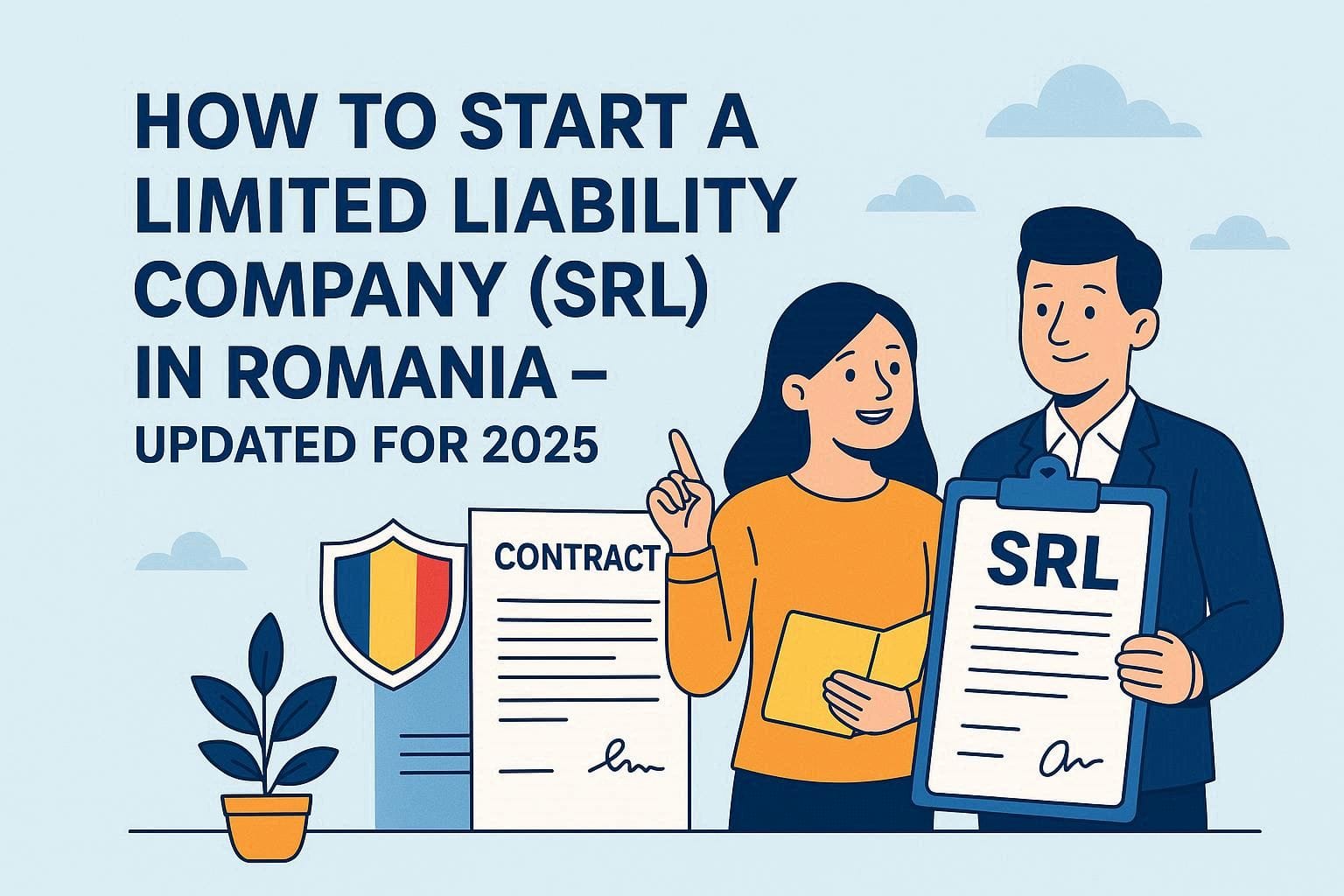
Start a Limited Liability Company (SRL) in Romania 2025

How to Start a Limited Liability Company (SRL) in Romania – Updated for 2025

How to Start a Limited Liability Company (SRL) in Romania – Updated for 2025

How to Start a Limited Liability Company (SRL) in Romania – Updated for 2025

Navigating the intricacies of starting a Limited Liability Company (SRL) in Romania requires a comprehensive understanding of the local legal framework and the specific nuances of Romanian law. This article serves as a guide to help entrepreneurs understand the SRL formation process, explore available options, and ultimately establish their business successfully in Romania.

Understanding SRL Formation in Romania

Successfully navigating the SRL registration process in Romania demands a clear understanding of both local and EU regulations. As an expert legal services provider, we can assist you in understanding the full scope of requirements and procedures. Our goal is to provide the best legal solutions, ensuring effective strategies for company formation in Romania. Learn more about our corporate law services.

What is an SRL?

An SRL (Societate cu Răspundere Limitată), or Limited Liability Company, is a business structure where the liability of shareholders is limited to their capital contribution. This structure is one of the most popular and practical routes for entrepreneurs in Romania, offering both flexibility and legal protection.

The Landscape of Business Formation in Romania

Romania’s economic landscape presents significant opportunities for business formation. Understanding the current trends, regulations, and requirements is crucial for both domestic and international entrepreneurs. The legal framework has been refined for 2025, with greater clarity around capital requirements, registration steps, and foreign investor issues.

Types of Business Structures: SRL vs. SA vs. PFA

In Romania, businesses can be structured in several ways:

  • SRL (Limited Liability Company), which is flexible and suitable for most startups and SMEs.
  • SA (Joint-Stock Company), typically required for large enterprises with minimum capital requirements.
  • PFA (Sole Proprietorship), suited for very small operations but without separate legal entity protection.

The type of business structure influences the registration process and available options, requiring tailored strategies.

Legal Framework for SRL Formation

Key Legislation Governing SRL Registration

The SRL formation process in Romania is governed by a comprehensive set of laws and regulations designed to protect both creditors and shareholders. Key legislation includes the Civil Procedure Code and regulations from the National Register of Commerce (ONRC). Understanding these laws is essential for effective company formation in Romania. For detailed information on procedures, refer to the European e-Justice Portal.

Role of Corporate Law Specialists

A corporate law specialist plays a crucial role in navigating the complexities of SRL formation in Romania.

Atrium Romanian Law Office is an expert legal services provider based in Romania, specifically in Bucharest. Atrium aims to be the best in handling complex and challenging legal matters. The firm’s team of experienced Romanian lawyers and professionals are equipped to resolve any legal issue in a timely manner. They offer guidance through processes related to company formation, compliance, and strategic business planning. The team are members of the Romanian Bucharest Bar.

These legal professionals provide expert guidance on registration procedures, handle ONRC submissions, and develop tailored strategies for company formation. At Atrium Romanian Law Office, experienced lawyers understand the nuances of Romanian law. This ensures that all procedures are both effective and compliant with current regulations, maximizing the chances of successful SRL establishment.

Understanding Capital Requirements

For 2025, the minimum share capital requirement has been effectively abolished for SRLs. Founders can declare any amount they deem appropriate. However, proposed legislative reforms may reintroduce minimum capital thresholds (around 8,000 RON) for new incorporations from January 2026 onwards. Understanding these requirements is crucial for proper company structuring.

Step-by-Step Process to Form an SRL in Romania

The SRL formation process in Romania involves several key phases designed to maximize your chances of successful registration. Whether through streamlined online procedures or in-person submissions, understanding each phase is critical.

Phase 1: Preliminary Planning & Name Reservation

The first step in SRL formation is careful planning and name reservation. This involves:

  • Choosing the SRL form and ensuring it fits your business model
  • Proposing 2–3 name options and checking availability via ONRC portal
  • Reserving the name with the trade-registry
  • Selecting your registered office address and gathering proof
  • Determining business activities (CAEN codes) carefully

Phase 2: Drafting Documents & File Preparation

Once planning is complete, prepare all necessary documentation:

  • Prepare Articles of Association outlining company details
  • For foreign shareholders: prepare apostilled copies and Romanian translations
  • Open a temporary bank account for capital deposit
  • Ensure all documentation is signed, notarized and in correct format

Phase 3: Submission to Trade Registry (ONRC)

Submit your file to ONRC through the following steps:

  • Submit file to ONRC (in person or via online portal)
  • Pay the state registration fee (approximately €50)
  • ONRC reviews file; certificate typically issued within 3 working days
  • Company is legally established; commence business activities (subject to licenses)

Phase 4: Post-Registration Formalities

After registration, complete these essential formalities:

  • Deposit declared capital in bank
  • Register for tax purposes with ANAF
  • Submit VAT registration if turnover exceeds threshold (EUR 88,500)
  • Open regular business bank account
  • Apply for sector-specific licenses/permits if required

Phase 5: Begin Operation & Compliance

Ensure ongoing compliance with:

  • Register for accounting and payroll services
  • File annual financial statements with ONRC
  • Ensure ongoing compliance with statutory deadlines
  • Report any changes in capital, address, administrators or business activity

Timeline & Cost Expectations (2025)

Typical Timeline: 5-10 working days for complete SRL setup

Typical Costs: €300-€800 (varies depending on legal fees, translations, notarization, and sector-specific requirements)

Actual costs vary widely depending on legal advisor fees, translation/notary costs for foreign shareholders, virtual office fees, bank requirements, and regulatory licenses needed.

Advantages of an SRL Structure in Romania

  • Limited Liability Protection – Your personal liability is limited to your contribution
  • Flexibility & Simplicity – Simpler to administer than joint-stock companies
  • Wide Applicability – Suited for startups, SMEs and cross-border businesses
  • Foreign Investor Friendly – Accommodates non-resident shareholders and administrators
  • Access to EU Single Market – With relatively favorable conditions

Common Pitfalls & How to Avoid Them

Protect your SRL formation by avoiding these common mistakes:

  • Incomplete documents — Legal professionals catch naming errors, missing signatures and incorrect forms
  • Foreign-investor documentation — Apostille, translation, notarization requirements vary; each adds time
  • Bank account delays — Budget extra time or use law-firm assisted account opening
  • Incorrect name or CAEN code — Similar names or restricted words trigger extra checks
  • Underestimating permits — Sectors like food, pharma, finance need regulatory checks before operation
  • Ignoring reform changes — Future-proof your structure against 2025/2026 minimum capital reforms

Related Company Formation Resources

To further support your journey in establishing and managing your business in Romania, we’ve compiled a comprehensive cluster of related guides and resources:

Frequently Asked Questions About SRL Formation in Romania

What is the minimum share capital for an SRL in Romania?
For an SRL in 2025, there is no legal minimum share capital required; founders may set the amount they deem appropriate. However, proposed legislative reforms may require higher minimum capital for new SRLs from 2026 onwards.
How long does it take to register an SRL?
If all documents are complete and valid, the trade-registry certificate is typically issued within 3 working days; total company setup often takes 5-10 working days depending on additional requirements.
Can a foreigner be a shareholder or director?
Yes — non-residents can own or manage an SRL; extra documentation may be required including apostille, notarization, and translation into Romanian.
When is VAT registration required?
Mandatory when turnover exceeds the equivalent of EUR 88,500 (in RON) or if opting in earlier. Check the latest ANAF threshold for current requirements.
What if my business activity needs a license?
After SRL registration you may need to apply for sector-specific licenses or permits (e.g., food services, pharmaceutical, financial advice). These can add days or weeks to the launch timeline.
What are the ongoing compliance requirements?
SRLs must file annual financial statements with ONRC, maintain accounting records, register for payroll services, and report any changes in capital, address, or business activities.
Can I use a virtual office for my registered address?
Yes, many foreign-investor SRLs use virtual offices with local law-firm hosting for convenience. The address will be publicly registered and used for all official correspondence.
What role does ONRC play in SRL formation?
ONRC (National Register of Commerce) processes SRL registrations, reviews submitted documents for compliance, issues registration certificates, and maintains the official registry of companies in Romania.
What are the benefits of engaging a law firm for SRL formation?
Engaging a law firm provides expert guidance on requirements, ensures proper document preparation, handles ONRC submissions, navigates foreign investor procedures, and improves chances of smooth registration.

Ready to Start Your SRL?

Setting up an SRL in Romania requires careful planning and professional guidance. Our experienced corporate lawyers ensure proper structure, compliant documentation, and smooth registration. Let us help you navigate the process and establish your business successfully.