Essential Documents for Foreign Founders Starting a Business in Romania
Essential Documents for Foreign Founders Starting a Business in Romania
What if the fastest way to launch a European business isn’t where you’d expect?
Romania’s streamlined corporate framework allows entrepreneurs to establish an SRL company in just three working days with current minimum capital requirements that have recently undergone significant changes in 2025.

But beneath this efficiency lies a critical question:
How can international investors avoid hidden pitfalls in documentation processes that could derail their ambitions?
Romania’s open-market policies permit full foreign ownership without local partnership mandates, creating attractive opportunities for global entrepreneurs.
However, the registration process demands precise adherence to legal standards.
Corporate filings must align with Trade Register specifications, including certified translations into Romanian or bilingual formats.
Strategic document preparation forms the backbone of successful incorporation.
Errors in paperwork often lead to delays, financial penalties, or rejected applications.
Professional legal guidance from lawyers in Romania ensures compliance with corporate law frameworks while maintaining operational legitimacy from day one.
Investors benefit from understanding how each document interacts with regulatory systems.
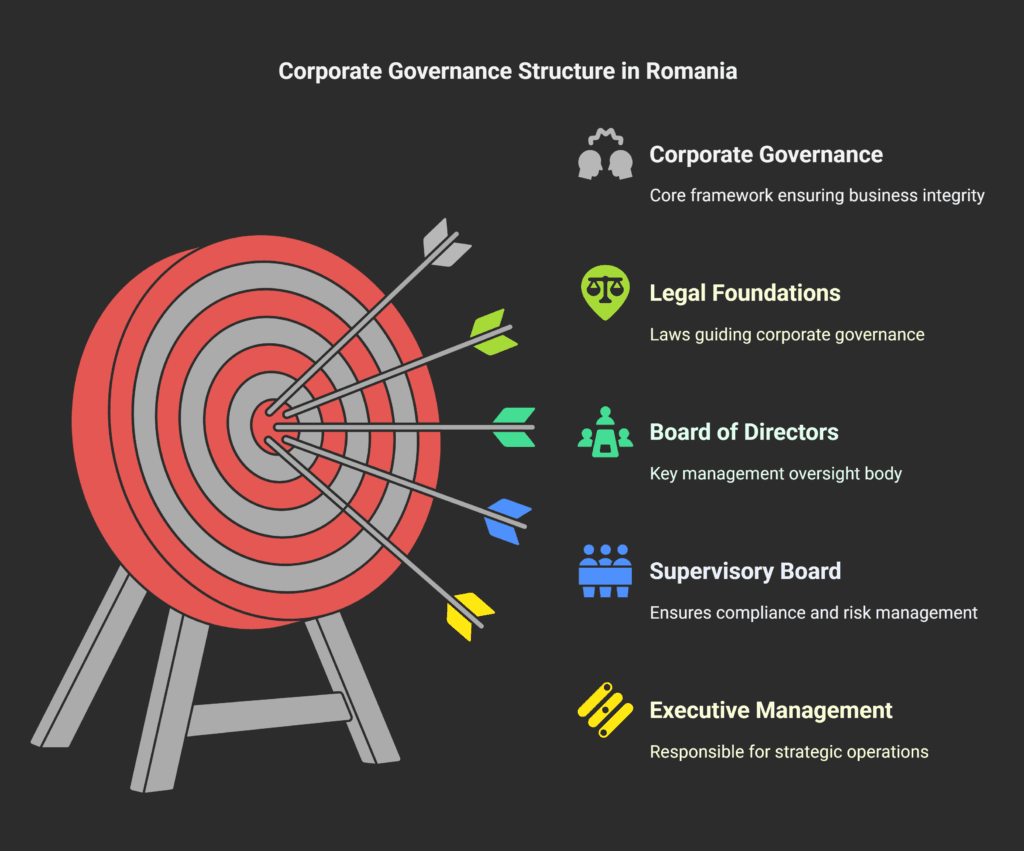
Properly structured articles of association, shareholder agreements, and notarized identification papers establish transparent governance structures.
These elements collectively safeguard business interests within Romania’s evolving economic landscape.
Key Takeaways
- Romania permits 100% foreign-owned companies with fast 3-day Trade Register approval timelines,
- Document preparation requires strict compliance with Romanian language standards,
- Legal expertise minimizes risks of administrative delays or non-compliance penalties,
- Corporate filings must align with Trade Register specifications for approval,
- Precise paperwork establishes long-term operational legitimacy,
- VAT rate increased to 21% in August 2025, with registration threshold at RON 395,000,
- Minimum capital requirements are undergoing reform, with new tiered structure proposed.
Introduction to Business Registration in Romania
Romania’s economic landscape presents a compelling proposition for global enterprises seeking competitive positioning in Europe.
As an EU member state, the country serves as a strategic crossroads connecting major continental markets.
This geographic advantage, combined with progressive regulatory frameworks, creates fertile ground for sustainable business growth.
Overview of the Romanian Market
The local market distinguishes itself through a growing pool of skilled workforce, particularly in technology and engineering sectors.
Romania produces approximately 18.6 STEM graduates per 1,000 people aged 20-29, though this remains below the EU average of 23.0.
The country is actively working to expand its technical education programs.
Operational costs remain 34-51% lower than Western European averages without compromising service quality, with Romanian developer salaries approximately 40% below comparable Western rates.
Infrastructure development continues accelerating across transportation and digital networks.
Modern highways connect major cities to EU trade routes, while digital coverage expands nationwide.
These advancements enable companies to maintain efficient supply chains and regional operations.
Benefits for Foreign Entrepreneurs
Romania offers foreign investors streamlined processes through recent legal reforms.
The elimination of redundant permits and digital filing systems reduces Trade Register approval to approximately three working days.
EU membership guarantees alignment with continental standards while preserving local cost advantages.
Investors benefit from tax incentives for research-driven business initiatives and export-oriented activities.
Cultural adaptability further enhances market entry, with English widely spoken in professional environments.
These factors position the country as an attractive destination for scalable international ventures.
Why Start a Business in Romania?
Romania’s tax and regulatory systems create a unique value proposition for commercial ventures targeting European markets.
Strategic fiscal policies combine with progressive legislative changes to support both startups and established enterprises.
Attractive Tax Environment
The country maintains one of Europe’s most competitive tax frameworks, though recent changes require careful attention.
Microenterprises benefit from a 1% revenue tax when employing at least one worker and earning up to €60,000 annually.
For revenues above €60,000 or for specific sectors like IT services (CAEN codes 6210, 6290) and restaurants, a 3% rate applies.
Traditional corporations face a flat 16% profit tax.
| Tax Type | Rate | Conditions |
|---|---|---|
| Microenterprise | 1% | Revenue under €60K with 1+ employee |
| Microenterprise | 3% | Revenue €60K-€250K (€100K from 2026) or IT/restaurant activities |
| Corporate Profit | 16% | Standard companies |
| Dividends | 10% | Increased from 8% in January 2025 |
| Standard VAT | 21% | Increased from 19% in August 2025 |
| Reduced VAT | 11% | Consolidated rate from August 2025 |
Favorable Legal Reforms
Recent legislative updates streamline operations for international investors.
Digital registration systems cut Trade Register processing times to 3 working days, while revised thresholds for micro-tax status continue until 2026, though the revenue limit decreases from €250,000 to €100,000 starting January 2026.
Enhanced transparency measures reduce bureaucratic hurdles.
Special support programs assist startups in navigating compliance requirements, ensuring smooth market entry.
However, investors must stay updated on frequent tax law changes, including the August 2025 VAT increase from 19% to 21%.
Understanding Legal Structures for Foreign Founders
Selecting the optimal legal framework forms the cornerstone of successful business operations.
Romania offers multiple corporate formats, each aligning with specific operational scales and strategic objectives.
Three primary options dominate commercial registrations, balancing legal safeguards with administrative practicality.
Limited Liability Company (SRL)
The Societate cu Răspundere Limitată (SRL) remains the preferred choice for most ventures.
This structure provides limited liability protection, shielding personal assets from business debts.
Requirements include:
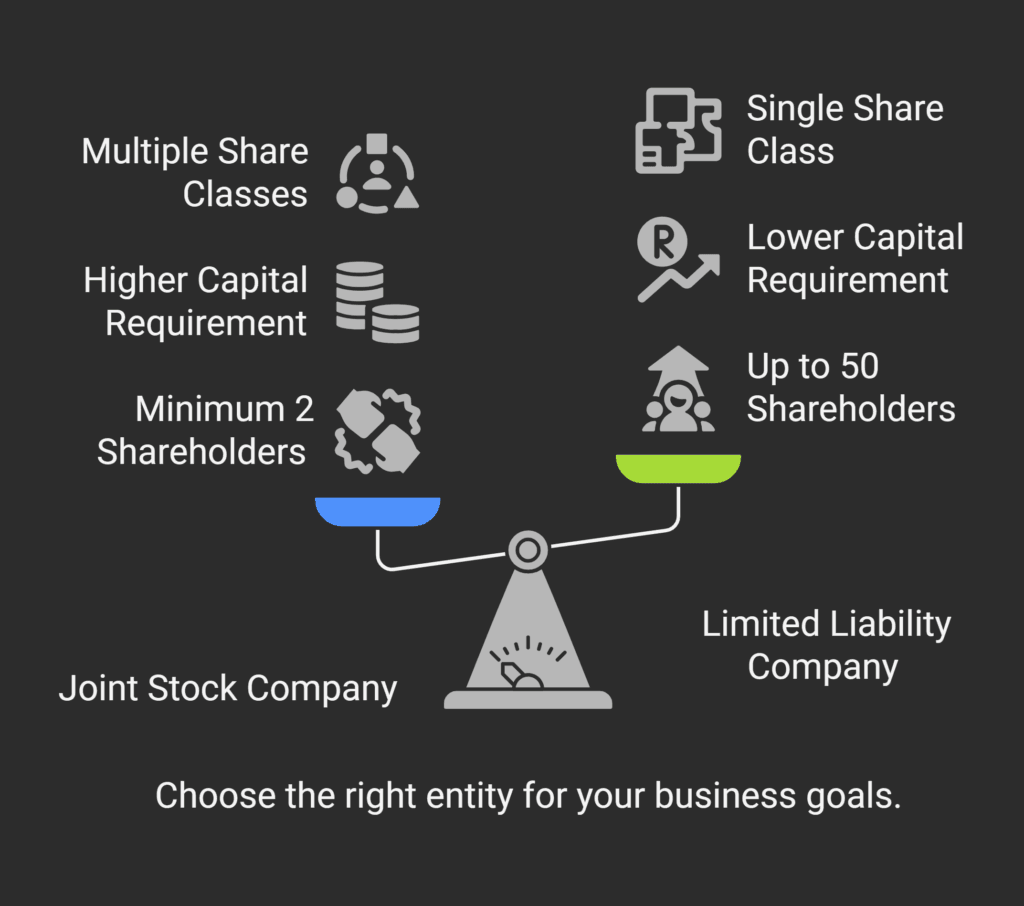
- 1–50 shareholders
- Minimum share capital currently ranges from RON 1 to RON 200 (sources vary), with a new tiered proposal for 2025-2026: RON 500 for new companies, increasing to RON 5,000 for revenues between RON 395,000-7 million, and RON 90,000 for revenues exceeding RON 7 million,
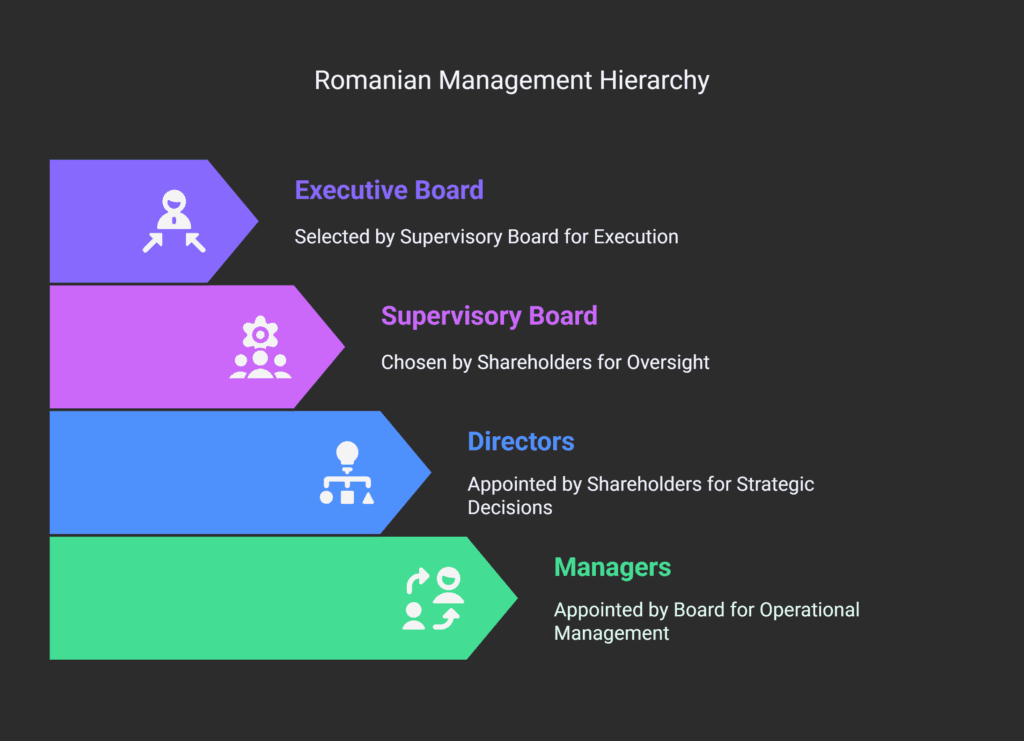
- Simplified management structures.
Governance flexibility allows swift decision-making, ideal for small-to-medium enterprises. Annual reporting obligations remain manageable compared to complex entities.
| Structure | Shareholders | Current Capital | Proposed Capital (2025-2026) | Best For |
|---|---|---|---|---|
| SRL | 1–50 | RON 1-200 | RON 500-90,000 (tiered) | Startups/SMEs |
| SA | Unlimited | RON 90,000 | RON 90,000 (€25,000) | Large enterprises |
Joint-Stock Company (SA) and Other Options
The Societate pe Acțiuni (SA) suits ventures planning IPOs or major investments.
Key features include:
- Minimum capital: RON 90,000 (approximately €25,000),
- Public share trading capability,
- Formal governance requirements.
Alternative structures like branches or partnerships serve niche scenarios.
Professional guidance ensures alignment between legal frameworks and long-term growth strategies, particularly given the evolving minimum capital requirements.
Required Documents for Foreign Founders in Romania
Navigating corporate registration demands meticulous attention to foundational paperwork.
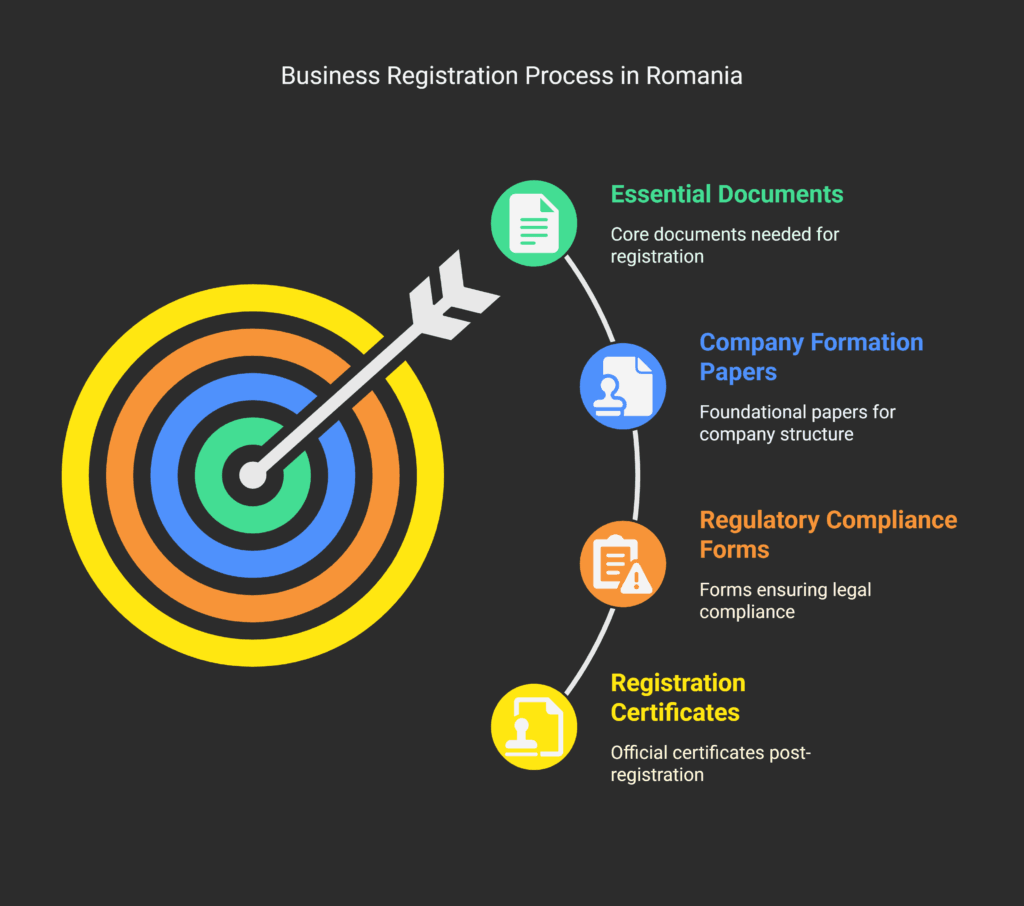
Seven core submissions form the basis of compliant filings, supported by supplementary materials that address cross-border complexities.
The application form and tax annex require detailed operational data, including management structures and activity codes.
Identity verification for administrators ( directors) necessitates certified copies of passports or national IDs, translated into Romanian by authorized professionals.
Shareholder affidavits confirm tax status for individuals lacking local fiscal identification.
These declarations prevent delays during fiscal authority reviews.
Articles of Association drafted in Romanian establish governance protocols, requiring alignment with national corporate law frameworks.
Proof of registered office ranges from property deeds to virtual office contracts, validating a physical business address.
Beneficial ownership disclosures meet EU anti-money laundering directives, tracing control chains for transparency.
Optional apostille certifications authenticate foreign-signed documents.
While not mandatory, these additions streamline verification processes across jurisdictions.
Professional legal review ensures technical accuracy before Trade Register submission, particularly important given recent regulatory changes.
Preparing Your Articles of Association and Registered Office
The foundation of a compliant Romanian enterprise lies in two critical components: constitutional documents and physical establishment.
These elements define operational boundaries while meeting legal obligations under national corporate frameworks.
Drafting the Articles of Association
Articles of Association act as a company’s operational blueprint.
This legally binding document must specify shareholder voting rights, capital distribution models, and decision-making hierarchies.
Romanian law mandates inclusion of NACE codes to classify business activities accurately.
Management roles require precise definitions of authority limits and appointment procedures.
Provisions for General Meetings must outline resolution processes and quorum requirements.
Legal professionals recommend embedding flexibility clauses to accommodate future growth scenarios, including provisions for the new tiered minimum capital requirements expected to phase in through 2026.
Establishing a Proof of Registered Office
All entities must maintain a verifiable registered office within Romania.
Valid proof includes notarized lease agreements or property ownership documents.
Virtual office contracts have gained traction for cost efficiency while fulfilling legal address requirements.
Service providers offering virtual solutions must issue compliance certificates recognized by the Trade Register.
Physical locations require utility bills or municipal confirmations.
Consistent address details across all filings prevent administrative delays during registration.
Steps in the Company Registration Process
Establishing a corporate entity in Romania follows a precise sequence of regulatory actions.
This systematic approach ensures compliance while maintaining operational efficiency for new market entrants.
Name Reservation and Document Filing
The initial company name reservation occurs through the National Trade Register Office (ONRC) portal.
This free digital service verifies name availability against existing registrations within minutes.
Approved reservations remain valid for 30 calendar days, creating urgency for subsequent filings.
Document preparation requires alignment with ONRC specifications.
Essential materials include translated identification papers and notarized corporate agreements.
Submissions can occur physically at regional offices or digitally using qualified electronic signatures.
Processing with the Trade Register
Officials typically complete company registration reviews within three working days for the Trade Register approval.
This period allows thorough verification of statutory documents and legal compliance checks.
Delays usually stem from incomplete filings or translation discrepancies.
Successful applicants receive three critical identifiers: the Certificate of Incorporation, CUI tax code, and Certificat Constatator.
These enable immediate banking operations and contractual engagements across Romania.
Note that while Trade Register approval is fast, the complete registration process including VAT registration and full operational readiness typically takes 7-10 working days.
Navigating Tax and VAT Registration in Romania
Understanding fiscal obligations marks a critical phase for enterprises establishing operations in emerging markets.
Romania’s integrated tax system combines automatic corporate registration with strategic VAT options, creating adaptable frameworks for diverse commercial needs.
Corporate and Microenterprise Tax Details
Newly registered companies receive tax IDs during incorporation, enabling immediate financial operations.
Important Update for 2025-2026:
Microenterprises benefit from preferential tax rates when maintaining at least one employee:
- 1% tax rate on revenue up to €60,000
- 3% tax rate on revenue from €60,000 to €250,000 (2025) or €100,000 (from January 2026)
Special activities including IT services (CAEN codes 6210, 6290), restaurants, and mobile food services are subject to the 3% rate regardless of revenue level.
Standard corporate tax applies at 16% for profits when companies exceed micro-company thresholds or don’t qualify for the regime.
The dividend withholding tax increased to 10% as of January 1, 2025 (previously 8%) for all recipients.
VAT Registration Requirements
Critical 2025 Updates:
Businesses must register for VAT when exceeding RON 395,000 annual turnover (effective September 1, 2025, increased from RON 300,000).
The standard VAT rate is 21% (increased from 19% in August 2025), with a consolidated reduced rate of 11% replacing the previous 5% and 9% rates.
Voluntary VAT registration remains available for smaller enterprises seeking input tax recovery.
Sector-specific rules apply, with businesses engaged in EU trade requiring VAT registration regardless of turnover thresholds.
FAQ
What legal structure is most common for foreign entrepreneurs in Romania?
The limited liability company (SRL) is preferred due to its flexibility and simplified compliance requirements.
Current minimum share capital varies between RON 1-200, with a new tiered proposal being implemented: RON 500 for new companies, increasing based on revenue thresholds to RON 5,000 (for revenues RON 395,000-7 million) and RON 90,000 (for revenues exceeding RON 7 million).
It allows full foreign ownership and limits liability to invested capital.
How does Romania’s tax environment benefit startups?
Romania offers a 16% corporate tax rate, one of the lowest in the EU.
Microenterprises with at least one employee pay only 1% on turnover up to €60,000 and 3% from €60,000 to €250,000 (reducing to €100,000 threshold from January 2026), making it ideal for early-stage businesses.
However, IT services and certain other sectors pay 3% regardless of revenue level.
Can a virtual office serve as proof of registered office?
Yes, foreign founders can use virtual office services compliant with Romanian law.
The address must be verifiable and included in the Articles of Association during company registration.
What are the VAT registration requirements for new businesses?
Updated for 2025: Companies must register for VAT if annual turnover exceeds RON 395,000 (effective September 1, 2025).
The standard VAT rate is 21% (increased from 19% in August 2025), with a reduced rate of 11%.
Voluntary registration is permitted, allowing input tax recovery.
Non-EU businesses require a fiscal representative for compliance.
How long does the company registration process take?
The Trade Register approval typically takes 3 business days with complete documentation.
However, the full registration process including VAT registration and complete operational setup takes 7-10 working days.
Delays often arise from incomplete documents or translation issues.
Are foreign shareholders required to visit Romania during incorporation?
No. A local lawyer can handle filings via power of attorney.
Notarized documents and apostilled/legalized identification (e.g., passports) must be submitted electronically or by courier.
What post-registration obligations apply to Romanian companies?
Firms must file annual financial statements, maintain accounting records, and submit monthly/quarterly tax declarations.
Important: As of 2025, the dividend tax is 10% (increased from 8%).
Companies must monitor the microenterprise revenue threshold, which decreases from €250,000 to €100,000 on January 1, 2026.
Hiring employees triggers additional labor law and social security compliance.
What are the current VAT rates in Romania?
Updated August 2025: The standard VAT rate is 21% (increased from 19%), and the reduced rate is 11% (consolidating the previous 5% and 9% rates).
These changes took effect August 1, 2025.
What documents are required to register a company in Romania as a foreigner?
To register a company in Romania, foreigners need to prepare and submit several necessary documents.
These include identification documents such as a valid passport, proof of address in Romania, and incorporation documents specific to the type of business structure chosen, whether it be a joint stock company or a limited liability company (SRL).
Additionally, an application for registration must be completed, and the unique company name must be verified through the trade registry.
How does the company registration process work for foreign entrepreneurs?
The company registration process for foreign entrepreneurs in Romania involves several key steps.
First, you must select a business structure and prepare the necessary documents.
Then, you will need to submit these documents to the trade registry for approval.
Following this, you will need to register your business office in Romania and meet the minimum share capital requirement.
Finally, once all documents are approved and the company is registered, you will receive a registration certificate, allowing you to start your business operations in Romania.
What are the benefits of starting a business in Romania as a foreigner?
Starting a business in Romania offers numerous benefits for foreign entrepreneurs.
Romania is situated in a strategic location within the European Union, providing access to a vast market.
The business environment is continually improving, with various incentives for foreign investment.
Additionally, the country offers a range of business structures available, allowing entrepreneurs to select the type of company that best fits their business needs.
This makes Romania an attractive destination for foreign founders looking to expand their operations in Europe.