change company office Romania

How to Change the Registered Office of a Romanian Company: Complete Guide


How to Change the Registered Office of a Romanian Company: Complete Guide

O persoană completează documente la birou cu un laptop.

Changing the registered office of a Romanian company is a critical process that requires careful attention to detail.

This guide provides a comprehensive overview of the steps involved in changing the registered office of a Romanian company, ensuring compliance with Romanian law and regulations.

Whether you’re a seasoned entrepreneur or new to the Romanian business landscape, understanding this process is essential for maintaining the legal standing of your business.


Need Professional Help?

At our law firm, Atrium Romanian Lawyers, we assist clients with corporate & commercial law, company registration, and office relocation services.


Understanding the Registered Office in Romania

O persoană stă la birou cu un laptop deschis, revizuind documente.

The registered office, also known as the company headquarters, is the official address of a Romanian company.

It is where all official correspondence from the Romanian authorities, such as ANAF (the National Agency for Fiscal Administration), and other legal entities is sent.

In Romania, the registered office must be a physical address; a P.O. box is not sufficient.

The registered office is a crucial detail recorded in the Trade Registry and on the registration certificate, making it essential to keep this information current.

Definition of Registered Office

The registered office in Romania serves as the official address for all legal and administrative purposes for a company in Romania.

It’s more than just a mailing address; it’s the legally recognized location where the Romanian authorities can contact the company.

According to Romanian law, every Romanian company, whether it is a limited liability company (SRL) or another type of legal entity, must have a registered office.

The address must be accurately registered with the Trade Registry, and any change of the registered office requires a formal amendment to the company’s registration documents.

Importance of the Registered Office for a Romanian Company

The registered office is paramount for a Romanian company’s legal standing and operational efficiency.

It’s the address to which all official communications, including tax notifications from ANAF and legal notices, are sent.

Failing to maintain an accurate registered office can lead to missed communications, fines, or even legal complications. For a Romanian company, it’s a critical element of compliance.

The Trade Registry maintains records of all registered offices, ensuring transparency and accountability within the Romanian business environment.

Legal Framework Surrounding Registered Offices in Romania

The legal framework governing registered offices in Romania is primarily defined by the Company Law No. 31/1990, as subsequently amended, and other related regulations issued by the Trade Registry.

These laws dictate the requirements for registration, documentation, and procedures for changing the registered office of a company.

The articles of association of a Romanian company must include details of the registered office.

When changing the registered office, a formal decision of the sole associate (if it is a sole proprietorship) or a general meeting of shareholders is required, followed by an application for registration with the Trade Registry.


Steps to Change the Registered Office of a Romanian Company

A stack of documents is placed next to a pen and a notepad.

Initial Considerations Before Changing Headquarters

Before embarking on the process of changing the registered office of your Romanian company, several crucial factors need careful consideration.

Firstly, determine the reasons for the change of registered office, whether it’s due to expansion, cost reduction, or operational streamlining.

Secondly, evaluate the implications for your company in Romania, including the potential impact on your Romanian trade relationships, tax obligations, and overall business strategy.

Consulting with Romanian lawyers is highly advisable to navigate these complexities and ensure compliance.

For more information on remote company formation and business setup, visit our comprehensive guide.

Necessary Documents for Changing the Registered Office

A comprehensive set of documents is essential when changing the registered office.

This includes the decision of the sole shareholder or the general meeting of shareholders approving the change of the registered office, the updated articles of association reflecting the new registered office address, and proof of the right to use the new registered office space.

This proof can be a lease agreement or a title deed if the company headquarters owns the property.

Depending on the specific circumstances, additional documents may be required by the Trade Registry, making it crucial to consult with Romanian lawyers to ensure all formality requirements are met.

The updated registration certificate must accurately reflect the updated address.

Filing Requirements with Romanian Authorities

The final step involves submitting the necessary documents to the Romanian Trade Registry (ONRC) where the company in Romania is registered.

This includes filing an application for registration of the change of registered office along with all supporting documents.

The Trade Registry will review the application and, if everything is in order, will issue a revised registration certificate reflecting the new registered office.

It’s also essential to notify several relevant Romanian authorities, such as:

  • ANAF, to avoid any potential issues with tax compliance or official communications.
  • Other relevant authorities, depending on the specific company.

Some companies might also need to consider changing the headquarters of a company from one county to another.

For detailed information on business registers in EU countries and Romania, consult the European e-Justice Portal.


Legal Aspects of Changing the Registered Office

O persoană stă la birou cu documente întinse, părea concentrată.

Relevant Laws and Regulations in Romania

Navigating the legal landscape is crucial when changing the registered office of a Romanian company.

Several key laws and regulations in Romania govern this process, primarily the Romanian Company Law No. 31/1990, as amended.

Compliance with these laws and regulations is essential to ensure the legality of the change of registered office and avoid potential penalties or legal complications for the company in Romania.

For more information on tax registration and compliance, explore our detailed guides.

Role of Lawyers in Romania during the Process

The role of Romanian lawyers is invaluable during the process of changing the registered office.

A law firm specialized in Romanian law and corporate matters can provide expert guidance on navigating the complex legal requirements and procedures.

Lawyers in Romania can assist with drafting the necessary decision of the sole shareholder or the general meeting of shareholders, updating the articles of association, and preparing the application for registration with the Trade Registry.

They can also ensure compliance with all applicable Romanian regulations, represent the company headquarters before the Trade Registry, and address any legal issues that may arise during the process.

Atrium Romanian Lawyers offers legal services and their experienced team can resolve any legal issue in a timely manner. The team provides comprehensive legal services in multiple languages.

Potential Legal Implications of Changing Headquarters

Changing the headquarters of a company carries potential legal implications that must be carefully considered.

Failure to properly notify the ANAF and other relevant authorities can lead to fines or penalties.

If the company headquarters is changing from one county to another, it may affect the jurisdiction for legal proceedings.

Additionally, the change of registered office may impact existing contracts and agreements that specify the previous address.

Consulting with Romanian lawyers is crucial to assess these implications and ensure compliance with all applicable laws.

The law firm can help mitigate potential risks and ensure a smooth transition.

The registration certificate must accurately reflect the new address.

Making changes regarding the registered office requires due diligence to avoid future legal issues.


Common Challenges and Solutions

Un grup de oameni discutând în jurul unei mese cu laptopuri.

Obstacles in Changing the Registered Office

Navigating the process of changing the registered office of a Romanian company can present several obstacles.

One common challenge is incomplete or inaccurate documentation, which can lead to delays or rejection by the Trade Registry.

Another hurdle is ensuring compliance with all applicable Romanian laws and regulations, which can be complex and subject to change.

Additionally, coordinating the change with various stakeholders, such as ANAF and other legal entities, requires careful planning and communication.

Seeking guidance from experienced Romanian lawyers can help overcome these obstacles and ensure a smooth and compliant change of the registered office.

Our firm understands these hurdles and offers expert assistance.

As an expert legal services provider, we aim to provide the best solution when making changes to your Romanian company.

How to Overcome Common Issues

To overcome common issues associated with changing the registered office, a proactive and meticulous approach is essential.

Thoroughly review all documentation requirements and ensure accuracy before submitting to the Trade Registry.

Engage with Romanian lawyers familiar with Romanian law and corporate regulations to navigate the legal complexities and ensure compliance.

Establish clear communication channels with ANAF and other relevant authorities to facilitate a seamless transition.

Additionally, consider conducting a preliminary legal audit to identify and address any potential issues before initiating the registration process.

By taking these steps, company headquarters can minimize delays, avoid penalties, and ensure a successful change of the registered office.

For companies undergoing more significant changes, you may want to explore our guide on company restructuring processes in Romania.

We at our law firm understand the importance of compliance when changing the registered office in Romania, and we help you along the way.

Case Studies: Successful Changes of Headquarters

Examining case studies of successful changes regarding company headquarters can provide valuable insights and practical guidance.

For instance, a Romanian company undergoing expansion successfully changed the headquarters from one county to another by meticulously documenting the rationale behind the move, ensuring all necessary amendments to the articles of association were in place, working with Romanian lawyers and proactively communicating with ANAF and local authorities.

Companies in specialized sectors have also successfully navigated address changes while maintaining their SRL or SA structure.

These case studies highlight the importance of thorough planning, attention to detail, and expert legal support in achieving a smooth and compliant change of the registered office.

We believe in our quality over quantity when providing legal services in Romania.


After the Change of Registered Office

Un birou cu un computer și o plantă, simbolizând un nou început.

Updating Business Registrations and Licenses

Following the approval of the change of the registered office by the Trade Registry, several crucial steps must be taken to ensure continued compliance.

One of the most important steps is updating all relevant business registration certificates and licenses to reflect the new registered office address. This involves:

  • Notifying ANAF and other relevant Romanian authorities of the change.
  • Updating the registration information with the Trade Registry.
  • Amending any licenses or permits that specify the previous address.

Failure to update these documents can result in fines, penalties, or even the suspension of business operations.

As an expert legal services provider, our law firm ensures all paperwork is followed through formality.

Informing Stakeholders and Clients

Communicating the change of registered office to all stakeholders and clients is a critical step in maintaining transparency and trust.

This includes several important actions:

  • Notifying customers, suppliers, partners, and other relevant parties about the new registered office address.
  • Updating the company headquarters website, business cards, letterheads, and other marketing materials to reflect the changes in your Romanian company.

Send out a formal announcement to all clients and partners, informing them of the change and providing the new registered office address.

Clear and proactive communication can help minimize confusion and maintain positive relationships.

We understand the unique needs and requirements of each client and provide tailored legal solutions; it’s about being the best when making changes to your registered office.

Monitoring Compliance Post-Change

After the change of registered office, it is essential to establish a system for monitoring compliance with all applicable Romanian laws and regulations.

Regularly review all business licenses and permits to ensure they are up to date and accurately reflect the new registered office address.

For companies with employees, ensure your HR practices and employment agreements reference the correct office address.

Stay informed about any changes to Romanian law that may impact the company in Romania and take appropriate action to ensure continued compliance.

Conduct periodic internal audits to identify and address any potential issues.

By proactively monitoring compliance, a Romanian company can minimize the risk of fines, penalties, or legal complications.

We ensure that the decision of the sole shareholder or the general meeting of shareholders is respected with regards to the registered office and articles of association.


FAQ – Changing the Registered Office of a Romanian Company

Q: What are the key steps to change the registered office of a Romanian company?

A: To change the registered office of a Romanian company, you need to follow several key steps.

First, ensure that the decision to relocate is approved by the general assembly of shareholders.

Next, prepare the necessary documents, including an addendum to the articles of association, and submit them to the National Trade Register Office (ONRC).

Additionally, you must obtain a new certificate reflecting the new registered office and publish the change in the official gazette.

Q: What documents must be submitted for changing the headquarters to another county?

A: When changing the headquarters to another county, the documents that must be submitted include the original registration certificate, the decision of the general assembly, the addendum to the articles of association, and documents attesting to the right to use the new space.

If applicable, a request for availability check may also be required to ensure no conflicts with the new address.

Q: Do I need legal assistance to change the registered office in Romania?

A: While it is possible to change the registered office without legal assistance, it is highly recommended to seek legal consultation, especially if you are unfamiliar with the law in Romania.

Legal professionals can help navigate the legal procedures, ensure compliance, and assist with the necessary documents.

Q: Can individuals and legal entities change the headquarters in another county?

A: Yes, individuals and legal entities can change the headquarters in another county.

The process is similar for both, requiring the approval of a general assembly, the preparation of specific documents, and registration with the ONRC.

It is important to ensure that the new location aligns with the company’s object of activity and complies with local regulations.

Q: What is the role of the ONRC in changing the registered office?

A: The National Trade Register Office (ONRC) plays a crucial role in the change of registered office.

It is responsible for processing the submitted documents, updating the trade register, and issuing the new registration certificate.

The ONRC also ensures that the change is published in the official gazette, making it publicly accessible.

Q: What are the implications of non-compliance when changing the registered office?

A: Non-compliance with the legal procedures for changing the registered office can lead to penalties, including fines or the inability to conduct business legally.

It is essential to adhere to all requirements, such as submitting the correct documents and adhering to timelines, to avoid any legal complications.

Q: How does the electronic signature facilitate the process of changing a registered office?

A: The use of an electronic signature simplifies the process of changing a registered office by allowing for quicker submission of documents to the ONRC and other relevant authorities.

It eliminates the need for physical signatures and can expedite the processing time for the necessary legal documents.

Q: What are the assistance services available for companies relocating their headquarters?

A: Various assistance services are available for companies relocating their headquarters, including secretarial assistance, legal advice, and real estate law consultations.

These services can help streamline the process, ensuring compliance with regulations and aiding in the selection of suitable office space.


Disclaimer: This article is for general information only and does not constitute legal advice. Please consult with a qualified Romanian corporate lawyer to verify current laws and regulations before proceeding with changing your company’s registered office. Laws and procedures are subject to change, and individual circumstances may vary.
Business Transfers in Romania: Fiscal and Legal Insights

Business Transfers in Romania: Fiscal and Legal Insights

business transfer in Romania

In Romania, only 14 Advance Pricing Agreements (APAs) were active by the end of 2020.

This shows how complex business transfers can be.

To navigate these, you need to understand the legal and fiscal rules well.

Thinking about buying a company in Romania?

You’ll face a complex set of rules.

Romania doesn’t have one law for all mergers and acquisitions.

Instead, it uses the civil code and many special laws.

To smoothly transfer ownership in Romania, you must know the local laws, taxes, and strategies.

Getting help from experts is key to understanding the complex world of Romanian business transfers.

Key Takeaways

  • Romanian business transfers require sophisticated legal and fiscal expertise;
  • No uniform M&A regulation exists in Romanian legislation;
  • Civil code serves as primary legal framework for transactions;
  • Complex tax and pricing documentation is mandatory;
  • Professional consultation is essential for successful transfers.

Understanding the Romanian M&A Landscape

M&A Romania


The Romanian mergers and acquisitions scene is growing fast.

It’s becoming a top spot for companies looking to change their structure.

The market is full of chances for growth and strategic moves.

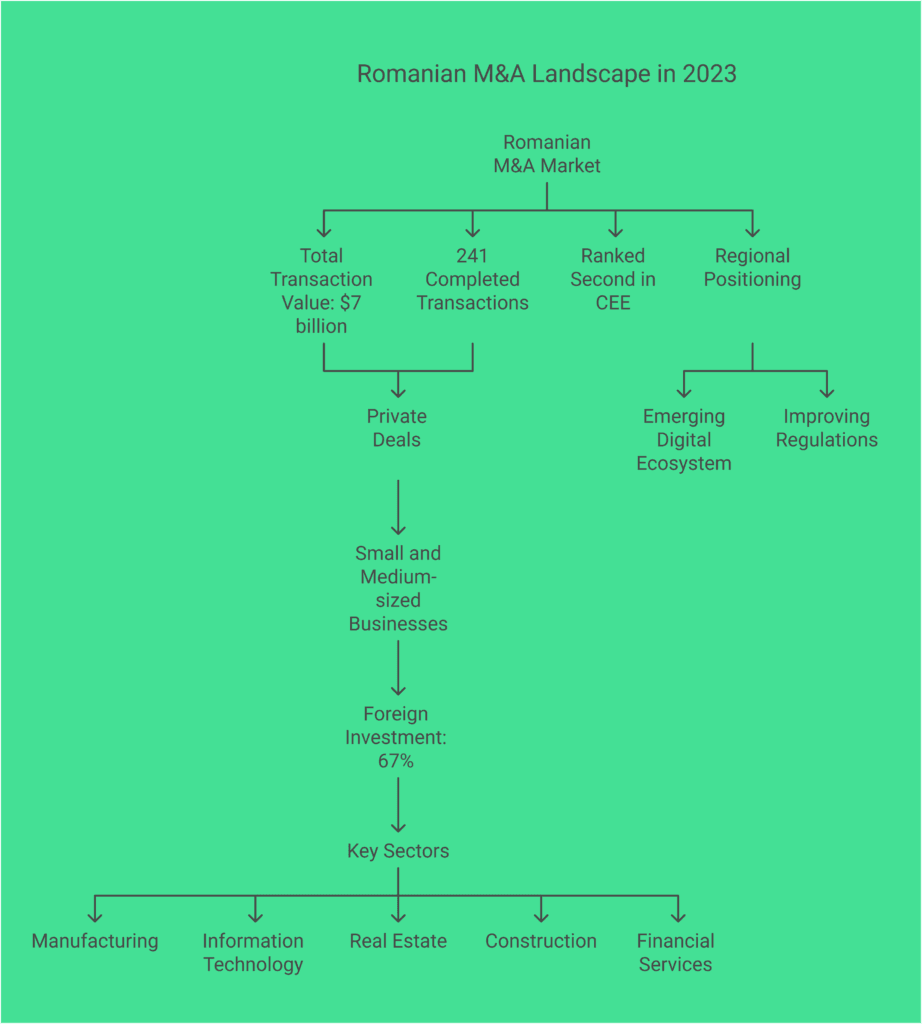
In 2023, the Romanian M&A market showed it’s strong.

Key signs point to its bright future:

  • Total transaction value reached approximately 7 billion dollars;
  • 241 completed ownership transition transactions;
  • Ranked second in Central and Eastern European M&A activity.

Market Dynamics and Trends

Most deals in Romania are private. Small and medium-sized businesses lead the way.

About 67% of deals come from outside, showing investors’ keen interest.

Sectoral Breakdown

The top sectors for mergers and acquisitions in Romania are:

  1. Manufacturing;
  2. Information Technology;
  3. Real Estate;
  4. Construction;
  5. Financial Services.

Regional Positioning

Romania is a major player in Central and Eastern Europe’s M&A scene.

Its location, emerging digital ecosystem, and improving rules attract investors.

They see great chances for restructuring their businesses here.

Legal Framework Governing Business Transfers in Romania

Romanian Business Transfer Legal Framework

Understanding the legal side of business transfers in Romania is key.

The rules are based on both national laws and EU directives.

This makes the process for handing over a business in Romania quite detailed.

Important legal parts of business transfers in Romania include:

  • Directive (EU) 2017/1132 on company law aspects;
  • Directive (EU) 2019/2121 addressing cross-border conversions;
  • Romanian Companies Law (Law 31/1990);
  • Financial Services Authority Regulation No. 5/2018.

Your plan for transferring a business must follow certain rules.

The Romanian laws set important rules and steps for business deals:

  1. Controlling interest is defined as holding 50% plus one voting right;
  2. Public takeovers become mandatory when an investor holds over 33% voting rights;
  3. Shareholders with more than 5% ownership can propose valuation methods;
  4. Mandatory notifications are required at specific ownership thresholds.

When you plan to transfer a business, you must follow strict rules.

Filings related to business combinations must be submitted within 24 hours of triggering events.

Also, merger plans need to be published in the Official Gazette of Romania.

International investors should know about recent changes.

Government Emergency Ordinance No. 108/2023 has made rules for foreign direct investment clearer.

This adds more complexity to business transfers in Romania.

Types of Business Transfers and Acquisitions

When thinking about company ownership changes in Romania, it’s key to know the different ways to transfer businesses.

Business leaders face complex choices between mergers, acquisitions, and other transfer methods.

These choices can greatly affect their business strategies.

In Romania, business succession planning mainly focuses on two main types: share deals and asset deals.

Each type has its own legal, financial, and operational implications for corporate transfers.

Mergers and Their Characteristics

Mergers are a complex way to join two companies into one. In Romania, mergers often mean:

  • Combining corporate structures;
  • Shared leadership and strategy;
  • Benefits in taxes and operations.

Acquisition Structures

Acquiring a business in Romania can be complex, with many strategies for different goals.

The main acquisition types are:

  1. Buying the whole target company;
  2. Buying a part of it;
  3. Making a strategic minority investment.

Asset vs. Share Deals

CharacteristicAsset DealsShare Deals
Transferable ElementsSpecific assets and some liabilitiesWhole company ownership
Tax ImplicationsSeller pays taxes16% capital gains tax for locals
ComplexityMore complex due to asset-by-asset transfersSmaller complexity in ownership change

For commercial enterprise transfer in Romania, knowing these detailed strategies helps businesses pick the best one.

This choice should match their goals and the market situation.

Foreign Direct Investment Regulations

Romania is a great place for business ownership change.

It has a solid framework for foreign direct investment (FDI).

This framework helps attract international investors.

It also guides foreign buyers on how to start or grow their business here.

Here are some important points about Romania’s FDI rules:

  • Mandatory screening for investments over €2 million;
  • Comprehensive national security and public order checks;
  • Environmental protection compliance requirements;
  • Specific sector-specific investment scrutiny.

Foreign investors need to understand Romania’s detailed rules when considering a business transfer here.

The investment screening process makes sure investments fit with national interests.

At the same time, it keeps the country open to investors.

FDI Regulation HighlightsKey Details
Screening Fee€10,000 (refundable under certain conditions)
Maximum Review Duration135 days
Penalty for Unauthorized InvestmentsUp to 10% of worldwide turnover

The Romanian FDI regime strikes a good balance.

It attracts foreign investments while safeguarding national interests.

Investors need to look closely at sector-specific rules, like in energy, telecommunications, and critical infrastructure.

Foreign investors should know about the detailed screening process for ownership changes.

The rules ensure transparency and national security.

They don’t block international business investments.

Business Transfer in Romania: Process and Requirements

Starting a commercial enterprise succession in Romania needs careful planning.

The process involves many important steps.

These steps focus on legal and financial details.

Understanding the framework for business transfers in Romania is key.

The process aims for transparency, legal compliance, and a smooth transfer of ownership.

Pre-Transfer Assessment

The first step is a detailed pre-transfer evaluation.

This phase is critical and includes:

  • Comprehensive financial review;
  • Valuation of company assets;
  • Identification of legal risks;
  • Verification of contracts.

Documentation Requirements

Business transfers need careful documentation.

You’ll need:

  1. Detailed financial statements;
  2. Shareholder agreements;
  3. Corporate registration documents;
  4. Tax compliance certificates.
Document TypeLegal RequirementProcessing Time
Share Transfer Approval75% Share Capital Consent7-14 Days
Registration CertificateRomanian Companies Law10 Days
Tax ClearanceMandatory Verification5-7 Days

Legal Compliance Steps

Legal compliance is essential for a smooth transfer.

Key steps are:

  • Notifying authorities;
  • Getting Competition Council approvals;
  • Completing registration processes.

Seeking expert legal advice is recommended.

For professional help, call our recommended Romanian legal experts at +40765366887.

Due Diligence in Romanian Business Transfers

When buying a company in Romania, due diligence is key.

It helps lower risks and makes sure the transfer goes well.

This step checks the investment in many ways.

When planning mergers and acquisitions in Romania, focus on several important areas:

  • Financial review of historical performance;
  • Legal compliance verification;
  • Operational infrastructure assessment;
  • Commercial and market analysis.

Business sales in Romania need careful checking.

Investors should look closely at financial reports, legal papers, and any rules that might affect the business.

Due Diligence CategoryKey Focus AreasPotential Risks
FinancialRevenue streams, profit marginsHidden liabilities
LegalContractual obligationsPending litigation
OperationalTechnology infrastructureInefficient processes

Experts say using new tech and getting help from experts is smart.

Good planning can really cut down on risks.

With a thorough due diligence, you’ll have a better shot at making a successful deal in Romania’s fast-changing market.

Tax Implications and Fiscal Considerations

Understanding tax laws in Romania is key for corporate transactions.

When you’re handling ownership changes, you’ll face many financial issues.

These can greatly affect your business strategy.

Romanian tax laws are complex for financial transfers.

Knowing the main tax points is vital.

It helps avoid risks and get the best financial results from your deal.

Transfer Pricing Requirements

The Romanian Fiscal Code requires strict rules for deals between related parties.

There’s been a rise in tax audits on these issues.

  • Mandatory documentation for related-party transactions;
  • Comprehensive reporting requirements;
  • Potential penalties for non-compliance.

VAT Implications

VAT is a big deal in business transfers.

Romania has its own VAT rules that businesses must follow:

  1. Standard VAT rate: 19%
  2. Reduced VAT rates: 9% and 5% for specific supplies
  3. VAT registration threshold: RON 300,000 annually

Corporate Tax Aspects

Corporate tax strategies are important for business transfers.

You need to think about tax liabilities, exemptions, and new laws.

Tax planning is essential to optimize your financial position during ownership transitions in Romania.

Strategic Sectors and Special Regulations

When you’re doing commercial transfers in Romania, knowing about strategic sectors is key.

The Romanian government watches business deals in important areas closely.

These areas affect national security and public order.

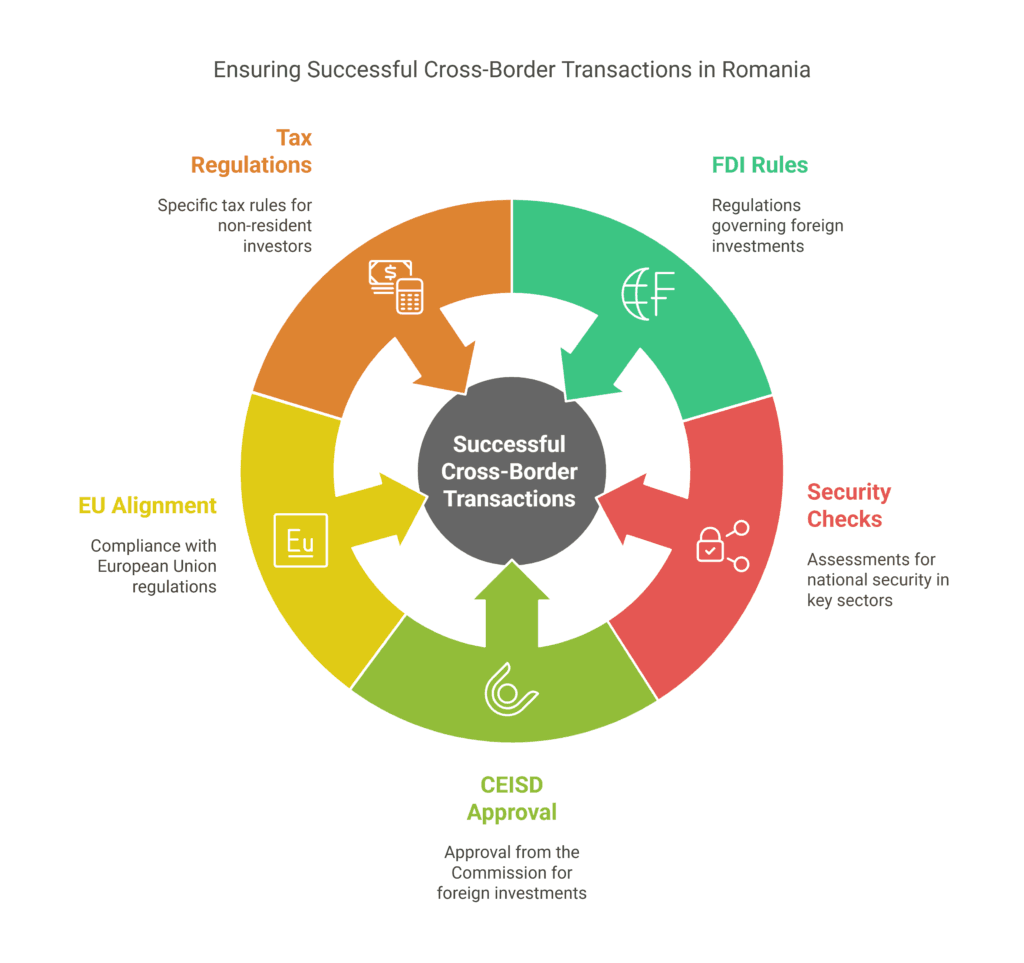
Foreign investors face a tough approval process in sensitive sectors.

The Commission for the Examination of Foreign Direct Investments (CEISD) checks these deals carefully.

Key Strategic Sectors Requiring Special Approval

  • Energy infrastructure;
  • Transport systems;
  • IT and communication networks;
  • Financial and banking services;
  • Critical national infrastructure;
  • Security-related industries.

For sales of companies in these key sectors, investors need special approvals.

The rules require a close look at deals over 2 million euros.

Recently, laws have changed, like the updates to Emergency Ordinance 46/2022.

These changes help protect national interests but also keep the investment climate good.

Investment Approval Considerations

  1. Comprehensive security assessment;
  2. Evaluation of national security risks;
  3. Check on the investor’s background;
  4. Look at how the deal affects key sectors.

Knowing these rules is vital for smooth business transfers in Romania’s strategic sectors.

Investors should team up with local legal advisors to get through these complex steps.

Role of Regulatory Bodies and Authorities

When you transfer business ownership in Romania, knowing the role of key regulatory bodies is key.

Your journey in corporate restructuring will meet several important authorities.

They oversee and validate business transactions.

Romanian business transfers need several regulatory frameworks for transparency and compliance.

These key institutions are vital in monitoring and approving corporate changes.

Competition Council Oversight

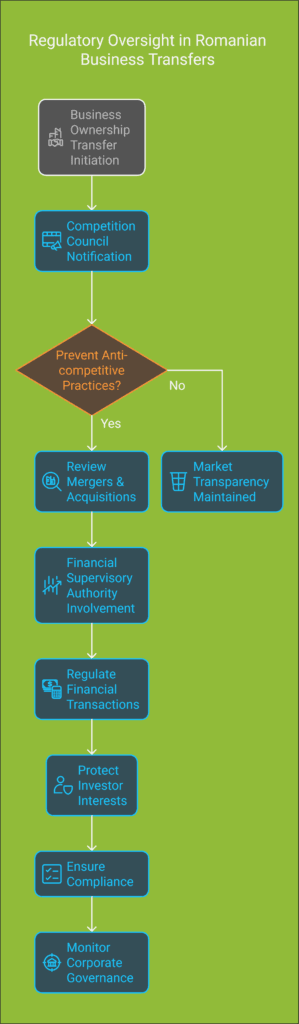
The Competition Council is a key watchdog in firm handovers. It has main duties:

  • Preventing anti-competitive market practices;
  • Reviewing merger and acquisition impacts;
  • Evaluating economic concentration transactions;
  • Protecting fair market competition.

When you transfer business ownership in Romania, you must tell the Competition Council for certain transactions.

This keeps the market transparent and stops monopolies.

M&A Regulatory

Financial Supervisory Authority Functions

The Financial Supervisory Authority (ASF) is key in corporate restructuring in Romania, mainly for financial institutions and listed companies. Its main tasks are:

  1. Regulating financial market transactions;
  2. Protecting investor interests;
  3. Ensuring compliance with financial regulations;
  4. Monitoring corporate governance standards.

Your business transfer plan must meet these regulatory needs for smooth, legal transactions in various sectors.

Knowing these regulatory frameworks helps you confidently and strategically navigate Romanian business transfers.

Cross-Border Transaction Considerations

Foreign investors must grasp the complex world of corporate takeovers in Romania.

The country has a strong legal setup to help with ownership changes.

It also protects national interests.

Key points for cross-border deals include:

The Romanian government has rules to attract foreign investment safely.

Foreign buyers need to know a few important things:

  1. They must report investments in sensitive areas;
  2. There could be a 5-8 month wait for FDI approval;
  3. They need to show detailed ownership details.

Taxes are very important in cross-border deals. Non-resident investors should know about specific tax rules:

Transaction TypeWithholding Tax RateSpecial Conditions
Dividends8%0% for EU companies with 10%+ shareholding
Interest16%Potential exemptions under EU directives
Royalties16%Reduced rates for specific agreements

It’s vital to understand these detailed rules for successful deals in Romania.

You must look at legal, financial, and regulatory aspects.

This ensures a smooth change in ownership.

Cross Border Transaction Romania

Recent Legislative Changes and Future Outlook

Romania’s business world is changing a lot in 2024.

This brings new chances for selling businesses and changing how companies work.

The rules for buying and selling companies are getting clearer.

Important changes are making the Romanian business scene different.

These changes affect how businesses operate:

  • Government Decision 300/2024 makes it easier to invest;
  • Emergency Ordinance 32/2024 changes how money is handled;
  • New rules for foreign investments.

2024 Regulatory Updates

Romania wants to make it easier for investors to come in.

If you’re thinking about selling your business in Romania, you’ll find it easier to start a new one.

The rules are clearer now.

Anticipated Changes

Romania’s economy is looking good, with a 3% GDP growth forecast for 2024-2025.

The government plans to make things better for businesses by:

  1. Making it easier to transfer businesses;
  2. Following EU rules;
  3. Welcoming more foreign investments.

If you’re looking to buy a business in Romania, now is a great time.

The mix of EU money and economic changes makes it a good place to invest.

Conclusion

Business divestment in Romania is complex and needs careful planning and legal knowledge.

When looking at corporate acquisitions, you must understand the detailed rules for business ownership changes in Romania.

This process includes legal steps, financial checks, and making strategic choices.

Your success in Romanian business transfers depends on thorough preparation and expert advice.

With about 690,000 small and medium-sized enterprises possibly changing hands soon, knowing the legal details is key.

The rules, like Law no. 31/1990, require focus on things like share transfer agreements and shareholder approvals.

Getting professional legal help is vital for these complex deals.

Romanian corporate law asks for accurate documents, like share transfer agreements and updated Articles of Association.

Working with skilled corporate lawyers can help avoid risks and make sure your business moves smoothly and legally.

For expert help with your business transfer, call Romania business transfer expert at tel. +40765366887.

Your careful planning will be key to the success of your corporate deal or business sale in Romania’s fast-changing market.

FAQ

What are the main types of business transfers in Romania?

In Romania, you can transfer businesses through mergers, acquisitions, asset deals, or share deals.

Mergers combine two companies into one.

Acquisitions mean one company buys another.

Asset deals transfer specific business assets, and share deals change who owns the company.

What are the key regulatory bodies involved in business transfers in Romania?

Several key groups watch over business transfers in Romania.

The Competition Council stops unfair competition.

The Financial Supervisory Authority looks after financial sector deals.

The Commission for the Examination of Foreign Direct Investments (CEISD) checks foreign investments.

What additional requirements exist for foreign investors in Romanian business transfers?

Foreign investors face extra rules, like national security checks under Emergency Ordinance 46/2022.

They must get extra approvals in key areas like energy and IT.

The CEISD reviews these deals to protect Romania’s interests and welcome foreign money.

How important is due diligence in Romanian business transfers?

Due diligence is very important in Romanian business transfers.

It checks the target business’s finances, laws, operations, and sales.

A good due diligence helps avoid risks and makes the transfer smooth.

It’s best to get experts to do a detailed check.

What tax considerations are critical in Romanian business transfers?

Important tax issues include following the arm’s length principle, VAT, and corporate taxes.

With more audits on transfer pricing, it’s key to document and justify prices.

You should also think about tax breaks, delays, and new tax laws that might affect your deal.

What are the primary challenges in cross-border business transfers in Romania?

Dealing with international rules is a big challenge in cross-border transfers in Romania.

You face issues like currency, legal systems, security checks, and taxes.

Getting help from Romanian legal and financial experts  is vital for these complex deals.

How has the Romanian M&A landscape changed in recent years?

The Romanian M&A market has seen big changes, like the COVID-19 pandemic and global tensions.

Romania is a strong player in Central and Eastern Europe, with more interest in tech, green energy, and finance.

New laws aim to make it easier for foreign investors to come in.

What documentation is typically required for a business transfer in Romania?

You’ll need lots of documents for a business transfer in Romania.

These include financial statements, legal papers, shareholder agreements, and tax certificates.

Depending on the deal, you might also need environmental reports, security clearances, and more.