online surveillance in Romania

Legal Aspects of Online Surveillance in Romania

Legal Aspects of Online Surveillance in Romania

Exploring online surveillance in Romania is complex.

The country’s history deeply affects its laws and how it handles intelligence.

After 1989, Romania’s Securitate was broken up.

This move marked the start of its modern surveillance and data privacy rules.

Legal Aspects of Online Surveillance in Romania

Now, Romania’s laws on online surveillance are guided by cybersecurity regulations and data privacy laws.

These rules try to keep the country safe while also protecting people’s privacy.

For more details on Romania’s online surveillance laws, email office@theromanianlawyers.com.

Key Takeaways

  • Romania’s history influences its current surveillance laws.
  • Cybersecurity regulations play a key role in online surveillance.
  • Data privacy laws are vital for balancing security and privacy.
  • Romania’s intelligence community was reformed after 1989.
  • Understanding Romanian data privacy laws is key for following the rules.

The Current State of Online Surveillance in Romania

To understand online surveillance in Romania, we must look at its history and recent changes.

Romania’s surveillance has grown a lot, shaped by both national security and EU rules.

Historical Development of Surveillance Laws

The history of surveillance laws in Romania has seen big changes, mainly after communism fell.

Post-Communist Era Reforms

After communism ended, Romania made big legal changes.

These aimed to protect privacy while keeping the country safe.

Recent Legislative Changes

In recent years, Romania’s laws on surveillance have changed a lot.

Now, electronic surveillance needs court approval, which helps protect people’s rights.

For more details on Romania’s surveillance laws and their impact, email office@theromanianlawyers.com.

Key Government Agencies Involved in Surveillance

In Romania, three main agencies handle surveillance: the Romanian Intelligence Service (SRI), the Foreign Intelligence Service (SIE), and the Protection and Security Service (SPP).

Each agency does different things, working together to keep the country safe.

AgencyPrimary Responsibilities
SRI (Romanian Intelligence Service)Domestic intelligence and security
SIE (Foreign Intelligence Service)International intelligence gathering
SPP (Protection and Security Service)Protection of high-ranking officials and security for critical infrastructure

surveillance technology usage in romania

Knowing about these agencies helps us understand how surveillance works in Romania.

It’s important to know the laws and who does what to keep your online privacy safe.

Legal Framework Governing Online Surveillance in Romania

To understand online surveillance laws in Romania, we need to look at both local laws and EU rules.

The country’s laws on surveillance are based on its constitution, national security laws, and EU rules.
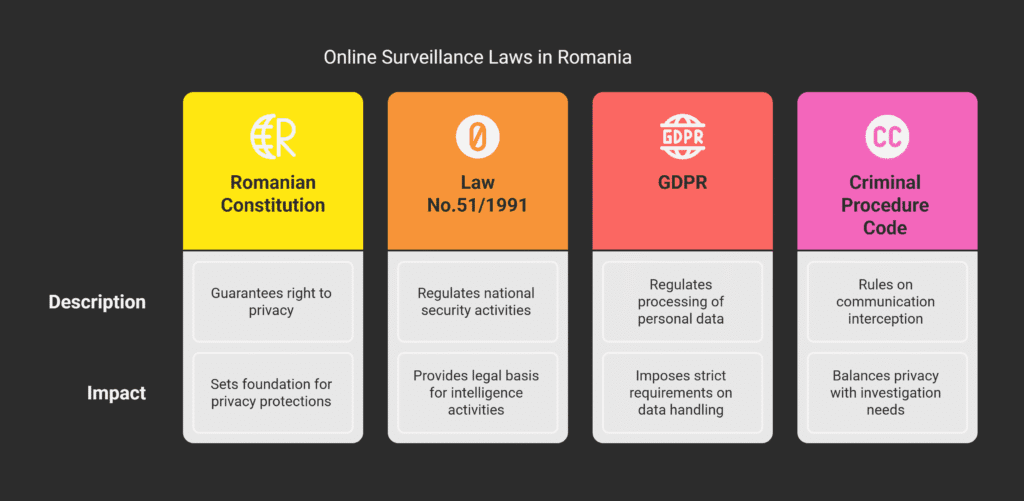
Legal Framework Governing Online Surveillance in Romania

Romanian Constitution and Privacy Protections

The Romanian Constitution is key to understanding privacy rights.

Article 26 of the Constitution protects privacy.

This right is important for online surveillance laws.

National Security Laws

National security laws in Romania are important for online surveillance.

They balance national security with privacy rights.

Law No.51/1991 on National Security

Law No.51/1991 is a major law on national security. It sets rules for intelligence work, including online surveillance.

This law makes sure surveillance respects privacy rights.

Criminal Procedure Code Provisions

The Criminal Procedure Code has rules on communication interception.

This is a form of online surveillance.

It needs court approval to balance privacy with investigation needs.

European Union Regulations Applicable in Romania

As an EU member, Romania follows EU rules on online surveillance.

The General Data Protection Regulation (GDPR) is a big rule for personal data handling.

The GDPR has strict rules for personal data, including online surveillance.

Companies in Romania must follow these rules.

They must handle personal data in a way that is open, safe, and respects individual rights.

RegulationDescriptionImpact on Online Surveillance
Romanian ConstitutionGuarantees the right to privacySets the foundation for privacy protections in online surveillance
Law No.51/1991Regulates national security activitiesProvides the legal basis for intelligence activities, including online surveillance
GDPRRegulates the processing of personal dataImposes strict requirements on the handling of personal data in online surveillance

For more information on online surveillance laws in Romania, email office@theromanianlawyers.com.

Data Protection and Privacy Legislation in Romania

Romania’s data protection laws come from both national rules and EU regulations.

This has led to a detailed framework to safeguard personal data.
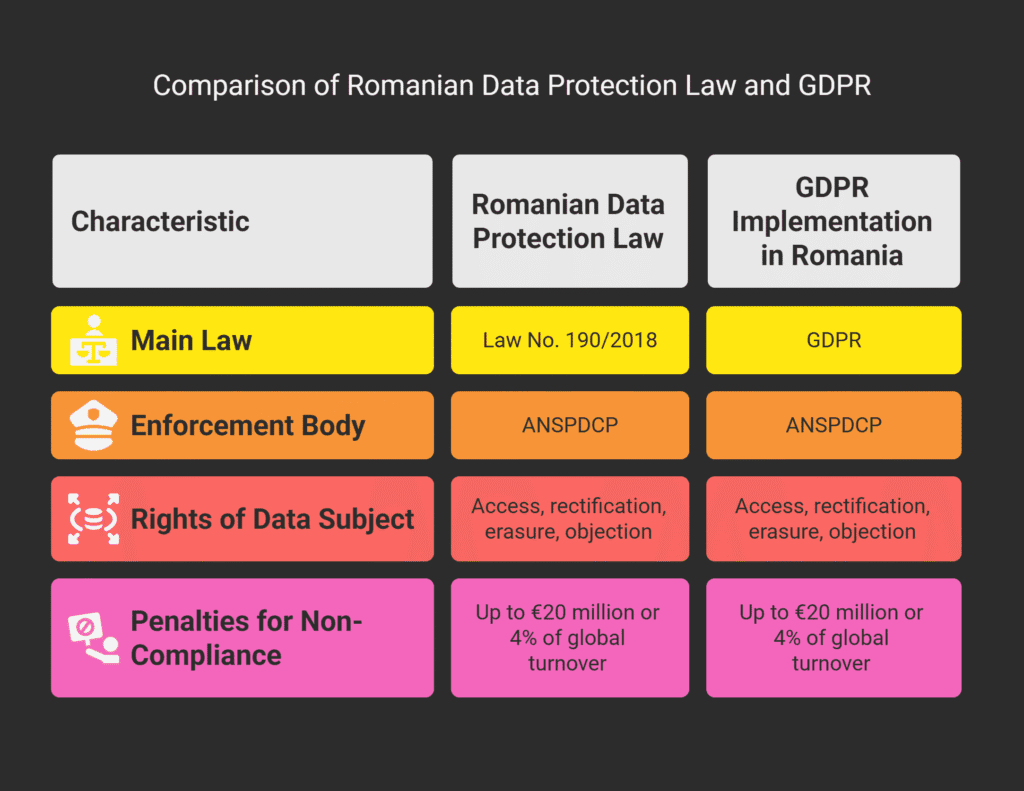
Data Protection and Privacy Legislation in Romania

Romanian Data Protection Law

Romania has its own data protection law, working alongside the EU’s GDPR.

Law No. 190/2018 is the main law for data protection in Romania.

It makes sure Romanian laws match EU standards.

Key aspects of the Romanian Data Protection Law include:

GDPR Implementation in Romania

Romania, as an EU member, has fully adopted the GDPR.

The GDPR sets a common data protection level across the EU.

Romania’s adoption ensures it meets these standards.

Local Enforcement Mechanisms

The ANSPDCP enforces data protection laws in Romania.

It looks into complaints, does audits, and can impose penalties for breaking the rules.

Penalties for Non-Compliance

Companies that don’t follow data protection rules in Romania face big penalties.

The ANSPDCP can fine up to €20 million or 4% of the company’s global turnover, whichever is higher.

The following table summarizes the penalties for non-compliance with GDPR in Romania:

ViolationMaximum Fine
Failure to implement adequate security measures€10 million or 2% of global turnover
Non-compliance with data subject rights€20 million or 4% of global turnover
Failure to report data breaches€10 million or 2% of global turnover

Rights of Data Subjects Under Romanian Law

Data subjects in Romania have several rights under the GDPR and national law, including:

  • The right to access their personal data;
  • The right to rectify or erase their personal data;
  • The right to restrict or object to processing;
  • The right to data portability.

For more information on data protection and privacy legislation in Romania, you can contact office@theromanianlawyers.com.

Legal Aspects of Online Surveillance in Romania: Permitted Practices

Romania has clear rules for online surveillance.

It’s important for people and businesses to know these rules.
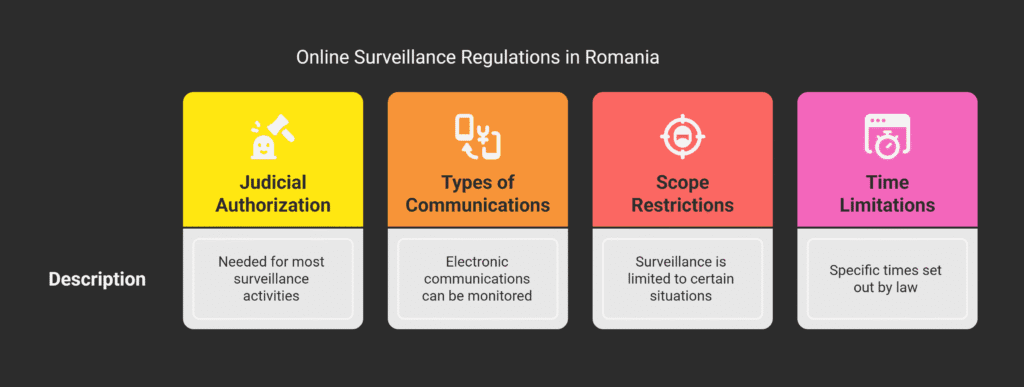
Legal Aspects of Online Surveillance in Romania

Lawful Interception Requirements

Lawful interception in Romania has strict rules.

To do surveillance, you must meet certain conditions.

Necessary Conditions for Surveillance

To start surveillance, you need judicial authorization.

This makes sure surveillance is legal and watched over.

  • Judicial authorization is needed for most surveillance;
  • The process checks the surveillance request carefully.

Types of Communications Subject to Monitoring

Many communications can be monitored, like electronic ones.

The law says which ones can be tapped.

Key aspects of lawful interception include:

  • Electronic communications can be monitored;
  • You need specific judicial authorization.

Judicial Authorization Process

The judicial authorization process is key in Romania’s surveillance laws.

It makes sure surveillance is legal and watched.

For more details on the judicial authorization process, email office@theromanianlawyers.com.

AspectDescription
Judicial AuthorizationNeeded for most surveillance activities
Types of CommunicationsElectronic communications can be monitored
Scope RestrictionsSurveillance is limited to certain situations

Time Limitations and Scope Restrictions

Surveillance in Romania has time limits and scope rules.

These rules make sure surveillance is fair and needed.

Knowing these rules is key for following the law.

The law sets out specific times and areas for surveillance.

Cybersecurity Regulations and Their Impact on Surveillance

The cybersecurity scene in Romania is changing fast.

New rules are shaping how we watch and record things.

Romania has set up a detailed plan to tackle cyber threats.
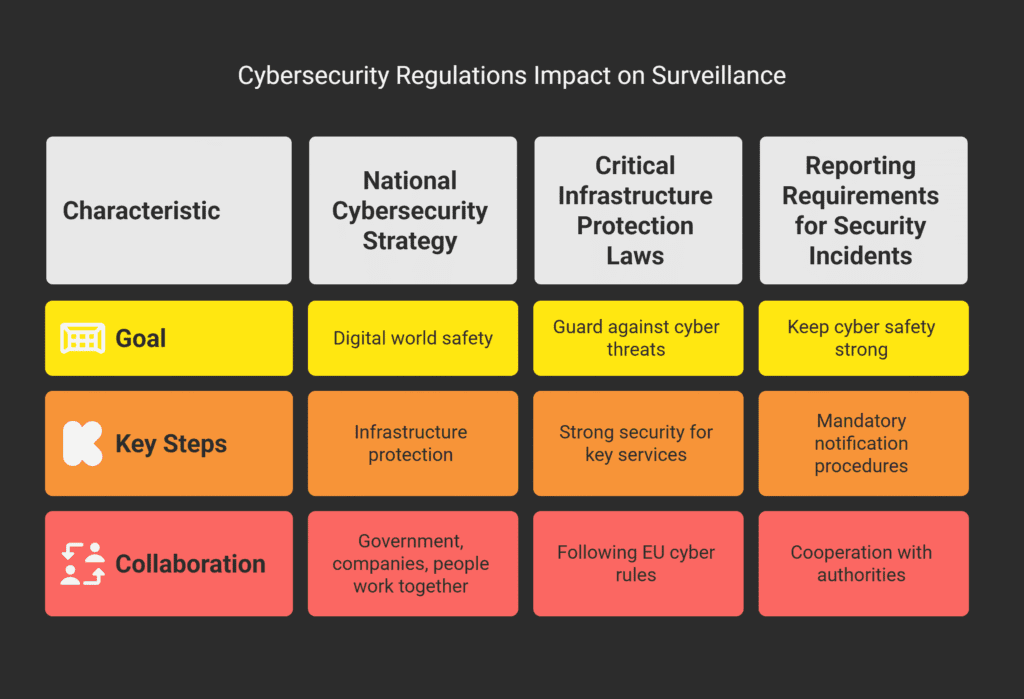
Cybersecurity Regulations and Their Impact on Surveillance

National Cybersecurity Strategy

Romania’s National Cybersecurity Strategy aims to keep its digital world safe.

It involves the government, private companies, and people working together.

Key parts of the strategy are:

  • Protecting key infrastructure;
  • Getting better at handling cyber attacks;
  • Teaching everyone about staying safe online.

Critical Infrastructure Protection Laws

Keeping critical infrastructure safe is a big part of Romania’s cyber plan.

Laws are in place to guard against cyber threats.

Some key steps are:

  1. Using strong security for key services;
  2. Doing regular checks for risks;
  3. Following EU cyber rules..

Reporting Requirements for Security Incidents

Romania has rules for reporting cyber attacks quickly.

This helps keep the country’s cyber safety strong.

Mandatory Notification Procedures

Companies must tell the right people fast if they spot a cyber attack.

This quick action helps fix problems fast.

Cooperation with Authorities

Working well with authorities is key to handling cyber attacks.

It helps share info and learn from each other.

For more on cybersecurity laws in Romania and how they affect watching and recording, email office@theromanianlawyers.com.

Electronic Communications Monitoring: Legal Boundaries

In Romania, there are clear legal rules for monitoring electronic communications.

ISPs and users must follow these rules to stay legal.

Internet Service Provider Obligations

ISPs in Romania must work with law enforcement under certain rules.

They need to have the right setup to intercept communications legally when asked.

For more details on ISP duties and their impact, email office@theromanianlawyers.com.

Data Retention Requirements

Data retention is key in monitoring electronic communications.

ISPs must keep certain data for a set time.

Types of Data Subject to Retention

The data ISPs must keep includes:

  • Subscriber information;
  • Traffic data;
  • Location data.

Storage Duration and Security Standards

Data is kept for 6 months to 2 years, depending on the type.

ISPs must follow strict security rules to keep data safe.

Encryption and Anonymity Regulations

Romania has rules on encryption and anonymity in online communications.

Encryption is usually okay, but there are times when decryption is needed by law.

Users have the right to stay anonymous, but this right can be limited.

This is true in cases like criminal investigations.

For advice on how these rules affect you, talk to legal experts in Romanian telecom law.

Practical Implications for Businesses and Individuals

It’s important for foreign companies to know about Romania’s online surveillance rules.

This knowledge helps them stay in line and avoid risks.

If you’re a business in Romania, you need to understand the country’s data protection and online surveillance laws.
Practical Implications for Businesses and Individuals

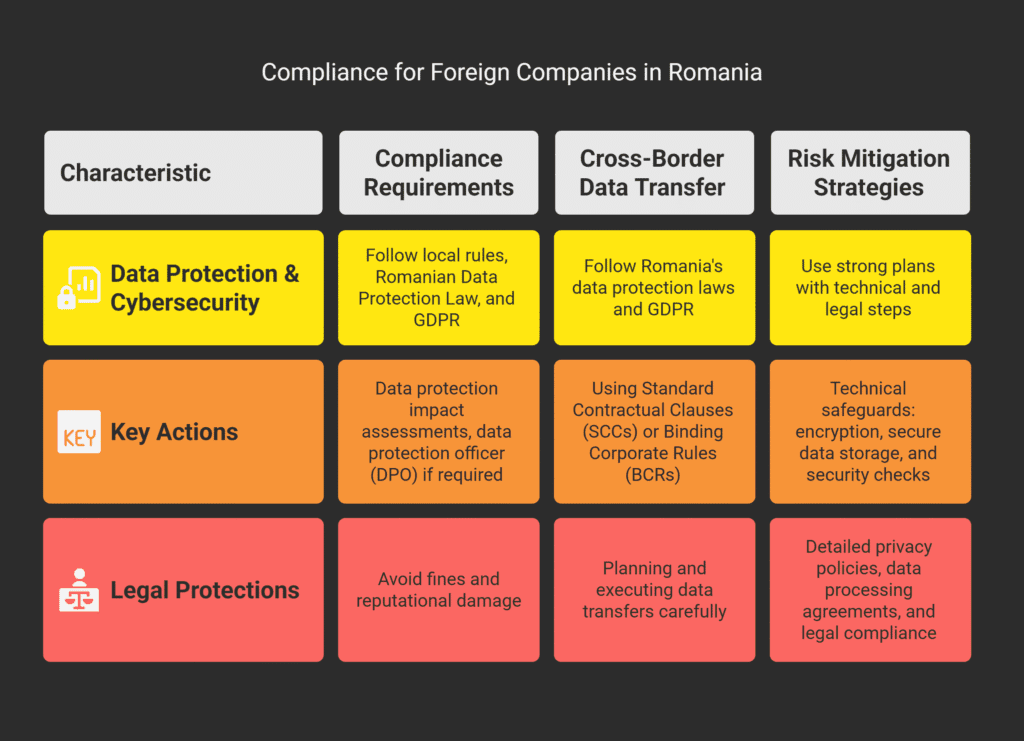
Compliance Requirements for foreign Companies Operating in Romania

Foreign companies in Romania must follow local data protection and cybersecurity rules.

This means they must stick to the Romanian Data Protection Law and the GDPR in Romania.

Following these rules is key to avoid big fines and harm to your reputation.

To meet these requirements, you should:

  • Do regular data protection impact assessments;
  • Use the right technical and organizational steps to keep data safe;
  • Have a Data Protection Officer (DPO) if the law says you must.

Cross-Border Data Transfer Considerations

When moving data across borders, foreign companies must follow Romania’s data protection laws and the GDPR.

This might mean using Standard Contractual Clauses (SCCs) or Binding Corporate Rules (BCRs) to protect data transfers.

Planning and executing cross-border data transfers carefully is essential for compliance.

You need to pick the best data transfer method for your business.

Risk Mitigation Strategies

To lower risks from online surveillance and data protection, foreign businesses in Romania should use strong risk mitigation plans.

These plans should include both technical and legal steps.

Technical Safeguards

Technical safeguards are key to protecting your business from data breaches and cyber threats.

Using encryption, secure data storage, and regular security checks can greatly reduce risks.

Legal Protections

Legal protections are also essential.

This includes having detailed privacy policies, data processing agreements, and making sure your business follows all relevant laws and regulations.

For more details on compliance and risk mitigation, reach out to a legal expert at office@theromanianlawyers.com.

Your Rights and Protections Against Unlawful Surveillance

In Romania, you have rights that protect you from unwanted spying.

Knowing these rights is key to keeping your privacy safe.

Constitutional Safeguards

The Romanian Constitution has strong protections against spying.

Article 30 guards your freedom of speech.

Article 26 protects your right to privacy.

These laws are the foundation of Romania’s rules on surveillance.

Legal Remedies for Privacy Violations

If you think your privacy has been broken, you have legal options. You can go to court for help with privacy issues.

Legal RemedyDescription
Judicial RecourseSeeking legal action through the courts for privacy violations.
Complaint to National Data Protection AuthorityFiling a complaint with the National Data Protection Authority for violations of data protection laws.

How to File Complaints with Romanian Authorities

If you think your privacy has been broken, you can report it to the right Romanian authorities.

National Data Protection Authority Process

The National Data Protection Authority watches over data protection laws in Romania.

To report a problem, write or use their online portal.

Judicial Recourse Options

You can also go to court for help.

A judge will look at your case and decide.

For more on your rights against spying in Romania, email a Romanian lawyer at office@theromanianlawyers.com.

Conclusion

You now know a lot about the laws that govern online surveillance in Romania.

The country’s laws on online surveillance, data protection, and cybersecurity are very important.

They shape how we use the internet.

Online surveillance laws in Romania are shaped by both national and European Union rules.

The data protection laws in Romania follow the General Data Protection Regulation (GDPR).

This means people’s personal data is well-protected.

Cybersecurity laws in Romania focus on keeping critical infrastructure safe and ensuring secure online communication.

If you’re doing business or living in Romania, it’s key to understand these laws.

This helps you stay in line with regulations and protect your rights.

For more details or help with these laws, you can reach out to the Romanian lawyers at office@theromanianlawyers.com.

FAQ

What is the current state of online surveillance in Romania?

Online surveillance in Romania is managed by a mix of laws.
These laws balance national security with privacy rights.
The country has laws like the Romanian Constitution and EU rules to oversee surveillance.

How does Romanian law protect individual privacy in the context of online surveillance?

Romanian law defends privacy in several ways.
It includes the Romanian Constitution and the GDPR.
People have the right to manage their data and seek help if their privacy is broken.

What are the requirements for lawful interception in Romania?

To legally intercept communications in Romania, a court order is needed.
The interception must be necessary and not too broad.
It must also be in line with a valid reason.

How do cybersecurity regulations in Romania impact online surveillance?

Romania’s cybersecurity laws aim to keep digital spaces safe.
They include the National Cybersecurity Strategy and laws for critical infrastructure.
These laws also affect surveillance by setting rules for data sharing and encryption.

What are the obligations of Internet Service Providers (ISPs) in Romania regarding online surveillance?

ISPs in Romania must help law enforcement get user data with a court order.
They also have to keep user data for a certain time.

How do online surveillance laws in Romania affect foreign businesses and individuals?

Foreign companies and people in Romania must follow the country’s surveillance laws.
They need to know the risks and take steps to protect themselves.

What are the rights and protections available to individuals against unlawful surveillance in Romania?

People in Romania have many rights against illegal surveillance.
These include constitutional protections and legal ways to fight privacy breaches.
They can also complain to Romanian authorities.

What is the role of the Romanian Constitution in protecting individual privacy?

The Romanian Constitution is key in protecting privacy.
It ensures the state respects privacy and sets rules for surveillance.

How does the GDPR apply in Romania?

The GDPR directly applies in Romania.
It offers strong data protection and strict rules for those handling personal data.

What are the key government agencies involved in online surveillance in Romania?

Important agencies for online surveillance in Romania are the Romanian Intelligence Service and the Ministry of Internal Affairs.
The National Authority for Management and Regulation in Communications also plays a role.
They enforce surveillance laws.

Protect Yourself from Phishing Scams in Romania

Protect Yourself from Phishing Scams in Romania

Did you know 71% of working adults in Romania have taken risky online actions?

This shocking fact from Proofpoint’s 2024 State of the Phish Report shows we need to know about phishing scams in Romania.

It’s key to understand how to avoid email fraud and identity theft in Romania.

Phishing scams in Romania are getting smarter, targeting both people and businesses.

Scammers use fake emails and social engineering tricks to steal your info.

This guide will teach you how to spot and stop these scams in Romania.

Phishing Scams in Romania

Every time you check your email, browse social media, or shop online, you face phishing threats.

By staying informed and careful, you can lower your risk of falling for these scams.

Let’s explore how to protect your digital world from phishing attacks.

Key Takeaways

  • 71% of Romanian working adults engage in risky online behavior;
  • Nearly 70% of Romanian organizations faced ransomware attacks;
  • Emails are the primary vector for social engineering breaches;
  • Implementing security training reduces phishing vulnerability;
  • Always verify website security before entering personal information;
  • Use two-factor authentication to enhance account security;
  • Stay alert for various phishing types: vishing, smishing, and spear phishing.

Understanding Phishing Scams in Romania

Phishing scams are a big problem in Romania.

Cybercriminals use smart tricks to get your information.

It’s important to know how to protect yourself and stay safe online.

What is Phishing and How it Works

Phishing is when scammers try to trick you into giving them your personal info.

They might pretend to be someone you trust, like a bank.

In Romania, about 1 in 3 people have been targeted by phishing scams in the last year.

Phishing scams in Romania

Common Types of Phishing Attacks in Romania

Email phishing is the most common, making up over 70% of scams.

SMS scams, or “smishing,” have jumped six times in 2023.

The most common scams target banks, followed by courier and telecom services.

Current Threat Landscape

The threat in Romania is changing fast.

Scams about cryptocurrency and investments have caused a 50% rise in financial losses.

Also, 60% of people can’t tell fake banking websites from real ones.

It’s key to be careful and know how to protect yourself online.

Banking and Financial Phishing Threats

Romanian banks are facing big cybersecurity challenges.

Phishers are targeting them, putting your money at risk.

It’s key to prevent online fraud in today’s digital banking world.

Scammers use smart tactics to steal your info.

They make fake bank emails and apps that seem real.

Some even pretend to be financial advisors to trick you.

Banking and financial phishing threats in RomaniaNever give out card numbers, PINs, or activation codes via email.

Always update your info through official channels.

This shows how important email security is.

To protect yourself:

  • Check sender email addresses carefully;
  • Don’t click links in suspicious messages;
  • Use official bank websites and apps only;
  • Enable two-factor authentication on accounts;
  • Report any suspicious activity immediately.

Stay alert and use anti-phishing strategies to keep your money safe.

Cybersecurity in Romania needs banks and customers to work together to stop scams.

Social Engineering Tactics Used by Romanian Scammers

Romanian cybercrime has grown, with scammers using smart social engineering tricks.

These methods are part of the rising phishing attacks in Romania.

It’s key to know how to fight these scams.

Psychological Manipulation Techniques

Scammers try to create urgency or play on emotions to trick victims.

In 2019, they used a tactic called “accident method.”

They called people, pretending their loved ones were in danger.

This method tries to make victims act without thinking.

phishing scam examples in romania

Common Persuasion Methods

Cybercriminals use many ways to trick people:

  • Fake contests: In 2019, they promised iPhone X Max prizes to trick victims.
  • Impersonation: They pretended to be trusted companies like Fan Courier to spread malware.
  • Celebrity exploitation: In 2019, Simona Halep’s Instagram was hacked for scams.
  • Trust exploitation: They made fake identities of famous people to ask for money.

Red Flags to Watch For

To stay safe in Romania, watch out for these signs:

  • Urgent requests for personal or financial info;
  • Suspicious links or attachments in emails;
  • Unwanted calls asking for sensitive data;
  • Messages that push you to act fast;
  • Offers that seem too good to be true.

By spotting these tricks, you can protect yourself from phishing scams.

This helps keep Romania’s cybersecurity strong.

Email-Based Phishing Schemes

Email scams in Romania are a big problem.

Scammers send fake messages that seem real.

They want your personal info. This fraud is getting worse fast.

Phishing emails ask for sensitive information.

They might want your name, CNP, or bank details. Real companies never ask for this by email.

If you get such a request, it’s likely a scam.

Email phishing scams in Romania

  • 90% of data breaches start with a phishing email;
  • 1 in 3 people face a phishing attempt yearly;
  • 60% of scams create false urgency;
  • 70% of phishing emails are generic.

To fight hacking threats in Romania, watch out for urgent emails.

Check the sender’s address well.

Don’t click on links or download files from unknown sources.

These steps help protect you from cybercrime in Romania.

Common Phishing TacticsRed Flags
Fake bank emailsRequests for login info
Humanitarian aid scamsPressure to act fast
Investment fraudPromises of high returns
Copycat websitesSlight URL changes

Stay alert and protect your digital identity.

If you see a suspicious email, report it to your local cybercrime unit.

Your watchfulness helps fight online fraud in Romania.

Mobile Phone and SMS Phishing

Smartphones are now a big part of our lives in Romania.

This has led to a rise in mobile phishing attacks.

In 2023, smishing attacks went up six times from 2022.

This shows we need to be more careful online.

Mobile phone and SMS phishing threats in Romania

SMS Scam Patterns

Cybercrime in Romania often uses fake SMS messages to trick mobile users.

In early 2023, 75% of these scams tried to steal identities. They use tricks to look real.

Scams include fake delivery notices, winning prizes, and urgent account updates.

These messages aim to get your personal info.

Mobile Banking Threats

The banking sector is a big target for mobile phishing.

Over three years, 56% of smishing scams were about banking.

Scammers pretend to be banks to get your info or take you to fake sites.

SIM Card Fraud Prevention

To avoid SIM card fraud, tell your service provider if you notice anything odd.

Use two-factor authentication for all accounts. Also, be careful of messages asking for personal info.

SectorPercentage of Smishing Scams
Banking56%
Courier Industry25%
Telecommunications15%
Other4%

Stay alert and learn about these threats to keep your internet safe in Romania.

Always remember, real companies don’t ask for your info via SMS or email.

E-commerce and Online Marketplace Scams

Online marketplace scams are becoming more common in Romania.

They target sites like Facebook Marketplace, TikTok Shop, and Instagram.

Scammers use advanced methods to steal your personal and financial details.

They often use fake payment confirmation emails to trick sellers.

This makes sellers send items without getting paid.

Another scam involves sellers claiming items have been shipped when they haven’t.

To stay safe, follow these tips:

  • Use secure payment methods;
  • Avoid deals that seem too good to be true;
  • Enable two-factor authentication on your accounts;
  • Be cautious of urgency tactics pressuring you to act quickly.

Romania is working hard to fight these scams.

The government is making new laws and starting education campaigns.

Keep up with these efforts to enjoy safe online shopping.

Identity Theft Prevention Strategies

Identity theft in Romania has jumped by 354% from 2022.

This makes it a big threat online.

With financial fraud losses hitting 1.13 billion euros, keeping your personal info safe is key.

Let’s look at ways to protect your identity from hackers in Romania.

Identity Theft Prevention Strategies Romania

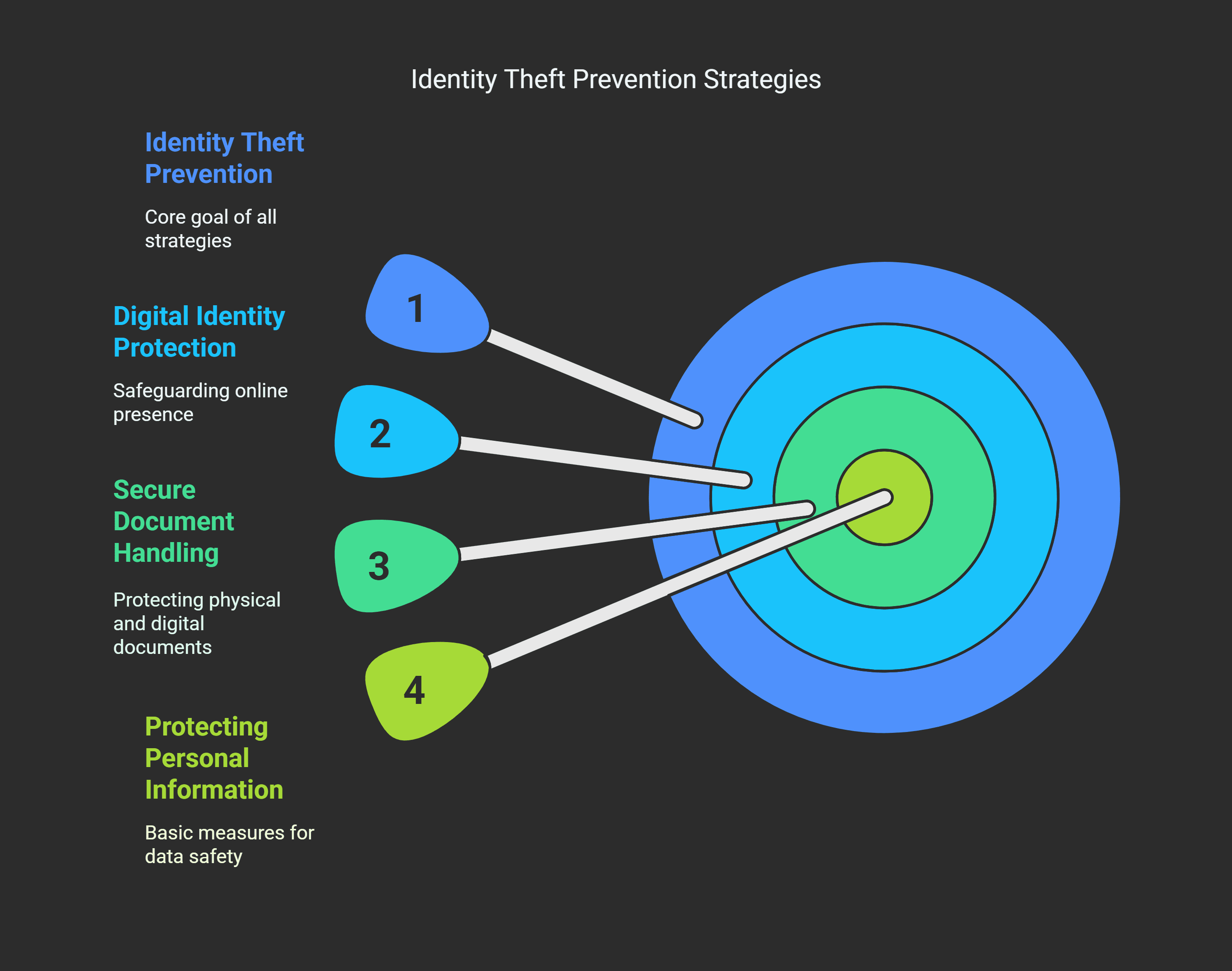
Protecting Personal Information

Keep your data safe.

Don’t share personal details online, and be careful on public Wi-Fi.

Use strong, unique passwords for all accounts.

Try to make them at least 12 characters long, with a mix of letters, numbers, and symbols.

Enable two-factor authentication for extra security.

This adds an extra step to log in.

Secure Document Handling

Handle sensitive documents carefully.

Shred papers with personal info before throwing them away.

Keep important documents in a safe place at home.

When sending sensitive info online, use encrypted connections.

Look for “https://” in website URLs to ensure it’s secure.

Digital Identity Protection

Use strong email security to avoid scams. Install reputable antivirus software to fight malware.

Update your passwords often, but make sure they’re complex.

Consider using a password manager to keep your passwords safe.

This way, you can have complex passwords without having to remember them all.

  • Monitor your credit reports regularly;
  • Place fraud alerts with credit bureaus;
  • Use identity monitoring services;
  • Be cautious of phishing attempts;
  • Limit personal information shared on social media.

By using these strategies, you can lower your risk of identity theft in Romania’s digital world.

Secure Online Banking Practices

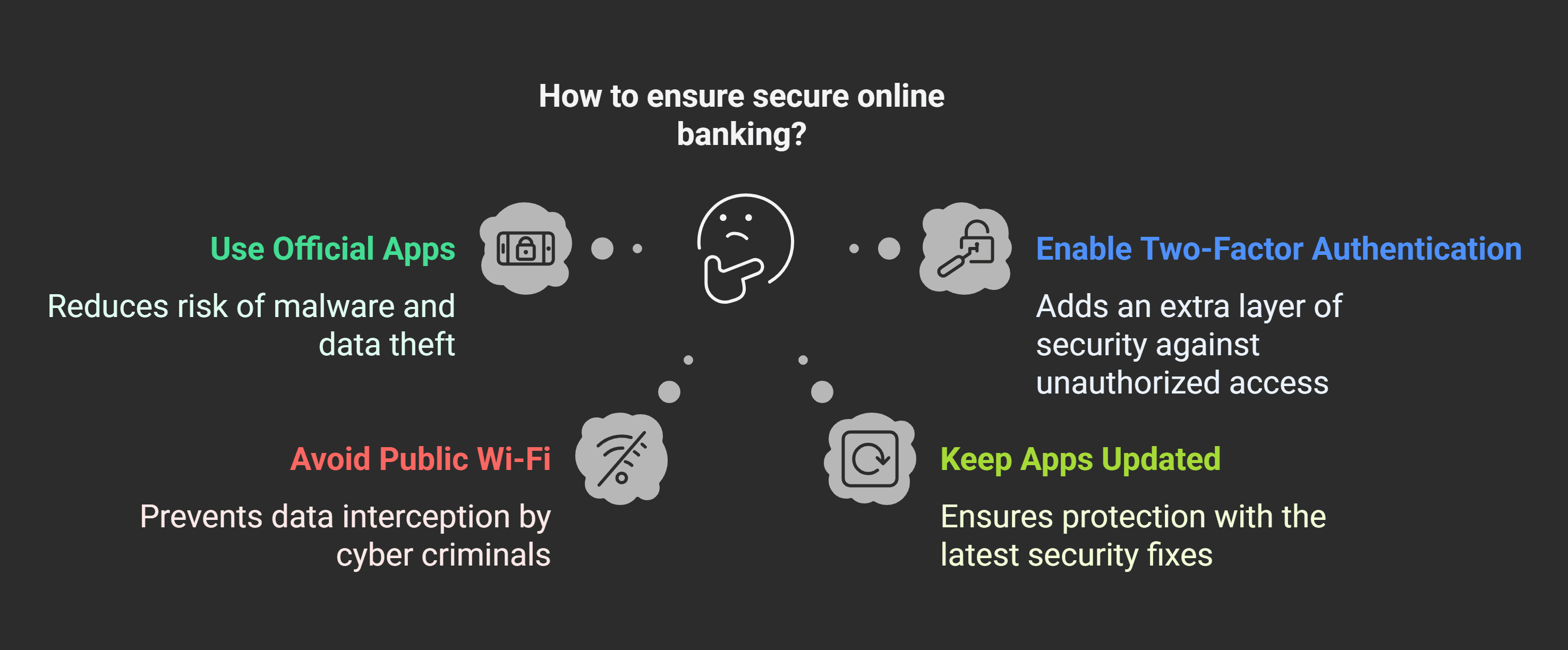
Secure Online Banking Practices Romania

In Romania, keeping your online banking safe is key as cyber threats grow.

Banks have rules to protect your money, but you also have a big part to play.

By using smart methods, you can protect yourself from hackers and data breaches.

Only use official banking apps from places like Google Play or Apple’s App Store.

This keeps you away from malware that could steal your info.

Always check the URL for “https” and look for the padlock icon when you’re on your bank’s site.

These signs mean it’s a secure connection.

Turn on two-factor authentication for more security.

This makes it tough for hackers to get into your account, even if they know your password.

Also, don’t do banking on public Wi-Fi.

These networks are not secure and can let cyber criminals see your data.

Keep your devices and banking apps up to date.

These updates often include security fixes that fight off new threats.

Be careful of emails or texts that seem to be from your bank but aren’t.

Scammers often use these to trick people into sharing sensitive info.

Banking Security MeasureEffectivenessUser Adoption Rate
Two-Factor AuthenticationHigh68%
Secure Wi-Fi UsageMedium82%
Regular App UpdatesHigh75%
Phishing AwarenessMedium60%

By being careful and following these steps, you can enjoy online banking safely.

Remember, your bank will never ask for your sensitive info via email or text.

If you’re unsure, always call your bank directly using official channels.

Two-Factor Authentication and Security Measures

In Romania, hacking and cyber fraud are big problems.

Two-factor authentication (2FA) is a key defense against online scams.

It adds an extra layer of protection to your accounts, making it harder for cybercriminals to get in.

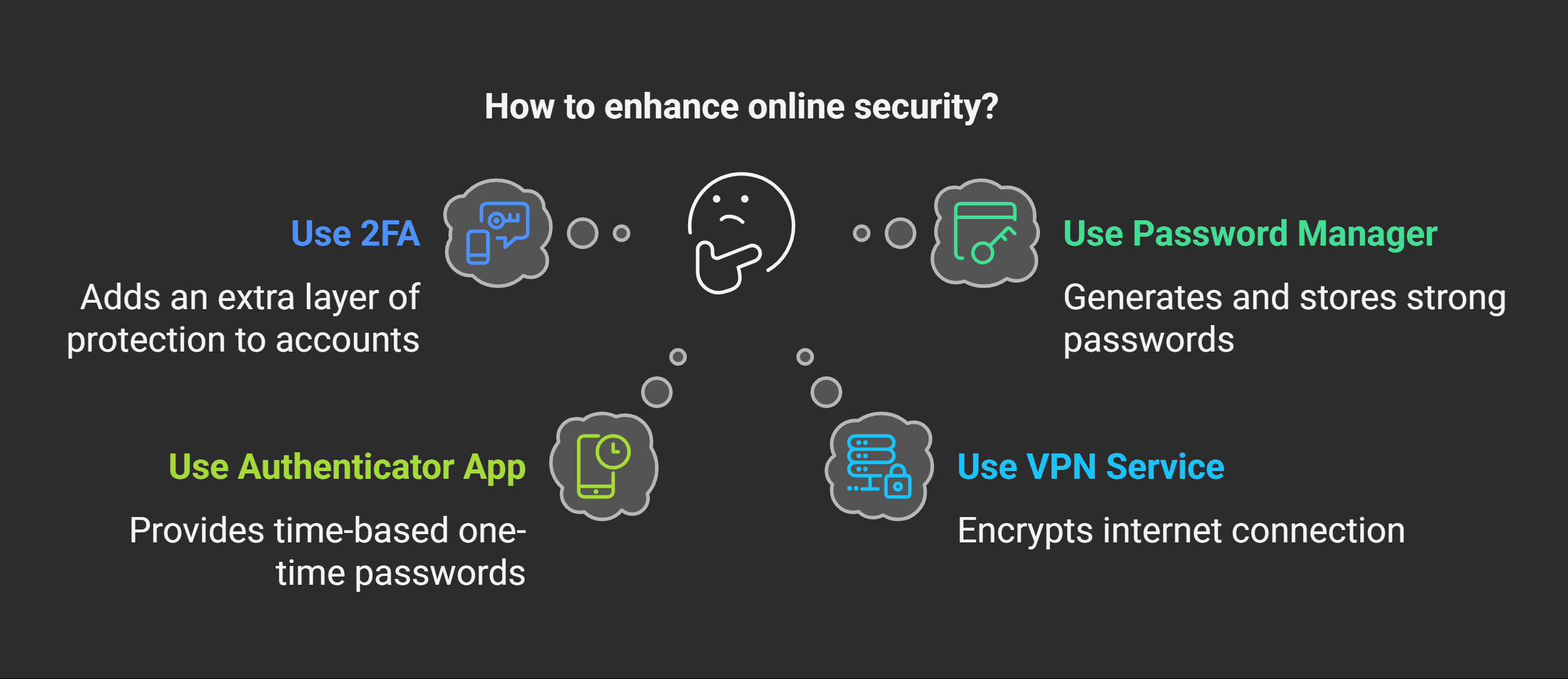
Two-Factor Authentication and Security Measures Romania

Setting Up 2FA

To boost your internet security in Romania, set up 2FA on your key accounts.

Most platforms have this feature in their security settings.

You’ll need to give a phone number or email for verification codes.

Some services also support authenticator apps or hardware tokens for more security.

Authentication Best Practices

When using 2FA, follow these best practices to protect against spam emails and online scams in Bucharest and beyond:

  • Use unique, strong passwords for each account;
  • Opt for authenticator apps over SMS when possible;
  • Regularly update your recovery information;
  • Be cautious of phishing attempts disguised as 2FA prompts.

Security Tool Recommendations

To further safeguard against cyber fraud in Romania, consider these security tools:

Tool TypeRecommendationKey Feature
Password ManagerLastPassGenerates and stores strong passwords
Authenticator AppGoogle AuthenticatorProvides time-based one-time passwords
VPN ServiceVPNEncrypts internet connection

By using these security measures, you’ll greatly lower your risk of falling victim to hacking attempts and online scams in Romania.

Stay alert and keep your digital defenses strong.

Recognizing Fraudulent Websites

It’s important to know how to spot fake websites to avoid scams in Romania.

Most people can’t tell if an email is a scam.

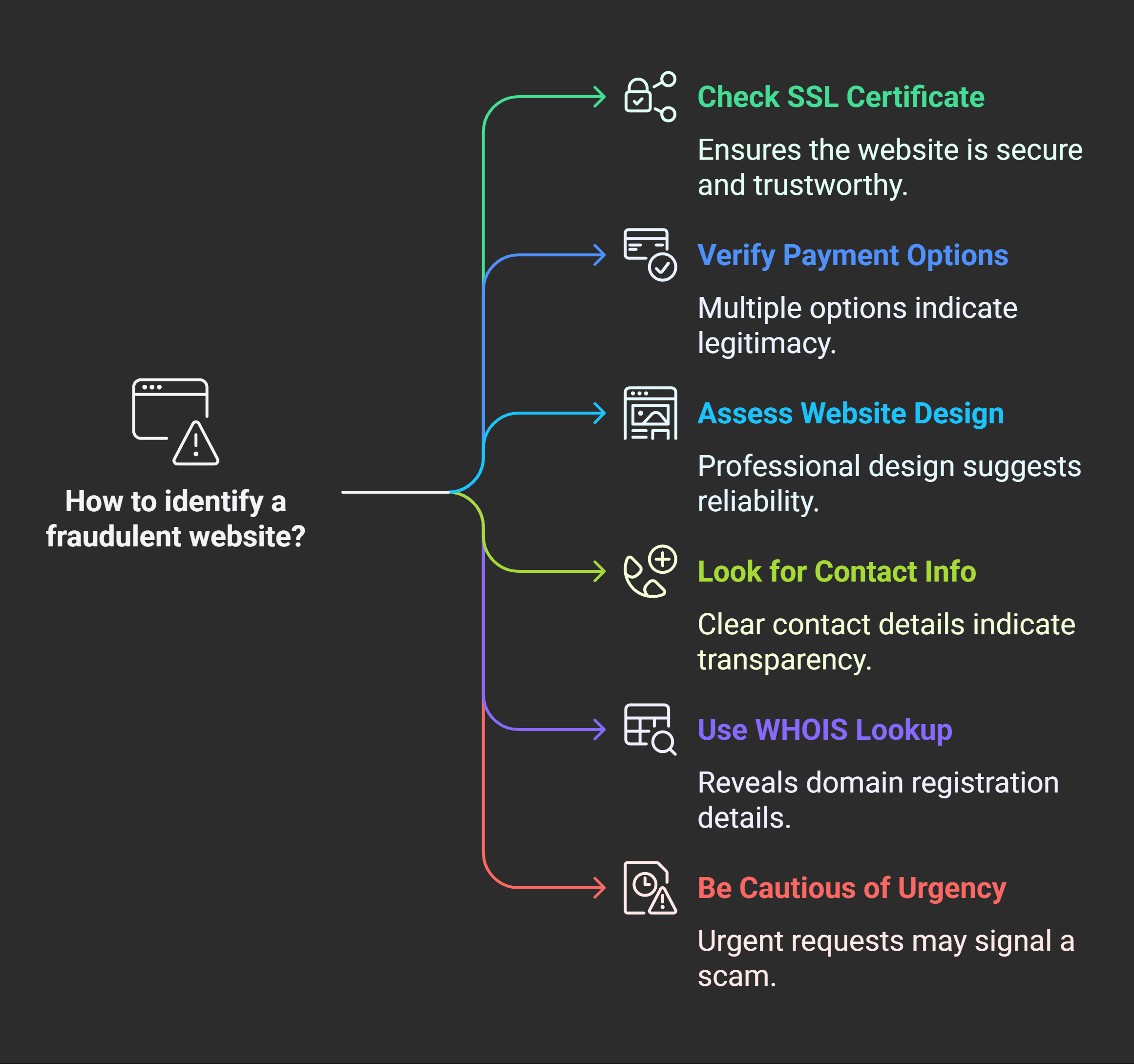
Recognizing Fraudulent Websites

Look for signs like bad design, weird URLs, and no security certificates.

Watch out for sites that are new.

Real sites offer many ways to pay, but scams only take bank transfers.

If there’s no “contact us” page, it’s a warning sign.

Also, fake sites often have spelling errors and low-quality images.

To stay safe from scams, check who owns a website.

Real sites feel professional. If you see bad reviews, it might be a scam. Always be careful and listen to your gut when online.

  • Verify the website’s SSL certificate;
  • Check for multiple payment options;
  • Look for a professional design and clear contact information;
  • Use WHOIS lookup to check domain registration details;
  • Be cautious of urgent offers or requests for personal information.

Romanian Cybercrime Reporting Procedures

In Romania, the battle against spam and email fraud never stops.

It’s key to know how to report cybercrime.

This guide will show you how to report and stay safe online.

Official Reporting Channels

The Fight Against Fraud Department (DLAF) leads the fight against cybercrime in Romania.

If you spot suspicious online activity or get caught in a spam trap, tell DLAF right away.

They are experts in keeping the internet safe.

Documentation Requirements

When you report cybercrime, collect all the evidence you can.

This includes:

  • Screenshots of suspicious emails or websites;
  • Transaction records if financial fraud occurred;
  • Any communication with the suspected scammer;
  • Dates and times of incidents.

Having detailed evidence helps authorities tackle spam in Romania better.

Contact Information for Authorities

To report cybercrime or get help with internet security, use these contacts:

AuthorityContact Details
Fight Against Fraud Department (DLAF)Address: Regina Elisabeta no 3, Bucharest 030015, Romania
Website: http://www.antifrauda.gov.ro
Legal AdviceEmail: office@theromanianlawyers.com

Quickly reporting spam emails and cyber threats helps everyone stay safe online in Romania.

Legal Framework and Consumer Protection

Romania has made big strides in protecting consumers.

The country follows EU rules to fight identity theft and social engineering.

This has been the case ever more strictly, thanks to the Consumer Protection Cooperation Regulation from 2020.

Romanian shoppers have strong rights.

You can return items within 14 days for any reason and get your money back.

This rule also applies to online shopping.

If someone tries to force you to buy, you have 14 days to change your mind.

These rules help keep you safe from scams and malicious links by Romanian hackers.

The National Authority for Consumer Protection (ANPC) looks after consumer rights in Romania.

They check out complaints and can fine businesses for unfair practices.

This helps fight hacking across Romania. You can check if a business is okay on the ANPC website.

New EU rules for digital content started in 2022.

These laws aim to protect you from online scams and ensure fair online markets.

They’re part of the ongoing fight against identity theft and phishing.

  • Minimum product warranty: 2 years;
  • Return period for online purchases: 14 days;
  • ANPC authority: Investigate complaints, penalize businesses;
  • EU-wide protection: Covers cross-border transactions.

Know your rights. This knowledge is key to protecting yourself from scams and getting fair treatment online.

Corporate Email Security Guidelines

In Romania, cyber threats and phishing attacks are big risks for businesses.

Malware campaigns and financial cybercrime are increasing.

It’s important to have strong email security to protect your company from these threats.

Corporate Email Security Guidelines

Business Email Compromise Prevention

BEC scams have cost Romanian companies millions.

To protect your business:

  • Use strong email filters to block suspicious messages;
  • Implement multi-factor authentication for all email accounts;
  • Always verify financial transaction requests by phone or in person;
  • Keep your email security software up to date.

Employee Training Protocols

Training is key to fight phishing attacks in Romania.

Create a detailed training program that includes:

  • Regular phishing simulations to test employee awareness;
  • Teach employees how to spot common phishing tactics in Romanian attacks;
  • Provide guidelines for reporting suspicious emails or security breaches;
  • Keep employees updated on the latest malware campaigns and cyber threats in Romania.

Security Policy Implementation

A solid security policy is your first defense against financial cybercrime in Romania.

It should include:

Policy ComponentDescription
Access ControlsLimit email access based on job roles and responsibilities
Email EncryptionProtect sensitive information in transit and at rest
Incident Response PlanDefine steps to take in case of a successful phishing attack
Regular AuditsConduct periodic reviews of email security measures

By following these guidelines, Romanian businesses can improve their email security.

This helps protect against growing cyber threats.

Recovery Steps After a Phishing Attack

If you’ve fallen victim to internet scams in Romania, don’t panic.

Quick action is key to minimizing damage from cyber crimes.

First, isolate the affected device by disconnecting it from the network.

This step in phishing prevention Romania helps contain the threat.

Next, report the incident to your bank and local authorities.

Romania has specific channels for reporting cyber crimes.

Change all your passwords, focusing on financial accounts.

Use strong, unique passwords for each service.

This is a vital anti-phishing measure Romania residents should follow.

Monitor your accounts closely for any suspicious activity.

If you’ve shared sensitive information, consider placing a fraud alert on your credit reports.

Many victims find professional help valuable in navigating the recovery process.

Cybersecurity experts can assess the breach and help secure your systems, improving your protection against phishing Romania.

Remember, recovery is also about learning. Take time to educate yourself and your family about the latest phishing tactics.

Many organizations offer free resources on protecting against phishing Romania.


By staying informed, you’ll be better equipped to spot and avoid future scams, strengthening your overall cybersecurity posture.

FAQ

What are the most common types of phishing attacks in Romania?

In Romania, phishing attacks often target you through email, SMS, social media, and fake banking sites.

Scammers pretend to be real institutions to get your personal info.

How can I spot a phishing email?

Watch out for urgent messages, spelling mistakes, and attachments that seem off.

Always check the sender’s email address.

Hover over links before clicking to see where they lead.

What should I do if I suspect I’ve fallen victim to a phishing scam?

Change your passwords right away. If your financial info was stolen, contact your bank. Report the scam to the Fight Against Fraud Department (DLAF) at http://www.antifrauda.gov.ro.

Freeze your credit and watch your accounts for any odd activity.

How can I protect myself from mobile phishing attacks?

Be careful with texts you didn’t ask for. Only download apps from trusted stores.

Keep your phone’s software up to date and use security apps.

Use two-factor authentication and avoid clicking on links in texts.

What are some effective ways to prevent identity theft in Romania?

Use strong, unique passwords for all accounts.

Enable two-factor authentication.

Check your credit reports often.

Be careful sharing personal info online.

Shred sensitive documents securely.

How can I ensure my online banking activities are secure?

Bank online from a private network.

Keep your device’s software updated. Use multi-factor authentication.

Always check your bank’s official website and app.

Never share your login details or give out financial info to unknowns.

What should I look for to identify a fraudulent website?

Look for https and a padlock in the address bar.

Check for poor design or spelling mistakes.

Verify the URL and use WHOIS lookups.

Be cautious of offers that seem too good to be true.

How can Romanian businesses protect themselves from phishing attacks?

Use strong email security and train employees on cybersecurity.

Implement multi-factor authentication and have clear policies for sensitive info.

Keep all systems and software updated.

What are the legal consequences for phishing in Romania?

Phishing is a serious crime in Romania, leading to fines and jail time.

Penalties vary based on the crime’s severity, following Romanian and EU laws.

How can I report a cybercrime in Romania?

Report cybercrimes to the Fight Against Fraud Department (DLAF) at http://www.antifrauda.gov.ro or the Romanian Police.

Give as much detail as you can, including any evidence of the attack.

What are the most common types of phishing scams targeting Romanian citizens in 2023?

In 2023, Romania has seen a significant rise in various phishing scams.

The most prevalent include banking-related phishing attempts where fraudulent messages claim to be from legitimate Romanian banks requesting verification of account details.

Email address spoofing is particularly common, where scammers create emails that appear to come from trusted organizations.

Online scams involving fake investment opportunities that seem “too good to be true” have also increased, targeting those looking for quick financial gains.

SMS phishing (also known as smishing) has become more sophisticated, with text messages claiming to be from delivery services requesting payment or verification.

Government impersonation scams where fraudsters pretend to be from tax authorities or other official Romanian institutions have also been on the rise.

Cybercriminals are increasingly targeting remote workers through fake collaboration tools, exploiting the continued growth of work-from-home arrangements across Romania.

How can I recognise a phishing attack targeting Romanian consumers?

Phishing attacks targeting Romanian consumers often have several tell-tale signs.

First, look for poor grammar and spelling mistakes, as many scammers use translation tools that produce imperfect Romanian language.

Be wary of communications creating artificial urgency with claims that your account will be suspended or that you’ve won a prize that must be claimed immediately.

Legitimate organizations will never ask for sensitive information or passwords via email.

Suspicious links are another red flag—hover over links without clicking to see if the URL matches the legitimate bank’s website or organization.