Romanian business professional reviewing GDPR compliance checklist on laptop in Bucharest office

GDPR Compliance Checklist for Romanian Companies 2025

GDPR Compliance Checklist for Romanian Companies

What crucial step could protect your business from devastating fines while building customer trust?

Many organizations underestimate how Europe’s strict data protection laws apply to their operations.

While GDPR penalties can reach €20 million or 4% of global revenue, Romanian enforcement authorities have imposed fines ranging from €3,000 to €130,000 for violations, demonstrating that penalties scale with the severity of breaches and organizational size.

GDPR compliance checklist for Romanian companies

Romania’s evolving digital economy demands proactive measures to align with rigorous privacy standards.

Legal experts emphasize that proper adherence involves more than basic policy updates—it requires systematic data governance.

Companies must address consent protocols, breach response plans, and cross-border data flows to avoid regulatory scrutiny.

Specialized legal guidance helps businesses transform compliance into strategic advantages.

Firms adopting privacy-first approaches often see improved client relationships and operational resilience.

Those delaying action risk not only financial consequences but also long-term reputational damage in competitive markets.

For tailored strategies meeting international standards, contact our data protection lawyers in Bucharest.

Our team of legal professionals provide actionable frameworks to navigate complex requirements while prioritizing business growth.

Key Takeaways

  • Data protection laws apply regardless of a company’s physical location if EU resident information is processed,
  • Penalties can reach €20 million or 4% of global revenue, emphasizing the need for preventive measures,
  • Building customer trust through transparent data practices creates market differentiation,
  • Legal experts offer customized solutions to align business operations with regulatory demands,
  • Compliance involves continuous monitoring, not just one-time adjustments.

Understanding GDPR and Its Impact on Romanian Businesses

How can organizations in Romania turn regulatory demands into strategic opportunities?

The General Data Protection Regulation (GDPR) reshapes how businesses manage information, particularly for entities handling EU residents’ data.

Its extraterritorial scope means even non-EU-based firms must adhere to strict standards when processing personal details of European citizens.

Core Regulatory Foundations

The regulation establishes six foundational principles for data handling, plus an overarching accountability principle.

These mandate that organizations:

  • Process information lawfully and transparently,
  • Collect only necessary data for specific purposes,
  • Maintain accuracy and limit storage durations.

Such requirements demand technical safeguards like encryption and operational protocols for accountability.

Privacy-by-design methodologies ensure protections are embedded in all systems.

Strategic Advantages for Local Entities

Adhering to these standards transforms obligations into opportunities.

Firms prioritizing data protection report:

  • Enhanced client confidence through transparent practices,
  • Reduced breach-related costs and operational disruptions,
  • Differentiation in markets where privacy concerns influence decisions.

For tailored strategies aligning Romanian operations with these regulations, consult our team of Romanian Lawyers.

Proactive adaptation not only mitigates risks but positions businesses as trustworthy data stewards.

Exploring Key GDPR Roles and Terminology

Who holds ultimate accountability in data governance frameworks?

Clarifying responsibilities under privacy regulations helps organizations establish clear operational boundaries.

Three critical roles form the foundation of proper data management practices.

data protection officer

Data Controllers, Processors, and Data Subjects

Data controllers determine why and how personal information is handled.

They bear legal responsibility for compliance across all processing activities.

Third-party processors execute tasks under controller directives but must independently meet security standards.

Individuals whose data is collected, known as data subjects, retain rights to access or delete their information.

Organizations must implement systems to honor these requests efficiently.

The Essential Role of the Data Protection Officer (DPO)

A data protection officer oversees compliance strategies and acts as the regulatory liaison.

This role is mandatory for entities processing sensitive data or conducting large-scale monitoring.

Under Romanian Law 190/2018, organizations processing national identification numbers (CNP) based on legitimate interest must also appoint a DPO, even if they don’t meet the standard GDPR thresholds.

This additional requirement reflects Romania’s enhanced protection for sensitive national identifiers.

Romanian businesses uncertain about role allocations should consult office@theromanianlawyers.com.

Proper classification prevents overlapping liabilities and ensures alignment with cross-border standards.

Conducting a Comprehensive Data Audit and Mapping

Organizations handling personal information must first establish clarity in their data ecosystems.

A systematic audit reveals how data flows through operations, exposing vulnerabilities while ensuring alignment with legal obligations.

This foundational step transforms raw information into actionable insights for risk management.

data audit and mapping

Identifying What Personal Data You Collect

Begin by cataloging every category of personal data your organization processes.

Common examples include:

  • Contact details (names, email addresses).
  • Digital identifiers (IP addresses, device information).
  • Sensitive records (financial data, health information).

Document each data point’s purpose, collection method, and retention timeline.

Assess whether processing activities rely on valid legal grounds like contractual necessity or explicit consent.

Storage locations demand equal scrutiny—identify physical servers, cloud platforms, and third-party repositories holding sensitive materials.

Access controls form another critical audit component.

Map which employees or systems interact with personal data and verify authorization protocols.

This process highlights potential exposure points while streamlining responses to information requests.

Romanian entities seeking structured frameworks for these assessments may contact our data protection legal specialists.

Expert guidance ensures audits meet regulatory expectations while supporting operational efficiency.

GDPR Compliance Checklist for Romanian Companies

Businesses handling EU data face operational complexity when aligning processes with privacy standards.

Structured frameworks simplify adherence while minimizing risks of non-conformance.

Effective strategies combine procedural clarity with technological safeguards to meet evolving requirements.

data protection checklist steps

Actionable Protocols for Information Security

Organizations should prioritize these critical measures:

Action ItemResponsible PartyDeadline
Complete data flow mappingIT & Legal Teams30 Days
Implement encryption protocolsSecurity Department45 Days
Update third-party contractsCompliance Officer60 Days

Consent Management Best Practices

Valid authorization requires unticked checkboxes and separate permissions for distinct processing purposes.

Confirmation emails enhance verification, while centralized logging systems track user agreements with timestamps and purpose details.

Organizations must honor withdrawal requests without undue delay and provide confirmation within one month, as required by GDPR Article 12(3).

Automated systems should flag outdated records immediately upon withdrawal, ensuring ongoing alignment with transparency obligations and ceasing processing activities promptly.

Regular audits verify adherence to storage limitation principles and access controls.

Local enterprises seeking customized frameworks may contact office@theromanianlawyers.com.

Specialized guidance helps establish resilient processes that satisfy regulatory expectations while supporting operational scalability.

Ensuring Website Security and Transparent Privacy Policies

How do modern businesses balance robust security with user transparency?

Websites storing personal information require layered defenses against cyber threats.

Organizations must adopt technical safeguards while clearly communicating data handling practices to users.

website security and privacy policies

Implementing SSL, Strong Passwords, and Anti-Virus Measures

HTTPS encryption via SSL certificates forms the first line of defense.

Multi-factor authentication and complex passwords prevent unauthorized account access.

Regular vulnerability scans and firewall updates address emerging threats.

Advanced protections include:

  • Content Delivery Networks (CDNs) to mitigate DDoS attacks,
  • Intrusion detection systems monitoring server activity,
  • Automated backups stored in geographically separate locations.

Designing Clear and Accessible Privacy Notices

Privacy policies must explain data collection purposes in plain language.

Every page should feature a visible link to these documents. Essential disclosures include:

  • Types of information gathered (contact details, device data)
  • Legal basis for processing activities
  • Third-party data sharing arrangements

Entities developing their online platforms should consult office@theromanianlawyers.com for policy reviews.

Proper alignment with privacy standards builds credibility while reducing legal exposure.

Managing Third-Party Vendors and International Data Transfers

How can businesses ensure their partners meet strict data protection standards?

Organizations relying on external vendors must verify their adherence to privacy regulations.

This requires thorough evaluations and contractual safeguards to maintain accountability across supply chains.

Evaluating Vendor Requirements and Contracts

Entities handling personal information must catalog all service providers processing data.

This includes cloud platforms, payment systems, and marketing tools.

Assessments should examine vendors’ security certifications, breach response plans, and documentation of regulatory alignment.

Legally binding agreements define responsibilities between controllers and processors.

These contracts specify permitted activities, retention timelines, and security protocols.

Subcontractor arrangements require explicit approval to maintain oversight.

RequirementActionMechanism
Vendor AccountabilityReview security auditsAnnual assessments
Data TransfersImplement SCCsContractual clauses
Risk MitigationConduct impact analysesTransfer evaluations

Cross-border data flows demand additional precautions.

Companies must confirm whether recipient countries have EU adequacy status.

For other regions, standardized contractual clauses or binding corporate rules become mandatory safeguards.

Romanian enterprises navigating these complexities should seek specialized Romanian Lawyer.

Proactive vendor management frameworks prevent regulatory violations while fostering trust with European partners.

Contact office@theromanianlawyers.com for tailored strategies addressing cross-border operational challenges.

Preparing for Data Breaches and Facilitating Data Subject Rights

What separates resilient organizations from vulnerable ones when cyber threats strike?

Proactive preparation for security incidents and efficient handling of individual rights form the backbone of modern data governance.

Organizations must balance rapid response capabilities with systematic processes to address user inquiries.

Developing a Robust Breach Response Plan

Effective incident management requires predefined protocols.

Immediate detection mechanisms trigger containment procedures within one hour of identifying unauthorized data access.

Forensic teams analyze breach scope while legal advisors determine notification obligations to authorities within 72 hours.

Regular simulation exercises test communication channels between IT, legal, and PR departments.

Documentation templates for breach reports ensure regulatory requirements are met without delays.

Continuous monitoring systems flag unusual activity patterns to prevent escalation.

Streamlining Data Subject Access Requests

Individuals increasingly exercise their right to review or delete personal information.

Centralized portals allow users to submit requests through secure authentication methods.

Automated workflows verify identities and route inquiries to appropriate teams within 24 hours.

Response templates maintain consistency while adhering to legal timelines.

Secure delivery channels protect sensitive information during transmission.

Audit trails demonstrate compliance with access rights obligations during regulatory inspections.

Entities requiring customized frameworks for incident management or user rights processes should contact office@theromanianlawyers.com.

Structured approaches transform regulatory demands into operational strengths while maintaining stakeholder trust.

FAQ

When must Romanian businesses appoint a data protection officer?

Organizations must designate a data protection officer if they systematically monitor individuals on a large scale or process sensitive categories like health records.

Public authorities in Romania also require this role regardless of data volume.

How long can companies retain customer information under EU regulations?

Storage periods must align with the original purpose for collection.

For example, transaction records may be kept for tax compliance periods specified by ANAF (Romania’s tax authority), while marketing contact lists require periodic reviews for relevance.

What technical safeguards are mandatory for website security?

Essential measures include SSL encryption, multi-factor authentication, regular penetration testing, and documented patch management processes.

Organizations should implement security measures proportionate to the risk level of data processing, following GDPR Article 32 requirements for appropriate technical and organizational measures.

Are international cloud providers like AWS or Microsoft Azure GDPR-compliant for Romanian data?

Providers operating under EU-approved mechanisms like Standard Contractual Clauses (SCCs) or binding corporate rules generally meet requirements.

However, companies must verify current certifications and update Data Processing Agreements (DPAs) annually.

What penalties apply for violating data subject rights in Romania?

The National Supervisory Authority for Personal Data Processing (ANSPDCP) can impose fines up to €20 million or 4% of global turnover.

Recent enforcement actions targeted improper consent practices and delayed breach notifications.

How should organizations handle data access requests from employees?

Businesses must respond within 30 days, providing free electronic copies of records.

Implement automated DSAR workflows in platforms like Microsoft 365 or specialized tools such as OneTrust to track and fulfill requests efficiently.

online surveillance in Romania

Legal Aspects of Online Surveillance in Romania

Legal Aspects of Online Surveillance in Romania

Exploring online surveillance in Romania is complex.

The country’s history deeply affects its laws and how it handles intelligence.

After 1989, Romania’s Securitate was broken up.

This move marked the start of its modern surveillance and data privacy rules.

Legal Aspects of Online Surveillance in Romania

Now, Romania’s laws on online surveillance are guided by cybersecurity regulations and data privacy laws.

These rules try to keep the country safe while also protecting people’s privacy.

For more details on Romania’s online surveillance laws, email office@theromanianlawyers.com.

Key Takeaways

  • Romania’s history influences its current surveillance laws.
  • Cybersecurity regulations play a key role in online surveillance.
  • Data privacy laws are vital for balancing security and privacy.
  • Romania’s intelligence community was reformed after 1989.
  • Understanding Romanian data privacy laws is key for following the rules.

The Current State of Online Surveillance in Romania

To understand online surveillance in Romania, we must look at its history and recent changes.

Romania’s surveillance has grown a lot, shaped by both national security and EU rules.

Historical Development of Surveillance Laws

The history of surveillance laws in Romania has seen big changes, mainly after communism fell.

Post-Communist Era Reforms

After communism ended, Romania made big legal changes.

These aimed to protect privacy while keeping the country safe.

Recent Legislative Changes

In recent years, Romania’s laws on surveillance have changed a lot.

Now, electronic surveillance needs court approval, which helps protect people’s rights.

For more details on Romania’s surveillance laws and their impact, email office@theromanianlawyers.com.

Key Government Agencies Involved in Surveillance

In Romania, three main agencies handle surveillance: the Romanian Intelligence Service (SRI), the Foreign Intelligence Service (SIE), and the Protection and Security Service (SPP).

Each agency does different things, working together to keep the country safe.

AgencyPrimary Responsibilities
SRI (Romanian Intelligence Service)Domestic intelligence and security
SIE (Foreign Intelligence Service)International intelligence gathering
SPP (Protection and Security Service)Protection of high-ranking officials and security for critical infrastructure

surveillance technology usage in romania

Knowing about these agencies helps us understand how surveillance works in Romania.

It’s important to know the laws and who does what to keep your online privacy safe.

Legal Framework Governing Online Surveillance in Romania

To understand online surveillance laws in Romania, we need to look at both local laws and EU rules.

The country’s laws on surveillance are based on its constitution, national security laws, and EU rules.

Legal Framework Governing Online Surveillance in Romania

Romanian Constitution and Privacy Protections

The Romanian Constitution is key to understanding privacy rights.

Article 26 of the Constitution protects privacy.

This right is important for online surveillance laws.

National Security Laws

National security laws in Romania are important for online surveillance.

They balance national security with privacy rights.

Law No.51/1991 on National Security

Law No.51/1991 is a major law on national security. It sets rules for intelligence work, including online surveillance.

This law makes sure surveillance respects privacy rights.

Criminal Procedure Code Provisions

The Criminal Procedure Code has rules on communication interception.

This is a form of online surveillance.

It needs court approval to balance privacy with investigation needs.

European Union Regulations Applicable in Romania

As an EU member, Romania follows EU rules on online surveillance.

The General Data Protection Regulation (GDPR) is a big rule for personal data handling.

The GDPR has strict rules for personal data, including online surveillance.

Companies in Romania must follow these rules.

They must handle personal data in a way that is open, safe, and respects individual rights.

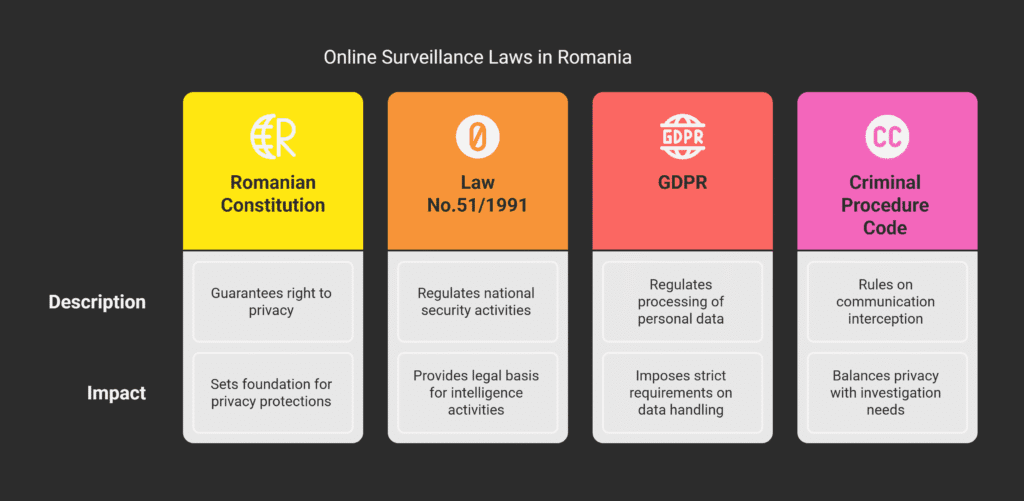
RegulationDescriptionImpact on Online Surveillance
Romanian ConstitutionGuarantees the right to privacySets the foundation for privacy protections in online surveillance
Law No.51/1991Regulates national security activitiesProvides the legal basis for intelligence activities, including online surveillance
GDPRRegulates the processing of personal dataImposes strict requirements on the handling of personal data in online surveillance

For more information on online surveillance laws in Romania, email office@theromanianlawyers.com.

Data Protection and Privacy Legislation in Romania

Romania’s data protection laws come from both national rules and EU regulations.

This has led to a detailed framework to safeguard personal data.

Data Protection and Privacy Legislation in Romania

Romanian Data Protection Law

Romania has its own data protection law, working alongside the EU’s GDPR.

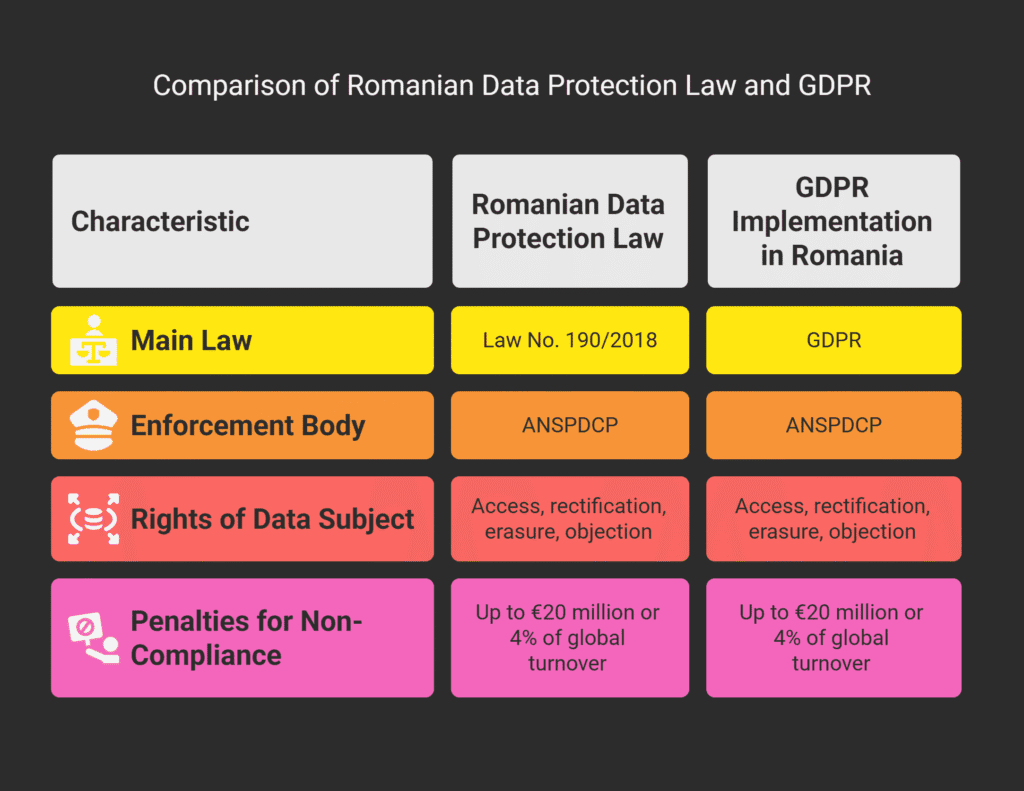
Law No. 190/2018 is the main law for data protection in Romania.

It makes sure Romanian laws match EU standards.

Key aspects of the Romanian Data Protection Law include:

GDPR Implementation in Romania

Romania, as an EU member, has fully adopted the GDPR.

The GDPR sets a common data protection level across the EU.

Romania’s adoption ensures it meets these standards.

Local Enforcement Mechanisms

The ANSPDCP enforces data protection laws in Romania.

It looks into complaints, does audits, and can impose penalties for breaking the rules.

Penalties for Non-Compliance

Companies that don’t follow data protection rules in Romania face big penalties.

The ANSPDCP can fine up to €20 million or 4% of the company’s global turnover, whichever is higher.

The following table summarizes the penalties for non-compliance with GDPR in Romania:

ViolationMaximum Fine
Failure to implement adequate security measures€10 million or 2% of global turnover
Non-compliance with data subject rights€20 million or 4% of global turnover
Failure to report data breaches€10 million or 2% of global turnover

Rights of Data Subjects Under Romanian Law

Data subjects in Romania have several rights under the GDPR and national law, including:

  • The right to access their personal data;
  • The right to rectify or erase their personal data;
  • The right to restrict or object to processing;
  • The right to data portability.

For more information on data protection and privacy legislation in Romania, you can contact office@theromanianlawyers.com.

Legal Aspects of Online Surveillance in Romania: Permitted Practices

Romania has clear rules for online surveillance.

It’s important for people and businesses to know these rules.

Legal Aspects of Online Surveillance in Romania

Lawful Interception Requirements

Lawful interception in Romania has strict rules.

To do surveillance, you must meet certain conditions.

Necessary Conditions for Surveillance

To start surveillance, you need judicial authorization.

This makes sure surveillance is legal and watched over.

  • Judicial authorization is needed for most surveillance;
  • The process checks the surveillance request carefully.

Types of Communications Subject to Monitoring

Many communications can be monitored, like electronic ones.

The law says which ones can be tapped.

Key aspects of lawful interception include:

  • Electronic communications can be monitored;
  • You need specific judicial authorization.

Judicial Authorization Process

The judicial authorization process is key in Romania’s surveillance laws.

It makes sure surveillance is legal and watched.

For more details on the judicial authorization process, email office@theromanianlawyers.com.

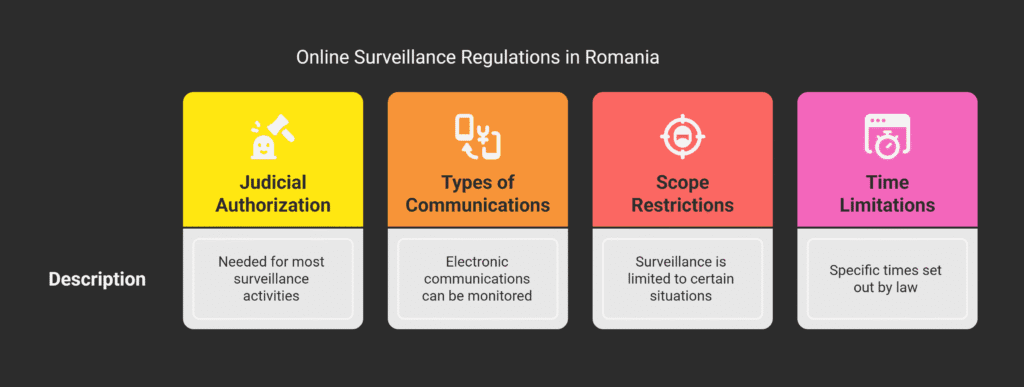
AspectDescription
Judicial AuthorizationNeeded for most surveillance activities
Types of CommunicationsElectronic communications can be monitored
Scope RestrictionsSurveillance is limited to certain situations

Time Limitations and Scope Restrictions

Surveillance in Romania has time limits and scope rules.

These rules make sure surveillance is fair and needed.

Knowing these rules is key for following the law.

The law sets out specific times and areas for surveillance.

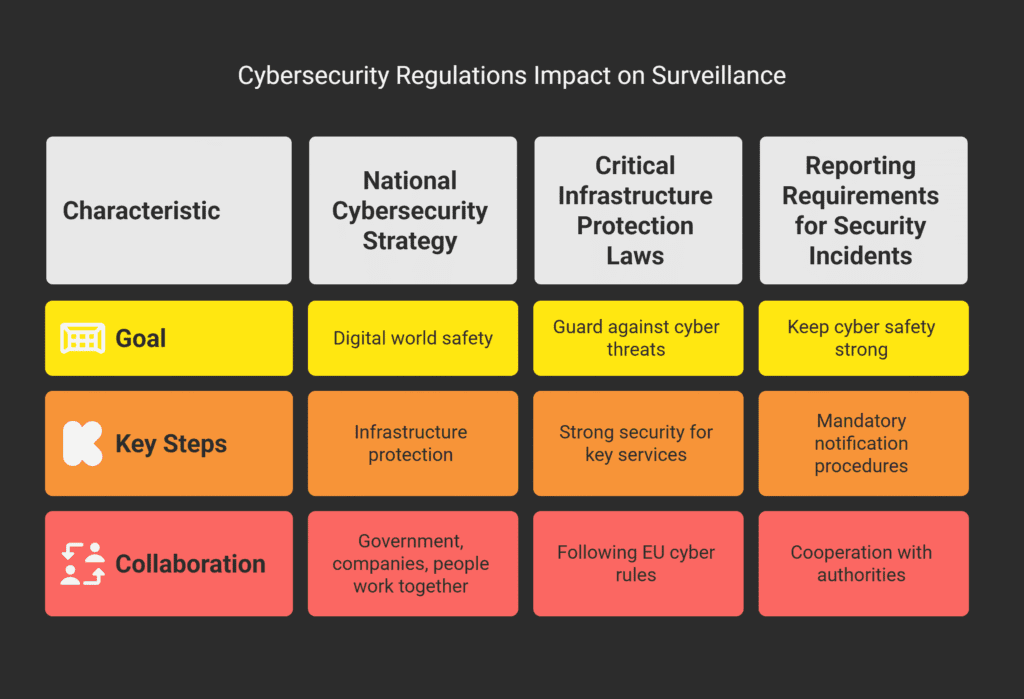
Cybersecurity Regulations and Their Impact on Surveillance

The cybersecurity scene in Romania is changing fast.

New rules are shaping how we watch and record things.

Romania has set up a detailed plan to tackle cyber threats.

Cybersecurity Regulations and Their Impact on Surveillance

National Cybersecurity Strategy

Romania’s National Cybersecurity Strategy aims to keep its digital world safe.

It involves the government, private companies, and people working together.

Key parts of the strategy are:

  • Protecting key infrastructure;
  • Getting better at handling cyber attacks;
  • Teaching everyone about staying safe online.

Critical Infrastructure Protection Laws

Keeping critical infrastructure safe is a big part of Romania’s cyber plan.

Laws are in place to guard against cyber threats.

Some key steps are:

  1. Using strong security for key services;
  2. Doing regular checks for risks;
  3. Following EU cyber rules..

Reporting Requirements for Security Incidents

Romania has rules for reporting cyber attacks quickly.

This helps keep the country’s cyber safety strong.

Mandatory Notification Procedures

Companies must tell the right people fast if they spot a cyber attack.

This quick action helps fix problems fast.

Cooperation with Authorities

Working well with authorities is key to handling cyber attacks.

It helps share info and learn from each other.

For more on cybersecurity laws in Romania and how they affect watching and recording, email office@theromanianlawyers.com.

Electronic Communications Monitoring: Legal Boundaries

In Romania, there are clear legal rules for monitoring electronic communications.

ISPs and users must follow these rules to stay legal.

Internet Service Provider Obligations

ISPs in Romania must work with law enforcement under certain rules.

They need to have the right setup to intercept communications legally when asked.

For more details on ISP duties and their impact, email office@theromanianlawyers.com.

Data Retention Requirements

Data retention is key in monitoring electronic communications.

ISPs must keep certain data for a set time.

Types of Data Subject to Retention

The data ISPs must keep includes:

  • Subscriber information;
  • Traffic data;
  • Location data.

Storage Duration and Security Standards

Data is kept for 6 months to 2 years, depending on the type.

ISPs must follow strict security rules to keep data safe.

Encryption and Anonymity Regulations

Romania has rules on encryption and anonymity in online communications.

Encryption is usually okay, but there are times when decryption is needed by law.

Users have the right to stay anonymous, but this right can be limited.

This is true in cases like criminal investigations.

For advice on how these rules affect you, talk to legal experts in Romanian telecom law.

Practical Implications for Businesses and Individuals

It’s important for foreign companies to know about Romania’s online surveillance rules.

This knowledge helps them stay in line and avoid risks.

If you’re a business in Romania, you need to understand the country’s data protection and online surveillance laws.

Practical Implications for Businesses and Individuals

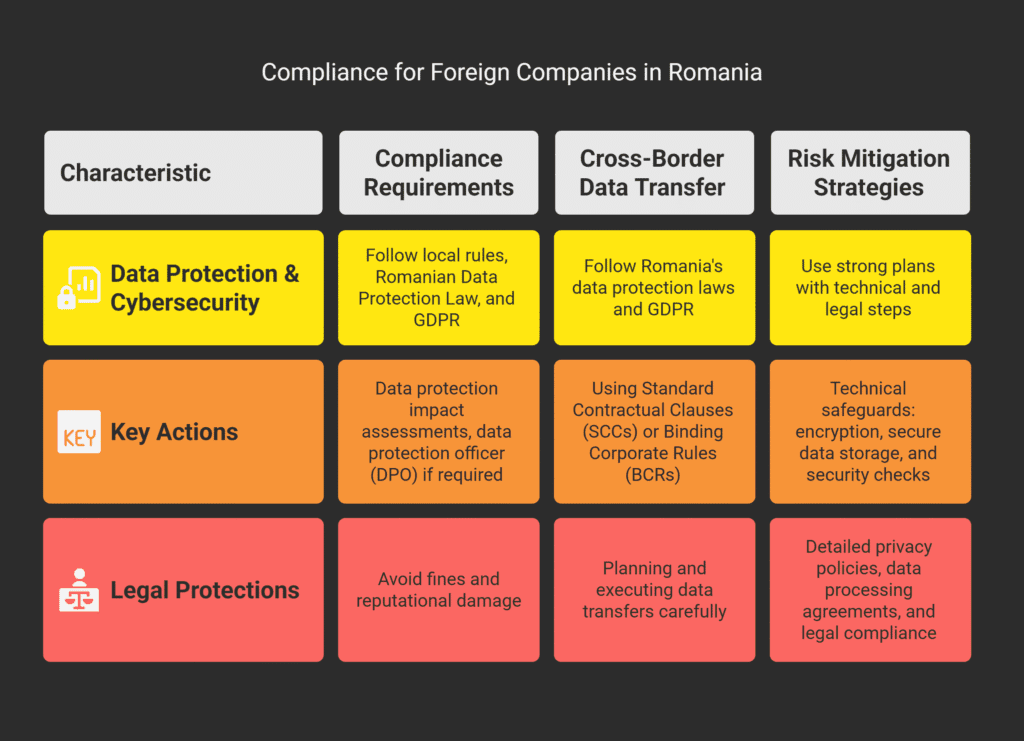
Compliance Requirements for foreign Companies Operating in Romania

Foreign companies in Romania must follow local data protection and cybersecurity rules.

This means they must stick to the Romanian Data Protection Law and the GDPR in Romania.

Following these rules is key to avoid big fines and harm to your reputation.

To meet these requirements, you should:

  • Do regular data protection impact assessments;
  • Use the right technical and organizational steps to keep data safe;
  • Have a Data Protection Officer (DPO) if the law says you must.

Cross-Border Data Transfer Considerations

When moving data across borders, foreign companies must follow Romania’s data protection laws and the GDPR.

This might mean using Standard Contractual Clauses (SCCs) or Binding Corporate Rules (BCRs) to protect data transfers.

Planning and executing cross-border data transfers carefully is essential for compliance.

You need to pick the best data transfer method for your business.

Risk Mitigation Strategies

To lower risks from online surveillance and data protection, foreign businesses in Romania should use strong risk mitigation plans.

These plans should include both technical and legal steps.

Technical Safeguards

Technical safeguards are key to protecting your business from data breaches and cyber threats.

Using encryption, secure data storage, and regular security checks can greatly reduce risks.

Legal Protections

Legal protections are also essential.

This includes having detailed privacy policies, data processing agreements, and making sure your business follows all relevant laws and regulations.

For more details on compliance and risk mitigation, reach out to a legal expert at office@theromanianlawyers.com.

Your Rights and Protections Against Unlawful Surveillance

In Romania, you have rights that protect you from unwanted spying.

Knowing these rights is key to keeping your privacy safe.

Constitutional Safeguards

The Romanian Constitution has strong protections against spying.

Article 30 guards your freedom of speech.

Article 26 protects your right to privacy.

These laws are the foundation of Romania’s rules on surveillance.

Legal Remedies for Privacy Violations

If you think your privacy has been broken, you have legal options. You can go to court for help with privacy issues.

Legal RemedyDescription
Judicial RecourseSeeking legal action through the courts for privacy violations.
Complaint to National Data Protection AuthorityFiling a complaint with the National Data Protection Authority for violations of data protection laws.

How to File Complaints with Romanian Authorities

If you think your privacy has been broken, you can report it to the right Romanian authorities.

National Data Protection Authority Process

The National Data Protection Authority watches over data protection laws in Romania.

To report a problem, write or use their online portal.

Judicial Recourse Options

You can also go to court for help.

A judge will look at your case and decide.

For more on your rights against spying in Romania, email a Romanian lawyer at office@theromanianlawyers.com.

Conclusion

You now know a lot about the laws that govern online surveillance in Romania.

The country’s laws on online surveillance, data protection, and cybersecurity are very important.

They shape how we use the internet.

Online surveillance laws in Romania are shaped by both national and European Union rules.

The data protection laws in Romania follow the General Data Protection Regulation (GDPR).

This means people’s personal data is well-protected.

Cybersecurity laws in Romania focus on keeping critical infrastructure safe and ensuring secure online communication.

If you’re doing business or living in Romania, it’s key to understand these laws.

This helps you stay in line with regulations and protect your rights.

For more details or help with these laws, you can reach out to the Romanian lawyers at office@theromanianlawyers.com.

FAQ

What is the current state of online surveillance in Romania?

Online surveillance in Romania is managed by a mix of laws.
These laws balance national security with privacy rights.
The country has laws like the Romanian Constitution and EU rules to oversee surveillance.

How does Romanian law protect individual privacy in the context of online surveillance?

Romanian law defends privacy in several ways.
It includes the Romanian Constitution and the GDPR.
People have the right to manage their data and seek help if their privacy is broken.

What are the requirements for lawful interception in Romania?

To legally intercept communications in Romania, a court order is needed.
The interception must be necessary and not too broad.
It must also be in line with a valid reason.

How do cybersecurity regulations in Romania impact online surveillance?

Romania’s cybersecurity laws aim to keep digital spaces safe.
They include the National Cybersecurity Strategy and laws for critical infrastructure.
These laws also affect surveillance by setting rules for data sharing and encryption.

What are the obligations of Internet Service Providers (ISPs) in Romania regarding online surveillance?

ISPs in Romania must help law enforcement get user data with a court order.
They also have to keep user data for a certain time.

How do online surveillance laws in Romania affect foreign businesses and individuals?

Foreign companies and people in Romania must follow the country’s surveillance laws.
They need to know the risks and take steps to protect themselves.

What are the rights and protections available to individuals against unlawful surveillance in Romania?

People in Romania have many rights against illegal surveillance.
These include constitutional protections and legal ways to fight privacy breaches.
They can also complain to Romanian authorities.

What is the role of the Romanian Constitution in protecting individual privacy?

The Romanian Constitution is key in protecting privacy.
It ensures the state respects privacy and sets rules for surveillance.

How does the GDPR apply in Romania?

The GDPR directly applies in Romania.
It offers strong data protection and strict rules for those handling personal data.

What are the key government agencies involved in online surveillance in Romania?

Important agencies for online surveillance in Romania are the Romanian Intelligence Service and the Ministry of Internal Affairs.
The National Authority for Management and Regulation in Communications also plays a role.
They enforce surveillance laws.

GDPR Compliance for AI-Powered Tools

GDPR Compliance for AI-Powered Tools

As Romanian businesses use more AI, knowing how to follow GDPR for AI tools is key.

Did you know AI can make compliance work 50 times faster than old methods?

This shows how AI can change the game in data privacy rules.

The General Data Protection Regulation (GDPR) changed how we handle personal data in 2018.

AI’s fast growth brings new chances for growth, but also new challenges in following GDPR and AI rules.

In Romania, getting good at GDPR for AI tools is more than just avoiding trouble.

It’s about winning customer trust and using privacy-friendly AI to stay ahead.

Let’s see how you can handle these rules and use AI’s power.

GDPR Compliance for AI-Powered Tools

Key Takeaways

  • AI can speed up compliance efforts by 50 times compared to manual methods;
  • GDPR outlines 6 legal grounds for processing personal data;
  • AI systems require large volumes of data, necessitating careful dataset compilation;
  • Data retention periods must be proportional and not indefinite;
  • Continuous learning AI systems raise questions about data protection;
  • Transparency in AI processing is key for GDPR compliance;
  • Organizations can save time by using AI for regulatory research and compliance mapping.

Understanding GDPR and Its Impact on AI Technologies

The General Data Protection Regulation (GDPR) sets strict guidelines for data handling in the European Union.

It was enacted on May 25, 2018.

It shapes how organizations collect, store, and process personal information.

This framework has significant implications for AI technologies, which often rely on vast amounts of data.

Definition and Scope of GDPR

GDPR aims to protect individual privacy rights and ensure responsible data practices.

It applies to any organization processing EU residents’ personal data, regardless of the company’s location.

The regulation grants individuals rights such as data access, erasure, and informed consent.

AI Processing Under GDPR Framework

AI systems face unique challenges under GDPR.

The regulation’s emphasis on data minimization conflicts with AI’s need for large datasets.

About 70% of AI projects struggle to comply with this principle.

GDPR also requires transparency in automated decision-making, impacting AI applications in finance, healthcare, and hiring.

AI governance framework

Key GDPR Principles Affecting AI Systems

Several GDPR principles directly influence AI development and deployment:

  • Data minimization and purpose limitation;
  • Transparency and accountability;
  • Secure data processing;
  • Algorithmic bias mitigation.

Organizations must implement robust AI governance frameworks to ensure compliance.

This includes adopting data anonymization techniques and prioritizing ai transparency and accountability.

By focusing on these areas, businesses can navigate the complex landscape of GDPR and AI integration effectively.

GDPR PrincipleImpact on AICompliance Strategy
Data MinimizationLimits dataset sizeImplement data anonymization techniques
TransparencyRequires explainable AIDevelop ai transparency measures
ConsentAffects data collectionDesign clear consent mechanisms
SecurityMandates data protectionEmploy secure data processing methods

GDPR Compliance for AI-Powered Tools

AI tools must follow GDPR when handling EU citizen data or working in the EU.

Not following this can lead to big fines, up to €10 million or 2% of annual income.

Businesses in Romania need to grasp the details of GDPR for their AI systems.

Starting with data minimization is key to responsible AI. GDPR says only use data needed for specific tasks.

AI systems should use methods like anonymization and pseudonymization to keep data safe while gaining insights.

Algorithmic fairness is critical in AI decision-making.

AI systems must let people see their data, understand how decisions were made, and have the right to be forgotten.

This openness is essential for trust and meeting GDPR standards.

GDPR compliance for AI-powered tools

Data protection impact assessments are needed for risky AI activities.

These assessments help spot and fix privacy risks.

Companies must do regular checks and use strong security to avoid data leaks.

GDPR RequirementAI Implementation
Explicit ConsentClear, specific consent for AI data processing
Data MinimizationUse only necessary data for AI models
TransparencyExplainable AI decision-making processes
Right to ErasureAbility to remove personal data from AI systems

To uphold artificial intelligence ethics, companies must train staff on privacy, bias, and ethics.

Using access controls and a privacy-first design are key to integrating data protection into AI tools.

Data Privacy Requirements for AI Systems

AI systems must follow strict data privacy rules under GDPR.

These rules protect personal info and let AI tech grow.

It’s key for Romanian businesses using AI tools to know these rules.

AI Data Privacy Compliance

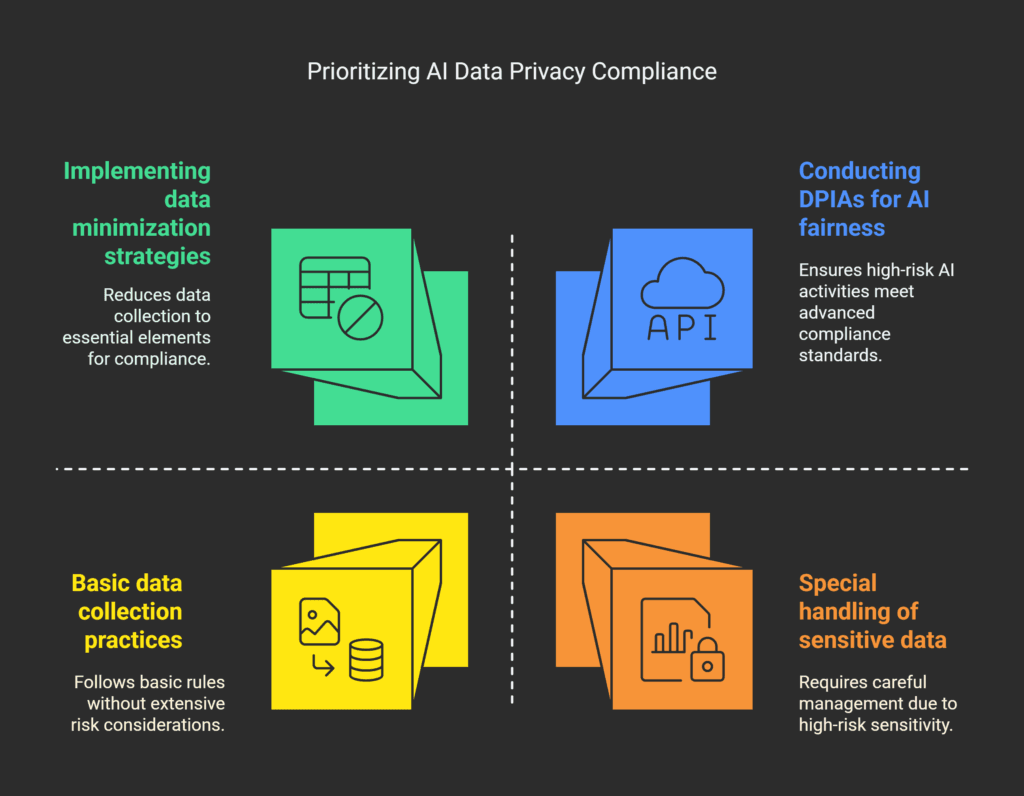
Data Minimization and Purpose Limitation

GDPR says organizations should only collect data needed for specific tasks.

This rule, data minimization, is key for AI systems that need lots of data.

You must figure out the least amount of personal data your AI tools need.

Purpose limitation means data can only be used for its original purpose.

Your AI rules should make sure data isn’t misused.

This makes AI more trustworthy and ethical.

Special Categories of Personal Data

AI systems handling sensitive data, like health info or biometrics, need extra care.

You must have strong security and get clear consent for these data types.

Data Protection Impact Assessments (DPIAs)

DPIAs are needed for high-risk AI activities.

They help spot and fix data protection risks.

Your DPIA should check on AI fairness and GDPR compliance.

Doing DPIAs shows you’re serious about safe AI use.

It protects people’s rights and makes sure your AI meets legal and ethical standards.

AI Transparency and Accountability Measures

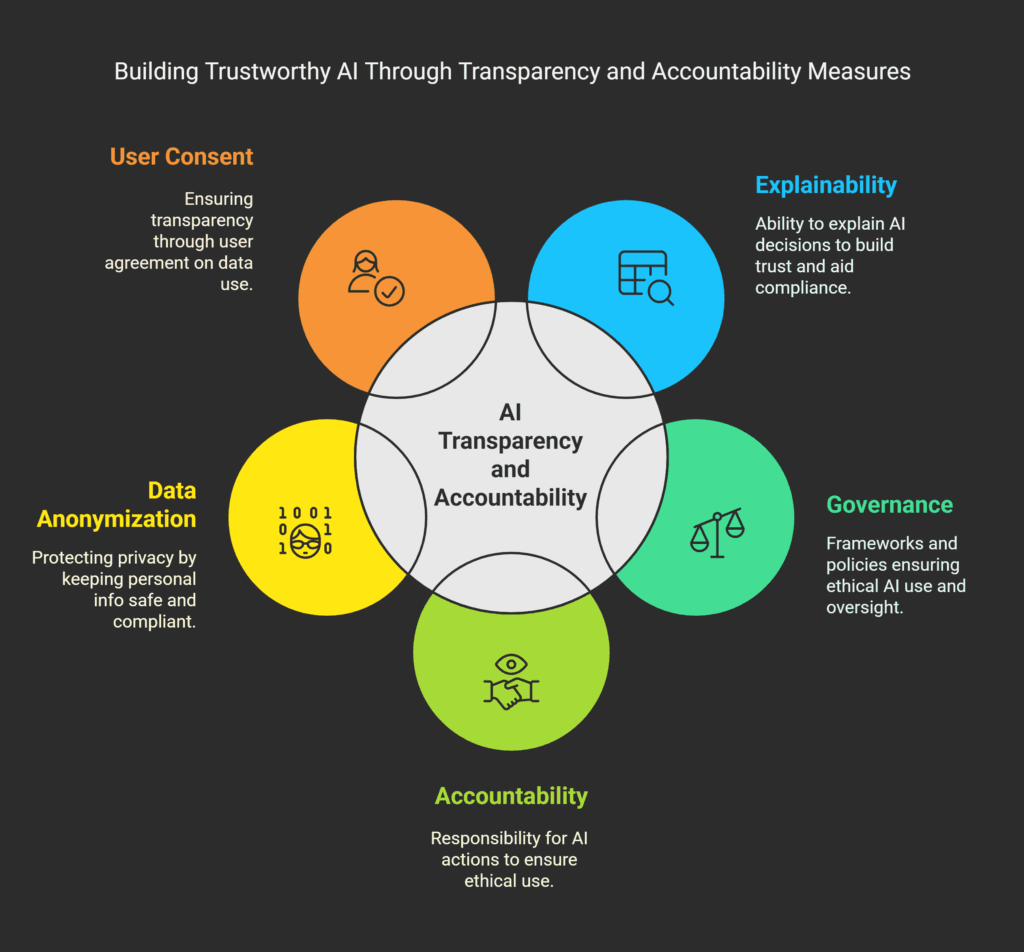
AI Transparency and Accountability Measures

AI transparency is key to trustworthy AI systems.

It includes explainability, governance, and accountability.

As AI models grow more complex, keeping things transparent gets harder.

Data anonymization is vital for privacy in AI.

It keeps personal info safe while AI works well.

This helps Romanian businesses meet GDPR rules.

User consent is essential for AI transparency.

Companies must tell users how data is used and get their okay.

This builds trust and follows data protection laws.

Companies can use many tools for AI transparency:

  • Explainability tools;
  • Fairness toolkits;
  • Auditing frameworks;
  • Data provenance tools.

These tools help with different parts of AI transparency.

They help businesses make AI systems more accountable.

Transparency RequirementDescriptionImportance
ExplainabilityAbility to explain AI decisionsBuilds trust, aids compliance
InterpretabilityUnderstanding how AI worksEnhances user confidence
AccountabilityResponsibility for AI actionsEnsures ethical use of AI

By using these steps, Romanian businesses can make trustworthy AI.

They will follow GDPR and keep user trust and privacy safe.

Automated Decision-Making and Profiling Rights

AI tools have made automated decision-making and profiling big issues in data protection.

GDPR has strict rules for these, focusing on ethics and clear AI systems.

Automated Decision-Making and Profiling Rights

Individual Rights Under GDPR

GDPR gives you rights over automated processing of your data.

You can ask to see your data, stop its use, or fix or delete it.

AI must protect these rights, mainly with sensitive info.

Automated Processing Restrictions

Companies need your clear consent for automated decisions on personal data.

They must tell you the reasons and possible outcomes.

This makes AI trustworthy and keeps data protection key.

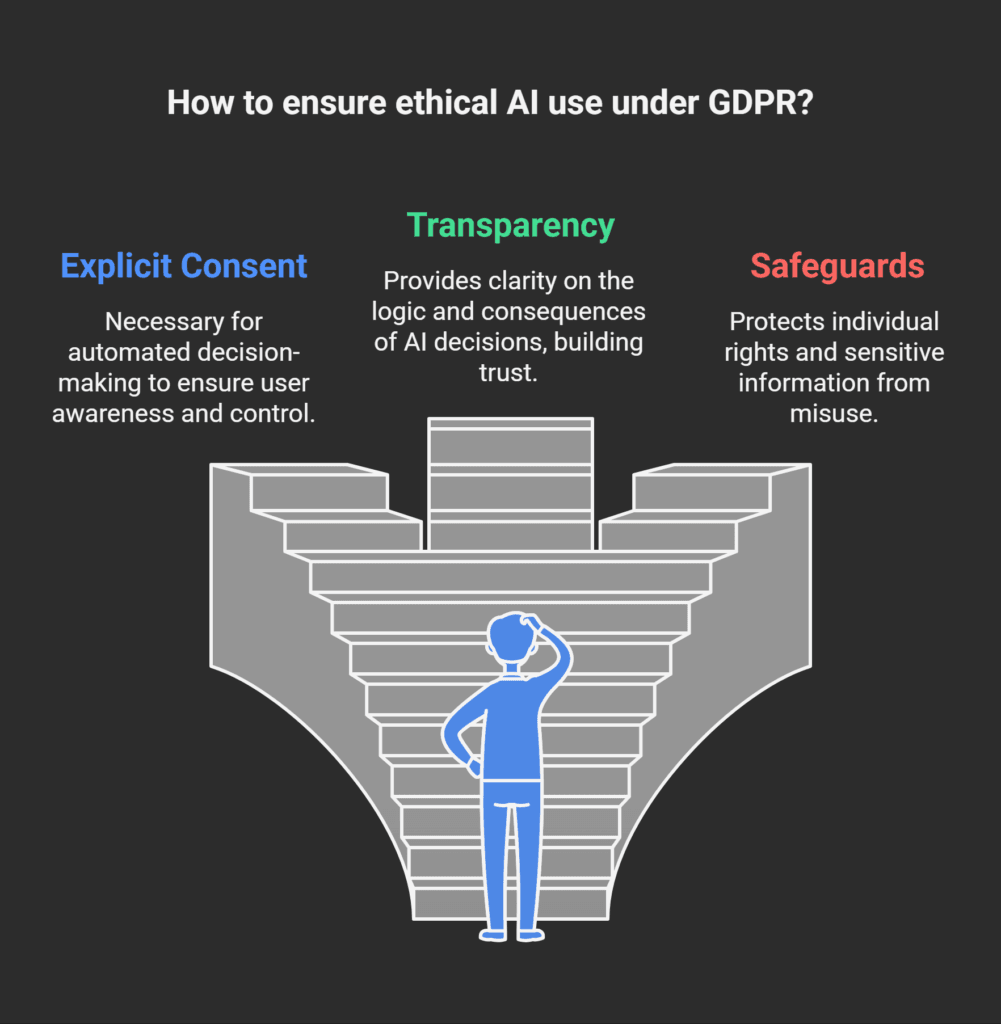
RequirementDescription
Explicit ConsentMandatory for automated decision-making
TransparencyInform about logic and consequences
SafeguardsImplement measures to protect rights
DPIAsRegular assessments to mitigate risks

Right to Human Intervention

GDPR gives you the right to human review in automated decisions.

This means AI can’t decide everything important in your life.

Companies must let you share your views and challenge automated decisions.

Following these rules, Romanian businesses can use AI responsibly.

They keep ethics and protect individual rights.

The aim is to make AI that’s efficient yet respects human values and privacy.

Data Security and Risk Management for AI Tools

AI tools introduce new security and risk challenges.

In Romania, companies must focus on secure data handling and managing AI risks to follow GDPR.

They need to use strong technical and organizational controls.

Data Privacy Requirements for AI Systems

Technical Security Measures

Companies should use encryption, access controls, and security tests.

These steps protect AI system data from unauthorized access and breaches.

Organizational Security Controls

Good data governance is key.

This means having clear policies, procedures, and training for employees.

A solid framework helps keep compliance and lowers AI risks.

Breach Notification Requirements

GDPR requires quick breach reports. Companies must have systems for fast detection and notification.

This is very important for AI systems that handle lots of personal data.

Risk Management AspectImportance
AI Accountability75% of CROs see AI as a reputational risk
Consent Management70% of consumers concerned about data use
Data Governance2.5x more likely to achieve compliance

By focusing on these areas, Romanian businesses can improve their GDPR compliance for AI tools.

Proper risk management not only avoids fines but also builds customer trust and protects your reputation.

Privacy by Design in AI Development

Privacy by Design is key in AI under GDPR.

It means building data protection into AI systems from the start.

This way, you protect data rights while using AI.

To start Privacy by Design, do data protection impact assessments.

These help spot and fix risks early. 92% of companies see the need for new risk handling with AI.

AI governance frameworks are vital for Privacy by Design.

They guide AI development and use, ensuring GDPR rules are followed.

They help with the 69% of companies facing legal issues with AI.

Algorithmic transparency is also important.

It makes AI decisions clear and fair. This builds trust and stops AI bias.

AI bias mitigation strategies are key too.

They make sure AI is fair and unbiased.

Regular checks and reviews can find and fix biases.

By using these steps, you can make AI systems that respect privacy.

This not only follows GDPR but also builds trust in your AI tools.

Cross-Border Data Transfers for AI Processing

AI tools often use data from different countries.

This creates legal challenges under GDPR.

Romanian businesses using AI must follow strict rules for moving data across borders.

Cross-Border Data Transfers for AI Processing

International Data Transfer Mechanisms

GDPR restricts data transfers outside the EU to protect privacy.

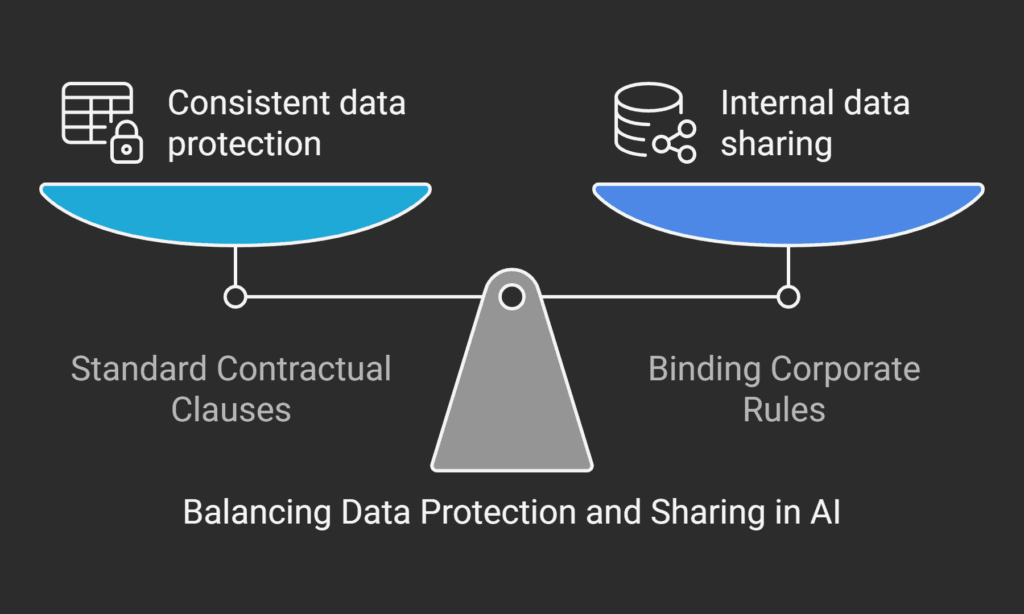
Companies can use approved methods like Standard Contractual Clauses (SCCs) or Binding Corporate Rules (BCRs).

These ensure data stays safe during transfers.

Proper use of these tools is key for ethical AI governance.

Standard Contractual Clauses

SCCs are pre-approved contracts that set rules for data transfers.

They’re a popular choice for Romanian firms working with non-EU partners.

SCCs spell out data protection duties and rights.

This helps maintain AI accountability measures across borders.

Adequacy Decisions

Some countries meet EU privacy standards through adequacy decisions.

This allows easier data flows.

For AI projects, working with adequate countries can simplify compliance.

It supports AI transparency and explainability by ensuring consistent rules.

Cross-border transfers pose unique challenges for AI systems.

Data anonymization and privacy-preserving machine learning techniques are vital.

They help protect personal data while allowing AI to learn from global datasets.

Romanian companies must balance innovation with strict GDPR compliance in their AI strategies.

Transfer MechanismKey FeatureBenefit for AI Processing
Standard Contractual ClausesPre-approved legal agreementsEnsures consistent data protection across borders
Binding Corporate RulesInternal company policiesFacilitates data sharing within multinational AI companies
Adequacy DecisionsEU-approved countriesSimplifies data transfers for AI training and deployment

Documentation and Record-Keeping Requirements

GDPR compliance for AI tools requires detailed records.

You need to document data processing, impact assessments, and security steps.

This helps show you’re following the rules and improves data handling.

To manage AI risks well, keep detailed logs of AI system use.

Record data flows, why you’re processing it, and how long you keep it.

Also, track user consent and data access requests.

These steps are key for following privacy and AI rules.

Explainable AI is very important.

You must document how AI makes decisions to be clear.

This should include how you avoid bias, showing you use AI fairly and ethically.

  • Data Protection Impact Assessments: Update before major changes;
  • Processing Activities Records: Monitor continuously;
  • Security Measure Documentation: Outline quarterly;
  • User Consent Records: Update in real-time.

Not following GDPR can lead to big fines, up to €20 million or 4% of your yearly sales.

Good documentation helps avoid these fines and makes your work smoother.

In fact, 31% of companies say they work better after keeping good records.

Conclusion

GDPR compliance is key for Romanian businesses using AI.

Ethical AI principles are the base for responsible AI.

They make sure AI respects privacy while pushing innovation.

Regular checks on AI models and privacy risk assessments are vital.

They help spot weaknesses and keep AI in line with data protection rules.

Also, clear machine learning models build trust and show a commitment to ethical AI.

Data protection by design is a big part of GDPR for AI tools.

Adding privacy safeguards early on helps avoid risks and boosts competitiveness.

The AI-enabled e-commerce market is expected to grow to $16.8 billion by 2030.

This shows how important GDPR-compliant AI is.

GDPR Compliance ElementAI Implementation
Data MinimizationAI algorithms identify essential data
TransparencyAI-generated plain language notices
Consent ManagementAI-powered platforms automate processes
Risk AssessmentAI conducts efficient DPIAs

By following these GDPR-compliant AI practices, Romanian businesses can innovate while protecting individual rights in the digital world.

Contact: office@theromanianlawyers.com

FAQ

Understanding GDPR for AI tools in Romania can be tough.

This FAQ tackles main worries about ai explainability and data protection.

We’ll look at how to make AI decisions clear while following responsible ai rules.

AI audits and monitoring are key for GDPR. Regular checks help ensure AI uses only needed data.

This follows the data minimization rule. Also, GDPR says no decisions can be made just by AI that affect people.

So, add human checks and explain AI choices clearly.

Being open about ai and data handling is essential for GDPR. You must tell people how their data is used by AI.

Think about doing Data Protection Impact Assessments (DPIAs) for risky AI projects.

These help spot and fix privacy risks, making sure your AI meets GDPR standards.

For help on GDPR for AI tools in Romania, email office@theromanianlawyers.com.

Keep up with the latest in AI explainability to stay compliant and gain customer trust.

FAQ

What are the key GDPR principles that affect AI systems?

GDPR principles for AI systems include data minimization and purpose limitation.

These mean AI systems should only collect and use data needed for their purpose.

They should also keep data only as long as necessary.

How can Romanian businesses ensure algorithmic fairness in their AI systems?

Romanian businesses should use bias mitigation techniques and audit AI models regularly.

They should also use diverse training data and transparent machine learning models.

This helps ensure fairness in AI systems.

What is a Data Protection Impact Assessment (DPIA) and when is it required for AI systems?

A DPIA is a process to identify and minimize data protection risks in AI systems.

It’s needed when an AI system poses a high risk to individuals’ rights and freedoms.

This includes systems that make automated decisions or handle sensitive data on a large scale.

How can businesses implement privacy-preserving machine learning techniques?

Businesses can use data anonymization, differential privacy, federated learning, and secure multi-party computation.

These methods help protect individual privacy while allowing AI processing to comply with GDPR.

What are the requirements for obtaining valid user consent for AI processing under GDPR?

To get valid consent for AI processing, businesses must ensure it’s freely given and specific.

Users must be clearly told how their data will be used in AI systems.

Consent should be given through a clear affirmative action.

How can Romanian businesses ensure AI transparency and accountability?

Romanian businesses can ensure AI transparency by using explainable AI and maintaining detailed documentation.

Regular audits of AI systems and clear communication to data subjects are also key.

This helps maintain accountability.

What are the restrictions on automated decision-making under GDPR?

GDPR limits automated decision-making that affects individuals legally or significantly.

Such processing needs explicit consent, is necessary for a contract, or is authorized by law.

Individuals have the right to human intervention and to contest decisions.

What security measures should be implemented to protect personal data processed by AI systems?

AI systems should have data encryption, access controls, and regular security testing.

Robust policies and procedures are also essential.

Businesses should protect against adversarial attacks and ensure training data integrity.

How can Privacy by Design be incorporated into AI development?

Privacy by Design should be considered from the start of AI system design.

This includes minimizing data collection and implementing strong security measures.

It also involves ensuring data accuracy and limiting retention.

Features that support individual rights are also important.

What are the implications of cross-border data transfers for AI processing under GDPR?

Cross-border data transfers for AI processing must follow GDPR rules.

This might involve using Standard Contractual Clauses or obtaining Adequacy Decisions.

Businesses must ensure the recipient country’s data protection is similar to the EU’s.

What documentation should Romanian businesses maintain for their AI systems to demonstrate GDPR compliance?

Romanian businesses should keep records of processing activities, Data Protection Impact Assessments, and security measures.

They should also document consent, data breaches, and AI governance frameworks.

This includes AI risk management, bias mitigation, and measures for transparency and accountability.