
AI due diligence checklist for foreign investors assessing a Romanian company

AI Due Diligence in Romania: What Foreign Investors Should Check

Foreign investment • AI governance • Romania

AI due diligence in Romania asks whether a target company’s AI use, data, contracts and public claims support the investment case. It is not a technical demonstration of a model and it is not a generic AI policy review. For a buyer, investor or lender, the question is whether the target has identified the systems it uses, can lawfully operate them, owns or can use the assets it relies on, and has a credible plan for the risks that will remain after closing.

What is AI due diligence in a Romanian transaction?

AI due diligence is a transaction-focused legal and commercial review. It identifies whether the target’s use of AI creates liabilities, restrictions, missing rights or implementation costs that could affect price, risk allocation or post-closing operations.

For a Romanian target, the review should cover the target’s Romanian operations and any AI outputs used in the European Union. The EU AI Act is directly applicable across the EU and operates alongside the GDPR where personal data is processed. A seller’s statement that it uses only a third-party AI tool does not end the inquiry: the target may still be a deployer, customer, controller, employer or regulated business with its own duties.

This guide has a different purpose from our analysis of AI vendor contracts in Romania, which focuses on the agreement with a supplier, and from DPIA vs FRIA in Romania, which focuses on assessment triggers for a deployment. Here, the investor is deciding what must be verified before, at and after a deal.

Start with the target’s actual AI footprint

Do not begin with a broad question such as “Does the company use AI?” Ask what system or model is used, for which decision, with which data, by whom, and whether the target sells, deploys, develops, fine-tunes or merely accesses the tool.

A useful data-room request separates customer-facing products from internal tools. It should identify models, APIs, software providers, hosting and cloud dependencies, integrations, datasets, prompts or knowledge bases, material outputs, users and the decisions influenced by each use case. The inventory should also record planned products or features that have not yet launched but are material to the investment thesis.

Deal-side navigator

Select a deal question to see the first evidence to request

Click or tap a card. Keyboard users can Tab to a card and press Enter or Space. Each selection stays visible until you choose another one.

Business model and footprint

Request a system inventory, product descriptions, roadmaps, supplier contracts, architecture summary and evidence of the target’s material AI claims. Compare marketing language with the technology and operating model actually in use.

Which legal and commercial issues should an investor test?

Click or tap a row to highlight the diligence takeaway. On a small screen, swipe the table sideways.

AI due diligence matrix for a Romanian target
Review areaWhat to testPossible deal response
Whether the target’s product, sales material and internal inventory describe the same systems, functions, limits and dependencies.Correct the diligence scope, ask for technical confirmation and qualify representations that are broader than the evidence.
Whether a use case may be prohibited, high-risk, subject to transparency rules or linked to a general-purpose AI model supply chain.Obtain a classification record, identify compliance timing and budget for any remediation or implementation work.
Data flows, controller/processor roles, legal bases, Article 22 issues, DPIA screening, security measures and cross-border transfers.Require a privacy remediation plan, review the DPA and test whether the target can continue the relevant processing after closing.
Whether datasets, prompts, files or customer information may lawfully be used for development, fine-tuning, testing or supplier improvement.Limit or stop impermissible use, obtain consents or contractual permissions where appropriate, and reserve a specific risk allocation.
Ownership and licences for software, open-source components, models, training materials, brand assets, output and third-party claims.Confirm chain of title, address licence conflicts and tailor warranties or indemnities to the assets that support the valuation.
Model, cloud and subprocessor dependencies, location, termination, audit evidence, model changes and service continuity.Seek consent, amendment, transition assistance or a post-closing migration plan if a dependency cannot support the buyer’s intended use.
Policies, ownership, AI literacy, logs, testing, monitoring, incident response, complaint handling and escalation records.Set a post-closing governance plan with owners, deadlines and evidence requirements rather than relying on a generic policy.

The European Commission describes the AI Act as a risk-based framework for developers and deployers. It identifies employment, credit scoring and access to essential services among the examples that may be high-risk. See the Commission’s AI Act overview and application timetable.

AI Act review: classify before you value the risk

Do not treat “AI Act compliant” as a sufficient diligence answer. Contractual, sector-specific, data-protection and AI Act obligations must be assessed separately. The investor should identify the system, its intended purpose, the target’s role and the rules that apply now or later. The relevant date can affect both risk allocation and integration planning.

The AI Act’s prohibitions, AI literacy obligations, governance rules, GPAI-model obligations and transparency rules have different application dates from the rules for high-risk systems. The Commission states that Annex III high-risk use cases, including employment and credit-scoring examples, are scheduled to apply from 2 December 2027, while high-risk systems embedded in regulated products have a later date of 2 August 2028. A diligence report should distinguish obligations already applicable from future obligations that could require a funded implementation plan. At the time of publication, the applicable AI Act timetable should be verified against the latest EU legislation and implementation guidance, including the official AI Act Service Desk timeline.

The analysis should also ask whether the target is developing an AI system, placing it on the market, deploying it in its own business, importing it, distributing it or using a third-party service. These labels are not interchangeable with GDPR controller and processor roles. For the contract-facing part of that review, see AI Vendor Contracts in Romania.

GDPR and data review: look beyond the privacy policy

The decisive question is what happens to personal data at each stage of the AI lifecycle. A target may process personal data in training, testing, deployment, monitoring, logs, prompts, support and human review, even where the product is marketed as automated or anonymised.

The review should map the data categories, purposes, retention, recipients, access, transfer mechanisms and contractual roles. Where the use involves profiling, recruitment, credit, insurance, pricing or decisions that may significantly affect individuals, check the actual decision flow and safeguards rather than relying on a generic human-review statement. Article 35 GDPR requires a DPIA where processing is likely to result in a high risk to the rights and freedoms of natural persons; Article 22 has separate rules for certain solely automated decisions.

The European Data Protection Board has also confirmed that the anonymity of an AI model trained with personal data must be assessed case by case. That matters for a target relying on a statement that a model, dataset or output is anonymous. Read EDPB Opinion 28/2024. For the broader framework, see our guide to GDPR compliance when using AI in Romania.

Data, intellectual property and contract rights

AI value is often dependent on rights that sit outside the target’s own code. The investor should trace the legal basis for using data, third-party models, cloud infrastructure, open-source components, output and confidential information.

Review the complete contract suite, not only the signed master agreement. Order forms, online terms, acceptable-use policies, data-processing agreements, security schedules, open-source notices and API terms can all affect the target’s rights. In particular, check whether a provider can use customer or target data for model training, whether the provider can change the model or service unilaterally, and whether the target can export its data and configurations on exit.

Ownership language for AI-generated output should be read carefully. A contractual promise may create a licence or allocation between the parties, but it does not necessarily guarantee exclusivity or copyright protection in every output. The copyright status of AI-generated content may vary depending on the level of human creative input and the applicable jurisdiction. The review should identify the use the target needs to make of the output and whether third-party rights, human authorship requirements, confidentiality or contractual restrictions could limit that use.

What should the investor request in the data room?

  1. Request a current AI inventory. Include internal tools, customer-facing products, models, APIs, plugins, fine-tuning, integrations and material planned features.
  2. Obtain a use-case map. Record intended purpose, users, affected people, decisions, data inputs, outputs, human review and country of deployment.
  3. Collect AI governance records. Ask for role assessments, policies, training records, system documentation, risk logs, testing, monitoring and incident procedures.
  4. Review AI Act screening. Identify prohibited practices, potential high-risk systems, transparency obligations, GPAI dependencies and the applicable timetable.
  5. Map personal-data processing. Review privacy notices, legal bases, Article 22 analysis, DPIAs, processor arrangements, security controls and transfers.
  6. Trace data rights. Check source, licence, consent or other permission for data used in development, testing, fine-tuning and ongoing service delivery.
  7. Review the contract stack. Read supplier, customer, cloud, API, DPA, security, outsourcing and change-control documents together.
  8. Confirm IP and open-source position. Request code provenance, licences, notices, ownership assignments, third-party claims and output-use restrictions.
  9. Test material statements. Compare product marketing, investor materials and customer commitments against the available technical and legal evidence.
  10. Assign the deal response. Separate issues requiring price, warranty, indemnity, condition, remediation, disclosure or post-closing integration action.

How should findings affect the transaction documents?

Translate each material finding into an owner, timing and remedy. A diligence report is useful only if the SPA, investment agreement, disclosure process and integration plan reflect the issues that have been identified.

The appropriate response will depend on the transaction structure and the seller’s ability to remediate. A buyer may need targeted warranties concerning data rights, AI-related regulatory compliance, ownership, contract compliance, absence of claims or material incidents. Confirmed gaps may justify a specific indemnity, a pre-closing remediation covenant, a post-closing plan, a condition or a tailored disclosure. The drafting should not assume that a general compliance warranty captures the actual issue.

Post-closing planning is equally important where the buyer will integrate systems, move data, introduce a new group policy, change suppliers or expand the target’s use case. These changes can alter the GDPR and AI Act analysis. If an assessment is required, the timing should be addressed before the relevant processing or deployment begins. Our DPIA vs FRIA guide explains why those two assessment routes must be screened separately.

When does a separate specialist review become necessary?

A focused AI legal review should be coordinated with corporate, technical, information-security, employment and commercial due diligence when the target develops AI products, relies on proprietary datasets, makes regulated-sector decisions, uses AI in recruitment or credit processes, processes sensitive personal data, markets compliance claims, or has important dependencies on a small number of providers. The workstreams should share the same factual inventory, but each should retain its own legal questions and conclusions.

How Atrium Romanian Lawyers can assist

Atrium Romanian Lawyers can coordinate the legal workstream for AI-related due diligence in a Romanian investment, acquisition or internal reorganisation. The review can cover AI Act role and use-case screening, GDPR and data-contract questions, supplier and customer terms, intellectual property, employment and operational governance, and the translation of findings into transaction documents or an integration plan.

Client experience

AI due diligence during the acquisition of a Romanian technology company

An international investor considered acquiring a Romanian technology company that relied extensively on AI-enabled software products and third-party AI services.

During the due diligence process, the buyer requested confirmation regarding AI Act compliance, data rights, intellectual-property ownership and the target’s dependencies on external AI providers.

The review identified gaps between the target’s public marketing materials and its internal documentation, uncertainties regarding the scope of rights over certain datasets, and contractual limitations affecting the use of third-party AI services after closing.

Atrium Romanian Lawyers coordinated the legal review of the AI use cases, supplier contracts, GDPR implications and intellectual-property position. The findings were translated into targeted warranties, disclosure items and a post-closing remediation plan.

The transaction proceeded with a clearer allocation of regulatory, contractual and operational risks and with a structured roadmap for post-closing compliance measures.

This example has been anonymised and simplified for publication. The appropriate legal analysis depends on the system, data, contract structure and facts of each matter.

Frequently asked questions

Does every investment in a Romanian company need AI due diligence?

No. The scope should be proportionate to the target’s actual use of AI and the importance of that use to the transaction. A company using a limited internal tool may require a focused review. A target selling AI-enabled products, using sensitive data or making decisions affecting people may need a deeper legal and technical workstream.

Is AI due diligence the same as an AI Act compliance audit?

No. AI Act compliance is one part of the review. Transaction diligence also considers ownership, licences, customer commitments, personal data, confidentiality, technical dependencies, product claims, change control and what the buyer will need after closing. The correct scope follows the investment thesis and the target’s operating reality.

Can a seller rely on a supplier’s AI compliance statement?

Supplier information can be relevant evidence, but it does not by itself establish that the target’s own deployment is compliant. The investor should check whether the statement identifies the actual system, model, purpose, data, users, territory, contract terms and responsibilities relevant to the target’s use case.

Should a buyer ask for the target’s DPIAs?

Where the target operates AI systems involving personal data and has conducted or screened for a DPIA, the relevant material should be reviewed subject to confidentiality controls. The question is not simply whether a document exists, but whether it reflects the current processing, risks, safeguards, changes and any residual issues requiring follow-up.

Can AI findings be addressed after closing?

Sometimes. The decision depends on the nature of the issue, legal exposure, urgency, operational dependency and the buyer’s ability to control remediation. A defensible post-closing plan should identify the owner, evidence, budget, deadlines and the effect on continued use. Some issues may need to be resolved before closing or before a planned deployment.

What is the most common gap in AI diligence?

A frequent gap is that the target has a high-level AI policy or vendor contract but no reliable inventory linking systems, use cases, data, roles, evidence and decision owners. The first practical step is usually to build that factual map before drawing legal conclusions or negotiating transaction protection.
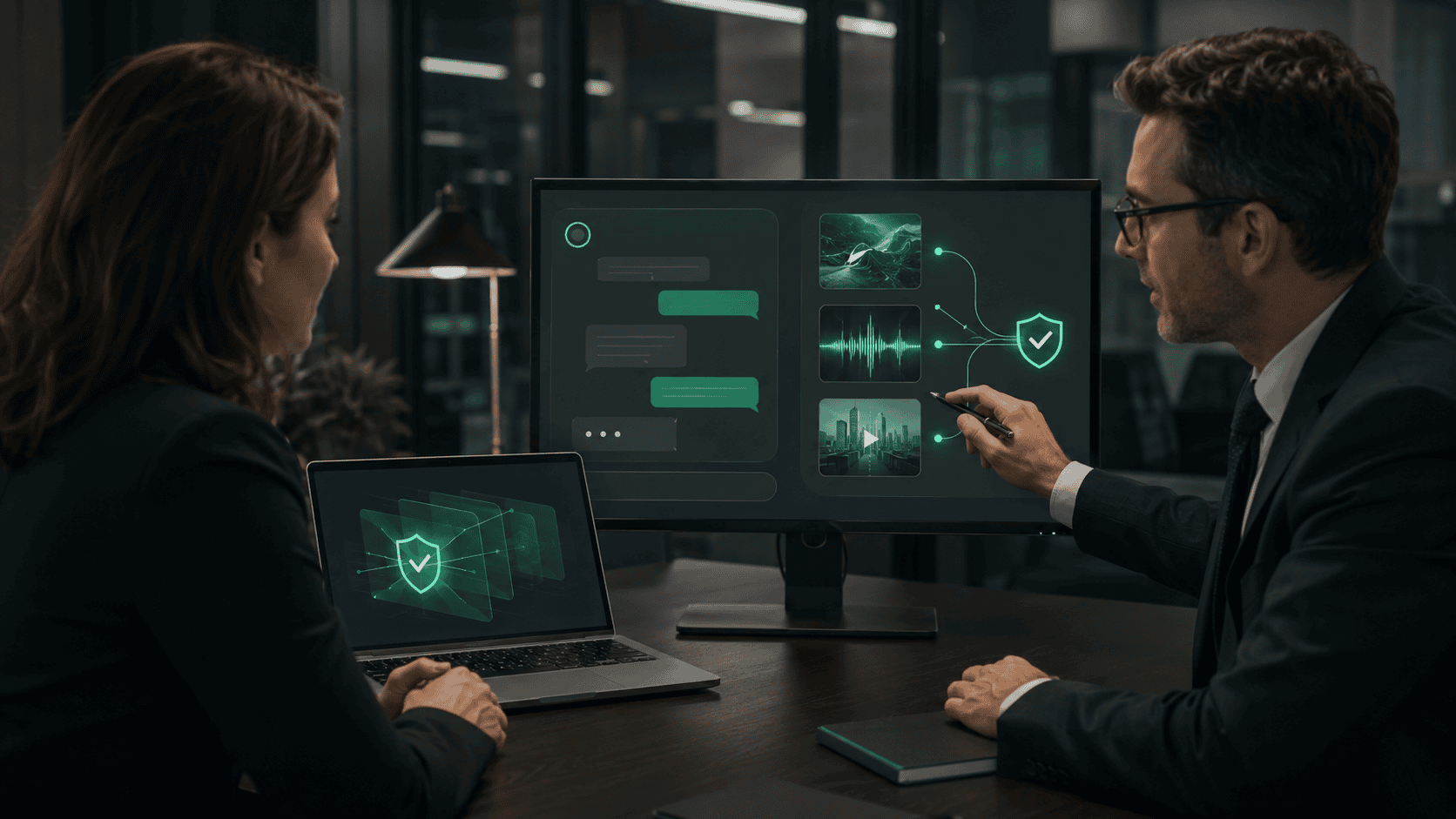
Two corporate professionals reviewing AI transparency controls, compliance dashboards, and synthetic content verification tools on screens in an office setting.

EU AI Act in Romania: 2026 Guide for Foreign Companies

Artificial intelligence and digital regulation · 2026

EU AI Act in Romania: 2026 Guide for Foreign Companies

Foreign companies operating in Romania may be subject to the EU AI Act even when the parent company, vendor or development team is outside the European Union. This practical guide explains the scope rules, the obligations already applying in 2026, the later high-risk deadlines and the records a Romanian business should build now.

The analysis should be read together with the official AI Act text, the Commission’s AI Act implementation page and the current guidance available through the AI Act Service Desk.

Two corporate professionals reviewing AI transparency controls, compliance dashboards, and synthetic content verification tools on screens in an office setting.
AI compliance is a governance process: classify, document, train and monitor.

What is the practical answer for a foreign company?

A Romanian subsidiary, branch or other local operation should begin with an inventory of the AI systems it provides, deploys, imports, distributes or uses for work. The company should then identify whether the system is prohibited, high-risk, subject to transparency duties, or outside the main AI Act obligations. The label used by the vendor is not decisive: the same tool may create different legal questions depending on its function, users, outputs and place of use.

Scope first

Map the Romanian entity, the foreign group, the provider, the deployer, the users and where the output is used. A foreign parent does not automatically remove EU exposure.

Article 2 analysis

Obligations now

AI literacy, prohibited-practice controls, GPAI-related obligations and the new transparency rules must be considered according to the applicable role and system.

2026 operating baseline

Evidence later

Keep an AI register, vendor file, training record, human-oversight process and incident route so the business can show how it reached its classification.

Governance that scales
Key point: the AI Act does not create a universal “AI officer” requirement for every Romanian business. Responsibility must be allocated in a way that fits the company’s systems, roles, risk profile and existing compliance structure.

AI Act timeline for companies operating in Romania

The original AI Act timetable has been supplemented by the Digital Omnibus on AI. The current implementation page of the European Commission identifies the dates below. A deadline table should be treated as a planning tool, not as a substitute for checking the final text and any sector-specific transition rule.

Completed1 August 2024
Entry into force

The Regulation entered into force. The legal framework began its transition period, while later provisions were scheduled to apply in stages.

Applied2 February 2025
Prohibitions and literacy

The prohibited-practice rules and the Article 4 AI-literacy obligation became applicable. Businesses should already have training and prohibited-use controls in place.

Applied2 August 2026
Transparency and supervision

Transparency obligations for certain AI systems, broader enforcement powers and the Commission’s AI Office and national authorities’ implementation work become operational.

Deferred2 December 2027
Selected high-risk uses

Following the Digital Omnibus, high-risk systems in sensitive Annex III areas, including employment, apply from this date. Product-embedded high-risk rules have a later transition.

Rule or milestoneCurrent application pointWhat the Romanian operation should do
Prohibited AI practicesApplied from 2 February 2025; an additional prohibition concerning certain non-consensual intimate or child sexual abuse material applies from 2 December 2026.Screen use cases before procurement or deployment and escalate any practice that may manipulate, exploit, socially score or infer protected characteristics.
AI literacyApplied from 2 February 2025 and enforced by national market-surveillance authorities from 2 August 2026.Adopt role-based training and retain evidence of the measures taken, rather than relying on a generic awareness email.
Transparency rulesApplied from 2 August 2026 for the relevant Article 50 systems and outputs.Review chatbot notices, synthetic-content marking, deepfake disclosures and the editorial process for public-interest text.
Annex III high-risk systemsSelected high-risk use cases, including employment, apply from 2 December 2027 after the Digital Omnibus transition.Classify and plan early. The later date does not remove GDPR, employment, consumer or fundamental-rights duties that may apply now.
High-risk systems in regulated productsExtended transition until 2 August 2028 under the current Commission summary.Coordinate product-safety, sectoral and AI Act analysis with the provider and any notified-body or conformity route.

The Commission’s current AI Act timeline identifies the staged dates and the changes introduced by the Digital Omnibus.

Does the AI Act apply to a foreign company operating in Romania?

Often, yes. The scope is not limited to companies incorporated in an EU Member State. The Regulation covers providers placing AI systems or general-purpose AI models on the Union market, deployers located in the Union, and providers or deployers in a third country where the output produced by the system is used in the Union. Importers, distributors, certain product manufacturers, authorised representatives and affected persons are also expressly addressed.

This creates several common patterns for international groups. A US or UK parent may provide a generative AI platform used by its Romanian subsidiary. A Romanian company may deploy a recruitment tool supplied by a vendor in another country. A group may centralise procurement and security while the local entity makes decisions affecting Romanian workers or customers. The legal analysis should identify each role instead of treating “the group” as a single operator.

Question 1Is the system used in the EU?

If the Romanian entity deploys the system, or its output is used in Romania or elsewhere in the Union, the scope analysis moves beyond the location of the parent company.

Question 2Who provides it?

Record the provider, importer, distributor, group company, authorised representative and vendor chain. Contract labels are useful evidence but do not replace the legal role analysis.

Question 3Who deploys it?

Identify the business unit that determines the purpose and use. The deployer may be the Romanian company, a foreign shared-service centre or another group entity depending on the facts.

Question 4Who is affected?

Employees, applicants, customers and other persons in the Union may be affected even when the technical processing or model hosting takes place outside Romania.

Do not rely on the hosting location alone: cloud hosting, a foreign parent or a vendor’s “EU AI Act compliant” statement does not by itself determine whether the Romanian entity has obligations.

Which AI uses should a Romanian company classify first?

A useful first inventory is operational rather than theoretical. Start with tools that make recommendations, rank people, generate customer-facing outputs, analyse sensitive information, control access to services or influence employment decisions. Include tools purchased by individual teams if company data or company accounts are used.

Business useWhy it needs early reviewFirst evidence to collect
Recruitment, CV screening or candidate scoringEmployment and access-to-self-employment uses are listed in Annex III and may engage high-risk analysis once the relevant rules apply.Vendor description, decision logic, data sources, human review and impact on applicants.
Employee monitoring, task allocation or performance evaluationAI used to affect working relationships or monitor behaviour may fall within the employment category and also raise labour-law and GDPR questions.Purpose, affected groups, indicators, decision owner, notice, consultation and challenge route.
Customer chatbot or voice assistantInteractive systems may require a clear notice that the person is interacting with AI unless the interaction is obvious in context.Interface screenshots, notice wording, escalation to a person and accessibility check.
AI-generated public-facing images, audio or textArticle 50 can require machine-readable marking or disclosure, subject to the relevant exception and content type.Generation workflow, labelling method, human review, editorial responsibility and publication record.
Credit, insurance, access or eligibility decisionsSome essential private or public service uses are listed as high-risk and can intersect with anti-discrimination and sectoral rules.Decision criteria, datasets, human oversight, explanation path and affected-person rights.

Do not classify a system only by the word “AI” in a sales brochure. Ask what the tool actually does, which people it affects, whether it generates or ranks content, whether it makes or supports a decision, and whether it is integrated into a regulated product. The Commission’s AI Act Service Desk provides tools and guidance that can support this initial assessment.

Which AI practices are prohibited?

The AI Act bans certain practices because their risks are considered unacceptable. Examples include harmful manipulation or deception, harmful exploitation of vulnerabilities, social scoring, certain forms of individual criminal-offence prediction, untargeted scraping to create facial-recognition databases, workplace or education emotion recognition, and biometric categorisation to infer protected characteristics, subject to the precise legal wording and exceptions.

For a foreign company with Romanian staff, the workplace emotion-recognition prohibition deserves particular attention. A vendor may market a “wellbeing”, “engagement” or “productivity” product without describing it as emotion recognition. The business should look at the functionality and the data signals used, not only the product name. The same applies to tools that claim to infer personality, intent, reliability or risk from communications.

Procurement gate

Require the business owner to describe the system’s purpose, data sources, affected people and output before purchase or activation.

Red-flag review

Escalate tools involving vulnerability exploitation, social scoring, biometric inference, emotion recognition or behavioural prediction.

Decision record

Record why the company concluded that a use is permitted, prohibited, outside scope or subject to another compliance route.

What transparency duties apply from 2 August 2026?

Article 50 covers specific interactions and outputs. A provider of an AI system intended to interact directly with natural persons must ensure that people are informed that they are interacting with an AI system unless this is obvious in context. Providers of systems generating synthetic audio, image, video or text must ensure that outputs are marked in a machine-readable format and detectable as artificially generated or manipulated, subject to the stated limits and exceptions.

Deployers have additional duties in defined situations. People exposed to emotion-recognition or biometric-categorisation systems must be informed. A deployer of an image, audio or video deepfake must disclose that the content was artificially generated or manipulated, subject to the artistic and other exceptions. Text generated or manipulated by AI and published to inform the public on matters of public interest must also be disclosed, but the obligation does not apply where the content has undergone human review or editorial control and a natural or legal person holds editorial responsibility.

This is why the website’s ordinary AI Notice and a public disclosure under Article 50 should not be treated as identical. An editorial footer may be useful transparency, but it does not automatically satisfy every machine-readable marking or user-facing notice requirement. Each workflow should be checked according to the system, output, audience and publication context.

Practical control: create a short content decision tree: AI-assisted editing, substantially generated content, deepfake or synthetic media, public-interest text, customer interaction. Assign the corresponding label, machine-readable marker, human review and approval record.

Does every AI-generated business article or image need a label?

No single answer applies to every output. The AI Act distinguishes between the type of system, the type of output and the way the content is published or presented. Standard editing that does not substantially alter the input may fall within an exception to the machine-readable marking duty. A human review and editorial-control exception may apply to certain public-interest text. Deepfakes have their own disclosure rule, while chatbots require a direct-interaction analysis.

The company should document the workflow instead of making a broad statement such as “all AI content is exempt” or “all AI content must be labelled in the same way”. Keep the prompt or source material where appropriate, the generated version, the human changes, the responsible editor, the final label and the publication channel. This is particularly useful where content is repurposed across websites, advertisements, social media and customer communications.

What does AI literacy require?

Article 4 requires providers and deployers to take measures to ensure, to their best extent, a sufficient level of AI literacy for staff and other persons dealing with the operation and use of AI systems on their behalf. The measures should take account of technical knowledge, experience, education, training, the context in which the systems are used and the people or groups on whom the systems are used.

This is a context-based obligation, not a fixed annual course or a universal certification. A marketing employee using a writing assistant, an HR manager using a candidate-ranking tool and an engineer managing a model deployment do not need identical training. The employer should explain relevant limitations, data handling, hallucination and reliability risks, prohibited uses, escalation routes, human review and the consequences of relying on outputs.

Identify AI users

List employees, contractors and other persons acting on the company’s behalf who operate or use an AI system. Include occasional users where the risk justifies it.

Match training to context

Separate basic safe-use guidance from role-specific instruction for HR, legal, customer service, developers, procurement and management.

Keep training records

Retain the audience, date, topics, materials, completion evidence and any follow-up testing or policy acknowledgement.

Update after change

Reassess training when a new system, material model update, high-risk use, incident or regulatory guidance changes the risk profile.

The Commission’s AI-literacy Q&A explains that enforcement of Article 4 is handled by national market-surveillance authorities and that there is no one-size-fits-all competence framework. A Romanian business should therefore build a proportionate internal record rather than wait for a template course.

What should employers know about recruitment and workplace AI?

Annex III identifies AI systems intended for recruitment or selection, including targeted job advertising, application analysis and candidate evaluation. It also identifies systems used to make decisions affecting terms of work-related relationships, promotion or termination, allocate tasks based on individual behaviour or personal traits, or monitor and evaluate performance and behaviour.

Under the current Commission timeline, the rules for high-risk systems in these sensitive areas apply from 2 December 2027 following the Digital Omnibus transition. This does not create a compliance holiday. A Romanian employer must still consider GDPR, Romanian labour law, anti-discrimination rules, information duties, collective arrangements, employment records, confidentiality and the possibility of human challenge. A vendor’s score should not become an unexplained substitute for a lawful employment decision.

Before deploying such a tool, the employer should identify who makes the final decision, what the AI output means, whether a person can disregard it, what data is used, whether a candidate or employee can obtain an explanation, and what happens if the system produces an incorrect or discriminatory result. The analysis should also consider whether the foreign group’s HR platform is being deployed by the Romanian entity or merely accessed for central administration.

Separate the dates: the later high-risk deadline concerns the AI Act’s high-risk requirements. It does not suspend GDPR or employment-law obligations that may arise from the same processing or decision today.

Vendor contracts and AI due diligence

A foreign company should not accept a short vendor statement as its entire AI Act file. The contract and due-diligence record should allow the Romanian operation to understand the system’s intended purpose, role allocation, technical limitations, data use, security, logging, human oversight, incident cooperation, transparency features and change-management process.

Purpose and role

Ask whether the supplier is a provider, GPAI provider, importer, distributor or another operator, and whether the Romanian entity is a deployer. Retain the product description, role matrix and contract.

Data and outputs

Check what data is processed, where it is stored, whether prompts or outputs train a model, and whether personal data can be isolated. Keep the data-flow map, DPA and security schedule.

Human oversight

Confirm whether the operator can intervene, override, suspend or test the system and whether those limits are communicated. Keep the operating procedure and testing logs.

Incidents and changes

Agree how model changes, outages, security events and regulatory requests are communicated. Keep notice SLAs, version history and audit rights.

Exit and continuity

Plan how the company will retrieve records, delete data and continue operations if the tool is withdrawn or reclassified. Keep the exit and retention plan.

Where the tool is supplied by a group company, the intercompany agreement should be tested in the same way as an external vendor contract. The Romanian entity may need practical access to information even when procurement, model management and security are centralised abroad.

How does the AI Act interact with GDPR and Romanian employment law?

The AI Act does not replace GDPR. Article 2 expressly preserves the application of Union data-protection, privacy and communications rules. A company may therefore need a lawful basis, purpose limitation, data minimisation, transparency, retention controls, processor arrangements, security measures and, where relevant, a data-protection impact assessment in addition to its AI Act analysis.

Workplace deployment adds another layer. If an AI tool ranks applicants, monitors employees, allocates tasks or recommends termination, the employer should consider the Labour Code, anti-discrimination protections, employee information and consultation, internal policies and the safeguards around automated decision-making. A human reviewer is important, but “human in the loop” is not a complete answer if the reviewer simply approves an unexplained score.

For customer-facing systems, consumer-protection and sectoral obligations may also apply. For regulated products, product-safety rules, conformity assessment and technical documentation may interact with the AI Act. The right approach is a combined compliance map that shows which regime addresses which risk.

AI Act

Classifies the system and creates duties tied to the operator role, risk level, transparency, literacy and governance.

GDPR

Controls personal-data processing, individual rights, security, profiling and the relationship between controller and processor.

Employment and sector law

Protects workers, customers and regulated activities through additional information, fairness, safety and challenge requirements.

Who supervises the AI Act in Romania?

Enforcement is shared. The European Commission’s AI Office supervises general-purpose AI providers and certain connected systems, while national competent authorities supervise other AI systems. The European Data Protection Supervisor has a specific role for systems used by EU institutions. The Romanian entity should monitor the national designation and implementation measures relevant to its activity instead of assuming that every question goes to one central EU authority.

The AI Act also allows complaints, investigations, information requests and other enforcement tools. The applicable authority may consider the nature, gravity and duration of an infringement, affected persons, the operator’s size and turnover, cooperation, responsibility, mitigation and whether the conduct was intentional or negligent.

What penalties can apply?

Article 99 sets maximum levels for several categories, while Member States establish the detailed national penalty and enforcement rules. Non-compliance with prohibited practices can reach up to EUR 35 million or 7% of worldwide annual turnover, whichever is higher. Other listed operator obligations, including certain deployer and transparency duties, can reach up to EUR 15 million or 3% of worldwide annual turnover, whichever is higher. Incorrect, incomplete or misleading information supplied to authorities can attract a separate maximum of EUR 7.5 million or 1% of worldwide annual turnover.

For SMEs and start-ups, Article 99 provides a lower-of-the-two limits approach for the amounts or percentages referred to in the provision. The figures are maximums, not automatic fines. Authorities must assess the individual circumstances and procedural safeguards remain relevant. Companies should avoid both extremes: treating the maximum as inevitable or assuming that a small local subsidiary has no exposure because the parent owns the technology.

Practical AI Act compliance checklist for a Romanian operation

01 · InventoryBuild the AI register

List systems, vendors, users, business owners, locations, outputs, affected people and group-company relationships. Include pilots and shadow AI.

02 · ClassifyAssign the legal route

Screen scope, prohibited practices, high-risk categories, transparency duties, GPAI dependencies, sector rules and applicable transition dates.

03 · ControlPut safeguards in place

Set access rules, human review, notices, marking, training, procurement controls, incident escalation and data-protection measures.

04 · EvidenceKeep the decision trail

Retain the classification rationale, vendor file, contract, training evidence, approvals, tests, incidents, changes and review date.

Create an inventory

Owner: Legal, IT, procurement and business owners. Output: an AI register with purpose, provider, deployer, data and affected persons.

Approve use cases

Owner: management with legal and security input. Output: a classification note, prohibited-use sign-off and escalation route.

Train users

Owner: HR, compliance and system owners. Output: role-based AI-literacy materials and completion evidence.

Review public outputs

Owner: marketing, communications and editorial owners. Output: a disclosure, marking and human-review record.

Monitor change

Owner: system owner and vendor manager. Output: version, incident, access, performance and reassessment logs.

Common mistakes made by foreign groups

“The parent handles it”

Central governance can help, but the Romanian operation still needs to know its role, local use, affected people and evidence available to it.

“The vendor is compliant”

Vendor compliance material is an input. It does not answer whether the Romanian entity is a deployer, importer or affected operator in the actual workflow.

“The deadline is 2027”

The later high-risk date does not postpone AI literacy, prohibited-practice controls, transparency duties or GDPR and employment-law analysis.

“A human checked it”

A nominal reviewer may not provide meaningful oversight. Define authority to challenge, override, document and stop the system.

“A footer solves labelling”

Website disclosure, user notice and machine-readable marking answer different questions. Match the control to the content and channel.

“Only official AI tools count”

Shadow AI used with company data can create the same confidentiality, data-protection and output risks as an approved platform.

Frequently asked questions

Does the AI Act apply if our parent company is outside the EU?

It may. Scope can arise because the Romanian entity deploys an AI system in the Union or because output from a third-country system is used in the Union. Analyse the actual provider, deployer, importer and output-use roles.

Are AI recruitment tools high-risk from 2 August 2026?

Not necessarily under the current transition timetable. Annex III includes recruitment and worker-management uses, but the Commission currently identifies 2 December 2027 for the selected sensitive high-risk areas after the Digital Omnibus changes. GDPR, employment and anti-discrimination duties can apply earlier.

Must employees disclose every use of ChatGPT or another writing assistant?

No universal AI Act rule requires disclosure of every private drafting step. The right control depends on the system, output, audience, content type, company policy and whether Article 50 applies. The employer should set a clear internal policy for confidential or regulated material.

Is an AI officer mandatory in Romania?

The AI Act does not impose a universal AI-officer title for every company. A foreign group should nevertheless allocate responsibility for inventory, classification, training, procurement, transparency, incidents and regulatory liaison.

Does using a human reviewer remove AI Act and GDPR risk?

No. Meaningful human oversight can be important, but it does not erase the underlying classification, transparency, data-protection, fairness or employment-law analysis. The reviewer must have information, time and authority to challenge the output.

Can we rely entirely on the AI vendor’s compliance statement?

No. Vendor material should be verified against the Romanian workflow, contract, data, users and role allocation. Keep evidence of the questions asked, the answers received and the decision made by the company.

Need to assess AI use in a Romanian business?

A Romanian business lawyer can help map the group structure, classify AI systems, review vendor terms, align GDPR and employment safeguards, and prepare a proportionate evidence file.

Contact Atrium Romanian Lawyers

This page provides general information only and does not constitute legal advice, a legal opinion or the creation of a lawyer-client relationship. Legal solutions depend on the specific facts, systems, contracts and legislation in force at the relevant time.

AI Notice: AI-assisted content, reviewed by a qualified Romanian lawyer.