Archives August 2025

Crypto Romania 2025

Crypto License Romania 2025: Step-by-Step Company Formation for Digital Assets

Crypto License Romania 2025: Step-by-Step Company Formation for Digital Assets
crypto 2025 Romania

What laws regulate crypto in Romania in 2025?

Romania follows the EU MiCA Regulation and EU AML Directives. Main authorities:

  • ASF: Supervises crypto-asset service providers.
  • BNR: Oversees banking & e-money.
  • ONPCSB: AML/CFT enforcement.

👉 European Commission MiCA
👉 ASF | BNR | ONPCSB


MiCA Implementation Timeline in Romania

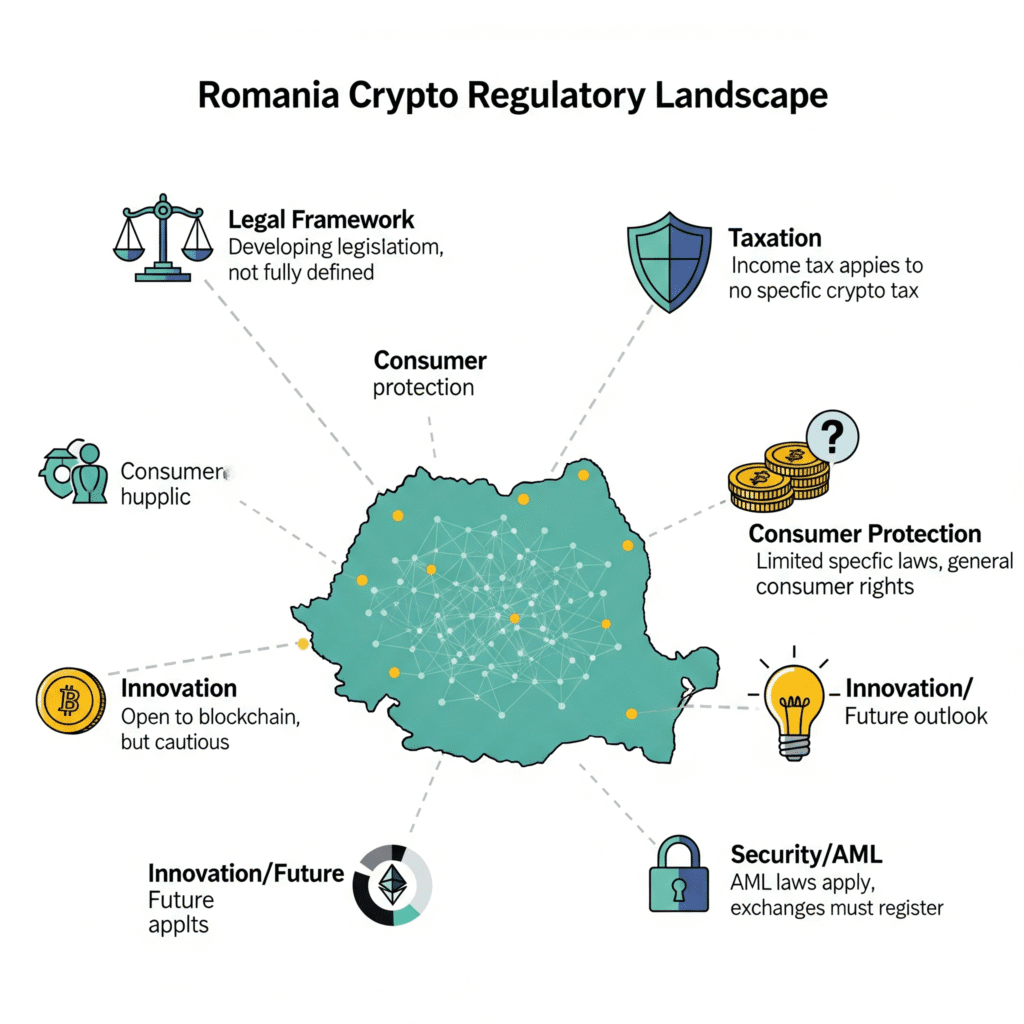
Romania Crypto Regulatory Landscape

DateMilestone
June 2024EU MiCA technical standards effective
Dec 2024Romanian guidance published
July 2026Deadline for CASPs to comply fully with MiCA

📊 Visual Timeline (Chart)

  • 2024 H1: EU-level guidance → 📘
  • 2024 H2: Romania issues notices → 🏛️
  • 2026 H2: Full MiCA compliance → ✅

Romanian Company Structures for Crypto Firms

Romanian Crypto Business Structures

Entity TypeCapital Requirement (Company Law)GovernanceBest Use CaseRegulatory Capital (Indicative)
SRLLow (check current law)Simple, flexibleStartups, wallet providers, MVP platforms~€25,000–€50,000
SAHigher (check current law)Strong governanceExchanges, custodians, trading platforms~€50,000–€75,000+
BranchN/A (not separate legal entity)Parent-controlledForeign firms entering RomaniaASF/BNR may require local license

📊 Visual Comparison (Bar Chart)

  • SRL: Low setup, flexible governance 🟩
  • SA: Higher capital, strong governance 🟦
  • Branch: Depends on parent company 🟨

Capital & Financial Obligations

Digital Currency Authorization Financial Requirements


Service TypeIndicative Minimum CapitalNotes
Wallet Provider€25,000May need liquidity reserves
Exchange€50,000Segregated accounts required
Trading Platform€75,000Stronger governance expectations

📈 Capital Requirement Graph (Illustrative)

  • Wallet: ▓▓ 25k
  • Exchange: ▓▓▓▓ 50k
  • Trading Platform: ▓▓▓▓▓▓ 75k

Required Documentation

  • Articles of association & ownership structure.
  • AML/KYC policies, sanctions screening, SAR workflows.
  • IT & security policies, custody architecture, penetration tests.
  • Financial forecasts, proof of liquidity & audited accounts.
  • Fit-and-proper evidence for directors.
  • Business plan with projections.

AML & KYC Compliance Standards

RequirementDetails
Customer Due Diligence (CDD)ID verification, beneficial owner checks, sanctions & PEP screening
Enhanced Due Diligence (EDD)Source of funds, high-risk monitoring, senior approval for onboarding
Transaction MonitoringBlockchain analytics, alerts, suspicious activity reports to ONPCSB
GovernanceAML officer appointment, staff training, independent AML audits

Registration Process (Romania 2025)

StageKey ActionsDuration
Pre-applicationPrepare compliance pack (AML, IT, governance)2–6 weeks
Application SubmissionFile with ASF/BNR, pay fees1–3 weeks
Review & ClarificationsAML, governance, capital checks4–12 weeks
Inspection & InterviewsIT & operational audit4–8 weeks
Decision & AuthorizationLicense granted + reporting dutiesOngoing

📊 Visual Process Flow
➡ Pre-application → 📂 Submission → 🔎 Review → 🖥️ Inspection → ✅ License


Tax Implications for Crypto Businesses

ActivityTax TreatmentNotes
Crypto TradingCorporate income tax on profitsRecord all trades, conversions
MiningBusiness or miscellaneous incomeTrack electricity & operational costs
Staking RewardsTaxed as income when receivedMaintain timestamped logs
Salaries in CryptoSubject to payroll withholding taxAdapt payroll systems

📊 Visual Tax Map

  • Trading: 📈 Profits → taxed under corporate tax.
  • Mining: ⚡ Treated as business income.
  • Staking: 🔗 Rewards → taxable when received.
  • Payroll: 💼 Crypto salaries taxed.

Frequently Asked Questions (FAQ)

1. What is the current status of cryptocurrency regulation in Romania in 2025?


Romania is aligning with the EU Markets in Crypto-Assets (MiCA) regulation while also enforcing national AML/CFT rules.

Providers must comply with both MiCA and Romanian laws, supervised mainly by ASF, BNR, and ONPCSB.

2. What business structures are available for crypto companies in Romania?


The most common options are:

  • SRL (Limited Liability Company) – best for startups and smaller providers.

  • SA (Joint Stock Company) – suited for larger exchanges or custody platforms.

  • Branch – used by foreign firms entering Romania.

3. What are the capital requirements for a crypto license in Romania?


Indicative minimums under MiCA:

  • Wallet providers: ~€25,000

  • Exchanges: ~€50,000

  • Trading platforms: ~€75,000
    Final figures must be confirmed with ASF or the competent authority.

4. How long does the licensing process take?


On average, 3–6 months, depending on the completeness of your compliance documentation and regulator reviews.

5. Can foreign companies operate in Romania with a branch office?


Yes, but depending on ASF/BNR recognition of the parent’s license, a local authorization may still be required.

6. Are crypto salaries and rewards taxed in Romania?


Yes. Crypto salaries are subject to payroll withholding tax, while trading profits and staking rewards are taxed as business income or capital gains depending on activity type.

digital products and subscriptions Romania

Selling Digital Products and Subscriptions in Romania: Legal Steps & Compliance Tips

Selling Digital Products and Subscriptions in Romania: Legal Steps & Compliance Tips

A person sits at a desk with a laptop, looking at digital product listings.

Selling digital products and subscriptions in Romania requires careful planning and legal know-how.

Are you ready to start a digital business in Romania?

It’s a big step, but you can avoid legal issues if you follow the right procedures.

Romania’s digital market offers great opportunities for entrepreneurs.

As an EU member state, Romania strictly enforces e‑commerce and VAT regulations.

You’ll need to manage VAT correctly, protect consumers, and adhere to e‑commerce rules.

Selling digital products and subscriptions in Romania provides growth opportunities for SaaS platforms, creators, e‑learning providers, and other online businesses.

Key Takeaways

  • Understand Romania’s digital product sales regulations,

  • Comply with EU and Romanian VAT registration requirements,

  • Learn essential legal steps for Romanian e‑commerce platforms,

  • Develop strategic digital product marketing approaches,

  • Recognize consumer protection and documentation standards.

For personalized legal advice on selling digital products in Romania, email our expert team of Romanian Lawyers at office@theromanianlawyers.com.

Understanding Digital Product Sales Regulations in Romania

A stack of digital devices, like tablets and smartphones, displaying various digital products.

Starting a digital business in Romania means knowing the laws well.

If you sell eBooks or other digital goods, there are specific regulations you must follow.

These ensure a fair and safe market for everyone.

Key Legal Requirements for Digital Sellers

Digital sellers in Romania must:

  • Register for VAT if you cross the turnover threshold.

  • Apply correct VAT rates on digital product sales.

  • Classify products properly to comply with tax rules.

  • File VAT returns and maintain records as required.

Romanian E‑commerce Framework Overview

Romania enforces EU-aligned rules for digital downloads and services, which include VAT compliance and invoicing standards.

Digital Product Categories and Classifications

Digital products are grouped into categories, each with distinct tax and legal implications.

Proper classification helps avoid issues.

Main categories include:

  • Software and apps,

  • E‑books and digital publications,

  • Online courses and e-learning,

  • Digital media and streaming services.

Stay updated on legal changes and retain comprehensive records to operate smoothly.

VAT Registration and Compliance for Digital Products

A calendar marked with important tax deadlines and reminders.

Understanding VAT rules is essential for digital product sellers in Romania.

VAT Thresholds & Registration

Registration Steps

  • Register within 10 days after you exceed the turnover threshold.

  • Non‑EU businesses must appoint a fiscal (tax) representative.

Registration TypeKey RequirementsProcessing Time
Resident CompaniesLocal VAT registration if turnover > RON 300,0005–7 business days*
Non‑Resident CompaniesLocal VAT representative required~10–14 business days*
Digital Product Sellers*Provide product documentation and VAT forms~7–10 business days*

*Times are estimations for context.

VAT Returns & Reporting Deadlines

  • File VAT returns monthly or quarterly (if turnover below RON 300,000 or €88,500).

  • Return and payment deadline is the 25th of the month following the fiscal period.

Accurate record-keeping of invoices, VAT reports, and sales data is vital.

E‑Invoicing Requirements and Documentation

Romania mandates electronic invoicing (e‑invoicing) for B2B and public sector invoices via the national RO e‑Factura (RO_CIUS format) system.

  • B2B and B2G invoices must be sent within 5 working days of issuance via RO e‑Factura.

  • Since January 2025, B2C e‑invoice submissions to RO e‑Factura became mandatory (with exceptions for simplified invoices).

Invoices require digital signatures and must follow RO_CIUS XML format.

Romania also enforces SAF‑T reporting (standardized tax control file).

Non-resident taxpayers must submit SAF‑T starting January 2025.

Digital Subscription Models and Legal Framework

A group of diverse individuals discusses digital sales strategies around a table.

Subscription services in Romania must include:

This ensures trust and regulatory compliance in subscription offerings.

Payment Gateway Integration and Compliance

A close-up of a credit card being inserted into a card reader.

When integrating payment gateways in Romania, ensure:

Payment Gateway FeatureCompliance RequirementImportance Level
GDPR Data ProtectionEU regulatory complianceHigh
Anti‑Money LaunderingFinancial regulationCritical
VAT Auto‑CalculationTax complianceEssential

Select platforms compliant with both Romanian and EU regulations, and consider transaction fees, ease of use, and coverage.

Cross‑border Digital Sales and EU Regulations

A group of people discussing digital marketing strategies in a bright office.

Cross-border digital sales benefit from OSS:

  • OSS lets sellers centralize VAT registration and reporting across the EU WikipediaSovos.

  • Romania can serve as primary OSS registration country Sovos.

  • Applies to B2C digital services exceeding €10,000.

Implement strategies such as multilingual support and transparent currency pricing for effective international operations.

Digital Rights Management and Copyright Protection

O persoană stând la birou cu un laptop, analizând datele despre vânzările de produse digitale.

To protect digital content in Romania:

Protection MethodEffectivenessComplexity
Digital WatermarkingHighMedium
Content EncryptionVery HighHigh
Legal RegistrationHighLow

Keep documentation like contracts and licensing agreements for at least 10 years.

Marketing Digital Products in the Romanian Market

Un site de piață digitală afișat pe un ecran de computer.

To thrive in Romania, tailor your marketing:

Digital Marketing Channels:

  • Social media (Facebook, Instagram),

  • Local marketplaces,

  • Professional networks and Romanian ad platforms.

Comply strictly with GDPR in ads and influencer campaigns.

Marketing ChannelEffectivenessCompliance Level
Social Media AdvertisingHighStrict GDPR enforcement
Content MarketingMediumModerate regulation
Influencer PartnershipsHighRequires disclosure

Blend storytelling and creative localization with legal compliance for compelling promotion.

Conclusion

Selling digital products in Romania demands a solid grasp of legal frameworks, especially around VAT, e‑invoicing, consumer protections, and marketing.

A balanced strategy that combines compliance with innovation can help your digital venture succeed in Romania’s thriving online economy.

For tailored legal guidance, reach out to Atrium Romanian Lawyers at office@theromanianlawyers.com.


FAQ

What are the primary legal requirements for selling digital products in Romania?
Businesses must register for VAT if exceeding the threshold, use e‑invoicing, keep documentation, and follow EU consumer protection rules.

How does VAT registration work for digital product sellers?
Resident sellers register when turnover passes ~RON 300,000. Non‑resident sellers must register immediately.

Registration is done via the ANAF portal.

What digital product categories are most popular in Romania?
E‑books, online courses, software, digital design assets, and training materials are in high demand.

What is the standard VAT rate for digital products in Romania?
Typically 21%, though some categories may benefit from reduced rates (e.g., eBooks; check with a tax professional).

Are there specific e‑invoicing requirements?
Yes—B2B/B2G invoices must be sent via RO e‑Factura.

From 2025, B2C e‑invoices are also mandatory in many cases.

How do cross‑border digital sales work from Romania?
Use the EU OSS to streamline VAT collection and reporting across EU member states.

What payment gateways are recommended?
Use GDPR‑compliant platforms that support VAT auto‑calculation and meet AML standards; choose based on fees and local support.

How can creators protect their intellectual property?
Register copyrights, use DRM measures like watermarking and encryption, and keep legal records for at least 10 years.

What marketing strategies work best?
Localized content, compliant social media campaigns, influencer marketing (with disclosures), and channel-specific ads that respect GDPR.

What are the key considerations for subscription models?
Ensure clarity in terms, pricing, renewal, cancellation, and refunds, aligned with EU law for digital content.

Which platforms are good for digital product sales?
Use platforms like Shopify, WooCommerce, or specialized course LMSs that support Romanian VAT, multichannel localization, and secure delivery.

How can I automate email marketing?
Integrate with services like Mailchimp or ActiveCampaign that sync with your store, segment customers, and send follow-up or upsell campaigns.

How do I comply with VAT obligations?
Register appropriately, charge correct VAT, file returns on schedule, and maintain detailed records to mitigate risks.

How can I create standout digital products?
Offer high‑quality content tailored to Romanian needs, competitive pricing, and effective messaging—possibly via TikTok or other trending platforms.

What upselling strategies work?
Offer complementary products at checkout, use “pay‑what‑you‑want” models, or implement personalized onboarding to increase average order value.

Remote Company Formation Romania

Remote Company Formation Romania: Digital Process 2025

Remote Company Formation Romania: Digital Process 2025

A person sits at a desk with a laptop and a cup of coffee, looking at a website about company formation.


Setting up a business in Romania has become increasingly streamlined, especially with advancements in digital processes.

This article serves as a comprehensive guide, focusing on several key aspects:

  1. Understanding remote company formation in Romania.
  2. Highlighting the nuances of Romanian law.
  3. Exploring the opportunities Romania offers for entrepreneurs seeking to register a company.

We aim to clarify the requirements and procedures for company registration in Romania, ensuring a smooth and efficient company formation process.


Understanding Company Formation in Romania

A person is video calling on a computer with a notepad in front of them.

Company formation in Romania involves navigating a specific legal and administrative landscape.

Understanding the nuances of the Romanian Trade Register and relevant legislation is crucial for seamless company registration.

Whether you are starting a company in Romania remotely or planning a physical presence, grasping the fundamentals will help you make informed decisions and ensure your business aligns with all legal requirements.

Many entrepreneurs find Romania offers a strategic location within the European Union, making understanding company formation in Romania paramount.


The Importance of Company Registration in Romania

Company registration is the cornerstone of legitimacy and operational capacity for any business in Romania.

By officially registering your company, you gain legal entity status, enabling you to enter into contracts, open a bank account in Romania, and conduct business activities within the Romanian legal framework.

Furthermore, proper company registration in Romania ensures compliance with Romanian tax regulations, including VAT and corporate tax, which is essential for sustainable growth and avoiding legal complications when starting a company in Romania.

Types of Romanian Companies

Romania offers several business structures for entrepreneurs, with the SRL (limited liability company) being the most popular.

Other options include the joint stock company (SA), suitable for larger ventures needing to raise capital through shares.

Each type has specific legal requirements, including minimum share capital and shareholder responsibilities.

Selecting the right structure is vital for aligning with your business goals and operational needs, especially if you’re looking at company formation Romania or even remote company formation.

Legal Framework Governing Company Registration

The legal framework governing company registration in Romania is primarily dictated by the Romanian Company Law No. 31/1990, alongside other relevant laws concerning business registration and trade.

This framework outlines the processes for registering a company, the necessary documentation, and the ongoing compliance requirements for Romanian companies.

Atrium Romanian Law Office possesses a deep understanding of the Romanian legal system and stays up-to-date on the latest legislative changes, ensuring clients receive accurate and effective guidance.

Navigating this framework is essential for anyone looking to set up a company in Romania.

Step-by-Step Guide to Registering a Company Remotely

A coffee cup next to a laptop, symbolizing a comfortable workspace.

Initial Considerations for Starting a Company in Romania

For international business owners aiming to expand or operate within Romania, certain initial considerations are crucial for successful company formation in Romania.

Understanding the Romanian market dynamics, including consumer behavior and competitive landscape, is essential.

Additionally, assessing the specific legal requirements and regulatory environment governing your industry in Romania will ensure compliance from the outset.

Addressing these initial aspects will lay a solid foundation for setting up a business and achieving long-term success as legal entities.

Document Requirements for Company Registration

The document requirements for company registration in Romania are comprehensive and precise, ensuring transparency and legal compliance during the company formation process.

Typically, these include the articles of association, identification documents for shareholders and directors, and proof of registered office address.

If registering a company remotely, notarized copies and officially translated documents are often necessary, especially for international founders.

Atrium Romanian Law Office provides invaluable legal assistance in ensuring compliance with these matters, streamlining the registration process.

Choosing a Company Name and Legal Structure

Selecting an appropriate company name and business structure is a pivotal step when starting a company in Romania.

The company name must be unique and comply with Romanian Trade Register regulations.

The choice of legal structure, such as an SRL (limited liability company) or SA (joint stock company), impacts liability, tax rate, and administrative obligations.

Atrium aims to be the best in handling complex and challenging legal matters, providing expert guidance to ensure you select the optimal business structure that aligns with your business goals and legal requirements.

The Digital Process of Company Registration in Romania

Documents are neatly arranged on a table, symbolizing the paperwork needed for registration.

Online Platforms for Company Registration

The digitization of company registration in Romania has led to the emergence of several online platforms designed to streamline the process.

These platforms typically offer a user-friendly interface where entrepreneurs can submit required documents, track the progress of their application, and communicate with the Romanian Trade Register.

While the central Trade Register does not yet offer a fully integrated online portal, authorized service providers can assist with digital submissions, making the company formation process more efficient and accessible for those registering a company.

Steps for Online Company Registration

The steps for online company registration in Romania generally mirror the traditional process but leverage digital tools to expedite company formation.

This involves preparing and digitizing all required documents, submitting them through an authorized platform, and paying the necessary fees online.

Verification and processing times may vary, but the online approach often reduces administrative delays, making it an attractive option for entrepreneurs aiming to set up a company efficiently.

Atrium Romanian Law Office can assist with this step-by-step guide.

Engaging Notaries and Power of Attorney

While the digitalization of company registration is advancing, the involvement of a notary is still often required, especially when registering a company remotely.

A notary public is essential for authenticating certain documents and ensuring compliance with legal requirements.

If founders cannot travel to Romania, granting a power of attorney to a local representative is a viable solution.

Atrium Romanian Law Office can act as a power of attorney for setting up a business in Romania.

Banking and Financial Requirements for Romanian Companies

A person types on a laptop while surrounded by various financial reports.

Opening a Bank Account for Your Romanian Business

Opening a bank account is a critical step in the company setup process.

A Romanian bank account is essential for managing your company’s finances, processing transactions, and complying with local regulations.

The process typically involves submitting company registration documents, identifying shareholders and directors, and adhering to the bank’s due diligence procedures.

Having a bank account in Romania is necessary to manage transactions in EUR and for paying your corporate tax and VAT.

Understanding Share Capital Regulations

Share capital is a fundamental aspect of company formation in Romania, representing the investment made by shareholders in the company.

For an SRL (limited liability company), the minimum share capital is relatively low, making it accessible for small and medium-sized businesses.

Understanding these regulations is crucial for complying with Romanian company law and avoiding potential legal complications when starting a company.

Tax Registration and Compliance

These are vital for all Romanian companies.

After company registration, businesses must register for VAT (if applicable) and income tax.

The standard corporate tax rate in Romania is competitive within the EU, making it an attractive destination for investors.

Regular tax filings and adherence to Romanian tax laws are essential for maintaining good standing and avoiding penalties. Atrium Romanian Law Office provides expertise in Tax Law, ensuring compliance and optimizing tax strategies.

Challenges and Solutions in Remote Company Formation

A stack of documents is neatly arranged next to a coffee cup.

Common Hurdles in Company Setup

Undertaking company formation in Romania remotely presents unique challenges for international entrepreneurs.

A significant obstacle is lack of familiarity with complex Romanian laws and regulations, especially concerning business registration.

Potential language barriers can further complicate communication with local authorities and service providers.

The sheer complexity of setting up a business in a foreign country, including navigating administrative procedures and understanding legal requirements, can also be daunting.

However, these hurdles can be overcome with proper planning and expert guidance when starting a company.

Legal and Administrative Support for Foreign Entrepreneurs

Atrium Romanian Law Office provides comprehensive legal services in multiple languages, including English, French, and German, catering specifically to the needs of foreign entrepreneurs.

Our expertise covers all aspects of company formation in Romania, from initial consultation to final company registration. We offer tailored legal solutions, addressing the unique challenges faced by international businesses.

Atrium Romanian Law Office stands as a reliable partner, ensuring a smooth and compliant entry into the Romanian market when registering a company.

Resources for Navigating Company Formation

Our team of Romanian Lawyers emphasizes understanding the unique needs of each client and providing tailored legal solutions.

We offer a range of resources designed to assist entrepreneurs in navigating the company formation process.

These resources include detailed guides, personalized consultations, and ongoing support to ensure compliance with Romanian laws and regulations.

Our client-centric approach ensures that each business in Romania receives the individualized attention and legal guidance necessary for success, especially when registering a company.

Future Trends in Company Formation in Romania

A futuristic city skyline is visible through a window, symbolizing progress.

Impact of Technology on Business Registration

Technology is rapidly transforming business registration worldwide, and Romania is no exception.

The increasing use of online platforms, digital signatures, and automated processes is streamlining the company formation in Romania process.

This trend is making it easier and faster for entrepreneurs to register a company in Romania, reducing administrative burdens and promoting efficiency.

Embracing technological advancements is crucial for Romanian companies to remain competitive in the global market.

Emerging Trends in the Romanian Business Landscape

The Romanian business landscape is evolving, driven by factors such as increasing foreign investment, technological innovation, and a growing focus on sustainability.

Emerging trends include the rise of e-commerce, the adoption of digital technologies across various industries, and a greater emphasis on corporate social responsibility.

These trends present both opportunities and challenges for Romanian companies, requiring adaptability and strategic planning to thrive in the changing environment.

Atrium Romanian Law Office offers insightful legal guidance to navigate these trends and capitalize on new opportunities when starting a company.

Policy Changes Affecting Company Formation

Government policies and regulations play a significant role in shaping the company formation landscape in Romania.

Staying informed about these policy changes is essential for entrepreneurs and investors.

Atrium Romanian Law Office closely monitors legislative developments and provides timely updates and expert advice to help clients adapt to the evolving regulatory environment and ensure compliance when registering a company

FAQ:

What is the process for remote company formation in Romania?

The process for remote company formation in Romania involves several legal steps, including selecting a company name, establishing a legal address, and registering with the National Trade Register Office.

You can complete most of the requirements online, making Romania an ideal location for setting up a company remotely.

What types of companies can I establish in Romania?

You can establish various types of companies in Romania, including limited liability companies (SRL) and joint stock companies.

The choice depends on the type of business you want to run and the number of shareholders involved.

Each structure has its own legal requirements and implications.

How do I register my company in Romania?

To register your company in Romania, you need to submit the necessary documents to the National Trade Register Office.

This includes your company name, legal address, and proof of share capital.

The registration process can typically be completed online, streamlining the company setup.

What legal address do I need for a company in Romania?

Your company in Romania must have a legal address, which is where official correspondence will be sent.

This address can be a commercial space or an office, but it must be registered with the National Trade Register Office during the company registration process.

What are the tax obligations for companies in Romania?

Can I open a bank account in Romania as a foreigner?

Yes, foreigners can open a bank account in Romania.

You will need to provide identification and documents related to your registered company, such as your Articles of Association and proof of registration.

Many Romanian banks offer services tailored for foreign business owners.

What are the benefits of setting up a company in Bucharest?

Bucharest is the capital of Romania and offers numerous advantages for business formation, including a vibrant economy, access to a skilled workforce, and a central location within Europe.

Additionally, the Romanian government provides various support services for growing your business in Romania.

How long does it take to register a company in Romania?

The registration process for a company in Romania typically takes about 5 to 10 working days, depending on the completeness of your documents and the efficiency of the National Trade Register Office.

Utilizing online services can expedite the establishment of your company.

What are the accounting services required for a business in Romania?

All companies in Romania must maintain proper accounting records and submit annual financial statements.

It is advisable to hire local accounting services to ensure compliance with Romanian tax laws, including income tax and VAT obligations, as well as to facilitate smooth operations in Romania.


Foreign Divorce Recognition in Romania 2025

Foreign Divorce Recognition in Romania (2025)

Foreign Divorce Recognition in Romania (2025)

A couple stands in front of a courthouse, looking confused.

Global mobility has transformed personal relationships.

Each year, thousands of Romanian citizens discover that divorcing abroad doesn’t automatically update their marital status in Romania.

Without official recognition, they face legal and administrative obstacles affecting property rights, remarriage plans, and identity documents.

This comprehensive guide explains how to recognize a foreign divorce in Romania, covering:

  • Legal framework under the Romanian Civil Code,

  • Differences between EU and non-EU divorce recognition,

  • Document requirements and apostille procedures,

  • Judicial process (exequatur) for non-EU divorces,

  • Common challenges and how to overcome them,

  • Practical steps for registration with Romanian authorities,

  • Legal support options for citizens in Romania and abroad.

For those considering marriage, reviewing prenuptial agreements in Romania can help avoid future legal complications in cross-border cases.


Why is foreign divorce recognition necessary in Romania?

A couple is sitting at a table with documents in front of them.

If you were married in Romania or are a Romanian citizen, foreign divorces are only valid where issued—unless formally recognized by Romanian authorities.

Without recognition:

Recognition aligns your legal records with your actual marital status, ensuring compliance with Romanian law.


What laws govern foreign divorce recognition in Romania?

A stack of international law books on a table.

The Romanian Civil Code and Civil Procedure Code regulate this process.

Recognition depends on the divorce’s origin:

  • EU Member States – benefit from simplified recognition under Regulation (EC) 2201/2003,

  • Non-EU Countries – require judicial recognition via the exequatur process,

  • Special Bilateral Treaties – may simplify or alter standard requirements.

The Romanian Civil Code also addresses related matters such as the recognition of paternity when relevant to family status updates.


How does automatic vs. judicial recognition work?

Two people are shaking hands in front of a courthouse.

Romania applies two distinct mechanisms:

Type of RecognitionUsed ForProcedure
Automatic recognition (de plin drept)Personal status matters of Romanian citizens abroadNo court proceedings required; administrative registration only
Judicial recognition (pe cale judecătorească)Complex cases involving property or custody, and most non-EU divorcesCourt validation through exequatur

What’s the difference between EU and non-EU divorce recognition?

A person reads a legal book titled

EU divorces

  • Governed by Regulation (EC) 2201/2003,

  • Recognition is automatic with a standardized certificate,

  • No apostille or legalization required,

  • Saves time and avoids lengthy court proceedings.

Non-EU divorces

  • Require exequatur judicial process,

  • Must prove decision aligns with Romanian public policy,

  • Need apostille certification (if from Hague Convention country),

  • Must submit certificate of finality from issuing court.


What documents are required for foreign divorce recognition?

A folder labeled

Document TypeEU DivorceNon-EU Divorce
Divorce DecreeOriginal or certified copyOriginal with Apostille
Birth CertificatesRequiredRequired with Apostille
Marriage CertificateRequiredRequired with Apostille
Certificate of FinalityEU regulation certificateCertificate of Non-Appeal
Power of AttorneyIf representedIf represented

Additional rules:

  • All foreign judgments must be translated by an authorized Romanian translator,

  • Translations must be notarized in Romania,

  • Some cases require a statement on post-divorce name change.


What is the exequatur procedure for non-EU divorces?

A couple sitting at a table with a lawyer discussing papers.

The exequatur process ensures a foreign divorce decree meets Romanian enforcement standards.

When required:

  • Divorce from a non-EU country,

  • Applicant did not have dual citizenship at time of divorce.

Jurisdiction:

  • File at the tribunal where the opposing party lives,

  • If no jurisdiction, file at the Bucharest Tribunal.

Documents needed:

  • Certified copy of foreign decision,

  • Proof it’s final and binding,

  • Proof both parties were legally notified,

  • Documents under Article 1096 Civil Procedure Code.

Processing time:

  • Standard cases: 3–6 months,

  • Complex cases: 6–9 months,

  • Missing documentation: up to 12 months.


What are the apostille requirements?

A person is filling out a form at a desk with a pen.

Countries in the Hague Convention must issue an apostille confirming the authenticity of your divorce documents.

  • Obtain from the competent authority in the country of issuance,

  • Required for divorce decree and certificate of non-appeal,

  • After apostille, documents must be translated and notarized in Romania.


Step-by-step process for registering a foreign divorce in Romania

Two people discussing papers at a desk.

  1. Collect required documents (see above),

  2. Authenticate documents – apostille or legalization as applicable,

  3. Translate via authorized Romanian translator,

  4. Notarize translations in Romania,

  5. Submit application:

    • In person at the local Mayor’s Office – Vital Statistics Department,

    • Or via Romanian Consulate if abroad,

  6. Update civil status registry to reflect new marital status.


What challenges might you face?

A person looks confused while holding a stack of legal documents.

  • Reciprocity rule – Some countries require mutual recognition agreements,

  • Notification proof – Courts demand proof the other spouse was properly informed,

  • Document compliance – Incorrect apostille or missing translations cause delays,

  • Family changes like modifying child custody arrangements can be harder without updated civil status.


How can a Romanian family lawyer help?

A Romanian lawyer sits at a desk with legal books and documents.

Benefits:

  • Navigating complex administrative & judicial requirements,

  • Avoiding document rejection due to technical errors,

  • Faster processing via correct submissions,

  • Representation via power of attorney for citizens abroad.

Typical lawyer timelines:

  • Document preparation: 3–5 days,

  • Court representation: 2–4 months,

  • Authority liaison: 1–2 weeks.

What is the recognition of foreign divorce in Romania?

The recognition of foreign divorce in Romania refers to the process by which a divorce judgment issued by a foreign court is acknowledged as valid within Romanian territory.

This involves ensuring that the foreign divorce decree meets the necessary legal standards set by Romanian law, allowing it to be enforced and registered in Romania.

How can I register a foreign divorce in Romania?

To register a foreign divorce in Romania, you must present the divorce judgment to a Romanian court along with required documents, such as a translation of the judgment into Romanian.

The court will review the case to ensure that the foreign divorce complies with Romanian legal standards before issuing a registration of the divorce.

What are the procedures for recognition of a foreign judgment in Romania?

The procedure for recognition of a foreign judgment in Romania typically involves filing a petition with a Romanian court, providing the foreign judgment, and any necessary translations.

For instance, the court will assess whether the judgment can be recognized based on criteria such as jurisdiction and compliance with Romanian laws regarding family matters.

Do I need a lawyer to help with the recognition of foreign divorce judgments?

While it is possible to navigate the recognition process independently, hiring a lawyer in Romania who specializes in family law can be beneficial.

Romanian lawyers can guide you through the legal intricacies, ensuring that all documentation is properly prepared and submitted, which can significantly expedite the process.

What happens if the foreign divorce decree is not recognized in Romania?

If a foreign divorce decree is not recognized in Romania, it means the dissolution of the marriage is not legally valid within Romanian jurisdiction.

This could lead to complications, particularly with matters such as property division or custody arrangements.

It may be necessary to initiate divorce proceedings in a Romanian court to achieve a valid legal dissolution.

Can a foreign citizen file for divorce in Romania?

Yes, a foreign citizen can file for divorce in Romania if they meet certain criteria, such as having residence in Romania or if the marriage was performed in Romania.

The divorce procedure in Romania will depend on various factors, including the couple’s last domicile and the jurisdiction of the Romanian court.

What are the obligations regarding the recognition and enforcement of foreign court decisions in Romania?

Obligations regarding the recognition and enforcement of foreign court decisions in Romania include ensuring that the judgment does not violate Romanian public policy and that it is enforceable in the issuing state.

Parties seeking enforcement must follow the proper legal channels to ensure compliance with Romanian law.

What is the role of Romanian attorneys in the recognition of foreign divorce decrees?

Romanian attorneys play a crucial role in the recognition of foreign divorce decrees by providing legal advice, preparing necessary documentation, and representing clients in court proceedings.

They help ensure that the foreign divorce is recognized according to Romanian legal standards and assist in navigating the complexities of family law.

What is the process for the recognition of foreign divorce in Romania?

The recognition of foreign divorce in Romania involves several steps.

First, the foreign divorce decree must be translated into Romanian and then apostilled if it was issued in a country that is part of the Hague Convention.

Once the divorce decree is properly translated and apostilled, the Romanian citizen must submit an application for recognition to the competent Romanian municipality.

The recognition of the foreign court’s divorce decision is crucial, as it allows for the enforcement in Romania.

This process may require the assistance of a law firm in Romania to navigate the legalities and ensure compliance with Romanian legislation.

How can a Romanian citizen enforce a foreign divorce decree in Romania?

To enforce a foreign divorce decree in Romania, the Romanian citizen must first ensure the decree is recognized by the Romanian courts.

This involves an application for recognition of the foreign judgment, which must demonstrate that the divorce was pronounced according to the laws of the foreign country .

Also, the applicant’s last domicile was in Romania at the time of the divorce.

The enforcement in Romania typically follows an exequatur process, where the foreign divorce decree is formally recognized.

It is advisable to engage attorneys in Romania to facilitate the registration of this divorce and to guide through the court proceedings in Romania.

Tax residency Romania

Romanian Tax Residence: A Guide to Tax Residency in Romania

Romanian Tax Residence: A Guide to Tax Residency in Romania

A person sitting at a desk with a laptop and tax documents spread out.

Navigating the complexities of the Romanian tax system can be daunting, especially when determining your tax obligations as a resident or non-resident.

This guide provides a comprehensive overview of tax residence in Romania, covering key aspects such as defining tax residency, understanding the Romanian tax system, and fulfilling your tax responsibilities.

Understanding Tax Residency in Romania

A group of people discusses tax forms around a table.

Determining your tax residency status in Romania is crucial for understanding your tax obligations.

Whether you are an expat, a foreign investor, or a Romanian citizen living abroad, understanding the rules of Romanian tax residence is essential for compliance with Romanian law and avoiding potential tax liabilities.

Definition of Tax Residency

Tax residence in Romania dictates how the Romanian tax authorities will treat your income.

A tax resident in Romania is subject to taxation on his or her worldwide income.

Understanding this definition is the first step in navigating the Romanian tax system, particularly for those with income sources outside Romania.

Criteria for Establishing Tax Residency

The primary criterion for establishing tax residency in Romania is spending more than 183 days in Romania within any 12-month period.

However, other factors can also contribute to determining your tax residency status, such as having your vital interests centered in Romania, including personal and economic ties, playing a crucial role in determining if someone is considered a tax resident.

Differences Between Resident and Non-Resident Status

Tax residents are subject to taxation on their worldwide income, while non-residents are only taxed on income sourced from Romania.

This distinction is vital for understanding your tax liabilities and completing accurate tax returns in accordance with Romanian law.

The Romanian Tax System

A person is reviewing documents while sipping coffee.

The Romanian tax system is governed by a range of legislation and regulations, impacting both individuals and businesses.

A solid understanding of this system is crucial for anyone considered a tax resident in Romania, ensuring compliance and effective financial management.

Furthermore, being a tax resident in Romania demands that individuals understand how to fulfill their tax obligations.

Overview of Romanian Tax Authorities

The main tax authority in Romania is the National Agency for Fiscal Administration (ANAF).

ANAF is responsible for the collection of taxes and enforcing tax legislation across the country.

Dealing effectively with the Romanian tax authorities requires understanding their procedures and ensuring all submissions are compliant with Romanian law.

Types of Taxes Applicable to Residents

Romanian tax residents are subject to various taxes, including income tax, social security contributions, and local taxes.

The flat income tax rate is a key feature of the Romanian tax system.

Understanding these different types of taxes is essential for proper fiscal planning and compliance.

How Tax Obligations are Determined

Tax obligations in Romania are primarily determined by your tax residency status and the type of income you earn.

Salary income, for example, is subject to specific tax and social security contributions, which are typically handled by the Romanian employer.

Properly declaring all income and understanding applicable tax treaties is crucial for accurate tax payments.

Tax Returns and Filing Requirements

A calendar on the wall highlights important tax filing deadlines.

Annual Tax Return Responsibilities

As a tax resident in Romania, you have an annual obligation to declare your worldwide income.

Ensuring compliance with Romanian law requires a thorough understanding of the tax legislation and accurate record-keeping of all financial transactions throughout the fiscal year.

Failure to submit accurate annual tax returns can result in tax liabilities and penalties in accordance with the Romanian tax code.

How to Declare Worldwide Income

Declaring your worldwide income as a tax resident involves completing and submitting the appropriate tax return forms to the Romanian tax authorities, ANAF.

These forms require a detailed account of all income sources, including salary, investments, and other earnings, both inside and outside Romania.

It’s important to accurately report all income.

Seeking professional tax advice can aid in correctly declaring your worldwide income.

Deadlines and Procedures for Filing Tax Returns

Adhering to the deadlines and procedures for filing tax returns is crucial.

Understanding the filing procedures, including online submission and required documentation, is essential for avoiding penalties.

Keep in mind that failure to comply with these provisions can result in tax liabilities and legal repercussions under Romanian law.

Implications of Tax Residency for Expats

A calculator and a notepad are placed beside a cup of coffee.

Tax Residency Status for Foreign Workers

If expats spend more than 183 days in Romania within a 12-month period, they are generally considered tax residents.

Understanding this threshold is essential for expats to comply with Romanian tax obligations and avoid potential issues with the Romanian tax authorities, ANAF.

Double Taxation Agreements and Their Importance

Double taxation agreements (tax treaties) prevent individuals from being taxed twice on the same income.

Romania has several tax treaties with EU member states and other nations to alleviate double taxation.

These agreements typically provide provisions for determining which country has the primary right to tax certain types of income, thereby impacting the tax obligations of expats and other tax residents in Romania.

Relocating for Work: Tax Considerations

Relocating to Romania for employment necessitates careful consideration of various tax implications.

Before relocation, expats should familiarize themselves with Romanian tax legislation to understand their potential tax obligations.

Factors such as employment contracts, salary, and the intention to spend more than 183 days in Romania within a 12-month period all impact tax residency status.

Consulting with tax professionals can ensure a smooth transition and compliance with the Romanian tax system.

Fiscal Obligations of Romanian Tax Residents

A calendar marked with tax deadlines and reminders.

Understanding Personal Income Tax Rates

As a tax resident in Romania, it’s crucial to understand the applicable personal income tax rates.

Romania operates with a flat income tax rate, currently set at 10%.

Understanding how this flat rate impacts your overall tax liabilities is essential for effective fiscal planning and budgeting as a tax resident.

Tax Deductions and Credits Available

Romanian tax legislation provides several tax deductions and credits that tax residents can utilize to reduce their tax obligations.

Expert guidance can help maximize your eligible deductions, ensuring compliance with Romanian law.

Consequences of Non-Compliance with Tax Obligations

Failure to comply with Romanian tax obligations can result in significant penalties and legal repercussions.

Ensuring accurate and timely tax compliance is crucial to avoid these potential adverse consequences for all Romanian tax residents.

Conclusion and Key Takeaways

A group of diverse people discussing documents around a table.

Summary of Romanian Tax Residency Principles

Spending more than 183 days in Romania within a 12-month period typically establishes tax residency, subjecting individuals to taxation on their worldwide income.

Understanding the nuances of Romanian tax residence is vital for compliance with Romanian law and fulfilling tax obligations, particularly for expats and those with income sourced outside Romania.

Important Resources and Links for Further Information

To further navigate the intricacies of Romanian tax residency, several resources are available.

The website of the National Agency for Fiscal Administration (ANAF) provides comprehensive information on tax legislation, tax returns, and filing procedures.

Consulting with a tax advisor specializing in Romanian tax law can provide tailored advice based on your specific circumstances.

Staying informed through these channels ensures compliance and maximizes tax efficiency as a tax resident.

Final Thoughts on Tax Residency in Romania

Navigating tax residency in Romania requires careful attention to detail and a thorough understanding of the applicable legislation.

As a tax resident in Romania, being aware of your tax obligations, understanding the Romanian Fiscal Code, and seeking professional guidance when needed are crucial for maintaining compliance.

Proactive management of your tax affairs ensures financial well-being and peace of mind while operating within the Romanian legal framework.

What is fiscal residency in Romania?

Fiscal residency in Romania refers to the legal status of individuals who are considered residents for tax purposes.

To be deemed a fiscal resident, one must meet specific residence criteria, such as having a permanent home in Romania or residing in the country for 183 days within a calendar year or 12 consecutive months.

How can foreign nationals establish tax residency in Romania?

Foreign nationals can establish tax residency in Romania by ensuring they meet the necessary residence criteria.

This includes having a permanent home in Romania or staying in the country for the required duration.

Additionally, registering with the Romanian tax authorities and notifying them of your residency status is crucial.

What are the tax obligations for residents in Romania?

Residents in Romania are liable to pay taxes on their worldwide income, which includes income obtained from employment activities, investments, and other sources.

They must also comply with mandatory social contributions and any reporting obligations set by the Romanian fiscal code.

How long do I need to reside in Romania to be considered a tax resident?

To be considered a tax resident in Romania, you must reside in the country for at least 183 days within a calendar year or maintain a permanent home there.

If you meet these conditions, you will be subject to Romanian tax laws.

Do I need to register with the tax authorities if I stay in Romania for less than 30 days?

If you are in Romania for less than 30 days, you typically do not need to register with the tax authorities.

However, it is advisable to check if your specific situation requires any notification or registration, especially if you have income sourced from Romania.

What happens if I do not meet the residence criteria?

If you do not meet the residence criteria for fiscal residency, you will be classified as a non-resident in Romania.

Non-residents are generally taxed only on their Romanian-source income, which may involve different tax rates and obligations compared to residents.

What is the standard procedure for establishing tax residency in Romania?

The standard procedure for establishing tax residency in Romania involves meeting the residence criteria, registering with the tax authorities, and submitting the necessary documents, including a questionnaire.

Additionally, if you are a foreign national, your tax documents may need to be translated into Romanian.

Are there any tax agreements in place to avoid double taxation?

Yes, Romania has tax agreements with various countries to avoid double taxation.

These agreements allow individuals to determine which country has the primary taxing rights on their income, thereby preventing tax liabilities in both the source country and Romania.

What are the implications of having a job with a salary in Romania?

If you are employed and receive a salary in Romania, you will be subject to Romanian tax laws and must fulfill your tax obligations as a resident if you meet the residence criteria.

This includes paying taxes on your income and contributing to mandatory social contributions.

What should I do if my circumstances change and I no longer meet the conditions for tax residency?

If your circumstances change and you no longer meet the conditions for tax residency, you must notify the tax authorities and update your residency status.

It’s essential to ensure compliance with all reporting obligations to avoid any penalties or issues related to your tax situation.

Minority Shareholder Rights in Romanian Companies

Minority Shareholder Rights in Romanian Companies: Legal Protections and Limits

Minority Shareholder Rights in Romanian Companies: Legal Protections and Limits

Can minority shareholders in Romanian companies protect their investments against decisions by controlling shareholders?

This question is vital for thousands of investors who contribute capital and oversight but own less than fifty percent of shares.

Minority shareholder rights in Romanian companies are a delicate balance between business efficiency and investor protection.

The legal framework, including Law No. 31/1990 on Commercial Companies, the Civil Code, and court precedents, offers safeguards.

These protections are for investors without voting control but with essential capital and market credibility.

Minority Shareholder Rights in Romanian Companies

Shareholder protection laws in Romania acknowledge the unique vulnerabilities of minority investors.

Majority shareholders might pursue strategies that benefit them at the expense of smaller shareholders.

The legal system counters these risks with mandatory information rights, judicial remedies, and procedural safeguards for fair treatment within corporate structures.

EU standards significantly influence Romanian legislation on minority investor rights. European directives dictate how Romanian companies must treat all shareholders, regardless of ownership percentage.

These protections go beyond basic voting rights to include access to corporate information, dividend distributions, and legal recourse against decisions harming minority interests.

A Romanian law office specializing in corporate matters offers critical guidance for minority shareholders.

Professional assistance helps investors understand their rights, evaluate corporate actions, and pursue remedies when necessary.

For expert legal services combining Romanian expertise with international standards, contact office@theromanianlawyers.com.

Key Takeaways

  • Romanian law defines minority shareholders as those holding less than 50% of company shares with specific legal protections
  • Law No. 31/1990 on Commercial Companies provides the primary framework for shareholder rights and corporate governance,
  • Minority investors possess information rights, voting privileges, and access to judicial remedies against unfair treatment,
  • EU directives strengthen minority investor protections through enhanced transparency and governance standards
  • Professional legal counsel helps minority shareholders understand and exercise their rights effectively,
  • Romanian courts offer multiple remedies including resolution annulment, compensation, and forced company dissolution.

Understanding the Legal Framework for Minority Shareholders in Romania

The protection of minority shareholders in Romania is rooted in detailed business legislation.

This legislation sets out clear guidelines for corporate governance.

It ensures that even those with smaller stakes receive fair treatment and have a say in company decisions.

The level of protection depends on the company type and the percentage of shares held.

Law No. 31/1990 on Commercial Companies as the Primary Legislation

Law 31/1990 is the cornerstone of corporate law in Romania, covering all private companies and outlining fundamental shareholder rights.

This legislation, backed by the  Civil Code, strikes a balance in corporate governance.

It deals with essential topics like shareholder meetings, voting, access to information, and legal recourse for minority shareholders.

Romanian companies law framework

Distinction Between Limited Liability Companies (SRL) and Joint Stock Companies (SA)

Romanian companies law 31/1990 distinguishes between two main types of commercial entities.

Each has its own governance structure:

Company TypeMinimum CapitalShareholder RightsMeeting Requirements
SRL (Limited Liability)1 RONAll shareholders can propose agenda itemsSimple majority decisions
SA (Joint Stock)90,000 RON5% threshold for special rightsQualified majority for major decisions

Definition and Thresholds for Minority Shareholders

In Romania, minority shareholders are those with less than 50% of shares.

The law sets specific thresholds for enhanced rights.

In joint stock companies, those with at least 5% can call for a general meeting and suggest agenda items.

Even single-share owners in SRLs have significant rights, including the right to challenge unlawful decisions in court.

Fundamental Information Rights and Corporate Transparency

Information access is key to protecting shareholders in Romania.

The Romanian Company Law outlines detailed rights for shareholders.

These rights allow them to track company activities and make informed choices.

This ensures that even small investors can monitor their investments and hold management accountable.

Access to Financial Statements and Corporate Records

Romanian law ensures all shareholders can access critical company documents.

This includes annual financial statements, board meeting minutes, and corporate registers.

It’s vital for protecting minority shareholders to review balance sheets, profit and loss statements, and audit reports.

Companies must keep these records at their registered office and make them available during business hours.

minority shareholder protection documents

Rights to Request Explanations from Directors

Shareholders also have the right to ask directors for explanations.

They can pose questions about business operations, financial transactions, or strategic decisions.

Directors must respond clearly within 15 days.

This strengthens shareholder protection in Romania by ensuring management is accountable.

Notification Requirements for Shareholders’ Meetings

Meeting notification is another essential aspect of protecting minority shareholders in Romania.

Companies must announce general meetings at least 30 days in advance through official channels.

Notifications must include:

  • Complete meeting agenda,
  • Proposed resolutions text,
  • Voting procedures,
  • Documentation access details.

These rules prevent majority shareholders from making surprise decisions that could harm minority shareholders.

Courts actively enforce these rules, often annulling resolutions passed without proper notification.

Minority Shareholder Rights in Romanian Companies

Romanian corporate law offers vital mechanisms for minority shareholders to protect their interests.

These legal safeguards are key in preventing corporate abuse and ensuring fairness for all shareholders.

This fairness is not based on the size of their ownership stake.

Challenging Unlawful Resolutions Under Article 132

Article 132 of Law No. 31/1990 gives shareholders the power to challenge decisions that break the law or company statutes. This provision is a cornerstone in Romania’s fight against minority shareholder oppression.

Shareholders can seek court annulment of resolutions under these conditions:

  • Decisions breach Romanian commercial law
  • Articles of association are violated
  • Individual shareholder rights face infringement
  • Private interests override company welfare

Legal Standing and Time Limits for Court Actions

Any shareholder can challenge board decisions in Romanian courts.

The law sets a strict deadline—actions must be filed within 15 days from the date the resolution is published in the Monitorul Oficial al României, Part IV .

This tight timeframe demands constant vigilance and quick action against minority shareholder oppression.

shareholder remedies romania

Protection Against Abusive or Self-Interested Decisions

Romania’s corporate abuse protection goes beyond just procedural issues.

Courts also look at the substance of decisions affecting minority shareholders:

Type of AbuseExamplesAvailable Remedies
Financial OppressionWithholding dividends despite profitabilityCourt-ordered distributions
Dilution TacticsUnjustified share capital increasesResolution annulment
Exclusion PracticesBarring minorities from strategic decisionsGovernance reforms
Self-DealingUndisclosed related-party transactionsTransaction reversal

Romanian courts are active in reviewing cases of challenging majority decisions.

Judges determine if resolutions are for legitimate business reasons or just to benefit the majority at the expense of minorities.

Voting Rights and Meeting Participation

Protecting voting rights for minority shareholders is key in corporate governance in Romanian companies.

Romanian corporations must follow specific legal rules to ensure all shareholders, regardless of their share percentage, have a say in corporate decisions.

The law on voting rights in Romanian corporations sets clear thresholds.

This allows minority groups to influence major decisions.

Shareholders with at least 5% of shares can call for general meetings.

This ensures minority shareholders’ rights are protected, even without a majority.

voting rights shareholders romania

Voting rights in Romanian corporations vary between Limited Liability Companies (SRL) and Joint Stock Companies (SA).

In SRLs, every shareholder has more rights. They can:

  • Propose agenda items for general meetings,
  • Contest decisions deemed unlawful,
  • Exercise corporate voting rights Romania guarantees by statute.

Shareholders in Romania face some limitations.

Amendments to Law 31/1990 now allow electronic or correspondence voting, particularly in joint-stock companies (SAs)—especially when listed or when permitted under the articles of association.

For SRLs, remote voting remains subject to stricter interpretation and typically requires express provisions in the company statute.

Major corporate decisions need qualified majorities to protect minority shareholders’ rights.

Changes to company charters, liquidation, and major asset sales need at least three-quarters of voting shares approval.

Recent reforms have introduced cumulative voting.

Cumulative voting (permitting concentration of votes on a single board candidate) remains entirely optional, made possible only where provided in the articles of association.

While corporate governance codes for listed companies might encourage it, no legal mandate exists.

This strengthens minority shareholders’ voting power in board elections and improves their role in corporate governance.

Legal Remedies for Minority Oppression and Abuse

In Romanian companies, minority shareholders facing corporate minority oppression have legal recourse.

The courts aim to safeguard small investor rights from majority abuse.

This includes withholding dividends, excluding from decision-making, and unfair share dilution.

Remedies span from financial compensation to restructuring the company.

Financial Compensation and Annulment of Resolutions

Romanian courts can annul resolutions that harm minority investors.

Claims often stem from preferential treatment of directors through secret deals.

Shareholders receive financial compensation when corporate governance is breached.

oppression remedies romania

Company Dissolution and Enforced Exit Mechanisms

In severe cases, courts may dissolve the company.

They assess if operations are justified amidst ongoing conflicts.

Fair compensation is ensured in minority squeeze-out procedures, with judicial oversight.

Exit MechanismTrigger ConditionsCourt Requirements
Forced BuyoutSystematic exclusion from managementFair market valuation
Company DissolutionIrreparable deadlockNo viable alternatives
Squeeze-Out Rights95% ownership threshold (for listed companies) | Independent price assessment.
In unlisted companies, squeeze-out rights are not statutory and must be defined through shareholder agreements or pursued through court action in cases of abuse
Independent price assessment

Judicial Administrator Appointments in Governance Deadlocks

Courts appoint judicial administrators in governance deadlocks.

This addresses conflicts where squeeze-out procedures fail.

Administrators have temporary power to resolve issues, ensuring compliance with regulations.

Dividend Rights and Corporate Distribution Policies

Minority shareholder rights in Romanian companies are crucial for ensuring equitable treatment and protection against potential abuses by majority shareholders.

Under Romanian company law, minority shareholders often face challenges related to voting influence, dividend distribution, and participation in corporate governance.

The articles of association play a central role in defining the procedures for passing shareholder resolutions and transferring shares, which can significantly affect minority influence in the general meeting of shareholders.

In mergers, demergers, or corporate reorganizations, minority shareholders are entitled to receive fair treatment, including compensation where applicable, particularly if their shareholding is affected by structural changes or exit scenarios.

 Although share buybacks are legally permitted under strict conditions, they are not a typical tool for minority exits.

The Romanian courts have acknowledged the importance of safeguarding minority shareholder rights, and affected shareholders may bring legal actions to challenge unlawful decisions or seek remedies under Law No. 31/1990 on Companies.

The Trade Register (ONRC) ensures public access to essential information such as company capital, registered shareholders, and changes to governing documents, contributing to transparency for both limited liability companies (SRL) and joint stock companies (SA).

As Romania continues to align its corporate governance framework with EU directives and international standards, the development of more effective enforcement mechanisms remains key.

Ensuring meaningful participation and protection for minority shareholders is essential to building trust and accountability in the Romanian business environment.

Shareholder Agreements and Contractual Protections

Shareholders’ agreements in Romania offer vital protections beyond what’s mandated by law.

These agreements fortify minority positions with specific clauses addressing common issues in Romanian business structures.

Tag-Along Rights and Cumulative Voting Provisions

Tag-along rights safeguard minority investors during majority shareholder sales.

They ensure minority shareholders can sell at the same price and terms as the majority.

Cumulative voting rights, on the other hand, boost board representation by allowing concentrated voting on certain candidates.

Protection TypeKey BenefitsApplication in Romania
Tag-Along RightsEqual sale conditionsCommonly included in Romanian shareholder agreements—especially in joint ventures, private equity deals, or closely held companies—to protect minority investors during ownership changes
Cumulative VotingEnhanced board representationMandatory for listed companies
Drag-Along RightsFacilitates complete salesStandard in PE investments

Preemptive Rights in Share Transfers and Capital Increases

Preemptive rights in Romania safeguard shareholders from dilution.

These rights apply during capital increases and share transfers, ensuring ownership percentages remain proportional.

Exit Options for Minority Investors

Minority investors have exit options, including mandatory buyouts triggered by certain events.

Romanian agreements typically include valuation mechanisms for fair pricing.

Derivative Actions and Corporate Litigation Rights

Romanian law empowers minority shareholders to defend corporate interests through derivative actions.

These actions allow shareholders to sue on behalf of the company when directors act against its best interests.

This is a key part of resolving disputes in corporate settings, ensuring management is held accountable.

Derivative actions in Romania have strict rules.

Shareholders must prove that directors have not pursued rightful claims against wrongdoers.

The law allows for actions against directors for breaches of duty, conflicts of interest, and transactions that favor certain shareholders over the company.

Romanian courts assess both the process and fairness of minority shareholder lawsuits.

They check if claims are for the company’s benefit or personal gain.

This ensures only valid disputes are addressed, preventing frivolous lawsuits.

Type of ClaimLegal Standing RequirementsTime Limits
Breach of Fiduciary Duty5% ownership in SA, 10% in SRL3 years from discovery
Conflict of Interest TransactionsAny shareholder regardless of stake6 months from transaction
Corporate Asset Misappropriation5% ownership minimum5 years from occurrence

Despite its benefits, enforcing these rights in Romania is challenging.

Courts demand robust evidence and legal expertise in local commercial law.

Success in shareholder disputes hinges on grasping procedural details and presenting strong cases that clearly show corporate harm.

Evolution of Romanian Corporate Governance Standards

Corporate governance in Romania has seen major changes with the shift to a market economy.

The reopening of the Bucharest Stock Exchange in 1995 was a key moment.

It opened up the Romanian capital markets after a 50-year hiatus.

This event laid the groundwork for modern shareholder protection laws and opened doors for both local and international investors.

Impact of EU Directives on Shareholder Protection

Romania’s path toward European Union membership led to significant legislative improvements.

The Pistor index, a measure of investor protection, jumped from 13 points in 1996 to 17.75 between May 2002 and November 2006.

EU directives brought in essential protections for minority shareholders in Romanian joint stock companies:

  • Mandatory takeover bid thresholds protecting minority investors,
  • Independent share registries ensuring transparent ownership records,
  • Strict insider trading prohibitions,
  • Enhanced disclosure obligations for major transactions.

Bucharest Stock Exchange Requirements for Listed Companies

The exchange introduced a three-tier listing system with increasing strictness.

First-tier companies face the most demanding corporate governance standards.

These standards aim to boost transparency and accountability.

They also enhance minority protections through mandatory disclosure and regular financial reports.

Recent Legislative Developments and Reform Initiatives

Law No. 441/2006 brought significant changes to minority protections in Romanian Companies.

It reduced the quorum needed for certain decisions to one-quarter.

This change slightly lowered the protection index to 17.25.

Yet, recent reforms have tackled key areas like cumulative voting, compulsory takeover offers, and detailed transaction disclosure.

These steps reflect the growing demand for better governance from investors in Romania.

Conclusion

Romanian corporate law, as outlined in Law No. 31/1990, provides a robust framework for minority shareholder rights.

This legislation ensures that minority shareholders have access to corporate information and can participate in meetings.

They also have the right to challenge unfair resolutions and seek judicial remedies when their rights are violated.

These protections align with EU standards, solidifying Romania’s standing in the global business arena.

Despite these legal safeguards, minority shareholders face practical hurdles in Romanian corporate governance.

Companies often distribute minimal dividends, limiting returns for minority investors.

Share issuance restrictions also hinder market oversight, which could discipline management decisions.

Minority shareholders must remain vigilant, documenting governance failures and asserting their statutory rights.

The dynamic nature of shareholder protection laws in Romania necessitates ongoing monitoring of legislative changes and court interpretations.

Seeking professional legal representation is essential for minority shareholders facing complex corporate disputes.

A skilled Romanian lawyer is well-versed in both the statutory framework and practical strategies to protect minority interests.

Whether it’s pursuing annulment actions, seeking compensation, or negotiating exit arrangements, experienced counsel is vital.

For expert guidance on shareholder disputes and protection strategies, contact a reputable Romanian law office at office@theromanianlawyers.com.

The future of minority shareholder protection hinges on ongoing legislative refinement and judicial enforcement.

As Romania’s corporate landscape evolves, the balance between majority control and minority rights must be constantly adjusted.

Collaborating with knowledgeable lawyers in Romania ensures minority shareholders can effectively exercise their rights.

This contributes to enhanced corporate governance standards.

For tailored advice and protection strategies for your investments, contact experienced Romanian lawyers at office@theromanianlawyers.com.

FAQ

What percentage of shares qualifies someone as a minority shareholder under Romanian law?

Romanian corporate law defines minority shareholders as those owning less than 50% of shares.

This rule applies to both Limited Liability Companies (SRLs) and Joint Stock Companies (SAs).

Specific rights and thresholds can differ between these company types.

How long do minority shareholders have to challenge unlawful corporate resolutions in Romania?

Article 132 of Law No. 31/1990 states that minority shareholders must start legal actions within 15 days after a resolution is adopted.

This tight deadline is critical for shareholders to act quickly when they spot legal breaches or decisions that harm their rights.

What information rights do minority shareholders have in Romanian companies?

Romanian Company Law ensures minority shareholders can access corporate records like financial statements and meeting minutes.

They have the right to ask directors about company operations and must be informed about shareholders’ meetings and decisions.

Denying access to this information can lead to legal action.

Can minority shareholders in Romanian SRLs propose agenda items for general meetings?

Yes, in Limited Liability Companies (SRLs), any shareholder can suggest agenda items and challenge decisions, regardless of their shareholding percentage.

This gives them more participation rights than in Joint Stock Companies (SAs), where at least 5% is needed to request a general meeting.

What remedies exist for minority shareholders facing dividend withholding in profitable Romanian companies?

Romanian courts can order financial compensation or annul abusive resolutions.

In extreme cases, they might dissolve the company if majority shareholders consistently withhold dividends despite profitability.

Studies show companies with majority shareholders over 50% pay lower dividends, making judicial remedies key for minority protection.

How do tag-along rights protect minority shareholders in Romania?

Tag-along rights in shareholder agreements allow minority shareholders to sell their shares at the same price and conditions as majority stakeholders.

Can minority shareholders bring derivative actions against directors in Romanian companies?

Yes, Romanian law allows minority shareholders to take legal action on behalf of the company against directors who fail to pursue claims.

They can seek compensation for damages caused by directors’ breach of duties or conflicts of interest.

Courts assess both procedural and substantive fairness.

What voting threshold is required for fundamental corporate decisions affecting minority shareholders?

Romanian law demands a 3/4 qualified majority for key decisions like charter changes, liquidation, and major asset sales.

This supermajority ensures minority shareholders can block significant corporate changes that might harm their interests.

How has EU membership affected minority shareholder protections in Romania?

Romania’s EU accession boosted corporate governance standards, with the Pistor index increasing from 13 in 1996 to 17.25 in 2008.

EU directives introduced takeover bid thresholds, independent registries, insider trading bans, and enhanced disclosure, strengthening minority investor rights.

What are preemptive rights and how do they protect minority shareholders from dilution?

Preemptive rights prevent dilution by allowing minority shareholders to buy new shares proportional to their existing holdings during capital increases or share transfers.

Romanian courts uphold these rights, ensuring that minority positions are not unfairly diluted without participation opportunities.

What are the rights of minority shareholders in Romanian companies?

Minority shareholders in Romanian companies have several rights established by law that provide them protection in the company’s governance.

These rights include the ability to attend and vote in the general meetings of shareholders, access to the company’s financial information, and the right to propose resolutions.

Additionally, minority shareholders may request the court to intervene if their rights are violated or if they believe the company is not acting in its best interests.

How does the law protect minority shareholders during a merger?

The law provides specific protections for minority shareholders during a merger in Romania.

Minority shareholders have the right to fair compensation for their shares if they do not agree with the merger.

The company must publish the merger details in the official gazette and provide adequate information to all shareholders, ensuring transparency throughout the process.

Furthermore, minority shareholders may challenge the merger in court if they believe it violates legal provisions or the company’s articles of association.

Can minority shareholders influence decisions made at the general meeting of shareholders?

Yes, minority shareholders have the right to influence decisions made at the general meeting of shareholders.

They can vote on shareholder resolutions and may request to hold extraordinary general meetings if they hold at least a certain number of shares as established by the articles of association.

This ensures that even minority shareholders can contribute to significant decisions affecting the company, including changes in the share capital or the transfer of shares.

What is the significance of the trade registry for minority shareholders?

The trade registry plays a crucial role in protecting the rights of minority shareholders in Romanian companies.

It serves as the official record of the company’s structure, including the number of shareholders, their contributions to the share capital, and any changes to the company’s articles of association.

Minority shareholders can verify the company’s compliance with corporate governance rules and ensure that any resolutions or actions taken are legally binding and in their best interests.

What legal forms of companies exist that impact minority shareholder rights?

In Romania, there are two main types of companies that impact minority shareholder rights: joint-stock companies and limited liability companies.

Each legal form has specific regulations regarding shareholder rights, governance, and share capital.

For instance, in a joint-stock company, minority shareholders may have greater rights to information and participation in decision-making compared to a limited liability company.

Understanding these distinctions is essential for minority shareholders to navigate their rights effectively.