Romania tax debt rescheduling 2026 under Law 239/2025, illustrated by a judge’s gavel, financial charts, digital tax systems, and Romanian flag symbolizing legal and fiscal reform.

Romania Tax Debt Rescheduling 2026 – Law 239/2025 Explained


Romania Debt Rescheduling 2026: Law 239/2025 Explained

Romania is entering a more restrictive fiscal environment in 2026 following the adoption of Law no. 239/2025, published in the Official Gazette no. 1160 of December 15, 2025 and effective as of December 18, 2025.

The reform forms part of a broader effort to strengthen budgetary discipline and improve tax collection, in line with Romania’s European fiscal commitments.

While formally structured as amendments to the Fiscal Procedure Code, the new rules introduce material changes to the practical functioning of tax debt rescheduling.

Mechanisms previously characterized by reduced guarantees and extended tolerance periods have been replaced by stricter eligibility criteria, enhanced enforcement safeguards for the tax authority, and increased personal involvement of individuals controlling indebted companies.


Key Takeaways for Romanian Taxpayers in 2026

  • Personal Guarantees in Classic Rescheduling: Article 193¹ introduces a mandatory fideiusiune (personal guarantee) for classic tax rescheduling, creating a contractual extension of liability for the guarantor for the duration of the arrangement.
  • Restricted Access to Simplified Rescheduling: Simplified rescheduling remains available only for lower debt thresholds (up to 400,000 lei for companies and 100,000 lei for individuals) and is subject to higher interest costs.
  • Shortened Compliance Period: The maximum delay for settling current tax obligations during a rescheduling plan has been reduced from 180 days to 60 days.
  • Expanded Fiscal Inactivity Grounds: Failure to maintain a Romanian payment account or submit financial statements may lead to fiscal inactivity status and subsequent administrative procedures.
  • Increased Digital Oversight: SAF-T, e-Factura, and e-VAT reporting data are increasingly used in compliance assessments and rescheduling analyses.


1. Macroeconomic Background of the Reform

Law no. 239/2025 must be viewed within Romania’s broader macroeconomic context.

Analyses published by the National Bank of Romania and the Fiscal Council point to persistent budget deficits, reduced fiscal space, and rising public debt servicing costs.

In prior years, simplified tax rescheduling was frequently used by companies as a liquidity management tool.

The revised framework signals a policy shift toward ensuring predictability of revenue collection and limiting prolonged reliance on deferred payment of public obligations.

For more information on how this affects business planning, consult our corporate law services or see our company formation guide.

2. Personal Guarantees and Contractual Extension of Liability

The most significant change introduced by Law 239/2025 is Article 193¹ of the Fiscal Procedure Code, which requires the submission of a personal guarantee (fideiusiune) in classic tax rescheduling arrangements.

This mechanism does not abolish the principle of limited liability under company law. Instead, it creates a contractual exception whereby a natural person assumes personal liability toward the tax authority for the fulfillment of the rescheduling obligations.

For detailed guidance on this mechanism, consult the National Agency for Fiscal Administration (ANAF) official guidance.

Who May Be Requested to Guarantee

In practice, tax authorities may require the guarantee to be provided by the individual exercising effective control over the company, typically corresponding to the Ultimate Beneficial Owner (UBO) as defined under Law no. 129/2019 on the prevention and combating of money laundering.

For guidance on shareholder responsibilities, see our shareholder rights guide or shareholder agreement documentation. Guarantees from individuals without substantive decision-making authority may be subject to additional scrutiny.

Legal Form and Enforcement Effects

The fideiusiune must be executed in authentic (notarial) form.

Under Romanian law, such instruments generally qualify as enforceable titles. In the event of default, enforcement measures may be initiated in accordance with the Fiscal Procedure Code and applicable procedural safeguards, depending on the nature of the assets involved.

Applicable Deadlines

The law introduces relatively short timeframes for submitting guarantees, ranging from several days following issuance of the fiscal attestation certificate to longer periods following preliminary approval.

Failure to comply may result in rejection of the rescheduling request and continuation of standard collection procedures.

For timely coordination with notaries, review the Romanian Notaries Chamber resources.

3. Simplified Rescheduling: Thresholds and Conditions

Simplified rescheduling under Article 209¹ remains available, but under narrower eligibility criteria than in prior years.

Applicable Monetary Limits

  • Legal entities: 5,000 – 400,000 lei
  • Individuals and unincorporated entities: 500 – 100,000 lei

Debts exceeding these thresholds generally require classic rescheduling, involving additional documentation, financial analysis, and guarantees.

For legal entities, simplified rescheduling is typically available only if the company has been established for at least 12 months.

Learn more about ANAF rescheduling procedures.

Cost of Rescheduling: The interest applicable to simplified rescheduling is approximately 0.02% per day (around 7.3% annually), reducing its attractiveness as a long-term financing substitute.

Compare this with traditional bank lending rates.

4. Ongoing Compliance and the 60-Day Rule

Once a rescheduling plan is approved, taxpayers must remain current with all new tax obligations.

Law 239/2025 reduces the maximum delay for settling such obligations from 180 days to 60 days.

Non-compliance may lead to termination of the rescheduling arrangement, acceleration of outstanding amounts, and potential activation of guarantees, subject to administrative confirmation and procedural rights.

See our compliance monitoring section below.

5. Fiscal Inactivity and Administrative Consequences

The reform expands the grounds on which a taxpayer may be declared fiscally inactive, including:

  1. Failure to maintain a payment account in Romania or with the State Treasury;
  2. Failure to submit annual financial statements within statutory deadlines.

If inactivity persists, the tax authority is required to initiate procedures that may include insolvency or dissolution proceedings, in accordance with applicable legal frameworks.

For insolvency matters, review the Insolvency Law.

6. Digital Reporting and Compliance Monitoring

Romania’s tax administration increasingly relies on digital reporting systems such as SAF-T, e-Factura, and e-VAT.

These systems provide standardized accounting and transactional data used to assess compliance behavior, financial indicators, and risk profiles.

While the law does not mandate automatic decisions based solely on digital data, such reporting plays an important role in administrative analysis and verification processes.

Ensure your company’s digital compliance documentation is up to date.

7. Sectoral Impact and Transactional Considerations

Certain sectors—such as construction, retail, and pharmaceuticals—may face additional challenges due to longer commercial payment cycles combined with the shortened fiscal compliance timelines.

In transactional contexts, including share transfers and reorganizations, outstanding tax liabilities may attract increased scrutiny.

Notification obligations and guarantees may be required for tax debts to remain opposable following ownership changes.

For M&A considerations, consult our transactional structuring guide.


Frequently Asked Questions

Q: Can my company avoid providing a personal guarantee for classic rescheduling?

In practice, ANAF generally requires a personal guarantee for classic rescheduling arrangements, subject to the specific circumstances of the taxpayer and applicable administrative practice. The guarantee must be provided by the individual exercising effective control (typically the UBO as per Law no. 129/2019). For more information on shareholder obligations and control structures, consult our corporate law services. Refusal to provide a required guarantee may result in rejection of the rescheduling request and continuation of standard collection procedures.

Q: What happens if I exceed the 60-day compliance window during rescheduling?

Exceeding the 60-day grace period for settling current tax obligations can lead to the following consequences, subject to administrative confirmation:

  • Termination of the rescheduling arrangement
  • Acceleration of the entire outstanding debt
  • Potential activation of personal guarantees, in accordance with the Fiscal Procedure Code
  • Resumption of standard collection and enforcement procedures

Action: Maintain strict internal tracking of all current tax payment deadlines during any rescheduling period.

Q: Is my company eligible for simplified rescheduling?

Simplified rescheduling is available if your company meets all of the following:

For individuals, the threshold is 500 – 100,000 lei. If your debt exceeds the limit, classic rescheduling (with guarantee) is required. Check ANAF’s official guidance for detailed eligibility requirements.

Q: What does “fiscal inactivity” mean and what are the consequences?

A company is declared fiscally inactive if:

Consequences include initiation of administrative procedures that may lead to insolvency or dissolution proceedings. Prevention: Ensure your company maintains an active Romanian payment account and submits all financial statements on time.

Q: How much does simplified rescheduling cost?

The interest rate for simplified rescheduling is approximately 0.02% per day, which equates to roughly 7.3% annually. This relatively high rate reduces its attractiveness as a long-term financing tool compared to traditional commercial financing. Review current lending rates from the National Bank of Romania for comparison.

For classic rescheduling, interest rates are typically lower and may vary based on the specific arrangement negotiated with ANAF. For further information on tax law and planning, consult our specialized services.

Q: How is the personal guarantee enforced?

The fideiusiune (personal guarantee) must be executed in authentic notarial form (contact the Romanian Notaries Chamber). Under Romanian law, such instruments qualify as enforceable titles, granting ANAF enhanced enforcement rights in case of default:

  • Enforcement mechanisms follow the procedures set out in the Fiscal Procedure Code, which provide the tax authority with enhanced enforcement rights compared to ordinary civil claims
  • The guarantor’s personal assets may be subject to attachment and enforcement
  • Procedural safeguards apply in accordance with the Civil Procedure Code
  • The guarantee remains enforceable for the entire duration of the rescheduling arrangement
Q: What role do digital reporting systems (SAF-T, e-Factura, e-VAT) play?

ANAF uses data from these systems to:

  • Assess your compliance behavior and financial capacity
  • Evaluate your risk profile for rescheduling eligibility
  • Monitor your activities during an existing rescheduling arrangement
  • Detect inconsistencies or red flags in reporting

While automated decisions are not mandatory, accurate and timely submission of SAF-T, e-Factura, and e-VAT reports is an important factor in the overall assessment of rescheduling eligibility. Review ANAF’s digital compliance requirements.

Q: Can I change the guarantor once rescheduling is approved?

The law does not explicitly address substitution of guarantors after initial approval. In practice, ANAF may require consent or may require a new authentic guarantee instrument. Any change should be coordinated with your tax advisor and ANAF before implementation to avoid complications or loss of rescheduling status.

Q: Are there any deadlines for submitting the guarantee?

Yes. The law introduces tight deadlines ranging from several days following issuance of the fiscal attestation certificate to longer periods after preliminary approval. Missing these deadlines typically results in:

  • Rejection of the rescheduling request
  • Loss of provisional rescheduling status
  • Resumption of standard collection procedures

Action: Coordinate guarantee preparation with a notary in advance. Contact the Romanian Notaries Chamber to ensure timely submission.


Disclaimer: This article is provided for general informational purposes only and does not constitute legal or tax advice. The analysis is based on Law no. 239/2025 and publicly available information as of January 2026. Application of the law may vary depending on individual circumstances, administrative practice, and subsequent guidance or case law. Professional advice should be obtained before taking any action based on this content.

Business lawyer assisting foreign company with branch office registration in Romania

How to Register a Branch Office of a Foreign Company in Romania


How to Register a Branch Office of a Foreign Company in Romania

Setting up a branch office in Romania offers foreign companies a strategic foothold in the European market. This comprehensive guide provides an overview of the process to register a branch in Romania, ensuring compliance with Romanian regulations and maximizing your business potential. From understanding the nuances of Romanian law to navigating the National Trade Register Office, we’ll walk you through each step.


Need Professional Help?

At our law firm, Atrium Romanian Lawyers, we assist clients with corporate & commercial law, branch registration, and investor-friendly advisory services.


Understanding Branch Offices in Romania

A receptionist welcoming visitors at the front desk of the office.

What is a Branch Office?

A branch office in Romania serves as an extension of the parent company, allowing it to conduct activities in Romania without creating a separate legal personality. Essentially, registering a branch is establishing a physical office in Romania that operates under the umbrella of the existing foreign company. Unlike a Romanian subsidiary, the branch office shares the same legal entity as its parent company, simplifying administrative processes while expanding its reach.

Branch vs. Subsidiary: Key Differences

TypeDescription
Branch OfficeExtension of parent company without separate legal personality; parent is directly liable
SubsidiaryDistinct legal entity with own capital; provides liability protection to parent

Benefits of Establishing a Branch in Romania

  • Test the Romanian market and gain insights before committing to a full-fledged subsidiary
  • Simpler and faster registration process compared to forming a new Romanian legal entity
  • Lower initial setup costs and reduced administrative burden
  • Leverage the established brand and resources of the parent company
  • Direct representation in the European Union market

Legal Framework for Foreign Companies

A close-up of legal documents and a pen on a desk.

Romanian Companies Law 31/1990

The Romanian Companies Law 31/1990 is the cornerstone of corporate governance in Romania, influencing how foreign companies can establish a branch. This law defines the legal entities permitted to operate in Romania and outlines the requirements for company formation, including registering a branch. Understanding this legislation is vital for foreign investors aiming to register a branch in Romania, ensuring compliance with local regulations.

Foreign Branch Legal Requirements

To register a branch in Romania, foreign companies must meet specific legal requirements:

  • Submit parent company’s registration documents, translated and notarized, to the National Trade Register Office (ONRC)
  • Ensure the branch representative has power of attorney to register and legally bind the company
  • Provide a registered office address in Romania with proof of occupancy
  • Define the scope of activities through CAEN codes

Registration with ONRC Romania

The National Trade Register Office (ONRC) is the central authority for registering a branch in Romania. The process involves filing necessary documents, including the parent company’s details, the decision to open a branch, and the appointment of the branch representative. Once approved, the branch office receives a unique registration number and tax identification code, allowing it to operate legally.

Atrium Romanian Law Office is an expert legal services provider based in Romania, specifically in Bucharest. The firm’s team of experienced Romanian lawyers and professionals are equipped to resolve any legal issue in a timely manner. They offer guidance through the branch registration process, ensuring full compliance with Romanian law.


Step-by-Step Registration Process

A checklist with steps for registration is pinned on a bulletin board.

Phase 1: Preparation of Required Documents

  • Parent company’s articles of association and certificate of incorporation
  • Board resolution authorizing the establishment of the branch
  • Proof of legal existence of the parent company
  • Details of the branch representative and their power of attorney
  • Business plan detailing planned activities in Romania

All foreign documents must be officially translated into Romanian and notarized. This preparation is crucial for avoiding delays with ONRC.

Phase 2: Branch Registration with ONRC

  • Submit all prepared registration documents to ONRC (in person or online)
  • Pay the registration fee (typically €50-€100)
  • ONRC reviews documents for compliance with Romanian legal requirements
  • Upon approval, receive registration certificate and unique fiscal code
  • Branch receives official publication in the Commercial Register

Phase 3: Tax Registration with ANAF

Phase 4: Post-Registration Formalities

  • Open business bank account in Romania
  • Register for social security and employment purposes
  • Apply for sector-specific licenses or permits if required
  • Notify relevant authorities of branch operations

Key Responsibilities After Registration

A computer screen displaying a business registration form.

Role of the Branch Representative

The branch representative holds significant responsibilities:

  • Acts on behalf of the parent company in all matters related to the branch
  • Is authorized to make decisions and enter into contracts
  • Must be a resident of Romania or an EU citizen with valid residence permit
  • Ensures compliance with all Romanian legal and regulatory requirements
  • Serves as the main point of contact with Romanian authorities

Parent Company Obligations

The parent company maintains certain obligations:

  • Remains ultimately liable for all activities conducted by the Romanian branch
  • Must ensure the branch adheres to Romanian legal standards
  • Is responsible for financial reporting and tax compliance
  • Must promptly communicate changes to structure or articles of association
  • Must maintain adequate insurance coverage for branch operations

Common Pitfalls & How to Avoid Them

Two people are discussing documents in a meeting room.
  • Incomplete translations — Ensure all documents are properly translated and notarized by qualified professionals
  • Inadequate branch representative — Choose a qualified individual familiar with Romanian business practices
  • Tax compliance issues — Establish robust accounting and tax reporting procedures from the start
  • Incorrect CAEN codes — Define business activities carefully to match registration requirements
  • Delayed bank account opening — Prepare all documentation in advance to expedite the process
  • Missing sector licenses — Identify and obtain all required permits before commencing operations

Useful Resources & Links


FAQ – Branch Registration in Romania

Q: What is a branch office of a foreign company in Romania?

A: A branch office is an extension of the parent company located abroad. It operates under Romanian laws while representing the foreign legal person and can engage in various business activities.

Q: How long does it take to register a branch in Romania?

A: The registration process typically takes 2-4 weeks, depending on the completeness of submitted documents and ONRC processing time.

Q: What are the registration costs?

A: Costs typically range from €500-€1,500, including ONRC fees, translation and notarization services, publication fees, and optional legal advisory services.

Q: Can a foreign company open multiple branches in Romania?

A: Yes, a foreign company can open multiple branches. However, each branch must be registered separately and comply with local laws and regulations.

Q: What is the difference between a branch and a representative office?

A: A branch can engage in commercial activities and generate revenue, while a representative office is limited to promoting the parent company’s interests without engaging in direct business activities.

Q: Is the branch representative required to be Romanian?

A: The branch representative must be a resident of Romania or an EU citizen with a valid residence permit. They don’t need to be Romanian by nationality.

Q: What are the tax implications for a branch?

A: A branch is subject to corporate income tax on income generated within Romania. It must register for VAT if annual turnover exceeds EUR 88,500 and comply with Romanian tax regulations.

Q: What documents are required to register a branch?

A: Required documents include the parent company’s incorporation certificate, articles of association, proof of legal existence, branch representative details, power of attorney, and information about planned activities.

Q: Can changes be made to the branch after registration?

A: Yes, changes such as branch representative, registered office, or scope of activities must be reported to ONRC. The parent company must ensure all modifications are properly documented and filed.


Disclaimer: This article is for general information only and does not constitute legal advice. Please consult with a qualified Romanian corporate lawyer to verify current laws and regulations before proceeding with branch registration. Laws and procedures are subject to change, and individual circumstances may vary.

Smiling Romanian lawyer holding a legal book with text “Register Company Name in Romania” on a bright background

Register Your Company Name in Romania


Register Your Company Name in Romania

If you’re considering starting a business in Romania, registering your company name with the National Trade Register Office (ONRC) is the essential first step. For 2025, the process is streamlined, affordable, and can be completed entirely online within one business day.

On this page, you’ll find a clear, step-by-step guide to registering a company name in Romania, expected timelines, key requirements, common challenges, and how to proceed to full company formation in Romania. This article is ideal for entrepreneurs, both domestic and international, who want a swift name registration process with confidence in their business identity.


Need Professional Help?

At our law firm, Atrium Romanian Lawyers, we assist clients with corporate & commercial law, company formation, and registration services.


What Does It Mean to Register a Company Name in Romania?

Registering a company name in Romania means officially reserving a unique business name with the National Trade Register Office (ONRC). This reservation protects your chosen name and establishes your business identity for legal purposes.

The name registration process is separate from full company formation in Romania. Registering your company name is the first essential step in establishing a business in Romania. It creates an official record proving you have the exclusive right to use that specific business name while you complete the remaining registration requirements.

Romanian law requires that every business operating in the country must have a unique, officially registered name. This prevents business name duplication and protects consumers who need to identify the companies they work with. The registration creates a public record accessible through the ONRC database, allowing anyone to verify company information.


Why Register a Company Name in Romania?

Legal Protection and Exclusivity

Registering your company name provides legal protection ensuring no other business in Romania can use an identical or confusingly similar name. This exclusivity applies nationwide throughout all of Romania, not just in your local jurisdiction.

Without name registration, another entrepreneur could establish a competing business with a nearly identical name, damaging your brand reputation and creating customer confusion. Name registration prevents this conflict by establishing priority rights to your chosen business name.

Prerequisite for Full Company Registration

Romanian law requires name reservation before you can complete full company formation. You cannot file incorporation documents with the ONRC without proof of a reserved company name. The name reservation certificate is mandatory documentation in your full registration packet.

This requirement ensures business names are verified for availability and legal compliance before companies are officially established. It prevents entrepreneurs from investing time and resources into incorporation only to discover their chosen name is unavailable.

Public Record and Brand Establishment

Registration creates an official public record establishing your business identity in Romania’s commercial registry. This official record builds credibility with customers, suppliers, banks, and government authorities.

When your company name appears in the ONRC registry, it becomes easier for business partners to verify your legitimate status. This public recognition helps establish your brand presence in the Romanian market.

Compliance with EU and Romanian Law

Registering your company name ensures compliance with Romanian legal requirements under Law 31/1990 (regarding limited liability companies and joint-stock companies) and Law 265/2022 (regarding trade register procedures). These laws govern how businesses must register and operate in Romania.

Meeting these legal requirements from the beginning protects your business from regulatory penalties and ensures your company can legally conduct business operations. For information on EU legal procedures, you can consult the European e-Justice Portal which provides guidance on civil procedures across member states.


Key Requirements for Registering a Company Name in Romania

Name Must Be Unique

Your chosen company name must be unique compared to existing Romanian companies and distinctive (not too general). The ONRC database contains records of all previously registered companies, and your name cannot match any existing business name.

If an existing company is named “Tech Solutions SRL,” you cannot register “Tech Solutions Ltd” or similar variations. The names must be sufficiently different that they are not too similar. The ONRC’s automated system checks for similarity and rejects applications when proposed names conflict with existing registrations.

Name Must Contain at Least One Romanian Word

The company name must include at least one word in Romanian. This requirement means your company name cannot consist entirely of foreign language words.

For example, “International Business Solutions” would not be acceptable because it contains no Romanian words. However, “International Solutions SRL” would be acceptable because “SRL” (the Romanian abbreviation for Limited Liability Company) satisfies this requirement. Alternatively, you could use “Business Solutions Internațional SRL” incorporating a Romanian language element.

Name Cannot Contain Restricted Words

Words such as “scientific,” “academy,” “university,” “scholar,” or “school,” or their derivatives are restricted and can only be included if the Government Secretariat or Prefecture’s Office provides authorization.

These restricted words are protected to maintain academic and scientific institution credibility. If your business requires using any restricted terminology, you must obtain special authorization from government authorities before your name can be approved.

Name Must Not Mislead About Business Nature

Your company name cannot mislead about your actual business activities or suggest false connections to government authorities. For example, if your company provides marketing services, you cannot name it “Health Ministry Consultants” as this would mislead customers about your business nature and falsely suggest government affiliation.

Name Should Be Sufficiently Long and Descriptive

It is recommended to use at least 2-3 words for the company name to ensure it is distinctive and not too short. Very short names like “Tech Ltd” or “Solutions SRL” are harder to distinguish from other companies and may face rejection.

Longer, more descriptive names help the ONRC system distinguish your company from others and reduce the risk of rejection due to similarity concerns.


The Step-by-Step Process to Register a Company Name in Romania

Step 1: Prepare Three Name Options

Before accessing the ONRC system, prepare at least three preferred company names in order of preference. This preparation ensures that if your first choice is unavailable, you have backup options ready to submit.

When selecting names, consider your business activities, target market, and brand identity. Verify mentally that each name meets the requirements: contains at least one Romanian word, is unique, and doesn’t use restricted terminology.

Step 2: Check Name Availability Online

Visit the National Trade Register Office (ONRC) website portal and use the online verification tool to search for existing businesses with similar names.

This preliminary search takes minutes and allows you to verify whether your preferred name is likely available before formally submitting the application. The ONRC database contains all registered companies, enabling you to check for duplicates or confusingly similar names.

Step 3: Access the ONRC Online Portal

Visit the official ONRC online portal. The portal provides digital access to name reservation services.

You will need to create an account or log in with existing credentials. The ONRC portal requires you to provide basic information including your identity details, contact information, and business information.

Step 4: Submit the Name Reservation Application

Log in to the ONRC platform, access the “Company Name Reservation” section from the main menu, read the personal data processing information notice, and press the “I have been informed” button to proceed.

In the application form, list your three preferred company names in order of preference. The online verification tool will search for existing businesses with similar names, and name verification and reservation works nationwide, not just in your registration county.

Step 5: Electronically Sign the Application

Electronically sign the application using a qualified digital signature issued by an accredited provider in Romania, ensuring that the signed document retains the exact same title as before signing.

Foreign applicants without Romanian digital signature certificates can alternatively submit applications through a representative with power of attorney or complete the process in person at an ONRC office.

Step 6: Submit the Signed Application

After signing the application, press the “Submit” button to send the request to the ONRC. The verification and approval process is automated and takes place quickly.

The ONRC system processes submitted applications in automated verification workflows, checking name availability and legal compliance. Most applications receive decisions on the same business day.

Step 7: Receive Your Name Reservation Certificate

Once approved, your name reservation stays valid for three months, giving you time to finish the remaining registration steps.

To obtain proof of name reservation, access the relevant section of your account and click the “Update Request” button, then download and keep the name reservation proof to use in the next steps of the registration process. The reservation certificate is an essential document proving you have reserved the name and must be included when filing full company incorporation documents with the ONRC.


Timeline for Registering a Company Name in Romania

The name reservation process is remarkably fast. The Trade Registry usually processes name reservations within one working day, and sometimes the same day.

Once you submit a complete, properly formatted application through the ONRC portal, you typically receive approval or rejection within 24 hours. Some applications are processed within hours on the same business day.

Your name reservation stays valid for three months, giving you time to finish the remaining registration steps. This three-month window allows you to prepare incorporation documents, open bank accounts, and complete other registration requirements without losing your reserved name.

If you don’t complete full company incorporation within three months, you must repeat the name reservation process with a new application.


Costs Associated with Registering a Company Name in Romania

Official ONRC Fee

The official ONRC fee for company name reservation is minimal and costs approximately EUR 5-10 (approximately 50-100 RON). This fee covers the automated verification and reservation process through the ONRC system.

This low cost makes name registration accessible to entrepreneurs at any startup stage. The fee is typically paid electronically through the ONRC portal when you submit your application.

Additional Optional Costs

If you work with a legal professional to assist with name registration, professional fees typically range from EUR 50-150. Many entrepreneurs complete name registration independently using the online portal to avoid these additional costs.

If you require document translation services (for example, if you are a foreign individual and need documents translated into Romanian), translation costs range from EUR 25-75 per document.


Common Challenges When Registering a Company Name in Romania

Similar Names Being Rejected

The most common challenge entrepreneurs face is discovering their preferred name is unavailable or too similar to existing registered companies. Finding unique names is getting harder, so it’s best to prepare about five alternative options.

If your first-choice name is rejected, you can immediately submit applications for your backup names. Having multiple options prepared prevents delays in the registration process.

Incorrectly Formatted Applications

Applications missing required information, improperly formatted, or lacking required declarations are rejected and must be resubmitted. Common errors include failing to include at least one Romanian word, not listing three name choices, or missing notarization requirements for foreign applicants.

Name Containing Restricted Terms

If your proposed name contains restricted words like “academy” or “university,” approval requires special authorization from government authorities. This authorization process delays name registration by several weeks.

Special Characters or Formatting Issues

The ONRC system has specific formatting requirements. Names containing special characters, unusual punctuation, or non-standard characters are sometimes rejected. The system prefers standard letters, numbers, and basic punctuation marks.


What Happens After Your Company Name Is Registered?

Three-Month Timeline to Complete Registration

After your name is reserved, you have exactly three months to file complete company incorporation documents with the ONRC. This deadline is firm—if you don’t complete incorporation within three months, the name reservation expires and you must repeat the reservation process.

Next Steps in Company Formation

With your reserved name confirmed, you proceed to complete your company formation by preparing incorporation documents including the Articles of Association, designating your registered office address, arranging share capital deposits, and preparing all required supporting documentation.

Our comprehensive guides on company formation in Romania and how to start a Limited Liability Company (SRL) in Romania cover all remaining steps after name registration, including capital requirements, document preparation, and ONRC filing procedures.

Failed Name Approval at Final Registration

In some cases, even though your name is reserved, the ONRC judge may ultimately reject the name when you file full incorporation documents. If this occurs, you must start over with a new company name reservation.

To minimize this risk, it’s advisable to submit multiple name options during the reservation phase, providing the ONRC with alternatives if the judge later identifies issues with your primary choice.


How Atrium Romanian Lawyers Can Help

Atrium Romanian Lawyers provides comprehensive support for company name registration and full company formation in Romania. Our team:

  • Conducts thorough name availability research to identify optimal business names
  • Prepares and submits name reservation applications through the ONRC portal
  • Guides you through complete company formation procedures after name reservation
  • Ensures compliance with all Romanian legal requirements
  • Provides representation before ONRC if issues arise during registration
  • Advises on business structure selection and registration strategy

As established experts in Romanian company law since 2003, Atrium understands the nuances of ONRC procedures and has successfully registered thousands of company names for both Romanian citizens and foreign investors across all sectors.


Key Takeaways for Registering a Company Name in Romania

Registering your company name in Romania is the essential first step in establishing a business. The process is streamlined, affordable, and quick—typically completed within one business day through the ONRC online portal.

Your reserved name remains valid for three months, providing sufficient time to complete full company incorporation. Prepare multiple name options to account for availability, ensure your chosen name includes at least one Romanian word, and avoid restricted terminology.

With your name successfully reserved, you can proceed confidently to incorporate your company knowing your business identity is legally protected and officially recognized in Romania’s commercial registry. The National Trade Register Office (ONRC) maintains all official records and documentation of registered business names throughout the country.


FAQ – Registering a Company Name in Romania

Q: How long does it take to register a company name in Romania?

A: Most name registrations are approved within one business day through the online ONRC portal, with many processed the same day of submission.

Q: Can I register a company name without Romanian citizenship?

A: Yes, foreigners and non-residents can register company names in Romania with the same process as Romanian citizens using the online ONRC portal or through a representative with power of attorney.

Q: What if my preferred company name is already taken?

A: Submit your backup name options listed in order of preference on the application form. The ONRC will reserve the first available name from your list.

Q: Can I change my company name after registration?

A: Yes, you can change your company name after incorporation by filing a modification request with the ONRC, though this involves additional procedures and costs.

Q: Is the name reservation valid indefinitely?

A: No, name reservations are valid for exactly three months. You must complete full company incorporation within this period or the reservation expires.

Q: Do I need a lawyer to register a company name?

A: No, you can complete name registration independently through the ONRC online portal. However, a lawyer can assist with the process and ensure compliance with all requirements.


Related Company Formation & Startup Resources

To support your journey in registering company names and establishing startups in Romania, explore these comprehensive guides:


Disclaimer: This article is for general information only and does not constitute legal advice. Please consult with a qualified Romanian corporate lawyer to verify current laws and regulations before proceeding with company name registration. Laws and procedures are subject to change, and individual circumstances may vary.

NIF Code Romania

Foreigners’ Fiscal Registration: NIF Code in Romania 2025

Foreigners’ Fiscal Registration: NIF Code in Romania

A close-up of a hand filling out a tax registration form.

Navigating the Romanian fiscal system can be complex, especially for foreign citizens.

One of the first steps is understanding and obtaining a Număr de Identificare Fiscală (NIF), which translates to Tax Identification Number.

This article provides a comprehensive guide to the NIF code in Romania, its importance, and how to obtain one.

Atrium Romanian Lawyers Bucharest aims to clarify these processes, ensuring foreigners can legally pay taxes in Romania with ease.

Understanding the NIF

Un om ținând un document cu codul NIF vizibil clar.

What is the NIF Code?

The NIF code, or Numărul de Identificare Fiscală, is a tax identification number assigned by the Romanian Tax Authority (ANAF).

It serves as a unique identification number for tax purposes.

Whether you are a Romanian citizen or a foreign citizen, understanding what a NIF is and knowing how to obtain one is paramount.

Atrium Romanian Lawyers can help you with your request.

Importance of the NIF in Romania

The NIF is essential for various transactions in Romania, including opening a bank account, signing contracts, and conducting business.

Paying taxes in Romania as a foreign citizen involves using this number for all tax-related activities.

Without a NIF, foreign citizens cannot comply with Romanian tax regulations.

The Romanian NIF is not just a formality; it is the key to engaging in legal and financial activities within the country, and for tax purposes.

Differences Between NIF and CNP

While both are identification codes, the NIF and CNP (Cod Numeric Personal or Personal Identification Number) serve different purposes and populations.

The CNP is assigned to Romanian citizens at birth and also functions as their tax identification number—meaning Romanian citizens with a CNP do not need to obtain a separate NIF for tax purposes.

The NIF, on the other hand, is specifically issued to foreign nationals who have tax obligations in Romania but do not possess a CNP.

Foreign citizens who earn income in Romania, own property, or conduct business must obtain a NIF by completing Form 030, ensuring they are properly registered as taxpayers with ANAF.

If foreign residents later obtain a residence permit and are assigned a CNP, the fiscal body will replace the NIF with the CNP in the tax records.

How to Obtain a NIF in Romania

Un calculator și un pix așezate lângă un formular de aplicare.

Eligibility for NIF Registration

Eligibility for NIF registration extends to both Romanian citizens and foreign citizens who need to pay taxes in Romania.

Foreign citizens are required to obtain a NIF if they engage in taxable activities, such as employment, business ownership, or property ownership.

To get a NIF, applicants must demonstrate a legitimate reason for needing a tax identification number within the Romanian fiscal system.

Our team of lawyers in Bucharest can assess your specific situation to determine your eligibility and guide you through the application process to obtain a NIF efficiently.

Required Documents for NIF Application

Here’s what foreign citizens generally need to provide when applying for a NIF in Romania.

This may include:

  • A copy of their passport.
  • A residence permit (if applicable).
  • Proof of address in Romania.

Depending on individual circumstances, additional documents like an employment contract or property ownership documents might also be necessary.

Form 030 is often used for non-EU citizens.

Our team of Romanian lawyers can provide a comprehensive list based on your individual circumstances to get your NIF, ensuring a smooth and successful application.

Steps to Apply for a NIF

The process to apply for a NIF typically involves submitting the required documents to the Romanian Tax Authority (ANAF).

The application can be submitted in person at an ANAF office or, in some cases, online.

After the application is processed, ANAF will issue a NIF.

For foreign citizens unfamiliar with the Romanian bureaucracy, this process can be daunting.

Atrium Romanian Lawyers Bucharest can act as your proxy, handling the entire application process on your behalf, from preparing the necessary documents to submitting the application and obtaining your NIF, allowing you to legally pay taxes in Romania.

Using the NIF in Romania

A person holds a document with the NIF code printed on it.

Paying Taxes in Romania with Your NIF

Your NIF serves as your taxpayer identification number, linking all your tax-related activities to your fiscal profile with the ANAF.

Whether you are filing income taxes, property taxes, or any other type of tax, you will need to include your NIF.

The Romanian NIF is essential to legally pay taxes in Romania, and accurately report all relevant financial information.

Understanding Your Tax Obligations as a Foreigner

As a foreign citizen in Romania, understanding your tax obligations is crucial for compliance with Romanian law.

Your tax obligations depend on several factors, including your residency status, the type of income you earn, and any applicable tax treaties between Romania and your home country.

Foreign citizens may need to pay income tax on their earnings, as well as other taxes such as social security contributions.

Consulting with our Romanian legal experts will help you understand your tax obligations.

Personal Tax and NIF Number Management

Proper management of your personal tax affairs and NIF number is essential for avoiding potential issues with the Romanian Tax Authority (ANAF).

Keep your NIF information secure and readily accessible for all tax-related transactions.

It’s also important to keep your contact information updated with ANAF to ensure you receive important notifications and correspondence.

If your personal circumstances change, such as a change of address or employment status, ensure these changes are reflected in your tax records.

Common Issues and Solutions

A calculator and a notepad on a desk with tax-related notes.

Problems in NIF Registration

While the NIF registration process is generally straightforward, applicants may encounter certain issues.

Common problems include incomplete or incorrect documentation, delays in processing, or difficulties navigating the ANAF bureaucracy.

Foreign citizens may face language barriers or lack of familiarity with Romanian tax regulations, further complicating the process.

Rectifying Errors in Your NIF

If you discover an error in your NIF information, it is crucial to rectify it promptly with the ANAF.

Errors can lead to complications with tax filings, penalties, or other issues.

To correct an error, you will typically need to submit a written request to ANAF along with supporting documentation.

This may involve completing form 030.

Atrium Romanian Lawyers can help with the necessary paperwork and communication with ANAF to correct any errors.

Contacting Authorities for Assistance

If you require assistance with your NIF, tax-related matters, or any issues with the Romanian tax system, contacting the appropriate authorities is essential.

The Romanian Tax Authority (ANAF) is the primary government agency responsible for tax administration.

You can contact ANAF through various channels, including phone, email, or in-person visits to an ANAF office.

For personalized guidance and support, consider engaging our Romanian Law Office as your proxy, offering assistance in Romanian tax matters.

NIF Code in Romania: Understanding Your Tax Identification Number

What is a NIF code in Romania?

The NIF code, or tax identification number, is a unique identifier assigned to individuals and entities for tax purposes in Romania.

It is essential for natural persons and legal entities to register for a NIF to legally pay their taxes and conduct various financial transactions within the Romanian state.

How can I obtain a NIF in Romania?

To obtain a NIF, you must submit a request to the Romanian tax authority.

Natural persons need to present identification documents, proof of residence, and fill out the necessary forms.

Documentation can be submitted in original at the fiscal office, and it typically takes a few days for the issuance of the document.

What are the differences between CNP and NIF?

The CNP, or personal numeric code, is a unique identification number assigned to Romanian citizens, while the NIF is specifically for tax purposes.

Although both codes serve as identification, the NIF is essential for business operations and tax obligations, whereas the CNP is primarily used for civil identification.

Do I need a NIF if I actually live in Romania?

If you actually live in Romania and plan to engage in any economic activities, you will need to obtain a NIF.

This applies to both Romanian citizens and foreigners who intend to pay taxes in Romania or conduct business operations.

Can a proxy obtain my NIF if I live in Bucharest?

Yes, a proxy can obtain your NIF on your behalf as long as they have the necessary authorization and documentation.

If your proxy lives in Bucharest, they can represent you at the fiscal office to facilitate the process of obtaining your NIF.

What happens if I do not have a NIF?

If you do not have a NIF, banks might refuse to open an account for you, and you may encounter difficulties in legally paying your taxes.

It is important to obtain a NIF to avoid complications with financial transactions and tax compliance.

Can I avoid double taxation with a NIF?

Having a NIF can help you navigate tax obligations and potentially avoid double taxation, especially if you are a foreign resident with income generated in Romania.

By properly declaring your tax status and utilizing tax treaties, you can minimize the risk of being taxed twice on the same income.

What documents do I need to attach to obtain a NIF?

To obtain a NIF, you need to attach the following documents: a valid identification document, proof of residence in Romania, and any additional forms required by the Romanian tax authority.

Our Romanian legal specialists advise to ensure that all documents are submitted in original and have proof of delivery to expedite the process.

cadastral documentation Romania

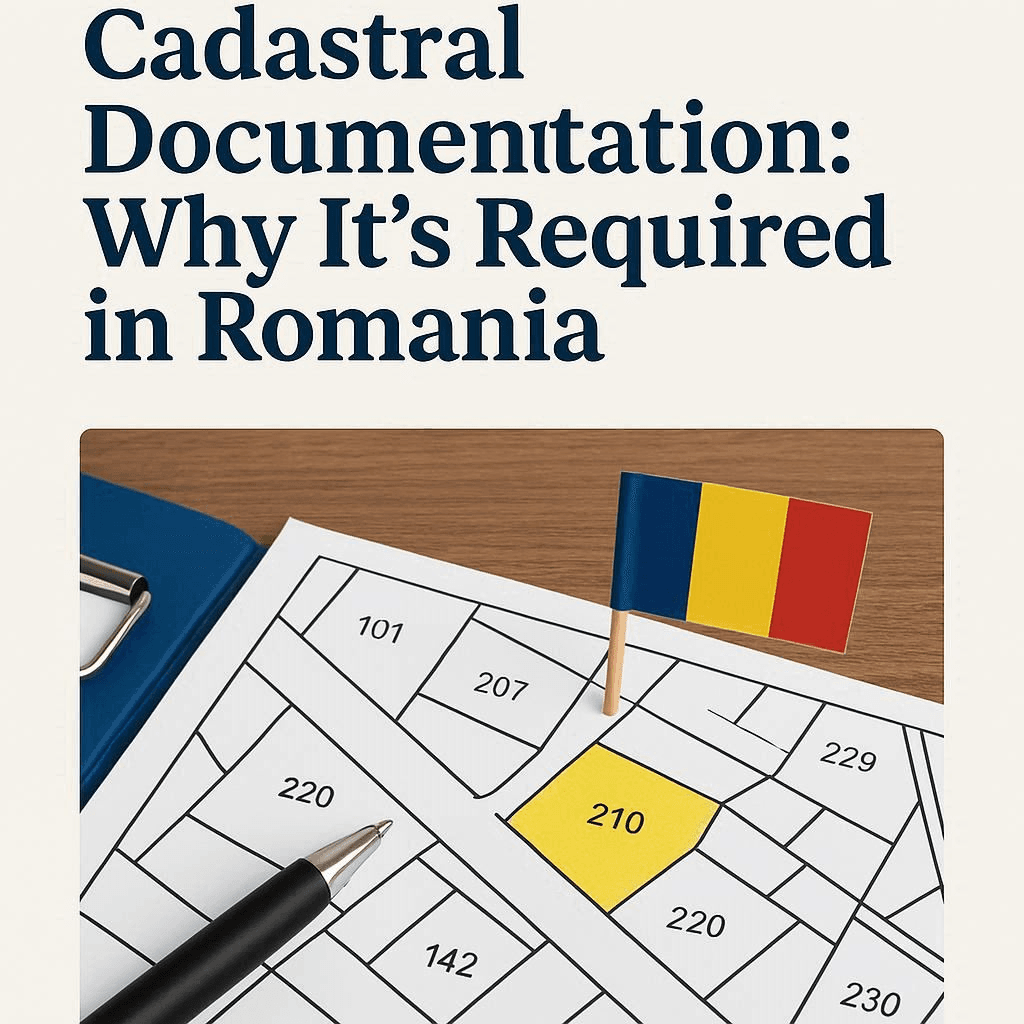
Cadastral Documentation: Why It’s Required in Romania

Cadastral Documentation: Why It’s Required in Romania

What if the key to securing your property rights in Romania isn’t just about owning land—but proving it in a way the law recognizes?

For buyers, sellers, and investors, this question underscores a critical reality: formalized records are the backbone of legally binding transactions.

A person is examining a detailed map of land parcels.

Romania’s integrated framework merges technical and legal processes to ensure accuracy in ownership details.

Every parcel undergoes rigorous verification before entering the national registry.

This system prevents disputes by creating an immutable record that shields owners from unauthorized claims.

The process involves collaboration between cadastral offices and real estate departments.

Technical surveys and legal validations occur simultaneously, streamlining approvals.

Delays in documentation can derail sales or financing, making compliance non-negotiable for smooth transactions.

For tailored guidance, contact office@theromanianlawyers.com.

Our team navigates these requirements daily, ensuring clients meet all obligations efficiently.

Key Takeaways

  • Romania’s property system requires precise technical and legal alignment for valid ownership,
  • Integrated workflows prevent errors and accelerate registration timelines,
  • Third-party claims lose validity without proper cadastral verification,
  • Delays in documentation expose owners to financial and legal risks,
  • Professional support minimizes hurdles in complex cases.

Understanding Cadastral Documentation in Romania

Romania’s property system relies on a structured framework where technical precision meets legal validity.

This foundation ensures every land registry entry reflects accurate ownership details and physical characteristics.

A map showing property boundaries and land divisions.

Definition and Key Components

Cadastral files combine technical surveys with legal descriptions.

They include boundary markers, exact surface measurements, and unique identification numbers assigned during registration.

These documents also contain geospatial plans that map the estate’s layout.

Authorized surveyors and legal experts collaborate to verify each detail.

Errors in boundary data or ownership records can invalidate transactions.

Professionals ensure compliance with national legislation to prevent disputes.

Historical Context and Evolution

Romania’s modern cadastral system has evolved through various historical influences, with significant development occurring during different administrative periods.

The current integrated system represents decades of modernization efforts to align with European Union standards.

Contemporary reforms integrated digital mapping with established processes.

Today’s estate records blend historical archives with real-time updates.

This evolution maintains continuity while addressing modern ownership complexities.

Cadastral Documentation and Why is It Required in Romania

A group of people discussing over a table filled with paperwork and charts.

Romanian legislation mandates strict protocols for validating property boundaries and ownership transfers.

These protocols serve as the foundation for all real estate transactions, ensuring every modification aligns with national standards.

Key Legal Requirements and Registration Effects

Under Romanian law, formalizing land divisions or mergers requires comprehensive technical verification.

This process applies during initial registrations and subsequent changes like boundary adjustments.

Authorized surveyors must validate measurement accuracy and confirm the credentials of involved professionals.

Each submission undergoes a multi-step review.

Inspectors cross-reference graphic databases to locate the site and ensure surface calculations match physical dimensions.

Discrepancies between descriptive details and visual representations trigger immediate revisions.

Upon approval, properties receive unique identifiers that lock their status in the national system.

These codes become critical references for future transactions or legal disputes.

Properly executed registrations grant owners enforceable rights against third-party claims.

They also activate the property’s eligibility for entries in Romania’s land book—a decisive factor in securing financing or completing sales.

Non-compliant submissions face rejection, requiring costly resubmissions.

Errors in surface data or boundary markers can delay land development projects significantly, emphasizing the need for precision from the outset.

Integration of Cadaster and Land Registry Systems

Romania’s property governance model eliminates bureaucratic silos through a cohesive institutional design.

The Romanain land registry and cadaster operate under one administrative umbrella, merging technical precision with legal validation.

This structural integration accelerates decision-making while maintaining rigorous standards.

Several colorful folders are neatly organized on a shelf labeled with different property names.

Unified Workflow in Land Book Registrations

Applications for property registration follow a synchronized process.

Technical surveys and legal validations are processed within the same department, removing redundant steps.

A single documentation file combines geospatial maps, boundary certifications, and ownership proofs.

The system routes files between cadastral inspectors and real estate publicity teams automatically.

Technical specialists verify measurement accuracy, while legal experts confirm compliance with ownership transfer rules.

Approved data flows directly into Part A of the land book, ensuring alignment between physical boundaries and registered rights.

Key advantages of this approach include:

  • Reduced processing times through parallel technical-legal reviews,
  • Eliminated discrepancies between registry entries and physical sites,
  • Centralized access to updated property information.

This integration minimizes errors that traditionally arise when separate institutions handle cadastral and registry tasks.

Real estate professionals benefit from predictable timelines, while owners gain enforceable rights backed by unified records.

Process and Legal Considerations for Cadastral Documentation

Navigating Romania’s property registration framework demands strict adherence to sequential technical and legal phases.

This structured approach protects ownership rights while maintaining alignment with national standards.

A close-up of a stamp on a completed application form.

Steps from Technical Verification to Legal Registration

The procedure unfolds through six critical stages:

  1. Preparer validation: Confirm credentials of professionals who drafted the documents,
  2. Database cross-check: Locate property in the national graphics system using coordinates,
  3. Surface verification: Audit mathematical accuracy of land measurements,
  4. Attribute correlation: Match written descriptions with graphical representations,
  5. Number assignment: Issue unique identifiers for unregistered properties,
  6. Final review: Cadastral inspector approves or flags discrepancies.

Ensuring Compliance with Romanian Law

Authorities reject submissions failing these legal benchmarks:

RequirementComplete DocumentationIncomplete Cases
Technical ActsPrecision-matched dataSurface calculation errors
Legal StandardsOwnership chain verifiedMissing notarized signatures
Time ImpactProcessing varies by complexityExtended delays and resubmissions

Non-compliant cases trigger detailed deficiency reports.

These outline exact corrections needed for resubmission.

Proper execution prevents third-party claims and ensures enforceable rights under Romanian statutes.

Implications for Real Estate and Property Transactions

Romania’s real estate market operates on a simple principle: no valid registration equals no enforceable rights.

The land registry acts as the ultimate authority for verifying ownership before any transaction closes.

This system protects buyers from inheriting unresolved disputes or hidden claims.

A computer screen displaying a digital cadastral map with highlighted properties.

Impact on Land Sale and Ownership Proof

Without registry entries, sellers cannot legally prove they own the property.

Notaries refuse to authenticate sales contracts for unregistered parcels, blocking transfers entirely.

Banks similarly reject mortgage applications tied to undocumented estates.

Common scenarios demonstrate these consequences:

ScenarioWith Proper DocumentsMissing Documents
Residential SaleProcessing within standard timeframesContract voided
Land DevelopmentFinancing approvedBank refusal
Inheritance TransferSmooth ownership changeExtended court proceedings

Proper registration creates a public record accessible to buyers, lenders, and authorities.

This transparency accelerates due diligence and reduces fraud risks.

Updated entries also increase property values by confirming marketability.

Maintaining current records helps avoid transaction delays and ensures compliance as boundaries or zoning laws change.

Legal Solutions and Alternative Approaches

When traditional property registration isn’t an option, Romanian law offers alternative pathways to secure ownership rights.

These mechanisms address complex scenarios where standard documentation remains unavailable or incomplete.


Noting Possession and Alternative Procedures

Individuals using land without formal ownership documents can request a notation of possession.

This legal step initiates a period during which third parties may contest the claim.

If no disputes arise, property rights may be formally registered through court proceedings.

Usucapion and Property Acquisition

Romanian law recognizes usucapion (adverse possession) as a method of acquiring property rights through prolonged possession.

Under current legislation, individuals who can demonstrate continuous, uninterrupted, and public possession for specified periods may acquire ownership rights.

The Civil Code establishes that those who possessed property for 10 years may become owners through adverse possession (extratabulară).

For situations involving longer periods, 30-year usucapion (acquisitive prescription) may apply depending on specific circumstances and legal requirements.

Resolving Complex Ownership Scenarios

Successful usucapion requires proving public, peaceful, and uninterrupted control of the land.

Authorized companies handle complex procedures for cases involving partial deeds or indirect evidence.

This process often becomes critical during inheritance disputes involving properties with unclear documentation.

Multiple heir situations demand specialized strategies to prevent prolonged litigation.

Legal professionals help owners navigate these complexities while protecting against future obstacles in mortgage or sale processes.

Consulting experienced attorneys ensures compliance with evolving registration standards.

Their guidance minimizes risks in both standard and alternative ownership validation processes.

Expert Insights and Best Practices in Cadastral Documentation

Navigating property records demands precision only specialists can deliver.

Romania’s framework assigns distinct roles to owners, professionals, and regulators to maintain system integrity.

O persoană arătând cu degetul la un teren pe un document.

Expert Guidance and the Role of Authorized Professionals

Licensed surveyors and legal practitioners handle technical evaluations under the National Agency for Cadaster and Land Registration.

These experts:

  • Verify boundary markers using GPS technology,
  • Cross-reference historical maps with current site conditions,
  • Certify that legal descriptions match physical characteristics.

Property owners must identify and preserve their boundaries.

Professionals bear responsibility for measurement accuracy, while inspectors validate data before issuing registration numbers.

Ensuring Data Accuracy and Timely Updates

Regular updates prevent conflicts during sales or inheritance transfers.

Key maintenance practices include:

ActionFrequencyResponsible Party
Boundary checksEvery 5 yearsOwner
Record auditsPost-constructionAuthorized surveyor
System updatesReal-timeCadastral office

Disputed cases require immediate legal intervention.

For complex scenarios like overlapping estate claims, contact office@theromanianlawyers.com.

Professional legal teams specialize in resolving boundary disputes efficiently.

Proactive monitoring of zoning changes safeguards rights.

Specialists recommend digital alerts for land registration amendments affecting your assets.

Conclusion

Securing property rights in Romania hinges on meticulous adherence to legal frameworks governing land records.

The integrated system combining technical precision with legal validation ensures transparent transactions while preventing ownership disputes.

From standard registrations to resolving complex cases, compliance protects all involved parties.

Authorized professionals play a critical role in verifying boundaries and maintaining error-free documentation.

Their expertise streamlines the process, whether handling routine updates or alternative acquisition methods.

Proactive management of real estate records remains essential for financing eligibility and conflict prevention.

Regular audits and immediate corrections uphold the integrity of Romania’s land registry framework.

For tailored guidance on navigating these requirements, contact office@theromanianlawyers.com.

Professional legal teams provide comprehensive support to ensure your assets remain protected under national law.

FAQ

What legal effects does land registration have in Romania?

Registration in the Land Book grants enforceable rights against third parties and validates ownership transfers.

It serves as the primary proof of legal title under Romanian law, ensuring transparency in transactions like sales or mortgages.

How does the cadaster system integrate with property registration?

Romania’s unified system combines cadastral data (physical boundaries, area) with the Land Registry’s legal records.

This integration streamlines workflows, reduces errors, and ensures accurate verification during transactions.

What steps are involved in obtaining cadastral documentation?

The process includes technical verification by licensed surveyors, boundary confirmation with neighbors, submission to the Cadaster Office, and final Land Book registration.

Compliance with zoning laws and notarization of legal acts is mandatory.

Why is cadastral documentation critical for real estate sales?

It confirms lawful ownership, clarifies boundaries, and identifies encumbrances like mortgages.

Buyers require this data to assess risks, secure financing, and complete transactions recognized by Romanian authorities.

Can property rights be established without full registration?

Temporary possession claims may be noted in the Land Book, but usucapion (adverse possession) or specialized procedures are required for full rights.

These alternatives involve court validation and strict evidence standards.

How do professionals ensure cadastral data accuracy?

Authorized surveyors, notaries, and lawyers cross-check records, resolve boundary disputes, and update entries for new constructions or subdivisions.

Regular audits by the National Agency for Cadaster prevent discrepancies.

What happens if a property has unresolved boundary issues?

Transactions may be delayed until disputes are settled via mediation or court rulings.

The Cadaster Office flags such cases, requiring updated technical plans and neighbor agreements before registration.


What are the legal grounds for contesting an administrative act

What are the legal grounds for contesting an administrative act

In Romania, people and businesses can challenge decisions made by government bodies.

The Law on Administrative Disputes sets the rules for this.

It helps protect your rights if you think a decision was unfair.

Knowing how to contest an administrative act is key.

It helps keep public actions legal and fair.

This way, you can defend your rights effectively.

legal grounds administrative act Romania

Key Takeaways

  • The Law on Administrative Disputes in Romania allows for the judicial review of administrative acts to protect citizens’ rights and ensure the legality of public administration activities.
  • Individuals and legal entities can initiate administrative proceedings if they believe an administrative act has violated their rights or direct personal interests.
  • Contesting administrative acts is a crucial mechanism for holding public authorities accountable and ensuring the legality of their decisions.
  • The legal grounds for challenging administrative acts in Romania include lack of competence, procedural violations, and violation of substantive law.
  • Seeking legal assistance from specialized administrative lawyers can help navigate the complexities of administrative litigation and increase the chances of success.

Understanding Administrative Acts and Their Legal Framework

In Romania, the rules for administrative acts come from the Law on Administrative Disputes and the Administrative Code.

These laws help us understand what administrative law is and how it works in the country.

Definition and Scope of Administrative Acts

Administrative acts are decisions made by public bodies that impact people’s rights or duties.

They can be orders, decisions, permits, or licenses.

Romania’s legal system has two types: normative acts that set rules and individual acts that solve specific problems.

Key Elements of Administrative Law in Romania

  • Principle of Legality: Public bodies must follow the law and stay within their legal powers.
  • Principle of Proportionality: Decisions should match the goal they aim for, balancing public and individual interests.
  • Right to Legal Protection: People and groups can challenge decisions in court or through other legal means.

Role of Public Authorities in Administrative Decisions

Public bodies like ministries and local governments are key in making administrative acts.

They must follow legal steps and act fairly, ensuring transparency and respect for the law.

Their actions can be reviewed in court to make sure they follow the law and protect everyone’s rights.

administrative law romania


Legal Grounds Administrative Act Romania

In Romania, the rules for challenging an administrative act are based on constitutional rightsdue process, and the rule of law.

These acts are the main way public authorities act.

They can be contested on several important grounds.

One reason to challenge an administrative act is if it breaks the law or doesn’t follow the right procedures.

This could happen if the wrong authority makes the act or if the facts are wrong.

The Administrative Court of Romania can decide if an act is legal. If not, they can cancel or change it.

People can also challenge acts made by higher authorities.

This gives them a chance to fight government actions that go against their rights or due process.

Key FactsData
Administrative acts as the main legal form of public administrationAdministrative acts are the main legal form of the activity of public administration authorities.
Building permits as individual administrative actsA building permit is an individual administrative act that produces legal effects as envisaged by the issuing public authority.
Administrative operations vs. administrative actsAdministrative operations (notices, agreements, minutes of establishment) are necessary steps for issuing administrative acts but do not produce legal effects themselves.
Court cases mentioning the exception of illegalityIn the last years (for ex. January 2016 – October 2021), there have been 985 court cases where the exception of illegality was mentioned in Romania.
Areas where the exception of illegality is raisedThe predominant matters where the exception of illegality is raised are urban planning procedures and administrative-fiscal procedures according to the findings from the website www.Rolii.ro.

Knowing how to challenge administrative acts in Romania helps protect rights and ensures fairness.

It allows people to stand up against government actions that don’t follow the law.

administrative law romania

Fundamental Principles of Administrative Dispute Resolution

In Romania, the way we handle disputes with the government is based on key principles.

These ensure everyone’s rights are protected and government decisions are fair.

The main principles are the rule of law, proportionality, and the right to legal defense.

Principle of Legality

The rule of law means all actions by government must follow the law.

This makes sure government decisions are based on solid legal ground.

It also ensures these decisions don’t go beyond what the law allows.

Principle of Proportionality

The principle of proportionality says government actions must match their goals.

These actions should not unfairly restrict people’s rights.

Any limits must be justified and needed to serve a public interest.

Right to Legal Protection

The right to legal protection lets people challenge unfair government decisions in court.

This gives citizens a fair chance to have their say against government actions.

It protects against decisions that are not lawful or fair.

By following these principles, Romania’s dispute resolution process aims to balance government and individual rights.

It promotes transparency, accountability, and the rule of law.

PrincipleDescription
LegalityAdministrative acts must comply with relevant laws and regulations.
ProportionalityAdministrative actions should not excessively limit individual rights.
Right to Legal ProtectionIndividuals can contest unfavorable administrative decisions in courts.

Procedural Requirements for Contesting Administrative Acts

Challenging administrative acts in Romania has specific steps to follow.

These steps are outlined in the laws about administrative actions.

They make sure the process is fair and open.

To challenge an administrative act, you must file a complaint on time.

The Law on Administrative Disputes (No. 554/2004) sets these deadlines.

Missing these deadlines can mean your case is dismissed.

You also need to include all the documents that support your claim.

This might be copies of the act you’re challenging, proof of harm, and other important papers.

It’s key to follow these rules to make your case valid.

When you submit your complaint, you must do it the right way.

This could mean sending it directly to the Administrative Court or following other steps set by the authorities.

Usually, you must try to solve the issue through administrative channels first.

This means appealing the decision through the right channels before going to court.

But, there are exceptions based on the law.

  1. File a complaint within the statutory deadlines set by the Law on Administrative Disputes (No. 554/2004)
  2. Provide the necessary documentation to support your claim, including copies of the contested administrative act and evidence of harm or violation
  3. Follow the proper submission protocols for contesting administrative acts, which may involve direct filing with the Administrative Court or additional procedures
  4. Exhaust administrative remedies before seeking judicial review, unless exceptions apply under the law

Following these steps ensures your challenge is handled correctly.

It respects the legal framework and rules of administrative proceedings in Romania.

Time Limits and Filing Procedures

Understanding time limits and filing procedures is key when dealing with administrative acts in Romania.

These rules are vital for challenging decisions fairly and efficiently.

They help make sure the judicial review process works well.

Statutory Deadlines for Filing Complaints

In Romania, you usually have 30 days to contest an administrative act after you’re notified.

Public prosecutors get 60 days.

Remember, these deadlines can’t be changed by anyone involved.

Documentation Requirements

To challenge an administrative act, you need a few things.

These include the decision you’re contesting, any evidence that supports your claim, and a power of attorney if you’re represented.

It’s important to gather and submit all these documents correctly.

Submission Protocols

You can file a complaint against an administrative act with the right court.

You can do this in person, by mail, or even by recording it at the court.

This makes it easier for people to seek judicial review administrative acts and legality administrative decisions.

Understanding how to challenge administrative acts in Romania is complex.

You need to know the time limits, what documents are needed, and how to submit them.

Following these rules helps individuals and groups exercise their rights and get the judicial review they need.

Rights and Obligations of Parties in Administrative Disputes

In Romania, those in administrative disputes have clear rights and duties.

These rules help make sure the process is fair and open.

If you’re challenging an administrative act, you can speak up, see the case files, and share evidence.

Public authorities must give out important documents and explain their decisions.

This makes sure public actions are clear and fair. Also, others who really care about the outcome can join the case.

Rights of PartiesObligations of Parties
  • Right to be heard
  • Access to case files
  • Right to present evidence
  • Provide relevant documents
  • Justify administrative decisions
  • Participate if direct interest is established

These rules help keep the dispute resolution process fair and balanced.

They follow the public administration law in Romania.

Grounds for Administrative Act Contestation

In Romania, there are many reasons to contest administrative acts.

These include lack of authority, breaking rules, and not following the law.

These reasons help keep the government in check and protect people’s rights.

They make sure the government’s actions can be reviewed in court.

Lack of Competence

One reason to contest an act is if the wrong person made it.

This happens when someone without the right to do so issues a decision.

Or, if the person who signed it didn’t have the power to do so.

Procedural Violations

Another reason is if the act was made without following the proper steps.

This includes not giving enough notice, not consulting the public, or not getting the facts right.

Violation of Substantive Law

Acts can also be challenged if they go against the law or are too broad.

This includes if they contradict higher laws or don’t follow important principles like the right to be heard.

These grounds for contestation are key in Romanian law.

They let citizens review government decisions in court.

This helps keep the government accountable and protects people’s rights.

It’s important for a fair and effective administrative system.

Role of Administrative Courts

In Romania, administrative courts are key in keeping the law and ensuring fair process in government actions.

They can check if government decisions are legal. If not, they can cancel these decisions, ask for new ones, or give money to those affected.

Their rulings are final and must be followed, showing how important they are.

The Supreme Court of Romania can also look at these decisions, adding more checks and balances.

These courts protect people and businesses from government mistakes or unfair actions.

Working with the People’s Advocate, they make sure everyone follows the law and gets a fair hearing.

FAQ

What are the legal grounds for contesting an administrative act in Romania?

In Romania, you can challenge an administrative act if it breaks the law or the rules of procedure.

You can also contest it if the authority that made it wasn’t supposed to. Or if the facts were not correctly established.

What is the legal framework for administrative acts in Romania?

Romania’s laws for administrative acts are based on the Law on Administrative Disputes and the Administrative Code.

These laws ensure acts are legal, fair, and protect citizens’ rights. Public bodies must follow these rules when making decisions.

What are the fundamental principles of administrative dispute resolution in Romania?

In Romania, resolving administrative disputes follows three main principles.

First, acts must follow the law.

Second, actions should be fair and not overly limit rights.

Third, everyone has the right to go to court if they disagree with a decision.

What are the procedural requirements for contesting administrative acts in Romania?

To challenge an administrative act in Romania, you must follow certain steps.

You need to file your complaint within a set time, provide all necessary documents, and follow the right steps.

The Administrative Court of Romania handles these disputes, and you must try to solve the issue first before going to court.

What are the time limits and filing procedures for contesting administrative acts in Romania?

You have 30 days to challenge an administrative act in Romania after you’re told about it.

Public prosecutors have 60 days.

You’ll need to include the act you’re challenging, evidence, and a power of attorney if you have a lawyer in Romania.

You can file your complaint in person, by mail, or by recording it at the court.

What are the rights and obligations of parties in administrative disputes in Romania?

In administrative disputes in Romania, both sides have rights and duties.

You have the right to be heard and to see your case files.

Authorities must give you the documents you need and explain their decisions.

Other people can join the case if they have a direct interest in it.

On what grounds can administrative acts be contested in Romania?

You can challenge an administrative act in Romania for several reasons.

If the authority that made it wasn’t allowed to, if there were mistakes in the process, or if the act goes against the law.

These are the main reasons.

What is the role of administrative courts in Romania?

Administrative courts in Romania are key in checking if administrative acts are legal.

They can cancel acts that are not lawful, ask authorities to make new ones, or give damages.

Their decisions are final, and the Supreme Court can review them if there’s a legal issue.

What is an administrative act under Romanian law?

An administrative act in Romania is a legal document issued by a public authority that creates, modifies, or terminates legal rights and obligations.

These acts are subject to administrative law and can be contested if they violate an individual’s rights or interests.

Romanian law provides specific grounds for challenging such acts, ensuring that public authorities operate within the bounds of legality and respect citizens’ rights.

What are the main legal grounds for contesting an administrative act in Romania?

The primary legal grounds for contesting an administrative act in Romania include:

1. Lack of competence of the issuing authority

2. Violation of legal procedures in adopting the act

3. Breach of substantive law

4. Abuse of power

5. Violation of the principle of proportionality

6. Failure to state reasons or insufficient reasoning

7. Illegality of the act’s content

8. Infringement of fundamental rights and freedoms.

These grounds are established by Romanian law and case law, and can be invoked when seeking to appeal an administrative act.

How can I contest a tax decision in Romania?

To contest a tax decision in Romania, you should follow these steps:

1. Review the decision carefully to identify potential grounds for contestation

2. File a written appeal with the tax authority that issued the decision within 45 days.

Capital Gains Tax in Romania – Key Points to Know

Capital Gains Tax in Romania – Key Points to Know

Are you an investor in Romania?

Do you know how the country’s capital gains tax works?

It has different rates, rules, and special cases.

This guide will help you understand it better and make smart choices.

Capital Gains Tax in Romania

Key Takeaways

  • The flat capital gains tax rate in Romania is 10%, with lower rates for certain asset classes and holding periods.
  • Reporting of capital gains and losses is mandatory through the annual tax return, with a filing deadline of May 25th.
  • Romania’s Fiscal Code and recent legislative changes, such as Law no. 142/2022, govern the taxation of capital gains.
  • Specific rules and exemptions apply to different types of investments, including stocksbonds, real estate, and derivatives.
  • The role of tax treatment in capital gains tax. authorized intermediaries is crucial in the collection and reporting of capital gains tax.

Understanding Capital Gains Tax Fundamentals in Romania

If you invest or own assets in Romania, knowing about capital gains tax is key.

The tax rates range from 0% to 10%.

This depends on the asset type, how long you held it, and your income.

Basic Tax Rates and Thresholds

The tax on capital gains from the sale of shares and financial instruments through Romanian entities is changing.

It will drop from 10% to 1% or 3%.

This depends on how long you owned the assets.

If you held the assets over 365 days, you pay 1%.

For less than 365 days, it’s 3%.

Who Needs to Pay Capital Gains Tax?

People living in Romania for more than 183 days in a year must pay capital gains tax.

The tax is based on the profit from selling an asset.

If you live in Romania for more than 183 days in a 12-month period, you are generally considered a Romanian tax resident, which means you must pay tax on your worldwide income, including capital gains from selling assets.

However, ANAF also looks at other important criteria, such as whether you have a permanent home in Romania, your center of vital interests (family, job, business, bank accounts), or legal ties like a Romanian domicile, car registration, passport, or health insurance.

Taxable Events and Transactions

Capital gains tax applies to the sale of shares, bonds, real estate, and more in Romania.

Some sales, like inheriting within two years, are tax-free.

You must report your capital gains and income tax by February of the next year.

capital gains tax rates

It’s vital for investors and asset owners in Romania to grasp capital gains tax basics.

Knowing the rates, thresholds, and what triggers tax helps make smart financial plans.

This way, you can follow the rules and get the most from your investments.

Capital Gains Tax in Romania: Current Rates and Regulations

Romania’s capital gains tax rules are detailed in the Fiscal Code and updated by Law no. 142/2022.

It’s key for investors to know the current rates and rules.

This knowledge helps in managing investments and taxes.

The tax rate on capital gains in Romania depends on the asset and how long you hold it.

Securities held over 365 days are taxed at 1%. But, those held for less than 365 days face a 3% rate.

Other capital gains are taxed at 10%.

Also, Romanians must pay a 10% health insurance if their capital gains are over 6 minimum gross wages a year.

This rule helps ensure that those who earn more contribute to the country’s social security.

  • Capital gains tax on securities held for over 365 days: 1%
  • Capital gains tax on securities held less than 365 days: 3%
  • Capital gains tax on other types of assets: 10%
  • Health insurance contribution: 10% on annual capital gains exceeding 6 minimum gross wages

Understanding Romania’s capital gains tax rules is complex.

It requires keeping up with the Fiscal Code and new laws.

Staying informed and following the tax treatment rules is crucial to avoid fines and meet tax duties.

romanian capital gains tax

Securities and Investment Taxation

Capital gains tax in Romania affects securities and investment transactions a lot.

Knowing the details helps investors and traders understand taxes better.

Stock Market Transactions

Stock market deals in Romania face capital gains tax.

The tax rate changes based on how long you hold the stock.

Stocks held for under a year get taxed at 3%.

But, stocks held over a year get taxed at just 1%.

Bond Market Investments

Bond investments in Romania are taxed similarly to stocks.

Bonds held for under a year are taxed at 3%.

Bonds held over a year are taxed at 1%.

Investment Fund Taxation

Investment funds in Romania get a special tax break.

Open-end collective investment funds don’t pay capital gains tax.

This makes them attractive for diversifying and getting professional management.

It’s key to remember that taxes are handled by the people who do the transactions.

Investors should talk to their financial advisors to follow the rules.

Investment TypeTax Rate (HeldTax Rate (Held > 1 year)
Stocks3%1%
Bonds3%1%
Investment Funds0%0%

Knowing the tax rules for different investments in Romania helps investors plan better.

Keeping up with tax changes and getting advice from experts is important for a smooth investment journey.

Real Estate Capital Gains Taxation

In Romania, selling real estate is taxed on capital gains.

If a property sells for over RON 450,000, a 3% tax is applied.

But, there are some exceptions.

If you inherit a property and sell it within two years, no tax is due.

After two years, a 1% tax on the property’s value is charged.

Not all personal items sold are taxed.

There are specific rules for real estate sales.

Knowing about capital gains tax on real estate in Romaniareal estate gains tax Romania, and capital gains on property Romania is key for both buyers and sellers.

Transaction TypeCapital Gains Tax Rate
Sale of property valued over RON 450,0003%
Inherited property transferred within 2 years0%
Inherited property transferred after 2 years1%

Capital gains tax on real estate in Romania is a big deal for buyers and sellers.

Knowing the tax rates and exemptions helps make better choices in the real estate market.

Role of Intermediaries in Capital Gains Tax Collection

In Romania, certain groups help with capital gains tax.

These include investment managers, self-managed companies, and fund administrators.

They figure out gains and losses, report to the National Agency for Fiscal Administration (ANAF), and take taxes from their clients’ deals.

Types of Authorized Intermediaries

  • Investment management companies;
  • Self-managed investment companies;
  • Administrators of alternative investment funds.

Reporting Requirements and Deadlines

These groups must send reports to ANAF by May 25th of the next year.

Their reports show the gains and losses for each client, along with the taxes they’ve paid for tax purposes.

Transaction Documentation

They keep detailed records of each deal.

This includes info on buying and selling securities and other investments.

These records help prove the accuracy of the gains and losses reported.

Type of Intermediary for the transfer of securities.Responsibilities
Investment management companiesCalculating gains/losses, reporting to ANAF, and withholding taxes on income obtained.
Self-managed investment companiesCalculating gains/losses, reporting to ANAF, and withholding taxes
Administrators of alternative investment fundsCalculating gains/losses, reporting to ANAF, and withholding taxes

Tax Exemptions and Special Considerations

In Romania, there are tax breaks and special rules for capital gains.

Knowing these can help you save money and follow the law.

It’s key for good financial planning.

One big break is the 0% tax on gains from open-end funds.

This means profits from these investments are tax-free.

Also, gifts and interest from EU pension funds are not taxed in Romania.

  • 0% tax on capital gains from open-end collective investment funds;
  • Exemption for gifts and interest income earned by pension funds within the EU;
  • Employee stock option plans are not taxed when granted or exercised, but the sale of underlying shares is taxable;
  • Gifts of real estate may be exempt if received from relatives up to the third degree.

Employee stock options have special rules. Getting or using them doesn’t trigger taxes.

But selling the shares does.

This can help in planning and saving taxes for both sides.

Also, gifts of real estate might not be taxed if from close relatives.

This is good for family gifts or estate planning.

By knowing these capital gains tax exemptions in Romania, you can lower your taxes.

Talk to a tax experienced lawyer in Romania to use these tax exemptions and capital gains exemptions wisely in your plans.

Non-Resident Taxation and International Aspects

Romania’s capital gains tax affects people and companies from outside the country.

It’s important to understand how taxes work for those doing business across borders.

Double Taxation Treaties

Romania has made deals with over 80 countries to avoid double taxation.

These agreements help prevent too much tax on income earned in Romania.

They can help reduce the tax burden on earnings from abroad.

Cross-Border Transactions

Transactions in Romania can lead to capital gains tax for non-residents.

The tax depends on the type of transaction and the double taxation treaty.

It’s key to follow rules and report income correctly to avoid tax problems.

Key AspectsDetails
Non-Resident Tax Registration for tax purposes.
  • Obtaining a tax identification code
  • Registering in the taxpayers’ registry
  • Obtaining a tax registration certificate for non-resident individuals.
Applicable Tax Rates
Double Taxation Avoidance
  • Over 80 double tax treaties signed by Romania
  • Foreign tax credits available for taxes paid overseas

Understanding non-resident taxation and international rules helps individuals and companies with dividend income.

They can make the most of their business across borders and follow Romania’s tax laws.

Reporting and Compliance Requirements

In Romania, taxpayers must follow specific rules for capital gains tax.

They need to file an annual return by a certain deadline to report their dividend income.

This ensures they meet their tax duties.

People in Romania must submit the “Declaratia unica privind impozitul pe venit si contributiile sociale datorate de persoanele fizice” form by May 25th of the next year.

This form helps them figure out how much capital gains tax they owe.

It’s based on their investments and deals from the past year.

Not just individuals, but also brokers and investment firms have to report too.

They must give detailed info about the deals they handle for tax purposes.

This helps make sure the right amount of capital gains tax is paid to the Romanian government.

Key Compliance DeadlinesReporting Requirements
May 25thFiling of “Declaratia unica privind impozitul pe venit si contributiile sociale datorate de persoanele fizice” form
June 25thDeadline for submitting annual CIT returns and paying related CIT for taxpayers subject to OMF 1802/2014
OngoingIntermediaries must report details of transactions they manage

Not following these rules can lead to penalties and extra charges.

It’s important for everyone to know the rules and deadlines.

This way, they can avoid problems with the Romanian tax authorities.

Conclusion

Romania’s capital gains tax system is both competitive and nuanced.

It balances collecting revenue with incentives for investment, especially in the domestic market.

The tax rates for capital gains in Romania range from 0% to 10%.

Recent changes have made some securities transactions more favorable.

To make the most of Romania’s capital gains tax system, it’s important to understand the rules and exemptions.

Both residents and non-residents need to know about the reporting requirements.

This knowledge is key to leveraging the opportunities in the Romanian market.

Whether you live in Romania or invest from abroad, understanding the capital gains tax in Romania is crucial.

You need to pay close attention to the Romanian capital gains tax rates and regulations.

By staying informed and following the rules, you can plan your taxes better and manage your capital gains in Romania effectively.

The Romanian capital gains tax landscape is always changing.

It’s vital to keep up with the latest news and seek professional advice when needed.

This way, you can make sure your investment plans and transactions fit the current tax environment.

It helps you maximize your returns and reduce your tax liabilities in Romania.

FAQ

What are the capital gains tax rates in Romania?

In Romania, capital gains tax rates range from 0% to 10%.

This depends on the asset type and transaction.

Stocks have a tax rate of 1% to 3% on gains derived, based on how long you held them. For real estate, a 3% tax applies if sold for over RON 450,000.

Who is required to pay capital gains tax in Romania?

People living in Romania for more than 183 days in a year must pay capital gains tax.

This includes taxes on stocks, bonds, real estate, and other assets.

What types of capital gains transactions are taxable in Romania?

In Romania, selling stocks, bonds, real estate, and other assets is taxable.

The tax is based on the sale price minus the purchase price.

Are there any capital gains tax exemptions in Romania?

Yes, some transactions are tax-free.

This includes inheriting property within two years and gifts from relatives up to the third degree.

Also, open-end collective investment funds have a 0% tax rate.

How are stock and bond market transactions taxed in Romania?

Stock and bond market transactions are taxed at 1% or 3%, depending on the holding period.

Losses from these transactions can’t be used to offset future gains.

What are the reporting requirements for capital gains tax in Romania?

You must report capital gains annually to ANAF by May 25th of the next year.

Companies that manage investments are responsible for reporting and withholding taxes.

How does Romania’s capital gains tax system compare to other countries?

Romania’s system offers tax rates from 0% to 10%.

It recently changed to favor certain securities.

The system aims to balance tax collection with investment incentives, especially in the domestic market.

What are the special considerations for non-residents regarding capital gains tax in Romania?

Non-residents may face Romanian capital gains tax on some transactions.

They can claim tax credits for overseas taxes, up to the Romanian tax amount.

Cross-border deals have specific rules based on double taxation treaties.

What is the Capital Gains Tax in Romania?

The Capital Gains Tax in Romania refers to the tax imposed on the profits realized from the sale of assets, such as real estate or stocks.

This tax applies to both Romanian tax residents and foreign companies earning capital gains in the country.

The tax rate on capital gains is typically set at a fixed percentage, which may vary based on the type of asset sold and the duration of ownership.

How is the Capital Gains Tax calculated in Romania?

The tax is calculated by determining the difference between the sale price of the asset and its acquisition cost, adjusted for any allowable expenses related to the transaction.

The resulting amount is termed the taxable income.

The tax rate on capital gains is then applied to this taxable income to determine the final income tax due.

What are the current tax rates for capital gains in Romania?

The current tax rate for capital gains obtained from the sale of real estate in Romania is generally set at 3%, while gains from the sale of stocks are subject to a tax rate of 10%.

However, these rates may be subject to changes for tax purposes, so it is advisable to consult the. Romanian tax authorities for the most up-to-date information.

Do Romanian residents need to file a tax return for capital gains?

Yes, Romanian tax residents are required to report their capital gains in their annual return for dividend income. tax return.

This includes disclosing any income derived from the transfer of assets and ensuring that the correct income tax rate is applied.

Failure to do so may result in penalties or additional tax obligations.

Are there any exemptions on Capital Gains Tax in Romania?

In certain circumstances, exemptions may apply to the capital gains tax.

For instance, if a property has been held for more than 3 years, the gains from its sale may be exempt from taxation.

Additionally, Romanian tax authorities may provide specific exemptions for certain categories of income or for Romanian companies engaging in particular business activities.

Confiscation of Goods under Romanian Law

Confiscation of Goods under Romanian Law

Recently, Romania’s Tax Reform Law introduced fines up to RON 30,000 for legal entities involved in illegal activities.

This shows how serious asset forfeiture and property seizure are in Romania.

The country’s criminal code now focuses more on recovering illicit gains through legal confiscation.

Confiscation of Goods under Romanian Law

In Romania, confiscating goods is not just a punishment.

It’s also a way to keep society safe, as stated in the Code of Criminal Procedure.

If you commit a crime, you could lose your assets forever.

This helps prevent future crimes and protects everyone.

Not only the person who committed the crime can lose property.

If you can’t show where goods came from, you might get fined up to RON 30,000.

For those who do it again, the fines can double to RON 60,000.

They might also have their business shut down for up to 15 days in a year.

Key Takeaways

  • Fines up to RON 30,000 for illicit economic activities;
  • Confiscation applies to goods used in or resulting from contraventions;
  • Failure to produce origin documents can result in hefty fines;
  • Repeat offenses lead to increased penalties and business suspension;
  • Confiscation is a definitive measure aimed at preventing future crimes;
  • The process affects assets and serves as a societal safety measure.

Understanding Legal Framework of Asset Confiscation in Romania

Romania has strong laws for taking away assets to fight corruption.

The country’s penal code explains how to confiscate assets, including those gained unfairly.

Definition and Types of Confiscation

Romania has two main types of asset confiscation. Special confiscation goes after assets directly tied to crimes.

Extended confiscation takes assets thought to come from illegal sources, even without a clear crime link.

Scope of Romanian Confiscation Laws

Romania’s laws allow for seizing a wide range of assets.

This includes property bought with crime money, income from crimes, and assets that don’t match someone’s legal earnings.

The National Agency for the Management of Seized Assets manages these assets.

Legal Basis and Authority

The laws for confiscating assets in Romania include:

  • Code of Criminal Procedure;
  • Law no. 144/2007 on the National Integrity Agency.
  • United Nations Convention against Corruption (ratified via Law no. 365/2004).

Asset confiscation can happen through criminal or civil court orders.

The Ministry of Justice is key in working with other countries to recover assets.

Asset confiscation legal framework in Romania

AspectDetails
Central Authority (Investigation Stage)Prosecution Office of the High Court of Cassation and Justice
Central Authority (Trial Stage)Ministry of Justice, Directorate for International Law and Judicial Cooperation
Asset Freezing DurationUp to 6 months
Specific Investigative Techniques DurationUp to 120 days
Asset Management AuthorityNational Agency for the Management of Seized Assets

Key Authorities and Institutions Involved in Confiscation

In Romania, several key institutions play crucial roles in the confiscation process.

A Romanian lawyer or Romanian law office can guide you through the complexities of these authorities.

Ministry of Justice Role

The Ministry of Justice’s Directorate for International Law and Judicial Cooperation handles cross-border asset recovery cases.

This department works closely with foreign counterparts to trace and seize criminal assets located abroad.

National Agency for Management of Seized Assets

The National Agency for the Management of Seized Assets (NAMSA) was established by Law 318/2015.

This agency is responsible for managing confiscated assets efficiently.

Between 2016 and 2021, NAMSA conducted over 415 interlocutory sales, generating total revenues of EUR 4,048,676.

national agency for the management of seized assets

Prosecution Office Powers

The Prosecution Office of the High Court of Cassation and Justice plays a vital role during investigation and prosecution stages.

It has the authority to seize assets linked to criminal activities.

In a recent case, prosecutors seized assets totaling EUR 342,667, including real estate, cars, and bank account contents.

InstitutionRoleKey Achievements
Ministry of JusticeInternational cooperationHandles cross-border asset recovery
NAMSAAsset managementGenerated EUR 4,048,676 from sales
Prosecution OfficeAsset seizureSeized EUR 342,667 in one case

If you need assistance navigating these institutions, consult a lawyer in Romania specializing in asset confiscation cases.

Confiscation of Goods under Romanian Law

Romanian law has three types of legal forfeiture: criminal, contraventional, and civil.

Criminal confiscation is a court-ordered measure for criminal acts.

Contraventional confiscation is a part of main offense sanctions.

Civil asset forfeiture targets unexplained wealth of public officials under Law no. 144/2007.

In 2012, Romania’s Constitutional Court introduced extended confiscation of goods from criminal activities.

This method is very effective in fighting economic crime.

It only applies to assets gained after 2012, thanks to changes in the New Criminal Romanian Code.

Criminal penalties can be very harsh.

For example, a former senator was fined €60 million for fraudulent privatization.

His case took 2,238 days from investigation start to sentencing, showing how complex these cases can be.

Romania’s laws on contraband have been made stronger to tackle non-compliance with the RO e-Transport system.

The penalties get worse with each offense:

OffenseNatural Persons Fine (RON)Legal Persons Fine (RON)Additional Penalty
First10,000 – 50,00020,000 – 100,000None
Second10,000 – 50,00020,000 – 100,00015% of undeclared goods value
Third10,000 – 50,00020,000 – 100,00050% confiscation of undeclared goods value
Fourth+10,000 – 50,00020,000 – 100,000100% confiscation of undeclared goods value

Due process rights are safeguarded through appeals and property return procedures.

The Cooperation and Verification Mechanism (CVM) watches over Romania’s judicial reform and anti-corruption efforts.

It makes sure Romania meets EU standards.

Special Confiscation Procedures

Romania has special rules for taking away criminal assets.

These rules help fight organized crime and corruption.

The country uses three main ways to take assets: criminal asset forfeiture, extended confiscation, and civil asset forfeiture.

Criminal Asset Forfeiture

In Romania, criminal asset forfeiture targets goods linked to crimes.

Authorities can take assets proven to be from illegal activities.

Recent laws have made it easier to seize assets, helping fight organized crime.

Extended Confiscation Measures

Extended confiscation measures let Romania seize more assets.

They apply when someone gets at least 4 years in prison.

If there’s doubt about someone’s wealth, assets can be seized.

This has made more crimes eligible for extended confiscation.

Civil Asset Forfeiture

Civil asset forfeiture in Romania targets unjust wealth of public officials.

It’s based on Law 144/2007. If someone’s wealth is more than 10,000 Euros above their legal income, their assets can be taken.

It’s a key tool against corruption in government.

These special confiscation procedures help Romania fight financial crimes.

By having strong asset forfeiture laws, Romania aims to get back stolen money and stop future crimes.

The success of these efforts keeps growing as Romania follows EU rules.

Asset Tracing and Seizure Process

In Romania, many agencies work together to fight illegal activities.

The National Office for the Prevention and Control of Money Laundering is key in finding assets.

Prosecutors and judges then take over to seize these assets during court cases.

The goal of legal property seizure in Romania is to quickly stop threats from illegal items.

Since 2015, the National Agency for the Management of Seized Assets (ANABI) has been a major player in this area.

ANABI has made big progress in taking away illegal goods.

They have taken control of assets worth about EUR 200 million.

They have also sold or reused assets worth around EUR 6 million.

These include shares, big deposits, industrial equipment, and even virtual currency linked to crime groups.

Asset TypeValue (EUR)Outcome
Total Seized Assets200 millionUnder ANABI management
Reused/Sold Assets6 millionFunds generated for state
Confiscated Building3 millionProposed for public institution use

ANABI’s work isn’t just local. They also work with other countries.

They even sent 173,802.35 USD to Romania from a project with the USA.

This shows how far-reaching their efforts are.

Documentation Requirements and Legal Proceedings

Understanding property seizure in Romania means dealing with complex rules and legal steps.

The National Authority for Consumer Protection (NACP) watches over consumer protection and enforces laws.

Origin Documentation Requirements

Romanian customs have strict rules for goods’ origin documents.

You need invoices, accompanying documents, and customs forms.

The Tax Reform Law has made these rules even stricter.

Traders must show proof of their business practices when asked by the authorities.

Legal Time Limits

Romania’s laws set time limits for legal actions.

Complaints must be solved within 30 days, with a 15-day extra for detailed checks.

Seized assets stay frozen until the confiscation request is settled.

Appeals Process

The appeals process for property seizures depends on the confiscation type.

Romanian law allows for international rogatory commissions in criminal cases.

This includes search and seizure of objects.

The execution of these commissions goes through two steps: considering the application and executing it if approved.

Romanian courts follow their laws when handling international rogatory commission requests.

If asked, they’ll tell the requesting state when and where it will happen.

This ensures fairness and follows Romania’s property seizure rules.

International Cooperation in Asset Recovery

Romania is a key player in the fight against financial crimes worldwide.

It works hard to recover assets linked to crime.

This effort is not just for its own benefit but also for the global community.

Mutual Legal Assistance

The Ministry of Justice in Romania leads in mutual legal assistance.

This system helps countries share information and recover assets together.

It makes it easier to freeze assets and enforce confiscation orders in criminal cases.

Cross-Border Cooperation

Romania is part of important European networks for cooperation.

These include the European Judicial Network (EJN) and Eurojust.

These partnerships help Romanian authorities work with others to track and seize assets linked to crime.

Recognition of Foreign Judgments

Romania’s laws allow it to enforce foreign confiscation orders under certain conditions.

This is crucial when assets in Romania come from crimes committed elsewhere.

It ensures that assets can be seized, even if the original judgment was made abroad.

By working together, Romania boosts its fight against money laundering and financial crime.

It plays a big role in the global effort to combat these issues.

Tax Reform Law Impact on Confiscation

Romania’s tax reform law, Law no. 296/2023, has made big changes.

It aims to fight organized crime better and improve how assets are seized.

New Sanctions Framework

The law now has a strong sanctions system for financial crimes.

It has big fines and can take away assets.

This shows Romania’s serious effort to fight financial crimes and boost anti-corruption.

Illicit Economic Activities Definition

The law now defines illicit economic activity more broadly. It includes unregistered businesses and goods without proper documents.

This lets authorities go after more illegal activities, helping to seize assets from organized crime in Romania.

Penalty Structure

The penalties for breaking the law are tough. Companies can get fined up to RON 30,000.

Also, goods and money from crimes can be taken away.

This strict rule aims to stop illegal actions and make recovering assets more effective.

OffensePenalty
Unregistered business operationFine up to RON 30,000
Goods without origin documentsConfiscation of goods
Money from illicit activitiesConfiscation of funds

These updates show Romania’s dedication to fighting financial crimes like the EU.

By making its laws stronger, Romania hopes to get better at recovering assets.

This will help the EU fight organized crime more effectively.

Asset Management and Disposition

Romania has a system for managing and selling seized property.

The National Agency for the Management of Seized Assets (ANABI) is key in this process.

ANABI takes care of the seized assets, from keeping them safe to selling them.

The Criminal Procedure Code in Romania outlines how to handle seized assets.

It allows for selling some assets before they are officially taken.

This helps keep the value high and saves on storage costs.

Seizing property in Romania is a detailed process.

ANABI makes sure the assets stay valuable during legal battles.

They store them well and might even rent them out to make money.

Romania’s asset management meets EU standards.

A 2014 EU report showed different ways to manage assets.

Romania has adopted many of these ideas, making its asset handling better.

The Law no. 129/2019, which started on July 21st, 2019, made Romania’s asset recovery stronger.

It created a system to fight money laundering and terrorism financing.

This law brings together different groups to handle assets linked to crimes.

Rights and Protections of Property Owners

Romania’s laws on confiscation balance state needs with property rights.

Both civil and criminal asset forfeiture systems protect property owners.

Due Process Rights

You have key due process rights in Romania’s confiscation laws.

These include:

  • Right to be informed of confiscation proceedings;
  • Opportunity to present evidence and arguments;
  • 24-hour period to show documentation before seizure;
  • Right to legal representation.

Appeal Mechanisms

If your assets are seized, you can appeal.

The appeal process varies for criminal and civil cases:

TypeAppeal TimelineReviewing Authority
Criminal Confiscation10 days from court rulingHigher Court
Civil Asset Forfeiture15 days from decisionCivil Court

Property Return Procedures

If your property was wrongly taken, Romania has ways to return it or offer compensation.

You must claim within 3 years of the confiscation order.

The National Agency for Seized Assets handles the return process.

Knowing your rights helps safeguard your assets.

If you’re facing confiscation in Romania, seek legal advice.

Conclusion

Romania has made big changes in its laws to fight money laundering and crime.

The country now uses criminal, civil, and administrative steps to tackle organized crime.

These laws aim to make it easier to take back stolen assets and increase transparency in finances.

Recently, Romania’s E-transport System has grown to cover all goods moved internationally.

This change, starting in January 2024, removes old limits on mass and value.

Now, operators must give detailed info about their shipments at least three days before.

This move is part of Romania’s push to improve asset recovery and fight fraud.

Breaking smuggling laws in Romania comes with serious penalties.

Fines and jail time are possible, with the exact punishment depending on the case.

The Romanian government is serious about enforcing these laws.

This is shown by recent court cases against tobacco smuggling.

These steps show Romania’s effort to meet EU standards and strengthen its anti-money laundering laws.

FAQ

What is confiscation under Romanian law?

In Romania, confiscation is a legal action taken when someone commits a crime.

It’s aimed at stopping dangerous situations and preventing future crimes.

It involves taking away someone’s assets to benefit society.

This action is permanent and cannot be undone.

It also doesn’t have a time limit.

What are the types of confiscation in Romania?

Romania has two main types of confiscation.

Special confiscation targets items directly linked to crimes.

Extended confiscation allows for the seizure of more assets.

Which institutions are involved in asset confiscation in Romania?

In Romania, several institutions play a role in confiscating assets.

The Ministry of Justice, the National Agency for the Management of Seized Assets (ANABI), and the Prosecution Office are key.

The Ministry handles international cooperation, ANABI manages seized assets, and the Prosecution Office is involved in investigations and prosecutions.

What are the special confiscation procedures in Romania?

Romania has special procedures for confiscation.

These include criminal asset forfeiture, extended confiscation, and civil asset forfeiture.

Criminal asset forfeiture targets items linked to crimes.

Extended confiscation seizes more assets.

Civil asset forfeiture applies to unjustified wealth of public officials over 10,000 Euros.

How does asset tracing and seizure work in Romania?

Asset tracing and seizure in Romania involve several agencies.

The National Office for the Prevention and Control of Money Laundering (NOPCML) helps trace assets.

Seizure can happen during investigations by prosecutors or in court by judges.

The goal is to quickly remove dangerous items from circulation.

What are the documentation requirements for goods in Romania?

Goods in Romania need proper documentation.

This includes origin documents like invoices and customs papers.

The Tax Reform Law has made these requirements stricter.

Without the right documents, goods can be confiscated.

How does Romania engage in international cooperation for asset recovery?

Romania works with other countries to recover assets.

It uses mutual legal assistance and cross-border cooperation.

The Ministry of Justice is the main point of contact for these efforts.

It also joins EU networks like the European Judicial Network (EJN) and Eurojust for cooperation.

What changes did the Tax Reform Law introduce regarding confiscation?

The Tax Reform Law (Law no. 296/2023) brought new rules for confiscation.

It includes harsh fines and confiscation for illegal economic activities.

It covers unregistered businesses and goods without origin documents.

Penalties can be up to RON 30,000 for companies and confiscation of goods and money from crimes.

Who manages seized assets in Romania?

The National Agency for the Management of Seized Assets (ANABI) manages seized assets in Romania.

ANABI takes care of the assets, including their preservation, valuation, and disposal.

What rights do property owners have in confiscation proceedings?

Property owners have rights in confiscation cases.

They can appeal confiscation decisions.

The law allows for appeals in both criminal and civil cases.

If confiscation was wrong, there are ways to get property back or compensation.

The Tax Reform Law also gives a 24-hour window to present documents before confiscation.

What is confiscation under Romanian law?

Confiscation under Romanian law refers to the legal process by which the state seizes and takes ownership of assets or goods that are connected to criminal activities.

This measure is part of the Romanian Criminal Law and is designed to deprive offenders of the proceeds of their crimes.

The Romanian Criminal Code provides for two main types of confiscation: special confiscation and extended confiscation.

What is the difference between special confiscation and extended confiscation in Romania?

Special confiscation applies to specific goods directly linked to a crime, such as instruments used to commit the offence or direct proceeds.

Extended confiscation, introduced to align with EU legislation, allows for the seizure of assets that are not directly linked to the specific crime for which a person is convicted, but are believed to be derived from other criminal activities.

This measure is applicable in cases of serious offences and aims to more effectively fight against corruption and organized crime.

When can extended confiscation be applied in Romania?

Extended confiscation can be applied when a person is convicted of certain serious offences listed in the Romanian Criminal Code, such as corruption, organized crime, or human trafficking.

The court must be convinced that the value of the assets exceeds the lawfully obtained income of the convicted person over a period of up to five years prior to the crime.

How the 2024 Amendments to Romanian Competition Law Will Impact Businesses

How the 2024 Amendments to Romanian Competition Law Will Impact Businesses

Did you know Romania’s economy grew by 4.1% in 2022 and 2.1% in 2023?

This growth, along with new changes to Romanian competition law in 2024, will change the business scene.

These updates will touch companies in many fields, from big tech firms to small local businesses.

The 2024 changes to Romanian competition law make big updates to antitrust rules and competition policy.

These updates follow EU plans and give more power to the Romanian Competition Council.

New rules for handling mergers, cartels, and dominance issues are now in place.

Your business must quickly adjust to these new rules.

The goal is to ensure fair competition and stop market abuse.

Not following these rules could lead to serious fines.

It’s vital to understand these new rules to stay competitive in Romania.

Amendments Romanian Competition Law

Many sectors will be affected, including tech, cars, energy, and banking.

The Romanian Competition Council now has more power to check mergers and acquisitions.

They must tell the Supreme Council of National Defense about deals that might affect national security.

These updates also bring in a new way to check foreign investments.

Investments over €2 million in key sectors will get extra checks.

This could change how international companies deal with the Romanian market.

Key Takeaways

  • Romanian competition law amendments align with EU standards;
  • Increased powers granted to the Romanian Competition Council;
  • New regulations for merger control and anti-competitive agreements.
  • Foreign investment screening mechanism introduced;
  • Businesses must adapt to avoid penalties and maintain competitiveness.

Overview of Romania’s Competition Law Framework

Romania’s competition law framework is key to its market rules.

It promotes fair competition and stops abuse of market power.

It also guides how mergers are controlled.

Knowing this framework is vital for businesses in Romania.

Competition Law no. 21/1996

Law no. 21/1996 is at the core of Romania’s competition policy.

It outlines rules for market dominance and merger control.

It also gives the Romanian Competition Council (RCC) the power to enforce these rules and fine violators heavily.

Romanian Competition Law Framework

Unfair Competition Law no. 11/1991

Law no. 11/1991 on unfair competition complements the main law.

It targets specific anti-competitive actions.

It’s essential for keeping the market fair in different sectors.

Key Legislative Instruments

Several other laws complete Romania’s competition law framework:

  • Government Emergency Ordinance no. 170/2020 on damages for competition law infringements;
  • Law no. 81/2022 on unfair practices in the agricultural and food supply chain;
  • GEO no. 23/2021 implementing EU Regulation 2019/1150 on online intermediation services.

These laws, along with government decisions and RCC guidelines, make up a detailed system.

This system is updated regularly to meet EU standards and tackle new market issues.

Amendments Romanian Competition Law

Romania has updated its antitrust laws, making big changes to how mergers and restrictive practices are handled.

These updates aim to make the market more competitive and follow EU standards.

The Romanian Competition Council (RCC) now has more power.

It can do dawn raids without needing a formal investigation, but only with court approval.

This helps the RCC fight unfair trading practices in Romania faster.

antitrust legislation romania

The laws on economic concentration have been changed.

Companies must tell the RCC about mergers if their total worldwide sales are over €10 million.

They also need to report if their sales in Romania are more than €4 million for at least two parties involved.

This makes sure big market changes get checked closely.

The new rules also bring tougher penalties for breaking the law.

Fines can be up to 10% of a company’s global sales for being part of a single economic unit.

This is meant to stop companies from acting against the competition.

Violation TypeFine Range
Competition Law InfringementUp to 10% of global turnover
False Information/Obstruction0.1% – 1% of worldwide turnover
Legal Entities5,000-50,000 Romanian Leu
Natural Persons5,000-10,000 Romanian Leu

These updates start a new chapter in Romanian competition law.

They focus on stricter rules and more market openness.

Companies in Romania need to keep up with these changes to follow the law and keep the market fair.

Enhanced Powers of the Romanian Competition Council

The Romanian Competition Council now has more tools to ensure fair competition.

These changes help Romania follow EU standards better.

This is good for both consumers and businesses.

Investigation Authority Expansion

The Council can now inspect personal devices for business use.

This includes external and cloud servers.

This lets them investigate anticompetitive practices more thoroughly.

Romanian Competition Council investigation

Dawn Raid Procedures

The Council’s dawn raid powers have grown.

They can involve law enforcement if there’s a chance of obstruction.

This ensures they can get the evidence they need without trouble.

Enforcement Capabilities

The Council can now fine companies up to 10% of their turnover.

Fines for not cooperating or giving wrong information are between 0.1% and 1% of worldwide turnover.

  • Market analyses requested by the Government now have a streamlined 6-month process.
  • The Council can dismiss claims based on prioritization.
  • A formal leniency program has been incorporated into Romanian Competition Law.

These new powers help the Romanian Competition Council enforce rules better.

They aim to make the business environment fairer and more competitive in Romania.

Impact on Merger Control and Acquisitions

The 2024 changes to Romanian competition law have big effects on mergers and acquisitions.

These updates impact both local and international deals.

They change the competitive scene for companies in Romania.

mergers and acquisitions in Romania

The Romania Competition Authority has updated the rules for merger notifications.

Now, deals need to be reported if the total worldwide sales of involved companies are over €10 million.

Also, at least two companies must have sales in Romania over €4 million in the last year.

Fees for filing have changed too.

You need to pay €1,000 just to submit.

Then, fees can go from €10,000 to €50,000 based on the investigation phase.

The Romanian Competition Council (RCC) has 45 days to decide on a deal or start a deeper investigation for complex cases.

AspectDetails
Notification ThresholdsCombined worldwide turnover >€10 million, Romanian turnover >€4 million for at least two undertakings
Filing FeesInitial: €1,000
Phase I: €10,000 – €25,000
Phase II: €25,001 – €50,000
Review Period45 days for clearance decision or Phase II launch

These updates aim to make mergers and acquisitions more efficient and legal.

Companies now face a more detailed regulatory world.

They must think about market power and possible negative effects on competition.

New Regulations for Anti-Competitive Agreements

Romania’s competition law has seen big changes to fight anti-competitive agreements.

These updates match EU standards and give clearer rules for businesses.

They aim to stop cartels and deal with price fixing in vertical agreements.

Horizontal Agreements

The new rules make it easier to watch over agreements between competitors.

Cartel investigations now cover more, like price-fixing and market sharing.

The Romanian Competition Council can now find and punish these practices better.

Vertical Restraints

Vertical agreements between suppliers and distributors are under closer watch.

The law now has clearer rules on price fixing and exclusive deals.

Companies need to check their contracts to stay within the law.

Anti-competitive agreements

Information Exchange Guidelines

New rules on sharing information between companies have been set.

These aim to stop anti-competitive data sharing that could lead to monopolies.

Companies must be careful when sharing data to avoid breaking these rules.

The Romanian Competition Council can now do more to enforce these rules.

Fines for breaking these agreements can be up to 3% of a company’s turnover from the last year.

To stay on the right side of the law, companies should have strong compliance programs and train their staff regularly.

Changes in Market Dominance Rules

Market dominance regulations

The Competition Council of Romania has made big changes to market dominance rules.

These updates aim to catch potential abuses better and protect consumers.

Now, there are clearer rules for figuring out who has too much power in the market.

Companies with big market shares are under closer watch now.

The Competition Council can now investigate and enforce rules against those who abuse their power.

This move helps keep the market fair and stops cartels from forming.

Key changes include:

  • Updated definition of market dominance;
  • Enhanced investigation powers for the Competition Council;
  • Stricter penalties for abuse of dominant position;
  • New guidelines for assessing market power.

Businesses need to be more careful to avoid being accused of abuse.

The Competition Council can fine companies up to 1% of their total sales for breaking the rules.

This shows how serious it is to follow competition laws in Romania.

These updates follow a trend in Europe to stop unfair business practices.

They help protect smaller businesses.

Companies in Romania should check their strategies to make sure they follow these new rules.

Foreign Investment Screening Mechanism

Romania has introduced a new way to handle foreign investments.

This change aims to balance economic growth with national security.

It makes the market more competitive and ensures fair trade.

Strategic Sectors Coverage

The new rules focus on key areas like energy, defense, and telecommunications.

This helps prevent monopolies and promotes a balanced economy.

Investment Thresholds

The mechanism has a €2 million threshold for mandatory screening.

This rule applies to non-EU investors in sensitive sectors.

It supports Romania’s economic reforms while keeping the investment climate open.

Review Procedures

The review process is detailed but quick.

In 2023, 105 clearances were given, with just one case needing commitments from the buyer.

This shows Romania’s dedication to foreign investments while protecting its interests.

Foreign direct investments in Romania

YearClearances IssuedCommitments ImposedProjected Trend
20231051Baseline
2024 (Projected)Increase expectedPossible increaseMore sophisticated reviews

Experts foresee more filings and clearances in 2024.

The Romanian Competition Council plans to update its guidelines.

These updates aim to improve the economy while keeping trade fair.

Compliance Requirements for Businesses

New rules in Romanian competition law make businesses work harder to follow the law.

They must set up strong compliance programs.

This means training staff, doing audits, and having ways to report any issues.

The Romanian Competition Council (RCC) can fine companies up to 10% of their global sales if they don’t follow the rules.

To stay safe, businesses should:

  • Do a deep check to find out where they might run into competition problems;
  • Make a detailed compliance guide with steps to follow;
  • Make sure all employees get the training they need;
  • Have rules for when someone breaks the competition rules.

Every company, big or small, needs a good compliance program.

The RCC says it’s key to share these programs inside and outside the company.

Trade groups can help small businesses a lot with this.

When buying or selling a company, it’s important to include rules for following the competition law.

Also, check the target company’s compliance risks.

A good compliance program can help in legal battles and might even get you leniency.

By focusing on stopping cartels and following economic liberalization, businesses can handle Romanian competition law better.

How well your compliance program works depends on how well it’s done in your company.

Penalties and Enforcement Measures

The Romanian Competition Council (RCC) has made its rules stricter to ensure fair competition.

It aims to stop bid rigging and other unfair practices.

This is done through tougher fines and legal changes.

Administrative Fines

Companies can face big fines for breaking competition laws.

Fines for not reporting a merger can be 0.5% to 10% of their last year’s earnings.

Fines for non-resident companies are based on their turnover in Romania.

Supermarkets might get fined up to 12,000 EUR for not sharing resale prices for market studies.

Criminal Sanctions

In serious cases, criminal penalties can be applied.

The RCC can now copy electronic data during dawn raids.

This helps them gather evidence for criminal cases against unfair practices.

Leniency Programs

The RCC has updated its leniency programs to encourage cooperation.

Companies that break cartels can get smaller fines by helping during investigations.

This helps to expose and stop unfair agreements and increase market openness.

Enforcement MeasureDetails
Merger Notification Failure0.5% – 10% of prior year turnover
Disclosure Obligation ViolationUp to 1% of prior year turnover
Supermarket Price Information RefusalUp to 12,000 EUR fine

These rules show how crucial it is for businesses to follow competition laws in Romania.

Companies need to keep up with these changes to avoid fines and stay compliant.

State Aid and Public Support Regulations

Romania’s competition law has seen big changes in state aid rules.

These updates follow EU standards to ensure fair market competition.

Now, public bodies and businesses must follow new rules when giving or getting state support.

The Romanian Competition Council (RCC) has more power to watch over state aid.

They can do sector inquiries to see how public support affects certain industries.

This keeps the market fair and stops unfair advantages.

Companies getting state aid must have strong compliance programs.

These programs help follow new rules and lower the chance of facing competition lawsuits.

The RCC can fine up to 10% of a company’s global sales for breaking state aid rules.

AspectOld RegulationNew Regulation
State Aid ThresholdMDL 30 millionMDL 50 million
Inspection PowersLimited scopeExpanded evidence collection
Fine ReductionNot availableUp to 30% for acknowledgment

The new rules make state aid processes more open.

Public bodies must tell the RCC about all state aid.

This makes sure the market stays fair, and no one gets an unfair edge.

Companies looking for state aid should get ready for tougher checks.

The RCC will look closely at the need and fairness of aid.

This makes sure aid doesn’t harm competition or other businesses.

Consumer Protection Enhancements

Romania’s competition law changes are big wins for consumer protection.

They follow EU rules, making trade fairer and transactions clearer.

This helps both shoppers and sellers.

The new rules give consumer protection groups more power.

They can now dig deeper into unfair business acts.

This means better protection for shoppers from tricks and scams.

Companies must follow these new rules closely.

They need to share more info and ensure products are safe.

Breaking these rules can lead to big fines or lawsuits.

Now, consumers have better ways to fight unfair business practices.

They can file complaints easier and get help faster.

This makes the market fairer and healthier for everyone.

  • 58% of respondents believe it’s possible to quantify consumer welfare impact in specific cases;
  • 75% use qualitative and quantitative methods to assess consumer welfare;
  • 81% agree that consumer welfare includes quality and economic criteria.

These numbers show a big push for measuring how well consumers are doing.

Businesses should focus on making shoppers happy to meet the new rules.

Digital Markets and E-commerce Provisions

Romania’s competition law has changed to reflect the importance of digital markets and e-commerce.

These updates aim to promote fair competition online.

They also protect smaller businesses and consumers in the digital world.

Online Platforms Regulation

New rules for e-commerce focus on online platforms.

They prevent big tech companies from abusing their power.

The National Consumer Protection Authority (ANPC) now has more power to enforce these rules.

Digital Competition Rules

The law now includes rules for digital competition.

These rules help make sure everyone has a fair chance online.

They cover things like:

  • Data usage and sharing practices;
  • Algorithm transparency;
  • Fair access to digital marketplaces;
  • Protection against unfair business-to-consumer practices in the digital space.

Companies in Romania’s digital markets must follow these new rules.

The goal is to encourage innovation, protect consumers, and ensure fair competition in the digital economy.

Sectoral Impact Analysis

The 2024 changes to Romanian competition law will change how markets work in different areas.

If you’re in energy, telecommunications, retail, or finance, you might see new challenges.

These updates aim to make markets more competitive and fight against unfair practices.

The Competition Council now has more power to check on sectors.

This means your industry could face closer looks to make sure everyone plays fair.

For instance, in energy, they might look into how prices are set or big mergers that could change the market.

Telecoms and retail companies should get ready for more checks on their online activities.

The new rules want to make sure everyone online competes fairly.

Finance firms need to update their rules on sharing info and how big they can get in the market.

These updates are part of making Romanian competition law match EU standards.

By keeping up with these changes and adjusting your business, you can thrive in this new environment.

This helps keep the market healthy and competitive.

FAQ

What are the key changes in the 2024 amendments to Romanian Competition Law?

The 2024 changes give the Romanian Competition Council more power.

They also introduce new rules for anti-competitive agreements and better enforcement.

These updates make Romanian law more like EU standards, aiming for fair competition and stopping market abuse.

How do the amendments affect merger control and acquisitions in Romania?

The changes bring new rules for mergers and acquisitions.

Companies now face stricter rules, especially on market dominance and potential harm to competition.

What are the new regulations for anti-competitive agreements?

The updates cover horizontal and vertical agreements, and information sharing.

They give clearer rules for businesses to follow, focusing on stopping cartels and resale price issues.

How have the market dominance rules been updated?

The rules now better define dominance and how to check for it.

Companies with big market shares need to be careful to avoid being seen as abusing their power.

What is the new foreign investment screening mechanism?

A new process checks investments in key sectors and over €2 million.

It applies to all investors, protecting national security while keeping the market open.

What are the new compliance requirements for businesses?

Companies must have strong compliance programs.

This includes training, audits, and clear reporting for any issues.

How have enforcement measures been strengthened?

Fines for breaking competition law have gone up, with a chance for criminal penalties in serious cases.

The leniency program has also been updated to encourage cooperation with authorities.

What changes have been made to state aid and public support regulations?

State aid rules now follow EU standards, with new rules to keep competition fair.

Businesses and public bodies must carefully follow these rules when getting or giving state aid.

How do the amendments address digital markets and e-commerce?

New rules for online platforms and digital competition have been added.

These aim to keep competition fair online, stop big tech companies from abusing power, and protect smaller businesses and consumers.

What sectors are most affected by these amendments?

Energy, telecommunications, retail, and finance are key sectors.

Each faces unique challenges in adapting to the new rules, with some seeing bigger changes in competition and compliance.


What are the key changes introduced by the 2024 amendments to Romanian Competition Law?

The 2024 amendments to Romanian Competition Law introduce several significant changes that will impact businesses operating in Romania.

These include:

1. Enhanced powers for the Romanian Competition Council (RCC) in conducting investigations and enforcing competition rules.

2. New provisions for screening of foreign direct investments in strategic sectors.

3. Increased fines and sanctions for competition law infringements.

4. Modified merger control thresholds and procedures.

5. Expanded scope of prohibited unfair competition practices.

6. New regulations for the agricultural and food sector.

7. Alignment with EU competition law and recent European Commission directives.

These changes aim to modernize Romania’s competition environment and bring it closer to European Union standards.

How will the new foreign direct investment screening mechanism affect international businesses?

The new foreign direct investment screening mechanism will significantly impact international businesses looking to invest in Romania.

Key aspects include:

1. Mandatory notification for investments in strategic sectors.

2. Review process conducted by the Romanian Competition Council in collaboration with other relevant authorities.

3. Potential delays in transaction timelines due to the screening process.

4. Increased scrutiny for investments from non-EU countries.

5. Possible conditions or restrictions imposed on certain investments.

6. Alignment with the EU‘s investment screening framework.

International investors will need to factor in these new requirements when planning direct investments in Romania, particularly in sensitive sectors.

Inheritance Procedure in Romania: Understanding Romanian Law and Rights

Inheritance Procedure in Romania: Understanding Romanian Law and Rights

Ever wondered how inheritance works in Romania?

The process is complex, governed by specific laws.

It’s important for both Romanian citizens and expatriates with assets in the country to understand these laws.

This ensures your rights are protected and property is smoothly transferred to your heirs.

Inheritance procedure in Romania

Romanian inheritance laws are based on the Civil Code.

They involve several steps to figure out who gets what after someone dies.

This includes looking at the deceased’s family, identifying legal heirs, checking property documents, and verifying if there’s a will.

Often, you need inheritance lawyers to help navigate these steps and protect everyone’s rights.

In Romania, inheritance can be either legal or testamentary, depending on if there’s a valid will.

The process involves working with public institutions, especially when dividing assets among heirs.

It’s key for both Romanian citizens and foreigners with assets in the country to understand these laws.

Key Takeaways

  • Romanian inheritance laws are governed by the Civil Code;
  • The process involves identifying heirs and examining property documents;
  • Inheritance can be legal or testamentary in Romania;
  • Legal assistance is often necessary due to the complexity of procedures;
  • Understanding succession laws is crucial for both citizens and expatriates;
  • The process includes interactions with various public institutions.

Understanding Romanian Inheritance Laws: Basic Principles

Romanian inheritance laws are based on the Romanian Civil Code.

This code sets the rules for how assets are shared after someone dies.

It also explains the rights of those who inherit.

Legal Framework and Civil Code Overview

The Romanian Civil Code is the base for inheritance rules.

It talks about two main types of inheritance: legal and testamentary.

Legal inheritance is more common, while testamentary is less.

Romanian Civil Code inheritance laws

Types of Inheritance in Romanian Law

In Romania, there are four main types of heirs:

  • Descendants;
  • Privileged ascendants and collaterals;
  • Ordinary ascendants;
  • Ordinary collaterals.

The law says that relatives are called to inherit in a certain order.

Those higher up in the list get priority.

The closer you are to the person who died, the more you get from the estate.

Jurisdiction and Applicable Laws

The court where the person who died last lived usually handles the inheritance.

A notary public in that area oversees the process.

AspectDescription
Applicable LawLaw of the state where the deceased had their habitual residence
Alternative OptionLaw of the deceased’s citizenship (if chosen)
Time Limit for HeirsOne year to accept or renounce inheritance
Extension PeriodTwo months if inventory report requested

Knowing these inheritance laws is key to handling succession well.

The laws in Romania make sure assets are divided fairly and protect the rights of heirs.

Legal Heirs and Succession Order in Romania

Knowing who inherits what in Romania is key for those dealing with inheritance.

Romanian law has clear rules for who gets what, including rights for surviving spouses and blood relatives.

Classes of Legal Heirs

In Romania, heirs are grouped into classes.

The order of inheritance follows a clear structure:

  • Descendants (children, grandchildren);
  • Privileged ascendants (parents) and relatives (siblings);
  • Ordinary ascendants (grandparents);
  • Ordinary relatives (up to the fourth degree).

Rights of the Surviving Spouse

Surviving spouses in Romania have protected rights.

They get a share of the estate, depending on who else is left:

Surviving RelativesSpouse’s Inheritance Share
With descendants1/4 of the estate
With privileged ascendants and collaterals1/3 of the estate
With ordinary relatives3/4 of the estate
No other heirsEntire estate

Blood Relatives’ Inheritance Rights

In Romania, inheritance goes to the closest relatives first.

For example, children get it before grandchildren.

If there are no children, the next in line gets it.

Legal heirs Romania inheritance order

The system in Romania makes sure assets are divided fairly among family.

It’s important to remember these rules apply when there’s no will.

But, a will can change things, and Romanian law protects some heirs.

Inheritance Procedure in Romania

The inheritance process in Romania starts when someone dies.

You have a year to decide if you want the inheritance.

This time is key for managing the estate.

A public notary usually takes care of the probate process.

They find out what assets the person had, figure out the value of the estate, and divide the property.

If there are disagreements, the case might go to court.

inheritance process Romania

Inheritance lawyers in Romania are very important.

They make sure everything is done legally and help solve any problems between family members.

AspectDetails
Inheritance Tax1% if procedure completed after 2 years
Legal Proceedings Duration6-18 months for asset division disputes
Governing LawCode of Civil Procedure, Article 193
Notary LocationSame region as deceased’s last residence

Descendants and ascendants can inherit, no matter how close they are.

Cousins and more distant relatives can also inherit up to the fourth degree.

If there’s no final divorce decision, the surviving spouse gets the inheritance.

Testamentary Succession and Will Requirements

Understanding testamentary succession in Romania is key for estate planning.

Romanian law has different types of wills. Each has its own rules for making and validating.

Types of Wills in Romania

In Romania, you can pick from several will types.

The most common is the authentic will, made with a notary.

Holographic wills, written by hand, are also valid.

But, Romania doesn’t accept oral wills like some U.S. states.


Will Preparation and Validation

To make a valid will in Romania, you must follow certain steps.

For authentic wills, you tell a notary your wishes.

They then write and read back the document.

You must be of legal age and mentally sound.

The notary is crucial in making sure your will is legal.

Revocation and Amendments

You can change or cancel your will with a notarial act or a new will.

Romanian law has rules to protect some heirs’ rights.

Will validation in Romania is a detailed process.

The notary checks if it meets legal standards and is genuine.

This step helps avoid disputes among heirs.

Dealing with testamentary succession in Romania can be tricky.

It’s wise to talk to a lawyer who specializes in this area.

They can help make sure your will reflects your wishes and follows Romanian law.

Rights and Obligations of Heirs

In Romania, heirs face important choices about accepting or renouncing an inheritance.

The law gives them a year to decide.

This time starts when the inheritance is opened, usually after the person who left it behind has passed away.

Acceptance of Inheritance

Accepting an inheritance in Romania can be done in two ways: express or tacit.

Express acceptance means making a formal statement.

Tacit acceptance happens when an heir acts like they want the inheritance, like managing the estate.

Heir rights Romania

Renunciation Rights

Heirs can also choose to give up the inheritance.

This choice must be clear and made within the given time.

It’s a good option if the estate owes more than it’s worth.

Time Limits for Decision Making

The time to decide is key for heirs.

If they don’t make a choice within a year, the law assumes they’ve given up the inheritance.

This rule helps settle estates quickly and protects the rights of heirs.

ActionTime LimitConsequence
Accept InheritanceWithin 1 yearBecome heir
Renounce InheritanceWithin 1 yearForfeit inheritance
No ActionAfter 1 yearPresumed renunciation

It’s vital to understand these rights and deadlines for handling inheritances in Romania.

Getting legal advice can help make the right choices on time.

Property Transfer and Asset Distribution

In Romania, transferring property and distributing assets are crucial steps after someone dies.

First, you identify and value all the deceased’s belongings.

Then, you divide them based on the law or their will.

This includes everything from homes and cars to money and debts.

To handle the estate distribution in Romania, you have a few options:

  • Work with a Romanian notary public if you’re the sole heir or have unanimous agreement among all parties;
  • Engage an EU notary public if the deceased lived in the EU;
  • File a court claim if the inheritance is disputed.

The process considers the rights of legal heirs and any special wishes left in a will.

If things get complicated, a court might need to step in to sort it out.

To avoid estate tax in Romania, you must finish the probate and inheritance process within two years of the person’s death.

Once everything is settled, you’ll get a certificate of inheritance.

This confirms who owns what.

AspectDetails
Time Limit2 years from death to avoid estate tax
EU Inheritance Rules57% of heirs can settle matters in courts of deceased’s last residence
Notary Involvement29% of EU heirs opt for notary settlement
Law Application43% follow national law of deceased’s last residence

Role of Public Notaries in Romanian Inheritance

Public notaries in Romania are key in inheritance.

They make sure everything is legal and assets are transferred right.

Let’s look at what they do in Romanian inheritances.

Notarial Procedures

Notaries start by opening the succession file and finding the heirs.

They check all documents and make sure everything is correct.

They also help heirs follow the legal steps.

Required Documentation

Heirs need a lot of documents for inheritance in Romania.

These include:

  • Death certificate;
  • Identity documents of heirs;
  • Marriage and birth certificates;
  • Property ownership papers;
  • Will (if available);
  • Fiscal certificates;
  • Bank statements.

Certificate of Inheritance Issuance

The certificate of inheritance is very important.

It shows who the heirs are and what they get.

Notaries make sure it’s right and legal.

This is crucial for transferring property and proving inheritance rights.

Notaries in Romania are very important for inheritances.

They deal with legal stuff, check documents, and give out important certificates.

Their help makes the inheritance process easier and legal.

International Inheritance Cases in Romania

International inheritance in Romania comes with its own set of challenges.

The EU Regulation 650/2012 has led to more cross-border succession cases.

This rule, known as Brussels IV, affects successions involving Romanian property after August 17, 2015.

When planning estates internationally, it’s key to know the rules.

In Romania, the law of the place where the property is located applies to real estate and bank accounts owned by foreigners.

This is different from many other places.

Romanian law also rules on shares, unless other agreements conflict with it.

The process for non-residents starts with real estate ownership.

If there’s no property, any notary can begin.

You’ll need death certificates, wills, marriage and birth certificates, and more.

Handling cross-border succession in Romania can be tricky.

Many notaries find it hard with foreign elements.

It’s important to pick a notary who knows international cases well.

Law firms like Atrium Romanian Lawyers, founded decades ago, help both foreign and Romanian clients.

Remember, for assets in Romania, you must start an inheritance process here.

This gets you a Romanian inheritance certificate.

This rule applies even if the deceased lived abroad, making international estate planning in Romania crucial for those with Romanian assets.

Vacant Inheritance and State Rights

In Romania, when no one claims an estate, it’s called vacant inheritance.

This situation leads to certain state rights.

It’s important for both municipalities and potential claimants to understand these rights.

Definition of Vacant Inheritance

A vacant inheritance in Romania occurs when heirs give up their rights or none exist.

The estate doesn’t stay unclaimed. Instead, it goes to the local unit where the deceased’s assets were found at death.

Municipality Claims

Romanian law lets communes, cities, or municipalities take vacant estates.

These assets become part of the local unit’s private domain.

This way, unclaimed inheritances help the local community instead of staying in limbo.

Administrative Procedures

Claiming a vacant estate has specific steps. Local authorities must follow these to legally transfer the property.

They check for heirs, value the estate, and register the transfer.

These steps ensure transparency and follow the law in handling unclaimed inheritances.

FAQ

What is the inheritance procedure in Romania?

In Romania, the inheritance process starts after someone dies.

It involves figuring out who gets what from the deceased’s estate.

This includes looking at the family situation, identifying heirs, and checking for a will.

The process begins with opening the succession.

It can be done with a public notary or in court if there are disagreements.

Who are considered legal heirs in Romania?

In Romania, legal heirs include the surviving spouse and relatives.

This includes descendants, ascendants, and relatives up to the fourth degree.

The law sets the order of inheritance, giving descendants and ascendants priority.

What types of inheritance are recognized in Romanian law?

Romanian law recognizes two types of inheritance. Legal succession happens without a will.

Testamentary succession is based on the deceased’s will.

How long do heirs have to accept or renounce an inheritance in Romania?

Heirs in Romania have a year to decide on an inheritance.

This time starts from when the succession is opened, usually after the person dies.

What is the role of public notaries in Romanian inheritance procedures?

Public notaries are key in Romanian inheritance.

They lead the succession debate, find heirs, and check documents.

They also open the succession file and gather documents from heirs.

Are there specific requirements for wills in Romania?

Yes, Romania has rules for wills. Authentic wills are made with a notary public.

The testator dictates their wishes, which the notary writes and reads back.

Wills must meet legal standards to be valid.

How are international inheritance cases handled in Romania?

International inheritance cases in Romania are complex.

They involve different laws.

Romanian law lets individuals choose the law of their citizenship for their inheritance.

For EU cases, the European Succession Regulation (Brussels IV) might apply. These cases need specialized legal help.

What happens in case of a vacant inheritance in Romania?

If there’s no one to inherit in Romania, the assets go to the local government.

This happens if there are no legal or testamentary heirs, or if all heirs have declined their inheritance.

The assets become part of the local government’s domain.

Is there an inheritance tax in Romania?

Currently, there’s no inheritance tax in Romania. But, tax laws can change.

It’s wise to check with a tax expert or inheritance lawyer for the latest information.

How is property transferred and distributed in Romanian inheritance?

In Romanian inheritance, property and assets are identified and valued.

They are then distributed according to the law or the will.

This includes movable and immovable properties, financial assets, and debts.

The distribution considers the rights of legal heirs and any will provisions.