
Tax residency Romania

Romanian Tax Residence: A Guide to Tax Residency in Romania

Romanian Tax Residence: A Guide to Tax Residency in Romania

A person sitting at a desk with a laptop and tax documents spread out.

Navigating the complexities of the Romanian tax system can be daunting, especially when determining your tax obligations as a resident or non-resident.

This guide provides a comprehensive overview of tax residence in Romania, covering key aspects such as defining tax residency, understanding the Romanian tax system, and fulfilling your tax responsibilities.

Understanding Tax Residency in Romania

A group of people discusses tax forms around a table.

Determining your tax residency status in Romania is crucial for understanding your tax obligations.

Whether you are an expat, a foreign investor, or a Romanian citizen living abroad, understanding the rules of Romanian tax residence is essential for compliance with Romanian law and avoiding potential tax liabilities.

Definition of Tax Residency

Tax residence in Romania dictates how the Romanian tax authorities will treat your income.

A tax resident in Romania is subject to taxation on his or her worldwide income.

Understanding this definition is the first step in navigating the Romanian tax system, particularly for those with income sources outside Romania.

Criteria for Establishing Tax Residency

The primary criterion for establishing tax residency in Romania is spending more than 183 days in Romania within any 12-month period.

However, other factors can also contribute to determining your tax residency status, such as having your vital interests centered in Romania, including personal and economic ties, playing a crucial role in determining if someone is considered a tax resident.

Differences Between Resident and Non-Resident Status

Tax residents are subject to taxation on their worldwide income, while non-residents are only taxed on income sourced from Romania.

This distinction is vital for understanding your tax liabilities and completing accurate tax returns in accordance with Romanian law.

The Romanian Tax System

A person is reviewing documents while sipping coffee.

The Romanian tax system is governed by a range of legislation and regulations, impacting both individuals and businesses.

A solid understanding of this system is crucial for anyone considered a tax resident in Romania, ensuring compliance and effective financial management.

Furthermore, being a tax resident in Romania demands that individuals understand how to fulfill their tax obligations.

Overview of Romanian Tax Authorities

The main tax authority in Romania is the National Agency for Fiscal Administration (ANAF).

ANAF is responsible for the collection of taxes and enforcing tax legislation across the country.

Dealing effectively with the Romanian tax authorities requires understanding their procedures and ensuring all submissions are compliant with Romanian law.

Types of Taxes Applicable to Residents

Romanian tax residents are subject to various taxes, including income tax, social security contributions, and local taxes.

The flat income tax rate is a key feature of the Romanian tax system.

Understanding these different types of taxes is essential for proper fiscal planning and compliance.

How Tax Obligations are Determined

Tax obligations in Romania are primarily determined by your tax residency status and the type of income you earn.

Salary income, for example, is subject to specific tax and social security contributions, which are typically handled by the Romanian employer.

Properly declaring all income and understanding applicable tax treaties is crucial for accurate tax payments.

Tax Returns and Filing Requirements

A calendar on the wall highlights important tax filing deadlines.

Annual Tax Return Responsibilities

As a tax resident in Romania, you have an annual obligation to declare your worldwide income.

Ensuring compliance with Romanian law requires a thorough understanding of the tax legislation and accurate record-keeping of all financial transactions throughout the fiscal year.

Failure to submit accurate annual tax returns can result in tax liabilities and penalties in accordance with the Romanian tax code.

How to Declare Worldwide Income

Declaring your worldwide income as a tax resident involves completing and submitting the appropriate tax return forms to the Romanian tax authorities, ANAF.

These forms require a detailed account of all income sources, including salary, investments, and other earnings, both inside and outside Romania.

It’s important to accurately report all income.

Seeking professional tax advice can aid in correctly declaring your worldwide income.

Deadlines and Procedures for Filing Tax Returns

Adhering to the deadlines and procedures for filing tax returns is crucial.

Understanding the filing procedures, including online submission and required documentation, is essential for avoiding penalties.

Keep in mind that failure to comply with these provisions can result in tax liabilities and legal repercussions under Romanian law.

Implications of Tax Residency for Expats

A calculator and a notepad are placed beside a cup of coffee.

Tax Residency Status for Foreign Workers

If expats spend more than 183 days in Romania within a 12-month period, they are generally considered tax residents.

Understanding this threshold is essential for expats to comply with Romanian tax obligations and avoid potential issues with the Romanian tax authorities, ANAF.

Double Taxation Agreements and Their Importance

Double taxation agreements (tax treaties) prevent individuals from being taxed twice on the same income.

Romania has several tax treaties with EU member states and other nations to alleviate double taxation.

These agreements typically provide provisions for determining which country has the primary right to tax certain types of income, thereby impacting the tax obligations of expats and other tax residents in Romania.

Relocating for Work: Tax Considerations

Relocating to Romania for employment necessitates careful consideration of various tax implications.

Before relocation, expats should familiarize themselves with Romanian tax legislation to understand their potential tax obligations.

Factors such as employment contracts, salary, and the intention to spend more than 183 days in Romania within a 12-month period all impact tax residency status.

Consulting with tax professionals can ensure a smooth transition and compliance with the Romanian tax system.

Fiscal Obligations of Romanian Tax Residents

A calendar marked with tax deadlines and reminders.

Understanding Personal Income Tax Rates

As a tax resident in Romania, it’s crucial to understand the applicable personal income tax rates.

Romania operates with a flat income tax rate, currently set at 10%.

Understanding how this flat rate impacts your overall tax liabilities is essential for effective fiscal planning and budgeting as a tax resident.

Tax Deductions and Credits Available

Romanian tax legislation provides several tax deductions and credits that tax residents can utilize to reduce their tax obligations.

Expert guidance can help maximize your eligible deductions, ensuring compliance with Romanian law.

Consequences of Non-Compliance with Tax Obligations

Failure to comply with Romanian tax obligations can result in significant penalties and legal repercussions.

Ensuring accurate and timely tax compliance is crucial to avoid these potential adverse consequences for all Romanian tax residents.

Conclusion and Key Takeaways

A group of diverse people discussing documents around a table.

Summary of Romanian Tax Residency Principles

Spending more than 183 days in Romania within a 12-month period typically establishes tax residency, subjecting individuals to taxation on their worldwide income.

Understanding the nuances of Romanian tax residence is vital for compliance with Romanian law and fulfilling tax obligations, particularly for expats and those with income sourced outside Romania.

Important Resources and Links for Further Information

To further navigate the intricacies of Romanian tax residency, several resources are available.

The website of the National Agency for Fiscal Administration (ANAF) provides comprehensive information on tax legislation, tax returns, and filing procedures.

Consulting with a tax advisor specializing in Romanian tax law can provide tailored advice based on your specific circumstances.

Staying informed through these channels ensures compliance and maximizes tax efficiency as a tax resident.

Final Thoughts on Tax Residency in Romania

Navigating tax residency in Romania requires careful attention to detail and a thorough understanding of the applicable legislation.

As a tax resident in Romania, being aware of your tax obligations, understanding the Romanian Fiscal Code, and seeking professional guidance when needed are crucial for maintaining compliance.

Proactive management of your tax affairs ensures financial well-being and peace of mind while operating within the Romanian legal framework.

What is fiscal residency in Romania?

Fiscal residency in Romania refers to the legal status of individuals who are considered residents for tax purposes.

To be deemed a fiscal resident, one must meet specific residence criteria, such as having a permanent home in Romania or residing in the country for 183 days within a calendar year or 12 consecutive months.

How can foreign nationals establish tax residency in Romania?

Foreign nationals can establish tax residency in Romania by ensuring they meet the necessary residence criteria.

This includes having a permanent home in Romania or staying in the country for the required duration.

Additionally, registering with the Romanian tax authorities and notifying them of your residency status is crucial.

What are the tax obligations for residents in Romania?

Residents in Romania are liable to pay taxes on their worldwide income, which includes income obtained from employment activities, investments, and other sources.

They must also comply with mandatory social contributions and any reporting obligations set by the Romanian fiscal code.

How long do I need to reside in Romania to be considered a tax resident?

To be considered a tax resident in Romania, you must reside in the country for at least 183 days within a calendar year or maintain a permanent home there.

If you meet these conditions, you will be subject to Romanian tax laws.

Do I need to register with the tax authorities if I stay in Romania for less than 30 days?

If you are in Romania for less than 30 days, you typically do not need to register with the tax authorities.

However, it is advisable to check if your specific situation requires any notification or registration, especially if you have income sourced from Romania.

What happens if I do not meet the residence criteria?

If you do not meet the residence criteria for fiscal residency, you will be classified as a non-resident in Romania.

Non-residents are generally taxed only on their Romanian-source income, which may involve different tax rates and obligations compared to residents.

What is the standard procedure for establishing tax residency in Romania?

The standard procedure for establishing tax residency in Romania involves meeting the residence criteria, registering with the tax authorities, and submitting the necessary documents, including a questionnaire.

Additionally, if you are a foreign national, your tax documents may need to be translated into Romanian.

Are there any tax agreements in place to avoid double taxation?

Yes, Romania has tax agreements with various countries to avoid double taxation.

These agreements allow individuals to determine which country has the primary taxing rights on their income, thereby preventing tax liabilities in both the source country and Romania.

What are the implications of having a job with a salary in Romania?

If you are employed and receive a salary in Romania, you will be subject to Romanian tax laws and must fulfill your tax obligations as a resident if you meet the residence criteria.

This includes paying taxes on your income and contributing to mandatory social contributions.

What should I do if my circumstances change and I no longer meet the conditions for tax residency?

If your circumstances change and you no longer meet the conditions for tax residency, you must notify the tax authorities and update your residency status.

It’s essential to ensure compliance with all reporting obligations to avoid any penalties or issues related to your tax situation.

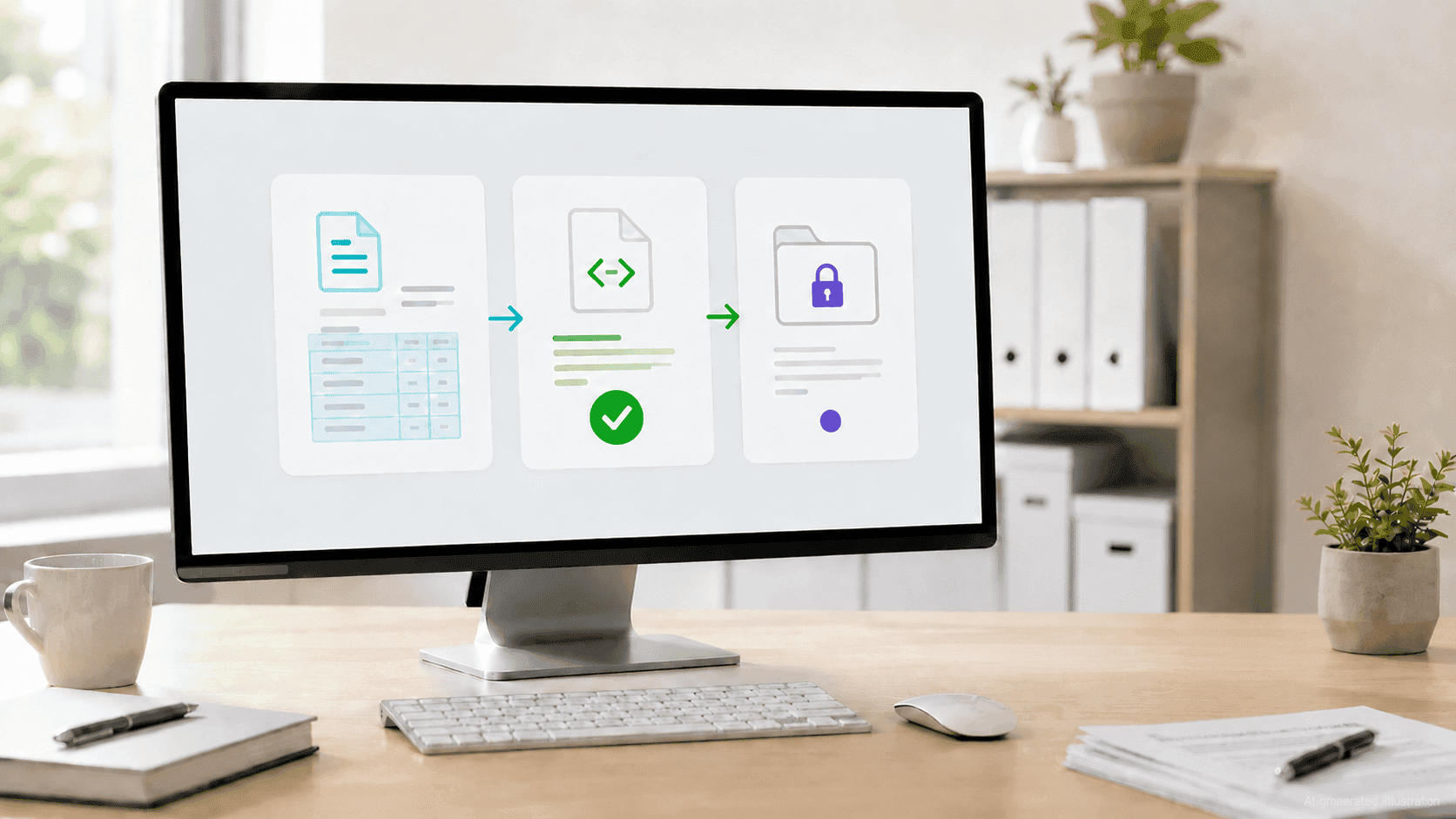
Finance team reviewing a Romanian RO e-Factura electronic invoice workflow

RO e-Factura Romania 2026: Foreign Company Guide

RO e-Factura in Romania is no longer only a local accounting issue. A foreign company may be affected because it has a Romanian subsidiary, a fixed establishment, a Romanian VAT registration, domestic transactions or Romanian customers. The correct result depends on the company’s VAT status and the transaction—not simply on the country in which the parent company is incorporated.

Key points for 2026:

  • From 1 January 2026, the statutory transmission deadline is generally five working days, subject to the separate legal deadline for issuing the invoice.
  • A Romanian VAT number alone does not necessarily mean that a foreign company is established in Romania.
  • Domestic B2B clearance, reporting by a non-established supplier and invoices to a foreign Romanian-VAT-registered customer must be classified separately.
  • When RO e-Factura is mandatory, a PDF is not a substitute for the validated structured electronic invoice.
  • The operational record should preserve the XML, the Ministry of Finance electronic seal or validation response, submission evidence and any corrected invoice.

This guide updates the existing Atrium article for the 2026 rules and is intended for foreign investors, finance teams, Romanian subsidiaries and non-resident businesses with Romanian VAT exposure. It should be read together with advice on Romanian tax law and, where a foreign entity needs a local fiscal identifier, the guide to obtaining a Romanian NIF tax identification number.

RO e-Factura compliance in Romania for foreign companies
RO e-Factura compliance workflow for companies operating in Romania. AI-generated illustration.

What changed for RO e-Factura in 2026?

The most important operational change is the move from five calendar days to five working days. The change was introduced through Government Emergency Ordinance no. 89/2025, which amended OUG no. 120/2021 and replaced the previous five-calendar-day transmission deadline with a five-working-day deadline effective from 1 January 2026. See also the explanatory summaries published by Contabilul and VATupdate. The deadline runs from the invoice issue date, but it cannot extend beyond five working days calculated from the statutory deadline for issuing that invoice under the Romanian Fiscal Code. Public holidays and the precise date from which the period is calculated should therefore be built into the company’s controls.

2026 pointPractical meaningControl to implement
Five working daysThe transmission period is counted in working days from 1 January 2026, subject to the invoice-issuance backstop.Use a Romanian working-day calendar and escalate before the final day.
Foreign VAT customersA Romanian-established supplier may have reporting duties for domestic invoices issued to a non-established customer registered for VAT in Romania.Separate establishment, VAT registration and invoice-delivery status in customer master data.
Special B2C exceptionsFrom 1 June 2026, Law 88/2026 introduced optional treatment for certain natural persons and specifically listed categories.Do not treat every individual customer record as identical.
Older guidanceMaterials referring to the calendar-day deadline, future 2025 B2C implementation or obsolete registration forms may be outdated.Version-control procedures and use current ANAF forms and legislation.
Scope selector
Which foreign-company profile are you assessing?

Select the closest profile. The explanation below is a screening result, not a substitute for transaction-level VAT analysis.

Romanian subsidiary

A Romanian company making domestic B2B supplies is ordinarily within the mandatory domestic system. Map invoice types, credentials, software and recipient status before go-live.

Does RO e-Factura apply to a foreign company?

There is no reliable yes-or-no answer based only on the existence of a Romanian VAT number. The analysis should identify the supplier, customer, place of supply, establishment used for the transaction, VAT-registration status and invoice category.

A Romanian subsidiary is a Romanian-established taxable person. A foreign company may also have a Romanian fixed establishment if the relevant VAT tests concerning sufficient permanence and human and technical resources are met. By contrast, a foreign company can be registered for Romanian VAT without being established in Romania.

Particular care is required where a foreign company is not established in Romania but holds a Romanian VAT registration. Such businesses should not automatically be analysed under the same mandatory domestic B2B clearance rules that apply to taxable persons established in Romania. Their obligations must be verified separately under the specific provisions applicable to non-established VAT-registered persons and any optional RO e-Factura registration route.

Business situationLikely RO e-Factura treatmentQuestion requiring verification
Romanian subsidiary invoices a Romanian businessDomestic B2B clearance is generally mandatory.Are any statutory exclusions or special invoice rules relevant?
Foreign company supplies through a Romanian fixed establishmentThe entity may be treated as established for the relevant transaction.Is the Romanian establishment actually involved in the supply?
Foreign company has only a Romanian VAT registrationVAT registration alone does not create a Romanian establishment. Any reporting obligations should be assessed separately from the mandatory domestic B2B clearance regime applicable to established taxable persons.What is the place of supply and has the company opted into the system?
Romanian supplier invoices a non-established customer registered for Romanian VATReporting obligations should be analysed under the specific rules applicable from 1 January 2026. Additional commercial transmission arrangements may still be required depending on the recipient’s status and access to the system.Is the recipient participating in RO e-Factura or only VAT-registered?
Export, intra-Community supply or service with place of supply abroadGenerally outside the domestic B2B exchange rule, subject to transaction-specific reporting.Is the VAT classification and evidence supporting the cross-border treatment correct?

Important distinction: an obligation to report invoice data is not always identical to full platform exchange between supplier and recipient. A non-established business should confirm whether it is reporting a domestic transaction, voluntarily registered in RO e-Factura or subject to the domestic clearance route because of a Romanian establishment.

How does the electronic invoice flow work?

The invoice is prepared as structured data compliant with the Romanian semantic model, based on the European e-invoicing standard. It is transmitted through the Ministry of Finance infrastructure, commonly through SPV-integrated software or an authorised technical solution. The system validates the file. If validation succeeds, the electronic seal is applied and the validated file becomes the system invoice. If it fails, the issuer receives an error response and must correct and resubmit it.

Invoice flow
From accounting data to defensible archive

Select a control point to see what the finance or IT team should retain.

Create structured XML

Generate the invoice from accurate supplier, customer, VAT and line-item data using the current RO_CIUS technical rules.

The official platform makes files available for download for a limited operational period. This is not a substitute for the company’s own legally compliant archive. The archive should allow the original XML, seal or validation status, readable representation, correction trail and accounting entry to be matched.

Technical specifications, validators and official web applications are published through the Ministry of Finance technical information page and the RO e-Factura web applications page.

Which transactions are in scope?

The Romanian rules cover several legally distinct streams: B2B, B2G and B2C reporting, as well as particular reporting obligations for non-established persons. Companies should not use a single ERP flag called “Romanian customer” as a substitute for the legal analysis.

The B2C reporting regime introduced for suppliers established in Romania should not automatically be assumed to apply to every non-resident supplier. For foreign businesses without a Romanian establishment, the legal position should be verified separately based on the applicable provisions and transaction structure.

Transaction2026 starting positionOperational note
Domestic B2B between persons established in RomaniaMandatory platform exchange, unless a statutory exclusion applies.The validated XML is the legally relevant electronic invoice.
B2G invoice within the statutory regimeMandatory according to the public-procurement and e-invoicing rules.Check public authority identifiers and contract references.
B2C invoice issued by an established supplierReporting is generally mandatory, with specific 2026 exceptions.The consumer does not need SPV access for the commercial invoice.
Domestic transaction by a non-established VAT-registered supplierA reporting obligation may apply; optional system registration changes the mechanics.Confirm current registration form and recipient-delivery channel.
Export or intra-Community supplyGenerally outside the domestic B2B exchange obligation.Retain evidence supporting the VAT treatment and destination.
Simplified invoice or other statutory exceptionTreatment depends on the specific legal exception.Do not infer exclusion merely because the amount is small.

How is the five-working-day deadline calculated?

From 1 January 2026, the invoice must generally be transmitted within five working days from the issue date, but no later than five working days after the last legal date on which the invoice should have been issued. The day of the triggering event, weekends and Romanian public holidays can affect the calculation under the applicable time-computation rules.

A delayed invoice issue date does not automatically postpone the transmission deadline. Where the invoice is issued after the statutory issuance deadline under Article 319 of the Romanian Fiscal Code, the five-working-day transmission period must be assessed by reference to the legal issuance deadline rather than the late issuance date. This backstop is also explained in the 2026 deadline summary.

Deadline control
A working-day clock needs four checks

Select a card to see the control that prevents a false deadline.

Confirm issue date

Use the date actually stated on the invoice and reconcile it with the accounting event. Backdating or delayed batch creation can create an immediate compliance risk.

For example, if an invoice is issued on a Monday and there is no public holiday, Tuesday is ordinarily the first working day and the following Monday is the fifth. This is only an illustration: the statutory invoice-issuance deadline and Romanian public holidays must also be checked.

What happens if an invoice fails validation?

A technically rejected file has not completed the required process. The response should be triaged immediately: identify whether the problem concerns syntax, master data, tax codes, totals or a business-rule conflict; correct the source data; regenerate the XML; resubmit it; and preserve both the failed and successful responses.

A successfully communicated invoice cannot simply be “returned” inside the system. Commercial objections should be handled separately, and corrections should follow Article 330 of the Romanian Fiscal Code. The corrective document must itself be transmitted when the RO e-Factura obligation applies.

What penalties and audit risks should foreign companies consider?

The penalty analysis depends on the legal obligation that has been breached. Late reporting can attract fixed fines by taxpayer category. For mandatory domestic B2B exchange, issuing or accepting an invoice outside the system can trigger a percentage-based sanction. The 15% sanction should not be applied mechanically to every cross-border or non-resident scenario without first confirming that the relevant statutory route covers the transaction and party.

The applicability of the 15% sanction should always be assessed by reference to the specific statutory obligation governing the transaction, including the supplier’s establishment status and the legal route under which the invoice was required to be transmitted.

RiskPossible consequencePreventive evidence
One or more late invoices in a calendar monthGenerally RON 5,000–10,000 for large taxpayers; RON 2,500–5,000 for medium taxpayers; RON 1,000–2,500 for other legal persons and individuals.Deadline dashboard, submission timestamps and exception log.
Mandatory domestic B2B invoice issued outside the systemA sanction equal to 15% of the total invoice value may apply to the issuer under the relevant rule.ERP block preventing off-system finalisation of in-scope invoices.
Recipient records an in-scope domestic B2B invoice received outside the systemA corresponding 15% sanction may apply to the recipient, subject to the statutory conditions.Accounts-payable validation against the system record.
Validation failure left unresolvedThe invoice may remain untransmitted and become late.Error queue, named owner, retry log and successful response.
Wrong establishment or customer classificationIncorrect platform route, missing report or duplicate delivery.Documented VAT and establishment decision tree.
Control map
Where implementation most often fails

Select a risk to see the corresponding control.

Wrong customer status

Maintain separate fields for country, Romanian VAT number, establishment status, customer type and participation in RO e-Factura. One “foreign” flag is not enough.

Implementation checklist for a foreign company

  1. Map the Romanian footprint. Identify subsidiaries, branches, fixed establishments, VAT registrations and fiscal representatives.
  2. Classify transaction flows. Separate domestic B2B, B2G, B2C, exports, intra-Community supplies, local reverse-charge cases and other cross-border services.
  3. Confirm access and authority. Verify SPV access, qualified certificates, mandates and the persons authorised to submit or retrieve files.
  4. Update master data. Record establishment status, Romanian VAT identifiers, customer type and system-participation status separately.
  5. Test XML generation. Validate tax codes, units, discounts, advance invoices, credit notes, currency and rounding rules.
  6. Build deadline monitoring. Use Romanian working days, identify the statutory issue-date backstop and prevent submission only on the final day.
  7. Create an error workflow. Route rejected files to a named owner and require documented resubmission.
  8. Control incoming invoices. Reconcile accounts payable with RO e-Factura where domestic B2B exchange is mandatory.
  9. Archive the evidence. Preserve XML, seal or response, readable copy, corrections and submission logs under the applicable accounting and tax-retention rules.
  10. Review changes. Monitor the official Ministry of Finance RO e-Factura hub, current legislation and ANAF technical announcements.

Official registration and verification resources

At the time of publication, ANAF documentation refers to Form 081 for the optional register, Form 082 for the mandatory register and Form 083 for certain non-resident operators. Companies should verify the current ANAF form catalogue before implementation, as registration procedures and form numbering may change over time.

At the time of publication, Form 083 is generally used by certain non-established operators wishing to opt into RO e-Factura. Companies should verify the current ANAF requirements before filing because registration procedures may change.

Use the official ANAF forms catalogue and the ANAF online registers. For the governing framework, consult the current consolidated text of Government Emergency Ordinance no. 120/2021, together with subsequent amendments including Law no. 88/2026.

Need a transaction-specific RO e-Factura review?

A focused review can determine whether a foreign company is established, merely VAT-registered or subject to a separate domestic reporting route, and translate that conclusion into an implementable invoice workflow.

Book a Consultation

Frequently asked questions

Does a Romanian VAT number make a foreign company established in Romania?

No. VAT registration and establishment are separate concepts. A fixed-establishment analysis considers permanence and appropriate human and technical resources, as well as whether that establishment is involved in the transaction. A Romanian VAT registration obtained through direct registration or fiscal representation does not in itself create a Romanian fixed establishment for VAT purposes.

Are all invoices involving a foreign company reported through RO e-Factura?

No. The result depends on the supplier, customer, place of supply, establishment status, Romanian VAT registration and invoice category. Exports and intra-Community supplies are generally outside the domestic B2B exchange rule, although other reporting obligations may apply.

What is the RO e-Factura deadline in 2026?

From 1 January 2026, the general transmission deadline is five working days from issue, but no later than five working days calculated from the statutory deadline for issuing the invoice. Romanian public holidays and the applicable time-computation rules must be included.

Is a PDF invoice sufficient?

Not where mandatory RO e-Factura exchange applies. The structured XML validated through the system and accompanied by the Ministry of Finance electronic seal is the legally relevant electronic invoice. A PDF may remain useful as a readable copy.

Can a recipient reject an invoice in RO e-Factura?

The system invoice cannot simply be returned. The recipient may communicate objections, while any correction should follow Article 330 of the Fiscal Code and be transmitted through RO e-Factura when the obligation applies.

What should a company do after a validation error or platform problem?

Preserve the response and technical logs, identify and correct the error, resubmit promptly and retain the successful confirmation. A company should not assume that a technical issue automatically extends the statutory deadline; any official unavailability procedure should be checked on the facts.

This article provides general information on Romanian electronic invoicing and tax compliance. The result depends on the transaction, place of supply, establishment, VAT status, invoice type, technical implementation and legislation in force. It does not replace legal or tax advice on a specific invoice flow.

AI Notice: AI-assisted content, reviewed and approved by a qualified Romanian lawyer.