Cinematic photo illustration of property investment in Romania, featuring Romanian landmarks, residential real estate, legal contract, and investment symbols, representing a 2026 legal and real estate buying guide.

Buying Property In Romania: The 2026 Ultimate Legal & Investment Guide


Buying Property In Romania: The 2026 Ultimate Legal & Investment Guide

Master the process of buying property in Romania with our 2026 expert guide. Discover essential due diligence steps, latest market statistics, and legal requirements to avoid pitfalls and maximize ROI.


Need Professional Help?

At our law firm, Atrium Romanian Lawyers, we assist clients with real estate law and property purchases.


What is the Current State of Buying Property in Romania?

Definition: Buying property in Romania is the legal process by which a natural or legal person acquires ownership of real estate through a notarized Sales-Purchase Agreement (SPA).

As of early 2026, the Romanian residential market remains one of the most affordable in the European Union on a price-to-income basis. However, rapid appreciation in cities like Cluj-Napoca and Bucharest has intensified the need for rigorous due diligence.

1. New Construction vs. Old Buildings

Choosing between new and old stock is the primary decision for any buyer.

New Developments (Post-2010)

Modern apartments offer energy efficiency and contemporary standards.

Old Buildings (Pre-1990)

Older apartments often have superior central locations but hidden structural risks.

2. Step-by-Step Process for Buying Property in Romania

  1. Reservation Agreement: A small deposit to take the property off market for 7–14 days.
  2. Legal Due Diligence: Your lawyer verifies the Land Registry, Fiscal Certificate, and historical deeds.
  3. Pre-Sale Agreement (Antecontract): A notarized document with 5%–15% deposit.
  4. Bank Valuation: If using a mortgage, the bank evaluates the property value.
  5. Final Sales-Purchase Agreement: Signed before a Notary Public. Ownership transfer recorded immediately.

3. Essential Documentation Checklist

Use the interactive tool below to evaluate your potential property:

Property Analyzer Tool

Strategic Real Estate Analysis for the Romanian Market

🏗️ New Apartments

⏰ Old Apartments

🏠 Technical Assessment

Risk Assessment: 0% Complete

Start checking items to evaluate your property.

Sellers

Buyers

Risk Assessment: 0% Complete

Start checking items to evaluate your property.

Do you prefer a central location or a new developing neighborhood?

Can you afford renovation costs or do you need immediate move-in?

If renting, does the area have high and stable demand?

Is the real rental yield above 5-6%?


FAQ – Buying Property in Romania

Q: Can foreigners buy property in Romania?

A: Yes. EU citizens can buy land and buildings under the same conditions as Romanians.

Q: What are the closing costs for a buyer?

A: Budget between 1% and 3% of the property price for notary fees and legal diligence.

Q: How long does the process take?

A: Cash: 3-5 days. Mortgage: 30-60 days.

Q: What is property transfer tax?

A: 1% for values up to 450,000 RON; 3% above.


Why Professional Legal Support is Mandatory

The Romanian real estate market is “Caveat Emptor” (Buyer Beware). Professional legal advisors provide expert oversight to prevent financial traps.

Disclaimer: This article is for general information only. Consult a qualified Romanian lawyer before proceeding with a property purchase.

Business lawyer assisting foreign company with branch office registration in Romania

How to Register a Branch Office of a Foreign Company in Romania


How to Register a Branch Office of a Foreign Company in Romania

Setting up a branch office in Romania offers foreign companies a strategic foothold in the European market. This comprehensive guide provides an overview of the process to register a branch in Romania, ensuring compliance with Romanian regulations and maximizing your business potential. From understanding the nuances of Romanian law to navigating the National Trade Register Office, we’ll walk you through each step.


Need Professional Help?

At our law firm, Atrium Romanian Lawyers, we assist clients with corporate & commercial law, branch registration, and investor-friendly advisory services.


Understanding Branch Offices in Romania

A receptionist welcoming visitors at the front desk of the office.

What is a Branch Office?

A branch office in Romania serves as an extension of the parent company, allowing it to conduct activities in Romania without creating a separate legal personality. Essentially, registering a branch is establishing a physical office in Romania that operates under the umbrella of the existing foreign company. Unlike a Romanian subsidiary, the branch office shares the same legal entity as its parent company, simplifying administrative processes while expanding its reach.

Branch vs. Subsidiary: Key Differences

TypeDescription
Branch OfficeExtension of parent company without separate legal personality; parent is directly liable
SubsidiaryDistinct legal entity with own capital; provides liability protection to parent

Benefits of Establishing a Branch in Romania

  • Test the Romanian market and gain insights before committing to a full-fledged subsidiary
  • Simpler and faster registration process compared to forming a new Romanian legal entity
  • Lower initial setup costs and reduced administrative burden
  • Leverage the established brand and resources of the parent company
  • Direct representation in the European Union market

Legal Framework for Foreign Companies

A close-up of legal documents and a pen on a desk.

Romanian Companies Law 31/1990

The Romanian Companies Law 31/1990 is the cornerstone of corporate governance in Romania, influencing how foreign companies can establish a branch. This law defines the legal entities permitted to operate in Romania and outlines the requirements for company formation, including registering a branch. Understanding this legislation is vital for foreign investors aiming to register a branch in Romania, ensuring compliance with local regulations.

Foreign Branch Legal Requirements

To register a branch in Romania, foreign companies must meet specific legal requirements:

  • Submit parent company’s registration documents, translated and notarized, to the National Trade Register Office (ONRC)
  • Ensure the branch representative has power of attorney to register and legally bind the company
  • Provide a registered office address in Romania with proof of occupancy
  • Define the scope of activities through CAEN codes

Registration with ONRC Romania

The National Trade Register Office (ONRC) is the central authority for registering a branch in Romania. The process involves filing necessary documents, including the parent company’s details, the decision to open a branch, and the appointment of the branch representative. Once approved, the branch office receives a unique registration number and tax identification code, allowing it to operate legally.

Atrium Romanian Law Office is an expert legal services provider based in Romania, specifically in Bucharest. The firm’s team of experienced Romanian lawyers and professionals are equipped to resolve any legal issue in a timely manner. They offer guidance through the branch registration process, ensuring full compliance with Romanian law.


Step-by-Step Registration Process

A checklist with steps for registration is pinned on a bulletin board.

Phase 1: Preparation of Required Documents

  • Parent company’s articles of association and certificate of incorporation
  • Board resolution authorizing the establishment of the branch
  • Proof of legal existence of the parent company
  • Details of the branch representative and their power of attorney
  • Business plan detailing planned activities in Romania

All foreign documents must be officially translated into Romanian and notarized. This preparation is crucial for avoiding delays with ONRC.

Phase 2: Branch Registration with ONRC

  • Submit all prepared registration documents to ONRC (in person or online)
  • Pay the registration fee (typically €50-€100)
  • ONRC reviews documents for compliance with Romanian legal requirements
  • Upon approval, receive registration certificate and unique fiscal code
  • Branch receives official publication in the Commercial Register

Phase 3: Tax Registration with ANAF

Phase 4: Post-Registration Formalities

  • Open business bank account in Romania
  • Register for social security and employment purposes
  • Apply for sector-specific licenses or permits if required
  • Notify relevant authorities of branch operations

Key Responsibilities After Registration

A computer screen displaying a business registration form.

Role of the Branch Representative

The branch representative holds significant responsibilities:

  • Acts on behalf of the parent company in all matters related to the branch
  • Is authorized to make decisions and enter into contracts
  • Must be a resident of Romania or an EU citizen with valid residence permit
  • Ensures compliance with all Romanian legal and regulatory requirements
  • Serves as the main point of contact with Romanian authorities

Parent Company Obligations

The parent company maintains certain obligations:

  • Remains ultimately liable for all activities conducted by the Romanian branch
  • Must ensure the branch adheres to Romanian legal standards
  • Is responsible for financial reporting and tax compliance
  • Must promptly communicate changes to structure or articles of association
  • Must maintain adequate insurance coverage for branch operations

Common Pitfalls & How to Avoid Them

Two people are discussing documents in a meeting room.
  • Incomplete translations — Ensure all documents are properly translated and notarized by qualified professionals
  • Inadequate branch representative — Choose a qualified individual familiar with Romanian business practices
  • Tax compliance issues — Establish robust accounting and tax reporting procedures from the start
  • Incorrect CAEN codes — Define business activities carefully to match registration requirements
  • Delayed bank account opening — Prepare all documentation in advance to expedite the process
  • Missing sector licenses — Identify and obtain all required permits before commencing operations

Useful Resources & Links


FAQ – Branch Registration in Romania

Q: What is a branch office of a foreign company in Romania?

A: A branch office is an extension of the parent company located abroad. It operates under Romanian laws while representing the foreign legal person and can engage in various business activities.

Q: How long does it take to register a branch in Romania?

A: The registration process typically takes 2-4 weeks, depending on the completeness of submitted documents and ONRC processing time.

Q: What are the registration costs?

A: Costs typically range from €500-€1,500, including ONRC fees, translation and notarization services, publication fees, and optional legal advisory services.

Q: Can a foreign company open multiple branches in Romania?

A: Yes, a foreign company can open multiple branches. However, each branch must be registered separately and comply with local laws and regulations.

Q: What is the difference between a branch and a representative office?

A: A branch can engage in commercial activities and generate revenue, while a representative office is limited to promoting the parent company’s interests without engaging in direct business activities.

Q: Is the branch representative required to be Romanian?

A: The branch representative must be a resident of Romania or an EU citizen with a valid residence permit. They don’t need to be Romanian by nationality.

Q: What are the tax implications for a branch?

A: A branch is subject to corporate income tax on income generated within Romania. It must register for VAT if annual turnover exceeds EUR 88,500 and comply with Romanian tax regulations.

Q: What documents are required to register a branch?

A: Required documents include the parent company’s incorporation certificate, articles of association, proof of legal existence, branch representative details, power of attorney, and information about planned activities.

Q: Can changes be made to the branch after registration?

A: Yes, changes such as branch representative, registered office, or scope of activities must be reported to ONRC. The parent company must ensure all modifications are properly documented and filed.


Disclaimer: This article is for general information only and does not constitute legal advice. Please consult with a qualified Romanian corporate lawyer to verify current laws and regulations before proceeding with branch registration. Laws and procedures are subject to change, and individual circumstances may vary.

cadastral documentation Romania

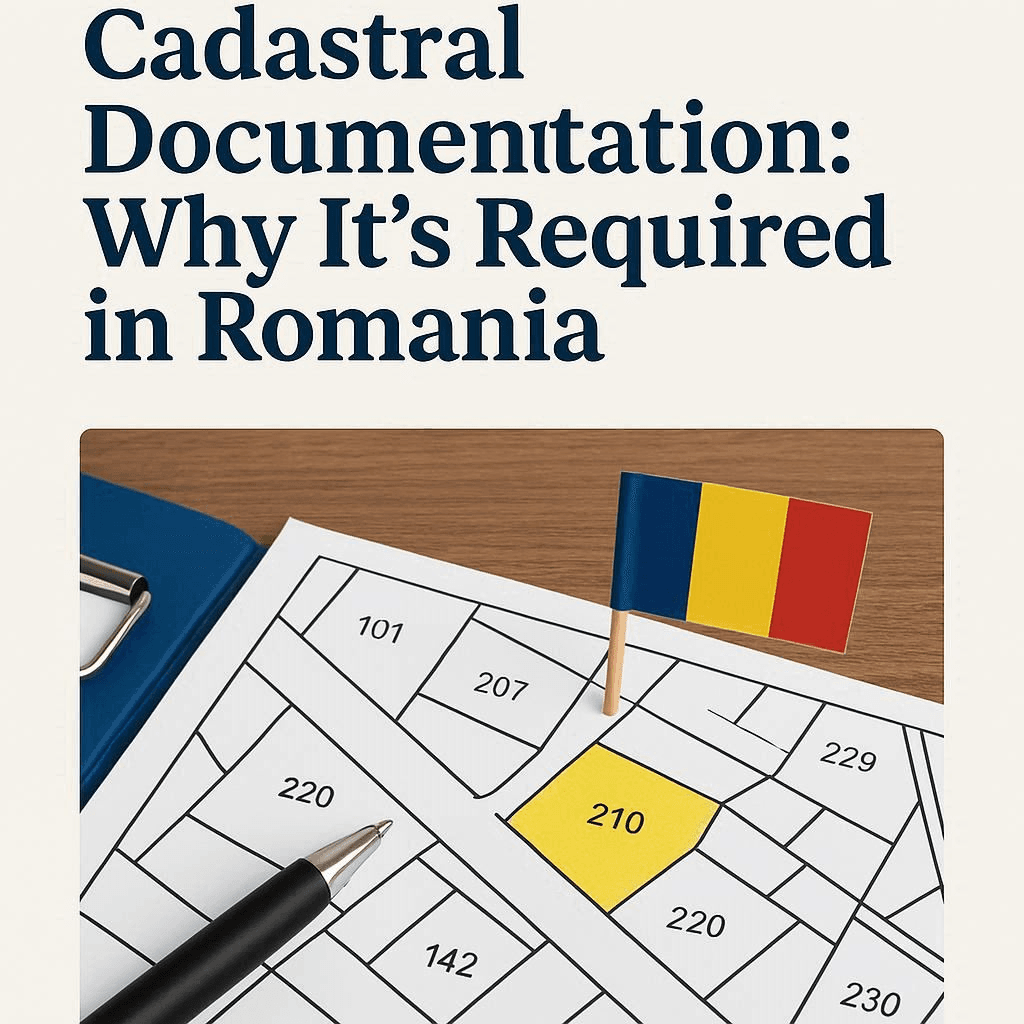
Cadastral Documentation: Why It’s Required in Romania

Cadastral Documentation: Why It’s Required in Romania

What if the key to securing your property rights in Romania isn’t just about owning land—but proving it in a way the law recognizes?

For buyers, sellers, and investors, this question underscores a critical reality: formalized records are the backbone of legally binding transactions.

A person is examining a detailed map of land parcels.

Romania’s integrated framework merges technical and legal processes to ensure accuracy in ownership details.

Every parcel undergoes rigorous verification before entering the national registry.

This system prevents disputes by creating an immutable record that shields owners from unauthorized claims.

The process involves collaboration between cadastral offices and real estate departments.

Technical surveys and legal validations occur simultaneously, streamlining approvals.

Delays in documentation can derail sales or financing, making compliance non-negotiable for smooth transactions.

For tailored guidance, contact office@theromanianlawyers.com.

Our team navigates these requirements daily, ensuring clients meet all obligations efficiently.

Key Takeaways

  • Romania’s property system requires precise technical and legal alignment for valid ownership,
  • Integrated workflows prevent errors and accelerate registration timelines,
  • Third-party claims lose validity without proper cadastral verification,
  • Delays in documentation expose owners to financial and legal risks,
  • Professional support minimizes hurdles in complex cases.

Understanding Cadastral Documentation in Romania

Romania’s property system relies on a structured framework where technical precision meets legal validity.

This foundation ensures every land registry entry reflects accurate ownership details and physical characteristics.

A map showing property boundaries and land divisions.

Definition and Key Components

Cadastral files combine technical surveys with legal descriptions.

They include boundary markers, exact surface measurements, and unique identification numbers assigned during registration.

These documents also contain geospatial plans that map the estate’s layout.

Authorized surveyors and legal experts collaborate to verify each detail.

Errors in boundary data or ownership records can invalidate transactions.

Professionals ensure compliance with national legislation to prevent disputes.

Historical Context and Evolution

Romania’s modern cadastral system has evolved through various historical influences, with significant development occurring during different administrative periods.

The current integrated system represents decades of modernization efforts to align with European Union standards.

Contemporary reforms integrated digital mapping with established processes.

Today’s estate records blend historical archives with real-time updates.

This evolution maintains continuity while addressing modern ownership complexities.

Cadastral Documentation and Why is It Required in Romania

A group of people discussing over a table filled with paperwork and charts.

Romanian legislation mandates strict protocols for validating property boundaries and ownership transfers.

These protocols serve as the foundation for all real estate transactions, ensuring every modification aligns with national standards.

Key Legal Requirements and Registration Effects

Under Romanian law, formalizing land divisions or mergers requires comprehensive technical verification.

This process applies during initial registrations and subsequent changes like boundary adjustments.

Authorized surveyors must validate measurement accuracy and confirm the credentials of involved professionals.

Each submission undergoes a multi-step review.

Inspectors cross-reference graphic databases to locate the site and ensure surface calculations match physical dimensions.

Discrepancies between descriptive details and visual representations trigger immediate revisions.

Upon approval, properties receive unique identifiers that lock their status in the national system.

These codes become critical references for future transactions or legal disputes.

Properly executed registrations grant owners enforceable rights against third-party claims.

They also activate the property’s eligibility for entries in Romania’s land book—a decisive factor in securing financing or completing sales.

Non-compliant submissions face rejection, requiring costly resubmissions.

Errors in surface data or boundary markers can delay land development projects significantly, emphasizing the need for precision from the outset.

Integration of Cadaster and Land Registry Systems

Romania’s property governance model eliminates bureaucratic silos through a cohesive institutional design.

The Romanain land registry and cadaster operate under one administrative umbrella, merging technical precision with legal validation.

This structural integration accelerates decision-making while maintaining rigorous standards.

Several colorful folders are neatly organized on a shelf labeled with different property names.

Unified Workflow in Land Book Registrations

Applications for property registration follow a synchronized process.

Technical surveys and legal validations are processed within the same department, removing redundant steps.

A single documentation file combines geospatial maps, boundary certifications, and ownership proofs.

The system routes files between cadastral inspectors and real estate publicity teams automatically.

Technical specialists verify measurement accuracy, while legal experts confirm compliance with ownership transfer rules.

Approved data flows directly into Part A of the land book, ensuring alignment between physical boundaries and registered rights.

Key advantages of this approach include:

  • Reduced processing times through parallel technical-legal reviews,
  • Eliminated discrepancies between registry entries and physical sites,
  • Centralized access to updated property information.

This integration minimizes errors that traditionally arise when separate institutions handle cadastral and registry tasks.

Real estate professionals benefit from predictable timelines, while owners gain enforceable rights backed by unified records.

Process and Legal Considerations for Cadastral Documentation

Navigating Romania’s property registration framework demands strict adherence to sequential technical and legal phases.

This structured approach protects ownership rights while maintaining alignment with national standards.

A close-up of a stamp on a completed application form.

Steps from Technical Verification to Legal Registration

The procedure unfolds through six critical stages:

  1. Preparer validation: Confirm credentials of professionals who drafted the documents,
  2. Database cross-check: Locate property in the national graphics system using coordinates,
  3. Surface verification: Audit mathematical accuracy of land measurements,
  4. Attribute correlation: Match written descriptions with graphical representations,
  5. Number assignment: Issue unique identifiers for unregistered properties,
  6. Final review: Cadastral inspector approves or flags discrepancies.

Ensuring Compliance with Romanian Law

Authorities reject submissions failing these legal benchmarks:

RequirementComplete DocumentationIncomplete Cases
Technical ActsPrecision-matched dataSurface calculation errors
Legal StandardsOwnership chain verifiedMissing notarized signatures
Time ImpactProcessing varies by complexityExtended delays and resubmissions

Non-compliant cases trigger detailed deficiency reports.

These outline exact corrections needed for resubmission.

Proper execution prevents third-party claims and ensures enforceable rights under Romanian statutes.

Implications for Real Estate and Property Transactions

Romania’s real estate market operates on a simple principle: no valid registration equals no enforceable rights.

The land registry acts as the ultimate authority for verifying ownership before any transaction closes.

This system protects buyers from inheriting unresolved disputes or hidden claims.

A computer screen displaying a digital cadastral map with highlighted properties.

Impact on Land Sale and Ownership Proof

Without registry entries, sellers cannot legally prove they own the property.

Notaries refuse to authenticate sales contracts for unregistered parcels, blocking transfers entirely.

Banks similarly reject mortgage applications tied to undocumented estates.

Common scenarios demonstrate these consequences:

ScenarioWith Proper DocumentsMissing Documents
Residential SaleProcessing within standard timeframesContract voided
Land DevelopmentFinancing approvedBank refusal
Inheritance TransferSmooth ownership changeExtended court proceedings

Proper registration creates a public record accessible to buyers, lenders, and authorities.

This transparency accelerates due diligence and reduces fraud risks.

Updated entries also increase property values by confirming marketability.

Maintaining current records helps avoid transaction delays and ensures compliance as boundaries or zoning laws change.

Legal Solutions and Alternative Approaches

When traditional property registration isn’t an option, Romanian law offers alternative pathways to secure ownership rights.

These mechanisms address complex scenarios where standard documentation remains unavailable or incomplete.


Noting Possession and Alternative Procedures

Individuals using land without formal ownership documents can request a notation of possession.

This legal step initiates a period during which third parties may contest the claim.

If no disputes arise, property rights may be formally registered through court proceedings.

Usucapion and Property Acquisition

Romanian law recognizes usucapion (adverse possession) as a method of acquiring property rights through prolonged possession.

Under current legislation, individuals who can demonstrate continuous, uninterrupted, and public possession for specified periods may acquire ownership rights.

The Civil Code establishes that those who possessed property for 10 years may become owners through adverse possession (extratabulară).

For situations involving longer periods, 30-year usucapion (acquisitive prescription) may apply depending on specific circumstances and legal requirements.

Resolving Complex Ownership Scenarios

Successful usucapion requires proving public, peaceful, and uninterrupted control of the land.

Authorized companies handle complex procedures for cases involving partial deeds or indirect evidence.

This process often becomes critical during inheritance disputes involving properties with unclear documentation.

Multiple heir situations demand specialized strategies to prevent prolonged litigation.

Legal professionals help owners navigate these complexities while protecting against future obstacles in mortgage or sale processes.

Consulting experienced attorneys ensures compliance with evolving registration standards.

Their guidance minimizes risks in both standard and alternative ownership validation processes.

Expert Insights and Best Practices in Cadastral Documentation

Navigating property records demands precision only specialists can deliver.

Romania’s framework assigns distinct roles to owners, professionals, and regulators to maintain system integrity.

O persoană arătând cu degetul la un teren pe un document.

Expert Guidance and the Role of Authorized Professionals

Licensed surveyors and legal practitioners handle technical evaluations under the National Agency for Cadaster and Land Registration.

These experts:

  • Verify boundary markers using GPS technology,
  • Cross-reference historical maps with current site conditions,
  • Certify that legal descriptions match physical characteristics.

Property owners must identify and preserve their boundaries.

Professionals bear responsibility for measurement accuracy, while inspectors validate data before issuing registration numbers.

Ensuring Data Accuracy and Timely Updates

Regular updates prevent conflicts during sales or inheritance transfers.

Key maintenance practices include:

ActionFrequencyResponsible Party
Boundary checksEvery 5 yearsOwner
Record auditsPost-constructionAuthorized surveyor
System updatesReal-timeCadastral office

Disputed cases require immediate legal intervention.

For complex scenarios like overlapping estate claims, contact office@theromanianlawyers.com.

Professional legal teams specialize in resolving boundary disputes efficiently.

Proactive monitoring of zoning changes safeguards rights.

Specialists recommend digital alerts for land registration amendments affecting your assets.

Conclusion

Securing property rights in Romania hinges on meticulous adherence to legal frameworks governing land records.

The integrated system combining technical precision with legal validation ensures transparent transactions while preventing ownership disputes.

From standard registrations to resolving complex cases, compliance protects all involved parties.

Authorized professionals play a critical role in verifying boundaries and maintaining error-free documentation.

Their expertise streamlines the process, whether handling routine updates or alternative acquisition methods.

Proactive management of real estate records remains essential for financing eligibility and conflict prevention.

Regular audits and immediate corrections uphold the integrity of Romania’s land registry framework.

For tailored guidance on navigating these requirements, contact office@theromanianlawyers.com.

Professional legal teams provide comprehensive support to ensure your assets remain protected under national law.

FAQ

What legal effects does land registration have in Romania?

Registration in the Land Book grants enforceable rights against third parties and validates ownership transfers.

It serves as the primary proof of legal title under Romanian law, ensuring transparency in transactions like sales or mortgages.

How does the cadaster system integrate with property registration?

Romania’s unified system combines cadastral data (physical boundaries, area) with the Land Registry’s legal records.

This integration streamlines workflows, reduces errors, and ensures accurate verification during transactions.

What steps are involved in obtaining cadastral documentation?

The process includes technical verification by licensed surveyors, boundary confirmation with neighbors, submission to the Cadaster Office, and final Land Book registration.

Compliance with zoning laws and notarization of legal acts is mandatory.

Why is cadastral documentation critical for real estate sales?

It confirms lawful ownership, clarifies boundaries, and identifies encumbrances like mortgages.

Buyers require this data to assess risks, secure financing, and complete transactions recognized by Romanian authorities.

Can property rights be established without full registration?

Temporary possession claims may be noted in the Land Book, but usucapion (adverse possession) or specialized procedures are required for full rights.

These alternatives involve court validation and strict evidence standards.

How do professionals ensure cadastral data accuracy?

Authorized surveyors, notaries, and lawyers cross-check records, resolve boundary disputes, and update entries for new constructions or subdivisions.

Regular audits by the National Agency for Cadaster prevent discrepancies.

What happens if a property has unresolved boundary issues?

Transactions may be delayed until disputes are settled via mediation or court rulings.

The Cadaster Office flags such cases, requiring updated technical plans and neighbor agreements before registration.

 
Romanian Company Board Meetings

Navigating Romanian Company Board Meetings: Key Insights

Navigating Romanian Company Board Meetings: Key Insights

A group of people sits around a large conference table with papers and laptops in front of them.

Understanding the nuances of Romanian company board meetings is important for anyone involved in the management of companies in Romania.

This article provides key insights into the structure, legal requirements, and best practices for conducting effective board meetings in accordance with Romanian company law.

We will explore the roles and responsibilities of directors, shareholders, and other key stakeholders in the Romanian corporate governance landscape.

Understanding the Structure of Romanian Companies

A projector displays a presentation on the wall with graphs and charts.

Overview of Atrium Romanian Lawyers

Romanian company law dictates the formation, operation, and governance of various types of companies in Romania.

The type of company significantly impacts its organizational structure and the regulations governing its board meetings.

Atrium Romanian Law Office, an expert legal services provider, highlights that Romanian lawyers must navigate these regulations meticulously.

The Articles of Association define the company’s internal rules, complementing the broader legal framework and influencing how the board of directors operates and how resolutions of the general meetings are implemented.

Types of Romanian Companies

Romania provides various legal entity options, each possessing unique attributes.

Two frequently chosen forms are:

  1. Limited liability companies (SRL), which are often preferred by smaller businesses due to their simpler organizational structures.
  2. Joint-stock companies (SA), designed for larger enterprises and characterized by more complex governance procedures.

Ultimately, the selection between these legal structures will influence the company’s meeting and decision-making protocols.

Legal Entities and Their Responsibilities

As legal entities, Romanian companies bear specific responsibilities under Romanian law.

The board of directors, or the management board, plays a pivotal role in overseeing the company’s operations and ensuring compliance.

Members of the board are entrusted with representing the company, and their actions must align with both the law and the company’s articles of association.

The company is managed in accordance with the law, and the directors or the management board are responsible for preparing financial statements of the company and filing them with the Trade Registry.

Shareholder Meetings in Romania

A clock on the wall shows the time during the meeting.

Types of Shareholder Meetings

Under Romanian company law, various types of shareholder meetings serve distinct purposes.

These meetings are critical for the management of companies, ensuring transparency and shareholder involvement.

For example:

  1. The annual general meeting is a mandatory gathering where shareholders review the financial statements of the company and elect the board of directors or supervisory board.
  2. Extraordinary general meetings are convened to address specific, urgent issues such as amending the articles of association, increasing the share capital of the company, or approving significant transactions.

Convene Procedures for Shareholder Meetings

To convene a shareholder meeting, Romanian companies must adhere to specific procedures.

The board of directors, or in some cases, the supervisory board, must issue a notice to all shareholders, detailing the meeting’s agenda, date, time, and location.

This notice must be sent within the timeframe prescribed by Romanian company law and the company’s articles of association.

Failing to follow these procedures may invalidate the resolutions of the general meetings passed during the meeting, potentially leading to legal challenges.

Amending Resolutions in Shareholder Meetings

Shareholders can amend resolutions during the shareholder meeting under Romanian law, provided the proposed amendments are within the scope of the original agenda.

The process typically involves a motion to amend, followed by a vote among the shareholders.

For significant amendments, such as those affecting the articles of association, a supermajority vote may be required, and the amended resolution must be filed with the Trade registry.

Understanding these procedures is vital for effective corporate governance in Romanian companies.

The Role of the Board of Directors

A woman presenting a report on a screen in front of the board.

Composition of the Board of Directors

The composition of the board of directors is a critical element in the management of the company.

Under Romanian company law, the Articles of association of Romanian companies will specify the number of members of the board, their qualifications, and the process for their appointment.

In joint stock companies, the shareholder structure dictates that some directors or the management board are appointed by the general meeting of shareholders, ensuring the shareholder interests are adequately represented.

This structure aims to balance expertise and shareholder oversight.

Duties and Responsibilities of Board Members

Members of the board have extensive duties and responsibilities under Romanian law.

They are entrusted with the strategic direction of the company in Romania, ensuring compliance with regulations, and safeguarding the interests of all shareholders.

The board of directors is responsible for overseeing the financial statements of the company, ensuring their accuracy and timely filing with the trade registry.

In joint stock companies, the board also manages risk, sets policy, and monitors the performance of the management board, upholding their fiduciary duty to the company.

Decision-Making Processes in Board Meetings

Effective decision-making in board meetings is crucial for the success of Romanian companies.

The process typically involves presenting agenda items, facilitating discussion, and voting on resolutions.

The Articles of association often prescribe specific voting thresholds for different types of decisions.

For significant matters, such as amending the Articles of Association or increasing the share capital of the company, a qualified majority or even unanimous consent may be required.

Proper documentation of these decisions in the meeting minutes is essential for transparency and accountability, and the minutes should be filed with the trade registry as appropriate.

General Meetings: Best Practices

Several individuals are engaged in discussion, with some taking notes.

Planning and Conducting General Meetings

Effective planning is essential for successful general meetings in Romanian companies.

The board of directors must meticulously plan the agenda, ensuring all relevant items are included and clearly defined.

Romanian company law mandates that the Articles of Association dictate the specific procedures for these meetings.

As an expert legal services provider, we emphasize that proper notice must be given to all shareholders, and the meeting should be convened in a manner that promotes transparency and active participation, whether for limited liability companies or joint stock companies.

We are dedicated to helping our clients navigate these processes smoothly.

Legal Requirements for General Meetings

Adherence to legal requirements is paramount for general meetings in Romania.

Romanian law stipulates specific rules for voting, quorum, and documentation of resolutions of the general meetings.

The board of directors must ensure that all procedures align with both Romanian company law and the articles of association.

Members of the board must understand that failure to comply can invalidate the meeting’s outcomes, potentially leading to legal challenges.

Our firm provides expert guidance to Romanian companies in navigating these complex legal obligations, ensuring compliance and protecting shareholder interests.

Best Practices for Effective Communication

Effective communication is a cornerstone of successful general meetings.

Members of the board should ensure that information is presented clearly and concisely, allowing all shareholders to understand the issues at hand.

In Romanian companies, this includes providing materials in Romanian and, potentially, other languages if international shareholders are involved.

Encouraging open dialogue and addressing shareholder concerns promotes trust and transparency.

As a client-focused firm, we emphasize the importance of proactive communication to facilitate productive and legally sound board meetings.

Recent Developments in Romanian Company Law

Documents and folders are neatly arranged on the table for review.

Changes Impacting Board Meetings

Recent changes in Romanian company law have significantly impacted board meetings.

Amendments related to corporate governance and shareholder rights necessitate that directors or the management board stay informed and adapt their practices accordingly.

These changes may affect procedures for votes, the handling of resolutions, and the overall management of the company.

As an expert team of Romanian lawyers, we closely monitor these developments and provide timely advice to our clients, ensuring their companies remain compliant and competitive.

These updates are particularly relevant for both limited liability companies and joint stock companies.

Emerging Trends in Corporate Governance

Emerging trends in corporate governance are reshaping how Romanian companies conduct board meetings.

There is a growing emphasis on transparency, accountability, and environmental, social, and governance (ESG) factors.

Companies are increasingly adopting digital solutions to streamline meeting processes and enhance shareholder engagement.

The articles of association of Romanian companies are evolving to reflect these trends, often requiring more detailed reporting and greater shareholder involvement.

We assist our clients in integrating these best practices to enhance their corporate governance frameworks and attract investment.

Case Studies of Successful Board Practices

Examining case studies of successful board practices provides valuable insights for Romanian companies.

Instances where board meetings effectively addressed critical challenges, implemented innovative strategies, or improved shareholder relations offer practical lessons.

These examples often highlight the importance of diverse members of the board, robust decision-making processes, and proactive risk management.

We leverage our experience and expertise to help clients implement similar strategies, fostering a culture of excellence and driving sustainable growth for Romanian companies across various sectors, including both limited liability and joint stock companies.

FAQ:

What are the requirements for conducting board meetings in Romania?

In Romania, board meetings must comply with the applicable legislation, which includes the requirements set forth by the Romanian legislation.

Companies are required to convene meetings in accordance with their articles of association, which dictate the procedures shareholders must follow.

Additionally, the meeting must be held at the registered office or another location specified in the convening notice.

How can shareholders participate and vote in general shareholder meetings?

Shareholders can participate and vote in general shareholder meetings either in person or through electronic means.

The recent legal framework removes the requirement for companies to include identification data in the meeting notice, making it easier for shareholders to engage in the voting process, including the use of electronic voting in general.

What is the role of the supervisory board in Romanian companies?

The supervisory board is responsible for overseeing the management of the company and may appoint one or more directors.

Members of the supervisory board are appointed either directly by shareholders or through the general shareholder meeting, which can delegate this authority.

Their role is crucial in ensuring that the company adheres to the current legal framework concerning operational and strategic decisions.

How does electronic communication impact board meetings in Romania?

Electronic communication has transformed the way board meetings are conducted in Romania.

Companies may now utilize electronic means to convene meetings, allowing for greater flexibility and accessibility.

This shift aligns with the needs of the business, enabling stakeholders to participate remotely while ensuring compliance with the legal requirements set forth in the recent amendments to Romanian law.

What happens if a company fails to comply with the legal framework during a board meeting?

If a company fails to comply with the legal framework concerning board meetings, it may face legal repercussions, including invalidation of decisions made during the meeting.

The current legal framework emphasizes the importance of adhering to the stipulated procedures, such as ensuring that the convening notice is published at least 30 days prior to the meeting and that all necessary documentation is submitted.

Can a company hold a general shareholder meeting without the presence of all shareholders?

A general shareholders’ meeting may proceed without the attendance of all shareholders, as long as the required quorum is met.

Shareholders representing the absolute majority of the share capital must be present, either in person or via electronic means, for decisions to be valid.

The company’s articles of association typically specify the exact quorum requirements.

What are the implications of the deadline of 6 December 2024 for Romanian companies?

The deadline of 6 December 2024 is significant as it marks the date by which companies must comply with the new legal framework concerning board meetings and shareholder communications.

Companies that fail to meet these requirements may face penalties or other legal consequences.

It is essential for companies to stay informed and adjust their procedures accordingly to ensure compliance with the amended legislation.

How do secondary offices relate to board meetings in Romania?

Board meetings are generally held at the registered office.

Secondary offices may play a role in the operations of a company, particularly for those with representative offices in different locations.

However, companies may also convene them at secondary offices, provided this is specified in the articles of association.

This allows for greater flexibility in operations and can help accommodate shareholders who may be located in various regions.

Navigating Collective Labor Agreements in Romania

Navigating Collective Labor Agreements in Romania

Collective Labor Agreement Romania

In 2023, Romania’s labor laws changed a lot.

More than 67% of businesses were affected by new rules on collective bargaining.

These changes have made a big difference in how jobs are set up and managed.

To understand collective bargaining in Romania, you need to know about the latest laws.

These laws have made it clearer and more organized for workers to negotiate at work.

The Ministry of Labor and Social Solidarity made big changes with Order no. 798/2023.

This order sets up a clear way to group businesses and handle negotiations at the sector level.

It’s all about making sure everyone follows the same rules in different industries.

Key Takeaways

  • New legislative framework implemented in 2023;
  • Enhanced transparency in collective bargaining;
  • Standardized classification of business units;
  • Improved protection of employee rights;
  • Sector-level negotiation opportunities expanded;
  • Clear guidelines for employment contracts.

Understanding the Legal Framework of Romanian Labor Laws

 Legal Framework of Romanian Labor Laws


Understanding Romanian labor laws is complex.

The Romanian labor code is key, guiding employers and employees. It sets the rules for the workplace.

Recently, employment laws in Romania have changed a lot.

New rules aim to protect workers better and improve talks between employers and employees.

Key Legislation Governing Labor Relations

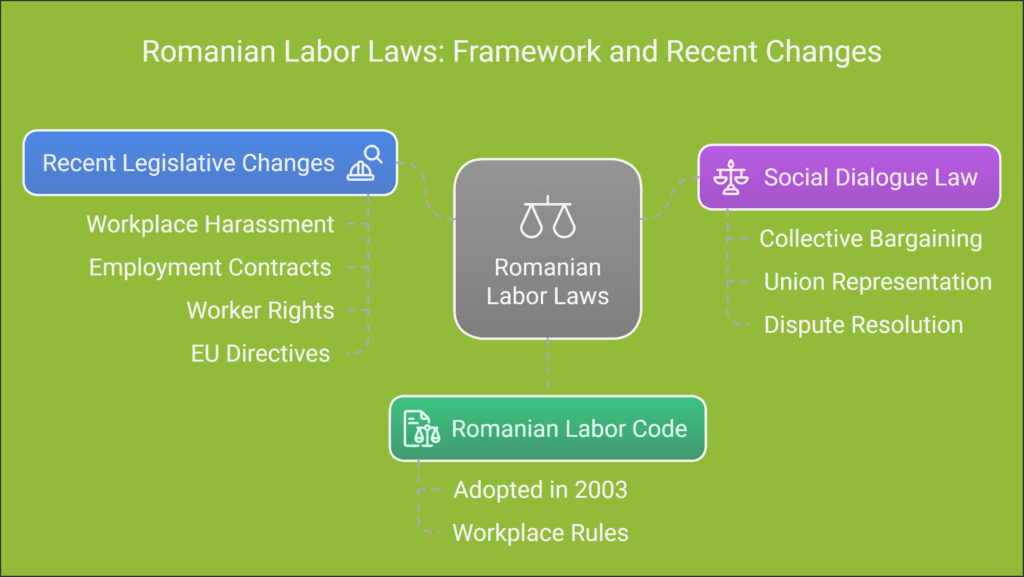
Romania’s labor laws are based on several important laws:

  • The Romanian Labor Code (adopted in 2003);
  • Social Dialogue Law (Law No. 367/2022);
  • Constitutional provisions;
  • European Union employment directives;
  • International Labor Organization (ILO) standards.

Social Dialogue Law Overview

The Social Dialogue Law is a big step forward.

It makes sure employers and workers talk openly.

It helps solve problems and negotiate better.

Legislative AspectKey Requirement
Collective BargainingMandatory for companies with 10+ employees
Union RepresentationMinimum 35% employee membership for company-level recognition
Dispute ResolutionStructured mediation processes established

Recent Legislative Changes in 2023-2024

Romania’s labor laws keep changing. Recent updates focus on:

  1. Stopping workplace harassment better;
  2. Making employment contracts clearer;
  3. Protecting workers’ rights more;
  4. Following EU employment rules.

It’s vital for businesses in Romania to know these laws.

This ensures they follow the rules and have good relationships with workers.

Mandatory Collective Bargaining Requirements

It’s important for employers and employees in Romania to know about collective bargaining rules. New laws have changed how labor talks work. It’s key to keep up with these changes.

Collective Bargaining Romania

Now, companies with 10 or more workers must do collective bargaining.

This is a big change from the old rule of 21 workers.

The government wants to protect workers more and improve work agreements.

  • Collective bargaining is now compulsory for companies employing 10+ workers;
  • Written agreements must be registered with the Territorial Labor Inspectorate;
  • Negotiation period cannot exceed 60 days without mutual agreement.

Employers must follow certain steps when starting labor talks.

They need to start talks at least 45 days before the current contract ends.

If they don’t, workers or unions can ask for talks in writing within 10 days.

Important things about union talks in Romania include:

  1. Collective agreements must be written and registered officially;
  2. Agreement duration ranges from 12 to 24 months;
  3. One-time extension of 12 months is permitted;
  4. Parties must document each negotiation meeting with signed minutes.

Trade unions are very important in these talks.

A union can start at a company with 15 members and get recognized with 35% of the workers.

This helps workers have a say in their rights and work conditions.

Role of Trade Unions and Employee Representatives

Role of Trade Unions and Employee Representatives

It’s important to know how workers are represented in Romania.

Trade unions play a big role in protecting workers’ rights.

They help with negotiations in many industries.

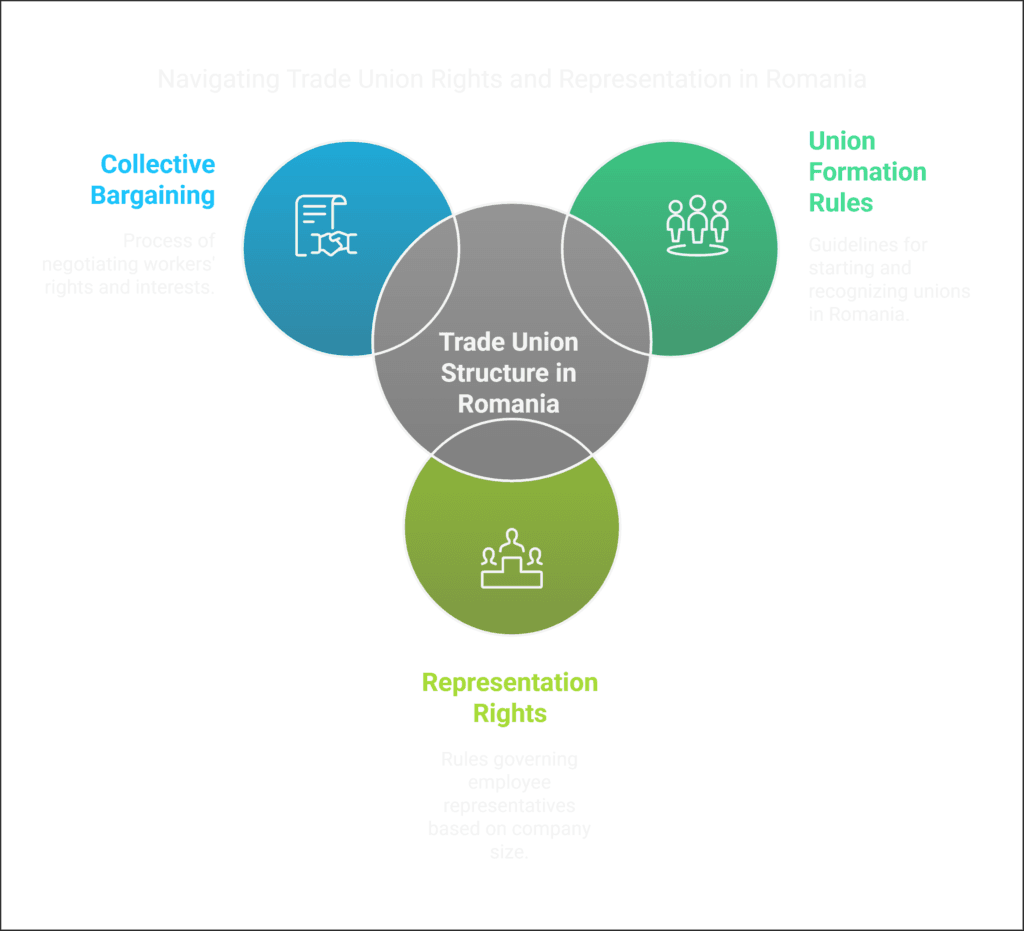
Labor unions in Romania have rules for starting and representing workers.

Here are the main steps to form workers’ associations:

  • At least 10 employees in the same company can start a union.
  • 20 employees from different companies in the same sector can also start a union.
  • A union must have at least 35% of company employees to be recognized.

Union Formation and Representation Rights

The rules for union representation in Romania are clear.

Companies have specific rules for choosing representatives based on their size:

Company SizeMaximum Representatives
Less than 100 employees2 representatives
101-500 employees3 representatives
501-1000 employees4 representatives
1001-2000 employees5 representatives
Over 2000 employees6 representatives

Collective Bargaining Priority

Workers’ voices are important in negotiations in Romania.

Representatives need at least 50% + 1 vote from employees.

They can only represent workers for two years.

Non-representative unions can also join negotiations if they have at least 7% of sector employees.

Collective Labor Agreement Romania: Essential Components

Collective Labor Agreement Romania Essential Components

Understanding the key parts of collective labor agreements in Romania is vital for protecting workers’ rights.

These agreements are detailed plans that cover important aspects of work and employee safety.

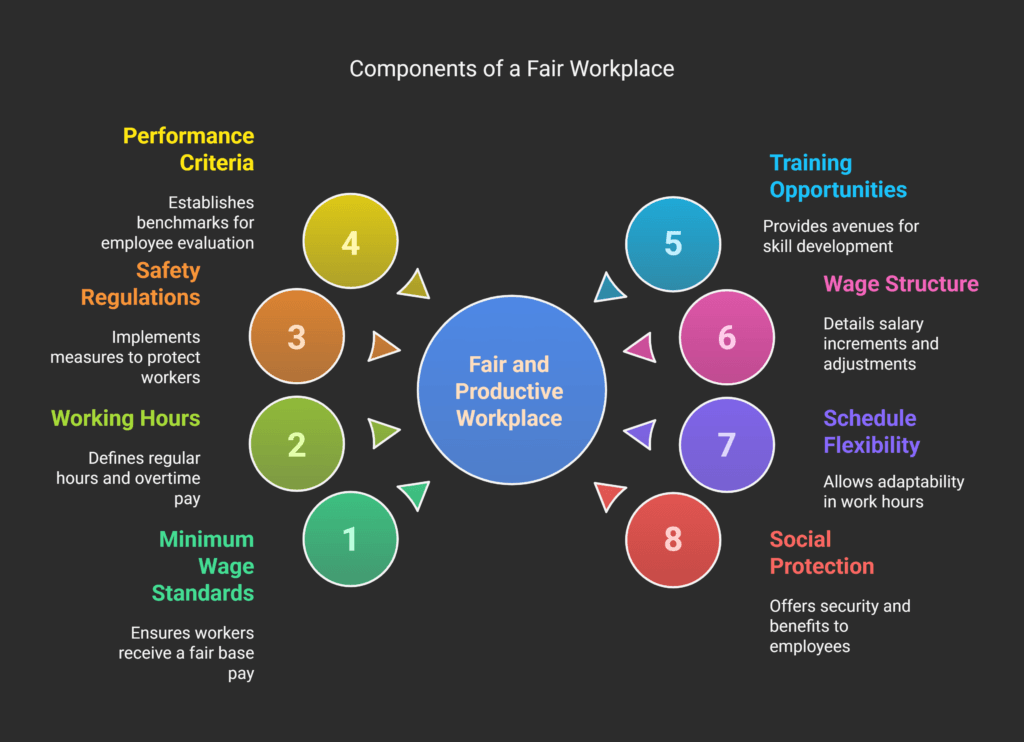
The main parts of these agreements focus on several key areas.

They affect how workers are treated and what benefits they get:

  • Minimum wage standards for different job categories;
  • Detailed working hours and overtime compensation;
  • Workplace safety regulations;
  • Performance evaluation criteria;
  • Employee training and development opportunities.

Romanian labor laws have specific rules for these agreements.

Since 2011, changes have made it easier for workers to talk about their jobs.

Now, only 10 employees are needed to start collective negotiations.

Important parts of these agreements include:

  1. Wage structure and salary increments;
  2. Work schedule flexibility;
  3. Social protection mechanisms;
  4. Dispute resolution procedures;
  5. Professional development pathways.

Employers need to see these agreements as more than just paperwork.

They are essential for keeping workplaces fair and productive.

By negotiating and implementing strong agreements, companies can build better relationships with their employees.

They also make sure they follow Romania’s changing labor laws.

Negotiation Process and Procedures

Negotiating collective bargaining in Romania needs a smart plan.

It’s about structured talks between employers and unions.

This ensures rules in the workplace are followed well.

Knowing the legal rules for labor talks is key.

Romanian laws set out clear steps for both sides to follow.

Initiating Collective Bargaining

Starting collective bargaining involves several important steps:

  • Employers with over 10 workers must start talks;
  • They must tell employees 15 days before talks begin;
  • Talks should start 60 days before the current deal ends.

Documentation Requirements

Keeping detailed records is vital in Romanian labor talks. The negotiation process needs accurate and formal documents.

DocumentPurposeCopies Required
Collective Labor AgreementFormal negotiation outcome3 copies (company, employees, Labor Inspectorate)
Negotiation MinutesRecord of discussions2 copies (each party)
Representative Voting RecordsValidate employee representation1 copy (company)

Timeline and Deadlines

Romanian rules set strict times for bargaining:

  1. Maximum negotiation time: 45 days;
  2. Extension possible: Up to 12 months with agreement;
  3. Deal length: 12-24 months.

Ignoring these rules can lead to big fines.

Fines can be between 5,000 to 20,000 RON.

Sector-Level Collective Bargaining

Sector-level collective bargaining is now key in Romania’s industrial relations.

New laws have changed how employers and workers make agreements in different sectors.

Key features of sector-level collective bargaining include:

  • Mandatory bargaining for employers with at least 10 employees;
  • Recognition of unions representing 35% of workers at sector level;
  • Potential extension of agreements to entire sectors under specific conditions.

The new rules change how workplace disputes are solved.

They make it clear what employer groups in Romania must do.

Companies now have to follow more detailed rules for bargaining, focusing on workers’ voices.

Notable developments in sector-level collective bargaining include:

  1. Reduced union establishment thresholds;
  2. Simplified negotiation timelines;
  3. Enhanced protections for employee representatives.

Romania is leading the EU in changing collective labor agreements.

The goal is to get workers more involved and make industrial relations clearer in various sectors.

Employers must now get ready for detailed negotiations at the sector level.

These agreements will influence industry standards for jobs, pay, and work conditions.

Implementation and Compliance Measures

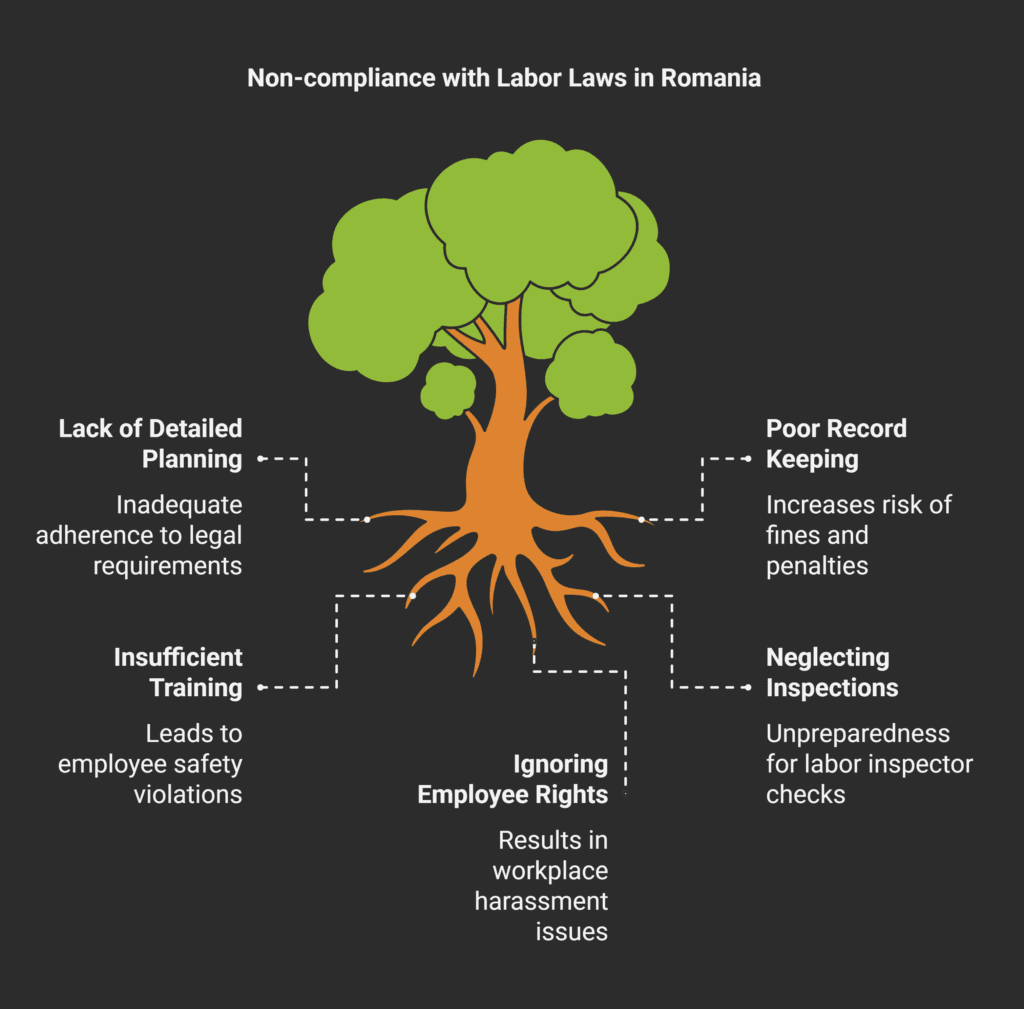
Non-compliance Labor Laws Romania

To follow labor laws in Romania, employers need a detailed plan.

They must carefully follow collective labor agreements and legal rules.

It’s important to handle work regulations in Romania with great care.

Here are some key steps for employers:

  • Register all employment contracts in the electronic Revisal system;
  • Do mandatory risk assessments for employee health and safety;
  • Give the right protective gear and training;
  • Keep accurate records of employee information;
  • Set up systems for handling employee complaints.

Labor inspectors are key in checking if employee protection standards are met.

They do deep checks to make sure workers’ compensation rules are followed.

Your company should be ready for inspections by keeping detailed records and fixing any issues early.

Important compliance rules cover many areas of employee rights and duties.

This includes:

  1. Keeping all employment contracts on file;
  2. Updating payroll statements regularly;
  3. Telling labor authorities about service contracts;
  4. Having rules against workplace harassment;
  5. Ensuring fair chances in hiring and promotions.

Not following the rules can lead to big fines.

Fines can be between RON 5,000 and RON 100,000, based on the violation.

It’s crucial to manage well and do regular checks to avoid problems and keep the workplace legal.

Legal Support and Professional Assistance

Understanding collective labor agreements in Romania needs the help of a professional Romanian law office.

A skilled lawyer in Bucharest can guide you through the complex legal landscape of employment disputes in Romania.

We will make sure your organization follows strict labor regulations.

Legal consultants are key in managing collective bargaining processes and help prepare documents, understand Social Dialogue Law, and avoid legal risks.

With fines up to RON 20,000 for mistakes, having expert lawyers in Bucharest is vital for your business.

Role of Legal Consultants

Your Romanian lawyer will explain the rules for collective bargaining, especially for companies with 10 or more employees.

Our Law firm offers strategic advice on negotiations, documents, and ensuring your organization meets Romanian Labor Code standards.

Documentation Requirements

Getting professional legal help is important for employment documents.

Bucharest lawyers can create detailed collective labor agreements, handle employee representation, and keep up with Romanian labor laws.

For specialized legal help, contact us.

FAQ

What is a Collective Labor Agreement in Romania?

A Collective Labor Agreement is a legal document.

It’s made by employers and trade unions.

It sets rules for work, rights, and duties for employees in a company or sector.

It covers important things like pay, hours, benefits, and how to solve problems.

Who is required to participate in collective bargaining in Romania?

Companies with 10 or more employees must bargain collectively.

Employers and trade unions must both take part.

New laws have made it easier for smaller groups to bargain.

How do I form a trade union in Romania?

To start a trade union, you need 10 workers from the same field.

You must register with the court and show you’re independent from employers.

The union must also have a fair structure.

What are the key components of a Collective Labor Agreement?

A Collective Labor Agreement in Romania has many parts.

It includes the minimum wage, work conditions, and benefits.

It also covers hours, overtime, training, health, and how to solve problems.

These parts are talked about to protect both workers and employers.

What is sector-level collective bargaining?

Sector-level bargaining makes agreements for whole industries.

These agreements set rules for wages, work, and benefits for all in a sector.

It makes work rules the same for everyone in that field.

What happens if an employer does not comply with a Collective Labor Agreement?

If an employer breaks a Collective Labor Agreement, they could face fines or lawsuits.

They might have to fix the problem, pay for it, or get in trouble with labor authorities.

How long are Collective Labor Agreements valid in Romania?

Collective Labor Agreements last 12 to 24 months.

After that, the parties must talk about new terms.

The old agreement stays in place until a new one is made or until it’s decided to end it.

Can individual employment contracts deviate from the Collective Labor Agreement?

No, individual contracts can’t be worse than the Collective Labor Agreement.

Employers must make sure individual contracts are at least as good as the agreement.

What role do legal consultants play in collective bargaining?

Legal consultants help with labor laws and making agreements.

They check if rules are followed, help in talks, and solve disputes.

Their knowledge is key in understanding labor laws in Romania.

How are disputes resolved in Collective Labor Agreements?

Disputes are usually solved through talking, mediation, or arbitration.

If that doesn’t work, they can go to court.

The agreement usually says how to solve problems between employers and employees.

Accidents at Work in Romania: Insights from Bucharest Lawyers

Accidents at Work in Romania: Insights from Bucharest Lawyers

accidents at work in Romania

Did you know Romania sees over 4,000 workplace accidents every year?

The construction and industrial sectors have the most incidents.

Knowing your rights and the legal protections is key to staying safe at work.

It’s important to understand the occupational hazards in Romania.

This knowledge helps protect you and your career.

Whether you work in construction, energy, or IT, knowing your rights is vital for safety and compensation.

Workplace safety in Romania is governed by strict laws.

These laws aim to prevent industrial accidents and protect workers.

The Romanian Labor Code outlines the rules employers must follow to keep workers safe.

Key Takeaways:

  • Romania has specific legal protections for workplace safety;
  • Construction and industrial sectors face higher accident risks;
  • Employers must establish health and safety committees;
  • Comprehensive documentation of workplace incidents is mandatory;
  • Employees have specific rights in case of workplace accidents.

If you need expert legal advice on workplace accidents in Romania, contact an Employment Lawyer in Bucharest.

Our team offer professional support and advice.

Understanding Workplace Safety in Romania: Legal Framework

Romanian Workplace Safety Regulations

Working in Romania means knowing the laws that keep everyone safe.

The laws are strong, making sure everyone follows the rules.

This is true for all kinds of jobs.

Key Labor Law Regulations

The laws in Romania are clear about keeping workers safe.

The main laws are:

  • Law No. 53/2003 (Labor Code)
  • Law 319/2006 on safety and health at work
  • OUG 137/2000 on prevention and discrimination
  • Law No. 202/2002 on equal opportunities

Employer Obligations Under Romanian Law

Employers in Romania must do a lot to keep the workplace safe.

They must:

  1. Do detailed workplace inspections Romania to find dangers;
  2. Give all workers the safety training they need;
  3. Give out free personal protective equipment (PPE);
  4. Tell the labor inspectorates about serious accidents within 24 hours.

Employee Rights and Protections

Romanian law gives workers big rights.

They have the right to:

  • Say no to unsafe work without getting in trouble;
  • Get the safety training they need;
  • Get compensation for work injuries;
  • Be safe from workplace discrimination.

Knowing these laws helps make a safer work place.

It makes sure everyone is treated fairly and safely.

Common Types of Workplace Accidents in Romania

Workplace Injuries in Romania

Exploring workplace injuries in Romania is key for keeping employees safe.

Knowing the most common accidents helps prevent them in different industries.

Romania’s workplace accident statistics show clear patterns in various sectors.

These patterns highlight the daily risks workers face.

This makes it vital for employers to assess risks in Romania.

  • Manufacturing sector experiences high accident rates;
  • Construction industry shows significant workplace injury risks;
  • Transportation and storage sectors report frequent incidents.

Romania’s safety laws require detailed accident reports.

By analyzing these, employers can create better prevention plans.

SectorMost Common Accident TypesInjury Percentage
ManufacturingMachine-related accidents29.4%
ConstructionFalls and tool-related injuries19.5%
TransportationMovement-related incidents12.1%

Workers’ compensation in Romania is vital for understanding these injury trends.

Losing control of machines is the top cause of accidents, making up 20.3% of non-fatal incidents.

By grasping these patterns, you can improve workplace safety.

This helps reduce risks in Romanian industries.

Legal Requirements for Workplace Safety Measures

Workplace safety in Romania

In Romania, protecting workers is a top priority.

The laws are strong, making sure everyone is safe at work.

Law No. 319/2006 sets clear rules for keeping workers safe and what employers must do.

Romanian labor laws require specific safety steps.

These rules help keep workers safe from harm.

They aim to reduce risks and protect employees.

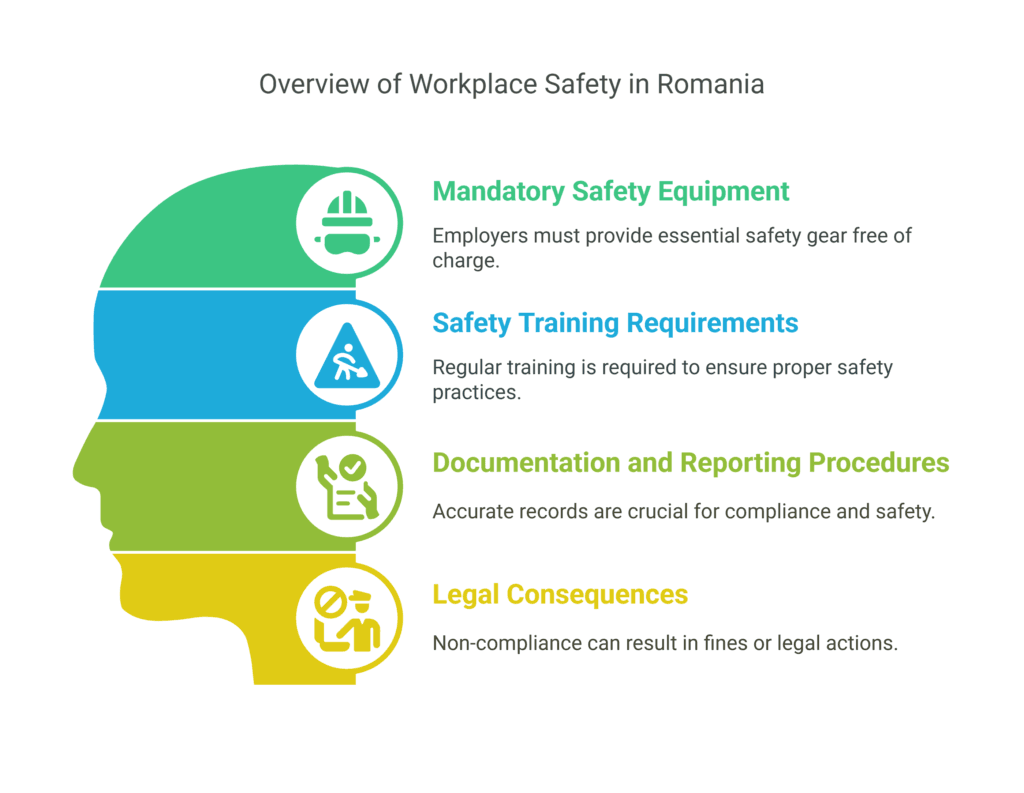
Mandatory Safety Equipment

Employers must give workers the safety gear they need for free.

This includes:

  • Personal Protective Equipment (PPE);
  • Protective clothing for job risks;
  • Safety helmets for construction;
  • Special gear for dangerous places.

Safety Training Requirements

Good safety training is key for workers’ rights.

Employers need to offer regular training. It should cover:

  1. Finding and dealing with hazards;
  2. Using safety gear right;
  3. What to do in emergencies;
  4. How to lower risks.

Documentation and Reporting Procedures

Keeping accurate records is vital for safety.

Employers must keep up with:

  • Workplace risk checks;
  • Training logs;
  • Accident reports;
  • Records of safety equipment checks.

The Labor Inspectorate checks these rules.

Breaking them can lead to fines up to 10,000 RON.

Serious cases might even mean stopping work or facing criminal charges.

This shows how important safety at work is.

Worker Compensation and Benefits in Romania

Worker Compensation and Benefits in Romania

It’s important to know about worker compensation laws in Romania.

These laws protect your rights at work.

They ensure you get the help you need after an accident.

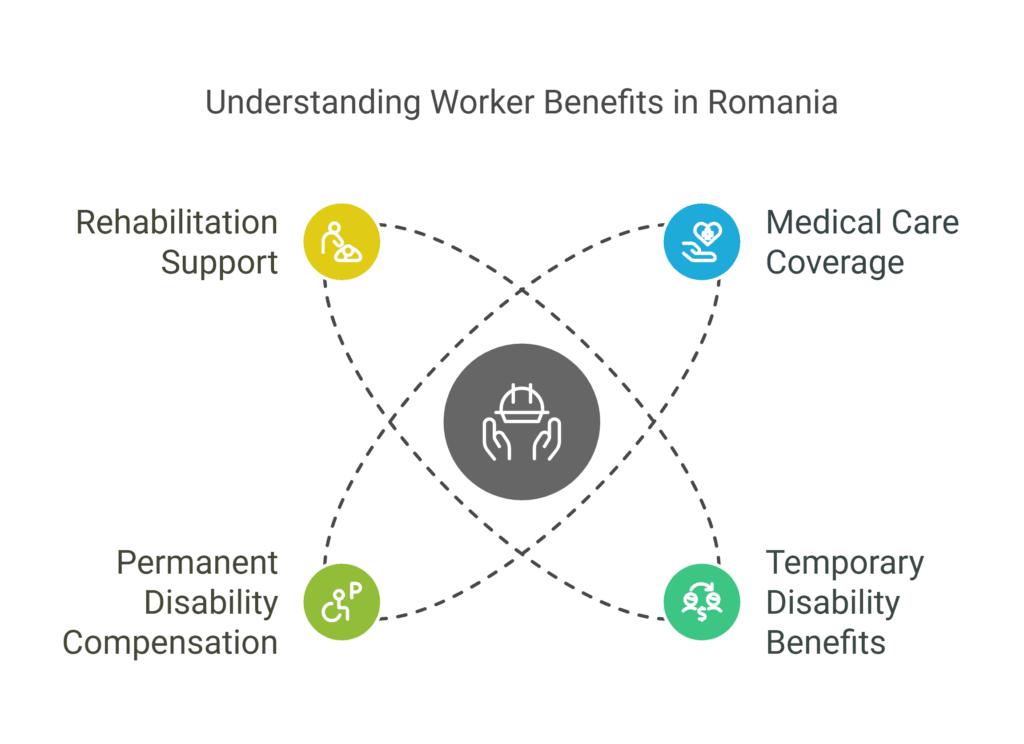
Here are some key benefits you get:

  • Medical care coverage for work-related injuries;
  • Temporary disability benefits;
  • Permanent disability compensation;
  • Rehabilitation support.

The laws in Romania have clear rules for compensation.

If you get hurt at work, you get money based on how bad the injury is.

Benefit TypeCoverage PercentageDuration
Temporary Disability75-100% of average salaryUp to 180 days
Permanent DisabilityVaries by disability gradeLong-term support
Medical ExpensesFull coverageAs needed

To get these benefits, you need to follow certain steps.

It’s important to report accidents quickly to get your rights.

Assessments help figure out how much you should get.

Money for these benefits comes from both employers and employees.

Accidents at Work in Romania: Statistics and Trends

Accidents at Work in Romania_ Statistics and Trends

Workplace safety is key, and Romania offers insights into job site inspections and preventing accidents.

This knowledge helps employers and employees make workplaces safer.

In 2020, Romania had some of the lowest rates of work-related health problems in the EU.

Only 3.0% of workers faced such issues.

This shows the value of safety training and accident reporting in Romania.

Industry-Specific Accident Rates

Workplace risks vary by industry.

Recent data shows:

  • Agriculture and forestry: 15.8% work-related health problems;
  • Construction: 76.3% exposure to physical risk factors;
  • Manufacturing: High incidents of musculoskeletal disorders.

Most Common Causes of Workplace Injuries

Claims for worker compensation in Romania highlight key injury causes:

  1. Musculoskeletal disorders (6.0% of workers affected);
  2. Physical risk factor exposure;
  3. Psychological stress and work pressure.

Annual Trends and Analysis

Romania’s workplace safety is improving.

By 2035, it aims to cut down fatal accidents significantly.

This shows a strong commitment to protecting workers and preventing incidents.

Workplace Safety MetricRomania’s Status
Work-Related Health Problems3.0% (Lowest in EU)
Fatal Accident ProjectionExpected to end by 2035
Expected Workplace Deaths (2021-2029)1,136

These statistics highlight the need for better workplace safety strategies and ongoing protection of workers.

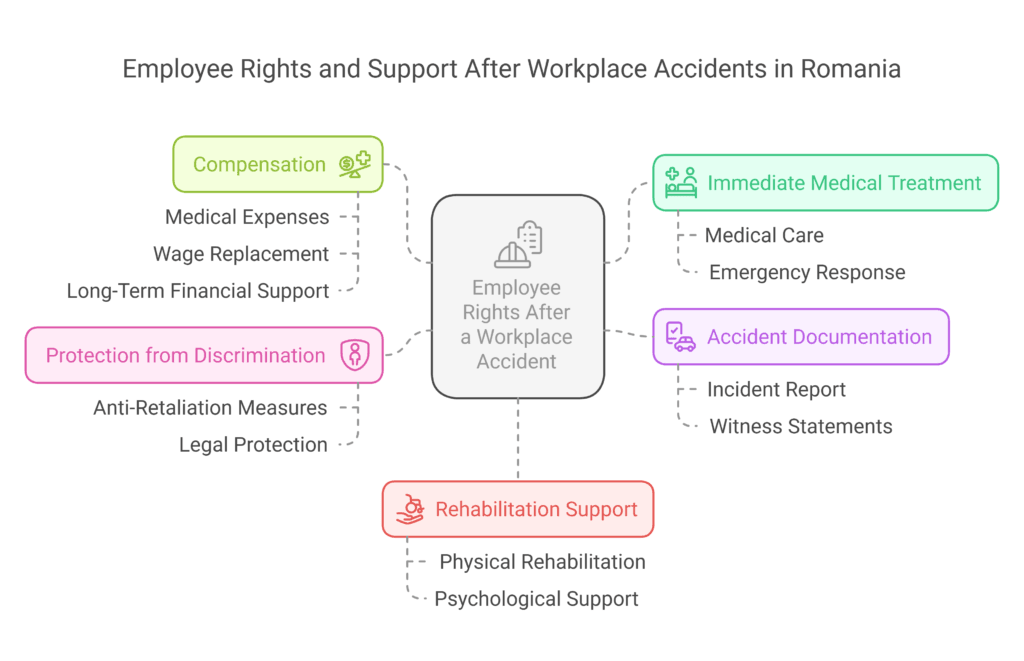
Employee Rights After a Workplace Accident

Employee Rights After a Workplace Accident

When a workplace accident happens in Romania, knowing your rights is key.

It helps protect your health and job future.

Employers must support and protect you after an accident.

Your main rights after an accident include:

  • Immediate medical treatment and care;
  • Full documentation of the accident;
  • Compensation for injuries;
  • Protection from workplace discrimination;
  • Potential rehabilitation support.

Occupational safety Romania laws let you report incidents in many ways.

You can tell your boss, contact the Labor Inspectorate, or get a lawyer if needed.

The workplace risk management Romania system offers support for injured workers.

Here’s what you can expect:

Accident TypeCompensation CoverageLegal Timeframe
Minor InjuryMedical ExpensesImmediate – 30 Days
Temporary DisabilityWage ReplacementUp to 180 Days
Permanent DisabilityLong-Term Financial SupportOngoing Assessment

Guidelines for preventing industrial accidents in Romania stress your right to refuse unsafe work.

They also protect you from being punished for reporting safety issues.

Legal Procedures for Filing Workplace Accident Claims

Dealing with workplace hazards in Romania can be tough.

But knowing how to file accident claims is key to protecting your rights.

If you get hurt at work, knowing the right steps can help a lot with your compensation and recovery.

Romania’s labor laws give clear rules for workers to seek justice after an accident.

The process has important steps that need careful attention and documentation.

Required Documentation for Your Claim

To file a workplace accident claim, you’ll need some key documents:

  • Detailed medical reports of your injury;
  • Incident reports from your employer;
  • Statements from coworkers who saw the accident;
  • Records of employee safety training in Romania;
  • Photos of the accident site and your injuries.

Timeline for Legal Actions

Knowing the timeline is key for construction site accidents in Romania.

You should:

  1. Tell your employer about the accident right away;
  2. File a claim with the Labor Inspectorate within 30 days;
  3. Start legal action within 2 years of the accident;
  4. Gather all needed safety regulations documents.

Role of Legal Representatives

Legal experts are very important in workplace accident claims.

They can:

  • Help understand complex legal papers;
  • Talk to insurance companies for you;
  • Speak for you in court;
  • Make sure you get fair compensation.

Remember, every workplace accident is different. Getting professional legal help can greatly improve your chances of a successful claim.

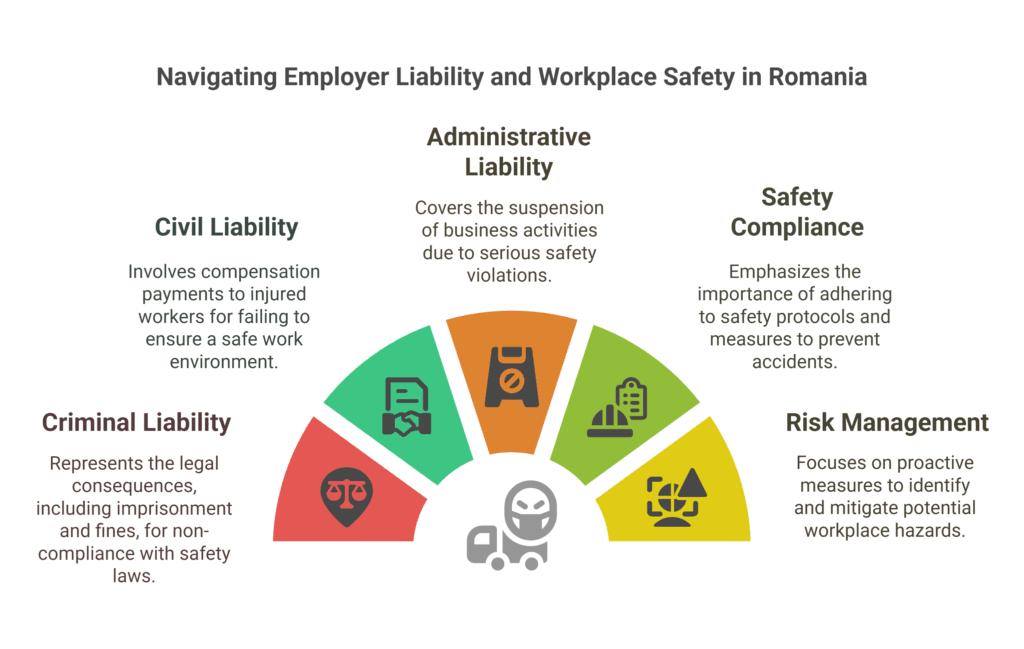
Employer Liability in Workplace Accidents

Employer Liability in Workplace Accidents

It’s important to know about employer liability in Romania.

The laws make employers responsible for keeping workers safe.

They must prevent injuries and handle hazards.

Romanian law sets rules for employers in industrial accidents.

Law no. 319/2006 says employers must keep their workers safe.

This is true even if they hire outside safety services.

Key Aspects of Employer Liability

  • Criminal liability can be applied to both legal entities and individual managers;
  • Penalties range from LEI 12,000 to LEI 1,200,000 for non-compliance;
  • Potential imprisonment from six months to three years for serious violations.

The Romanian Criminal Code has two main offenses for employee protection:

  1. Failure to implement mandatory health and safety measures;
  2. Failure to observe established safety protocols.

Employers need to act to lower their risks in workplace safety.

They should:

  • Give clear safety instructions;
  • Choose people to watch over safety;
  • Check for risks often.
Liability TypePotential Consequences
Criminal LiabilityImprisonment, fines
Civil LiabilityCompensation to injured workers
Administrative LiabilityBusiness activity suspension

Employers can be blamed even if no accident happens.

The causal link between their actions and risks is important.

It helps decide if they are legally at fault.

Prevention Strategies and Risk Management

Job site risks in Romania need a proactive approach to safety.

The European Union has a strong legal framework for workplace safety.

This framework requires employers to manage risks well.

By doing so, your organization can lower workplace accidents.

Risk assessments are key to spotting hazards early.

Romanian law demands detailed checks of work conditions.

These checks cover physical and mental risks.

They help prevent worker compensation claims by tackling dangers early.

Best Practices for Safety Compliance

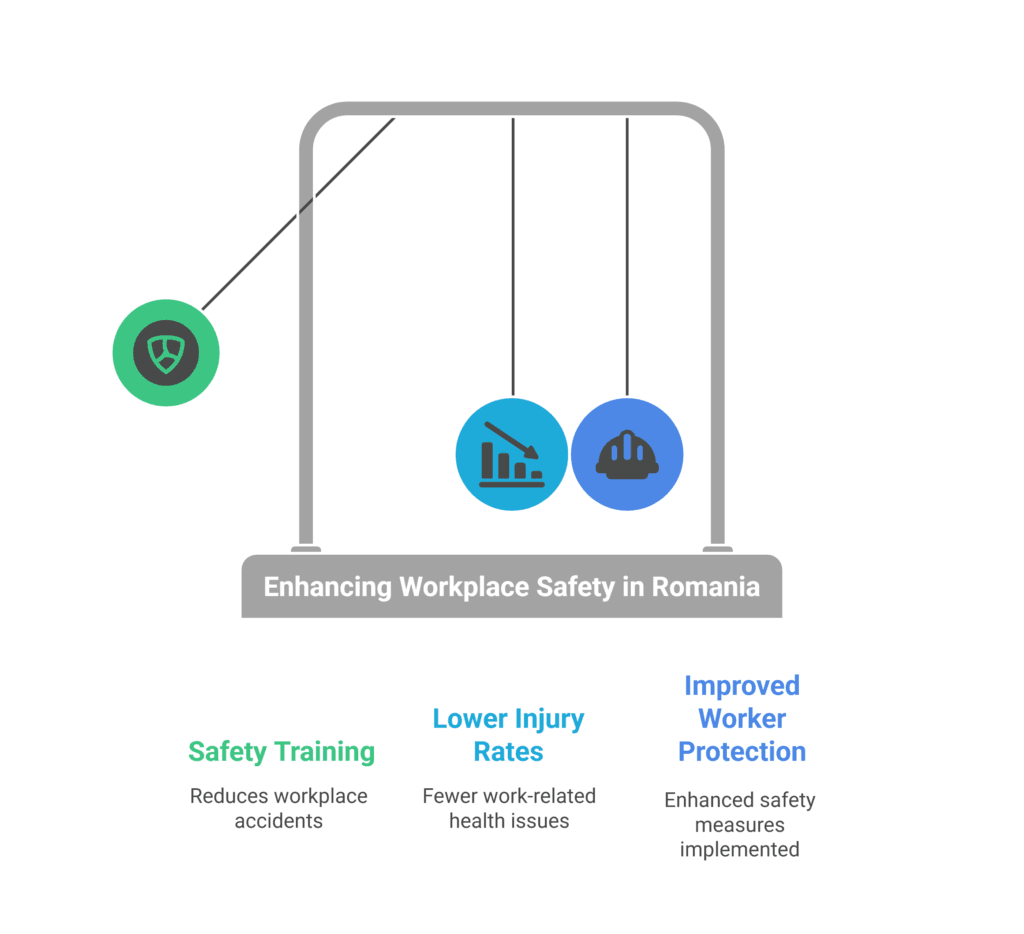
Effective safety starts with training and awareness.

Regular safety checks, teaching employees, and detailed accident reports in Romania can cut down on incidents.

It’s important to build a safety culture.

This culture lets workers speak up about risks before they get worse.

Risk Assessment Protocols

Need help with workplace safety? Contact an Employment Lawyer in Bucharest at office@theromanianlawyers.com.

They offer advice on Romania’s safety laws.

We can help create strategies that protect everyone in the workplace.

FAQ

What are the most common types of workplace accidents in Romania?

In Romania, falls from heights and injuries from machinery are common.

Construction site accidents, transportation incidents, and accidents with heavy equipment also happen often.

Construction, manufacturing, and transportation have the most incidents.

What should I do immediately after a workplace accident in Romania?

First, get medical help right away.

Tell your employer about the accident within 24 hours.

Take photos and get witness statements.

Keep all medical records.

Also, tell the local labor inspectorate and save evidence for compensation claims.

Am I entitled to compensation if I’m injured at work?

Yes, Romanian labor laws say you can get compensation for work injuries.

This includes medical costs, disability benefits, and costs for rehabilitation.

You might also get damages for pain and suffering.

The amount of compensation depends on the injury’s severity and how it affects your work.

What safety equipment must employers provide in Romania?

Employers must give you the right PPE for your job.

This includes helmets, protective clothes, gloves, safety glasses, and more.

The equipment must meet Romanian safety standards and be kept in good condition.

How long do I have to file a workplace accident claim?

In Romania, you have 2 years to file a claim after the accident or when you knew about the injury.

It’s important to report the accident to your employer quickly and get medical help soon to support your claim.

What are my rights if my employer doesn’t provide a safe working environment?

You can refuse unsafe work, ask for a safety check, and report unsafe conditions to the labor inspectorate.

If your employer doesn’t keep the workplace safe, you might get compensation and can take legal action.

Do temporary workers have the same workplace safety protections?

Yes, temporary and contract workers have the same safety protections as permanent employees in Romania.

Employers must give them the same safety training, equipment, and measures.

How are workplace accidents reported in Romania?

Accidents must be told to the employer right away and documented in an official report.

You also need to notify the local labor inspectorate.

The report should have all the details of the incident, witnesses, and medical treatment.

What types of industries have the highest workplace accident rates?

Construction, manufacturing, transportation, agriculture, and mining have the most accidents in Romania.

These jobs involve a lot of physical work and dangerous conditions, so they need extra safety steps.

Can I be fired for reporting a workplace safety concern?

No, Romanian laws protect you from being fired for reporting safety issues.

If you’re fired or treated unfairly for raising safety concerns, you can file a complaint and might get legal help.