Urban planning certificate in Romania illustrated over a property development plan with five certificate routes

Urban Planning Certificate in Romania: Five Routes Under the 2026 Code

ROMANIAN PROPERTY & DEVELOPMENT COUNSEL

The urban planning certificate is often the first document a seller sends to support a proposed Romanian development. Its purpose, contents and validity can change the transaction, the design brief and the route to a building permit. Before committing capital, confirm which certificate you have, what it establishes and which further approvals or procedures your project requires.

Planning a purchase or project?

Under Romania’s Code of Spatial Planning, Urbanism and Construction, adopted by Law no. 169/2026 (the “Code”), there are five categories of urban planning certificate. The information certificate is useful for preliminary research; certificates for cadastral operations, buildings and arrangements, engineering works and special constructions address different purposes. None is itself a building permit. Atrium’s lawyers can review a certificate against the title, local planning rules, project assumptions and transaction timetable, then identify the questions for your architect and the issuing authority.

ONE PROPERTY OR PROJECT

Request a certificate and planning review

Send the certificate or proposed request, land-book extract, location plan and a short project brief. We will agree the scope and an upper fee limit before starting.

Request a defined review
RECURRING INVESTMENTS

Discuss ongoing Romanian legal support

For investors with several sites, align certificate reviews with acquisitions, leases, permit conditions and commercial milestones under one agreed legal-support arrangement.

Explore monthly support

Which urban planning certificate does your project need?

Article 253(3) of the Code classifies certificates by the purpose of the request. Choose the route that matches the proposed legal or construction operation, not merely the document a seller already happens to hold.

The selector below uses short commercial labels for the five statutory categories: certificate for information, cadastral operations, building or demolition of buildings and arrangements, engineering works, and special constructions. It is a review aid. A certificate can cover more than one purpose under Article 253(5), so the wording and documents submitted with the request still matter.

Certificate route selector

Select a purpose to see what the legal review should test.

Showing: Pre-purchase information

Information before a commitment

Obtain a certificate for information and compare its legal, economic and technical data with the investor’s intended use. Under Article 254(1), it gives general information rather than project-specific conditions and is not a substitute for a later building-route certificate when that route is required. For a purchase, check the approved plan, protected status, permissible function, access, utilities and any stated building restrictions before treating the advertised development potential as a transaction assumption.

What changed under Romania’s 2026 planning and construction Code?

Law no. 169/2026 and the Code of Spatial Planning, Urbanism and Construction came into force on 25 August 2026. Under Article 576(3)(a)–(b), the Code repealed Law no. 350/2001 and Law no. 50/1991 when it entered into force, subject to the transitional provisions, including Article 582. The certificate is now described by category in Articles 253–258; Article 253(3) lists five categories, including special constructions.

The certificate remains an instrument for informing the applicant of current rules, permissions and restrictions. Article 253(2) states that it does not give the right to execute construction or demolition works. The information certificate is different in legal character from the other listed certificates: Article 253(1) describes the certificate as an administrative act, except for the information certificate under paragraph (3)(a). The response to a restrictive or negative certificate depends on its legal effects, reasons and procedural context and should be assessed before choosing a challenge route. Under Article 253(9), certificates in categories (b)–(d) issued without content elements required by law are void; the competent administrative court establishes that nullity under the statutory conditions. This concerns the certificate itself and is distinct from the nullity of specified cadastral operations and related acts under Article 256(2).

The commercial change is that the purpose of the request becomes harder to overlook. The Ministry of Development’s CATUC page provides information about the new Code. For the site itself, check the approved planning documents and the issuing authority’s file. If a purchaser wants only to understand a site, an information certificate can support early diligence. A developer preparing a concrete project should work with the architect on the certificate for buildings and arrangements or the engineering route as applicable. A planned parcel division calls for a separate cadastral analysis. In each case the approved local planning documentation and the actual certificate control the project-level answer.

Can a certificate for information establish that the plot is buildable?

It can reveal current planning parameters, but it does not confirm that a particular design can be authorised. Article 254 describes a general information document, not a certificate tailored to the investment proposal.

The information route is available to any interested individual or company. It addresses the property’s legal, economic and technical regime and may help before a land purchase, lease negotiation or development feasibility decision. Article 253(4) sets out content elements for urban planning certificates generally, including property status and rights known to the issuer, approved planning rules, permitted or prohibited functions, occupancy and floor-area parameters, access, parking, height and utilities information held by the authority. The information certificate does not certify that the seller has good title or that the proposed building satisfies all technical rules.

Under Article 254(6)–(7), the information certificate is to be issued within five working days where the local authority has a functional information system, or within ten working days until that system operates. Those periods concern this category, not every certificate. Check the actual local filing channel. For registered property, the application identifies the cadastral number; the Code has separate location-plan and land-book provisions for property with incomplete cadastral data. For a property entered in the land book but lacking updated cadastral data, Article 254(11) also requires an updated land-book extract. Under paragraph (12), that extract must be no older than 30 days when the certificate request is submitted. The ANCPI online land-book service provides access to extracts; compare the extract with the cadastral identifier on the certificate.

For the purchaser, the question is whether the contractual promise is narrower or wider than the verified planning position. A seller’s assertion that land is “buildable” does not establish that the purchaser’s specific project, access arrangement, parking count or required utility capacity can be authorised. Before paying a substantial non-refundable deposit, connect the current certificate and approved plans to an architect’s feasible design and the purchase agreement’s conditions. Our real estate due diligence guide for Romanian buyers explains the wider title and transaction review.

When does a cadastral operation need its own certificate?

The Code uses a distinct certificate for the operations listed in Article 256(1): division, merger, registration of passage servitudes, and recording or re-recording properties in the land book (evidențieri/reevidențieri de imobile în cartea funciară). Under Article 256(2), those listed operations and their related legal acts carried out without the required certificate or in breach of its conditions are subject to absolute nullity. Paragraphs (10)–(11) state exceptions for certain nationally significant transport infrastructure works and operations in special-destination areas. The first task is to determine whether the proposed operation falls within the provision. This can be a material acquisition risk where the investment model depends on creating separate plots or access rights.

For the application, Article 256(7) refers to an up-to-date land-book extract or location plan where no cadastral registration exists, an owner’s authorisation if the applicant is not the owner, and cadastral documentation prepared by an authorised person based on a proposal from an architect or urban planner. The Code states a ten-working-day issuance period in paragraph (4). Under Article 256(8), the authority may issue a reasoned negative certificate, reject an incomplete file with reasons or, for a division into more than three parcels, issue the certificate with a PUZ requirement in the circumstances stated there. Paragraph (9) requires a PUZ obligation for the particular urban-planning operations referred to in Article 214(1). Those routes should be checked against the proposed survey and the precise statutory case.

A purchase agreement should therefore avoid assuming that a parcel split or right of access will be completed simply because a survey plan exists. The urban planning certificate, cadastral documentation and land-book entry are distinct steps. Confirm the applicable registration procedure with the National Agency for Cadastre and Land Registration (ANCPI) and the surveyor for the particular operation. Check the sequencing with the surveyor and notary: certificate, technical documentation, any planning condition, cadastral registration and final transfer may fall on different dates. If the transaction is conditional on a particular parcel configuration, state who bears the work, the cost and the risk if the authority’s conditions differ from the negotiated plan.

What should an investor check in a building-route certificate?

Article 257 deals with a certificate for building, demolition, changes to construction in progress and regularisation. It is addressed to a holder of a real right over the property under the conditions of that provision. The application for new construction and horizontal extensions is supported by a current land-book extract, a proposed site plan and a concise description of the investment, with distinct rules for other works. A preliminary sale agreement alone does not give the prospective buyer a real right over the property. If the purchase depends on a building-route certificate, distinguish the qualifying applicant from the person filing on that applicant’s behalf. An authorised representative should identify the existing right-holder and the basis of representation; the authorisation does not itself give the buyer the right required of the applicant. Allocate the certificate condition in the purchase contract, and do not assume that a lease or development agreement automatically supplies the required right.

Right, property and applicant. Compare the land-book entry, parcel identifier, ownership or other qualifying right, applicant and any consent. A mismatch may require a transaction step before the application is ready.

Planning fit. Compare the project’s proposed use, footprint, height, access and parking with the certificate and the approved local planning documents. The architect should confirm whether the design works within those limits.

Required planning procedure. Article 257(9) contemplates a direct certificate, a PUD requirement, a PUZ requirement in the cases provided by law, or a reasoned negative certificate. These outcomes have very different costs and timings.

Endorsements and validity. Check the full list of opinions and approvals, any distinction between planning-stage and permit-stage items, and the certificate’s actual expiry. A loan or lease timetable should not assume that all endorsements are interchangeable.

The Code sets a 15-working-day issuance period from registration of the request for this certificate in Article 257(4). Under paragraphs (15)–(17), the authority generally sets validity at 12–36 months. The holder must request an extension at least 15 working days before expiry; the extension can last up to 24 months, after which a new certificate is required. For public-investment projects, paragraph (18) allows validity up to 60 months, with a special rule for national transport infrastructure. Check the printed expiry and the statutory extension deadline against the transaction timetable. Do not confuse the State Inspectorate in Construction’s supervisory role with that of the authority legally competent to issue the certificate for the particular project.

If the certificate requires a PUZ or PUD, ask whether the demand is supported by the approved general plan and the Code. Article 257(10) provides that, where a PUD or PUZ is required, the certificate can be used for the requested purpose only under the relevant conditions and after the planning document is approved; it remains valid for another 12 months after that approval. A negative certificate must be read with its factual and legal reasons; it is not the same thing as an incomplete application or a final refusal of a building permit. A targeted legal review can establish what to ask the authority to clarify, whether redesign or planning work is needed, and which procedural route should be assessed with counsel. If a later application is rejected, our building-permit refusal guide explains the next legal questions.

How do engineering works and special constructions differ?

Article 258 gives engineering works a distinct certificate. It addresses construction, demolition, modification and regularisation of those works and states that the beneficiary need not hold a principal real right over all affected properties merely to request that certificate. That is a rule about obtaining the certificate, not a general licence to enter, occupy or build on someone else’s land. Project rights, consents, easements, expropriation routes and the later permit still require separate analysis.

The general period in Article 258(2) is 15 working days from filing the request. Paragraph (4) sets a distinct 15-calendar-day period for the specified transport-infrastructure works, with listed information about affected properties, planning conditions, studies and endorsement authorities. These different units of time should not be collapsed into one deadline. For public engineering investment, Article 258(5) allows validity up to 60 months, subject to the separate national transport rule. For special constructions, Article 253(3)(e) and (7) assign the special certificate to competent defence, public-order and national-security institutions on the basis of a local information certificate; the applicable procedural deadline must be checked for that special route.

In a private development, these distinctions can surface when a building requires roads, utility extensions or works crossing several properties. The building file and the infrastructure file may involve different applicants, consents, authorities and contract responsibilities. Ask the engineers to describe each package and counsel to align the rights and agreements. A certificate for the principal building should not be assumed to resolve every utility or access work.

What does the certificate comparison mean for the investment decision?

The table links each document to a commercial decision. Select a row to see the practical review question beneath it.

Certificate and transaction decision map
Project positionDocument to testCommercial exposureDecision to make
Information certificate, approved plan, land book, design briefAdvertised potential may not match the intended scheme.Condition the purchase on an adequate legal and technical review.
Cadastral certificate, survey plan, owner’s authorityThe target parcel or access structure may not be registrable.Align surveyor, notary and transaction deadlines.
Building certificate, title, project, endorsement listExtra planning work or a negative position changes the budget.Revisit the design, price and long-stop dates.
Engineering certificate, easements, utility agreementsAccess or utilities may depend on third-party property.Assign rights, consents and infrastructure work in writing.
Issue date, printed validity, earlier approvals and file historyWrong transition assumptions may derail a live application.Document the applicable authority and surviving endorsements.
Buying a siteTreat the information certificate as an initial planning signal, then verify the design and purchase conditions separately.

Can a certificate issued before August 2026 still be used?

A pre-Code certificate can retain its validity, but the subsequent permit route requires a separate check. Article 582(4) preserves certificates issued before the Code entered into force and addresses the permit authority and endorsements associated with those certificates. Paragraph (5) addresses a later change in the authority competent to issue the permit. Paragraphs (1)–(2) concern planning and territorial-planning documentation already in progress and a possible simplified route for outstanding endorsements in those procedures. They should not be treated as a general reset of every building-permit file. Reconstruct the filing dates, certificate, competent issuer and endorsement history for the particular project.

For a pending acquisition, request the actual certificate, original application, issuer’s correspondence, planning history, endorsement list and proof of expiry or extension. Compare the certificate’s purpose with the buyer’s planned works. An earlier certificate for a different scope is not made suitable simply because it is still within its validity period. The building-permit refusal guide deals with the different situation where the authority has already declined a later permit application.

What would an Atrium review cost, up to a defined limit?

Proposed initial scope: up to €500, including taxes, for no more than five hours of legal work. This cap covers one property and one certificate or draft certificate request, a land-book extract, the relevant available planning documents, a concise project description, and a written list of legal issues and next questions. This proposed capped engagement is subject to written acceptance of the scope and fee before work begins. It is not a statutory fee, an automatic quote for every project or a promise to obtain a certificate.

The figure is consistent with Atrium’s published hourly range of €60–€100 including taxes when the reviewed work is limited to five hours. A narrower review may require less time and a lower agreed fee. If a multi-site portfolio, historical planning file, contested certificate or extensive negotiations require more work, we would first define a new scope and fee with the client. Architect, surveyor, engineer, authority, notary, registry and litigation costs are outside this proposed legal-review cap unless expressly included in the engagement. Municipal certificate fees are separate and depend on the applicable fiscal and local rules; Article 253(10) refers to the relevant Fiscal Code provisions.

For repeated acquisitions and operational questions, a scoped monthly arrangement may be more useful than commissioning unrelated reviews. Atrium’s Romanian law office subscription options set out available monthly allocations and terms. Real-estate transactions and development projects should be expressly included in the engagement scope rather than assumed to fall within a general monthly allocation. Project-specific technical services and authority charges still require separate budgeting.

What documents should management send for a first review?

Send what already exists; an initial conversation need not wait for a perfect file. A compact index is more useful than an unlabelled archive. For a proposed purchase, the most valuable items are the current land-book extract, cadastral identification, seller’s planning materials, approved plan references, certificate and project brief. For a submitted request, include the exact filed version and all authority communications with dates and proof of receipt.

Open each card to see what to send and what the review tests.

Property and rightsWho may apply for this project?

Land-book and cadastral documents, title or lease, relevant servitudes, seller correspondence and identity of the proposed applicant.

Why it matters: Compare the applicant’s right with the works and the parcel described in the request.

Planning and proposalWhat can the certificate answer?

Existing certificate, request draft, applicable plans, architect’s short brief, desired use, footprint, access and estimated timing.

Why it matters: Identify the planned use and any gap between the certificate and the actual design brief.

Contracts and deadlinesWhich commitment depends on approval?

Purchase or lease draft, deposit terms, financing milestones, contractor timetable, authority notices and endorsement status.

Why it matters: Map the deposit, long-stop dates and exit conditions against the real planning route.

The review can then ask one useful question: which unverified assumption is most capable of changing the investment decision? For one client it may be title or access. For another it may be a zoning-plan requirement, validity date, protected status or the wrong type of certificate. The right response may be a clarification request, a redesign, a condition precedent or a decision to postpone the transaction. A Romanian lawyer advising on property development can connect those legal consequences to the documents; the technical feasibility of a design remains with the qualified architect and engineers.

Illustrative Scenario: Reviewing a Site Before Acquisition

The situation. Consider a company evaluating land near Bucharest before paying a non-refundable deposit. The seller describes the site as suitable for development, but the certificate supplied contains general planning information rather than project-specific conditions.

The legal review. A Romanian lawyer would compare the certificate with the land-book extract, applicable planning documents and proposed purchase terms. Questions about access, permitted use and a project-specific application would be separated from design issues for the architect and points requiring confirmation by the issuing authority.

The decision point. Management could make the purchase conditional while the architect tests the design against planning rules. The legal review would help allocate planning risk in the transaction without guaranteeing that a building permit will be issued.

This is a hypothetical scenario for general information. It does not describe a verified Atrium client mandate or predict an outcome in another project.

Frequently asked questions

Is an information certificate enough to apply for a building permit?

Do not assume so. The information certificate under Article 254 provides general property information. The building-route certificate under Article 257 concerns the conditions for a specific investment and identifies necessary studies and endorsements. Check the precise scope and current Code requirements with the designer and competent authority.

Can a buyer request a certificate before becoming the owner?

An information certificate can be requested by any interested person under Article 254(2). The building-route certificate under Article 257(1) is framed around the holder of a real right. A preliminary purchase agreement alone does not create that right. Other categories have their own application rules, so identify the purpose and how the application will be made with or through the existing right-holder before filing.

Does a negative certificate mean that no project can ever proceed?

No universal conclusion follows from that label alone. Article 257(9)(d) addresses a reasoned negative certificate in specified circumstances. Read its factual and legal reasons against the approved plans, project description and possibility of lawful changes. The correct response could be clarification, redesign or a procedural challenge, depending on the document and circumstances.

Are all five categories subject to the same issuance deadline?

No. Articles 254, 256, 257 and 258 give distinct periods: five or ten working days for information depending on the authority’s functional information system, ten working days for cadastral operations, fifteen working days for buildings and generally fifteen working days for engineering works, with a fifteen-calendar-day transport rule in the specified case. The special-construction category is separate; do not assume one of those ordinary periods applies without checking its governing procedure.

Is the proposed €500 cap the total cost of a development file?

No. It is a proposed ceiling for a defined first-stage legal review of up to five hours, if accepted in the engagement terms. It does not include technical design, cadastral work, official fees, outside advice, later applications or disputes unless separately agreed. The scope and fee must be confirmed before work starts.

Related Guides

NEXT PROJECT DECISION

Test the certificate before a deposit or design commitment

Share the certificate, land-book extract and proposed use. We can define a capped first-stage legal review and identify the technical questions to discuss with your architect.

Contact Atrium

Disclaimer: This page provides general information only and does not constitute legal advice, a legal opinion or the creation of a lawyer-client relationship. Legal solutions depend on the specific facts and documents involved.

AI Notice: AI-assisted content.

Commercial lease agreement in Romania with office key and floor plan

Commercial Lease Agreement Romania: 12 Key Clauses

Commercial real estate · Romania

A commercial lease is a long-term allocation of occupancy cost, operational responsibility and exit risk. Review the legal and practical controls before the premises, rent and fit-out commitments become difficult to unwind.

12 key clausesLandlord and tenant viewRomanian Civil Code focus
Decision lens Can the premises support the business, and can the contract control the downside? Use the interactive maps below to move from the commercial brief to signing, operation and exit.

A commercial lease agreement in Romania can commit a company to years of rent, service charges and restoration costs. The commercial decision therefore depends not only on the monthly headline rent, but also on whether the premises can lawfully support the tenant’s activity and whether the contract allocates operational risks clearly.

Commercial lease agreement in Romania with office key and floor plan
Commercial premises and lease documentation in Romania.

This guide is intended for landlords and companies leasing offices, retail units, warehouses and other business premises. It explains the principal clauses to check under the Romanian Civil Code and the related property, tax and authorisation framework. Residential leases and leases of public property follow additional rules and are outside this article’s main scope.

Is a written commercial lease mandatory in Romania?

Romanian law does not generally require a privately owned commercial lease to be notarised for validity. A signed written contract is nevertheless essential for evidence, enforceability, tax treatment and protection against third parties.

The lease relationship is governed principally by the Romanian Civil Code, especially the general rules on lease agreements. The parties have broad contractual freedom in a business-to-business transaction, but statutory rules apply where the lease is silent, and certain mandatory provisions of Romanian law may apply irrespective of contractual wording.

Under Article 1798 of the Civil Code, a lease concluded in authentic form, or a privately signed lease registered with the competent tax authority, may constitute an enforceable title for rent payment under the conditions stated by law. Tax registration affects enforceability, not the validity of the lease. It is not a universal requirement for the existence of every corporate lease, although the applicable tax and registration duties must still be checked for the particular landlord and transaction.

For leases requiring stronger protection against a future buyer or other third parties, the parties should assess land-book registration. The correct mechanism depends on the property, the lease term and the landlord’s registered title. A company entering a long-term lease should not assume that signature alone gives the same protection as registration.

Lease signing roadmap
From premises selection to rent commencement

Select a stage to see the legal control that should be completed before moving forward.

Define the commercial scope

Fix the exact premises, intended activity, timetable, fit-out assumptions, headline rent and critical conditions before detailed drafting begins.

What should be checked before the commercial lease is signed?

Verify the landlord, title, cadastral identity, permitted use, technical condition and authorisation route before the lease becomes unconditional.

The tenant should compare the land-book extract and cadastral plan with the space actually offered. The review should cover ownership, mortgages, litigation annotations, existing leases, access rights, parking, common areas and the landlord’s authority to grant the agreed use. These checks overlap with a focused real estate due diligence review in Romania.

The proposed activity must also be compatible with the building’s authorised use and applicable planning, fire-safety, sanitary, environmental and sector-specific requirements. A contractual statement that the tenant will obtain “all permits” does not solve a structural problem with the premises. The lease should distinguish permits relating to the building from those relating to the tenant’s own business.

For buildings or units covered by Law no. 372/2005, the owner must address the applicable energy-performance certificate obligations when leasing. The current framework covers offices, retail and other occupied commercial uses, subject to statutory exemptions. See the official energy performance legislation.

CheckTenant questionContract response
Title and authorityDoes the landlord own and control the exact premises?Attach current land-book and corporate authority evidence.
Permitted useCan the intended activity operate lawfully here?Make effectiveness or rent commencement conditional where appropriate.
Physical conditionWho bears existing defects and compliance works?Use a detailed handover report, photos and defect list.
Third-party rightsCould a lender, buyer or other tenant disrupt use?Consider lender consent, non-disturbance and land-book protection.
Utilities and capacityAre power, HVAC, access and loading capacity sufficient?Define technical specifications and remedies for shortfalls.

The 12 clauses that determine the real commercial risk

Commercial lease risk selector
Where can the lease create the greatest exposure?

Select a clause to see the negotiation priority.

Total occupancy cost

Model base rent, indexation, VAT, service charge, utilities, insurance contributions and one-off fit-out or reinstatement expenses.

1. Parties, authority and guarantees

Identify each party by its full legal name, registered office, registration number and tax code. Confirm the signatory’s authority. If a parent company, bank or shareholder gives security, specify whether it is a guarantee, autonomous demand guarantee, deposit or another instrument, together with its cap, duration and claim procedure.

2. Exact premises and permitted use

The lease should attach a plan and state the exclusive area, common-area allocation, parking and access rights. “Office use” or “commercial use” may be too vague. Describe the actual activity and deal with signage, customer access, deliveries, opening hours, hazardous materials and exclusivity if commercially relevant.

3. Term, commencement and long-stop date

Separate the signature date, handover date, fit-out access date, lease commencement and rent commencement. If delivery or permits are delayed, a long-stop date should allow the affected party to terminate. The Civil Code limits leases to a maximum statutory duration, so unusually long structures require specific review.

4. Rent, currency and indexation

State the currency, payment currency, exchange-rate source, due date and invoicing mechanics. An indexation clause should identify the index, reference period, first adjustment date, whether decreases apply and whether there is a cap or floor. Avoid combining indexation with discretionary “market rent” language unless the valuation procedure is clear.

5. VAT, withholding and invoicing

The lease of immovable property is generally VAT-exempt under the Romanian Fiscal Code, subject to important statutory exceptions and the landlord’s option to apply VAT under the prescribed procedure. Ancillary services, bundled supplies, invoicing structures and certain categories of premises may require distinct treatment. The contract should state whether figures include or exclude VAT and what happens if the VAT treatment changes. The parties should also align invoicing with the applicable Romanian electronic invoicing rules. For wider compliance context, see the site’s Romanian tax guidance.

6. Service charge and operating costs

Define recoverable costs, allocation formula, budget, reconciliation, audit rights and exclusions. Capital expenditure, financing costs, structural defects, landlord negligence, vacancy costs and costs relating to other tenants should not be hidden in a generic “all building expenses” clause. Retail leases may also involve marketing contributions and turnover reporting.

Cost itemPoint to negotiateTypical control
Base rentArea, currency, payment date and rent-free periodRent schedule attached to the lease
IndexationIndex, floor, cap and first adjustmentWorked example and no double escalation
Service chargeRecoverable categories and allocationAnnual budget, reconciliation and audit right
UtilitiesMetered consumption versus allocationSeparate meters or transparent formula
VATExempt or taxable treatmentExpress net/gross wording and change mechanism
ReinstatementRemoval and restoration at exitAgreed baseline and pre-expiry inspection

7. Deposit and financial security

Specify the amount, currency, replenishment duty, permitted deductions, return deadline and whether interest accrues. A bank guarantee should state the required issuing bank, wording, expiry buffer and renewal consequences. The landlord should not have an unlimited right to draw security for disputed amounts.

8. Handover, condition and defects

A signed handover protocol should record keys, meters, systems, inventory, photographs and defects. Define the condition standard at delivery and the remedy if the premises fail the agreed technical specifications. The tenant should not inadvertently accept latent or structural defects merely by taking possession.

9. Fit-out, alterations and ownership of improvements

Address design approval, permits, contractors, access, insurance, health and safety, delays and damage. The lease must also say whether improvements become the landlord’s property, whether compensation is available and what must be removed at expiry. These provisions should be coordinated with the construction-law implications of fit-out works.

10. Repairs, maintenance and building services

The Civil Code places core delivery, maintenance and peaceful-use obligations on the landlord, while the tenant normally bears routine repairs resulting from ordinary use, subject to the contract and the nature of the defect. A commercial lease should allocate structure, roof, façade, common systems, HVAC, internal installations and statutory upgrades expressly, together with response times and self-help rights.

Responsibility map
Who controls each category of work?

Select the responsible actor. The final allocation must be stated in the lease and coordinated with insurance and access rights.

Landlord-controlled matters

Ownership, structural integrity, roof and façade, common systems and building-level approvals normally require the landlord’s control and cooperation.

MatterStarting allocationLease control
Structure, roof and façadeLandlordResponse deadline, access and tenant remedy if use is disrupted
Routine internal maintenanceTenantStandard of care and exclusions for latent defects
Common building systemsLandlord or service-charge regimeService levels, cost allocation and outage remedies
Tenant fit-outTenant, subject to approvalDesign approval, permits, ownership and reinstatement
Statutory upgradeDepends on cause and scopeBuilding-level versus activity-specific responsibility

11. Assignment, subletting and corporate change

The Romanian Civil Code contains specific rules on assignment and subletting, which are frequently modified by commercial lease clauses. The contract should therefore state whether landlord consent is required and on what conditions. The tenant may seek objective consent standards for group reorganisations, business transfers and subleases, while the landlord may require financial tests or continued liability.

12. Default, termination, force majeure and hardship

List the defaults that justify termination, notice method, cure periods and consequences. Non-payment, unlawful use, loss of permits and abandonment need different treatment. Insolvency provisions should be reviewed together with the applicable insolvency legislation: Article 123 of Law no. 85/2014 maintains ongoing contracts at the opening of insolvency proceedings and may limit clauses that terminate or accelerate solely because insolvency has commenced. Force majeure should address genuine impossibility, while hardship or major economic disruption requires a separate allocation because increased cost alone is not automatically force majeure.

What happens if the building is sold?

A tenant should not rely on a simple “sale does not affect the lease” sentence. Ongoing protection depends on the Civil Code’s opposability rules and the steps taken to make the lease effective against the buyer.

Articles 1811 and following of the Civil Code regulate when a lease is opposable to a purchaser and the consequences of transferring the leased property. For registered immovable property, notation of the lease in the Land Registry is a central opposability mechanism; other statutory rules may apply depending on the property and transaction. The lease should require the landlord to notify a sale, procure the buyer’s assumption of obligations and transfer the deposit or guarantees correctly. For material long-term premises, the tenant should assess Land Registry notation and lender non-disturbance arrangements. The seller’s continuing liability, if any, should be stated rather than assumed.

Can the landlord enforce unpaid rent without a full lawsuit?

Potentially yes. A qualifying lease may constitute an enforceable title for rent, but enforceability depends on the contract’s form or tax registration and on the claim being due and sufficiently determined.

Article 1798 of the Civil Code gives qualifying leases enforcement value for rent. Separate rules may also support restitution of the premises when a fixed-term lease expires. Parties should coordinate default clauses with Romanian civil procedure and should not assume that a contractual label such as “enforceable” creates enforcement rights by itself. Broader non-payment strategies are covered in the guide to recovering unpaid business claims in Romania.

Exit & default risk map
How can the lease relationship end?

Select a route to review the clause that should control notice, cost and handover.

Expiry of the agreed term

Set the handover date, inspection process, reinstatement standard, deposit reconciliation and treatment of any continued occupation.

Exit eventDocument to controlMain financial exposure
Fixed-term expiryExpiry notice and handover protocolReinstatement, dilapidations and deposit deductions
Tenant breakBreak notice complying exactly with the clausePenalty, incentive repayment or remaining liabilities
Termination for breachDefault notice and evidence of cure periodArrears, damages, security draw and enforcement costs
Property saleBuyer assumption and opposability evidenceDeposit transfer and continuity of tenant rights
Continued occupationWritten extension or renewal termsUncertain rent, duration and exit notice

Landlord and tenant negotiation checklist

  1. Verify title, cadastral identity, authority and encumbrances.
  2. Confirm that the building and the intended activity can obtain the necessary approvals.
  3. Attach the plan, technical specifications, handover standard and fit-out rules.
  4. Model rent, indexation, VAT, service charge, utilities and exit costs.
  5. Allocate structural, routine and statutory repair obligations precisely.
  6. Align guarantees with actual exposure and release dates.
  7. Negotiate cure periods, break rights, long-stop dates and restoration obligations.
  8. Assess tax registration, enforceability and land-book protection.
  9. Record condition, meters, defects and assets in the handover protocol.
  10. Retain signed notices, invoices, approvals and service-charge reconciliations.

The bottom line

A commercial lease agreement in Romania is primarily a long-term allocation of business risk. The strongest contract is not necessarily the longest. It is the one that identifies the premises accurately, prices the full occupancy cost, makes the authorisation path workable and provides realistic remedies when delivery, operation or exit does not go as planned.

Before committing to a significant lease, both landlord and tenant should coordinate the legal document with technical due diligence, tax treatment, insurance and the operational timeline. A focused contract review in Romania can identify inconsistencies before the commercial timetable makes them expensive to correct.

Frequently Asked Questions

Must a Romanian commercial lease be notarised?

No, not as a general validity rule for a private commercial property. However, authentic form, tax registration and land-book notation can have different consequences for enforcement and opposability. The right structure depends on the parties, term, property and intended protection.

Can rent be stated in euros but paid in Romanian lei?

Yes, parties often denominate rent in euros and provide payment in lei. The lease should identify the exchange-rate source and date, address bank charges and avoid ambiguity about whether indexation applies before or after currency conversion.

Is VAT charged on commercial rent in Romania?

The lease of immovable property is generally VAT-exempt, subject to important statutory exceptions and the landlord’s option to apply VAT under the prescribed procedure. Ancillary services, bundled supplies, invoicing structures and certain premises may receive distinct treatment. The lease should state whether amounts are net or gross and allocate change-of-law risk.

Who pays for repairs in a Romanian commercial lease?

The Civil Code provides a default allocation, broadly separating the landlord’s obligation to maintain usable premises from routine tenant repairs. Commercial contracts usually refine this substantially. Structure, building systems, internal installations, negligence and statutory upgrades should each be addressed expressly.

Can a tenant terminate a fixed-term commercial lease early?

Only if the contract or applicable law provides a right to do so, or if a sufficiently serious breach justifies termination. Businesses should negotiate express break rights, notice periods, conditions and any repayment of incentives rather than rely on a general expectation of early exit.

Does the lease continue if the property is sold?

It may continue against the buyer when the Civil Code’s opposability requirements are satisfied. The tenant should assess land-book notation, the landlord’s sale obligations and any lender arrangements, particularly for high-value fit-out or a long remaining term.

AI Notice: AI-assisted content, reviewed by a qualified Romanian lawyer.

cadastral documentation Romania

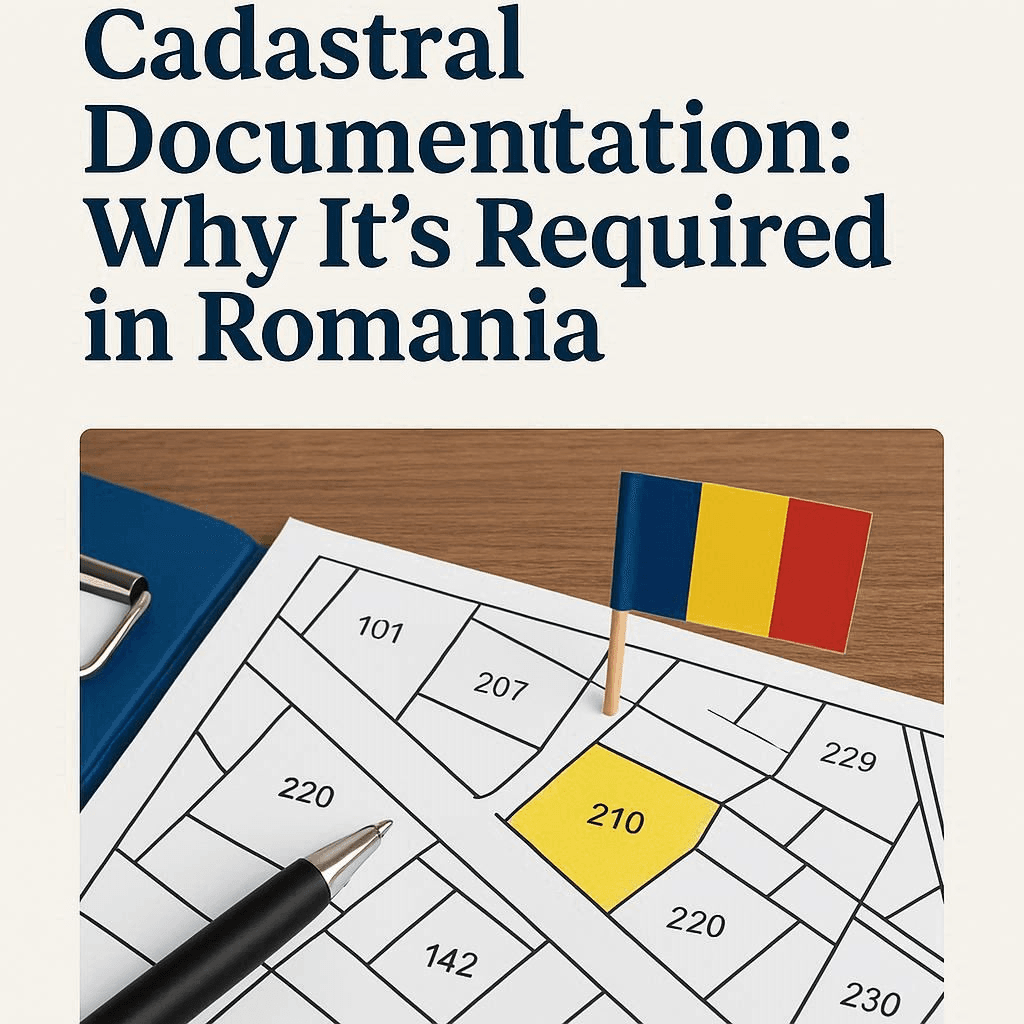
Cadastral Documentation: Why It’s Required in Romania

Play

Cadastral Documentation: Why It’s Required in Romania

What if the key to securing your property rights in Romania isn’t just about owning land—but proving it in a way the law recognizes?

For buyers, sellers, and investors, this question underscores a critical reality: formalized records are the backbone of legally binding transactions.

A person is examining a detailed map of land parcels.

Romania’s integrated framework merges technical and legal processes to ensure accuracy in ownership details.

Every parcel undergoes rigorous verification before entering the national registry.

This system prevents disputes by creating an immutable record that shields owners from unauthorized claims.

The process involves collaboration between cadastral offices and real estate departments.

Technical surveys and legal validations occur simultaneously, streamlining approvals.

Delays in documentation can derail sales or financing, making compliance non-negotiable for smooth transactions.

For tailored guidance, contact office@theromanianlawyers.com.

Our team navigates these requirements daily, ensuring clients meet all obligations efficiently.

Key Takeaways

  • Romania’s property system requires precise technical and legal alignment for valid ownership,
  • Integrated workflows prevent errors and accelerate registration timelines,
  • Third-party claims lose validity without proper cadastral verification,
  • Delays in documentation expose owners to financial and legal risks,
  • Professional support minimizes hurdles in complex cases.

Understanding Cadastral Documentation in Romania

Romania’s property system relies on a structured framework where technical precision meets legal validity.

This foundation ensures every land registry entry reflects accurate ownership details and physical characteristics.

A map showing property boundaries and land divisions.

Definition and Key Components

Cadastral files combine technical surveys with legal descriptions.

They include boundary markers, exact surface measurements, and unique identification numbers assigned during registration.

These documents also contain geospatial plans that map the estate’s layout.

Authorized surveyors and legal experts collaborate to verify each detail.

Errors in boundary data or ownership records can invalidate transactions.

Professionals ensure compliance with national legislation to prevent disputes.

Historical Context and Evolution

Romania’s modern cadastral system has evolved through various historical influences, with significant development occurring during different administrative periods.

The current integrated system represents decades of modernization efforts to align with European Union standards.

Contemporary reforms integrated digital mapping with established processes.

Today’s estate records blend historical archives with real-time updates.

This evolution maintains continuity while addressing modern ownership complexities.

Cadastral Documentation and Why is It Required in Romania

A group of people discussing over a table filled with paperwork and charts.

Romanian legislation mandates strict protocols for validating property boundaries and ownership transfers.

These protocols serve as the foundation for all real estate transactions, ensuring every modification aligns with national standards.

Key Legal Requirements and Registration Effects

Under Romanian law, formalizing land divisions or mergers requires comprehensive technical verification.

This process applies during initial registrations and subsequent changes like boundary adjustments.

Authorized surveyors must validate measurement accuracy and confirm the credentials of involved professionals.

Each submission undergoes a multi-step review.

Inspectors cross-reference graphic databases to locate the site and ensure surface calculations match physical dimensions.

Discrepancies between descriptive details and visual representations trigger immediate revisions.

Upon approval, properties receive unique identifiers that lock their status in the national system.

These codes become critical references for future transactions or legal disputes.

Properly executed registrations grant owners enforceable rights against third-party claims.

They also activate the property’s eligibility for entries in Romania’s land book—a decisive factor in securing financing or completing sales.

Non-compliant submissions face rejection, requiring costly resubmissions.

Errors in surface data or boundary markers can delay land development projects significantly, emphasizing the need for precision from the outset.

Integration of Cadaster and Land Registry Systems

Romania’s property governance model eliminates bureaucratic silos through a cohesive institutional design.

The Romanain land registry and cadaster operate under one administrative umbrella, merging technical precision with legal validation.

This structural integration accelerates decision-making while maintaining rigorous standards.

Several colorful folders are neatly organized on a shelf labeled with different property names.

Unified Workflow in Land Book Registrations

Applications for property registration follow a synchronized process.

Technical surveys and legal validations are processed within the same department, removing redundant steps.

A single documentation file combines geospatial maps, boundary certifications, and ownership proofs.

The system routes files between cadastral inspectors and real estate publicity teams automatically.

Technical specialists verify measurement accuracy, while legal experts confirm compliance with ownership transfer rules.

Approved data flows directly into Part A of the land book, ensuring alignment between physical boundaries and registered rights.

Key advantages of this approach include:

  • Reduced processing times through parallel technical-legal reviews,
  • Eliminated discrepancies between registry entries and physical sites,
  • Centralized access to updated property information.

This integration minimizes errors that traditionally arise when separate institutions handle cadastral and registry tasks.

Real estate professionals benefit from predictable timelines, while owners gain enforceable rights backed by unified records.

Process and Legal Considerations for Cadastral Documentation

Navigating Romania’s property registration framework demands strict adherence to sequential technical and legal phases.

This structured approach protects ownership rights while maintaining alignment with national standards.

A close-up of a stamp on a completed application form.

Steps from Technical Verification to Legal Registration

The procedure unfolds through six critical stages:

  1. Preparer validation: Confirm credentials of professionals who drafted the documents,
  2. Database cross-check: Locate property in the national graphics system using coordinates,
  3. Surface verification: Audit mathematical accuracy of land measurements,
  4. Attribute correlation: Match written descriptions with graphical representations,
  5. Number assignment: Issue unique identifiers for unregistered properties,
  6. Final review: Cadastral inspector approves or flags discrepancies.

Ensuring Compliance with Romanian Law

Authorities reject submissions failing these legal benchmarks:

RequirementComplete DocumentationIncomplete Cases
Technical ActsPrecision-matched dataSurface calculation errors
Legal StandardsOwnership chain verifiedMissing notarized signatures
Time ImpactProcessing varies by complexityExtended delays and resubmissions

Non-compliant cases trigger detailed deficiency reports.

These outline exact corrections needed for resubmission.

Proper execution prevents third-party claims and ensures enforceable rights under Romanian statutes.

Implications for Real Estate and Property Transactions

Romania’s real estate market operates on a simple principle: no valid registration equals no enforceable rights.

The land registry acts as the ultimate authority for verifying ownership before any transaction closes.

This system protects buyers from inheriting unresolved disputes or hidden claims.

A computer screen displaying a digital cadastral map with highlighted properties.

Impact on Land Sale and Ownership Proof

Without registry entries, sellers cannot legally prove they own the property.

Notaries refuse to authenticate sales contracts for unregistered parcels, blocking transfers entirely.

Banks similarly reject mortgage applications tied to undocumented estates.

Common scenarios demonstrate these consequences:

ScenarioWith Proper DocumentsMissing Documents
Residential SaleProcessing within standard timeframesContract voided
Land DevelopmentFinancing approvedBank refusal
Inheritance TransferSmooth ownership changeExtended court proceedings

Proper registration creates a public record accessible to buyers, lenders, and authorities.

This transparency accelerates due diligence and reduces fraud risks.

Updated entries also increase property values by confirming marketability.

Maintaining current records helps avoid transaction delays and ensures compliance as boundaries or zoning laws change.

Legal Solutions and Alternative Approaches

When traditional property registration isn’t an option, Romanian law offers alternative pathways to secure ownership rights.

These mechanisms address complex scenarios where standard documentation remains unavailable or incomplete.


Noting Possession and Alternative Procedures

Individuals using land without formal ownership documents can request a notation of possession.

This legal step initiates a period during which third parties may contest the claim.

If no disputes arise, property rights may be formally registered through court proceedings.

Usucapion and Property Acquisition

Romanian law recognizes usucapion (adverse possession) as a method of acquiring property rights through prolonged possession.

Under current legislation, individuals who can demonstrate continuous, uninterrupted, and public possession for specified periods may acquire ownership rights.

The Civil Code establishes that those who possessed property for 10 years may become owners through adverse possession (extratabulară).

For situations involving longer periods, 30-year usucapion (acquisitive prescription) may apply depending on specific circumstances and legal requirements.

Resolving Complex Ownership Scenarios

Successful usucapion requires proving public, peaceful, and uninterrupted control of the land.

Authorized companies handle complex procedures for cases involving partial deeds or indirect evidence.

This process often becomes critical during inheritance disputes involving properties with unclear documentation.

Multiple heir situations demand specialized strategies to prevent prolonged litigation.

Legal professionals help owners navigate these complexities while protecting against future obstacles in mortgage or sale processes.

Consulting experienced attorneys ensures compliance with evolving registration standards.

Their guidance minimizes risks in both standard and alternative ownership validation processes.

Expert Insights and Best Practices in Cadastral Documentation

Navigating property records demands precision only specialists can deliver.

Romania’s framework assigns distinct roles to owners, professionals, and regulators to maintain system integrity.

O persoană arătând cu degetul la un teren pe un document.

Expert Guidance and the Role of Authorized Professionals

Licensed surveyors and legal practitioners handle technical evaluations under the National Agency for Cadaster and Land Registration.

These experts:

  • Verify boundary markers using GPS technology,
  • Cross-reference historical maps with current site conditions,
  • Certify that legal descriptions match physical characteristics.

Property owners must identify and preserve their boundaries.

Professionals bear responsibility for measurement accuracy, while inspectors validate data before issuing registration numbers.

Ensuring Data Accuracy and Timely Updates

Regular updates prevent conflicts during sales or inheritance transfers.

Key maintenance practices include:

ActionFrequencyResponsible Party
Boundary checksEvery 5 yearsOwner
Record auditsPost-constructionAuthorized surveyor
System updatesReal-timeCadastral office

Disputed cases require immediate legal intervention.

For complex scenarios like overlapping estate claims, contact office@theromanianlawyers.com.

Professional legal teams specialize in resolving boundary disputes efficiently.

Proactive monitoring of zoning changes safeguards rights.

Specialists recommend digital alerts for land registration amendments affecting your assets.

Conclusion

Securing property rights in Romania hinges on meticulous adherence to legal frameworks governing land records.

The integrated system combining technical precision with legal validation ensures transparent transactions while preventing ownership disputes.

From standard registrations to resolving complex cases, compliance protects all involved parties.

Authorized professionals play a critical role in verifying boundaries and maintaining error-free documentation.

Their expertise streamlines the process, whether handling routine updates or alternative acquisition methods.

Proactive management of real estate records remains essential for financing eligibility and conflict prevention.

Regular audits and immediate corrections uphold the integrity of Romania’s land registry framework.

For tailored guidance on navigating these requirements, contact office@theromanianlawyers.com.

Professional legal teams provide comprehensive support to ensure your assets remain protected under national law.

FAQ

What legal effects does land registration have in Romania?

Registration in the Land Book grants enforceable rights against third parties and validates ownership transfers.

It serves as the primary proof of legal title under Romanian law, ensuring transparency in transactions like sales or mortgages.

How does the cadaster system integrate with property registration?

Romania’s unified system combines cadastral data (physical boundaries, area) with the Land Registry’s legal records.

This integration streamlines workflows, reduces errors, and ensures accurate verification during transactions.

What steps are involved in obtaining cadastral documentation?

The process includes technical verification by licensed surveyors, boundary confirmation with neighbors, submission to the Cadaster Office, and final Land Book registration.

Compliance with zoning laws and notarization of legal acts is mandatory.

Why is cadastral documentation critical for real estate sales?

It confirms lawful ownership, clarifies boundaries, and identifies encumbrances like mortgages.

Buyers require this data to assess risks, secure financing, and complete transactions recognized by Romanian authorities.

Can property rights be established without full registration?

Temporary possession claims may be noted in the Land Book, but usucapion (adverse possession) or specialized procedures are required for full rights.

These alternatives involve court validation and strict evidence standards.

How do professionals ensure cadastral data accuracy?

Authorized surveyors, notaries, and lawyers cross-check records, resolve boundary disputes, and update entries for new constructions or subdivisions.

Regular audits by the National Agency for Cadaster prevent discrepancies.

What happens if a property has unresolved boundary issues?

Transactions may be delayed until disputes are settled via mediation or court rulings.

The Cadaster Office flags such cases, requiring updated technical plans and neighbor agreements before registration.

 
Romanian Land Registry Process

The Land Registry Process in Romania: A Comprehensive Overview

Play

The Land Registry Process in Romania: A Comprehensive Overview

What if a single oversight in documentation could jeopardize your real estate investment?

This critical question underscores the importance of Romania’s structured approach to property ownership verification.

The system ensures legal certainty through meticulous record-keeping and standardized protocols.

land registry process in Romania

Romania’s framework for validating ownership rights involves coordinated efforts between notaries, cadastral specialists, and government agencies.

Each transaction requires precise authentication and multi-stage reviews to prevent disputes.

While the system prioritizes accuracy, its complexity demands professional navigation.

Our team of lawyers in Bucharest play a vital role in interpreting regulations and avoiding procedural missteps.

For tailored guidance, contact office@theromanianlawyers.com to ensure compliance with all requirements.

Key Takeaways

  • Romania’s system provides legal security for real estate transactions,
  • Multiple verification stages prevent ownership disputes,
  • Specialized professionals ensure regulatory compliance,
  • Documentation accuracy impacts transaction validity,
  • Updated records maintain market transparency.

Introduction and the Importance of Land Registry in Romania

Accurate records form the backbone of successful real estate dealings.

Romania’s national property registry acts as a legal safeguard, detailing ownership rights, physical boundaries, and existing claims.

This system ensures every transaction meets strict standards for validity and transparency.

Overview of Real Estate Registration

The framework for property validation includes three core elements:

  • Technical specifications outlining exact dimensions and location,
  • Ownership history showing current and previous rights holders,
  • Legal restrictions like mortgages or usage limitations.

Romanian real estate documentation

Mandatory updates to these records occur with any ownership change.

Financial institutions and buyers rely on this data to verify asset legitimacy before approving deals.

How Reliable Documentation Impacts Transactions

Complete paperwork prevents disputes between involved parties.

Missing or conflicting information can:

  • Delay sales by weeks or months,
  • Invalidate purchase agreements,
  • Expose buyers to hidden liabilities.

Romania’s alignment with EU standards offers international investors familiar protections.

For tailored support navigating these requirements, contact office@theromanianlawyers.com to secure your transactions.

Historical Evolution of Land Registration in Romania

Romania’s approach to ownership validation reflects centuries of legal refinement.

The Austro-Hungarian Empire introduced structured cadastral practices in Transylvania during 1849, marking the region’s first standardized public records.

This initiative laid the groundwork for contemporary legal frameworks governing asset transfers.

cadastral records evolution

From Manual Registers to Digital Precision

Early documentation relied on handwritten ledgers detailing boundaries and ownership chains.

By the 20th century, these evolved into legally binding registers with three critical functions:

  • Mapping exact geospatial coordinates,
  • Recording successive titleholders,
  • Highlighting contractual obligations.

The shift to electronic databases after 2000 accelerated verification processes while preserving historical legal principles.

Modern platforms now integrate EU-compliant formats with traditional safeguards.

Continental Foundations and Systemic Reforms

Central European legal traditions heavily influenced Romania’s adoption of public accessibility standards for property books. Key developments include:

  • Harmonization with EU directives on transparency,
  • Digitization of archival records (1850-1950),
  • Nationwide implementation of unified protocols.

These advancements transformed fragmented regional practices into a cohesive framework.

Our team of lawyers in Romania leverage this historical context to interpret current requirements effectively.

For specialized guidance navigating these evolved systems, contact office@theromanianlawyers.com.

Legal Framework and Key Principles

Romanian property validation relies on foundational rules ensuring fairness and transparency.

Five core concepts govern how ownership changes are recorded and enforced under Law 7/1996.

These mechanisms protect both individual rights and public trust in official records.

Romanian legal principles

Opposability, Full Disclosure, and Legality

The principle of opposability ensures registered claims take immediate effect against third parties.

This establishes clear priority when multiple parties assert interests in the same asset.

Full disclosure requirements mandate recording all ownership details and restrictions.

PrincipleLegal BasisPractical Effect
OpposabilityLaw 7/1996 Art.12Immediate enforceability post-registration
Full DisclosureCivil Code Art.881Complete transaction history visibility
Legality ReviewLand Book Reg. §4Document validity verification

Neutrality and Ex Officio Decision Making

Registrars maintain strict neutrality, acting only upon formal requests.

However, they possess authority to independently verify application accuracy.

This ex officio examination ensures system integrity without compromising impartiality.

Legal professionals analyze how these principles interact in specific cases.

For personalized guidance navigating Romania’s property registration framework, contact our team of real estate lawyers in Bucharest at office@theromanianlawyers.com.

Understanding the Land Registry Process in Romania

Navigating property ownership in Romania requires understanding its dual-track validation system.

This framework combines administrative efficiency with judicial safeguards to balance speed and legal protection.

Specialized professionals manage critical approvals while maintaining avenues for dispute resolution.

Romanian administrative judicial system

Administrative Versus Judicial Aspects

The administrative procedure focuses on swift document processing by qualified registrars.

These officials review applications using standardized checklists to ensure compliance.

Key features include:

  • Mandatory legal education for registrars,
  • Predefined timelines for application reviews,
  • Automated validity checks for common documents.

Judicial oversight activates when parties challenge administrative decisions.

Courts examine whether registrars properly applied laws during initial assessments.

This layered approach prevents errors while respecting constitutional rights.

Decision Hierarchies and Professional Qualifications

Romania’s appeal process follows a strict three-step structure:

  1. Re-examination by senior registrars,
  2. District-level judicial review,
  3. Potential appeals to higher courts.

Legal professionals often intervene when technical interpretations affect ownership outcomes.

For tailored assistance navigating these mechanisms, contact office@theromanianlawyers.com to secure your property rights efficiently.

Step-by-Step Guide to Registration and Documentation

Securing property rights in Romania demands strict adherence to official validation protocols.

Three critical phases govern this structured approach: deed authentication, application review, and permanent database updates.

Each phase involves specialized professionals ensuring compliance with national standards.

Authentication of Deeds and Preliminary Certification

Public notaries initiate the authentication process by verifying signatures and legal capacity.

They cross-check ownership details against current land book extracts to confirm seller authority.

This step prevents invalid transactions by identifying undisclosed claims or restrictions.

Notaries issue preliminary certificates confirming document validity.

These certificates serve as prerequisites for submitting applications to territorial offices.

Missing this step voids subsequent registration attempts.

Submission, Verification, and Final Registration

Complete documents receive chronological entry numbers during submission, establishing priority for conflicting claims.

Assistant-registrars perform initial checks for completeness before forwarding files to senior officials.

Qualified registrars conduct final reviews within legally mandated timelines:

  • 9 days maximum for ownership transfers,
  • 2 days for mortgage registrations.

Approved applications trigger permanent database updates and automated certificate distribution.

For streamlined procedure navigation, contact office@theromanianlawyers.com for expert documentation support.

Digital Advances: Electronic Submission and Land Books

Romania’s property sector is undergoing a digital revolution while maintaining analog safeguards.

The national land book system now operates through hybrid workflows, combining electronic databases with physical document submissions.

This dual approach balances modernization efforts with traditional verification practices.

Benefits of Electronic Registration

Digital platforms transform how professionals interact with property records.

Key improvements include:

AspectTraditional MethodElectronic System
Processing Timeapp. 2-4 weeksapp. 3-5 business days
Record AccuracyManual entry errorsAutomated validation
AccessibilityIn-person requests24/7 online access

Authorized users retrieve estate data instantly through secure portals.

Integrated databases enable simultaneous updates across multiple agencies, reducing administrative overlaps.

Challenges in Transitioning from Analog Methods

The mixed system creates unique operational hurdles:

  • Physical document scanning delays digital processing,
  • Varied digital literacy among older professionals,
  • Inconsistent formatting of paper submissions.

These issues occasionally extend registration timelines when systems require manual reconciliation.

Legal teams often bridge the gap by cross-verifying electronic and physical records.

For streamlined navigation of Romania’s evolving land book procedures, contact office@theromanianlawyers.com.

Their experts provide tailored solutions for both digital and paper-based requirements.

Roles of Notaries and Legal Experts

Property transactions in Romania require coordinated efforts between specialized professionals to ensure legal compliance.

Notaries and registrars form the backbone of document validation, while legal advisors resolve complex challenges.

The Notary’s Function in Authenticating Documents

Public notaries verify the right of sellers to transfer ownership.

They confirm identities, check signatures, and obtain updated extracts from property records.

This prevents transactions involving disputed titles or hidden claims.

Key responsibilities include:

  • Validating legal capacity of all parties,
  • Ensuring compliance with contractual formalities,
  • Flagging undisclosed restrictions in land book extracts.

The Land Registrar’s Critical Decision Role

Registrars possess exclusive authority to approve or reject applications.

Their technical reviews determine if submissions meet statutory requirements for rights registration.

RoleFocus AreaDecision Impact
NotaryDocument validityTransaction initiation
RegistrarLegal complianceOwnership transfer finality

Romanian Legal professionals bridge gaps between these roles, particularly when multiple parties or cross-border elements complicate matters.

For complex cases involving contested titles, contact our team of specialized lawyers in Bucharest at office@theromanianlawyers.com for tailored solutions.

Overcoming Common Challenges in Real Estate Registration

Navigating property transfers often reveals unexpected hurdles requiring strategic solutions.

Many transactions stall due to incomplete paperwork or conflicting records, particularly in cases involving older assets or informal agreements.

Troubleshooting Missing Documents and Delays

Incomplete ownership chains frequently emerge with inherited estates or properties lacking updated titles.

Common issues include handwritten sale receipts without notary validation or assets listed solely in agricultural registries.

These gaps prevent legal transfers until resolved through archival research or court orders.

Delays often stem from multi-agency coordination requirements.

Cadastral mapping and zoning confirmations must precede notarial acts, creating sequential bottlenecks.

Proactive document preparation reduces waiting periods significantly.

Mitigating Legal and Procedural Pitfalls

Romanian law mandates authenticated ownership proofs for valid sales.

Romanian lawyers address challenges through:

  • Reconstructing historical ownership via court petitions,
  • Validating informal agreements through supplementary evidence,
  • Coordinating parallel approvals across institutions.

Specialized legal support in Romania streamlines these complex processes.

For tailored resolution strategies, contact office@theromanianlawyers.com to secure your transaction’s validity.


FAQ

What legal principles govern real estate registration in Romania?

The process follows three core principles: opposability (rights become enforceable against third parties upon registration), full disclosure (all relevant details must be publicly accessible), and legality (strict compliance with statutory requirements).

These ensure transparency and legal certainty in transactions.

How does electronic submission improve registration efficiency?

Digital platforms reduce processing times by enabling remote document filing, automated validations, and real-time status tracking.

This minimizes errors and accelerates the authentication of deeds while maintaining compliance with EU data standards.

What role do notaries play in property transactions?

Notaries authenticate agreements, verify identities, and confirm the legality of terms.

Their involvement ensures documents meet formal requirements before submission to the Land Book Office, reducing rejection risks during final registration.

Why might a registration request be delayed or rejected?

Common issues include incomplete ownership history, unresolved boundary disputes, or unrecorded encumbrances.

Proactive title searches and professional legal reviews help identify and resolve such gaps before submission.

Can possession alone establish ownership rights in Romania?

No. While long-term possession may support a claim through adverse possession laws, formal recognition requires a court decision and subsequent registration in the Land Book.

Mere occupancy does not guarantee legal rights.

What distinguishes administrative from judicial registration procedures?

Administrative processes handle uncontested applications, while judicial oversight applies when disputes arise over validity or competing claims.

Registrars assess evidence ex officio but may defer to courts in complex cases.

How are third-party rights protected during registration?

The system’s publicity principle mandates that all registered rights are visible to potential buyers or creditors.

This prevents hidden claims and ensures transactions reflect the true legal status of assets.


🏛️ Romanian Land Registry Quiz

Test your knowledge about property registration in Romania