NIF Code Romania

Foreigners’ Fiscal Registration: NIF Code in Romania 2025

Foreigners’ Fiscal Registration: NIF Code in Romania

A close-up of a hand filling out a tax registration form.

Navigating the Romanian fiscal system can be complex, especially for foreign citizens.

One of the first steps is understanding and obtaining a Număr de Identificare Fiscală (NIF), which translates to Tax Identification Number.

This article provides a comprehensive guide to the NIF code in Romania, its importance, and how to obtain one.

Atrium Romanian Lawyers Bucharest aims to clarify these processes, ensuring foreigners can legally pay taxes in Romania with ease.

Understanding the NIF

Un om ținând un document cu codul NIF vizibil clar.

What is the NIF Code?

The NIF code, or Numărul de Identificare Fiscală, is a tax identification number assigned by the Romanian Tax Authority (ANAF).

It serves as a unique identification number for tax purposes.

Whether you are a Romanian citizen or a foreign citizen, understanding what a NIF is and knowing how to obtain one is paramount.

Atrium Romanian Lawyers can help you with your request.

Importance of the NIF in Romania

The NIF is essential for various transactions in Romania, including opening a bank account, signing contracts, and conducting business.

Paying taxes in Romania as a foreign citizen involves using this number for all tax-related activities.

Without a NIF, foreign citizens cannot comply with Romanian tax regulations.

The Romanian NIF is not just a formality; it is the key to engaging in legal and financial activities within the country, and for tax purposes.

Differences Between NIF and CNP

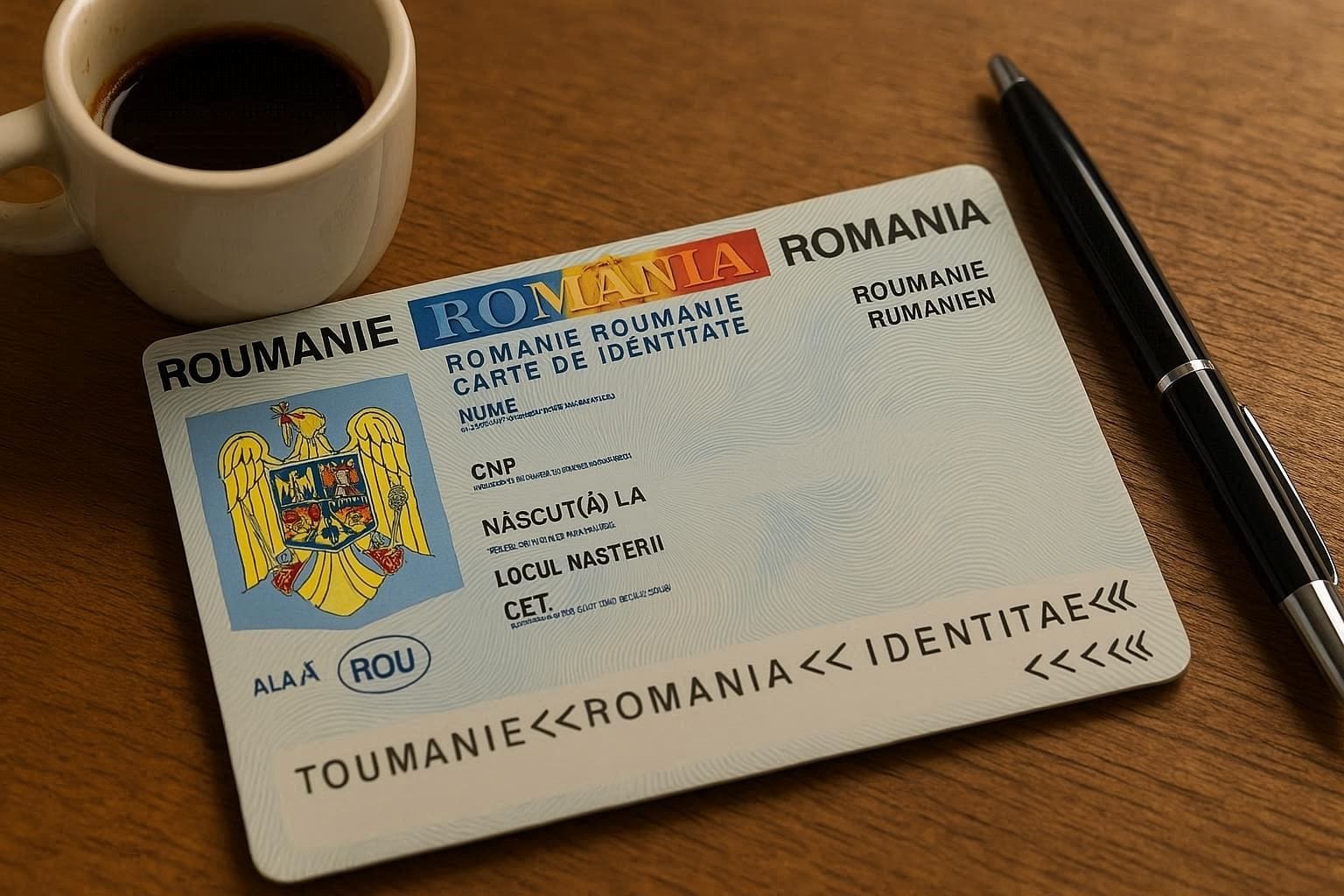
While both are identification codes, the NIF and CNP (Cod Numeric Personal or Personal Identification Number) serve different purposes and populations.

The CNP is assigned to Romanian citizens at birth and also functions as their tax identification number—meaning Romanian citizens with a CNP do not need to obtain a separate NIF for tax purposes.

The NIF, on the other hand, is specifically issued to foreign nationals who have tax obligations in Romania but do not possess a CNP.

Foreign citizens who earn income in Romania, own property, or conduct business must obtain a NIF by completing Form 030, ensuring they are properly registered as taxpayers with ANAF.

If foreign residents later obtain a residence permit and are assigned a CNP, the fiscal body will replace the NIF with the CNP in the tax records.

How to Obtain a NIF in Romania

Un calculator și un pix așezate lângă un formular de aplicare.

Eligibility for NIF Registration

Eligibility for NIF registration extends to both Romanian citizens and foreign citizens who need to pay taxes in Romania.

Foreign citizens are required to obtain a NIF if they engage in taxable activities, such as employment, business ownership, or property ownership.

To get a NIF, applicants must demonstrate a legitimate reason for needing a tax identification number within the Romanian fiscal system.

Our team of lawyers in Bucharest can assess your specific situation to determine your eligibility and guide you through the application process to obtain a NIF efficiently.

Required Documents for NIF Application

Here’s what foreign citizens generally need to provide when applying for a NIF in Romania.

This may include:

  • A copy of their passport.
  • A residence permit (if applicable).
  • Proof of address in Romania.

Depending on individual circumstances, additional documents like an employment contract or property ownership documents might also be necessary.

Form 030 is often used for non-EU citizens.

Our team of Romanian lawyers can provide a comprehensive list based on your individual circumstances to get your NIF, ensuring a smooth and successful application.

Steps to Apply for a NIF

The process to apply for a NIF typically involves submitting the required documents to the Romanian Tax Authority (ANAF).

The application can be submitted in person at an ANAF office or, in some cases, online.

After the application is processed, ANAF will issue a NIF.

For foreign citizens unfamiliar with the Romanian bureaucracy, this process can be daunting.

Atrium Romanian Lawyers Bucharest can act as your proxy, handling the entire application process on your behalf, from preparing the necessary documents to submitting the application and obtaining your NIF, allowing you to legally pay taxes in Romania.

Using the NIF in Romania

A person holds a document with the NIF code printed on it.

Paying Taxes in Romania with Your NIF

Your NIF serves as your taxpayer identification number, linking all your tax-related activities to your fiscal profile with the ANAF.

Whether you are filing income taxes, property taxes, or any other type of tax, you will need to include your NIF.

The Romanian NIF is essential to legally pay taxes in Romania, and accurately report all relevant financial information.

Understanding Your Tax Obligations as a Foreigner

As a foreign citizen in Romania, understanding your tax obligations is crucial for compliance with Romanian law.

Your tax obligations depend on several factors, including your residency status, the type of income you earn, and any applicable tax treaties between Romania and your home country.

Foreign citizens may need to pay income tax on their earnings, as well as other taxes such as social security contributions.

Consulting with our Romanian legal experts will help you understand your tax obligations.

Personal Tax and NIF Number Management

Proper management of your personal tax affairs and NIF number is essential for avoiding potential issues with the Romanian Tax Authority (ANAF).

Keep your NIF information secure and readily accessible for all tax-related transactions.

It’s also important to keep your contact information updated with ANAF to ensure you receive important notifications and correspondence.

If your personal circumstances change, such as a change of address or employment status, ensure these changes are reflected in your tax records.

Common Issues and Solutions

A calculator and a notepad on a desk with tax-related notes.

Problems in NIF Registration

While the NIF registration process is generally straightforward, applicants may encounter certain issues.

Common problems include incomplete or incorrect documentation, delays in processing, or difficulties navigating the ANAF bureaucracy.

Foreign citizens may face language barriers or lack of familiarity with Romanian tax regulations, further complicating the process.

Rectifying Errors in Your NIF

If you discover an error in your NIF information, it is crucial to rectify it promptly with the ANAF.

Errors can lead to complications with tax filings, penalties, or other issues.

To correct an error, you will typically need to submit a written request to ANAF along with supporting documentation.

This may involve completing form 030.

Atrium Romanian Lawyers can help with the necessary paperwork and communication with ANAF to correct any errors.

Contacting Authorities for Assistance

If you require assistance with your NIF, tax-related matters, or any issues with the Romanian tax system, contacting the appropriate authorities is essential.

The Romanian Tax Authority (ANAF) is the primary government agency responsible for tax administration.

You can contact ANAF through various channels, including phone, email, or in-person visits to an ANAF office.

For personalized guidance and support, consider engaging our Romanian Law Office as your proxy, offering assistance in Romanian tax matters.

NIF Code in Romania: Understanding Your Tax Identification Number

What is a NIF code in Romania?

The NIF code, or tax identification number, is a unique identifier assigned to individuals and entities for tax purposes in Romania.

It is essential for natural persons and legal entities to register for a NIF to legally pay their taxes and conduct various financial transactions within the Romanian state.

How can I obtain a NIF in Romania?

To obtain a NIF, you must submit a request to the Romanian tax authority.

Natural persons need to present identification documents, proof of residence, and fill out the necessary forms.

Documentation can be submitted in original at the fiscal office, and it typically takes a few days for the issuance of the document.

What are the differences between CNP and NIF?

The CNP, or personal numeric code, is a unique identification number assigned to Romanian citizens, while the NIF is specifically for tax purposes.

Although both codes serve as identification, the NIF is essential for business operations and tax obligations, whereas the CNP is primarily used for civil identification.

Do I need a NIF if I actually live in Romania?

If you actually live in Romania and plan to engage in any economic activities, you will need to obtain a NIF.

This applies to both Romanian citizens and foreigners who intend to pay taxes in Romania or conduct business operations.

Can a proxy obtain my NIF if I live in Bucharest?

Yes, a proxy can obtain your NIF on your behalf as long as they have the necessary authorization and documentation.

If your proxy lives in Bucharest, they can represent you at the fiscal office to facilitate the process of obtaining your NIF.

What happens if I do not have a NIF?

If you do not have a NIF, banks might refuse to open an account for you, and you may encounter difficulties in legally paying your taxes.

It is important to obtain a NIF to avoid complications with financial transactions and tax compliance.

Can I avoid double taxation with a NIF?

Having a NIF can help you navigate tax obligations and potentially avoid double taxation, especially if you are a foreign resident with income generated in Romania.

By properly declaring your tax status and utilizing tax treaties, you can minimize the risk of being taxed twice on the same income.

What documents do I need to attach to obtain a NIF?

To obtain a NIF, you need to attach the following documents: a valid identification document, proof of residence in Romania, and any additional forms required by the Romanian tax authority.

Our Romanian legal specialists advise to ensure that all documents are submitted in original and have proof of delivery to expedite the process.

Romania B2B e-Invoicing: Navigating the RO e-Factura System

Romania B2B e-Invoicing: Navigating the RO e-Factura System

Are you ready for Romania’s new e-invoicing rules?

The RO e-Factura system has changed how businesses handle B2B and B2G deals.

Not following this digital shift can lead to big fines.

Are you ready to tackle the challenges of electronic invoicing?

RO e-Factura System

Key Takeaways

  • Romania’s RO e-Factura system became mandatory for B2B transactions starting July 1, 2022, and B2G transactions as of July 1, 2022.
  • Businesses failing to comply with the new e-invoicing regulations face fines ranging from EUR 200 to EUR 2,000, depending on their size.
  • The RO e-Factura system mandates that all B2B and B2G transactions take place on the platform, with non-compliance resulting in penalties of up to 15% of the total invoice value.
  • Mandatory e-invoicing for B2C transactions in Romania is expected to start on January 1, 2025, following a voluntary phase that began in July 2024.
  • Businesses must register on the Romanian Virtual Private Space (SPV) and the RO e-Factura platform to issue and receive electronic invoices in compliance with the new regulations.

Understanding Romania’s Electronic Invoicing Transformation

Romania’s move to digital billing has changed a lot with the RO e-Factura system.

This change aims to make tax compliance better, cut down fraud, and boost business efficiency.

Current State of Digital Billing in Romania

Starting January 2024, Romania made a rule for B2B e-invoicing that lasts until December 2026 or when ViDA is adopted.

There’s a grace period until May 31, 2024.

This period brings two new features: pre-filled data and English for foreign taxpayers using E-factura.

Key Drivers Behind E-invoicing Implementation

  • Enhancing tax compliance and reducing fraud;
  • Improving business efficiency through digitalization;
  • Aligning with European Union’s e-invoicing standards.

Timeline of E-invoicing Mandates

  1. B2G implementation began in 2020;
  2. B2B mandate initiated in January 2024;
  3. Planned B2C implementation scheduled for January 2025.

The Romanian Finance Authority checks for compliance every month.

They make sure everyone follows the rules for fiscalizare online, online fiscal reporting, and SAF-T file generation.

Not following these rules can lead to big fines, up to 15% of the invoice.

It’s key to keep master data right to avoid problems with Romanian tax authority integration.


RO e-Factura System: Platform Overview and Features

The RO e-Factura system, also known as ANAF, is Romania’s national e-invoicing solution for B2B e-invoicing and digital billing. It generates electronic documents that meet the RO_CIUS and EU EN 16931 standards.

Some key features of the RO e-Factura system include:

  • Real-time monitoring and data encryption for enhanced security;
  • Automatic application of the Ministry of Finance’s digital signature after validation;
  • Support for the UBL 2.1 format, generating XML documents readable by both humans and machines.

The platform can be accessed from any device, including PCs, laptops, tablets, and smartphones.

It allows for unlimited invoice sending and receiving.

You can also create customized invoices and documents for products, services, and partners.

FeatureDescription
Currency OptionsInvoices can be generated in the desired currency, such as RON, EUR, or USD, with automatic integration of the current exchange rate from the National Bank of Romania website.
Export OptionsInvoices can be exported in various formats, including CSV, PDF, and XML.
Digital SignatureA single digital signature is sufficient, regardless of the number of users, simplifying the signing process.
Predefined CatalogsThe system provides pre-populated catalogs for countries, counties, localities, and units of measurement, streamlining the invoice creation process.
Accounting DocumentsThe platform enables the rapid generation of various accounting documents, such as NIR (Incoming Goods Receipt), consumption voucher, fiscal voucher, and accompanying goods receipt.
Management ReportsThe system offers essential management reports, including store cards, product stocks, and inventory lists, with automated calculations and double or triple copy printing of receipts.

The RO e-Factura system has been in use for 2 years.

It provides a comprehensive automated e-invoicing solution for businesses in Romania.

Its features aim to streamline the b2b e-invoicing process, enhance data security, and support compliance with evolving Romanian e-invoicing regulations.

RO e-Factura system

Mandatory E-invoicing Requirements for Different Business Sectors

Romania is moving towards digital transformation.

This has led to strict e-invoicing rules for different business areas.

It’s key for companies in the region to know these rules well.

B2B Transaction Requirements

Starting January 1, 2024, all B2B deals in Romania must go through the RO e-Factura system.

Companies have until May 31, 2024, to follow this rule or face penalties.

Not using electronic invoices can lead to fines of 1,000-2,000 EUR for big companies, 500-1,000 EUR for medium ones, and 200-500 EUR for small ones.

B2G Implementation Standards

The rule for B2G (Business-to-Government) transactions in Romania started on July 1, 2022.

Now, all businesses dealing with Romanian public bodies must use the e-Factura platform for invoices.

This makes the public buying process smoother and government spending clearer.

Upcoming B2C Regulations

The Romanian government is making invoicing digital by introducing B2C (Business-to-Consumer) rules.

From July 1, 2024, a voluntary phase will start, and then it will be mandatory from January 1, 2025.

The RO e-Invoice system will be used for all invoices to customers, making transactions consistent and standard.

In all sectors, Romanian companies must use the national electronic invoice system.

This is to keep VAT compliance and help with the country’s digital growth.

Not following these rules can lead to big fines, showing how important it is to keep up with the latest laws.

e-invoicing requirements

Technical Specifications and Format Requirements

As Romania moves into the digital age, the RO e-Factura system is key.

It makes blockchain-based invoicing and managing fiscal data easier.

This platform uses the Universal Business Language (UBL) 2.1 format, common in the European Union.

Businesses send invoices as XML files, making data exchange smooth.

Though electronic signatures are not needed, the Romanian Ministry of Finance adds its digital seal to approved e-invoices.

This makes sure the fiscal data is real and safe.

Companies must send their digital invoices within 5 working days after the transaction to meet RO e-Factura system rules.

Technical SpecificationRequirement
Invoice FormatUBL 2.1 XML
Electronic SignatureNot required (Ministry of Finance applies digital seal)
Submission Deadline5 working days from transaction date

Following these technical specs and format rules helps Romanian businesses.

They can link their digital invoicing systems with the RO e-Factura system.

This makes managing fiscal data and e-billing easier.

Registration and Access to the Romanian Virtual Private Space (SPV)

To use Romania’s paperless billing system, RO e-Factura, businesses must first sign up on the Virtual Private Space (SPV).

This step became necessary as of March 1, 2022.

It’s part of Romania’s push to make tax processes digital and fight tax evasion.

Step-by-Step Registration Process

First, you need to create an SPV account.

Then, you must submit Form 084 to the National Agency for Fiscal Administration (ANAF).

After submitting the form, your registration is approved on the first of the next month.

This makes sure documents are exchanged securely with tax authorities.

Required Documentation and Forms

To sign up for the SPV, you’ll need to provide several documents.

One of these is a qualified digital certificate from a certified Romanian provider.

This certificate is key for secure, encrypted exchanges of electronic invoices and tax documents.

Access Management and Security

The SPV uses strong security and access management to protect your data.

It has features like multi-factor authentication and audit trails.

These ensure your electronic invoices and transactions are safe and private.

By linking with the RO e-Factura platform, the SPV helps businesses with their tax duties.

It makes the billing process more efficient and paperless.

This move is a big step for Romania towards a more digital and clear tax system.

Electronic Invoice Generation and Submission Process

In Romania, companies can make invoices through their ERP systems or third-party digital solutions.

These invoices need to be sent to the RO e-Factura system in XML format within 5 working days.

The RO e-Factura system checks the invoices.

If an invoice is okay, it adds electronic signatures automatically.

But, if there are errors, it sends a file with the issues so businesses can fix and resubmit.

If a customer rejects an invoice, the company must issue a credit note.

Then, they can send a new, correct invoice.

This keeps the e-invoicing system in Romania secure and reliable.

Following these steps, Romanian businesses can smoothly send invoices through the RO e-Factura system.

This makes sure they meet the country’s digital billing rules.

Compliance and Penalty Framework

As Romania moves towards a digital economy, it has set up a strong system for compliance and penalties.

This is to make sure everyone uses the RO e-Factura system.

Businesses in Romania need to know about the penalties for not following the rules.

They also need to understand the grace periods to avoid fines and keep their operations running smoothly.

Non-compliance Penalties

Not following the e-invoicing rules can lead to big fines for Romanian businesses.

The penalties can be between 1,000 RON (about €200) and 10,000 RON (about €2,000).

This depends on the size of the business.

Also, a 15% fine of the total invoice value might be added for transactions not done through the RO e-Factura system.

Grace Periods and Deadlines

  • B2B e-invoicing became mandatory from July 1, 2024, with a grace period until June 1, 2024, before penalties were enforced.
  • Businesses had until July 1, 2024, to fully transition to the RO e-Factura system for all domestic B2B transactions.
  • The mandatory e-invoicing for B2C transactions is scheduled to begin on January 1, 2025, with a grace period and penalty enforcement timeline to be determined.

It’s very important for Romanian businesses to keep up with the changing e-invoicing rules.

They need to know about the grace periods and deadlines.

This way, they can avoid fines and help Romania modernize its digital infrastructure.

It will make the business environment more efficient, transparent, and tax-compliant.

Document Storage and Archiving Requirements

In Romania, the RO e-Factura platform is key for managing electronic invoices.

After validation, e-invoices are stored on this platform for 60 days.

Both senders and recipients must save these documents for at least 10 years.

This is to meet tax regulations and for future audits.

Businesses in Romania are using services for archiving.

These are certified electronic archive administrators that follow Romanian laws and  help businesses archive electronic invoices.

It offer automatic and manual archiving.

This ensures documents are quickly available for a long time, with options for export during audits or legal cases.

By using this platform, businesses can avoid human errors and work more efficiently.

It keeps important financial information safe and easy to access.

The Romanian e-invoicing system is getting more complex.

Starting in 2025, all B2B, B2C, and B2G transactions will need e-invoicing.

Businesses must focus on proper document storage and archiving to stay compliant and avoid fines.

Working with trusted providers will help manage e-invoices better and keeps data safe and accessible for the long term.

Integration Options with Existing Business Systems

Switching to Romania’s electronic invoicing system, RO e-Factura, needs businesses to link their current systems.

This link is key to making the e-invoicing process smoother and following the new rules.

ERP Integration Solutions

Businesses can use special ERP integration tools to connect their systems with RO e-Factura.

These tools help with making invoices automatically, checking their format, and sending data safely.

This makes the e-invoicing process easier and less likely to be rejected.

Third-party Service Providers

Another option is to work with third-party e-invoicing services. They create invoices in the right XML format and keep up with Romanian rules.

This lets businesses focus on their main work while making sure they follow the rules and work efficiently.

FeatureERP IntegrationThird-party Service Providers
Automated Invoice Generation
Format Validation
Secure Data Transmission
Regulatory Compliance
International Transaction SupportLimited

By using ERP integration or third-party services, Romanian businesses can easily move to the automated invoicing system Romania, paperless billing Romania, electronic invoicing, and digital invoicing needed by RO e-Factura.

This makes their work flow better and ensures they meet the new rules.

Best Practices for Implementation Success

As Romania gets ready for mandatory e-invoicing by January 2024, companies need to get ready too.

They should check if they meet legal standards, do audits on their tech and people, and gather data on invoice volumes.

Keeping up with new rules and thinking about growth are key.

Working with service providers can help businesses deal with the e-invoicing landscape in Romania.

This ensures they follow the RO e-Factura system rules.

Key Considerations for Successful Implementation

  • Check if you meet legal standards and find any missing pieces;
  • Look at your tech and people skills for paperless billing;
  • Get data on how many invoices you send out each month;
  • Keep an eye on new tax compliance rules;
  • Think about how you’ll grow in online billing;
  • See how you can connect your systems;
  • Work with third-party e-invoicing service providers for help.

By following these steps, Romanian businesses can smoothly move to the mandatory e-invoicing system.

This ensures they stay compliant and improve their VAT reporting.

Conclusion

Romania is moving to mandatory e-invoicing, changing its business and tax world.

The RO e-Factura system is key to this change.

It aims to boost tax compliance, cut down on fraud, and make businesses more efficient.

As automated invoicing and invoice management roll out, Romanian businesses must quickly adjust.

Romania’s transition to mandatory e-invoicing through the RO e-Factura system represents a significant shift in the business landscape, emphasizing the need for compliance and adaptability.

As companies navigate these new regulations, the role of Romanian lawyers becomes increasingly vital.

These legal professionals can provide essential guidance on compliance with the e-invoicing rules, helping businesses avoid hefty fines and streamline their operations.

For businesses seeking to understand and implement these changes effectively, engaging a lawyer in Romania is crucial.

They can assist in navigating the complexities of tax registration, compliance, and the specific requirements of the RO e-Factura system.

By leveraging the expertise of a Romanian lawyer, companies can ensure that they meet all legal obligations while benefiting from the efficiencies that electronic invoicing offers.

In conclusion, as Romania embraces digital transformation in invoicing, partnering with knowledgeable legal experts will be key to successfully adapting to these changes and maintaining competitiveness in the evolving market.

FAQ

What is the RO e-Factura system?

The RO e-Factura system is Romania’s national e-invoicing platform.

It was launched in November 2021.

It aims to improve tax compliance, reduce fraud, and boost business efficiency.

When did e-invoicing become mandatory in Romania?

E-invoicing became mandatory for B2G transactions on July 1, 2022.

For B2B transactions, it started on January 1, 2024.

B2C e-invoicing will be mandatory from January 1, 2025.

What are the key features of the RO e-Factura system?

The RO e-Factura system creates electronic documents according to RO_CIUS specs.

It supports UBL 2.1 format and offers real-time monitoring.

It also has data encryption and the Ministry of Finance’s signature after validation.

How do businesses access the RO e-Factura system?

Businesses need to register on the Virtual Private Space (SPV) to use the RO e-Factura system.

They must create an SPV account and submit form 084 to the National Agency for Fiscal Administration (ANAF).

What are the requirements for submitting e-invoices in Romania?

Businesses must send e-invoices to the RO e-Factura system in XML format within 5 working days.

The system adds electronic signatures if the invoice is approved.

What are the penalties for non-compliance with e-invoicing regulations in Romania?

Non-compliance can lead to fines from EUR 200 (1,000 RON) to EUR 2,000 (10,000 RON), based on business size.

A 15% fine of the total invoice value may apply for transactions outside the RO e-Factura system.

How long must businesses retain electronic invoices in Romania?

Businesses must keep e-invoices from the RO e-Factura platform for at least 10 years.

This is required by Romanian tax regulations.

What integration options are available for businesses to comply with the RO e-Factura system?

Businesses can link their ERP systems with the RO e-Factura platform.

Or, they can use third-party e-invoicing providers.

This ensures invoices are in the correct XML format and keeps them compliant.

What is the RO e-Factura system and when will it become mandatory for B2B transactions in Romania?

The RO e-Factura system is Romania’s electronic invoicing system designed to streamline B2B and B2G transactions.

It will become mandatory for B2B transactions starting July 2024.

This e-invoicing system is part of Romania’s efforts to digitize financial processes, reduce tax evasion, and improve fiscal transparency.

The system is managed by the Romanian Ministry of Finance and the National Agency for Fiscal Administration (ANAF).

Who is required to use the RO e-Factura system for B2B transactions?

All taxable persons established in Romania and registered for VAT purposes in Romania are required to use the RO e-Factura system for their B2B transactions.

This includes both domestic and foreign entities that are registered in the RO system and conduct business within Romania.

It’s important to note that this requirement applies to all types of businesses, regardless of their size or industry sector.

What are the key dates for the implementation of mandatory e-invoicing in Romania?

The implementation of mandatory e-invoicing in Romania follows a phased approach:

1. January 1, 2024: B2G e-invoicing becomes mandatory for all suppliers to government entities.

2. July 2024: B2B e-invoicing becomes mandatory for all taxable persons established in Romania.