Romanian Company Board Meetings

Navigating Romanian Company Board Meetings: Key Insights

Navigating Romanian Company Board Meetings: Key Insights

A group of people sits around a large conference table with papers and laptops in front of them.

Understanding the nuances of Romanian company board meetings is important for anyone involved in the management of companies in Romania.

This article provides key insights into the structure, legal requirements, and best practices for conducting effective board meetings in accordance with Romanian company law.

We will explore the roles and responsibilities of directors, shareholders, and other key stakeholders in the Romanian corporate governance landscape.

Understanding the Structure of Romanian Companies

A projector displays a presentation on the wall with graphs and charts.

Overview of Atrium Romanian Lawyers

Romanian company law dictates the formation, operation, and governance of various types of companies in Romania.

The type of company significantly impacts its organizational structure and the regulations governing its board meetings.

Atrium Romanian Law Office, an expert legal services provider, highlights that Romanian lawyers must navigate these regulations meticulously.

The Articles of Association define the company’s internal rules, complementing the broader legal framework and influencing how the board of directors operates and how resolutions of the general meetings are implemented.

Types of Romanian Companies

Romania provides various legal entity options, each possessing unique attributes.

Two frequently chosen forms are:

  1. Limited liability companies (SRL), which are often preferred by smaller businesses due to their simpler organizational structures.
  2. Joint-stock companies (SA), designed for larger enterprises and characterized by more complex governance procedures.

Ultimately, the selection between these legal structures will influence the company’s meeting and decision-making protocols.

Legal Entities and Their Responsibilities

As legal entities, Romanian companies bear specific responsibilities under Romanian law.

The board of directors, or the management board, plays a pivotal role in overseeing the company’s operations and ensuring compliance.

Members of the board are entrusted with representing the company, and their actions must align with both the law and the company’s articles of association.

The company is managed in accordance with the law, and the directors or the management board are responsible for preparing financial statements of the company and filing them with the Trade Registry.

Shareholder Meetings in Romania

A clock on the wall shows the time during the meeting.

Types of Shareholder Meetings

Under Romanian company law, various types of shareholder meetings serve distinct purposes.

These meetings are critical for the management of companies, ensuring transparency and shareholder involvement.

For example:

  1. The annual general meeting is a mandatory gathering where shareholders review the financial statements of the company and elect the board of directors or supervisory board.
  2. Extraordinary general meetings are convened to address specific, urgent issues such as amending the articles of association, increasing the share capital of the company, or approving significant transactions.

Convene Procedures for Shareholder Meetings

To convene a shareholder meeting, Romanian companies must adhere to specific procedures.

The board of directors, or in some cases, the supervisory board, must issue a notice to all shareholders, detailing the meeting’s agenda, date, time, and location.

This notice must be sent within the timeframe prescribed by Romanian company law and the company’s articles of association.

Failing to follow these procedures may invalidate the resolutions of the general meetings passed during the meeting, potentially leading to legal challenges.

Amending Resolutions in Shareholder Meetings

Shareholders can amend resolutions during the shareholder meeting under Romanian law, provided the proposed amendments are within the scope of the original agenda.

The process typically involves a motion to amend, followed by a vote among the shareholders.

For significant amendments, such as those affecting the articles of association, a supermajority vote may be required, and the amended resolution must be filed with the Trade registry.

Understanding these procedures is vital for effective corporate governance in Romanian companies.

The Role of the Board of Directors

A woman presenting a report on a screen in front of the board.

Composition of the Board of Directors

The composition of the board of directors is a critical element in the management of the company.

Under Romanian company law, the Articles of association of Romanian companies will specify the number of members of the board, their qualifications, and the process for their appointment.

In joint stock companies, the shareholder structure dictates that some directors or the management board are appointed by the general meeting of shareholders, ensuring the shareholder interests are adequately represented.

This structure aims to balance expertise and shareholder oversight.

Duties and Responsibilities of Board Members

Members of the board have extensive duties and responsibilities under Romanian law.

They are entrusted with the strategic direction of the company in Romania, ensuring compliance with regulations, and safeguarding the interests of all shareholders.

The board of directors is responsible for overseeing the financial statements of the company, ensuring their accuracy and timely filing with the trade registry.

In joint stock companies, the board also manages risk, sets policy, and monitors the performance of the management board, upholding their fiduciary duty to the company.

Decision-Making Processes in Board Meetings

Effective decision-making in board meetings is crucial for the success of Romanian companies.

The process typically involves presenting agenda items, facilitating discussion, and voting on resolutions.

The Articles of association often prescribe specific voting thresholds for different types of decisions.

For significant matters, such as amending the Articles of Association or increasing the share capital of the company, a qualified majority or even unanimous consent may be required.

Proper documentation of these decisions in the meeting minutes is essential for transparency and accountability, and the minutes should be filed with the trade registry as appropriate.

General Meetings: Best Practices

Several individuals are engaged in discussion, with some taking notes.

Planning and Conducting General Meetings

Effective planning is essential for successful general meetings in Romanian companies.

The board of directors must meticulously plan the agenda, ensuring all relevant items are included and clearly defined.

Romanian company law mandates that the Articles of Association dictate the specific procedures for these meetings.

As an expert legal services provider, we emphasize that proper notice must be given to all shareholders, and the meeting should be convened in a manner that promotes transparency and active participation, whether for limited liability companies or joint stock companies.

We are dedicated to helping our clients navigate these processes smoothly.

Legal Requirements for General Meetings

Adherence to legal requirements is paramount for general meetings in Romania.

Romanian law stipulates specific rules for voting, quorum, and documentation of resolutions of the general meetings.

The board of directors must ensure that all procedures align with both Romanian company law and the articles of association.

Members of the board must understand that failure to comply can invalidate the meeting’s outcomes, potentially leading to legal challenges.

Our firm provides expert guidance to Romanian companies in navigating these complex legal obligations, ensuring compliance and protecting shareholder interests.

Best Practices for Effective Communication

Effective communication is a cornerstone of successful general meetings.

Members of the board should ensure that information is presented clearly and concisely, allowing all shareholders to understand the issues at hand.

In Romanian companies, this includes providing materials in Romanian and, potentially, other languages if international shareholders are involved.

Encouraging open dialogue and addressing shareholder concerns promotes trust and transparency.

As a client-focused firm, we emphasize the importance of proactive communication to facilitate productive and legally sound board meetings.

Recent Developments in Romanian Company Law

Documents and folders are neatly arranged on the table for review.

Changes Impacting Board Meetings

Recent changes in Romanian company law have significantly impacted board meetings.

Amendments related to corporate governance and shareholder rights necessitate that directors or the management board stay informed and adapt their practices accordingly.

These changes may affect procedures for votes, the handling of resolutions, and the overall management of the company.

As an expert team of Romanian lawyers, we closely monitor these developments and provide timely advice to our clients, ensuring their companies remain compliant and competitive.

These updates are particularly relevant for both limited liability companies and joint stock companies.

Emerging Trends in Corporate Governance

Emerging trends in corporate governance are reshaping how Romanian companies conduct board meetings.

There is a growing emphasis on transparency, accountability, and environmental, social, and governance (ESG) factors.

Companies are increasingly adopting digital solutions to streamline meeting processes and enhance shareholder engagement.

The articles of association of Romanian companies are evolving to reflect these trends, often requiring more detailed reporting and greater shareholder involvement.

We assist our clients in integrating these best practices to enhance their corporate governance frameworks and attract investment.

Case Studies of Successful Board Practices

Examining case studies of successful board practices provides valuable insights for Romanian companies.

Instances where board meetings effectively addressed critical challenges, implemented innovative strategies, or improved shareholder relations offer practical lessons.

These examples often highlight the importance of diverse members of the board, robust decision-making processes, and proactive risk management.

We leverage our experience and expertise to help clients implement similar strategies, fostering a culture of excellence and driving sustainable growth for Romanian companies across various sectors, including both limited liability and joint stock companies.

FAQ:

What are the requirements for conducting board meetings in Romania?

In Romania, board meetings must comply with the applicable legislation, which includes the requirements set forth by the Romanian legislation.

Companies are required to convene meetings in accordance with their articles of association, which dictate the procedures shareholders must follow.

Additionally, the meeting must be held at the registered office or another location specified in the convening notice.

How can shareholders participate and vote in general shareholder meetings?

Shareholders can participate and vote in general shareholder meetings either in person or through electronic means.

The recent legal framework removes the requirement for companies to include identification data in the meeting notice, making it easier for shareholders to engage in the voting process, including the use of electronic voting in general.

What is the role of the supervisory board in Romanian companies?

The supervisory board is responsible for overseeing the management of the company and may appoint one or more directors.

Members of the supervisory board are appointed either directly by shareholders or through the general shareholder meeting, which can delegate this authority.

Their role is crucial in ensuring that the company adheres to the current legal framework concerning operational and strategic decisions.

How does electronic communication impact board meetings in Romania?

Electronic communication has transformed the way board meetings are conducted in Romania.

Companies may now utilize electronic means to convene meetings, allowing for greater flexibility and accessibility.

This shift aligns with the needs of the business, enabling stakeholders to participate remotely while ensuring compliance with the legal requirements set forth in the recent amendments to Romanian law.

What happens if a company fails to comply with the legal framework during a board meeting?

If a company fails to comply with the legal framework concerning board meetings, it may face legal repercussions, including invalidation of decisions made during the meeting.

The current legal framework emphasizes the importance of adhering to the stipulated procedures, such as ensuring that the convening notice is published at least 30 days prior to the meeting and that all necessary documentation is submitted.

Can a company hold a general shareholder meeting without the presence of all shareholders?

A general shareholders’ meeting may proceed without the attendance of all shareholders, as long as the required quorum is met.

Shareholders representing the absolute majority of the share capital must be present, either in person or via electronic means, for decisions to be valid.

The company’s articles of association typically specify the exact quorum requirements.

What are the implications of the deadline of 6 December 2024 for Romanian companies?

The deadline of 6 December 2024 is significant as it marks the date by which companies must comply with the new legal framework concerning board meetings and shareholder communications.

Companies that fail to meet these requirements may face penalties or other legal consequences.

It is essential for companies to stay informed and adjust their procedures accordingly to ensure compliance with the amended legislation.

How do secondary offices relate to board meetings in Romania?

Board meetings are generally held at the registered office.

Secondary offices may play a role in the operations of a company, particularly for those with representative offices in different locations.

However, companies may also convene them at secondary offices, provided this is specified in the articles of association.

This allows for greater flexibility in operations and can help accommodate shareholders who may be located in various regions.

Play
divorce Romania

Administrative Divorce in Romania vs Court Divorce: Key Differences

Administrative Divorce in Romania vs Court Divorce: Key Differences

When couples face irreconcilable differences, many assume lengthy court battles are inevitable.

But what if dissolving the marriage in Romania could align with mutual respect and efficiency?

Romanian law offers multiple pathways for spouses to legally separate, each tailored to specific circumstances.

administrative divorce in Romania vs court divorce

The Civil Code recognizes three primary methods: judicial processes, notarial agreements, and administrative solutions. These options vary in complexity, duration, and requirements.

For instance, simplified procedures exist when both parties agree on terms like asset division or child custody.

Choosing the right approach depends on factors such as cooperation levels and family dynamics.

While some cases require judicial oversight, others can resolve through streamlined administrative channels.

Legal professionals often emphasize early consultation to determine eligibility and avoid procedural delays.

Those navigating this process should contact office@theromanianlawyers.com for tailored guidance.

Expert advice ensures compliance with evolving regulations while protecting individual rights throughout the dissolution journey.

Key Takeaways

  • Romanian law provides judicial, notarial, and administrative separation options,
  • Mutual agreement significantly simplifies the process,
  • Child custody arrangements impact procedure selection,
  • Legal consultation helps identify optimal pathways,
  • Document preparation varies between methods,
  • Timelines differ based on case complexity.

Understanding Divorce Procedures in Romania

Three distinct legal avenues exist for couples seeking to dissolve their union.

Each method carries specific eligibility criteria and procedural steps, requiring careful evaluation of family circumstances and mutual agreements between partners.

divorce procedures in Romania

Overview of Judicial Divorce and Its Legal Basis

Courts handle separation requests when spouses cannot reach full consensus or face complex disputes.

This traditional approach demands filing at the district court near the last shared residence, ensuring jurisdictional accuracy.

Both parties must demonstrate unforced consent and legal capacity throughout proceedings.

Judicial oversight becomes mandatory for resolving conflicts involving asset distribution or child support disagreements.

Legal professionals often recommend this route when safeguarding individual rights requires formal adjudication.

The process typically involves multiple hearings and documented evidence submissions.

Administrative and Notarial Divorce Options

Mutually agreed separations without minor children qualify for streamlined civil registry processing.

Partners present a joint declaration alongside necessary documentation, expediting dissolution without court involvement.

This administrative path concludes faster but excludes cases with underage dependents.

Notarial alternatives accommodate parents who establish unified childcare arrangements beforehand.

Public notaries validate agreements covering parental authority and financial responsibilities, permitting separation despite having children.

Both methods prioritize efficiency while maintaining legal validity when all terms receive mutual approval.

Consulting office@theromanianlawyers.com helps determine eligibility and navigate documentation requirements for each procedure.

Expert guidance ensures compliance with evolving regulations while protecting personal interests during marital transitions.

Exploring “administrative divorce in Romania vs court divorce”

Choosing between separation methods depends on multiple factors.

Couples must evaluate their ability to collaborate and resolve disputes independently.

Legal frameworks prioritize efficiency while ensuring fair outcomes for all parties involved.

administrative vs court divorce comparison

Core Differences in Procedures and Requirements

Streamlined civil processes require full consensus between partners.

Both must sign documentation confirming no minor children exist from the union.

A mandatory 30-day reflection period precedes finalization.

AspectCivil Registry ProcessJudicial Process
EligibilityNo children & full agreementChildren or disputes present
Timeline60 days averageapprox. 3-12 months
Required AgreementAll terms settledCourt resolves conflicts
Child InvolvementProhibitedMandatory oversight
Legal OversightCivil officerJudge

When Mutual Agreement Simplifies the Process

Partners who settle financial and parental matters privately qualify for faster resolutions.

Complete alignment on asset division and childcare arrangements avoids courtroom delays.

Legal professionals at office@theromanianlawyers.com often mediate such agreements.

Disputes over property or visitation rights automatically trigger judicial involvement.

Even couples initially aligned on separation may require court intervention for specific disagreements.

Early legal consultation helps identify potential conflicts before filing paperwork.

Key Legal Requirements and Documentation

Legal dissolution of marital bonds demands careful adherence to statutory prerequisites.

Partners must meet specific conditions and submit properly executed paperwork to validate their separation under Romanian law.

divorce documentation requirements

Eligibility Criteria and Grounds for Dissolution

Four legal justifications permit marital termination:

  • Mutual consent with settled financial/parental matters,
  • Irreparable relationship breakdown,
  • Two-year separation for unilateral requests,
  • Severe health conditions preventing marital fulfillment.
RequirementStreamlined ProcessJudicial Process
Child StatusNo underage dependentsAny family situation
Agreement LevelFull consensusPartial or no agreement
Medical RestrictionsProhibited if impaired decision-making exists

Mandatory Cooling-Off Phase

A 30-day reflection period allows partners to reconsider their decision.

This safeguard applies even when both parties initially agree on separation terms.

Exceptions occur if one spouse lacks mental capacity to provide valid consent.

Essential documents include:

  • Original marriage certificate,
  • Valid identification papers,
  • Residency confirmation,
  • Parenting plans (if applicable).

Professional documentation assistance through office@theromanianlawyers.com ensures proper preparation of all required legal forms.

Experts verify compliance with evolving regulations while protecting individual rights throughout dissolution proceedings.

Practical Steps and Expert Advice for a Smooth Divorce Process

A smooth transition from marriage to independence demands careful legal navigation.

Early engagement with qualified professionals helps spouses address financial, parental, and logistical challenges effectively.

Strategic planning reduces conflicts while safeguarding individual rights throughout proceedings.

divorce process guidance

Consulting Legal Professionals

Contacting specialists at the initial stages prevents costly errors.

Romanian Attorneys assess property portfolios, international assets, and childcare arrangements to create tailored strategies.

Our expertise proves vital when drafting enforceable agreements or preparing court submissions.

Managing Financial and Family Matters

Matrimonial property regimes terminate upon filing separation documents.

Couples may choose:

AspectMutual AgreementCourt Decision
Asset DivisionPartners negotiate termsJudge determines split
Child ArrangementsParental plan requiredCourt-approved schedule
CostLower feesHigher expenses

Parental authority agreements must specify education, healthcare, and financial responsibilities.

Our legal teams help draft comprehensive plans prioritizing children’s welfare.

We can also mediate disputes over business interests or inherited properties.

Jurisdiction depends on the last family residence or marriage location.

Proper venue selection accelerates procedures while ensuring legal compliance.

Professional guidance remains essential for navigating bureaucratic requirements and meeting deadlines.

Conclusion

Navigating marital dissolution requires understanding distinct legal pathways tailored to specific circumstances.

Couples with full consensus and no underage children benefit most from streamlined processes, while contested cases demand judicial oversight.

Romanian law accommodates diverse scenarios through three validated methods: court proceedings, notarial settlements, and simplified administrative solutions.

Early consultation with legal experts proves critical for procedure selection.

Professionals assess cooperation levels, childcare needs, and asset complexity to recommend optimal strategies.

Those pursuing mutual agreements save time and resources, whereas disputed separations necessitate structured court interventions.

Finalizing marital termination hinges on precise documentation and statutory compliance.

Partners should prioritize expert guidance to navigate evolving regulations effectively.

For comprehensive support, contact office@theromanianlawyers.com to ensure rights protection throughout the dissolution process.

FAQ

What distinguishes administrative divorce from court divorce in Romania?

Administrative divorce occurs through a notary when spouses mutually agree on all terms, avoiding court.

Judicial divorce requires court intervention if disagreements exist regarding assets, child custody, or other legal matters.

Can spouses finalize a divorce without appearing in court?

Yes, if both parties agree on dissolution terms, they may opt for a notarial procedure.

This streamlined process eliminates court hearings but requires documented consent on parental authority, property division, and financial obligations.

How does mutual consent impact the timeline for dissolving a marriage?

Mutual agreement significantly accelerates proceedings.

Couples completing the mandatory 30-day reflection period can finalize the process within weeks, compared to months or years in contested cases requiring judicial review.

What legal criteria must couples meet for a notarial divorce?

Eligibility requires shared consent, no minor children, and a marital residence registered in Romania.

Spouses must also submit proof of marriage, joint declarations, and settlement agreements to the notary public.

Why is the 30-day reflection period mandatory?

Romanian law mandates this period to allow spouses to reconsider their decision.

It ensures both parties fully understand the implications of dissolution before legally formalizing the separation.

When is consulting a family law attorney advisable?

Legal counsel is critical if disputes arise over asset distribution, child support, or custody arrangements.

Attorneys also ensure compliance with Romanian Civil Code requirements and protect clients’ rights during negotiations.

How are parental responsibilities handled in uncontested cases?

Parents must outline custody terms, visitation schedules, and financial contributions in a joint agreement.

The notary or court validates this plan to safeguard the children’s best interests under Romanian family law.

What documentation is required to initiate proceedings?

Essential documents include marriage certificates, property deeds, child-related agreements, and proof of residence.

Notarial divorces additionally require a mutually signed dissolution contract.

Play
Crypto Romania 2025

Crypto License Romania 2025: Step-by-Step Company Formation for Digital Assets

Crypto License Romania 2025: Step-by-Step Company Formation for Digital Assets
crypto 2025 Romania

What laws regulate crypto in Romania in 2025?

Romania follows the EU MiCA Regulation and EU AML Directives. Main authorities:

  • ASF: Supervises crypto-asset service providers.
  • BNR: Oversees banking & e-money.
  • ONPCSB: AML/CFT enforcement.

👉 European Commission MiCA
👉 ASF | BNR | ONPCSB


MiCA Implementation Timeline in Romania

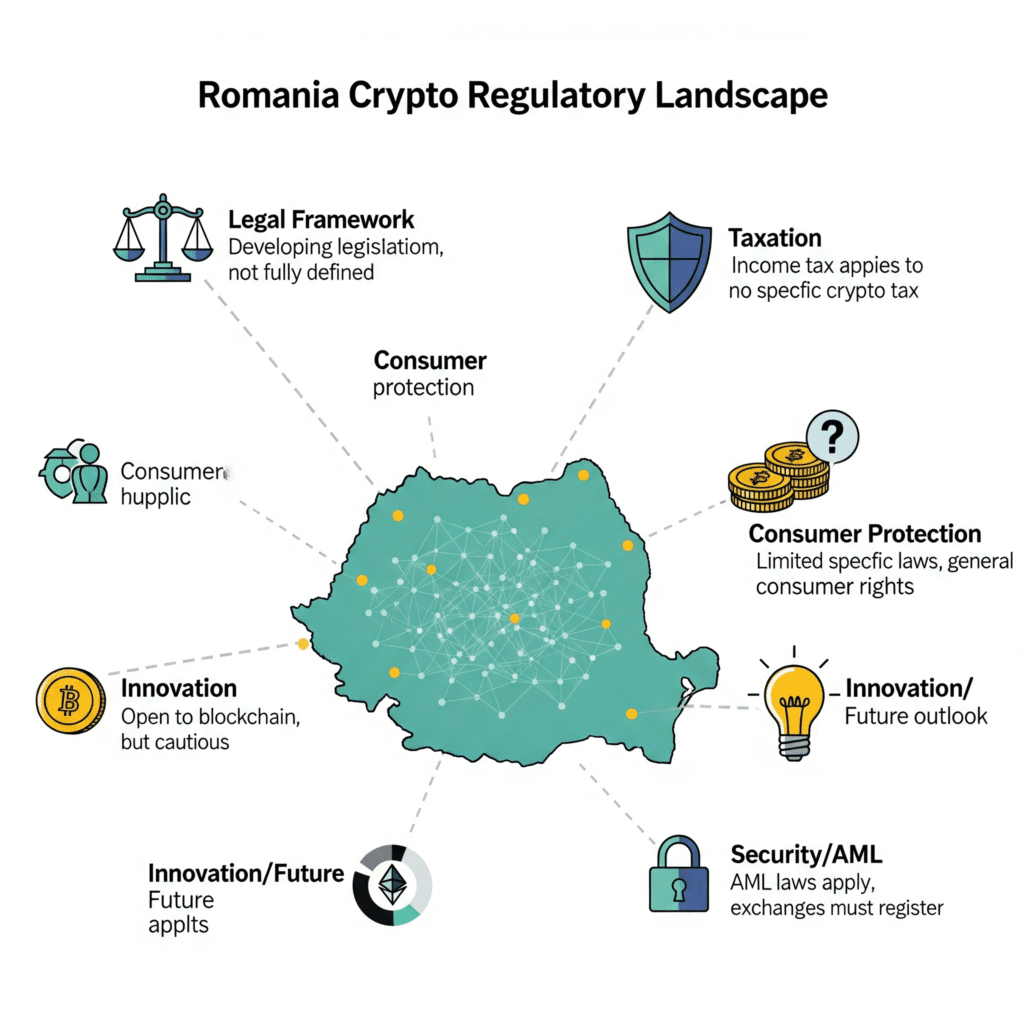
Romania Crypto Regulatory Landscape

DateMilestone
June 2024EU MiCA technical standards effective
Dec 2024Romanian guidance published
July 2026Deadline for CASPs to comply fully with MiCA

📊 Visual Timeline (Chart)

  • 2024 H1: EU-level guidance → 📘
  • 2024 H2: Romania issues notices → 🏛️
  • 2026 H2: Full MiCA compliance → ✅

Romanian Company Structures for Crypto Firms

Romanian Crypto Business Structures

Entity TypeCapital Requirement (Company Law)GovernanceBest Use CaseRegulatory Capital (Indicative)
SRLLow (check current law)Simple, flexibleStartups, wallet providers, MVP platforms~€25,000–€50,000
SAHigher (check current law)Strong governanceExchanges, custodians, trading platforms~€50,000–€75,000+
BranchN/A (not separate legal entity)Parent-controlledForeign firms entering RomaniaASF/BNR may require local license

📊 Visual Comparison (Bar Chart)

  • SRL: Low setup, flexible governance 🟩
  • SA: Higher capital, strong governance 🟦
  • Branch: Depends on parent company 🟨

Capital & Financial Obligations

Digital Currency Authorization Financial Requirements


Service TypeIndicative Minimum CapitalNotes
Wallet Provider€25,000May need liquidity reserves
Exchange€50,000Segregated accounts required
Trading Platform€75,000Stronger governance expectations

📈 Capital Requirement Graph (Illustrative)

  • Wallet: ▓▓ 25k
  • Exchange: ▓▓▓▓ 50k
  • Trading Platform: ▓▓▓▓▓▓ 75k

Required Documentation

  • Articles of association & ownership structure.
  • AML/KYC policies, sanctions screening, SAR workflows.
  • IT & security policies, custody architecture, penetration tests.
  • Financial forecasts, proof of liquidity & audited accounts.
  • Fit-and-proper evidence for directors.
  • Business plan with projections.

AML & KYC Compliance Standards

RequirementDetails
Customer Due Diligence (CDD)ID verification, beneficial owner checks, sanctions & PEP screening
Enhanced Due Diligence (EDD)Source of funds, high-risk monitoring, senior approval for onboarding
Transaction MonitoringBlockchain analytics, alerts, suspicious activity reports to ONPCSB
GovernanceAML officer appointment, staff training, independent AML audits

Registration Process (Romania 2025)

StageKey ActionsDuration
Pre-applicationPrepare compliance pack (AML, IT, governance)2–6 weeks
Application SubmissionFile with ASF/BNR, pay fees1–3 weeks
Review & ClarificationsAML, governance, capital checks4–12 weeks
Inspection & InterviewsIT & operational audit4–8 weeks
Decision & AuthorizationLicense granted + reporting dutiesOngoing

📊 Visual Process Flow
➡ Pre-application → 📂 Submission → 🔎 Review → 🖥️ Inspection → ✅ License


Tax Implications for Crypto Businesses

ActivityTax TreatmentNotes
Crypto TradingCorporate income tax on profitsRecord all trades, conversions
MiningBusiness or miscellaneous incomeTrack electricity & operational costs
Staking RewardsTaxed as income when receivedMaintain timestamped logs
Salaries in CryptoSubject to payroll withholding taxAdapt payroll systems

📊 Visual Tax Map

  • Trading: 📈 Profits → taxed under corporate tax.
  • Mining: ⚡ Treated as business income.
  • Staking: 🔗 Rewards → taxable when received.
  • Payroll: 💼 Crypto salaries taxed.

Frequently Asked Questions (FAQ)

1. What is the current status of cryptocurrency regulation in Romania in 2025?


Romania is aligning with the EU Markets in Crypto-Assets (MiCA) regulation while also enforcing national AML/CFT rules.

Providers must comply with both MiCA and Romanian laws, supervised mainly by ASF, BNR, and ONPCSB.

2. What business structures are available for crypto companies in Romania?


The most common options are:

  • SRL (Limited Liability Company) – best for startups and smaller providers.

  • SA (Joint Stock Company) – suited for larger exchanges or custody platforms.

  • Branch – used by foreign firms entering Romania.

3. What are the capital requirements for a crypto license in Romania?


Indicative minimums under MiCA:

  • Wallet providers: ~€25,000

  • Exchanges: ~€50,000

  • Trading platforms: ~€75,000
    Final figures must be confirmed with ASF or the competent authority.

4. How long does the licensing process take?


On average, 3–6 months, depending on the completeness of your compliance documentation and regulator reviews.

5. Can foreign companies operate in Romania with a branch office?


Yes, but depending on ASF/BNR recognition of the parent’s license, a local authorization may still be required.

6. Are crypto salaries and rewards taxed in Romania?


Yes. Crypto salaries are subject to payroll withholding tax, while trading profits and staking rewards are taxed as business income or capital gains depending on activity type.

Play
digital products and subscriptions Romania

Selling Digital Products and Subscriptions in Romania: Legal Steps & Compliance Tips

Selling Digital Products and Subscriptions in Romania: Legal Steps & Compliance Tips

A person sits at a desk with a laptop, looking at digital product listings.

Selling digital products and subscriptions in Romania requires careful planning and legal know-how.

Are you ready to start a digital business in Romania?

It’s a big step, but you can avoid legal issues if you follow the right procedures.

Romania’s digital market offers great opportunities for entrepreneurs.

As an EU member state, Romania strictly enforces e‑commerce and VAT regulations.

You’ll need to manage VAT correctly, protect consumers, and adhere to e‑commerce rules.

Selling digital products and subscriptions in Romania provides growth opportunities for SaaS platforms, creators, e‑learning providers, and other online businesses.

Key Takeaways

  • Understand Romania’s digital product sales regulations,

  • Comply with EU and Romanian VAT registration requirements,

  • Learn essential legal steps for Romanian e‑commerce platforms,

  • Develop strategic digital product marketing approaches,

  • Recognize consumer protection and documentation standards.

For personalized legal advice on selling digital products in Romania, email our expert team of Romanian Lawyers at office@theromanianlawyers.com.

Understanding Digital Product Sales Regulations in Romania

A stack of digital devices, like tablets and smartphones, displaying various digital products.

Starting a digital business in Romania means knowing the laws well.

If you sell eBooks or other digital goods, there are specific regulations you must follow.

These ensure a fair and safe market for everyone.

Key Legal Requirements for Digital Sellers

Digital sellers in Romania must:

  • Register for VAT if you cross the turnover threshold.

  • Apply correct VAT rates on digital product sales.

  • Classify products properly to comply with tax rules.

  • File VAT returns and maintain records as required.

Romanian E‑commerce Framework Overview

Romania enforces EU-aligned rules for digital downloads and services, which include VAT compliance and invoicing standards.

Digital Product Categories and Classifications

Digital products are grouped into categories, each with distinct tax and legal implications.

Proper classification helps avoid issues.

Main categories include:

  • Software and apps,

  • E‑books and digital publications,

  • Online courses and e-learning,

  • Digital media and streaming services.

Stay updated on legal changes and retain comprehensive records to operate smoothly.

VAT Registration and Compliance for Digital Products

A calendar marked with important tax deadlines and reminders.

Understanding VAT rules is essential for digital product sellers in Romania.

VAT Thresholds & Registration

Registration Steps

  • Register within 10 days after you exceed the turnover threshold.

  • Non‑EU businesses must appoint a fiscal (tax) representative.

Registration TypeKey RequirementsProcessing Time
Resident CompaniesLocal VAT registration if turnover > RON 300,0005–7 business days*
Non‑Resident CompaniesLocal VAT representative required~10–14 business days*
Digital Product Sellers*Provide product documentation and VAT forms~7–10 business days*

*Times are estimations for context.

VAT Returns & Reporting Deadlines

  • File VAT returns monthly or quarterly (if turnover below RON 300,000 or €88,500).

  • Return and payment deadline is the 25th of the month following the fiscal period.

Accurate record-keeping of invoices, VAT reports, and sales data is vital.

E‑Invoicing Requirements and Documentation

Romania mandates electronic invoicing (e‑invoicing) for B2B and public sector invoices via the national RO e‑Factura (RO_CIUS format) system.

  • B2B and B2G invoices must be sent within 5 working days of issuance via RO e‑Factura.

  • Since January 2025, B2C e‑invoice submissions to RO e‑Factura became mandatory (with exceptions for simplified invoices).

Invoices require digital signatures and must follow RO_CIUS XML format.

Romania also enforces SAF‑T reporting (standardized tax control file).

Non-resident taxpayers must submit SAF‑T starting January 2025.

Digital Subscription Models and Legal Framework

A group of diverse individuals discusses digital sales strategies around a table.

Subscription services in Romania must include:

This ensures trust and regulatory compliance in subscription offerings.

Payment Gateway Integration and Compliance

A close-up of a credit card being inserted into a card reader.

When integrating payment gateways in Romania, ensure:

Payment Gateway FeatureCompliance RequirementImportance Level
GDPR Data ProtectionEU regulatory complianceHigh
Anti‑Money LaunderingFinancial regulationCritical
VAT Auto‑CalculationTax complianceEssential

Select platforms compliant with both Romanian and EU regulations, and consider transaction fees, ease of use, and coverage.

Cross‑border Digital Sales and EU Regulations

A group of people discussing digital marketing strategies in a bright office.

Cross-border digital sales benefit from OSS:

  • OSS lets sellers centralize VAT registration and reporting across the EU WikipediaSovos.

  • Romania can serve as primary OSS registration country Sovos.

  • Applies to B2C digital services exceeding €10,000.

Implement strategies such as multilingual support and transparent currency pricing for effective international operations.

Digital Rights Management and Copyright Protection

O persoană stând la birou cu un laptop, analizând datele despre vânzările de produse digitale.

To protect digital content in Romania:

Protection MethodEffectivenessComplexity
Digital WatermarkingHighMedium
Content EncryptionVery HighHigh
Legal RegistrationHighLow

Keep documentation like contracts and licensing agreements for at least 10 years.

Marketing Digital Products in the Romanian Market

Un site de piață digitală afișat pe un ecran de computer.

To thrive in Romania, tailor your marketing:

Digital Marketing Channels:

  • Social media (Facebook, Instagram),

  • Local marketplaces,

  • Professional networks and Romanian ad platforms.

Comply strictly with GDPR in ads and influencer campaigns.

Marketing ChannelEffectivenessCompliance Level
Social Media AdvertisingHighStrict GDPR enforcement
Content MarketingMediumModerate regulation
Influencer PartnershipsHighRequires disclosure

Blend storytelling and creative localization with legal compliance for compelling promotion.

Conclusion

Selling digital products in Romania demands a solid grasp of legal frameworks, especially around VAT, e‑invoicing, consumer protections, and marketing.

A balanced strategy that combines compliance with innovation can help your digital venture succeed in Romania’s thriving online economy.

For tailored legal guidance, reach out to Atrium Romanian Lawyers at office@theromanianlawyers.com.


FAQ

What are the primary legal requirements for selling digital products in Romania?
Businesses must register for VAT if exceeding the threshold, use e‑invoicing, keep documentation, and follow EU consumer protection rules.

How does VAT registration work for digital product sellers?
Resident sellers register when turnover passes ~RON 300,000. Non‑resident sellers must register immediately.

Registration is done via the ANAF portal.

What digital product categories are most popular in Romania?
E‑books, online courses, software, digital design assets, and training materials are in high demand.

What is the standard VAT rate for digital products in Romania?
Typically 21%, though some categories may benefit from reduced rates (e.g., eBooks; check with a tax professional).

Are there specific e‑invoicing requirements?
Yes—B2B/B2G invoices must be sent via RO e‑Factura.

From 2025, B2C e‑invoices are also mandatory in many cases.

How do cross‑border digital sales work from Romania?
Use the EU OSS to streamline VAT collection and reporting across EU member states.

What payment gateways are recommended?
Use GDPR‑compliant platforms that support VAT auto‑calculation and meet AML standards; choose based on fees and local support.

How can creators protect their intellectual property?
Register copyrights, use DRM measures like watermarking and encryption, and keep legal records for at least 10 years.

What marketing strategies work best?
Localized content, compliant social media campaigns, influencer marketing (with disclosures), and channel-specific ads that respect GDPR.

What are the key considerations for subscription models?
Ensure clarity in terms, pricing, renewal, cancellation, and refunds, aligned with EU law for digital content.

Which platforms are good for digital product sales?
Use platforms like Shopify, WooCommerce, or specialized course LMSs that support Romanian VAT, multichannel localization, and secure delivery.

How can I automate email marketing?
Integrate with services like Mailchimp or ActiveCampaign that sync with your store, segment customers, and send follow-up or upsell campaigns.

How do I comply with VAT obligations?
Register appropriately, charge correct VAT, file returns on schedule, and maintain detailed records to mitigate risks.

How can I create standout digital products?
Offer high‑quality content tailored to Romanian needs, competitive pricing, and effective messaging—possibly via TikTok or other trending platforms.

What upselling strategies work?
Offer complementary products at checkout, use “pay‑what‑you‑want” models, or implement personalized onboarding to increase average order value.

Play
Remote company formation in Romania represented as a legal gateway to Bucharest

Remote Company Formation in Romania: 2026 Guide for Foreign Founders

Remote company formation in Romania is possible in many cases without the founders travelling to Romania. The incorporation filing can be handled electronically or through an authorised representative, but the correct route depends on how documents are signed, where the founders are based, who provides the registered office and what identification checks apply.

Cross-border legal process for remote company formation in Romania
Remote incorporation requires a coordinated bridge between foreign documents, Romanian registration and post-incorporation requirements.

This guide explains the remote procedure for foreign individuals and overseas companies. It focuses on the digital and cross-border execution issues that arise after the founder has decided to establish a Romanian company. For the broader choice of entity, capital and corporate structure, see our company formation in Romania guide.

Can you form a Romanian company entirely remotely?

Often yes, but “remote” must be assessed step by step. The Trade Register application can be filed online, and a lawyer or another properly authorised representative may handle the procedure, but foreign-document formalities, identity verification and bank onboarding can still create offline or jurisdiction-specific requirements.

Romania’s National Trade Register Office online portal offers services including company-name reservation and incorporation. Law No. 265/2022 also regulates online company formation and electronic communication with the Trade Register.

Under Article 105 of Law No. 265/2022, the registrar may exceptionally request physical presence if there is a suspicion of identity falsification. The same provision states that physical presence is not required when the incorporation application and supporting documents, including the articles of association, were prepared by a public notary or lawyer. If presence is exceptionally requested during online formation, the remaining stages may still be completed electronically.

StageCan it be handled remotely?Important qualification
Name reservationNormally yesThe proposed name must satisfy Trade Register availability and naming rules.
Preparation of incorporation documentsYesThe documents must reflect the chosen structure, activities, management and registered office.
Signing and representationOften yesThe route may use a qualified electronic signature or a compliant power of attorney, depending on the document and filing method.
Trade Register filingYesElectronic filing must meet the portal’s technical and signature requirements.
Bank account onboardingBank-dependentBanks apply their own know-your-customer, beneficial-owner and risk procedures.
Sector permitsDepends on the activityRegulated activities may require separate authorisations before or after incorporation.

What are the steps for remote company formation in Romania?

The legal sequence is straightforward, but the filing route should be chosen before documents are signed. Select each step below to see its practical purpose.

Remote formation roadmap
Six coordinated steps

Select a step to review what must be resolved before the next stage.

Confirm the structure

Choose the company type, shareholders, directors, activities, decision rules and capital before preparing the filing documents.

  1. Confirm the company structure. Decide the entity type, ownership, administrators, business activities and signing authority. An SRL is common, but it should not be selected automatically when investment, governance or regulated activities require another structure. See our 2026 guide to Romanian limited liability companies.
  2. Reserve the company name. Submit alternatives that comply with the Trade Register rules. Our separate guide explains how to register a company name in Romania.
  3. Establish the registered office. Every Romanian company needs a valid registered office and supporting title to use the address. For the documents commonly used in an incorporation file, see our foreign-founder document checklist.
  4. Prepare, formalise and translate the documents. Coordinate the articles of association, identity or corporate records, declarations, beneficial-owner information, office evidence and powers of attorney. Foreign public documents may require apostille, legalisation or an applicable exemption, depending on the issuing state, bilateral treaties, EU legislation and the nature of the document, followed by an authorised Romanian translation where required.
  5. Sign and file through the selected route. If the electronic filing route is used, the signature and submission must satisfy the applicable ONRC technical and procedural requirements. A properly authorised representative may provide an alternative route, provided that the authority granted complies with the requirements applicable to the filing.
  6. Complete post-registration onboarding. After incorporation, organise accounting, tax registrations or options, bank onboarding, employment setup and any permits required for the actual activity.

Which documents do foreign founders usually need?

The exact file depends on whether the shareholder is an individual or a foreign company, the founder’s country, the administrators, the registered office and the intended activities. Do not sign foreign documents until their Romanian formality and translation route has been checked.

Founder or issueTypical documents or informationRemote-formation check
Foreign individual shareholderValid identity document, personal details, declarations and specimen/signing information as applicableConfirm legibility, validity, signature method and whether additional identification evidence is required.
Foreign corporate shareholderRecent company extract, constitutional documents, representation evidence and corporate approvalConfirm issue date, competent signatory, apostille or legalisation and Romanian translation.
AdministratorIdentity data, acceptance and statutory declarationsCheck eligibility, tax-identification implications and the signing route.
Company constitutionArticles of association specifying ownership, management, activities, capital and governanceAlign every translated or signed version. See our articles of incorporation guide.
Registered officeDocument proving the right to use the Romanian address and any required supporting recordsConfirm permitted use, term and consistency with the filing.
Beneficial ownerBeneficial-owner information and any declaration required under Romanian anti-money laundering legislationTrace the ownership chain and identify the natural persons who ultimately own or control the company.
RepresentativePower of attorney or lawyer’s authority, depending on the routeMatch the scope, form and authentication requirements to the acts the representative will perform.

Do founders need a qualified electronic signature?

A qualified electronic signature may support electronic filing, but its legal validity does not, by itself, make it sufficient for every ONRC submission. A founder may instead use a properly authorised representative, provided that the power of attorney complies with the form requirements applicable to the specific filing and the jurisdiction where it is executed.

The signature route should be tested before execution. Romania’s framework includes Law No. 214/2024 on electronic signatures and trust services, while the Trade Register procedure is governed specifically by Law No. 265/2022 and the portal’s filing requirements. The availability of electronic filing depends not only on the legal validity of the electronic signature but also on the technical and procedural requirements imposed by the National Trade Register Office.

Remote identity checks may also involve regulated identification services. The Romanian Authority for Digitalisation publishes information on remote identification by video means, but the availability and acceptance of a particular method still depend on the institution and transaction.

Is a Romanian notary always required?

No. Notarial involvement is not a universal requirement for every remote Romanian incorporation. It may nevertheless be necessary or useful for a particular power of attorney, foreign public document, contribution, identity issue or transaction-specific formality.

The correct answer depends on the document, the country where it is issued and the chosen filing route. For foreign founders, the practical question is usually not “Do I need a notary for the company?” but “Which document, if any, needs notarisation, apostille or legalisation, and in which country?”

How long does remote incorporation take?

Romanian law provides a short decision period for a complete Trade Register application, but that is not a guaranteed end-to-end formation time. Document collection, foreign formalities, translations, corrections, registered-office arrangements and bank checks sit outside that narrow decision window.

Articles 105 and 107 of Law No. 265/2022 provide, in principle, for the registrar to resolve the registration application on documents within one working day and, when the legal requirements are met, for admission within one working day. The entry is then operated according to the statutory procedure. This clock should not be advertised as the total time needed by a foreign founder.

If the file is incomplete or does not meet the legal requirements, Article 106 allows a remedy or completion period of up to 15 calendar days. The practical schedule should therefore separate:

  • preparation time for the corporate structure and registered office;
  • time for foreign documents, apostille or legalisation and translation;
  • the Trade Register review of a complete filing;
  • time needed to cure any filing defect; and
  • post-incorporation bank, accounting, tax and licensing steps.

Is the bank account part of the online incorporation?

No. Company registration and bank onboarding are separate processes. Incorporation by the Trade Register does not compel a bank to open an account remotely or remove its customer due-diligence requirements.

Each bank decides what identification, beneficial-owner, source-of-funds and business-model evidence it needs. Some institutions offer remote onboarding in eligible cases; others may request a video identification, additional documents or physical attendance. Founders should compare banking routes early, especially where the ownership chain is international or the activity carries heightened compliance risk. See our guide to opening a Romanian business bank account as a non-resident.

What most often delays a remote filing?

Common error 1

Signing before the route is confirmed. The founder signs documents that later require a different form, signature or authentication.

Common error 2

Using inconsistent identity or corporate data. Names, addresses, registration numbers or signatory capacities differ across extracts, translations and the articles of association.

Common error 3

Treating the bank as part of ONRC registration. The company is incorporated, but operations are delayed because bank onboarding was not planned separately.

Common error 4

Choosing activities without checking authorisations. A company may be registered while its actual regulated activity still requires a permit, approval or professional condition.

Remote formation checklist for a foreign founder

  1. Confirm the Romanian entity, ownership, administrators and business activities.
  2. Choose the online filing or legal-representation route before signing documents.
  3. Check each foreign document for issue date, apostille or legalisation and Romanian translation.
  4. Secure a compliant registered office and align the supporting document with the intended filing.
  5. Map the beneficial owners through the complete international ownership chain.
  6. Verify the signature and authority of every shareholder, administrator and representative.
  7. Submit one consistent, complete file through the National Trade Register Office route.
  8. Plan banking, accounting, tax and sector-specific compliance as separate workstreams.

The bottom line

Remote company formation in Romania is a workable route for many foreign founders, but it is not a single universal online form. The successful approach coordinates Romanian incorporation requirements with the founder’s home-country documents, a valid signing or representation route, registered-office evidence and separate post-registration onboarding.

Frequently asked questions

Can a foreigner open a company in Romania without travelling there?

Often yes. The filing can be completed electronically or through a properly authorised representative. The final route depends on the founder’s documents, their country of issue, the signing method, identity checks and the requirements of any bank or regulated authority involved after incorporation.

Does every foreign founder need a Romanian electronic signature?

No. A qualified electronic signature may support electronic filing, but acceptance also depends on the technical and procedural requirements imposed by the National Trade Register Office. Legal representation can provide another remote option, provided that the power of attorney satisfies the requirements applicable to the filing and place of execution.

Does a remote incorporation always require a notarised power of attorney?

No universal rule applies to every file. The required form depends on the representative’s acts, the document, the country of execution and applicable Romanian and international formalities. Some powers or foreign documents may require notarisation, apostille or legalisation; others may follow a different route.

Can the Romanian Trade Register ask a founder to appear in person?

Exceptionally, yes. Article 105 of Law No. 265/2022 permits a request for physical presence where there is a suspicion of identity falsification. The law also provides that presence is not required when the application and supporting documents, including the articles of association, were drawn up by a public notary or lawyer.

Is a Romanian bank account opened automatically after registration?

No. The Trade Register incorporates the company, while the chosen bank conducts its own onboarding and compliance review. Remote availability varies by bank and case, especially for non-resident founders, foreign corporate shareholders and complex beneficial-ownership structures.

How long does remote company formation in Romania take?

The registrar’s statutory decision period for a complete application is not the same as the total project time. Foreign-document formalities, translations, registered-office arrangements, corrections and bank onboarding can extend the schedule. A realistic estimate requires review of the specific founders and documents.

Planning to establish a Romanian company remotely?

Atrium Romanian Lawyers assists foreign individuals and international companies with structuring, document preparation, powers of attorney, Trade Register filings and coordinated post-incorporation steps.

Discuss your remote formation route

AI-assisted content, reviewed by a qualified Romanian lawyer.

Foreign Divorce Recognition in Romania 2025

Foreign Divorce Recognition in Romania (2025)

Foreign Divorce Recognition in Romania (2025)

A couple stands in front of a courthouse, looking confused.

Global mobility has transformed personal relationships.

Each year, thousands of Romanian citizens discover that divorcing abroad doesn’t automatically update their marital status in Romania.

Without official recognition, they face legal and administrative obstacles affecting property rights, remarriage plans, and identity documents.

This comprehensive guide explains how to recognize a foreign divorce in Romania, covering:

  • Legal framework under the Romanian Civil Code,

  • Differences between EU and non-EU divorce recognition,

  • Document requirements and apostille procedures,

  • Judicial process (exequatur) for non-EU divorces,

  • Common challenges and how to overcome them,

  • Practical steps for registration with Romanian authorities,

  • Legal support options for citizens in Romania and abroad.

For those considering marriage, reviewing prenuptial agreements in Romania can help avoid future legal complications in cross-border cases.


Why is foreign divorce recognition necessary in Romania?

A couple is sitting at a table with documents in front of them.

If you were married in Romania or are a Romanian citizen, foreign divorces are only valid where issued—unless formally recognized by Romanian authorities.

Without recognition:

Recognition aligns your legal records with your actual marital status, ensuring compliance with Romanian law.


What laws govern foreign divorce recognition in Romania?

A stack of international law books on a table.

The Romanian Civil Code and Civil Procedure Code regulate this process.

Recognition depends on the divorce’s origin:

  • EU Member States – benefit from simplified recognition under Regulation (EC) 2201/2003,

  • Non-EU Countries – require judicial recognition via the exequatur process,

  • Special Bilateral Treaties – may simplify or alter standard requirements.

The Romanian Civil Code also addresses related matters such as the recognition of paternity when relevant to family status updates.


How does automatic vs. judicial recognition work?

Two people are shaking hands in front of a courthouse.

Romania applies two distinct mechanisms:

Type of RecognitionUsed ForProcedure
Automatic recognition (de plin drept)Personal status matters of Romanian citizens abroadNo court proceedings required; administrative registration only
Judicial recognition (pe cale judecătorească)Complex cases involving property or custody, and most non-EU divorcesCourt validation through exequatur

What’s the difference between EU and non-EU divorce recognition?

A person reads a legal book titled

EU divorces

  • Governed by Regulation (EC) 2201/2003,

  • Recognition is automatic with a standardized certificate,

  • No apostille or legalization required,

  • Saves time and avoids lengthy court proceedings.

Non-EU divorces

  • Require exequatur judicial process,

  • Must prove decision aligns with Romanian public policy,

  • Need apostille certification (if from Hague Convention country),

  • Must submit certificate of finality from issuing court.


What documents are required for foreign divorce recognition?

A folder labeled

Document TypeEU DivorceNon-EU Divorce
Divorce DecreeOriginal or certified copyOriginal with Apostille
Birth CertificatesRequiredRequired with Apostille
Marriage CertificateRequiredRequired with Apostille
Certificate of FinalityEU regulation certificateCertificate of Non-Appeal
Power of AttorneyIf representedIf represented

Additional rules:

  • All foreign judgments must be translated by an authorized Romanian translator,

  • Translations must be notarized in Romania,

  • Some cases require a statement on post-divorce name change.


What is the exequatur procedure for non-EU divorces?

A couple sitting at a table with a lawyer discussing papers.

The exequatur process ensures a foreign divorce decree meets Romanian enforcement standards.

When required:

  • Divorce from a non-EU country,

  • Applicant did not have dual citizenship at time of divorce.

Jurisdiction:

  • File at the tribunal where the opposing party lives,

  • If no jurisdiction, file at the Bucharest Tribunal.

Documents needed:

  • Certified copy of foreign decision,

  • Proof it’s final and binding,

  • Proof both parties were legally notified,

  • Documents under Article 1096 Civil Procedure Code.

Processing time:

  • Standard cases: 3–6 months,

  • Complex cases: 6–9 months,

  • Missing documentation: up to 12 months.


What are the apostille requirements?

A person is filling out a form at a desk with a pen.

Countries in the Hague Convention must issue an apostille confirming the authenticity of your divorce documents.

  • Obtain from the competent authority in the country of issuance,

  • Required for divorce decree and certificate of non-appeal,

  • After apostille, documents must be translated and notarized in Romania.


Step-by-step process for registering a foreign divorce in Romania

Two people discussing papers at a desk.

  1. Collect required documents (see above),

  2. Authenticate documents – apostille or legalization as applicable,

  3. Translate via authorized Romanian translator,

  4. Notarize translations in Romania,

  5. Submit application:

    • In person at the local Mayor’s Office – Vital Statistics Department,

    • Or via Romanian Consulate if abroad,

  6. Update civil status registry to reflect new marital status.


What challenges might you face?

A person looks confused while holding a stack of legal documents.

  • Reciprocity rule – Some countries require mutual recognition agreements,

  • Notification proof – Courts demand proof the other spouse was properly informed,

  • Document compliance – Incorrect apostille or missing translations cause delays,

  • Family changes like modifying child custody arrangements can be harder without updated civil status.


How can a Romanian family lawyer help?

A Romanian lawyer sits at a desk with legal books and documents.

Benefits:

  • Navigating complex administrative & judicial requirements,

  • Avoiding document rejection due to technical errors,

  • Faster processing via correct submissions,

  • Representation via power of attorney for citizens abroad.

Typical lawyer timelines:

  • Document preparation: 3–5 days,

  • Court representation: 2–4 months,

  • Authority liaison: 1–2 weeks.

What is the recognition of foreign divorce in Romania?

The recognition of foreign divorce in Romania refers to the process by which a divorce judgment issued by a foreign court is acknowledged as valid within Romanian territory.

This involves ensuring that the foreign divorce decree meets the necessary legal standards set by Romanian law, allowing it to be enforced and registered in Romania.

How can I register a foreign divorce in Romania?

To register a foreign divorce in Romania, you must present the divorce judgment to a Romanian court along with required documents, such as a translation of the judgment into Romanian.

The court will review the case to ensure that the foreign divorce complies with Romanian legal standards before issuing a registration of the divorce.

What are the procedures for recognition of a foreign judgment in Romania?

The procedure for recognition of a foreign judgment in Romania typically involves filing a petition with a Romanian court, providing the foreign judgment, and any necessary translations.

For instance, the court will assess whether the judgment can be recognized based on criteria such as jurisdiction and compliance with Romanian laws regarding family matters.

Do I need a lawyer to help with the recognition of foreign divorce judgments?

While it is possible to navigate the recognition process independently, hiring a lawyer in Romania who specializes in family law can be beneficial.

Romanian lawyers can guide you through the legal intricacies, ensuring that all documentation is properly prepared and submitted, which can significantly expedite the process.

What happens if the foreign divorce decree is not recognized in Romania?

If a foreign divorce decree is not recognized in Romania, it means the dissolution of the marriage is not legally valid within Romanian jurisdiction.

This could lead to complications, particularly with matters such as property division or custody arrangements.

It may be necessary to initiate divorce proceedings in a Romanian court to achieve a valid legal dissolution.

Can a foreign citizen file for divorce in Romania?

Yes, a foreign citizen can file for divorce in Romania if they meet certain criteria, such as having residence in Romania or if the marriage was performed in Romania.

The divorce procedure in Romania will depend on various factors, including the couple’s last domicile and the jurisdiction of the Romanian court.

What are the obligations regarding the recognition and enforcement of foreign court decisions in Romania?

Obligations regarding the recognition and enforcement of foreign court decisions in Romania include ensuring that the judgment does not violate Romanian public policy and that it is enforceable in the issuing state.

Parties seeking enforcement must follow the proper legal channels to ensure compliance with Romanian law.

What is the role of Romanian attorneys in the recognition of foreign divorce decrees?

Romanian attorneys play a crucial role in the recognition of foreign divorce decrees by providing legal advice, preparing necessary documentation, and representing clients in court proceedings.

They help ensure that the foreign divorce is recognized according to Romanian legal standards and assist in navigating the complexities of family law.

What is the process for the recognition of foreign divorce in Romania?

The recognition of foreign divorce in Romania involves several steps.

First, the foreign divorce decree must be translated into Romanian and then apostilled if it was issued in a country that is part of the Hague Convention.

Once the divorce decree is properly translated and apostilled, the Romanian citizen must submit an application for recognition to the competent Romanian municipality.

The recognition of the foreign court’s divorce decision is crucial, as it allows for the enforcement in Romania.

This process may require the assistance of a law firm in Romania to navigate the legalities and ensure compliance with Romanian legislation.

How can a Romanian citizen enforce a foreign divorce decree in Romania?

To enforce a foreign divorce decree in Romania, the Romanian citizen must first ensure the decree is recognized by the Romanian courts.

This involves an application for recognition of the foreign judgment, which must demonstrate that the divorce was pronounced according to the laws of the foreign country .

Also, the applicant’s last domicile was in Romania at the time of the divorce.

The enforcement in Romania typically follows an exequatur process, where the foreign divorce decree is formally recognized.

It is advisable to engage attorneys in Romania to facilitate the registration of this divorce and to guide through the court proceedings in Romania.

Tax residency Romania

Romanian Tax Residence: A Guide to Tax Residency in Romania

Romanian Tax Residence: A Guide to Tax Residency in Romania

A person sitting at a desk with a laptop and tax documents spread out.

Navigating the complexities of the Romanian tax system can be daunting, especially when determining your tax obligations as a resident or non-resident.

This guide provides a comprehensive overview of tax residence in Romania, covering key aspects such as defining tax residency, understanding the Romanian tax system, and fulfilling your tax responsibilities.

Understanding Tax Residency in Romania

A group of people discusses tax forms around a table.

Determining your tax residency status in Romania is crucial for understanding your tax obligations.

Whether you are an expat, a foreign investor, or a Romanian citizen living abroad, understanding the rules of Romanian tax residence is essential for compliance with Romanian law and avoiding potential tax liabilities.

Definition of Tax Residency

Tax residence in Romania dictates how the Romanian tax authorities will treat your income.

A tax resident in Romania is subject to taxation on his or her worldwide income.

Understanding this definition is the first step in navigating the Romanian tax system, particularly for those with income sources outside Romania.

Criteria for Establishing Tax Residency

The primary criterion for establishing tax residency in Romania is spending more than 183 days in Romania within any 12-month period.

However, other factors can also contribute to determining your tax residency status, such as having your vital interests centered in Romania, including personal and economic ties, playing a crucial role in determining if someone is considered a tax resident.

Differences Between Resident and Non-Resident Status

Tax residents are subject to taxation on their worldwide income, while non-residents are only taxed on income sourced from Romania.

This distinction is vital for understanding your tax liabilities and completing accurate tax returns in accordance with Romanian law.

The Romanian Tax System

A person is reviewing documents while sipping coffee.

The Romanian tax system is governed by a range of legislation and regulations, impacting both individuals and businesses.

A solid understanding of this system is crucial for anyone considered a tax resident in Romania, ensuring compliance and effective financial management.

Furthermore, being a tax resident in Romania demands that individuals understand how to fulfill their tax obligations.

Overview of Romanian Tax Authorities

The main tax authority in Romania is the National Agency for Fiscal Administration (ANAF).

ANAF is responsible for the collection of taxes and enforcing tax legislation across the country.

Dealing effectively with the Romanian tax authorities requires understanding their procedures and ensuring all submissions are compliant with Romanian law.

Types of Taxes Applicable to Residents

Romanian tax residents are subject to various taxes, including income tax, social security contributions, and local taxes.

The flat income tax rate is a key feature of the Romanian tax system.

Understanding these different types of taxes is essential for proper fiscal planning and compliance.

How Tax Obligations are Determined

Tax obligations in Romania are primarily determined by your tax residency status and the type of income you earn.

Salary income, for example, is subject to specific tax and social security contributions, which are typically handled by the Romanian employer.

Properly declaring all income and understanding applicable tax treaties is crucial for accurate tax payments.

Tax Returns and Filing Requirements

A calendar on the wall highlights important tax filing deadlines.

Annual Tax Return Responsibilities

As a tax resident in Romania, you have an annual obligation to declare your worldwide income.

Ensuring compliance with Romanian law requires a thorough understanding of the tax legislation and accurate record-keeping of all financial transactions throughout the fiscal year.

Failure to submit accurate annual tax returns can result in tax liabilities and penalties in accordance with the Romanian tax code.

How to Declare Worldwide Income

Declaring your worldwide income as a tax resident involves completing and submitting the appropriate tax return forms to the Romanian tax authorities, ANAF.

These forms require a detailed account of all income sources, including salary, investments, and other earnings, both inside and outside Romania.

It’s important to accurately report all income.

Seeking professional tax advice can aid in correctly declaring your worldwide income.

Deadlines and Procedures for Filing Tax Returns

Adhering to the deadlines and procedures for filing tax returns is crucial.

Understanding the filing procedures, including online submission and required documentation, is essential for avoiding penalties.

Keep in mind that failure to comply with these provisions can result in tax liabilities and legal repercussions under Romanian law.

Implications of Tax Residency for Expats

A calculator and a notepad are placed beside a cup of coffee.

Tax Residency Status for Foreign Workers

If expats spend more than 183 days in Romania within a 12-month period, they are generally considered tax residents.

Understanding this threshold is essential for expats to comply with Romanian tax obligations and avoid potential issues with the Romanian tax authorities, ANAF.

Double Taxation Agreements and Their Importance

Double taxation agreements (tax treaties) prevent individuals from being taxed twice on the same income.

Romania has several tax treaties with EU member states and other nations to alleviate double taxation.

These agreements typically provide provisions for determining which country has the primary right to tax certain types of income, thereby impacting the tax obligations of expats and other tax residents in Romania.

Relocating for Work: Tax Considerations

Relocating to Romania for employment necessitates careful consideration of various tax implications.

Before relocation, expats should familiarize themselves with Romanian tax legislation to understand their potential tax obligations.

Factors such as employment contracts, salary, and the intention to spend more than 183 days in Romania within a 12-month period all impact tax residency status.

Consulting with tax professionals can ensure a smooth transition and compliance with the Romanian tax system.

Fiscal Obligations of Romanian Tax Residents

A calendar marked with tax deadlines and reminders.

Understanding Personal Income Tax Rates

As a tax resident in Romania, it’s crucial to understand the applicable personal income tax rates.

Romania operates with a flat income tax rate, currently set at 10%.

Understanding how this flat rate impacts your overall tax liabilities is essential for effective fiscal planning and budgeting as a tax resident.

Tax Deductions and Credits Available

Romanian tax legislation provides several tax deductions and credits that tax residents can utilize to reduce their tax obligations.

Expert guidance can help maximize your eligible deductions, ensuring compliance with Romanian law.

Consequences of Non-Compliance with Tax Obligations

Failure to comply with Romanian tax obligations can result in significant penalties and legal repercussions.

Ensuring accurate and timely tax compliance is crucial to avoid these potential adverse consequences for all Romanian tax residents.

Conclusion and Key Takeaways

A group of diverse people discussing documents around a table.

Summary of Romanian Tax Residency Principles

Spending more than 183 days in Romania within a 12-month period typically establishes tax residency, subjecting individuals to taxation on their worldwide income.

Understanding the nuances of Romanian tax residence is vital for compliance with Romanian law and fulfilling tax obligations, particularly for expats and those with income sourced outside Romania.

Important Resources and Links for Further Information

To further navigate the intricacies of Romanian tax residency, several resources are available.

The website of the National Agency for Fiscal Administration (ANAF) provides comprehensive information on tax legislation, tax returns, and filing procedures.

Consulting with a tax advisor specializing in Romanian tax law can provide tailored advice based on your specific circumstances.

Staying informed through these channels ensures compliance and maximizes tax efficiency as a tax resident.

Final Thoughts on Tax Residency in Romania

Navigating tax residency in Romania requires careful attention to detail and a thorough understanding of the applicable legislation.

As a tax resident in Romania, being aware of your tax obligations, understanding the Romanian Fiscal Code, and seeking professional guidance when needed are crucial for maintaining compliance.

Proactive management of your tax affairs ensures financial well-being and peace of mind while operating within the Romanian legal framework.

What is fiscal residency in Romania?

Fiscal residency in Romania refers to the legal status of individuals who are considered residents for tax purposes.

To be deemed a fiscal resident, one must meet specific residence criteria, such as having a permanent home in Romania or residing in the country for 183 days within a calendar year or 12 consecutive months.

How can foreign nationals establish tax residency in Romania?

Foreign nationals can establish tax residency in Romania by ensuring they meet the necessary residence criteria.

This includes having a permanent home in Romania or staying in the country for the required duration.

Additionally, registering with the Romanian tax authorities and notifying them of your residency status is crucial.

What are the tax obligations for residents in Romania?

Residents in Romania are liable to pay taxes on their worldwide income, which includes income obtained from employment activities, investments, and other sources.

They must also comply with mandatory social contributions and any reporting obligations set by the Romanian fiscal code.

How long do I need to reside in Romania to be considered a tax resident?

To be considered a tax resident in Romania, you must reside in the country for at least 183 days within a calendar year or maintain a permanent home there.

If you meet these conditions, you will be subject to Romanian tax laws.

Do I need to register with the tax authorities if I stay in Romania for less than 30 days?

If you are in Romania for less than 30 days, you typically do not need to register with the tax authorities.

However, it is advisable to check if your specific situation requires any notification or registration, especially if you have income sourced from Romania.

What happens if I do not meet the residence criteria?

If you do not meet the residence criteria for fiscal residency, you will be classified as a non-resident in Romania.

Non-residents are generally taxed only on their Romanian-source income, which may involve different tax rates and obligations compared to residents.

What is the standard procedure for establishing tax residency in Romania?

The standard procedure for establishing tax residency in Romania involves meeting the residence criteria, registering with the tax authorities, and submitting the necessary documents, including a questionnaire.

Additionally, if you are a foreign national, your tax documents may need to be translated into Romanian.

Are there any tax agreements in place to avoid double taxation?

Yes, Romania has tax agreements with various countries to avoid double taxation.

These agreements allow individuals to determine which country has the primary taxing rights on their income, thereby preventing tax liabilities in both the source country and Romania.

What are the implications of having a job with a salary in Romania?

If you are employed and receive a salary in Romania, you will be subject to Romanian tax laws and must fulfill your tax obligations as a resident if you meet the residence criteria.

This includes paying taxes on your income and contributing to mandatory social contributions.

What should I do if my circumstances change and I no longer meet the conditions for tax residency?

If your circumstances change and you no longer meet the conditions for tax residency, you must notify the tax authorities and update your residency status.

It’s essential to ensure compliance with all reporting obligations to avoid any penalties or issues related to your tax situation.

Minority Shareholder Rights in Romanian Companies

Minority Shareholder Rights in Romanian Companies: Legal Protections and Limits

Minority Shareholder Rights in Romanian Companies: Legal Protections and Limits

Can minority shareholders in Romanian companies protect their investments against decisions by controlling shareholders?

This question is vital for thousands of investors who contribute capital and oversight but own less than fifty percent of shares.

Minority shareholder rights in Romanian companies are a delicate balance between business efficiency and investor protection.

The legal framework, including Law No. 31/1990 on Commercial Companies, the Civil Code, and court precedents, offers safeguards.

These protections are for investors without voting control but with essential capital and market credibility.

Minority Shareholder Rights in Romanian Companies

Shareholder protection laws in Romania acknowledge the unique vulnerabilities of minority investors.

Majority shareholders might pursue strategies that benefit them at the expense of smaller shareholders.

The legal system counters these risks with mandatory information rights, judicial remedies, and procedural safeguards for fair treatment within corporate structures.

EU standards significantly influence Romanian legislation on minority investor rights. European directives dictate how Romanian companies must treat all shareholders, regardless of ownership percentage.

These protections go beyond basic voting rights to include access to corporate information, dividend distributions, and legal recourse against decisions harming minority interests.

A Romanian law office specializing in corporate matters offers critical guidance for minority shareholders.

Professional assistance helps investors understand their rights, evaluate corporate actions, and pursue remedies when necessary.

For expert legal services combining Romanian expertise with international standards, contact office@theromanianlawyers.com.

Key Takeaways

  • Romanian law defines minority shareholders as those holding less than 50% of company shares with specific legal protections
  • Law No. 31/1990 on Commercial Companies provides the primary framework for shareholder rights and corporate governance,
  • Minority investors possess information rights, voting privileges, and access to judicial remedies against unfair treatment,
  • EU directives strengthen minority investor protections through enhanced transparency and governance standards
  • Professional legal counsel helps minority shareholders understand and exercise their rights effectively,
  • Romanian courts offer multiple remedies including resolution annulment, compensation, and forced company dissolution.

Understanding the Legal Framework for Minority Shareholders in Romania

The protection of minority shareholders in Romania is rooted in detailed business legislation.

This legislation sets out clear guidelines for corporate governance.

It ensures that even those with smaller stakes receive fair treatment and have a say in company decisions.

The level of protection depends on the company type and the percentage of shares held.

Law No. 31/1990 on Commercial Companies as the Primary Legislation

Law 31/1990 is the cornerstone of corporate law in Romania, covering all private companies and outlining fundamental shareholder rights.

This legislation, backed by the  Civil Code, strikes a balance in corporate governance.

It deals with essential topics like shareholder meetings, voting, access to information, and legal recourse for minority shareholders.

Romanian companies law framework

Distinction Between Limited Liability Companies (SRL) and Joint Stock Companies (SA)

Romanian companies law 31/1990 distinguishes between two main types of commercial entities.

Each has its own governance structure:

Company TypeMinimum CapitalShareholder RightsMeeting Requirements
SRL (Limited Liability)1 RONAll shareholders can propose agenda itemsSimple majority decisions
SA (Joint Stock)90,000 RON5% threshold for special rightsQualified majority for major decisions

Definition and Thresholds for Minority Shareholders

In Romania, minority shareholders are those with less than 50% of shares.

The law sets specific thresholds for enhanced rights.

In joint stock companies, those with at least 5% can call for a general meeting and suggest agenda items.

Even single-share owners in SRLs have significant rights, including the right to challenge unlawful decisions in court.

Fundamental Information Rights and Corporate Transparency

Information access is key to protecting shareholders in Romania.

The Romanian Company Law outlines detailed rights for shareholders.

These rights allow them to track company activities and make informed choices.

This ensures that even small investors can monitor their investments and hold management accountable.

Access to Financial Statements and Corporate Records

Romanian law ensures all shareholders can access critical company documents.

This includes annual financial statements, board meeting minutes, and corporate registers.

It’s vital for protecting minority shareholders to review balance sheets, profit and loss statements, and audit reports.

Companies must keep these records at their registered office and make them available during business hours.

minority shareholder protection documents

Rights to Request Explanations from Directors

Shareholders also have the right to ask directors for explanations.

They can pose questions about business operations, financial transactions, or strategic decisions.

Directors must respond clearly within 15 days.

This strengthens shareholder protection in Romania by ensuring management is accountable.

Notification Requirements for Shareholders’ Meetings

Meeting notification is another essential aspect of protecting minority shareholders in Romania.

Companies must announce general meetings at least 30 days in advance through official channels.

Notifications must include:

  • Complete meeting agenda,
  • Proposed resolutions text,
  • Voting procedures,
  • Documentation access details.

These rules prevent majority shareholders from making surprise decisions that could harm minority shareholders.

Courts actively enforce these rules, often annulling resolutions passed without proper notification.

Minority Shareholder Rights in Romanian Companies

Romanian corporate law offers vital mechanisms for minority shareholders to protect their interests.

These legal safeguards are key in preventing corporate abuse and ensuring fairness for all shareholders.

This fairness is not based on the size of their ownership stake.

Challenging Unlawful Resolutions Under Article 132

Article 132 of Law No. 31/1990 gives shareholders the power to challenge decisions that break the law or company statutes. This provision is a cornerstone in Romania’s fight against minority shareholder oppression.

Shareholders can seek court annulment of resolutions under these conditions:

  • Decisions breach Romanian commercial law
  • Articles of association are violated
  • Individual shareholder rights face infringement
  • Private interests override company welfare

Legal Standing and Time Limits for Court Actions

Any shareholder can challenge board decisions in Romanian courts.

The law sets a strict deadline—actions must be filed within 15 days from the date the resolution is published in the Monitorul Oficial al României, Part IV .

This tight timeframe demands constant vigilance and quick action against minority shareholder oppression.

shareholder remedies romania

Protection Against Abusive or Self-Interested Decisions

Romania’s corporate abuse protection goes beyond just procedural issues.

Courts also look at the substance of decisions affecting minority shareholders:

Type of AbuseExamplesAvailable Remedies
Financial OppressionWithholding dividends despite profitabilityCourt-ordered distributions
Dilution TacticsUnjustified share capital increasesResolution annulment
Exclusion PracticesBarring minorities from strategic decisionsGovernance reforms
Self-DealingUndisclosed related-party transactionsTransaction reversal

Romanian courts are active in reviewing cases of challenging majority decisions.

Judges determine if resolutions are for legitimate business reasons or just to benefit the majority at the expense of minorities.

Voting Rights and Meeting Participation

Protecting voting rights for minority shareholders is key in corporate governance in Romanian companies.

Romanian corporations must follow specific legal rules to ensure all shareholders, regardless of their share percentage, have a say in corporate decisions.

The law on voting rights in Romanian corporations sets clear thresholds.

This allows minority groups to influence major decisions.

Shareholders with at least 5% of shares can call for general meetings.

This ensures minority shareholders’ rights are protected, even without a majority.

voting rights shareholders romania

Voting rights in Romanian corporations vary between Limited Liability Companies (SRL) and Joint Stock Companies (SA).

In SRLs, every shareholder has more rights. They can:

  • Propose agenda items for general meetings,
  • Contest decisions deemed unlawful,
  • Exercise corporate voting rights Romania guarantees by statute.

Shareholders in Romania face some limitations.

Amendments to Law 31/1990 now allow electronic or correspondence voting, particularly in joint-stock companies (SAs)—especially when listed or when permitted under the articles of association.

For SRLs, remote voting remains subject to stricter interpretation and typically requires express provisions in the company statute.

Major corporate decisions need qualified majorities to protect minority shareholders’ rights.

Changes to company charters, liquidation, and major asset sales need at least three-quarters of voting shares approval.

Recent reforms have introduced cumulative voting.

Cumulative voting (permitting concentration of votes on a single board candidate) remains entirely optional, made possible only where provided in the articles of association.

While corporate governance codes for listed companies might encourage it, no legal mandate exists.

This strengthens minority shareholders’ voting power in board elections and improves their role in corporate governance.

Legal Remedies for Minority Oppression and Abuse

In Romanian companies, minority shareholders facing corporate minority oppression have legal recourse.

The courts aim to safeguard small investor rights from majority abuse.

This includes withholding dividends, excluding from decision-making, and unfair share dilution.

Remedies span from financial compensation to restructuring the company.

Financial Compensation and Annulment of Resolutions

Romanian courts can annul resolutions that harm minority investors.

Claims often stem from preferential treatment of directors through secret deals.

Shareholders receive financial compensation when corporate governance is breached.

oppression remedies romania

Company Dissolution and Enforced Exit Mechanisms

In severe cases, courts may dissolve the company.

They assess if operations are justified amidst ongoing conflicts.

Fair compensation is ensured in minority squeeze-out procedures, with judicial oversight.

Exit MechanismTrigger ConditionsCourt Requirements
Forced BuyoutSystematic exclusion from managementFair market valuation
Company DissolutionIrreparable deadlockNo viable alternatives
Squeeze-Out Rights95% ownership threshold (for listed companies) | Independent price assessment.
In unlisted companies, squeeze-out rights are not statutory and must be defined through shareholder agreements or pursued through court action in cases of abuse
Independent price assessment

Judicial Administrator Appointments in Governance Deadlocks

Courts appoint judicial administrators in governance deadlocks.

This addresses conflicts where squeeze-out procedures fail.

Administrators have temporary power to resolve issues, ensuring compliance with regulations.

Dividend Rights and Corporate Distribution Policies

Minority shareholder rights in Romanian companies are crucial for ensuring equitable treatment and protection against potential abuses by majority shareholders.

Under Romanian company law, minority shareholders often face challenges related to voting influence, dividend distribution, and participation in corporate governance.

The articles of association play a central role in defining the procedures for passing shareholder resolutions and transferring shares, which can significantly affect minority influence in the general meeting of shareholders.

In mergers, demergers, or corporate reorganizations, minority shareholders are entitled to receive fair treatment, including compensation where applicable, particularly if their shareholding is affected by structural changes or exit scenarios.

 Although share buybacks are legally permitted under strict conditions, they are not a typical tool for minority exits.

The Romanian courts have acknowledged the importance of safeguarding minority shareholder rights, and affected shareholders may bring legal actions to challenge unlawful decisions or seek remedies under Law No. 31/1990 on Companies.

The Trade Register (ONRC) ensures public access to essential information such as company capital, registered shareholders, and changes to governing documents, contributing to transparency for both limited liability companies (SRL) and joint stock companies (SA).

As Romania continues to align its corporate governance framework with EU directives and international standards, the development of more effective enforcement mechanisms remains key.

Ensuring meaningful participation and protection for minority shareholders is essential to building trust and accountability in the Romanian business environment.

Shareholder Agreements and Contractual Protections

Shareholders’ agreements in Romania offer vital protections beyond what’s mandated by law.

These agreements fortify minority positions with specific clauses addressing common issues in Romanian business structures.

Tag-Along Rights and Cumulative Voting Provisions

Tag-along rights safeguard minority investors during majority shareholder sales.

They ensure minority shareholders can sell at the same price and terms as the majority.

Cumulative voting rights, on the other hand, boost board representation by allowing concentrated voting on certain candidates.

Protection TypeKey BenefitsApplication in Romania
Tag-Along RightsEqual sale conditionsCommonly included in Romanian shareholder agreements—especially in joint ventures, private equity deals, or closely held companies—to protect minority investors during ownership changes
Cumulative VotingEnhanced board representationMandatory for listed companies
Drag-Along RightsFacilitates complete salesStandard in PE investments

Preemptive Rights in Share Transfers and Capital Increases

Preemptive rights in Romania safeguard shareholders from dilution.

These rights apply during capital increases and share transfers, ensuring ownership percentages remain proportional.

Exit Options for Minority Investors

Minority investors have exit options, including mandatory buyouts triggered by certain events.

Romanian agreements typically include valuation mechanisms for fair pricing.

Derivative Actions and Corporate Litigation Rights

Romanian law empowers minority shareholders to defend corporate interests through derivative actions.

These actions allow shareholders to sue on behalf of the company when directors act against its best interests.

This is a key part of resolving disputes in corporate settings, ensuring management is held accountable.

Derivative actions in Romania have strict rules.

Shareholders must prove that directors have not pursued rightful claims against wrongdoers.

The law allows for actions against directors for breaches of duty, conflicts of interest, and transactions that favor certain shareholders over the company.

Romanian courts assess both the process and fairness of minority shareholder lawsuits.

They check if claims are for the company’s benefit or personal gain.

This ensures only valid disputes are addressed, preventing frivolous lawsuits.

Type of ClaimLegal Standing RequirementsTime Limits
Breach of Fiduciary Duty5% ownership in SA, 10% in SRL3 years from discovery
Conflict of Interest TransactionsAny shareholder regardless of stake6 months from transaction
Corporate Asset Misappropriation5% ownership minimum5 years from occurrence

Despite its benefits, enforcing these rights in Romania is challenging.

Courts demand robust evidence and legal expertise in local commercial law.

Success in shareholder disputes hinges on grasping procedural details and presenting strong cases that clearly show corporate harm.

Evolution of Romanian Corporate Governance Standards

Corporate governance in Romania has seen major changes with the shift to a market economy.

The reopening of the Bucharest Stock Exchange in 1995 was a key moment.

It opened up the Romanian capital markets after a 50-year hiatus.

This event laid the groundwork for modern shareholder protection laws and opened doors for both local and international investors.

Impact of EU Directives on Shareholder Protection

Romania’s path toward European Union membership led to significant legislative improvements.

The Pistor index, a measure of investor protection, jumped from 13 points in 1996 to 17.75 between May 2002 and November 2006.

EU directives brought in essential protections for minority shareholders in Romanian joint stock companies:

  • Mandatory takeover bid thresholds protecting minority investors,
  • Independent share registries ensuring transparent ownership records,
  • Strict insider trading prohibitions,
  • Enhanced disclosure obligations for major transactions.

Bucharest Stock Exchange Requirements for Listed Companies

The exchange introduced a three-tier listing system with increasing strictness.

First-tier companies face the most demanding corporate governance standards.

These standards aim to boost transparency and accountability.

They also enhance minority protections through mandatory disclosure and regular financial reports.

Recent Legislative Developments and Reform Initiatives

Law No. 441/2006 brought significant changes to minority protections in Romanian Companies.

It reduced the quorum needed for certain decisions to one-quarter.

This change slightly lowered the protection index to 17.25.

Yet, recent reforms have tackled key areas like cumulative voting, compulsory takeover offers, and detailed transaction disclosure.

These steps reflect the growing demand for better governance from investors in Romania.

Conclusion

Romanian corporate law, as outlined in Law No. 31/1990, provides a robust framework for minority shareholder rights.

This legislation ensures that minority shareholders have access to corporate information and can participate in meetings.

They also have the right to challenge unfair resolutions and seek judicial remedies when their rights are violated.

These protections align with EU standards, solidifying Romania’s standing in the global business arena.

Despite these legal safeguards, minority shareholders face practical hurdles in Romanian corporate governance.

Companies often distribute minimal dividends, limiting returns for minority investors.

Share issuance restrictions also hinder market oversight, which could discipline management decisions.

Minority shareholders must remain vigilant, documenting governance failures and asserting their statutory rights.

The dynamic nature of shareholder protection laws in Romania necessitates ongoing monitoring of legislative changes and court interpretations.

Seeking professional legal representation is essential for minority shareholders facing complex corporate disputes.

A skilled Romanian lawyer is well-versed in both the statutory framework and practical strategies to protect minority interests.

Whether it’s pursuing annulment actions, seeking compensation, or negotiating exit arrangements, experienced counsel is vital.

For expert guidance on shareholder disputes and protection strategies, contact a reputable Romanian law office at office@theromanianlawyers.com.

The future of minority shareholder protection hinges on ongoing legislative refinement and judicial enforcement.

As Romania’s corporate landscape evolves, the balance between majority control and minority rights must be constantly adjusted.

Collaborating with knowledgeable lawyers in Romania ensures minority shareholders can effectively exercise their rights.

This contributes to enhanced corporate governance standards.

For tailored advice and protection strategies for your investments, contact experienced Romanian lawyers at office@theromanianlawyers.com.

FAQ

What percentage of shares qualifies someone as a minority shareholder under Romanian law?

Romanian corporate law defines minority shareholders as those owning less than 50% of shares.

This rule applies to both Limited Liability Companies (SRLs) and Joint Stock Companies (SAs).

Specific rights and thresholds can differ between these company types.

How long do minority shareholders have to challenge unlawful corporate resolutions in Romania?

Article 132 of Law No. 31/1990 states that minority shareholders must start legal actions within 15 days after a resolution is adopted.

This tight deadline is critical for shareholders to act quickly when they spot legal breaches or decisions that harm their rights.

What information rights do minority shareholders have in Romanian companies?

Romanian Company Law ensures minority shareholders can access corporate records like financial statements and meeting minutes.

They have the right to ask directors about company operations and must be informed about shareholders’ meetings and decisions.

Denying access to this information can lead to legal action.

Can minority shareholders in Romanian SRLs propose agenda items for general meetings?

Yes, in Limited Liability Companies (SRLs), any shareholder can suggest agenda items and challenge decisions, regardless of their shareholding percentage.

This gives them more participation rights than in Joint Stock Companies (SAs), where at least 5% is needed to request a general meeting.

What remedies exist for minority shareholders facing dividend withholding in profitable Romanian companies?

Romanian courts can order financial compensation or annul abusive resolutions.

In extreme cases, they might dissolve the company if majority shareholders consistently withhold dividends despite profitability.

Studies show companies with majority shareholders over 50% pay lower dividends, making judicial remedies key for minority protection.

How do tag-along rights protect minority shareholders in Romania?

Tag-along rights in shareholder agreements allow minority shareholders to sell their shares at the same price and conditions as majority stakeholders.

Can minority shareholders bring derivative actions against directors in Romanian companies?

Yes, Romanian law allows minority shareholders to take legal action on behalf of the company against directors who fail to pursue claims.

They can seek compensation for damages caused by directors’ breach of duties or conflicts of interest.

Courts assess both procedural and substantive fairness.

What voting threshold is required for fundamental corporate decisions affecting minority shareholders?

Romanian law demands a 3/4 qualified majority for key decisions like charter changes, liquidation, and major asset sales.

This supermajority ensures minority shareholders can block significant corporate changes that might harm their interests.

How has EU membership affected minority shareholder protections in Romania?

Romania’s EU accession boosted corporate governance standards, with the Pistor index increasing from 13 in 1996 to 17.25 in 2008.

EU directives introduced takeover bid thresholds, independent registries, insider trading bans, and enhanced disclosure, strengthening minority investor rights.

What are preemptive rights and how do they protect minority shareholders from dilution?

Preemptive rights prevent dilution by allowing minority shareholders to buy new shares proportional to their existing holdings during capital increases or share transfers.

Romanian courts uphold these rights, ensuring that minority positions are not unfairly diluted without participation opportunities.

What are the rights of minority shareholders in Romanian companies?

Minority shareholders in Romanian companies have several rights established by law that provide them protection in the company’s governance.

These rights include the ability to attend and vote in the general meetings of shareholders, access to the company’s financial information, and the right to propose resolutions.

Additionally, minority shareholders may request the court to intervene if their rights are violated or if they believe the company is not acting in its best interests.

How does the law protect minority shareholders during a merger?

The law provides specific protections for minority shareholders during a merger in Romania.

Minority shareholders have the right to fair compensation for their shares if they do not agree with the merger.

The company must publish the merger details in the official gazette and provide adequate information to all shareholders, ensuring transparency throughout the process.

Furthermore, minority shareholders may challenge the merger in court if they believe it violates legal provisions or the company’s articles of association.

Can minority shareholders influence decisions made at the general meeting of shareholders?

Yes, minority shareholders have the right to influence decisions made at the general meeting of shareholders.

They can vote on shareholder resolutions and may request to hold extraordinary general meetings if they hold at least a certain number of shares as established by the articles of association.

This ensures that even minority shareholders can contribute to significant decisions affecting the company, including changes in the share capital or the transfer of shares.

What is the significance of the trade registry for minority shareholders?

The trade registry plays a crucial role in protecting the rights of minority shareholders in Romanian companies.

It serves as the official record of the company’s structure, including the number of shareholders, their contributions to the share capital, and any changes to the company’s articles of association.

Minority shareholders can verify the company’s compliance with corporate governance rules and ensure that any resolutions or actions taken are legally binding and in their best interests.

What legal forms of companies exist that impact minority shareholder rights?

In Romania, there are two main types of companies that impact minority shareholder rights: joint-stock companies and limited liability companies.

Each legal form has specific regulations regarding shareholder rights, governance, and share capital.

For instance, in a joint-stock company, minority shareholders may have greater rights to information and participation in decision-making compared to a limited liability company.

Understanding these distinctions is essential for minority shareholders to navigate their rights effectively.

Digital Currency Authorization Financial Requirements

Data Protection Meets AI: GDPR Compliance When Using AI in Romania

Data Protection Meets AI: GDPR Compliance When Using AI in Romania

The digital transformation in Romania brings new challenges for companies using artificial intelligence.

The country’s data protection laws create a complex regulatory landscape.

This demands careful navigation from organizations.

The National Authority for Personal Data Processing and Supervision (ANSPDCP) oversees these critical requirements.

The 2024-2027 National AI Strategy, approved by the Romanian Government, sets new priorities for technology governance.

office building with 2-3 men in suits passing by

Companies must balance innovation with strict regulatory adherence.

Romania’s artificial intelligence legal framework continues to evolve, influenced by EU directives.

Professional guidance is essential for businesses seeking sustainable solutions.

For expert consultation, organizations can contact office@theromanianlawyers.com.

A qualified Romanian lawyer can offer tailored strategies for successful implementation. Our team ensures full regulatory adherence.

Key Takeaways

  • Romania relies on EU frameworks while developing specific AI legislation through its 2024-2027 National Strategy,
  • ANSPDCP compliance requirements govern data protection obligations for AI implementation,
  • The EU AI Act provides legal definitions that will be applied within Romanian jurisdiction,
  • Organizations need professional legal guidance to navigate complex regulatory requirements,
  • Current data protection laws must be carefully balanced with emerging AI regulations,
  • Romanian law firms offer specialized expertise for technology compliance matters.

Romania’s Data Protection Legal Landscape for AI Technologies

The legal framework for AI in Romania blends European standards with national rules.

This setup outlines clear duties for companies using AI to process personal data.

Romanian businesses must grasp how these laws shape their AI strategies.

Three main pillars form this framework.

They include GDPR implementation, national oversight, and EU AI Act integration.

Each pillar adds vital elements to the compliance structure.

romanian dpa guidelines for AI technologies

GDPR Implementation Through Romanian Law 190/2018

Romanian Law 190/2018 is key in applying GDPR within the country.

It sets out specific rules for AI systems handling personal data in Romania.

The law details how to develop, deploy, and maintain AI applications.

The law covers critical aspects of AI compliance, such as data processing rules and individual rights.

Romanian companies must align their AI with these laws and EU standards.

They need to focus on both GDPR and national specifics.

Law 190/2018 goes beyond GDPR in automated processing systems.

It requires more transparency, human oversight, and accountability in algorithms.

Companies must document their compliance and show they meet the law’s technical and organizational standards.

ANSPDCP Authority and AI Oversight Responsibilities

The National Authority for Personal Data Processing and Supervision (ANSPDCP) oversees AI in Romania.

It has the expertise to check AI systems for compliance.

The authority offers guidance, investigates, and enforces rules across sectors.

ANSPDCP reviews data protection impact assessments and offers consultation for high-risk AI projects.

It has guidelines for AI challenges.

These help companies understand their duties and implement necessary safeguards.

The authority works with other EU data protection bodies.

This ensures consistent application of EU data privacy rules.

Romanian companies benefit from this cooperation, getting clear regulatory expectations and compliance paths.

Integration with EU AI Act Requirements

Romania is making preparations to incorporate the regulations outlined in the EU AI Act into its legal framework.

This process aligns existing data protection rules with new AI-specific ones.

It ensures smooth compliance for AI systems processing personal data.

The EU AI Act introduces risk-based classifications for AI systems, building on GDPR.

Romanian regulations will address how these classifications fit with current AI rules.

Companies must prepare for more documentation, risk assessments, and governance.

Legal advice is vital for navigating this changing landscape.

The integration requires analyzing how new AI Act provisions affect existing rules.

Early preparation and strategic planning are key for Romanian businesses as these rules come into effect.

Regulatory ComponentPrimary FunctionKey RequirementsEnforcement Authority
Romanian Law 190/2018GDPR domestic implementationData processing principles, individual rights, accountability measuresANSPDCP
ANSPDCP OversightNational supervision and guidanceDPIA review, prior consultation, investigation proceduresNational DPA
EU AI Act IntegrationAI-specific regulatory frameworkRisk classification, governance systems, documentation requirementsCoordinated EU enforcement
GDPR Article 22Automated decision-making rulesHuman involvement, transparency, individual rights protectionANSPDCP coordination

Core Principles of GDPR and AI Compliance in Romania

The intersection of artificial intelligence and data protection regulations in Romania brings specific compliance obligations under GDPR’s core principles.

These foundational requirements establish the regulatory framework that Romanian organizations must follow when implementing AI systems that process personal data.

Romanian GDPR implementation requires businesses to embed these principles into their AI development lifecycle from the initial design phase.

Organizations cannot treat compliance as an afterthought but must integrate data protection considerations into every aspect of their artificial intelligence operations.

machine learning compliance standards romania

The GDPR establishes nine core principles that apply comprehensively to AI systems processing personal data within Romanian jurisdiction.

These principles create binding obligations that extend far beyond traditional data processing scenarios to encompass the unique challenges posed by automated systems and algorithmic decision-making processes.

Lawfulness, Fairness, and Transparency in Automated Systems

Lawfulness requires Romanian organizations to establish valid legal bases before implementing AI systems that process personal data.

Organizations must identify appropriate legal grounds such as consent, legitimate interests, contractual necessity, or compliance with legal obligations before initiating any AI-driven data processing activities.

Fairness extends beyond mere legal compliance to address ethical considerations in AI system design and operation.

Romanian businesses must ensure their artificial intelligence compliance EU standards prevent discriminatory outcomes and biased algorithmic decisions that could unfairly impact individuals or specific demographic groups.

Transparency obligations demand clear communication about AI system operations and decision-making processes.

Organizations must provide individuals with understandable information about:

  • The logic involved in automated decision-making,
  • The significance and consequences of such processing,
  • The categories of personal data being processed,
  • The purposes for which data is collected and used.

Purpose Limitation and Data Minimization for AI Applications

Purpose limitation requires Romanian organizations to collect and process personal data only for specified, explicit, and legitimate purposes.

AI systems cannot repurpose data collected for one objective to serve entirely different functions without establishing new legal bases and obtaining appropriate permissions.

Data minimization mandates that organizations limit data collection to what is directly relevant and necessary for their stated AI purposes.

This principle challenges traditional machine learning approaches that often rely on extensive data collection, requiring Romanian businesses to adopt more targeted data acquisition strategies.

Romanian GDPR implementation emphasizes that organizations must regularly review their AI systems to ensure continued compliance with purpose limitation requirements.

Any expansion of AI system functionality must undergo thorough assessment to verify alignment with original data collection purposes.

Accuracy and Storage Limitation in Machine Learning

Accuracy requirements mandate that personal data processed by AI systems remains correct and current.

Romanian organizations must implement technical and organizational measures to identify and rectify inaccurate data that could lead to erroneous automated decisions or unfair individual treatment.

Machine learning compliance standards require organizations to establish data quality management processes that include:

  1. Regular data validation and verification procedures,
  2. Automated error detection and correction mechanisms,
  3. Clear protocols for handling data accuracy complaints,
  4. Systematic review of training data quality.

Storage limitation principles impose temporal boundaries on data retention within AI systems.

Romanian businesses must establish clear data retention schedules that specify how long personal data will be maintained for AI training, operation, and improvement purposes.

Organizations must implement automated deletion processes that remove personal data when retention periods expire or when the data is no longer necessary for the original AI system purposes.

This requirement presents particular challenges for machine learning systems that rely on historical data patterns for ongoing algorithmic improvement.

The integration of these core principles into AI system architecture requires thorough planning and ongoing monitoring.

Romanian organizations must adopt privacy-by-design approaches that embed compliance considerations into every stage of AI development, deployment, and maintenance to ensure sustained adherence to data protection regulations in Romania.

Automated Decision-Making and Profiling Regulations

Article 22 of the GDPR sets strict limits on automated decision-making, impacting AI in Romania.

It outlines a detailed framework for using artificial intelligence in decision-making processes affecting individuals.

The framework emphasizes the importance of individual rights and procedural safeguards.

In Romania, automated decision-making means any process where technology makes decisions without human input.

This includes AI systems used for credit scoring, employment screening, insurance assessments, and content moderation.

Article 22 GDPR Requirements for AI Systems

The GDPR bans automated decision-making that has legal effects or significant impacts on individuals, unless certain conditions are met.

Organizations using AI systems must comply with these restrictions under Romanian data privacy laws.

This ban applies to AI applications across various sectors.

There are three exceptions to this ban.

First, organizations can use automated decision-making with explicit consent from the data subject.

Second, it’s allowed when necessary for contract performance between the organization and individual.

Third, applicable law may permit automated decision-making with appropriate safeguards.

Organizations must implement robust protection measures and maintain transparency about their systems.

The GDPR enforcement for AI systems requires strict adherence to these exceptions.

AI governance Romania automated decision-making compliance

Organizations must document which legal basis applies to their automated decision-making processes.

This documentation is critical during regulatory audits and individual rights requests.

The European Data Protection Authority stresses the importance of identifying the legal basis correctly.

Meaningful Human Involvement Standards

Meaningful human involvement requires genuine oversight, not just superficial reviews.

Human reviewers must have the authority and capability to assess automated decisions and override them when necessary.

This involvement cannot be superficial or ceremonial.

Organizations must train human reviewers to understand the automated system’s logic and biases.

Reviewers need access to relevant information to evaluate system outputs.

The AI governance framework in Romania emphasizes substantive human participation.

Technical implementation of meaningful human involvement includes providing reviewers with decision explanations and relevant data inputs.

Organizations should establish clear protocols for when human intervention is mandatory.

These standards ensure that automated systems remain accountable to human oversight.

Documentation requirements extend to recording human involvement instances and decision modifications.

Organizations must maintain records showing that human reviewers actively participated in the decision-making process.

Individual Rights Against Automated Processing

Individuals have specific rights when subject to automated decision-making processes under Romanian data privacy laws.

These rights include obtaining human intervention in automated decisions, expressing personal viewpoints about the decision, and contesting automated outcomes that affect their interests significantly.

The right to human intervention requires organizations to provide accessible channels for individuals to request human review of automated decisions.

Organizations must respond to these requests promptly and provide meaningful human evaluation of the contested decision.

This right extends beyond simple complaint mechanisms.

Individuals can express their viewpoints about automated decisions, requiring organizations to consider these perspectives during human review processes.

This right ensures that automated systems account for individual circumstances that algorithms might not properly evaluate.

The GDPR enforcement for AI systems mandates genuine consideration of individual input.

Organizations must establish robust procedures for handling individual rights requests related to automated processing.

These procedures should include clear timelines, communication protocols, and decision modification processes.

The AI ethics legal framework requires transparent and accessible rights enforcement mechanisms that protect individuals from inappropriate automated decision-making.

Legal Bases for AI Data Processing in Romania

Choosing the right legal bases for AI applications is a critical step in Romania’s data protection law.

Organizations must find valid legal grounds before processing personal data through AI systems.

This choice affects individual rights, data retention, and transfer mechanisms throughout the AI lifecycle.

Romanian personal data processing regulations require identifying one of six legal bases under GDPR Article 6.

Each basis has specific requirements and limitations that impact AI system design and operation.

Professional legal analysis is essential for determining the most suitable legal foundation for specific AI processing activities.

romania ai governance legal bases

The six legal bases include consent, contract performance, legal obligation compliance, vital interests protection, public task execution, and legitimate interests pursuit.

Organizations must carefully evaluate which basis aligns with their AI processing purposes and operational requirements.

This decision influences data subject rights, processing limitations, and overall compliance obligations.

Consent Mechanisms for AI Training Data

Consent is one of the most transparent legal bases for AI data processing activities.

Obtaining valid consent for AI training data presents unique challenges under Romanian GDPR standards.

Organizations must ensure that consent meets four key criteria: freely given, specific, informed, and unambiguous.

AI training datasets often contain vast amounts of personal information collected from multiple sources.

This complexity makes it difficult to provide specific information about processing purposes.

Organizations must clearly explain how personal data will be used in machine learning algorithms and model training processes.

The following requirements apply to consent mechanisms for AI applications:

  • Clear explanation of AI processing purposes and methodologies,
  • Specific information about data usage in training and inference stages,
  • Easy withdrawal mechanisms without negative consequences,
  • Regular consent renewal for ongoing processing activities,
  • Documentation of consent collection and management processes.

Individuals must understand the implications of their consent decision.

This includes information about automated decision-making capabilities and profiling activities.

Organizations should provide simple, accessible language that explains complex AI processes in understandable terms.

Consent withdrawal mechanisms must be as easy as the original consent process.

Organizations cannot make service access conditional on consent for AI processing unless absolutely necessary for service provision.

This requirement often complicates business models that rely heavily on data-driven personalization.

Legitimate Interest Assessments

Legitimate interest provides an alternative legal basis that offers greater flexibility for AI implementations.

This basis requires a three-part assessment that balances organizational interests against individual privacy rights.

Romanian organizations must conduct thorough legitimate interest assessments before relying on this legal foundation.

The three-part test examines purpose necessity, processing effectiveness, and proportionality of privacy impact.

Organizations must demonstrate that their AI processing serves genuine business interests that cannot be achieved through less intrusive means.

This analysis requires detailed documentation and regular review processes.

Key considerations for legitimate interest assessments include:

  1. Business necessity evaluation for AI processing activities,
  2. Assessment of alternative processing methods and their effectiveness,
  3. Analysis of individual privacy expectations and possible harm,
  4. Evaluation of existing safeguards and mitigation measures,
  5. Documentation of balancing test results and decision rationale.

Organizations must consider reasonable expectations of data subjects when conducting these assessments.

Individuals should not be surprised by AI processing activities based on the context of data collection.

Transparent privacy notices help establish appropriate expectations and support legitimate interest claims.

The proportionality analysis requires careful consideration of possible adverse effects from AI processing.

This includes risks from automated decision-making, profiling activities, and possible discrimination or bias.

Organizations should implement appropriate safeguards to minimize these risks and protect individual rights.

GDPR implementation for machine learning often relies on legitimate interest assessments for research and development activities.

Organizations must ensure that processing remains within the scope of their assessed legitimate interests and does not expand beyond documented purposes.

Public Task and Vital Interest Applications

Public task and vital interest legal bases serve specific governmental and essential service applications in AI implementations.

These bases support critical infrastructure systems, emergency response mechanisms, and public safety applications.

Romanian AI ethics standards recognize the importance of these applications while maintaining strict compliance requirements.

Public task applications must be based on legal obligations or official authority vested in the data controller.

This includes government agencies implementing AI systems for administrative efficiency or public service delivery.

Organizations must demonstrate clear legal mandates for their AI processing activities under this basis.

Vital interest applications address life-threatening situations where AI systems provide critical support.

Healthcare emergency response systems and disaster management applications often rely on this legal basis.

Organizations cannot use vital interests as a general justification for AI processing without demonstrating genuine emergency circumstances.

The Romanian data protection authority provides guidance on appropriate applications of these legal bases.

Organizations should consult official guidance and seek legal advice when determining whether their AI systems qualify for public task or vital interest justifications.

Documentation requirements for these legal bases include:

  • Legal mandates or official authority supporting public task claims,
  • Emergency circumstances justifying vital interest processing,
  • Scope limitations ensuring processing remains proportionate,
  • Regular review processes for continued necessity,
  • Safeguards protecting individual rights and freedoms.

Organizations must ensure that AI processing under these bases remains strictly necessary for the stated purposes.

Scope creep beyond original justifications can invalidate the legal basis and create compliance violations.

Regular legal review helps maintain appropriate boundaries and compliance standards.

Special Category Data and AI Applications

In Romania, processing sensitive personal information through AI applications demands enhanced legal safeguards.

Special category personal data under GDPR includes racial or ethnic origin, political opinions, religious beliefs, genetic data, biometric identifiers, health information, and data about sexual orientation.

These data types require additional protection measures beyond standard personal data processing requirements.

Organizations implementing AI systems must establish specific legal justifications for processing special category data.

The heightened protection requirements reflect the increased risks to individual privacy and fundamental rights.

Romanian privacy laws mandate that companies demonstrate both necessity and proportionality when processing sensitive information through automated systems.

AI governance in Romania special category data protection

Biometric Data Processing Requirements

Biometric data processing in AI systems faces strict regulatory controls under EU GDPR implementation Romania.

Facial recognition, fingerprint analysis, voice identification, and behavioral biometrics all qualify as special category data requiring enhanced protection.

Organizations must establish explicit legal bases before implementing biometric AI technologies.

Technical safeguards for biometric processing include encryption during transmission and storage.

Access controls must limit biometric data availability to authorized personnel only.

Regular security assessments help maintain protection standards throughout the data lifecycle.

Biometric template storage presents particular challenges for Anspdcp compliance.

Organizations should implement irreversible hashing techniques where possible.

Data retention periods must align with processing purposes, with automatic deletion mechanisms ensuring compliance with storage limitation principles.

Health Data in AI Healthcare Solutions

Healthcare AI systems processing patient information must navigate complex regulatory requirements.

Medical data enjoys special protection status, requiring careful balance between innovation benefits and privacy protection.

Healthcare providers implementing AI diagnostic tools must ensure patient consent mechanisms meet enhanced standards.

AI-powered medical research applications often qualify for public interest derogations.

Organizations must implement appropriate safeguards protecting patient rights.

Pseudonymization techniques help reduce privacy risks while enabling beneficial medical research outcomes.

  • Patient consent documentation requirements,
  • Medical professional oversight obligations,
  • Research ethics committee approvals,
  • Data sharing agreements with research partners.

Cross-border health data transfers require additional scrutiny under ai ethics framework Romania.

International medical AI collaborations must establish adequate protection levels for Romanian patient information.

Explicit Consent and Derogations

Explicit consent for special category data processing requires clear, specific agreement from data subjects.

Consent mechanisms must explain AI processing purposes, data types involved, and possible risks.

Pre-ticked boxes or implied consent do not satisfy explicit consent requirements for sensitive data categories.

Consent withdrawal procedures must remain accessible throughout the processing lifecycle.

Organizations should implement user-friendly mechanisms allowing individuals to revoke consent easily.

Withdrawal must not affect processing legality before consent removal.

Derogation TypeApplication ScopeAdditional Safeguards Required
Substantial Public InterestLaw enforcement AI, fraud detectionProportionality assessment, impact evaluation
Medical DiagnosisHealthcare AI diagnosticsMedical professional oversight, patient information
Preventive MedicinePublic health monitoring AIAnonymization techniques, limited access controls

Derogations from explicit consent requirements exist for specific circumstances under Romanian privacy laws.

Public interest applications, medical treatment purposes, and preventive healthcare activities may qualify for alternative legal bases.

Organizations must carefully evaluate whether their AI processing activities meet derogation criteria and implement appropriate additional safeguards.

Regular compliance reviews help ensure ongoing adherence to special category data requirements.

Legal counsel should evaluate AI system changes affecting sensitive data processing.

Documentation requirements extend beyond standard processing records to include derogation justifications and safeguard implementations.

Data Controller and Processor Obligations

In Romania, the roles of data controllers and processors are key to AI compliance.

Companies must set up clear legal frameworks.

These frameworks define roles, ensure accountability, and uphold data protection laws in AI development.

AI projects often involve many stakeholders with different data control levels.

This complexity demands precise legal documents and clear contracts.

Such agreements are essential for meeting privacy laws for AI systems in Romania.

Joint Controllership in AI Ecosystems

When multiple organizations work together on AI data processing, joint controllership arises.

They need detailed agreements outlining each party’s GDPR responsibilities in Romania.

Joint controllers must have clear procedures for handling data subject rights.

They must decide who will handle individual requests and how information will be shared.

Liability in AI joint controllership is complex.

Partners must agree on who is responsible for data breaches, violations, and penalties.

They need to address technical failures, biases, and security incidents in their agreements.

Processor Agreements for AI Service Providers

AI service providers must have thorough agreements that cover AI’s technical aspects.

These contracts should detail security measures, audit rights, and breach notification procedures specific to AI.

Agreements with processors should include sub-processor authorization clauses.

They must outline data retention, deletion, and return procedures upon contract end.

Cross-border data transfer clauses are critical in AI processor agreements.

Providers must show they comply with adequacy decisions or use standard contractual clauses for data outside the European Economic Area.

Accountability Documentation Requirements

Organizations must keep detailed records showing GDPR compliance in AI systems.

This includes records of AI processing activities and their data protection implications.

Data protection impact assessments are required for high-risk AI activities.

Companies must document risk assessments, mitigation steps, and ongoing monitoring to meet AI ethics standards in Romania.

Record-keeping includes privacy policies, consent records, and evidence of security measures.

These records must reflect AI’s unique characteristics and provide audit trails for inspections.

Responsibility AreaData Controller ObligationsData Processor ObligationsJoint Controller Requirements
Purpose DeterminationDefine AI processing purposes and legal basisProcess only according to controller instructionsJointly determine purposes through formal agreement
Data Subject RightsRespond to all individual rights requestsAssist controller with rights fulfillmentDesignate point of contact and response procedures
Security MeasuresImplement appropriate technical safeguardsMaintain security throughout processing lifecycleCoordinate security standards across organizations
Breach NotificationNotify authorities within 72 hoursAlert controller without undue delayEstablish notification protocols and responsibilities

Compliance records must show ongoing adherence to data minimization in AI training and deployment.

Companies should document how they limit data collection and implement retention policies suitable for AI.

Cross-Border Data Transfers and AI Systems

Organizations deploying AI systems internationally face complex data protection requirements.

The intersection of artificial intelligence and international data flows creates unique compliance challenges.

These challenges require specialized legal analysis under Romanian privacy legislation.

Cross-border AI implementations involve multiple layers of regulatory oversight.

These systems process vast amounts of personal data across different countries with varying protection standards.

Romanian organizations must ensure their data protection laws extend seamlessly to international AI operations.

The complexity increases when AI systems operate in real-time across multiple jurisdictions.

Data flows continuously between servers, processing centers, and analytical platforms located in different countries.

Each transfer point represents a compliance risk that organizations must address through appropriate safeguards.

Third Country AI Service Provider Compliance

Third country AI service providers present distinct compliance challenges for Romanian organizations.

These providers often operate under different legal frameworks that may not provide equivalent protection to GDPR standards.

Companies must conduct thorough due diligence assessments before engaging international AI vendors.

The evaluation process involves analyzing the provider’s data protection practices, security measures, and legal obligations in their home jurisdiction.

Romanian ai governance requires organizations to verify that third country providers implement adequate technical and organizational measures.

This assessment must consider government access to data and surveillance programs that could compromise personal data protection.

“The adequacy of protection must be assessed in light of all the circumstances surrounding a data transfer operation or set of data transfer operations.”

European Court of Justice, Schrems II ruling

Organizations must also evaluate the provider’s ability to comply with individual rights requests.

AI service providers must demonstrate capacity to facilitate access, rectification, and erasure rights across their international operations.

This capability becomes complex when AI systems process data through multiple interconnected platforms.

Standard Contractual Clauses Implementation

Standard Contractual Clauses serve as the primary mechanism for legitimizing AI data transfers to third countries.

These clauses must be carefully adapted to address the specific characteristics of artificial intelligence processing activities.

The implementation requires detailed consideration of AI system architectures and data processing flows.

Organizations must ensure that Standard Contractual Clauses accurately reflect their AI processing activities.

The clauses should specify data categories, processing purposes, and retention periods relevant to machine learning operations.

Technical measures for protecting transferred data must align with AI system requirements and capabilities.

The Romania artificial intelligence regulations framework requires organizations to supplement Standard Contractual Clauses with additional safeguards when necessary.

These supplementary measures may include encryption, pseudonymization, or access controls designed for AI environments.

Regular monitoring and review processes ensure ongoing compliance with contractual obligations.

Adequacy Decisions and Transfer Impact Assessments

European Commission adequacy decisions provide the foundation for unrestricted data transfers to approved countries.

Most AI service providers operate in countries without adequacy decisions, requiring alternative transfer mechanisms.

Organizations must stay informed about evolving adequacy determinations that may affect their AI operations.

Transfer Impact Assessments represent a critical compliance tool for AI data transfers.

These assessments evaluate specific risks associated with transferring personal data for AI processing purposes.

The data protection impact assessment Romania methodology must consider unique factors affecting artificial intelligence systems.

The assessment process examines government surveillance capabilities, data localization requirements, and available technical protections in the destination country.

Organizations must evaluate whether proposed safeguards provide effective protection for AI-processed data.

This analysis includes reviewing the enforceability of data protection rights and the independence of supervisory authorities.

Romanian privacy legislation requires organizations to document their transfer impact assessments and update them regularly.

Changes in political conditions, legal frameworks, or technical capabilities may necessitate reassessment of transfer arrangements.

Organizations must maintain evidence demonstrating ongoing compliance with transfer requirements throughout their AI system lifecycle.

Data Protection Impact Assessment for AI Projects

The use of artificial intelligence systems in Romania triggers the need for Data Protection Impact Assessments.

These assessments are critical for compliance, going beyond traditional privacy evaluations.

AI systems require a detailed risk analysis, addressing both established privacy concerns and new challenges.

Seeking professional legal advice is essential for thorough data protection impact assessments.

Romanian organizations must integrate DPIA processes into their AI development lifecycle.

This ensures compliance with GDPR standards and demonstrates a commitment to privacy protection.

Mandatory DPIA Triggers for AI Systems

GDPR Article 35 outlines clear triggers for Data Protection Impact Assessments.

These triggers include processing activities that pose high risks to individual rights and freedoms.

Organizations must evaluate their AI implementations against these triggers to determine if a DPIA is required.

Automated decision-making with legal or significant effects is a primary trigger.

This includes credit scoring, employment screening, and healthcare diagnostic applications.

The GDPR requires DPIAs for AI systems that make decisions affecting individual rights or legal status.

AI-powered surveillance systems also require DPIAs.

This includes video analytics, facial recognition, and behavioral monitoring technologies.

Large-scale processing of special category personal data through AI applications also necessitates DPIA completion before deployment.

Risk Assessment Methodologies and Mitigation

Risk assessment methodologies for AI systems must address traditional privacy risks and new challenges from machine learning.

Organizations implementing automated decision-making solutions must evaluate algorithmic bias, data accuracy, security vulnerabilities, and function creep.

These assessments require expertise from legal, technical, and ethical fields.

Comprehensive risk profiles must identify specific privacy threats associated with AI system operations.

Data quality risks arise from training datasets with inaccurate or biased information.

Security risks include unauthorized access, data poisoning attacks, and inference attacks revealing sensitive information about training data subjects.

Mitigation strategies must address identified risks through technical and organizational measures.

Technical safeguards include differential privacy, federated learning, and robust access controls.

Organizational measures include staff training, algorithm audits, and governance frameworks.

The AI compliance framework in Romania requires documenting these measures and monitoring their effectiveness.

Risk mitigation must also consider AI ethics in Romania.

Organizations should implement fairness testing, transparency mechanisms, and accountability measures.

These ethical considerations strengthen risk management and demonstrate responsible AI development.

Prior Consultation with ANSPDCP Procedures

Prior consultation with ANSPDCP is necessary when DPIAs identify high residual risks.

This consultation process requires detailed documentation of processing activities, risk assessment findings, proposed mitigation measures, and justifications for proceeding with high-risk AI implementations.

Organizations must prepare thorough consultation packages.

These packages should demonstrate consideration of privacy implications and commitment to implementing recommended safeguards.

The documentation should include technical specifications, data flow diagrams, risk assessment matrices, and proposed monitoring mechanisms.

ANSPDCP evaluates these submissions to determine if additional safeguards are necessary or if processing can proceed as planned.

The consultation timeline is typically eight weeks from submission of complete documentation.

Organizations cannot deploy AI systems requiring prior consultation until receiving ANSPDCP approval or recommendations.

This ensures that high-risk AI implementations receive appropriate regulatory oversight and incorporate necessary privacy protections.

Privacy by Design and Security Measures

Creating robust privacy safeguards in AI systems demands a holistic approach.

Organizations must embed protection mechanisms from the outset to the deployment phase.

This proactive stance ensures they meet Romanian data protection laws and establish strong security bases.

GDPR Article 25 mandates privacy by design and default.

These mandates go beyond mere compliance, influencing system architecture.

Romanian firms must show that data protection guides AI development and deployment fully.

“Data protection by design and by default requires that appropriate technical and organizational measures are implemented in such a manner that processing will meet the requirements of this Regulation and protect the rights of data subjects.”

GDPR Article 25

Technical Safeguards in AI Development

Technical safeguards are the core of compliant AI systems.

Data minimization limits personal data to what’s necessary for processing.

This prevents excessive data that could breach Romanian data security rules.

Pseudonymization and anonymization lower identification risks in machine learning.

Advanced encryption safeguards data during training and use.

Access controls limit data to authorized personnel and processes.

Secure data storage meets AI-specific needs.

Version control tracks data and model changes.

Audit trails document data access and processing for compliance checks.

Organizational Measures and Data Governance

Organizational measures are key to privacy in AI.

Clear roles and responsibilities are essential for data handling in AI projects.

Staff training on Romanian AI regulations is also vital.

Data governance frameworks set policies and procedures.

Compliance audits ensure ongoing adherence to laws.

Incident response plans handle privacy breaches and vulnerabilities.

Documentation is critical for accountability.

Organizations must keep detailed records of AI system design and privacy measures.

These records help with regulatory inspections and internal checks.

  • Staff training on data privacy Romania requirements,
  • Incident response protocols for AI systems,
  • Regular compliance monitoring and assessment,
  • Clear data handling procedures and responsibilities.

Security by Default Implementation

Security by default ensures AI systems apply maximum privacy settings automatically.

This approach eliminates the need for user configuration or technical expertise.

Default settings must protect data without hindering system performance.

GDPR Article 25 mandates default privacy settings that prioritize data subject rights.

Organizations cannot rely on users or administrators for privacy settings.

Automated privacy controls reduce human error in deploying protection mechanisms.

System updates must enhance privacy safeguards.

Configuration management prevents unauthorized security setting changes.

Protection LayerImplementation MethodCompliance Benefit
Data EncryptionEnd-to-end encryption protocolsConfidentiality protection
Access ControlsRole-based authentication systemsUnauthorized access prevention
Data MinimizationAutomated filtering mechanismsPurpose limitation compliance
Audit LoggingComprehensive activity trackingAccountability demonstration

Privacy by design and security measures need continuous improvement.

Organizations must regularly evaluate protection effectiveness and adapt to new threats.

This ongoing effort ensures compliance with Romanian data protection laws and emerging regulations.

Individual Rights in AI-Driven Environments

Romanian GDPR enforcement mandates that AI systems uphold fundamental data protection rights.

Organizations must deploy artificial intelligence with frameworks that safeguard data subject autonomy.

The legal framework for machine learning outlines clear obligations for protecting individual rights in automated environments.

Data subjects retain all GDPR rights when their personal information is processed by AI, regardless of system complexity.

These rights necessitate technical solutions that can locate, modify, or remove personal data from AI systems.

Organizations must strike a balance between algorithmic efficiency and individual privacy through carefully designed mechanisms.

Right to Explanation and Algorithmic Transparency

The right to explanation is a significant challenge in AI compliance under Romanian data protection law.

Individuals have the right to obtain meaningful information about automated decision-making logic that affects their interests.

This requirement goes beyond simple system descriptions, demanding specific explanations for individual automated decisions.

Organizations must provide clear, understandable explanations that enable data subjects to comprehend AI system operations.

These explanations should detail how personal data influences automated decisions without revealing proprietary algorithms.

Transparency measures must balance individual understanding with trade secret protection.

The explanation requirement encompasses both general AI system information and specific decision rationales.

Organizations must develop documentation that explains algorithmic logic in accessible language.

Technical complexity cannot excuse inadequate transparency when individual rights are at stake.

Access, Rectification, and Erasure Rights

Access rights in AI environments require organizations to provide detailed information about personal data processing activities.

Data subjects can request details about AI training datasets, processing purposes, and automated decision outcomes.

Organizations must implement systems that can locate personal data across distributed AI architectures and training datasets.

Rectification rights present significant technical challenges within machine learning systems where personal data may be embedded in trained models.

Organizations must develop mechanisms to correct inaccurate personal data without compromising system integrity.

The machine learning legal framework requires effective correction procedures that maintain AI system performance while ensuring data accuracy.

Erasure rights, commonly known as the “right to be forgotten,” require sophisticated technical implementations in AI contexts.

Personal data deletion must extend beyond primary datasets to include derived data and model parameters.

Organizations must implement data lineage systems that track personal information throughout AI processing pipelines.

  • Complete data mapping across AI system components,
  • Technical deletion mechanisms for embedded personal data,
  • Verification procedures for successful data removal,
  • Documentation of erasure implementation methods.

Data Portability in Machine Learning Contexts

Data portability rights enable individuals to receive their personal data in structured, commonly used formats.

In AI environments, determining portable data scope requires careful consideration of what constitutes personal data versus derived insights.

Organizations must distinguish between original personal data and AI-generated profiles or recommendations.

Cross-border data transfers complicate portability implementations when AI systems operate across multiple jurisdictions.

Organizations must ensure that portable data formats remain meaningful when transferred between different AI service providers.

Technical standards for data portability must preserve utility while protecting privacy interests.

Automated processing safeguards require that portable data includes relevant metadata about AI processing activities.

Data subjects should receive information about how their data contributed to automated decisions.

Biometric data protection considerations apply when AI systems process unique biological characteristics that require specialized portability measures.

Right CategoryAI Implementation ChallengeTechnical Solution
ExplanationComplex algorithm transparencyInterpretable AI models and decision logs
AccessDistributed data locationComprehensive data mapping systems
RectificationEmbedded model correctionsModel retraining and update procedures
ErasureComplete data removalData lineage tracking and deletion verification
PortabilityMeaningful data format transferStandardized export formats and metadata inclusion

Organizations must establish clear procedures for rights fulfillment that account for AI system complexity while meeting legal obligations.

Regular testing and validation of rights implementation mechanisms ensure continued compliance as AI systems evolve.

The integration of individual rights protection into AI development lifecycles represents essential compliance architecture for Romanian organizations.

Sector-Specific Compliance Challenges

Industry-specific AI applications face unique regulatory hurdles, going beyond the standard GDPR rules.

Companies must navigate a complex legal landscape.

This landscape combines general data protection rules with specific sector regulations.

Understanding both Romanian data protection laws and industry-specific legal requirements is essential.

Different sectors encounter varying levels of regulatory complexity with AI.

Healthcare must comply with medical device and privacy laws.

Financial sectors deal with consumer protection laws that overlap with data privacy.

Employment sectors balance worker rights with automated decision-making.

Healthcare AI and Medical Data Processing

Healthcare AI systems are subject to strict regulations.

These regulations combine medical device compliance with data protection.

Companies developing healthcare AI must adhere to clinical evidence standards and protect sensitive health data.

They need robust consent mechanisms for both medical treatment and data processing.

Medical AI applications must have detailed audit trails for accountability.

Healthcare providers must ensure data accuracy for medical decisions while following patient safety standards.

The integration of AI legal requirements with healthcare regulations is complex, needing specialized legal knowledge.

Clinical trial data processing adds challenges for healthcare AI.

Companies must balance research goals with patient privacy rights.

This requires compliance with medical research regulations, going beyond GDPR.

Financial Services and Credit Decision AI

Financial institutions using AI for credit decisions face multiple regulations.

Consumer credit protection laws and data protection intersect, creating complex compliance.

These systems must ensure fair lending and prevent algorithmic bias.

Credit decision AI needs transparency to meet consumer rights and regulatory oversight.

Financial organizations must document automated decision-making processes and protect customer financial data.

Implementing Anspdcp compliance in finance requires attention to anti-discrimination principles.

Prudential regulations add complexity to financial AI.

Banks and financial institutions must ensure AI systems comply with risk management and operational resilience.

This requires governance frameworks addressing data protection and financial stability.

Employment AI Tools and Worker Rights

Employment AI systems face emerging compliance challenges.

These challenges intersect data protection law with labor regulations.

Organizations must respect worker dignity and provide transparency in automated employment decisions.

They must consider collective bargaining and employee monitoring regulations.

Worker privacy rights are critical for employment AI.

Companies must balance business interests with employee privacy expectations. Compliance with labor law is essential.

The deployment of machine learning GDPR in employment requires attention to non-discrimination and worker consultation.

Employee evaluation AI systems must ensure fairness and transparency.

Organizations must provide meaningful human involvement in automated decisions.

The integration of EU data privacy law with employment regulations requires ongoing legal assessment.

Recent Regulatory Developments

The regulatory landscape for AI compliance continues evolving rapidly.

The European Data Protection Board’s Opinion 28/2024 on AI model development addresses critical questions about data minimization in training datasets, individual rights in AI systems, and cross-border data transfers for AI purposes.

Recent CJEU clarifications on automated decision-making rights provide important guidance on balancing GDPR transparency requirements with legitimate trade secret protection.

These developments emphasize the importance of staying current with evolving guidance as Romanian organizations implement AI systems under GDPR requirements.

Conclusion

The blend of artificial intelligence and data protection brings forth complex compliance duties under Romanian law.

Companies must navigate through GDPR implementation Romania rules.

They also need to prepare for new regulatory frameworks on automated decision-making GDPR applications.

Personal data processing ai Romania necessitates thorough risk assessment strategies.

The European Data Protection Board Opinion 28/2024 highlights the need for proactive AI governance.

It calls for organizations to implement strong technical and organizational measures from design to deployment.

The Romanian AI governance framework is rapidly evolving.

Companies using AI technologies face increasing pressure from GDPR enforcement for technology companies Romania.

This makes professional legal advice critical for maintaining compliance programs.

Automated decision-making Romanian regulations demand a blend of legal and technical expertise.

Organizations must invest in frameworks that uphold privacy by design, protect individual rights, and monitor regulations continuously.

Non-compliance can lead to more than just financial penalties.

It can also cause reputational damage and disrupt operations.

Professional legal support ensures AI deployments meet their goals while adhering to all regulations and protecting privacy rights.

For detailed GDPR and AI compliance advice, companies should reach out to legal experts at office@theromanianlawyers.com.

Our team of Romanian lawyers can offer customized legal solutions tailored to Romania’s specific regulations and the upcoming EU AI Act obligations.

FAQ

What is the primary legal framework governing AI data protection in Romania?

Romania’s AI data protection is governed by the General Data Protection Regulation (GDPR).

This is implemented through Law 190/2018.

The National Authority for Personal Data Processing and Supervision (ANSPDCP) oversees compliance.

They ensure AI applications that process personal data meet the necessary standards.

How does ANSPDCP oversee AI compliance requirements in Romania?

ANSPDCP has specific responsibilities for AI systems processing personal data.

They evaluate data protection impact assessments and enforce automated decision-making regulations.

They also monitor compliance, investigate violations, and provide guidance on AI data protection matters.

What role does the EU AI Act play in Romania’s regulatory framework?

The EU AI Act is a significant development in Romania’s regulatory landscape.

It requires coordination between GDPR obligations and AI-specific requirements.

This creates a framework addressing traditional privacy concerns and new AI challenges.

What are the core GDPR principles that AI systems must comply with in Romania?

AI systems must follow lawfulness, fairness, and transparency.

They must operate under valid legal bases and avoid discriminatory outcomes.

Organizations must implement purpose limitation and data minimization principles.

How does Article 22 of GDPR affect automated decision-making in AI systems?

Article 22 prohibits solely automated decision-making with legal effects or significant impacts.

This applies to AI applications like credit scoring, employment screening, and content moderation.

What constitutes meaningful human involvement in automated decision-making?

Meaningful human involvement requires genuine oversight, not just a pro forma review.

It must be substantive, allowing human reviewers to assess and override automated decisions when necessary.

What legal bases can organizations use for AI data processing in Romania?

Organizations can use consent, legitimate interests, contract performance, or other recognized bases for AI data processing.

Consent for AI training data must meet GDPR standards.

Legitimate interest assessments must balance organizational interests against individual privacy rights.

How are biometric data processing requirements handled in AI systems?

Biometric data processing in AI systems requires enhanced protection measures and specific legal justifications.

Organizations must establish explicit legal bases and implement technical safeguards.

Biometric data must remain secure throughout its lifecycle.

What are the requirements for health data processing in AI healthcare solutions?

AI systems processing health information must comply with GDPR and sector-specific healthcare regulations.

They must navigate medical data protection requirements while enabling healthcare innovations.

Patient privacy must be protected throughout legitimate medical research and treatment.

How do joint controllership arrangements work in AI ecosystems?

Joint controllership emerges when multiple organizations collaborate in determining AI processing purposes and means.

Detailed agreements are necessary, specifying responsibilities, individual rights procedures, and liability allocation.

These arrangements address complex scenarios involving shared datasets and collaborative model training.

What must processor agreements for AI service providers include?

Processor agreements must address AI processing activities comprehensively.

They must include data security measures, sub-processor authorization procedures, data retention and deletion obligations, and assistance with data subject rights fulfillment.

These agreements require attention to cross-border data transfers and audit rights.

How do cross-border data transfers work with AI systems?

Cross-border AI data transfers require evaluating international data protection standards and transfer mechanisms.

Organizations must assess whether third country AI providers maintain adequate protection levels.

They must implement Standard Contractual Clauses adapted to specific AI processing activities and technical architectures.

When is a Data Protection Impact Assessment required for AI projects?

Mandatory DPIA triggers for AI systems include automated decision-making with legal or significant impacts, systematic monitoring of publicly accessible areas, and large-scale processing of special category personal data.

Many AI applications require DPIAs due to their inherent processing characteristics.

What risk assessment methodologies should AI systems use?

Risk assessment methodologies must address traditional privacy risks and novel challenges posed by machine learning technologies.

They must consider algorithmic bias, data accuracy issues, security vulnerabilities, and function creep.

These assessments require interdisciplinary expertise combining legal analysis, technical evaluation, and ethical considerations.

What technical safeguards must be implemented in AI development?

Technical safeguards must be embedded throughout the AI system lifecycle.

They include data minimization techniques, pseudonymization and anonymization methods, access controls, encryption protocols, secure data storage mechanisms, and robust authentication systems.

These safeguards protect personal data throughout AI processing activities.

How does privacy by design apply to AI systems?

Privacy by design requires embedding compliance considerations into AI system architecture from initial development phases.

Organizations must adopt approaches that incorporate data protection principles throughout system design.

This ensures privacy protection is built into AI systems, not added as an afterthought.

What is the right to explanation in AI systems?

The right to explanation requires organizations to provide meaningful information about automated decision-making logic.

This includes general information about AI system operations and specific explanations for individual automated decisions affecting personal interests.

It enables individuals to understand how AI systems process their data.

How do access, rectification, and erasure rights work with AI systems?

These rights require technical implementations that can locate, modify, or delete specific personal data within complex AI systems and training datasets.

Organizations must develop robust data lineage tracking systems and implement technical measures enabling effective rights fulfillment without compromising system integrity or performance.

What special considerations apply to healthcare AI compliance?

Healthcare AI must comply with GDPR requirements, medical data protection regulations, clinical trial standards, and healthcare quality assurance obligations.

These systems must implement robust consent mechanisms, ensure data accuracy for medical decision-making, and maintain detailed audit trails for clinical accountability purposes.

How do employment AI tools affect worker rights under Romanian law?

Employment AI tools present compliance challenges intersecting data protection law with employment regulations.

They require consideration of worker privacy rights, non-discrimination principles, and collective bargaining obligations.

Organizations must ensure employment AI systems respect worker dignity and maintain compliance with labor law requirements regarding employee monitoring.

What are the consequences of non-compliance with AI data protection requirements?

Non-compliance can result in significant financial penalties, reputational damage, and operational disruptions.

The complexity of requirements necessitates a thorough compliance program addressing all aspects of AI data protection from initial system design through ongoing operations.

Why is professional legal guidance important for AI compliance in Romania?

Professional legal guidance is essential for navigating complex AI compliance requirements.

It combines legal knowledge, technical understanding, and practical implementation experience.

The regulatory landscape is rapidly evolving, with new guidance documents, enforcement actions, and legislative developments regularly updating compliance requirements for AI systems processing personal data.

Key Clauses Romanian Labor Law

Key Clauses in Romanian Employment Contracts

Key Clauses in Romanian Employment Contracts

What makes a Romanian employment contract legally binding and compliant with local labor regulations?

The answer lies in understanding the intricacies of Romanian labor law and the essential clauses that protect both employers and employees.

Romanian employment legislation mandates specific protocols that distinguish valid contracts from those destined for legal challenges.

The Contract Individual de Muncă (CIM Romania) serves as the foundation of every employment relationship.

Each contract must be drafted in Romanian and registered through the Reges electronic system before the first day of work.

Special clauses in Romanian employment contracts go beyond basic terms to address unique workplace scenarios and protect business interests.

These provisions require careful consideration.

They often benefit from guidance by experienced Romanian lawyers who understand the nuances of local employment practices.

Without proper medical certification confirming fitness for the specific role, even the most detailed contract becomes null and void under Romanian law.

The complexity of Romanian employment contracts demands professional expertise during negotiation and drafting phases.

An employment lawyer in Romania can ensure compliance with mandatory requirements.

They can also incorporate protective clauses that serve both parties’ interests.

For specialized assistance with employment contract matters, interested parties may contact office@theromanianlawyers.com.

special clauses in Romanian Employment Contracts

special clauses in Romanian Employment Contracts

Key Takeaways

  • Romanian employment contracts must be written in Romanian language and registered with Reges before work begins,
  • Medical certificates confirming job fitness are mandatory for valid employment contracts,
  • The Contract Individual de Muncă (CIM) establishes fundamental rights and obligations under Romanian Labor Code,
  • Special contractual clauses address specific workplace scenarios beyond standard employment terms,
  • Professional legal assistance ensures compliance with Romanian employment legislation requirements,
  • Invalid contracts lacking proper documentation face nullification under Romanian law.

Understanding Romanian Employment Contract Requirements

Romanian workplace regulations set strict rules for employment contracts.

These rules protect both employers and employees.

They ensure that all employment relationships adhere to specific legal standards.

This brings transparency and legal certainty to all parties involved.

Mandatory Written Form and Romanian Language

Employment contracts in Romania must be concluded in written form and in the Romanian language, regardless of the employee’s nationality or the employer’s origin.

This requirement ensures clarity and helps prevent any misunderstandings regarding the terms and conditions of employment.

Before signing, employers must inform candidates about key contract details.

This includes salary, working hours, job duties, and location.

Employers can assess professional abilities beforehand but must inform applicants first.

They must also notify applicants before contacting previous employers for references.

Registration with REGES Electronic System

Employers must register employment contracts with Reges, Romania’s electronic employee registry.

This must happen before the employment starts.

The system tracks compliance with Romanian labor law and employment regulations.

Romanian employment contract requirements

Romanian employment contract requirements

Registration RequirementDeadlinePenalty for Non-Compliance
New Employment ContractBefore first working day5,000 – 10,000 RON
Contract ModificationsWithin 3 working days3,000 – 5,000 RON
Contract TerminationWithin 24 hours3,000 – 5,000 RON

Medical Certificate Requirements

Medical certificates are a must under Romanian workplace regulations.

Employers need these certificates before finalizing contracts.

The medical exam confirms the candidate’s fitness for the job.

Without a valid medical certificate confirming the employee’s fitness for the job, the employer may not legally allow the employee to begin work.

According to Article 31(1) of the Romanian Labor Code, the employment contract is deemed null and void.

Essential Mandatory Clauses Under Romanian Labor Code

The Romanian labor code outlines key requirements for employment contracts.

These are designed to safeguard both employers and employees.

Mandatory clauses are essential for legal compliance and clarity in the employment relationship.

Party Identification and Workplace Details

Employment contracts must clearly list all parties involved.

This includes the full legal names of employer and employee, along with the employer’s headquarters.

The workplace location is also specified, with details on transportation if there are multiple sites.

Romanian labor code special provisions emphasize the need for precise documentation of work locations.

Job Description and COR Classification

Each job must be classified using the Romanian Classification of Occupations (COR) system.

The contract must detail the job description, outlining duties and responsibilities.

Professional evaluation criteria should be clearly stated to set performance expectations.

Risk factors associated with the job must also be documented for safety compliance.

Mandatory clauses Romanian labor law requirements

Mandatory clauses Romanian labor law requirements

Salary Components and Payment Terms

Salary compensation clauses in Romania require detailed information on base salary and payment frequency.

Bonuses, allowances, and additional compensation must be clearly outlined.

The payment method, whether bank transfer or cash, must be documented.

Overtime compensation clauses should detail rates and conditions for extra hours.

Salary ComponentRequired DetailsPayment Frequency
Base SalaryGross amount in RONMonthly
Performance BonusPercentage or fixed amountQuarterly/Annual
Meal VouchersDaily valueMonthly
Transportation AllowanceFixed amount or reimbursementMonthly

Working Hours and Annual Leave Entitlements

Standard working hours are capped at 40 hours weekly, as per Romanian regulations.

The contract must outline daily and weekly schedules, including shift arrangements if necessary.

Annual paid leave entitlements start at 20 working days minimum.

Employment termination clauses must include notice period requirements based on position type and length of service.

Special Clauses in Romanian Employment Contracts

Romanian employment agreements go beyond the basics.

They include special clauses that address specific workplace needs.

These provisions create a detailed framework for both employers and employees.

They establish clear expectations for various work situations.

Professional Training Provisions

Professional training clauses are key for workforce development in Romania.

They outline the rights and obligations of both parties regarding skill enhancement.

Employers can specify training requirements, cost-sharing, and retention periods after educational investments.

Employees gain clear development opportunities.

They also understand their commitments after receiving company-sponsored training.

special clauses in romanian employment contracts

special clauses in romanian employment contracts

Mobility Clauses and Geographic Flexibility

Mobility clauses in Romania offer employers operational flexibility while protecting employee interests.

These clauses specify conditions for changes in workplace locations.

The mobility clause must detail geographic boundaries, compensation for relocation, and notice periods.

Romanian law requires these provisions to be reasonable and clearly defined.

This ensures they are enforceable.

Additional Benefits and Compensation

Salary and benefits clauses go beyond basic wage agreements.

They include performance bonuses, profit sharing, or commission structures.

Variable compensation arrangements require precise calculation methods and payment schedules.

Common additional benefits include:

  • Private medical insurance coverage,
  • Company car or transportation allowances,
  • Meal vouchers and daily allowances,
  • Private pension contributions,
  • Flexible working arrangements.

These provisions boost employee satisfaction.

They also help companies attract and retain talent in competitive markets.

Non-Compete Agreements and Restrictive Covenants

In Romania, non-compete provisions must be carefully crafted to be legally valid.

Employment law allows for restrictive covenants under certain conditions.

These conditions aim to safeguard employer interests while respecting employee rights.

The key is to find a balance between protection and fair compensation for restricted workers.

Maximum Duration and Geographic Limitations

The Labor Code sets strict time limits for non-compete clauses in Romania.

Agreements can last up to 24 months after employment ends.

The geographic scope must be reasonable, reflecting the employer’s legitimate business interests.

Courts assess if the territorial restrictions are proportionate to the employer’s concerns.

Non-compete agreements in Romania legal framework

Non-compete agreements in Romania legal framework

Mandatory Compensation Requirements

For a non-compete clause to be valid, it must include monthly payments to the restricted employee.

To be legally valid, a non-compete clause must include financial compensation for the employee.

According to Article 21(3) of the Romanian Labor Code, this compensation must amount to at least 50% of the average gross monthly income the employee personally earned in the six months prior to contract termination.

This payment is required throughout the restriction period.

Compensation ElementLegal RequirementPayment Frequency
Minimum Amount50% of employee’s average gross monthly incomeMonthly
Calculation PeriodLast 6 months of employee’s own incomeThroughout restriction
Payment CessationEnds clause validityImmediate effect

Enforceability Conditions Under Romanian Law

Several factors determine if a non-compete clause is enforceable in Romania.

Agreements must clearly outline prohibited activities, geographic scope, duration, and compensation terms.

If any of these are missing, the agreement is void.

Courts evaluate if the restrictions are reasonable and do not unfairly restrict career paths.

Confidentiality Provisions and Trade Secret Protection

Confidentiality clauses in Romanian labor law are vital for safeguarding sensitive business information.

These clauses set clear limits on what employees can share during and after their employment.

Employers in Romania use these clauses to keep their competitive edge and safeguard their proprietary knowledge.

Employers must clearly outline what information is confidential under Romanian labor law.

This includes trade secrets, client databases, financial data, business strategies, and technical processes.

The confidentiality clause in a contract must differentiate between truly confidential information and public knowledge.

Confidentiality provisions cover several critical areas that need protection:

  • Customer lists and contact information,
  • Pricing strategies and profit margins,
  • Manufacturing processes and formulas,
  • Marketing plans and business development strategies,
  • Research and development projects,
  • Salary confidentiality provisions between employees.

Confidentiality agreements in Romania remain binding even after employment ends, if they meet legal standards.

The length of these obligations must be reasonable and clearly outlined in the employment contract.

The Labor Code does not set legal maximum time limits, but judicial practice favors reasonable durations (1–2 years).

For longer periods (e.g., 5 years), a clear justification and the express agreement of the parties are required.

Information TypeProtection PeriodBreach Consequences
Trade SecretsUnlimited durationCivil damages and criminal liability
Client Lists2-5 years post-employmentMonetary compensation
Business Strategies1-3 years post-employmentInjunctive relief and damages
Technical Information3-5 years post-employmentLegal action and compensation

Confidentiality clauses in Romania must strike a balance between protecting business interests and respecting employee rights.

Courts assess their enforceability based on clarity, reasonableness, and the legitimate need for protection.

Probationary Period Regulations

The probation period in Romania is a critical evaluation phase for employers and employees.

It is governed by clear guidelines that protect both parties and ensure fair job performance assessment.

Understanding these regulations is essential for companies to establish effective employment relationships from the start.

Duration Limits by Position Type

Probationary period contracts in Romania have strict duration limits, depending on the position and contract length.

The terms for probation periods vary widely:

  • Standard positions: maximum 90 calendar days,
  • Managerial positions: maximum 120 calendar days,
  • Disabled employees: maximum 30 calendar days.

For fixed-term contracts, the probation period rules differ.

Contracts under three months allow only 5 working days of probation.

Also, contracts between three and six months permit 15 working days.

Contracts exceeding six months allow 30 working days, extending to 45 days for executive positions.

Termination Rights During Probation

Probationary period conditions offer both parties significant flexibility.

Either party can terminate the employment relationship with written notice.

No motivation or advance notice is required during this evaluation phase.

This approach balances the need for assessment with individual rights.

Special Provisions for Disabled Employees

Probationary period restrictions ensure fair treatment for disabled workers.

The reduced 30-day maximum acknowledges their unique circumstances while maintaining evaluation opportunities.

Employers cannot extend this period or impose different probationary period provisions for disabled staff.

Each person can undergo probation only once for the same position with the same employer.

Fixed-Term vs. Open-Ended Contract Distinctions

Understanding contract types in Romania requires grasping the key differences between temporary and permanent employment.

Open-ended contracts are the core of Romanian employment, providing indefinite agreements without set end dates.

They offer stability and are the standard in many industries.

Romanian fixed-term contracts meet specific business needs but are subject to strict legal limits.

Employers can only use these contracts in certain situations:

  • Replacing employees on maternity leave or sick leave,
  • Covering seasonal business peaks in tourism or agriculture,
  • Completing specific projects with defined timelines,
  • Filling temporary skill gaps during organizational transitions.

Fixed-term contract limitations safeguard workers from being stuck in temporary roles.

Romanian law caps any single fixed-term contract at 36 months.

Employers and employees cannot have more than three consecutive contracts with the same parties.

Once these limits are hit, the contract automatically converts to an open-ended one.

Fixed-term contract restrictions demand employers to justify temporary hiring in writing.

Each contract must outline the legal basis, explain the need for temporary employment, and state exact start and end dates.

Without proper justification, labor authorities might classify it as permanent employment.

These measures ensure fixed-term contracts in Romania balance business needs with worker security.

Companies gain flexibility through temporary staffing, while employees are protected from endless precarious employment.

Contract Modification and Termination Procedures

Romanian labor law outlines strict rules for altering and ending employment contracts.

Both employers and employees must adhere to these legal guidelines when making contract changes or ending employment.

These rules aim to safeguard both parties and ensure fair treatment during employment transitions.

Written Addendum Requirements

In Romania, contract addendums must be in writing and signed by both employer and employee.

Any changes to critical contract elements require formal agreement through these addendums. Key elements include:

  • Salary and compensation packages,
  • Working hours and schedules,
  • Job title and responsibilities,
  • Workplace location.

Employers cannot unilaterally alter these terms.

The only exception is in cases of force majeure, as defined by Romanian law.

Notice Period Obligations

The length of notice periods in Romania depends on who initiates the termination and the employee’s position.

Termination conditions in employment contracts set a minimum:

  • Employer dismissals: minimum 20 working days,
  • Employee resignations: maximum 20 days for standard positions,
  • Management resignations: maximum 45 days.

Disciplinary dismissals and terminations due to arrest exempt employers from notice obligations.

Employers can choose to waive employee notice periods.

Dismissal Procedures and Employee Rights

Employers must follow strict procedures for termination.

Valid reasons for dismissal include professional misconduct, incompetence, or redundancy.

Each reason requires specific documentation and notification processes for employees.

Mutual Agreement and Resignation Protocols

Romanian labor law recognizes several termination methods.

Mutual agreement is the simplest, requiring only written consent from both parties.

Resignations must meet notice requirements unless the employer waives them.

Automatic termination can occur due to retirement age or contract expiration.

Conclusion

Creating compliant Romanian work contracts demands meticulous attention to legal specifics.

A well-crafted employment agreement safeguards both parties and sets clear expectations.

Romanian labor laws dictate essential elements for every contract’s validity and enforceability.

Engaging with seasoned employment lawyers in Romania is critical for tackling these complexities.

Their expertise helps avoid pitfalls that could result in disputes or penalties.

A Romanian law office focused on employment can guarantee all necessary clauses adhere to current legal standards.

  • Proper registration in the Reges electronic system,
  • Clear salary structures and payment terms,
  • Appropriate probationary period definitions,
  • Valid non-compete and confidentiality clauses,
  • Correct termination procedures and notice periods.

Compliance with Romanian labor law goes beyond initial contract creation.

Laws evolve, necessitating regular review of agreements.

A skilled Romanian lawyer keeps you updated on employment law changes.

This proactive stance averts compliance issues before they occur.

For assistance with employment contracts, turn to specialists well-versed in local and international regulations.

Professional legal advice ensures contracts fulfill all requirements while aligning with business goals.

For expert guidance on Romanian employment law, contact office@theromanianlawyers.com.

FAQ

What are the specific clauses in Romanian employment contracts?

Specific clauses in Romanian employment contracts include provisions related to work hours, remuneration, job responsibilities, and termination conditions.

The Romanian Labor Code mandates that certain information must be included to ensure clarity and compliance with the law.

How do collective bargaining agreements affect employment contracts in Romania?

Collective bargaining agreements can influence employment contracts in Romania by establishing minimum standards for wages, working conditions, and additional benefits.

Employers and employees must adhere to these agreements when drafting individual employment contracts.

What types of employment are recognized under Romanian labor law?

Romanian labor law recognizes various types of employment including full-time, part-time, temporary, and apprenticeship contracts.

Each type has specific regulations and requirements that must be adhered to in the employment contract.

What must an individual employment contract contain according to Romanian legislation?

An individual employment contract must contain specific information such as the type of work, place of work, working hours, and remuneration details.

These elements are essential to ensure the contract is valid and enforceable under Romanian law.

What is the probationary period in Romanian employment contracts?

The probationary period in Romanian employment contracts may last up to 90 days, during which both the employer and employee can assess the suitability of the employment relationship.

This period should be clearly stated in the contract.

How is the termination of the employment contract regulated in Romania?

Termination of the employment contract in Romania is regulated by the Labor Code, which specifies the grounds for dismissal and the required notice period.

Employers must follow legal procedures to avoid potential disputes or claims.

What are the legal provisions regarding overtime work in Romania?

Legal provisions regarding overtime work in Romania stipulate that employees are entitled to additional compensation for hours worked beyond the standard working hours.

Overtime must be agreed upon in the individual employment contract and cannot exceed certain limits set by law.

Can an employment contract be concluded in writing for temporary work in Romania?

Yes, an employment contract may be concluded in writing for temporary work in Romania.

Such contracts must specify the duration of employment, the type of work, and comply with provisions set forth in the Labor Code.

What role does the Ministry of Labor play in employment contracts in Romania?

The Ministry of Labor oversees the implementation of labor laws in Romania, ensuring that employment contracts comply with national regulations.

They also provide guidance on drafting work contracts and resolving disputes between employers and employees.